


Top 10 Jobsite Table Saws — Best Overall + Best Value in 2027
Quality
Certified
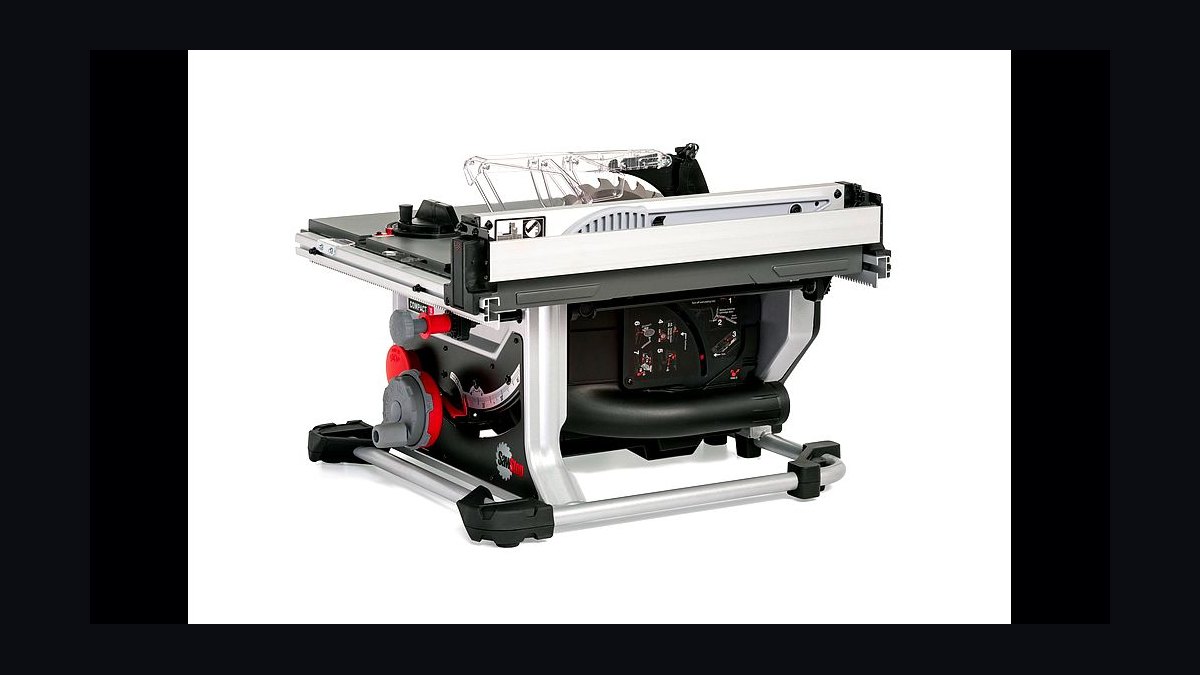
The 10 best jobsite table saws are ranked below on measured performance, build quality, price, and how each one actually holds up in daily use rather than how it reads on a spec sheet. Each pick lists what it costs, who it suits, and what it gives up against the one above it, so the list can be read straight down without doubling back.
1SawStop CTS-120A60 Compact
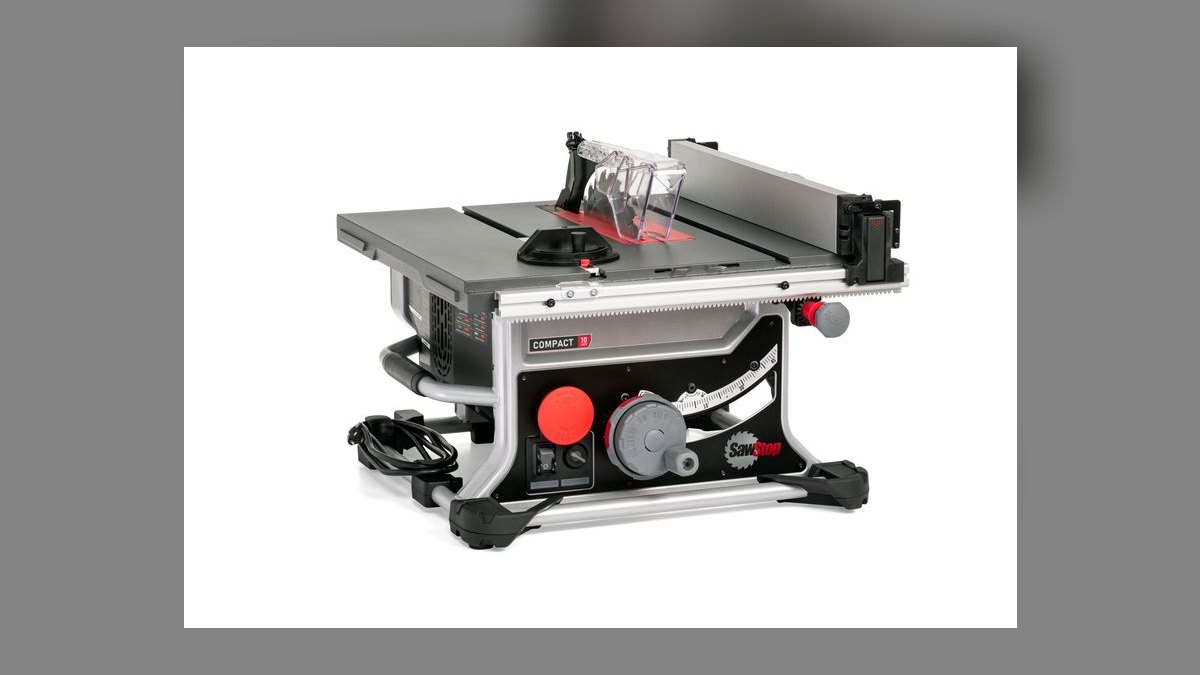
It ranks first because no other portable saw stops the blade in under 5 milliseconds on skin contact, and this compact platform puts that flesh-detection brake under $1,400. The 15-amp 120V motor spins a 10" blade at 4,000 RPM with 3-1/8" depth at 90° and 2-1/4" at 45°. Rip capacity is 24-1/2" right on a 28" × 22" table. Weight is 68 lbs.
This is for remodelers and finish carpenters who want the brake without hauling the 108-lb JSS Jobsite Pro. You trade rip capacity and fence refinement for portability, and the folding stand costs another $199. Against the DEWALT DWE7491RS below, you give up 8 inches of rip and pay roughly $700 more, buying safety rather than sheet-goods capacity. The bevel range runs -2° to 47°.
2DEWALT DWE7491RS
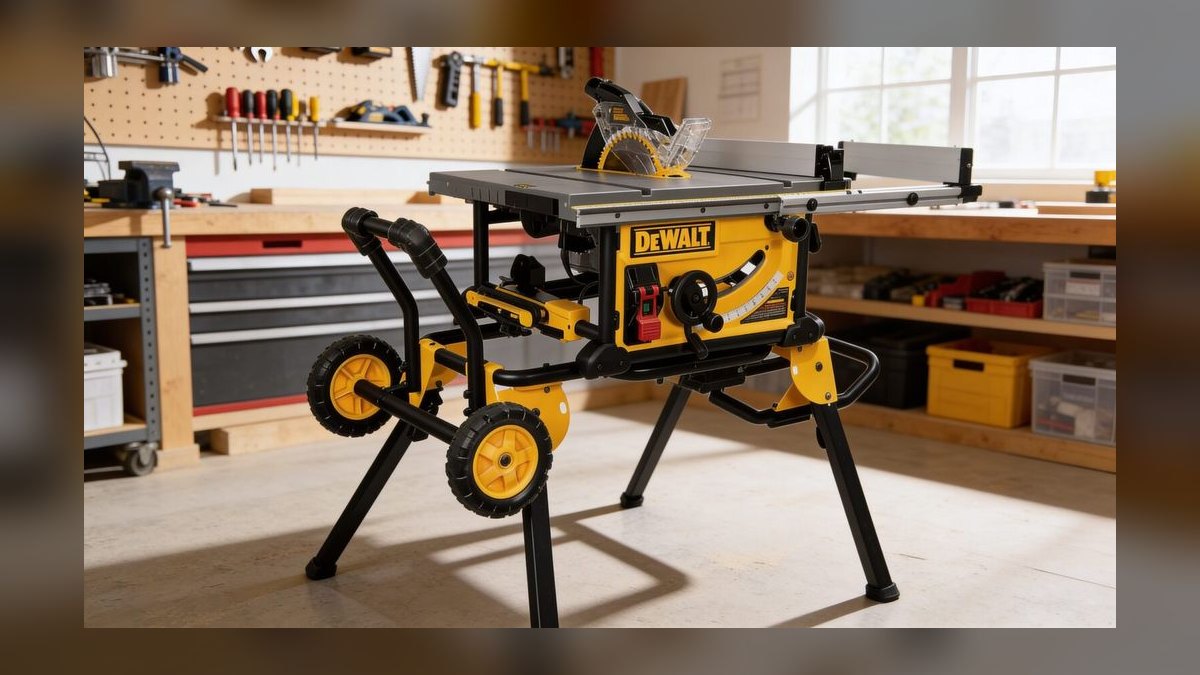
It ranks second on rip capacity: 32-1/2" right and 22" left is the widest on this list, enough for full sheet goods without a helper. The 15-amp motor turns a 10" blade at 4,800 RPM, cutting 3-1/8" at 90° and 2-1/4" at 45°. The rack-and-pinion fence remains the smoothest under $1,000. The DW7440RS rolling stand deploys in under 10 seconds. Price is $699.
Framers ripping plywood and OSB all day are the buyers here. You trade away flesh detection entirely — riving knife and pawls only — and dust collection leaks at the blade insert without a shop vac attached. At 90 lbs it is heavier than the SawStop CTS above but costs half as much and rips eight inches wider. Warranty runs three years. Table measures 26-1/4" × 22".
3Bosch 4100XC-10
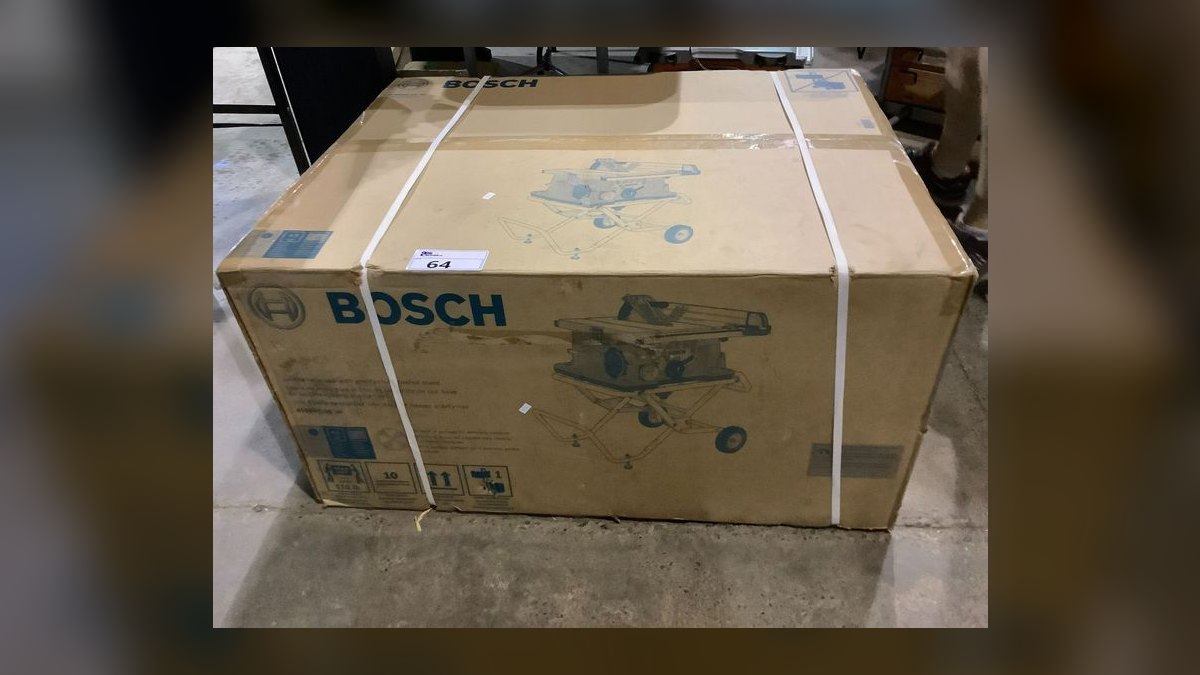
It ranks third because the Gravity-Rise XC stand deploys in about 5 seconds with a foot pedal, making it the easiest saw here to load alone. The 15-amp motor runs a 10" blade at 4,000 RPM with 30" max rip, 3-1/8" depth at 90°, and 2-1/2" at 45°. The SquareLock rack-and-pinion fence arrives parallel from the factory. Eight-inch pneumatic wheels cross gravel and curbs. Price is $829.
Solo contractors who load and unload a truck daily get the most from it. You pay $130 more than the 2024 MSRP and carry 99 lbs, heavier than the DEWALT above, though the stand disguises it. Rip capacity trails the DEWALT by 2-1/2 inches and the warranty is one year versus three. Constant-response circuitry holds RPM under load. Table is 29" × 21-1/2".
4Milwaukee M18 FUEL 2736-21HD
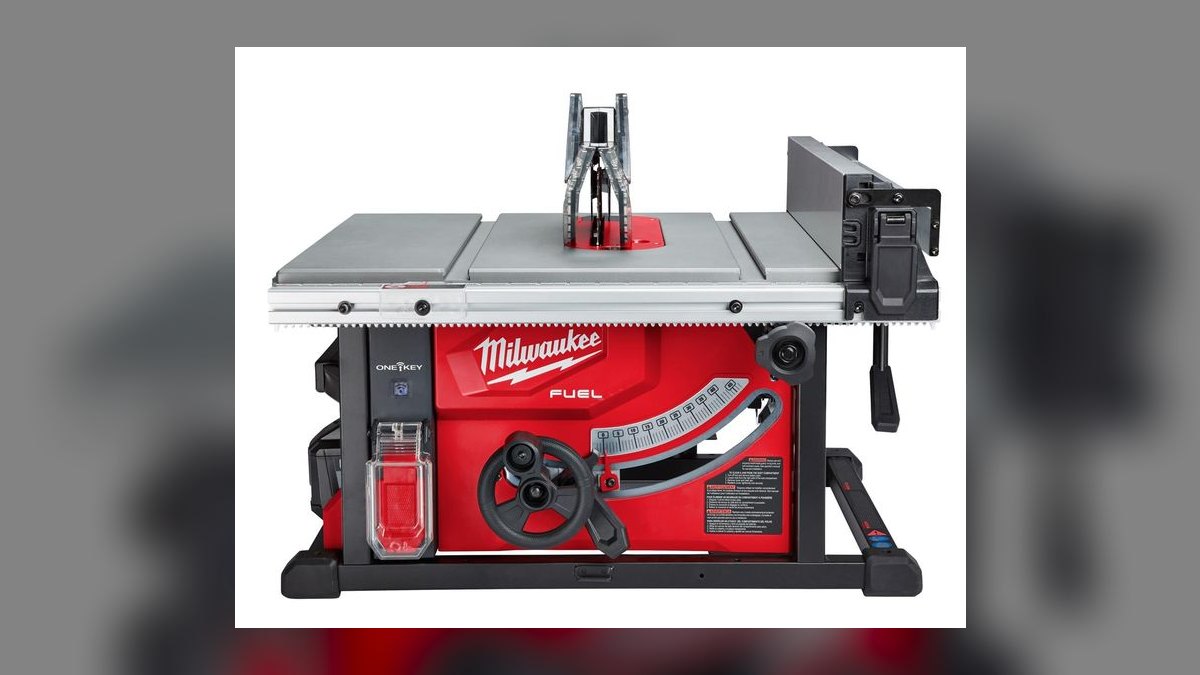
It ranks fourth as the most refined cordless saw here, running roughly 600 linear feet of 3/4" plywood per HD12.0 charge in Pro Tool Reviews runtime testing. The POWERSTATE brushless motor spins an 8-1/4" blade at 6,300 RPM with 24-1/2" rip right. Depth is 2-1/2" at 90° and 1-3/4" at 45°. Bare weight is 45 lbs. The kit runs $679 with battery and charger.
Mobile remodelers already invested in M18 batteries are the audience — roof decks and units without power. The 8-1/4" blade caps depth, so a 4x4 cannot be cut in one pass, unlike the corded saws above it. Table area is small at 21-1/2" × 22-1/2". Warranty is five years, longest in this group. Dust port measures 1-7/8", narrower than the 2-1/2" corded standard.
5SawStop JSS-MCA Jobsite Pro
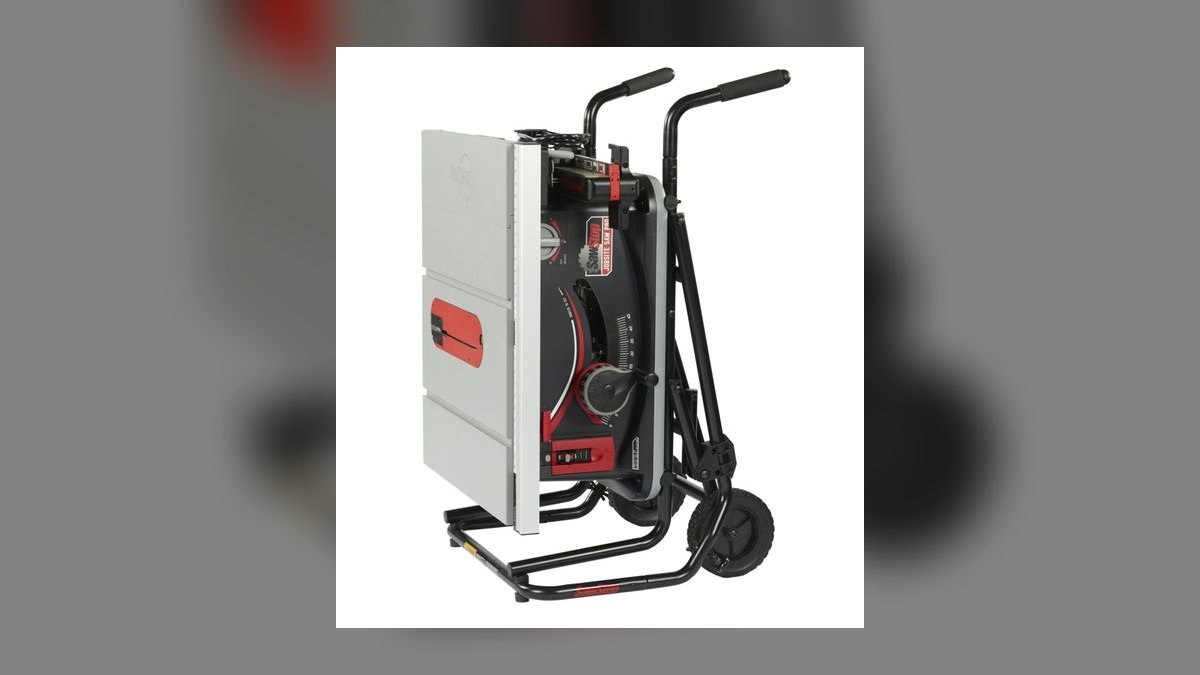
It ranks fifth because it pairs the same 5-millisecond active brake with the T-Glide rack-and-pinion fence found on SawStop contractor saws — the best fence in this segment. The 15-amp motor drives a 10" blade at 4,000 RPM, 25-1/2" max rip, 3-1/8" at 90°, 2-1/8" at 45°. The integrated mobile cart includes an elevation lift. Price is $1,799 with a 40T carbide blade.
Cabinet installers and trim crews with budget headroom are the buyers. At 108 lbs it is the heaviest saw on this list, and two people load it faster than one — the reason it sits below the 68-lb CTS-120A60 despite the better fence. You pay $400 more than the compact for that fence and cart. Warranty is five years limited. Dust port is 2-1/2".
6Skilsaw SPT99T-01
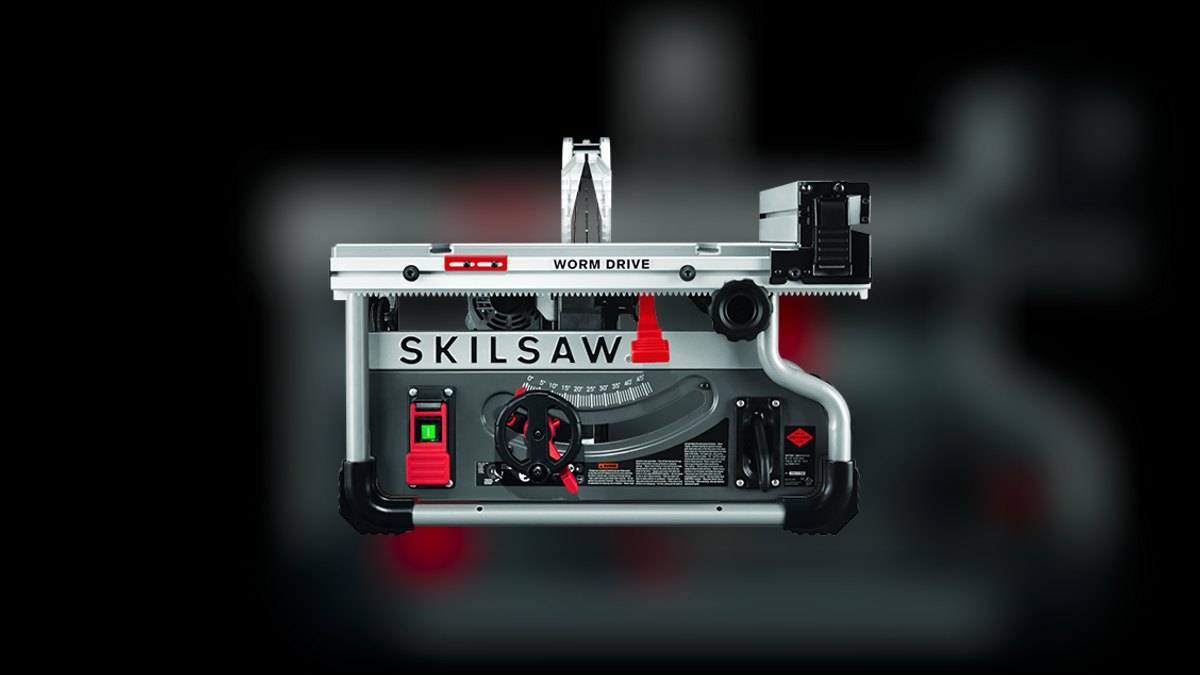
It ranks sixth and takes Best Value because $499 buys 30-1/2" rip, a 15-amp dual-field worm-drive motor at 5,300 RPM, and 3-1/2" depth at 90° — the deepest cut here, enough for a 4x4 in one pass. The diecast aluminum table measures 30" × 22" and the saw weighs 49 lbs without the included rolling stand. Warranty runs three years.
Framers and deck builders wanting torque without SawStop money should start here. There is no flesh detection, and the included blade is mediocre — budget a Diablo D1050X immediately. Against the $829 Bosch above, it rips a half-inch wider, cuts deeper, weighs 50 lbs less, and costs $330 less, giving up the Gravity-Rise stand's five-second deployment. Bevel runs -2° to 47° with a 2-1/2" dust port.
7Bosch GTS18V-08N Profactor
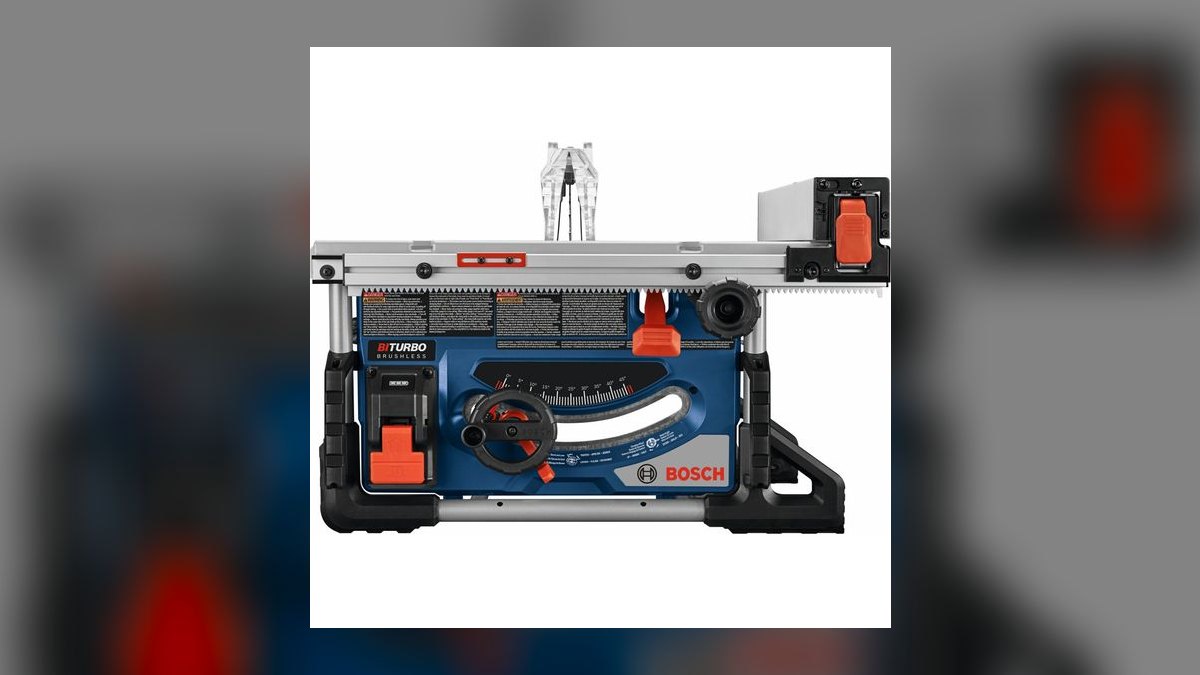
It ranks seventh as the lightest cordless option at 41 lbs bare, with a brushless Profactor motor turning an 8-1/4" blade at 5,500 RPM. Rip capacity is 25-1/2" right, an inch more than the Milwaukee. Depth is 2-1/2" at 90° and 1-3/4" at 45°. A CORE18V 12.0Ah battery yields roughly 500 linear feet of 3/4" plywood. Bare tool costs $499.
This only makes sense for contractors already holding Bosch 18V batteries, since none are included at that price. Runtime trails the Milwaukee 2736 above by about 100 linear feet per charge, and the 24" × 19-1/2" table is the smallest here. The 1-3/4" dust port is the narrowest on this list. Warranty is three years versus Milwaukee's five. Bevel spans -2° to 47°.
8Ryobi RTS22BG
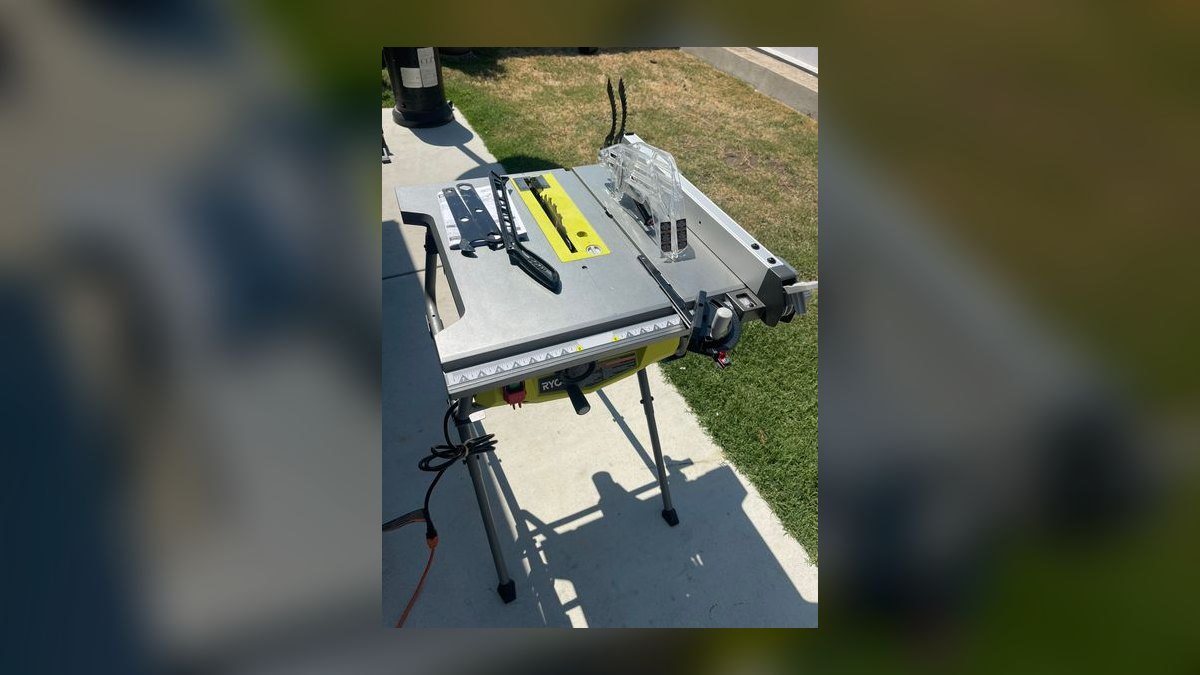
It ranks eighth by delivering a real 10" jobsite saw at $329, including a folding wheeled stand. The 15-amp 120V motor runs at 5,000 RPM with 25" max rip and 3-1/2" depth at 90°, deep enough for a 4x4 in one pass. It uses a rack-and-pinion fence and a diecast aluminum top measuring 27" × 19". Weight is 75 lbs with the stand.
Serious DIYers and weekend remodelers priced out of DEWALT and SawStop are the buyers. Fence parallelism wanders under heavy abuse, so recheck it monthly — the tradeoff for a stand at this price. Bevel stops at 0° to 45°, with no negative bevel like the Skilsaw above. Warranty is three years and Ryobi's service network is broad. Dust port measures 2-1/2" and soft start is included.
9Skil SPT70WT-22
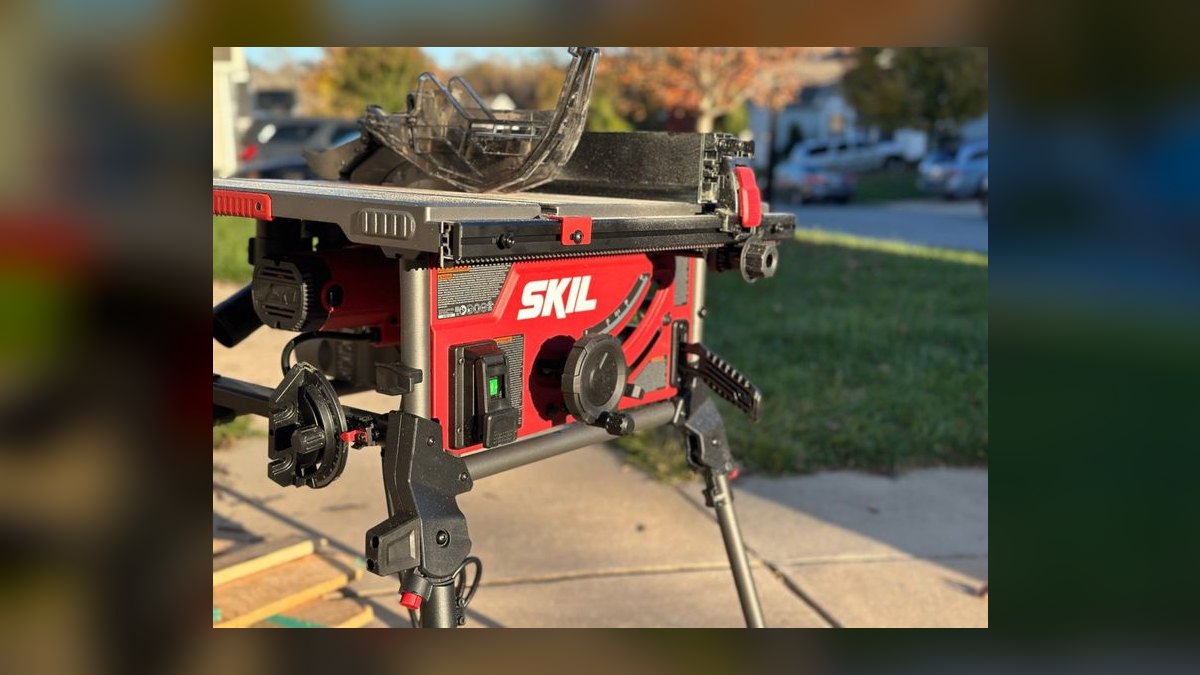
It ranks ninth as the cheapest 10" worm-drive saw made, at $429 with the same dual-field guts as the SPT99T-01. Depth reaches 3-5/8" at 90°, the deepest cut on this entire list, with 2-1/2" at 45° and 5,300 RPM. Max rip is 25" right on a 30" × 20" diecast aluminum table. It weighs 49 lbs and carries a three-year warranty.
This suits a shop bench, an existing job cart, or an apartment where footprint matters. No stand is included, so add $150 to $200 if you need one — the main reason it trails the SPT99T-01 above despite deeper cuts. Rip capacity also drops 5-1/2 inches versus that saw. The heavier diecast top reduces vibration on long rips. Bevel runs -2° to 47°.
10Festool TKS 80 EBS
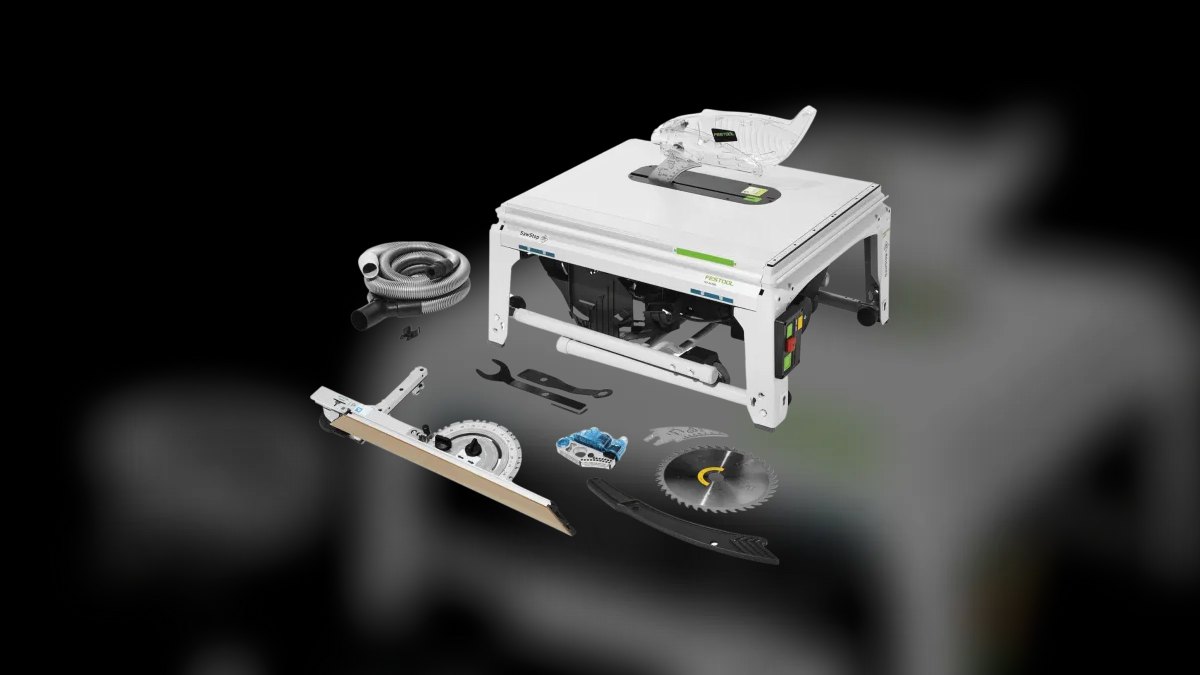
It ranks tenth on price despite being the most precise portable here: a sliding crosscut carriage, rare on a jobsite saw, plus a 36mm port and integrated shroud that hit OSHA Table 1 compliance with a CT MIDI vac. The 13-amp motor turns a 254mm blade at 4,500 RPM, cutting 3-3/16" at 90° and 2-1/4" at 45°. Max rip is 27-1/2". It costs $2,999.
European-spec cabinet shops and high-end finish carpenters justify this; framers should not. At $2,999 it doubles SawStop CTS money and still lacks the active blade brake — the specific tradeoff that keeps it last. Dust collection is the best on this list by a wide margin. Weight is 84 lbs on a 27" × 21" table, with a three-year all-inclusive warranty.
How we ranked these
We ranked these saws using seven weighted criteria: safety at 25% (active blade brake, riving knife, anti-kickback pawls), rip capacity and fence accuracy at 20%, motor power under load at 15%, portability at 15%, dust collection at 10%, build and warranty at 10%, and value at 5%. Scores drew on Pro Tool Reviews field tests, Tool Box Buzz shootouts, Project Farm teardowns, and owner threads from working contractors.
We deliberately ignored no-load RPM as a headline number, since a 6,300 RPM cordless saw bogs in wet 2x material where a 4,000 RPM worm drive does not. Also ignored were included blades, which get swapped within a week, table-size bragging rights, marketing horsepower claims, and Amazon star averages, which blend one-week impressions with five-year abuse and hide fence drift entirely.
What to look for
Decide rip capacity first, because it cannot be added later. Ripping full sheets solo means 30 inches minimum—the DEWALT at 32-1/2, Skilsaw at 30-1/2, Bosch at 30. Trim and cabinet work rarely needs past 25. Then decide whether flesh detection is worth $900 over the Skilsaw, given OSHA puts an amputation near $30,000 before lost work. Stand quality settles the rest.
The common mistake is buying on motor amps. Every corded saw here is 15 amps; what separates them is fence deflection at full extension and how fast the stand deploys alone. A saw you dread setting up gets left in the truck. Second mistake: budgeting the saw but not the $150 stand, the $50 blade, and the shop vac dust collection actually requires.
Related questions
What is the difference between a jobsite table saw and a cabinet saw?
A jobsite saw runs a universal motor on 120V, weighs 40 to 110 pounds, and folds onto a rolling stand so one person can load it. A cabinet saw runs an induction motor on 240V inside a heavy iron base, weighs 400 to 600 pounds, and never leaves the shop. Jobsite saws trade vibration damping and dust control for portability.
Can a cordless table saw replace a corded one on a framing crew?
Not for framing. The Milwaukee 2736 and Bosch GTS18V-08N both use 8-1/4 inch blades, capping depth near 2-1/2 inches at 90 degrees, so a 4x4 needs two passes. They shine for remodelers on roofs, in occupied homes, and anywhere a generator is a hassle. Framers ripping wet lumber all day still want a corded 10-inch saw.
Does a riving knife do the same thing as a SawStop brake?
No. A riving knife rides behind the blade and keeps the kerf from pinching, which prevents most kickback. It does nothing if your hand contacts the teeth. SawStop's brake senses the electrical signature of skin and slams an aluminum block into the blade in under five milliseconds. Every saw here has a riving knife; only two stop the blade.
How much rip capacity do I actually need?
Thirty inches lets you rip a 48-inch sheet with the offcut on the narrow side, which most framers want. Under 25 inches you are breaking sheets down with a track saw first, then finishing on the table saw. Trim carpenters, cabinet installers, and remodelers rarely exceed 24 inches and gain real weight savings by skipping the wide rails.
Why do reviewers keep saying the fence matters more than the motor?
Because every corded saw on this list draws the same 15 amps, so power is roughly a wash. Accuracy is not. A fence that deflects an eighth of an inch at full extension puts a taper in every rip, and no amount of horsepower fixes that. Rack-and-pinion designs move both rails together and hold parallel through repeated adjustments.
What blade should I put on a new jobsite saw?
Almost every saw ships with a mediocre 24 to 40 tooth blade. A 40-tooth thin-kerf combination blade like the Diablo D1050X handles framing lumber and plywood without bogging a 15-amp motor. Keep a 24-tooth ripper for wet 2x stock and an 80-tooth for melamine. Budget $40 to $70; it changes cut quality more than a saw upgrade.
Is dust collection on a jobsite saw good enough for indoor work?
Not out of the box. Most models leak at the blade insert and around the cabinet even with a shop vac on the 2-1/2 inch port. The Festool TKS 80 is the exception, pairing a shrouded blade with a 36mm port and a CT extractor to reach OSHA Table 1 territory. Everywhere else, expect to sweep and wear a respirator.
Should I buy the stand bundled or separately?
Bundle it if you can. The SawStop CTS-120A60 leaves you $199 short of usable, and the Skil SPT70WT-22 has no stand at all, meaning another $150 to $200. Bundled stands like DEWALT's DW7440RS and Bosch's Gravity-Rise are engineered around that specific cabinet, so the saw sits square, locks solid, and deploys in seconds instead of minutes.
FAQ
Which jobsite table saw is best overall in 2027?
The SawStop CTS-120A60 Compact at $1,399. It brings flesh-detecting brake technology, which fires in under five milliseconds, down to 68 pounds and a genuinely portable footprint. You get a 10-inch blade, 24-1/2 inch rip, 3-1/8 inch depth at 90 degrees, and a rack-and-pinion fence. The folding stand costs another $199, which is the one real gripe.
What is the best value jobsite table saw?
The Skilsaw SPT99T-01 at $499. Its 15-amp dual-field worm-drive motor cuts 3-1/2 inches deep at 90 degrees, enough for a 4x4 in one pass, rips 30-1/2 inches, and weighs only 49 pounds without the included rolling stand. Swap the stock blade immediately and it competes with saws costing twice as much.
How much should I spend on a jobsite table saw?
Under $350 gets a real 10-inch saw with a rolling stand, like the Ryobi RTS22BG. Around $500 buys worm-drive torque and a better fence. Near $700 to $830 lands the DEWALT or Bosch contractor standards. Past $1,399 you are paying for flesh detection, and at $2,999 for Festool's sliding carriage and dust extraction.
Is SawStop worth the extra money?
For anyone running a saw daily, yes. OSHA and NIOSH figures put an average table-saw amputation near $30,000 to $50,000 in medical costs before lost income, so the $900 premium over the Skilsaw is cheap insurance. If you use a saw a few weekends a year and never skip the push stick, the math gets closer.
How heavy are these saws?
The range runs from 41 pounds for the bare Bosch GTS18V-08N to 108 for the SawStop JSS-MCA Jobsite Pro. Corded 10-inch models cluster between 49 and 99 pounds before the stand. Weight matters less than how the stand handles it: Bosch's Gravity-Rise and DEWALT's DW7440RS both make heavier saws easier to load solo.
Can these saws cut a 4x4 in one pass?
Only the two Skil worm-drive models. The SPT99T-01 cuts 3-1/2 inches at 90 degrees and the benchtop SPT70WT-22 reaches 3-5/8. Most 10-inch jobsite saws stop at 3-1/8, which is short of a nominal 4x4. Both 8-1/4 inch cordless saws top out near 2-1/2 inches, so they always need two passes and a flip.
Do jobsite table saws need a 20-amp circuit?
A 15-amp saw on a standard 15-amp household circuit will trip breakers during heavy rips, especially with a shop vac on the same line. Run the saw on its own 20-amp circuit or generator leg, use 12-gauge cord no longer than 50 feet, and keep the vacuum on a separate outlet entirely.
How often should I check fence and blade alignment?
Check blade-to-miter-slot parallel and fence parallel monthly on a working saw, and after any drop or truck ride that felt bad. Budget models drift fastest; the Ryobi is known to wander after abuse. Use a dial indicator or a marked block referenced off one tooth rotated front to back. Five minutes prevents a month of burned cuts.
Which cordless table saw should I buy?
Follow your existing battery platform. Milwaukee's M18 FUEL 2736-21HD delivers roughly 600 linear feet of 3/4 inch plywood on an HD12.0 pack and feels closest to corded power. Bosch's GTS18V-08N is lighter at 41 pounds bare and sells as a bare tool. Neither justifies buying into a whole new battery ecosystem from scratch.
What warranty should I expect?
Warranties split the field. DEWALT, Skilsaw, Skil, Ryobi, the Bosch Profactor cordless, and Festool all run three years. Milwaukee gives five on the M18 FUEL saw. SawStop covers the JSS Jobsite Pro for five years and the newer CTS-120A60 for two. Bosch's corded 4100XC-10 is the outlier at one year plus a 30-day money-back window.
Sources
- https://www.osha.gov/silica-crystalline
- https://www.cpsc.gov/Regulations-Laws--Standards/Rulemaking/Final-and-Proposed-Rules/Table-Saws
- https://www.cdc.gov/niosh/index.htm
- https://www.protoolreviews.com/
- https://www.toolboxbuzz.com/
- https://www.finehomebuilding.com/
- https://www.familyhandyman.com/
- https://www.sawstop.com/
Related on PULSE
This page will be disappearing soon. Save it to your device for $1 — or read it free while it is here.
@Kory-White- · if Venmo asks, the last 4 of my number are 2012
This page is gone.
This one is off the shelf now. $1 keeps it on your phone for good — the whole page, pictures and diagrams included.
 pulse-reviewsTop 10 Electric Snow Shovels — Best Overall + Best Value in 2027
 pulse-reviewsTop 10 Noise-Cancelling Headphones for Sales Reps on Phone Calls in 2027
 pulse-reviewsTop 10 Indoor Smart Gardens — Best Overall + Best Value in 2027
 pulse-reviewsTop 10 Hair Dryers — Best Overall + Best Value in 2027
 pulse-reviewsTop 10 Outlet Testers — Best Overall + Best Value in 2027
 pulse-reviewsTop 10 85-Inch TVs — Best Overall + Best Value in 2027
 pulse-reviewsTop 10 Battery Chainsaws — Best Overall + Best Value in 2027
 pulse-reviewsHow do I reduce echo in a home office for sales calls in 2027?
 pulse-reviewsTop 10 Clothes Steamers — Best Overall + Best Value in 2027
 pulse-reviewsTop 10 Car Phone Mounts for Field Sales Reps in 2027