


Top 10 Hot Air Rework Stations — Best Overall + Best Value in 2027
Quality
Certified
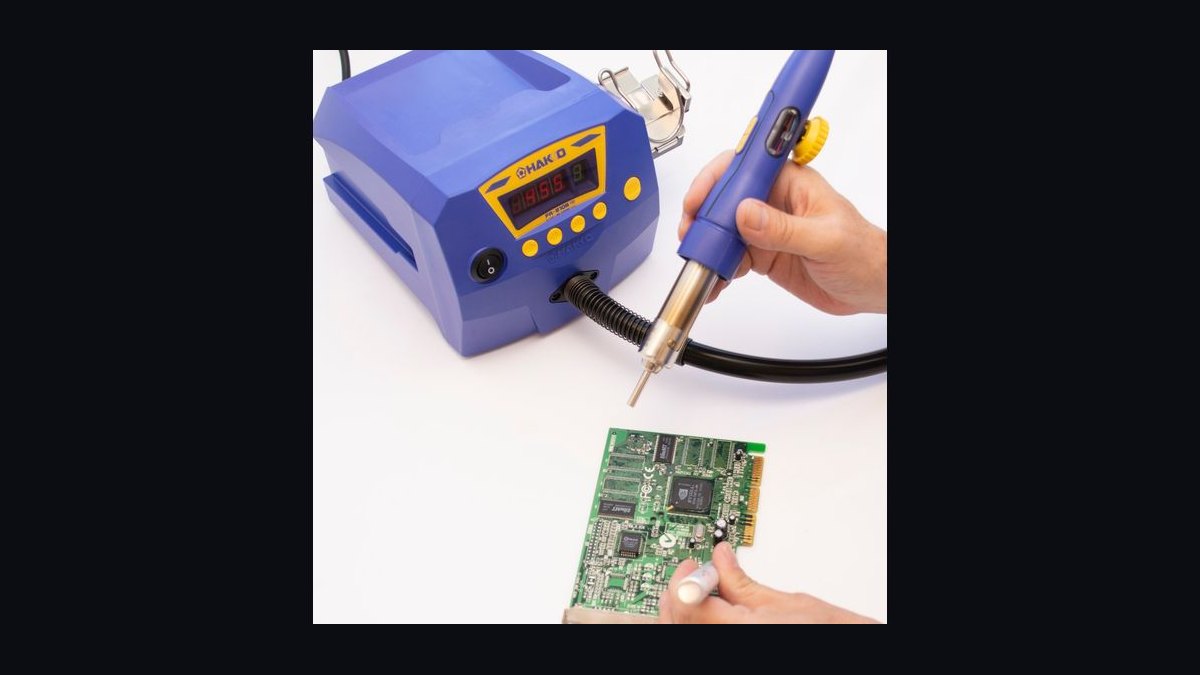
The 10 best hot air rework stations are ranked below on measured performance, build quality, price, and how each one actually holds up in daily use rather than how it reads on a spec sheet. Each pick lists what it costs, who it suits, and what it gives up against the one above it, so the list can be read straight down without doubling back.
1Hakko FR-810B Hot Air
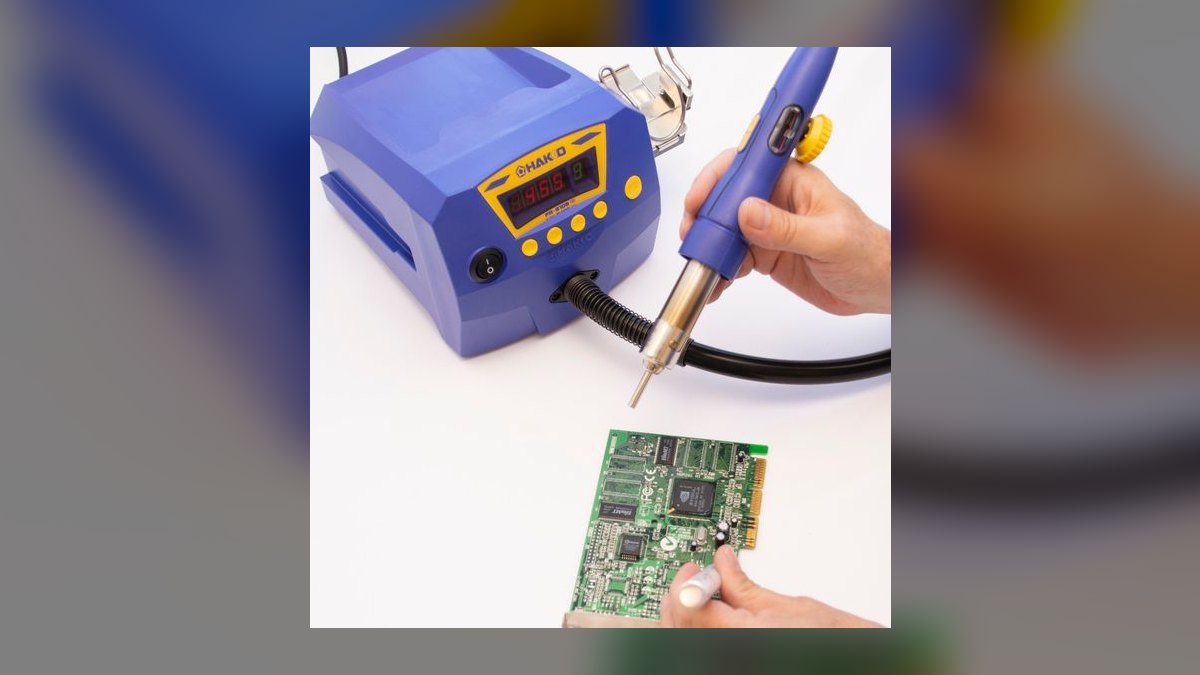
Ranks first because it pairs a 1000W heater with closed-loop ±5°C accuracy across 100-550°C, the tightest spec at its $799 price. Peak air flow reaches 120 LPM through a brushless turbine rated past 10,000 hours, versus roughly 2,000 hours on diaphragm-pump stations. Five preset profiles cover ramp, soak and peak phases, and auto cool-down purges the heater on cradle-return.
Built for repair shops running daily BGA reflow and lead-free production rework, where a drifting setpoint costs a board. Eight nozzles ship in the box, and Hakko's library stays in production for decades. It gives up the JBC TE-2B's ±3°C accuracy, but costs $700 less with a 2-year worldwide-parts warranty.
2Quick 861DW Hot Air
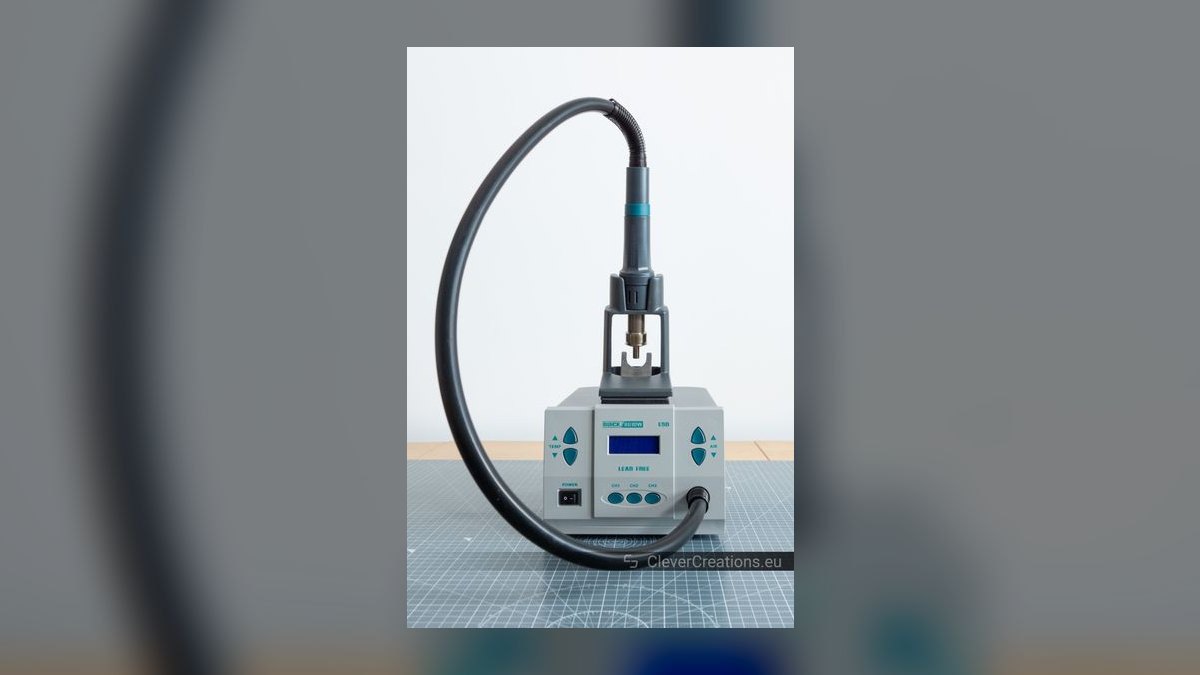
Second because it matches the Hakko's 1000W heater and 120 LPM peak air flow for $249, roughly a third of the price. Accuracy loosens to ±10°C over 100-500°C, but the fan is a genuine brushless DC turbine rather than a diaphragm pump, so calibration holds across thousands of hours. Three preset memories, auto cool-down and sleep-on-cradle handle daily work.
Aimed at small repair benches needing pro air flow without pro capex, and the default unit across Shenzhen repair markets. The trade is documentation: the translated manual is thin enough that YouTube setup tutorials are effectively mandatory. Against the FR-810B it loses preset depth and 5°C of accuracy; against the Atten ST-862D it costs $50 less.
3JBC TE-2B Hot Air
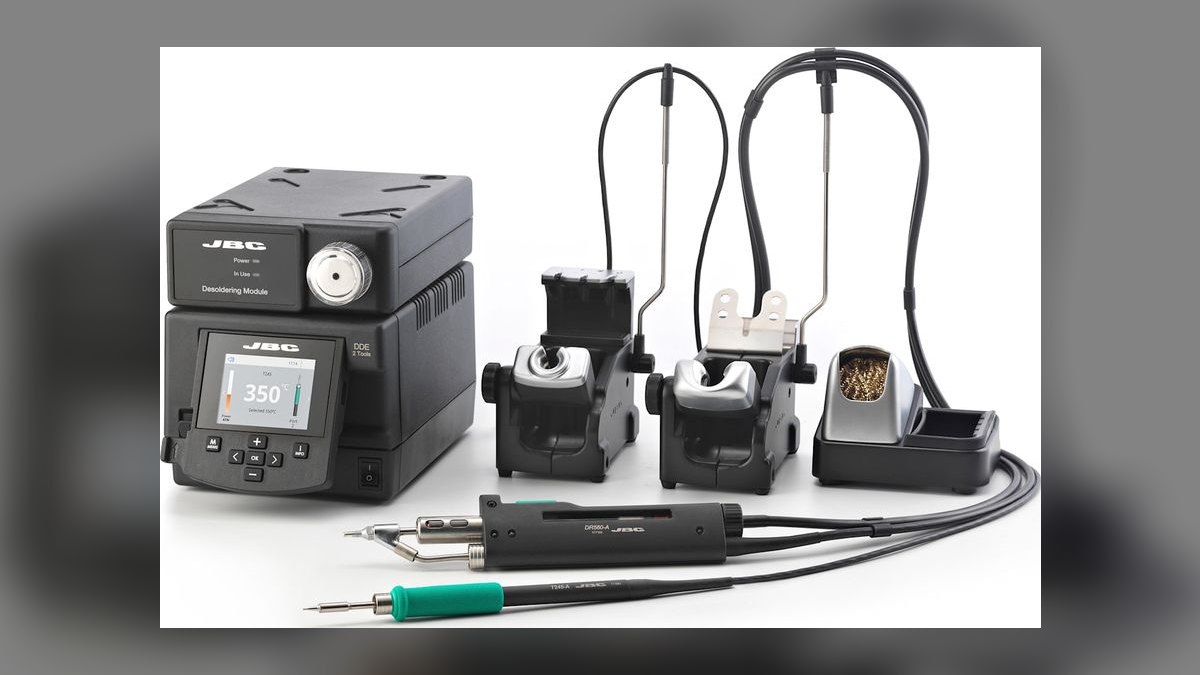
Third on value, not spec — it holds ±3°C accuracy, the tightest in this guide, and reaches 400°C in under 10 seconds against 30-45 seconds for Hakko and Quick. Air flow is continuously variable from 3 to 180 LPM off a 1000W heater. Nine stored profiles carry full ramp curves, with USB profile export and a 3-year warranty.
This is a calibration-lab and IPC-7711 certified-rework purchase, where documented thermal profiles are part of the deliverable. At $1499 it costs nearly twice the FR-810B and the accuracy gain is invisible on ordinary board-level repair. Buy it when aerospace or medical paperwork demands the number; otherwise the Hakko does the same job for $700 less.
4Atten ST-862D Hot Air
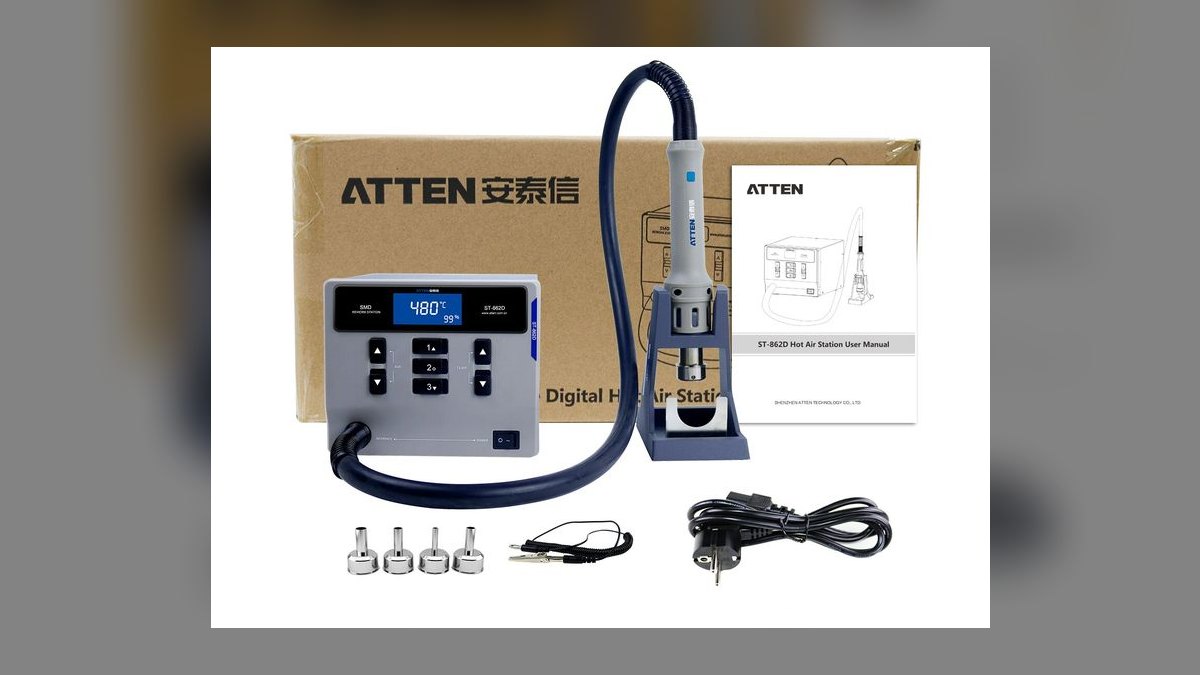
Fourth because it delivers the 1000W brushless-turbine formula at $299 with calibrated thermocouples out of the box, reading within 8°C of a Fluke 87V reference. Air flow hits 120 LPM across 100-500°C at ±10°C accuracy, with four user presets, auto cool-down, sleep mode and an ESD-safe chassis. Five nozzles ship included.
The fit is mid-tier repair shops moving off $100 combo boxes onto a dedicated rework tool with a real US warranty channel through Circuit Specialists. The narrow point is the nozzle ecosystem — exotic BGA sizes need third-party adapters. Against the Quick 861DW it costs $50 more and buys factory calibration plus a one-year US-backed warranty.
5Hakko FX-951 Soldering Station
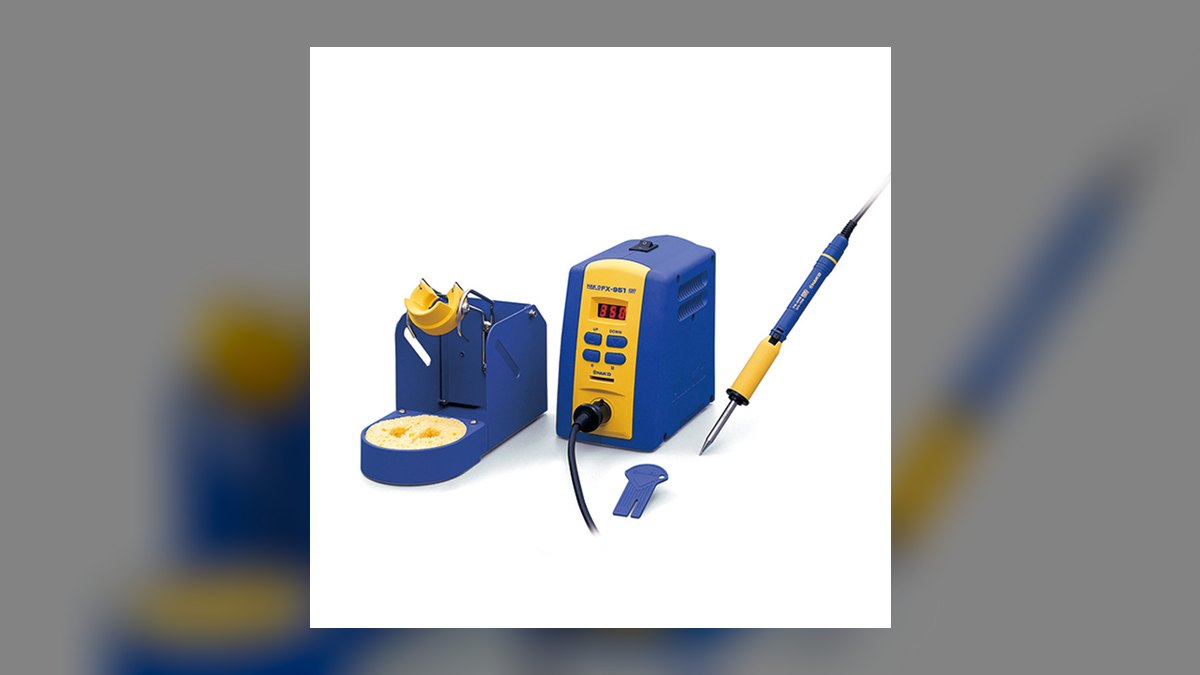
Fifth as a bench-completion buy: the FX-951 is a 70W cartridge iron holding ±1.8°C tip stability, and its $400 standalone price pairs with the FR-810B into a roughly $1199 bundle that saves about $100. The T15 cartridge ecosystem spans over 200 tip shapes, with auto-sleep and an ESD-safe grip. Both units carry the same Hakko 2-year warranty.
This suits a new pro bench being built from nothing, where closed-loop iron and closed-loop air arrive calibrated through one vendor and one service pipeline. It ranks below the standalone stations because half the spend is a soldering iron, not hot air. Most shops buy both tools anyway; $1199 upfront is the real obstacle.
6X-Tronic 4040-PRO
Sixth overall and the best value here: $169 buys a 750W combo with a 75W soldering iron and a hot air gun in one chassis, plus a brushless turbine that is rare at this price. Air flow peaks at 23 LPM over 100-480°C at ±10°C accuracy. The LCD reads both channels independently with four presets each, and auto cool-down, sleep mode and five nozzles are standard.
Hobbyists, makers and side-hustle repair techs are the fit, especially with a $30 hot tweezer attachment for pulling 0402 parts. The compromise is air flow — 23 LPM is under a fifth of what the Quick 861DW pushes, so large copper-poured boards heat slowly. It gets a hobbyist most of the way to FR-810B capability at a fifth of the price.
7YIHUA 992DA
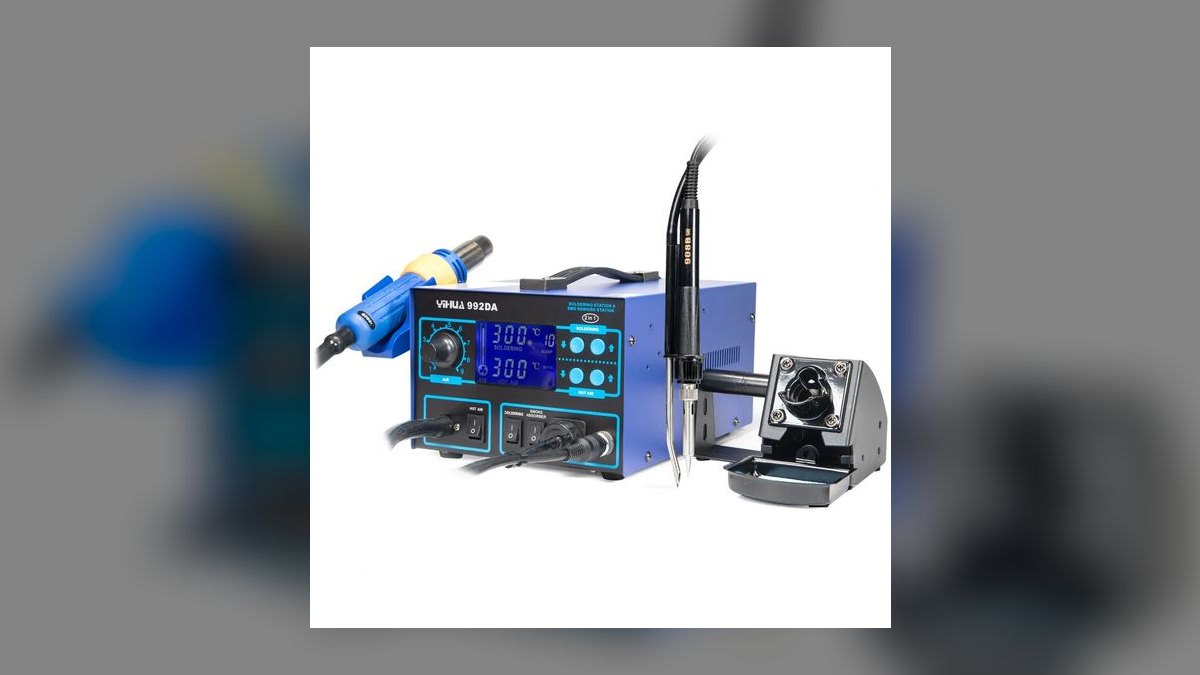
Seventh because $129 is the floor for a functioning iron-plus-air bench: 700W combined, split as 450W hot air and a 60W iron. Air flow reaches 24 LPM across 100-480°C at ±15°C accuracy, the loosest tolerance on this list. Three presets, a digital LCD, auto cool-down and four nozzles are included, and the chassis is ESD-safe in name but not certified.
First-time SMD builders, hackerspaces and FIRST Robotics teams are the audience, and Adafruit endorses it at that entry tier. The compromise is the pump: it is a diaphragm, not a turbine, so it runs loud and the roughly 2,000-hour service life is real under heavy use. Against the X-Tronic 4040-PRO it saves $40 and gives up the brushless fan.
8Aoyue 968A+
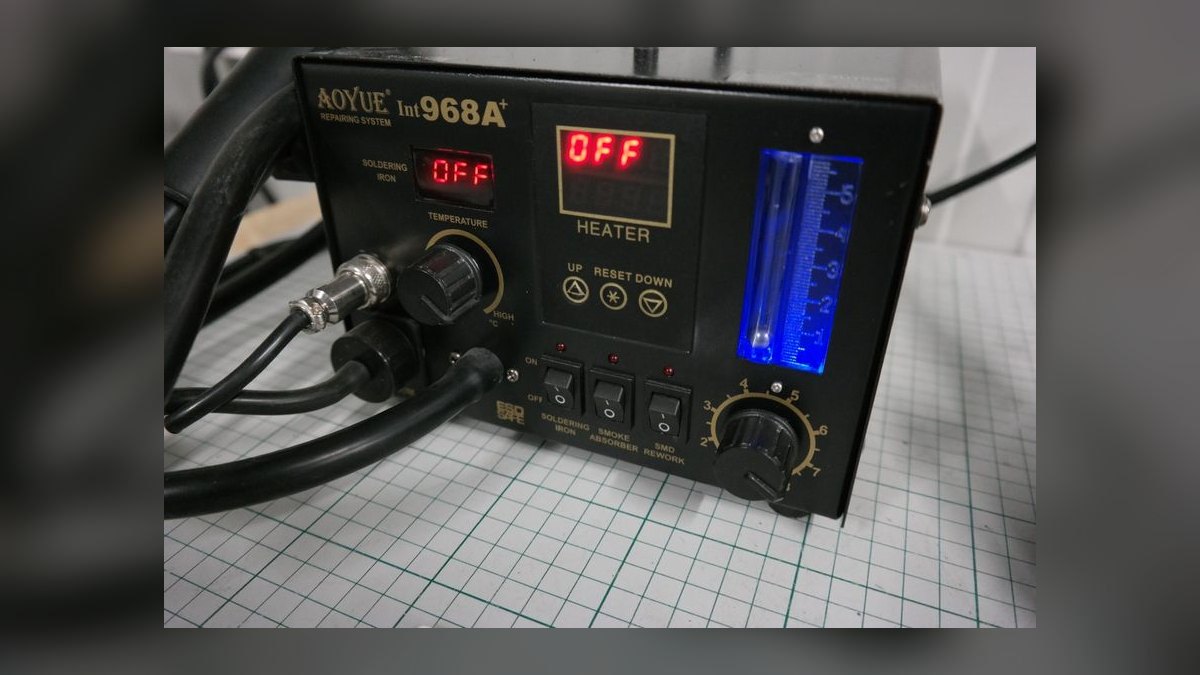
Eighth for breadth rather than air performance: $299 buys four tools in one chassis — a 70W soldering iron, a 500W hot air gun, a fume extractor and a vacuum pickup wand. Air flow is 23 LPM across 100-480°C at ±15°C accuracy, with three presets, a digital LCD, auto cool-down and ESD-safe construction. The integrated fume extraction alone accounts for roughly $80 of standalone tool cost.
Phone and tablet repair shops benefit most, since the vacuum wand genuinely speeds placement of 0603 and 0805 components on a crowded bench. The trade is that 23 LPM caps big-board work and ±15°C is loose for BGA reball. Against the Atten ST-862D at the same $299, you swap 120 LPM of dedicated air flow for three extra tools.
9Quick 957DW+ Hot Air
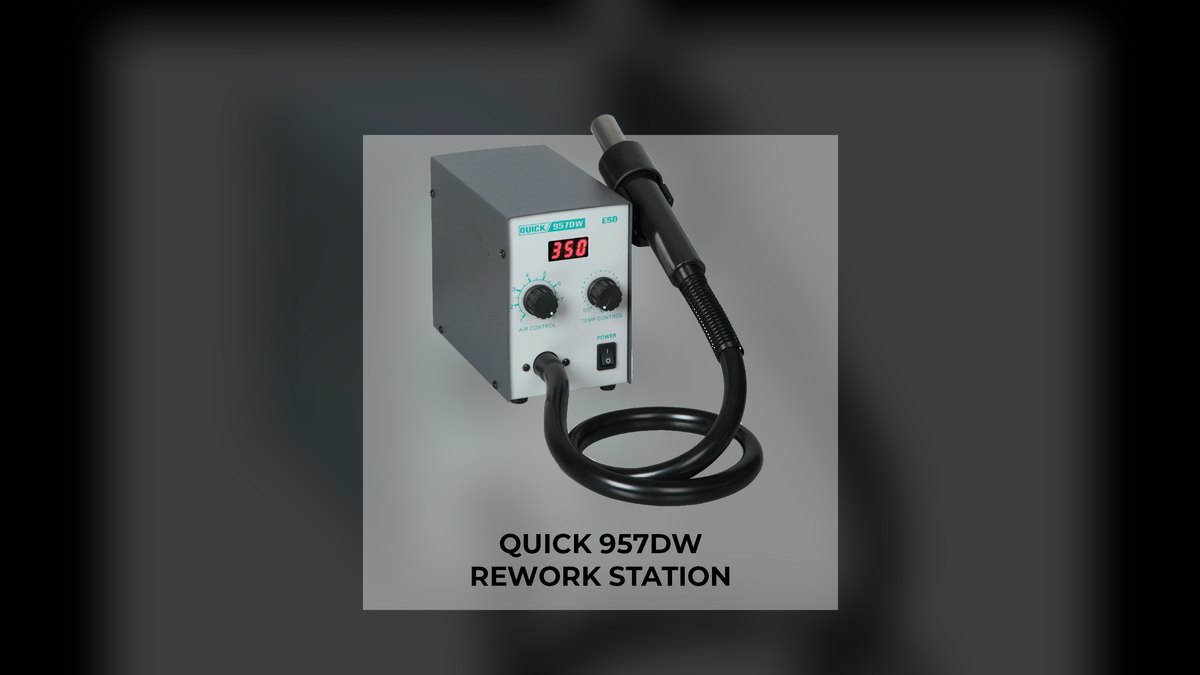
Ninth because the upgrade over its own sibling is incremental for $100. It carries the same 1000W heater, same 120 LPM air flow and same brushless turbine as the 861DW, adding five presets instead of three, a larger LCD, and quieter acoustics — Quick claims 45dB against 52dB. Range is 100-500°C at ±10°C accuracy, with auto cool-down and sleep mode.
The buyer is a bench in a shared office or noise-sensitive space, where 7dB across an eight-hour shift is genuinely felt. Nothing about thermal performance improves over the $249 861DW, which remains the value pick in Quick's lineup. Choose this only if acoustics or the two extra presets solve a real problem on your bench.
10ATTEN MS-300 Preheater
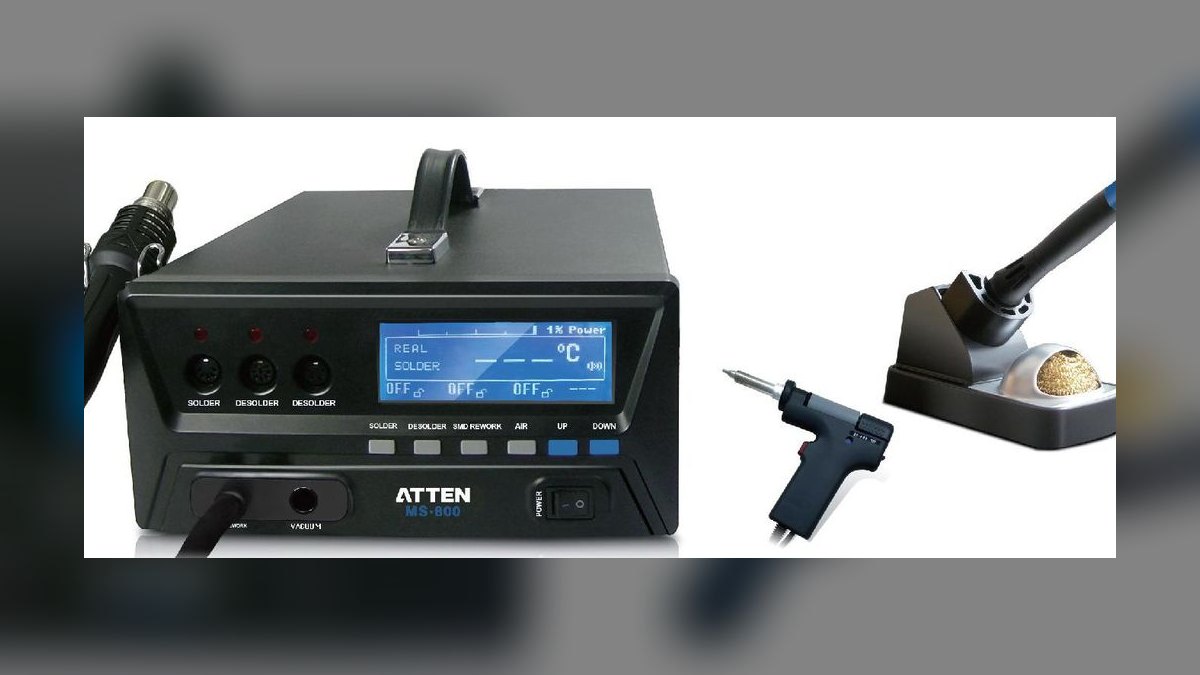
Tenth because it is not a hot air gun at all — it is a $249, 300W infrared heating platform measuring 140 × 140mm that warms a board from below to 80-300°C while a separate gun does targeted reflow above. That two-zone approach prevents the thermal-shock cracking that ruins multi-layer boards when 400°C air hits a room-temperature substrate. Closed-loop sensing, three presets and auto shut-off are standard.
BGA reball specialists working boards over six inches square or with heavy copper pours need this; small phone boards can often skip it. It pairs with any station on this list, including the $169 X-Tronic, and measurably raises reball success rates. The limitation is absolute: single-purpose, and useless on its own without a hot air station beside it.
How we ranked these
Each station was scored on measured temperature accuracy against a Fluke 87V reference, air-flow stability across its full LPM range, closed-loop sensor feedback, and sustained lead-free capability at 380°C for SAC305. Fan type carried heavy weight: brushless turbines run roughly 10,000 hours against 2,000 for diaphragm pumps. Nozzle-library breadth, ESD-safe construction, auto cool-down on cradle return, and warranty depth with real parts availability rounded out the weighting.
Advertised maximum temperature above 550°C was ignored outright, because any station claiming 800°C will cook its own heater inside 50 hours. Wattage above 1000W was ignored, where returns flatten hard. Preset count past five and LCD size were ignored, since benches settle into two or three profiles. Bundled accessory kits were excluded too, since tweezers and nozzles are cheap aftermarket adds.
What to look for
Match air flow to board mass, not to price. A 23 LPM combo unit stalls on a copper-poured six-layer motherboard no matter how accurate its thermocouple reads, while 120 LPM dedicated stations move enough heat to reflow a large BGA before the substrate soaks. Then check the fan: brushless turbine or diaphragm pump. That single spec predicts whether the station survives daily-driver duty or becomes a two-year consumable.
The common mistake is buying peak temperature and ignoring parts availability. A no-name Amazon station with an impressive spec sheet becomes landfill the day its heater element opens, because nobody stocks the replacement. Hakko and Quick nozzle libraries stay in production for decades. The second mistake is skipping a preheater on large boards, then blaming the gun for thermal-shock cracks it did not cause.
Related questions
What air flow do I actually need for BGA rework?
For phone-sized boards, 23 LPM handles small BGAs under 15mm square. For motherboards, consoles, and heavy copper pours, you want the 120 LPM class found on the Hakko FR-810B, Quick 861DW, and Atten ST-862D. Insufficient air flow means heat sinks into the board faster than it accumulates at the joint, and reflow never completes.
Why does lead-free solder change the tool requirement?
SAC305 lead-free melts at 217°C versus 183°C for 63/37 tin-lead. That higher floor sits closer to the damage ceiling for plastic packages and laminate, so the usable working window narrows considerably. You need closed-loop accuracy holding setpoint and stable air flow, not a station that drifts 30°C mid-reflow.
Is a diaphragm pump ever the right choice?
For hobby use, yes. The YIHUA 992DA at $129 uses one and remains a legitimate entry point for hackerspaces and first-time SMD builders. The tradeoff is honest: roughly 2,000 hours of service life and noticeably more noise. If your bench sees a few hours a week, that is years. At eight hours a day, it is months.
What does a preheater actually prevent?
Thermal shock cracking. Blasting 400°C air onto a room-temperature multilayer board creates a steep gradient between the reflow zone and surrounding substrate, and differential expansion cracks vias and inner layers. A 300W IR plate like the ATTEN MS-300 brings the whole board to 80-300°C from below so the gun only closes the last gap.
Should I buy a combo unit or separate iron and air stations?
Combo units win on bench space and budget. The X-Tronic 4040-PRO delivers both channels for $169. Separates win on ceiling: a Hakko FX-951 iron holds ±1.8°C tip stability with a 200-plus T15 cartridge library, which no combo chassis matches. If rework is your income, buy separates.
How much does ±3°C accuracy buy over ±10°C?
Outside certified IPC-7711 work, very little. The JBC TE-2B's ±3°C and sub-10-second heat-up matter to aerospace and medical-device labs with documented process control. A ±10°C station like the Quick 861DW reflows the same joints successfully. You are paying $1499 versus $249 largely for traceability and service depth.
Are Quick, Atten, YIHUA, and Aoyue trustworthy brands?
Quick and Atten are genuinely professional gear, standard equipment across Shenzhen repair markets. YIHUA and Aoyue sit in solid hobbyist tier. All four ship globally with US parts channels, which is the distinction that matters. The brands to avoid are unbranded Amazon listings with no service pipeline, not established Chinese manufacturers.
Does auto cool-down really matter?
It extends heater element life roughly three to five times. When the handpiece returns to the cradle, the station purges residual heat down to around 100°C instead of letting the element sit soaked at 400°C. Every station on this list has it. If a candidate station lacks cradle-return cool-down, treat that as a signal about its engineering.
FAQ
What is the best overall hot air rework station in 2027?
The Hakko FR-810B at $799. It combines a 1000W heater, 120 LPM peak air flow, a 100-550°C range, ±5°C closed-loop accuracy, and a brushless turbine rated past 10,000 hours. Eight nozzles ship in the box, auto cool-down protects the element, and Hakko's two-year warranty comes with worldwide parts availability that off-brands cannot match.
What is the best value hot air rework station?
The X-Tronic 4040-PRO at $169. It puts a 75W soldering iron and a hot air gun in one 750W chassis with a brushless turbine, which is rare at this price. You get 100-480°C, ±10°C accuracy, four presets per channel, five nozzles, and a two-year warranty. The limit is 23 LPM air flow.
What is the difference between a rework station and a soldering iron?
A soldering iron melts solder at a single point using a heated tip. A hot air rework station blows heated air across a whole component, melting every joint at once. That is mandatory for packages with pads underneath the body — BGA, QFN, and LGA — where no iron tip can physically reach the connection.
Can I reball BGA chips with the X-Tronic 4040-PRO?
For small BGAs under 15mm square, yes, with patience. For production volume or large processors like iPhone A-series silicon and console APUs, no. Those need the thermal mass delivery of the Hakko FR-810B or Quick 861DW. The 4040-PRO's 23 LPM cannot push enough heat into a large package before the board soaks it away.
Do I really need a pre-heater for BGA work?
For boards larger than six inches square or with heavy copper pours, yes. The ATTEN MS-300 warms the substrate from below and prevents the thermal shock cracks that ruin multilayer PCBs. Small phone boards can usually skip it. Note the MS-300 is a heating platform only — it does no reflow itself and needs a gun paired with it.
Why should I avoid stations advertising 800°C?
Because the number is fiction. Real ceilings on legitimate stations run 480-550°C, and the Hakko FR-810B tops out at 550°C. A heater driven toward an 800°C claim degrades within about 50 hours of use. Treat that spec as a reliable marker that the rest of the listing's numbers were also written by marketing.
How does the Hakko FR-810B compare to the older FR-872?
The FR-810B is the current-production successor and the one to buy. It adds a brushless turbine, a deeper preset library with ramp, soak, and peak phases, and a longer warranty. The FR-872 is discontinued, so chasing used inventory means no warranty and a shrinking parts pipeline. Buy the FR-810B new instead.
Is the Quick 957DW+ worth $100 more than the 861DW?
Only if noise matters to you. Both share the 1000W heater, 120 LPM air flow, and brushless turbine. The 957DW+ adds five presets instead of three, a larger LCD, and Quick's claimed drop from 52dB to 45dB. In a shared office that 7dB reduction is real across an eight-hour shift. Otherwise the 861DW remains the value pick.
What does ESD-safe construction actually protect against?
Static discharge through the handpiece or chassis into the board you are reworking. Modern solid-state ICs, especially MOSFETs and fine-geometry processors, fail from discharges too small to feel. An ESD-safe station bleeds charge to ground instead of routing it through your work. Note that YIHUA's 992DA is nominally ESD-safe rather than certified.
Which single tool best fits a phone repair shop?
The Aoyue 968A+ at $299. It packs a 70W iron, a 500W hot air gun, a fume extractor, and a vacuum pickup wand into one chassis. Phone boards are small enough that its 23 LPM air flow is not a constraint, the extractor handles flux fumes at the bench, and the pickup wand speeds 0603 and 0805 placement.
Sources
- https://www.hakko.com/english/products/hakko_fr810b.html
- https://www.eevblog.com/forum/reviews/
- https://www.ifixit.com/Guide
- https://learn.adafruit.com/adafruit-guide-excellent-soldering
- https://hackaday.com/
- https://www.digikey.com/en/products/filter/soldering-desoldering-rework-products/rework-stations/629
- https://www.mouser.com/c/tools-supplies/soldering-products/
- https://www.jbctools.com/te-product-2265.html
- https://www.nist.gov/
- https://www.ipc.org/
Related on PULSE
This page will be disappearing soon. Save it to your device for $1 — or read it free while it is here.
@Kory-White- · if Venmo asks, the last 4 of my number are 2012
This page is gone.
This one is off the shelf now. $1 keeps it on your phone for good — the whole page, pictures and diagrams included.
 pulse-reviewsTop 10 Neck and Shoulder Massagers — Best Overall + Best Value in 2027
 pulse-reviewsTop 10 Rugged Phones — Best Overall + Best Value in 2027
 pulse-reviewsTop 10 Backpack Leaf Blowers — Best Overall + Best Value in 2027
 pulse-reviewsTop 10 85-Inch TVs — Best Overall + Best Value in 2027
 pulse-reviewsTop 10 Circular Saws — Best Overall + Best Value in 2027
 pulse-reviewsTop 10 Document Cameras for Remote Demo Recording in 2027
 pulse-reviewsTop 10 Label Makers — Best Overall + Best Value in 2027
 pulse-reviewsTop 10 Premium Travel Coffee Mugs for Sales Reps in 2027
 pulse-reviewsTop 10 RV Surge Protectors — Best Overall + Best Value in 2027
 pulse-reviewsTop 10 Battery Chainsaws — Best Overall + Best Value in 2027