


Top 10 65-Inch TVs — Best Overall + Best Value in 2027
Quality
Certified
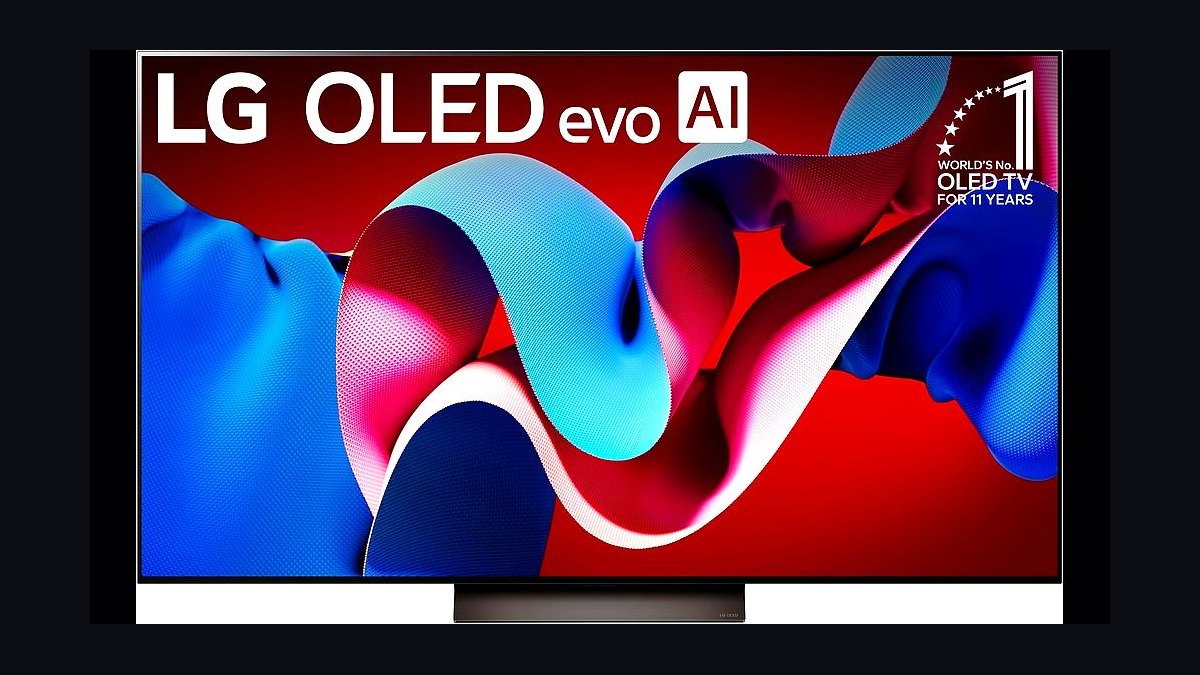
The 10 best 65-inch tvs are ranked below on measured performance, build quality, price, and how each one actually holds up in daily use rather than how it reads on a spec sheet. Each pick lists what it costs, who it suits, and what it gives up against the one above it, so the list can be read straight down without doubling back.
1LG G5 OLED evo 65
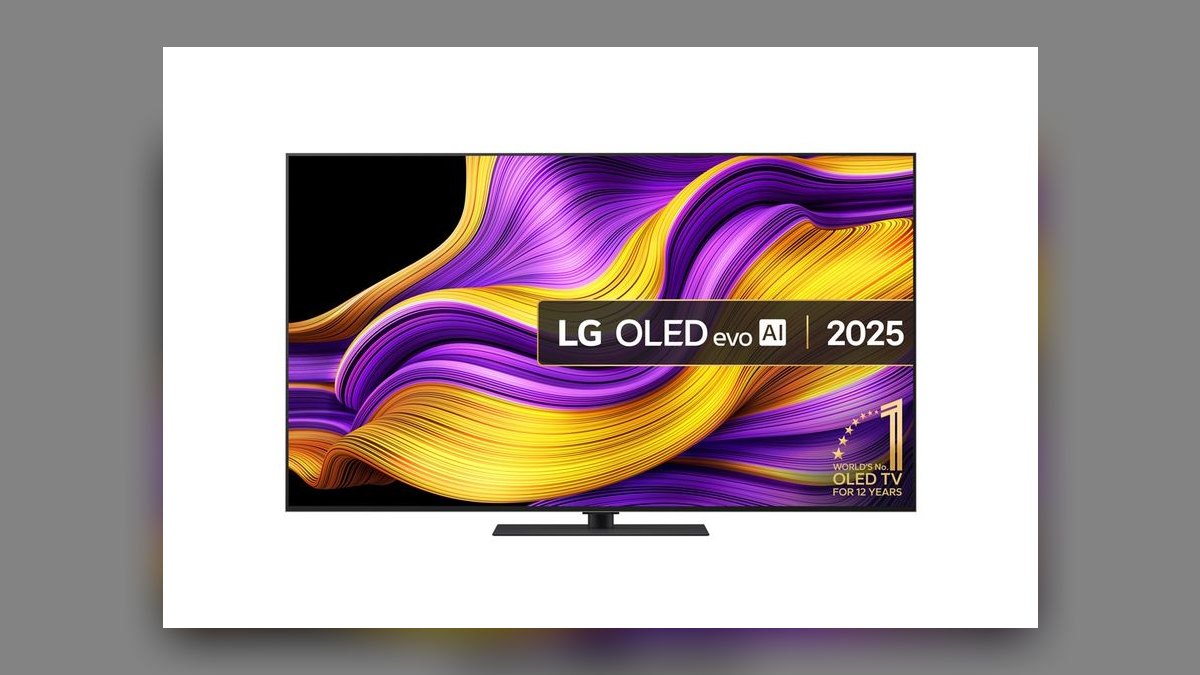
It ranks first because no other 65-inch panel pairs per-pixel black levels with measured peak HDR highlights past 4,000 nits, which HDTVTest recorded on the Primary RGB Tandem four-stack panel. That is roughly triple the original G1 and more than double the C5. DCI-P3 coverage measures 99.5%, and all four HDMI 2.1 ports run 4K at 165Hz. Price is $3,399.
This is for picture-quality purists with $3,000-plus who want one set that works in both a blackout theater and a lit living room. The trade is the gallery design: no tabletop stand ships in the box, so budget for the GP9 stand or a flush wall mount for the 48.5-pound panel. Against the Sony Bravia 9 below it, the G5 gives up Sony's motion processing but wins on black level and port count.
2Sony Bravia 9 Mini-LED 65
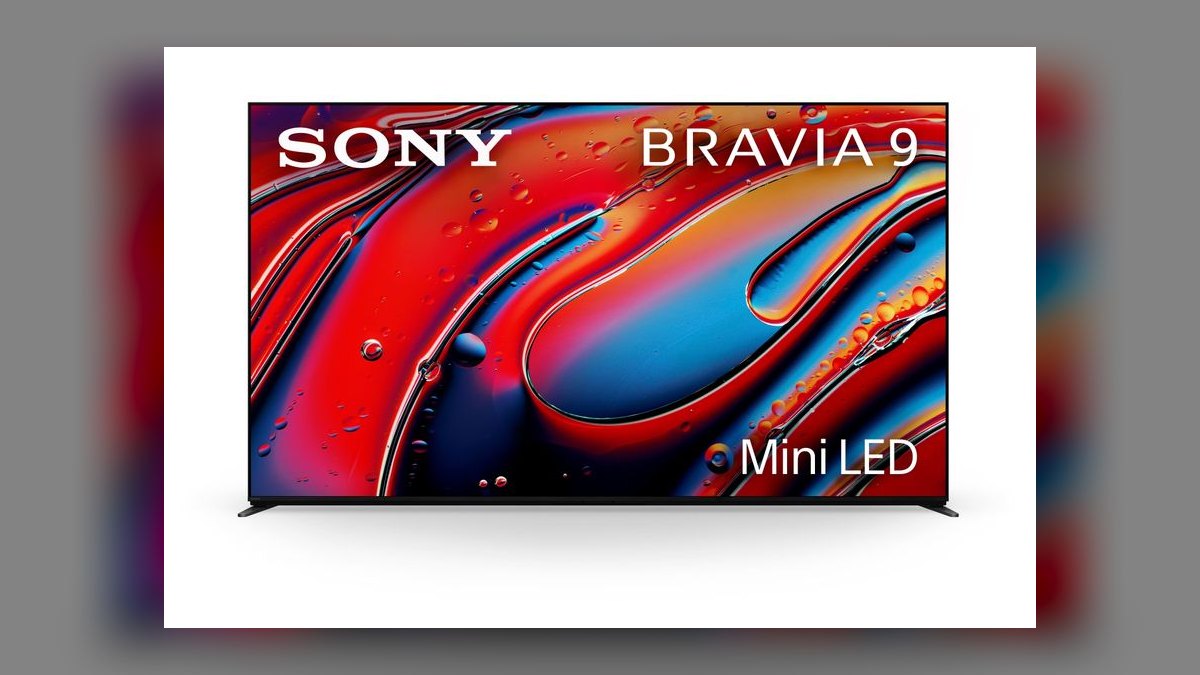
Second place reflects the best-controlled Mini-LED backlight measured to date, with RTINGS counting roughly 2,000 dimming zones and 2,800 nits peak in a 10% window. XR Backlight Master Drive suppresses blooming better than any competing Mini-LED per Wirecutter's 2026 update. The Cognitive Processor XR delivers what reviewers repeatedly call the best motion handling on any LCD. It sells for $3,499.
Buyers with real ambient light who still want videophile processing should look here. Two compromises matter: only two HDMI 2.1 ports versus four on the LG G5 above, and 70.5 pounds of weight that rules out cheap 50-pound mounts. Compared with the G5, blacks are worse in dark scenes but SDR upscaling and Bravia Core streaming are better.
3Samsung S95F QD-OLED 65
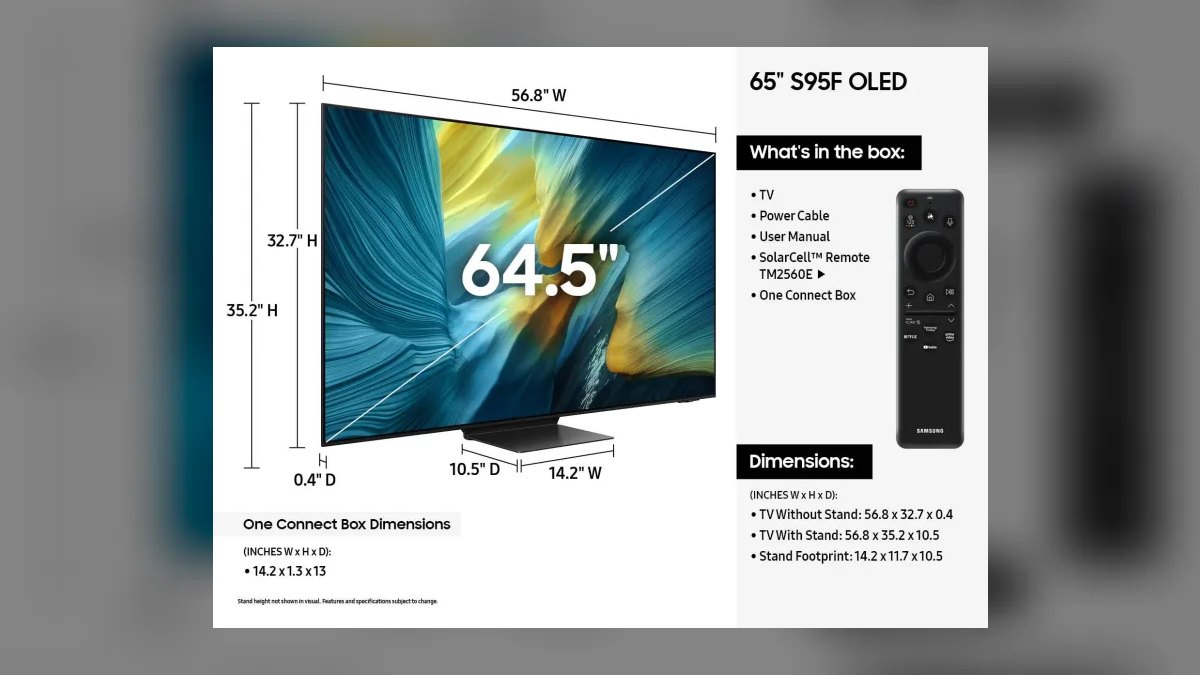
Third because the OLED Glare Free matte coating cuts specular reflections roughly 75% versus glossy OLEDs, a trick nothing else at this tier offers. Peak HDR brightness measures 2,100 nits in a 10% window, about 40% above the S95D. Rec. 2020 coverage reaches 90% and DCI-P3 hits 99.8%, the widest color volume here. Price is $3,299.
Pick this over the LG G5 if windows sit behind your couch, since reflection control beats raw nits in that room. The cost is Dolby Vision: Samsung ships HDR10+ Adaptive only, which hurts on Apple TV+ and Disney+. The One Connect Box routes four HDMI 2.1 ports through one thin cable, simplifying wall-mounting for the 47.4-pound panel, and native refresh runs 165Hz.
4Sony A95L QD-OLED 65
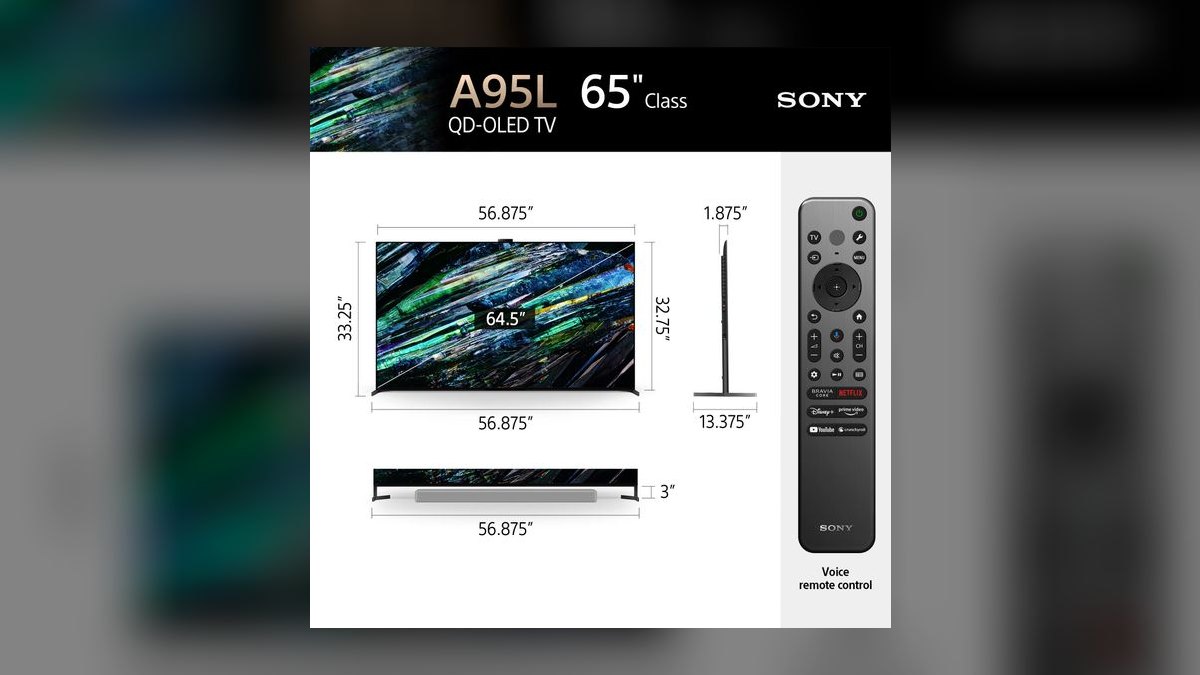
Fourth on brightness alone: peak HDR measures 1,400 nits, below every OLED ranked above it. What holds the position is color, since HDTVTest rates Sony's XR Triluminos Pro as the most natural of any QD-OLED, with 99% DCI-P3 coverage and Calman Ready calibration. Acoustic Surface Audio+ turns the panel into the tweeter. Discounts hold it at $3,499 at Best Buy and Crutchfield.
Movie-first buyers should take this over the Samsung S95F above, trading matte anti-glare and 165Hz for Dolby Vision support and better out-of-box accuracy. Gamers should not: only two HDMI 2.1 ports, capped at 4K/120Hz with no 165Hz mode. It remains on shelves because the A95M refresh is still rolling out unevenly. Weight is 50 pounds without stand.
5LG C5 OLED 65
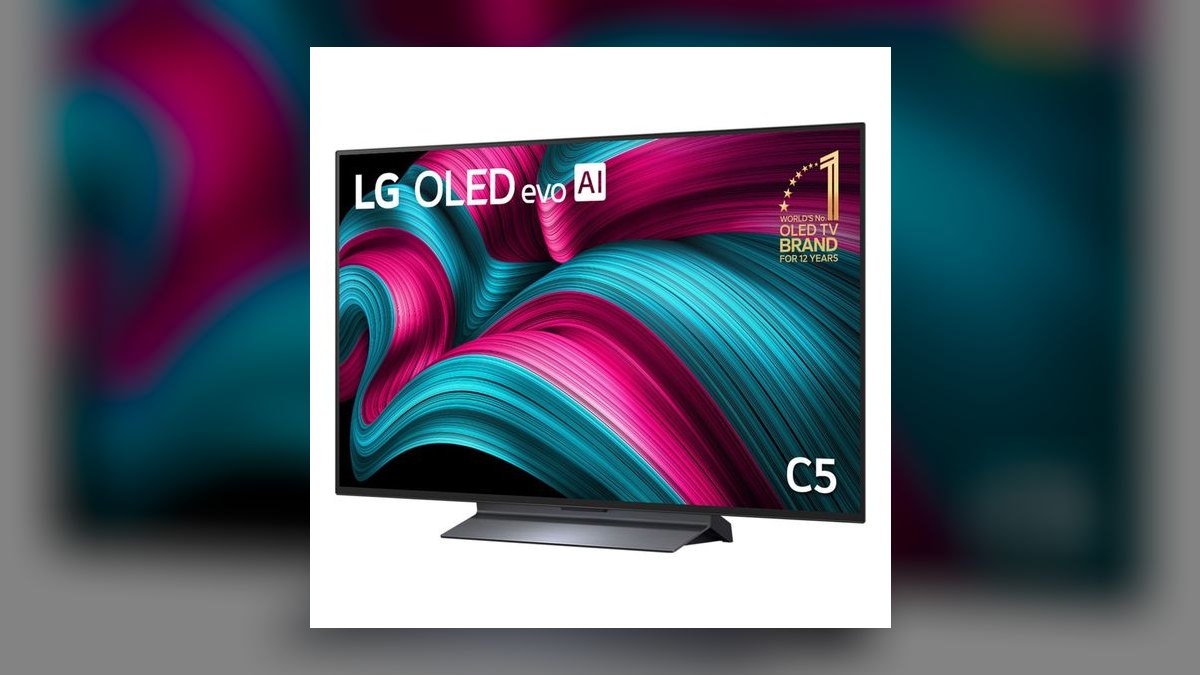
Fifth because it delivers the same α11 AI Processor Gen2, same webOS 25, and the same four HDMI 2.1 ports as the $3,399 G5 for $1,899. Peak HDR brightness measures 1,200 nits rather than 4,000, and refresh is 120Hz native instead of 165Hz. Per-pixel contrast stays infinite, DCI-P3 hits 99%, and Dolby Vision IQ is supported.
This suits mainstream buyers with controlled lighting who will not use the G5's brightness headroom. The trade is bright-room performance: 1,200 nits loses to every Mini-LED here in daylight. Unlike the G5, a tabletop stand is included, and at 36.8 pounds it is the lightest 65-inch OLED on this list. Four HDMI 2.1 ports beat the two on both Sony sets above.
6Hisense U8N Mini-LED 65
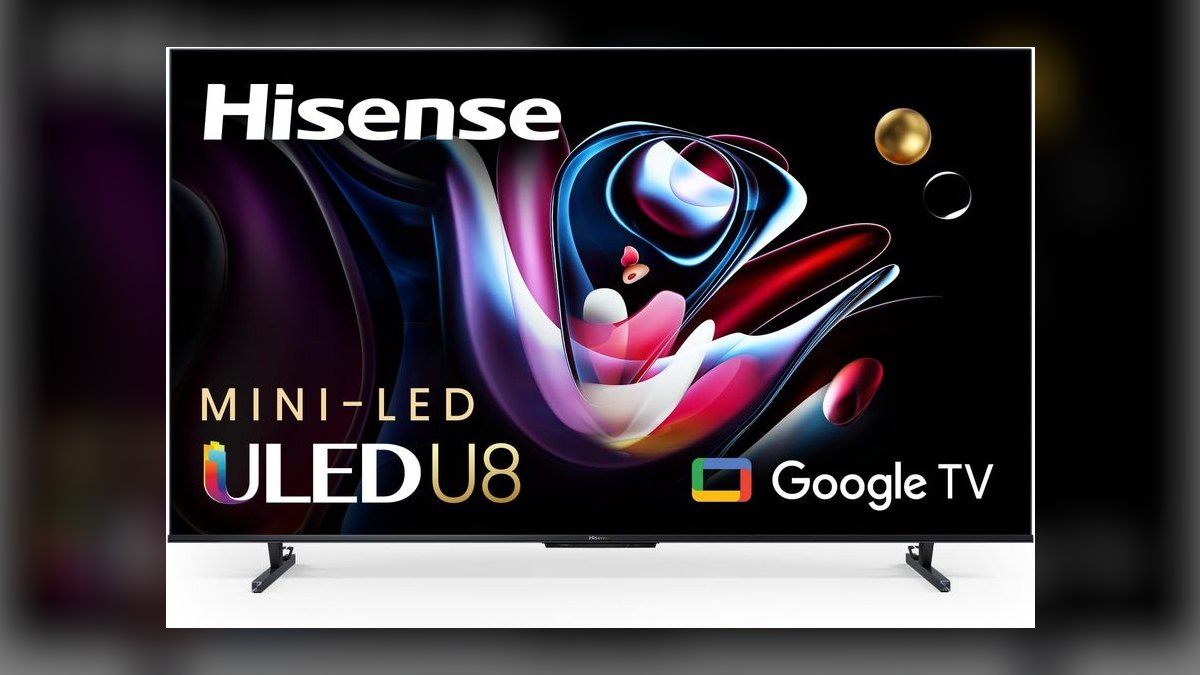
Sixth overall but the value pick, because RTINGS measured 3,200 nits peak in a 10% window at $1,299 — brighter than every OLED here and above the $3,499 Sony Bravia 9. Hisense advertises 2,000-plus dimming zones at 65 inches. Four HDMI 2.1 ports carry full 4K/144Hz, VRR, and ALLM, and both Dolby Vision IQ and HDR10+ are supported.
Bright-room buyers with a $1,500 ceiling get roughly one-third the price of premium sets for most of the performance. Blooming is the giveaway: halos are visible around letterbox bars in dark scenes, which the LG C5 above never shows. The 2.1.2 speaker system handles Dolby Atmos without a soundbar, but 64.6 pounds demands a mount rated well above 50 pounds.
7TCL QM8K Mini-LED 65
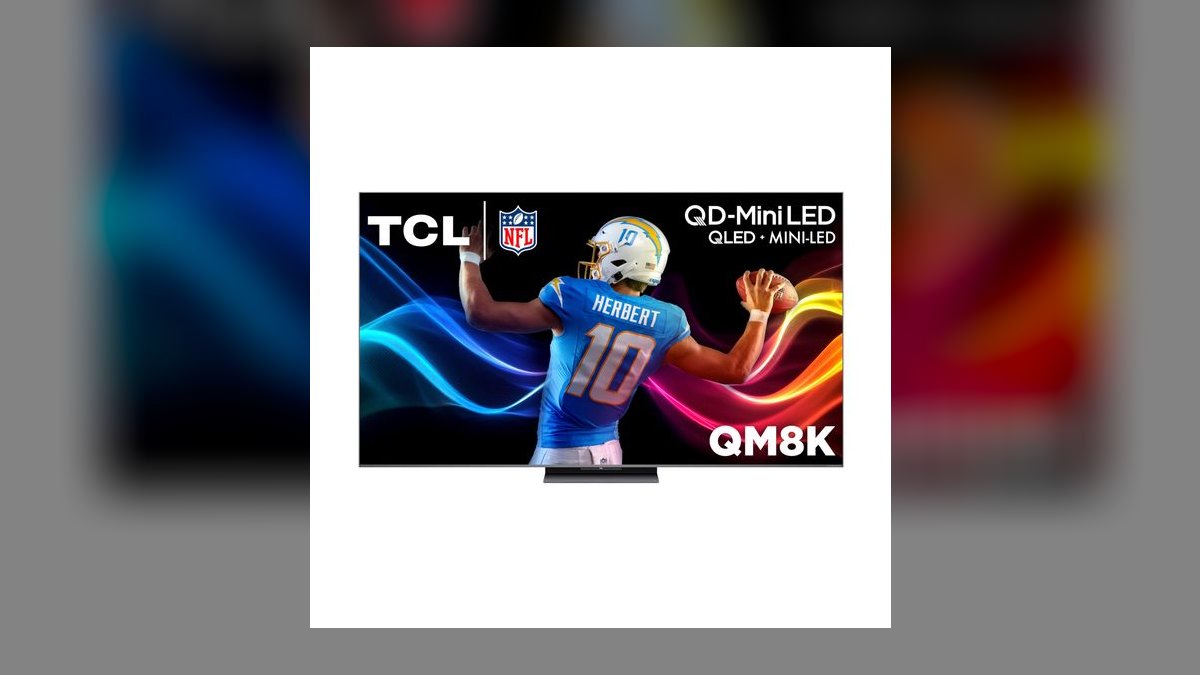
Seventh because zone count is where it beats the cheaper Hisense U8N: TCL advertises 5,000-plus local dimming zones at 65 inches, which shows up as visibly less blooming. Peak HDR brightness measures 3,000 nits and DCI-P3 coverage hits 96%. Dolby Vision IQ, HDR10+, IMAX Enhanced, and Filmmaker Mode are all supported, with 144Hz native refresh across four HDMI 2.1 ports. Price is $1,699.
Buyers under $2,000 who watch letterboxed film and hate halos should pay the $400 premium over the U8N. Two costs: TCL's Google TV build lags Sony and Hisense on app launch speed, and at 71 pounds this is the heaviest set here, so check stud spacing first. Onkyo-tuned 2.1.2 speakers with side-firing tweeters outperform most built-ins.
8Samsung S90F QD-OLED 65
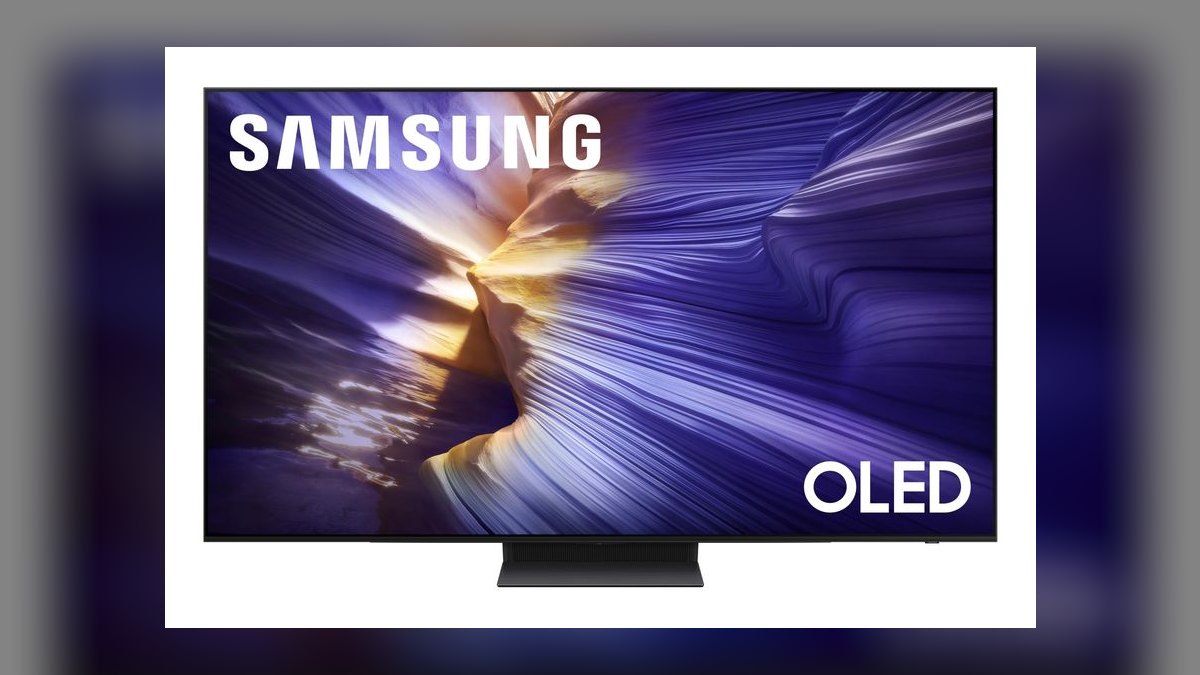
Eighth because it puts the S95F's QD-OLED panel at $2,099, $1,200 less, while giving up brightness: peak HDR measures 1,500 nits against the S95F's 2,100. DCI-P3 coverage reaches 99% and Rec. 2020 lands at 88%. Four HDMI 2.1 ports run 4K/144Hz with VRR and ALLM, matching the flagship. Depth is 1.6 inches for flush mounting.
The catch is the panel lottery: some 65-inch S90F units ship with WOLED instead of QD-OLED depending on regional supply, so read RTINGS' panel guide and confirm before checkout, especially in EU markets. Dolby Vision is absent, as across Samsung's lineup. Versus the LG C5 above at $1,899, you gain quantum-dot color volume and 144Hz but lose Dolby Vision and the 5-year LG panel terms.
9Hisense U6N 65 Mini-LED
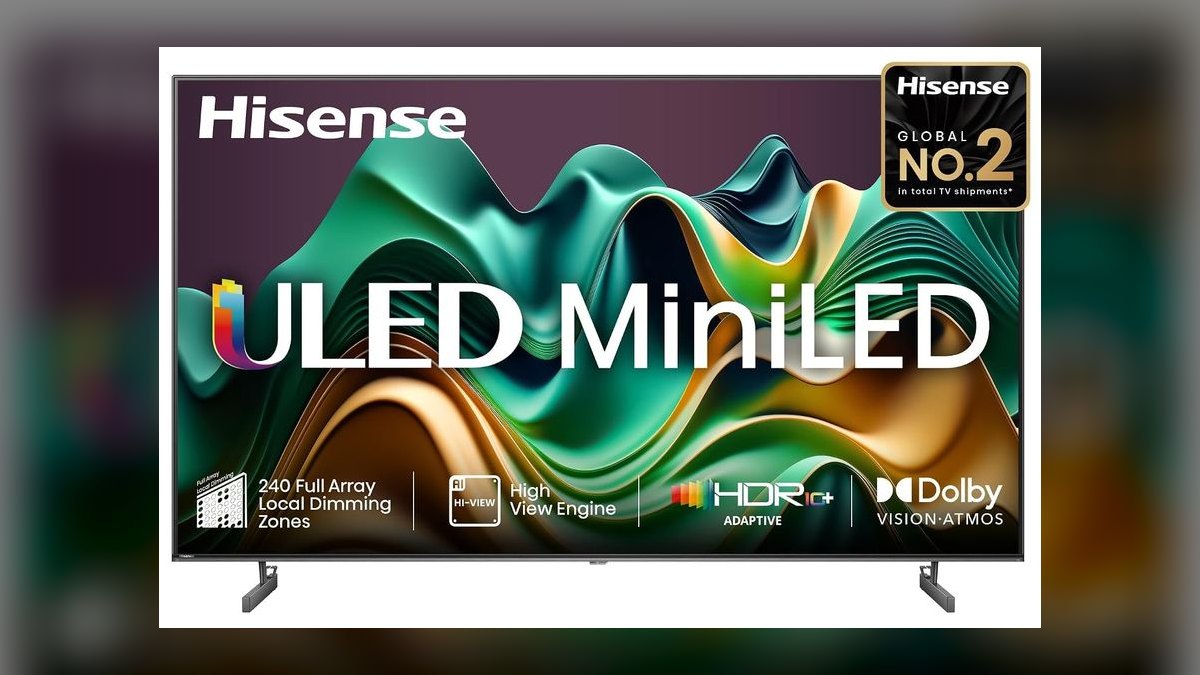
Ninth because it puts Mini-LED backlighting and Dolby Vision at $499, a combination nothing cheaper matches. Peak HDR brightness measures 600 nits and DCI-P3 coverage hits 94%, with Hisense advertising roughly 100 to 200 dimming zones — far below the U8N's 2,000-plus. Google TV with Chromecast is built in, HDR10+ is supported, and the warranty runs two years.
Streaming-first households under $500 are the audience. Gamers are not: refresh is 60Hz native, and two HDMI 2.0 ports plus one eARC mean no 4K/120Hz for a PS5 Pro or Series X. Build is plastic but inoffensive at 49.6 pounds. Against the TCL Q6 at the same price, this wins on backlight and brightness but loses on glare control.
10TCL Q6 65 QLED
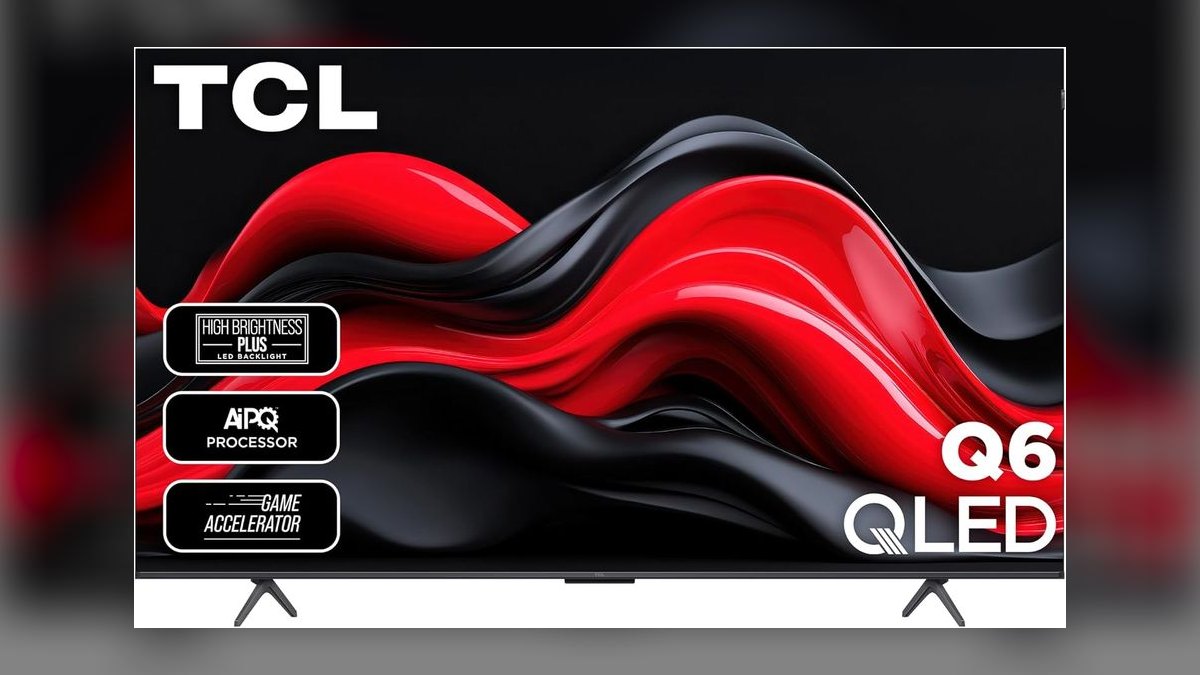
Tenth because it matches the Hisense U6N's $499 price while dropping Mini-LED for direct-lit QLED, and peak HDR brightness measures 450 nits against the U6N's 600. DCI-P3 coverage hits 91%. Google TV runs at 60Hz native, with Dolby Vision, HDR10+, and HLG all supported. Two HDMI 2.0 ports mean no 4K/120Hz. Depth is 3.1 inches at 46.7 pounds.
Where it beats the U6N directly above is the anti-reflection coating, which measurably reduces glare versus Hisense's glossier finish, so a room with a lamp or window opposite the screen favors this one. The slimmer profile also suits tight TV stands. Give up Mini-LED local dimming, 120Hz, and any HDMI 2.1 gaming feature at this tier.
How we ranked these
Picture quality carried 35% of the weight, scored from measured peak nits in a 10% window, black level, and DCI-P3 coverage. Gaming took 20%, price-to-performance 20%, smart platform 15%, and build plus warranty 10%. Every figure traces to RTINGS lab runs, HDTVTest calibration reports, Wirecutter long-term picks, Tom's Guide hands-on time, or CNET shootouts rather than manufacturer spec sheets.
We ignored 8K panels entirely, since no meaningful 8K content exists, and we ignored refresh claims above 144Hz that come from frame interpolation rather than native panel speed. We refused to scale specs from 55-inch or 77-inch siblings, because zone counts, heat headroom, and peak brightness rarely carry across sizes. Manufacturer contrast ratios and dynamic nit figures were discarded outright.
What to look for
Start with room lighting, not the spec sheet. If sunlight hits the screen during your viewing hours, the Hisense U8N or TCL QM8K at 3,000-plus nits will beat any OLED here, because the LG C5's 1,200 nits washes out in daylight. If you watch mostly after dark, per-pixel black on the C5 or G5 matters more than brightness headroom you will never use.
The mistake most buyers make is paying for the flagship when the tier below covers their habits. The LG C5 gives you the same four HDMI 2.1 ports, the same webOS 25, and the same α11 processor as the $3,399 G5 for $1,899. Unless you need 4,000-nit highlights or 165Hz, that $1,500 gap buys nothing you will notice.
Related questions
Is a 65-inch TV too big for a small living room?
Not necessarily. THX seat-distance guidance puts a 65-inch 4K set at roughly eight to ten feet for comfortable viewing, and 4K resolution means you can sit closer than old 1080p rules allowed without seeing pixel structure. If your couch sits under seven feet away, the screen fills more of your vision than most people want for casual TV.
Does OLED burn-in still matter in 2027?
Less than it used to, but it is not zero. Every OLED here ships pixel shifting and logo-luminance detection, and LG covers the G5 panel for five years. The risk lives with static content such as a news ticker, a game HUD, or a broadcast scorebug displayed for hours daily at high brightness. Mixed viewing is effectively safe.
What is the real difference between QD-OLED and WOLED?
QD-OLED replaces WOLED's white subpixel with quantum dots, converting blue light to red and green more efficiently. The result is wider color volume, with the Samsung S95F measuring 99.8% DCI-P3 and 90% Rec. 2020, plus brighter saturated highlights. WOLED counters with better black-level performance in bright rooms, since QD-OLED's glossy layer can raise blacks under lamps.
How many local dimming zones do I actually need?
Zone count matters less than zone control. TCL's QM8K advertises 5,000-plus zones and shows visibly less blooming than the Hisense U8N, but Sony's Bravia 9 does more with roughly 2,000 because its Backlight Master Drive algorithm is better tuned. Below about 200 zones, dimming becomes cosmetic and letterbox bars glow noticeably.
Is Dolby Vision worth choosing a TV over?
It depends on what you stream. Apple TV+ and Disney+ lean heavily on Dolby Vision, and Samsung supports HDR10+ instead across its whole lineup, including the S95F and S90F. Netflix and Max carry both formats, so the gap narrows there. Hisense and TCL are the only brands here shipping Dolby Vision and HDR10+ together.
Do I need HDMI 2.1 if I do not game?
Mostly no. If you only stream, HDMI 2.0 carries 4K/60 with HDR fine, which is why the $499 Hisense U6N and TCL Q6 skip 2.1 without much loss. It matters the moment a PS5 Pro, Xbox Series X, or gaming PC enters the room, since 4K/120Hz and VRR need the bandwidth. Check for full 48Gbps.
Should I wait for next year's models or buy now?
Buy when the previous flagship gets discounted, not at launch. The Sony A95L sits at $3,499 in 2027 only because the A95M refresh is still rolling out, and that discount is the whole reason it ranks here. Panel generations improve brightness year over year, but processing and app support change slowly, so a one-year-old flagship usually beats a new mid-tier set.
What size wall mount do I need for a 65-inch TV?
Weight ranges widely across this list: the LG C5 is 36.8 pounds without stand, while the TCL QM8K hits 71 pounds and the Sony Bravia 9 hits 70.5. A mount rated for 100 pounds handles all ten safely; a cheap 50-pound mount will fail under the heaviest two. Most 65-inch sets use VESA 300 or 400 patterns.
FAQ
What is the best 65-inch TV in 2027?
The LG G5 OLED evo at $3,399. Its Primary RGB Tandem panel and third-generation Brightness Booster Ultimate push measured peak HDR highlights past 4,000 nits, roughly triple the original G1, while keeping per-pixel OLED blacks. DCI-P3 coverage measures 99.5%, four HDMI 2.1 ports run 4K at 165Hz, and webOS 25 covers every app. The catch: no tabletop stand is included.
What is the best value 65-inch TV?
The Hisense U8N at $1,299. It measures 3,200 nits peak in a 10% window, which beats every OLED on this list, and it undercuts the Sony Bravia 9 by roughly two-thirds while landing in similar brightness territory. You get 144Hz, four HDMI 2.1 ports, Google TV, and both Dolby Vision and HDR10+. Blooming on letterbox bars is the tradeoff.
How much should I spend on a 65-inch TV?
Three price bands do real work. Under $600 buys a competent streaming TV such as the Hisense U6N or TCL Q6, both 60Hz. Around $1,300 to $1,900 is the sweet spot: the U8N for bright rooms, the LG C5 for dark ones. Above $3,000 you pay for the last 20% of brightness and processing, which matters mainly in home-theater rooms.
Is Mini-LED better than OLED?
Neither wins outright. Mini-LED delivers far more brightness, 3,000-plus nits on the U8N and QM8K versus 1,200 on the LG C5, so it wins any room with sunlight. OLED delivers per-pixel black with no blooming and 0.1ms response, so it wins dark rooms and fast motion. Pick by lighting conditions, not by which technology sounds newer.
Why does Samsung not support Dolby Vision?
Samsung backs HDR10+, a royalty-free format it co-developed, rather than licensing Dolby Vision. That policy runs across the entire lineup, including the $3,299 S95F flagship. In practice you lose Dolby Vision grading on Apple TV+ and Disney+, where it is common; Netflix and Max ship both formats, so the loss is partial. Sony, LG, Hisense, and TCL all support Dolby Vision.
Is 120Hz necessary on a 65-inch TV?
Only if you game. For streaming and broadcast, 60Hz is sufficient, since nearly all film and TV content is mastered at 24 or 30fps and gets pulled down anyway. For a PS5 Pro or Xbox Series X, 120Hz plus VRR is the reason to skip the $499 tier entirely. The 165Hz modes on the G5 and S95F only benefit PC gamers.
Do I need a soundbar with any of these TVs?
Depends on the set. The TCL QM8K's Onkyo-tuned 2.1.2 system and the Sony A95L's Acoustic Surface Audio+, which vibrates the panel itself as a tweeter, are genuinely good without help. The Hisense U8N's 2.1.2 array handles Dolby Atmos passably. Budget sets at $499 have thin, downward-firing drivers, so add a soundbar there. All ten support eARC passthrough.
What is the panel lottery on the Samsung S90F?
Samsung ships some 65-inch S90F units with a QD-OLED panel and others with a WOLED panel, depending on regional supply. The QD-OLED version delivers the wider color volume the reviews describe; the WOLED version measures differently. RTINGS maintains a panel-lottery guide identifying units by model suffix. Check the code before checkout, especially in EU markets where WOLED units are more common.
Should I buy an extended warranty on a 65-inch TV?
Usually not for OLED, since LG already covers the G5 and C5 panels for five years against burn-in. Mini-LED sets carry standard one- or two-year manufacturer terms, and credit cards often extend that free. Put the money toward a mount rated for 100 pounds instead, because the heaviest sets here, the QM8K and Bravia 9, exceed 70 pounds.
Does a 65-inch TV need a special stand or furniture?
Check depth and weight before trusting existing furniture. The TCL Q6 is 3.1 inches deep and 46.7 pounds, while the Samsung S90F is 1.6 inches deep for flush mounting. The LG G5 ships no stand at all, so budget for the GP9 or a wall mount. Most TV consoles rated for 80 pounds handle every set here.
Sources
- https://www.rtings.com/tv/reviews/best/by-size/65-inch
- https://www.rtings.com/tv/reviews/lg/g5-oled
- https://www.rtings.com/tv/reviews/hisense/u8n
- https://www.nytimes.com/wirecutter/reviews/best-tv/
- https://www.cnet.com/tech/home-entertainment/best-tv/
- https://www.tomsguide.com/best-picks/best-tvs
- https://www.techradar.com/televisions/samsung-s90f-review
- https://www.lg.com/us/tvs
Related on PULSE
This page will be disappearing soon. Save it to your device for $1 — or read it free while it is here.
@Kory-White- · if Venmo asks, the last 4 of my number are 2012
This page is gone.
This one is off the shelf now. $1 keeps it on your phone for good — the whole page, pictures and diagrams included.
 pulse-reviewsTop 10 USB-C Hubs for Sales Travel in 2027
 pulse-reviewsTop 10 Circular Saws — Best Overall + Best Value in 2027
 pulse-reviewsTop 10 Car Backup Cameras — Best Overall + Best Value in 2027
 pulse-reviewsTop 10 Drone Cases — Best Overall + Best Value in 2027
 pulse-reviewsTop 10 YouTube Lighting Kits — Best Overall + Best Value in 2027
 pulse-reviewsTop 10 Boom Pole Kits — Best Overall + Best Value in 2027
 pulse-reviewsTop 10 Noise-Cancelling Headphones — Best Overall + Best Value in 2027
 pulse-reviewsTop 10 Smart Mirrors — Best Overall + Best Value in 2027
 pulse-reviewsTop 10 Document Cameras for Remote Demo Recording in 2027
 pulse-reviewsTop 10 Car Phone Mounts for Field Sales Reps in 2027