


Top 10 Small TVs 32-43 Inch — Best Overall + Best Value in 2027
Quality
Certified
The 10 best small tvs 32-43 inch are ranked below on measured performance, build quality, price, and how each one actually holds up in daily use rather than how it reads on a spec sheet. Each pick lists what it costs, who it suits, and what it gives up against the one above it, so the list can be read straight down without doubling back.
1LG C5 OLED 42-Inch
The LG C5 OLED 42" takes the top spot because it pairs a self-emissive OLED panel with the most complete gaming input set at this size. Contrast is effectively infinite with true black pixels no 43-inch LCD matches, and peak HDR brightness lands near 800 nits. All four HDMI 2.1 ports carry 4K at 120Hz with VRR, ALLM, and G-Sync compatibility, and input lag measures roughly 9 ms at $999.
This is the pick for bedroom viewers at 4 to 6 feet and anyone doubling the panel as a gaming PC monitor. It trades away brightness headroom for sunlit rooms, where the Samsung S90D's roughly 1,000 nits pulls ahead, and static desktop elements require pixel shift and screensaver enabled. It weighs 23 pounds without the stand, mounts on 300x200 VESA, and carries a five-year burn-in panel warranty.
2Samsung S90D QD-OLED 42-Inch
The Samsung S90D 42" ranks second because its QD-OLED panel is the brightest small OLED here, reaching roughly 1,000 nits peak HDR against the LG C5's 800. Quantum dots layered over the OLED stack lift color volume 20 to 30 percent above standard WOLED. The anti-glare coating handles window reflections well, and the panel runs 4K at 144Hz with FreeSync Premium Pro at $999.
Buy this instead of the C5 if your bedroom has daylight glare that washes out a dimmer panel. The tradeoff is port count: only one of the four HDMI inputs is 2.1, so multi-console owners will swap cables where the C5 never asks them to. Tizen OS runs quickly but carries heavier advertising than webOS. It weighs 22 pounds and uses 200x200 VESA spacing.
3Sony A90K OLED 42-Inch
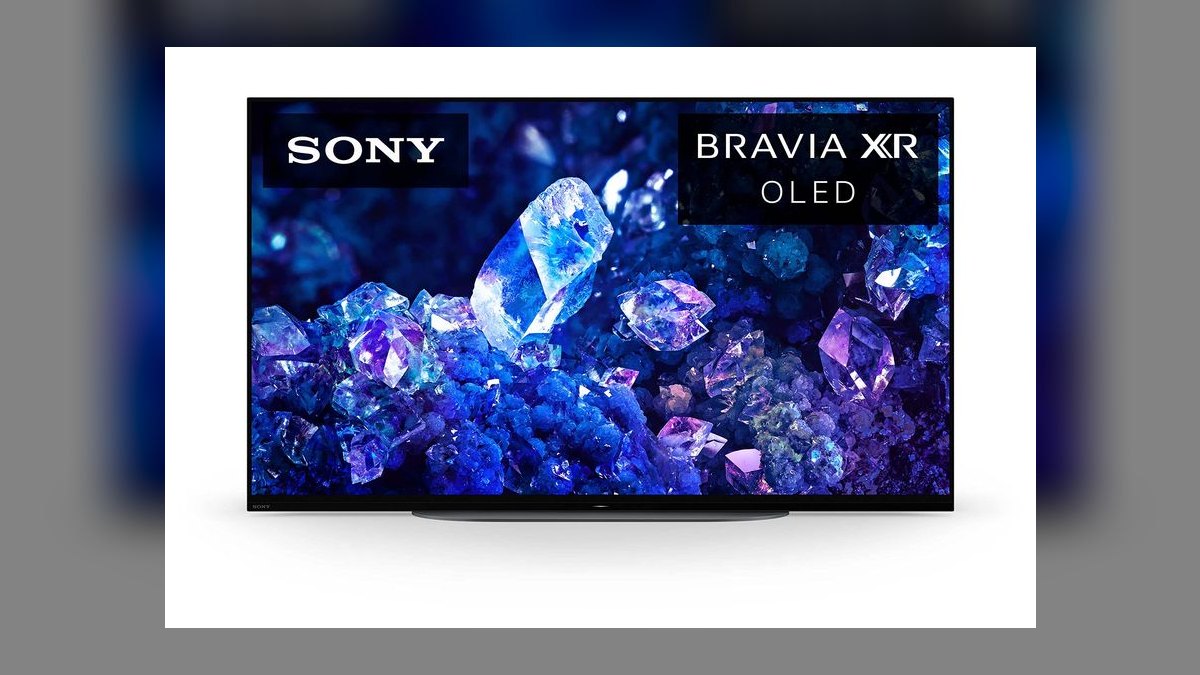
The Sony A90K 42" places third on picture accuracy rather than specs, since its Cognitive Processor XR delivers the most accurate out-of-box image in the small-OLED class per HDTVTest measurements. Motion processing and sub-4K upscaling beat both LG and Samsung here. Acoustic Surface Audio+ vibrates the panel itself, placing dialog at the speaker's on-screen mouth. Google TV carries the widest app catalog of any 2027 platform.
This suits movie purists and PS5 owners, who get Auto HDR Tone Mapping and Auto Genre Picture Mode. It costs about $50 more than the LG C5 while supplying only two HDMI 2.1 ports instead of four, so gamers give up flexibility for processing quality. It weighs 25 pounds, mounts at 300x300 VESA, and includes a four-year burn-in warranty.
4LG B5 OLED 48-Inch

The LG B5 OLED 48" ranks fourth because it is the cheapest OLED available in 2027 at $899, delivering the same perfect blacks as the C5 for $100 less. The panel runs 120Hz with VRR and G-Sync support, so the full gaming feature set survives the price cut. Peak HDR brightness drops to roughly 700 nits and the slower Alpha 8 processor handles upscaling less cleanly than the C5's chip.
This is for budget OLED hunters with at least six feet of viewing distance. Two HDMI 2.1 ports rather than four is the real concession versus the C5, and 48 inches overwhelms tight kitchens, RV walls, and narrow desks where the 42-inch models fit. It weighs 30 pounds, the heaviest set here, and uses 300x300 VESA mounting.
5Hisense U8N 43-Inch Mini-LED

The Hisense U8N 43" leads the non-OLED field because roughly 500 local dimming zones and about 1,500 nits peak HDR make it brighter than every OLED above it. That output holds up in sun-flooded rooms where OLED highlights flatten. Four HDMI inputs include two at 2.1 spec for 4K at 144Hz, and Dolby Vision IQ plus FreeSync Premium Pro round out the feature list at $499.
This is the pick for bright kitchens and offices with uncontrolled daylight, at half the price of the OLEDs above. The tradeoff is blooming: bright objects on dark backgrounds show halos that the self-emissive panels never produce, so dark-room film watching favors the LG B5. It weighs 24 pounds, mounts at 300x300 VESA, and runs Google TV.
6TCL S4 43-Inch 4K Roku
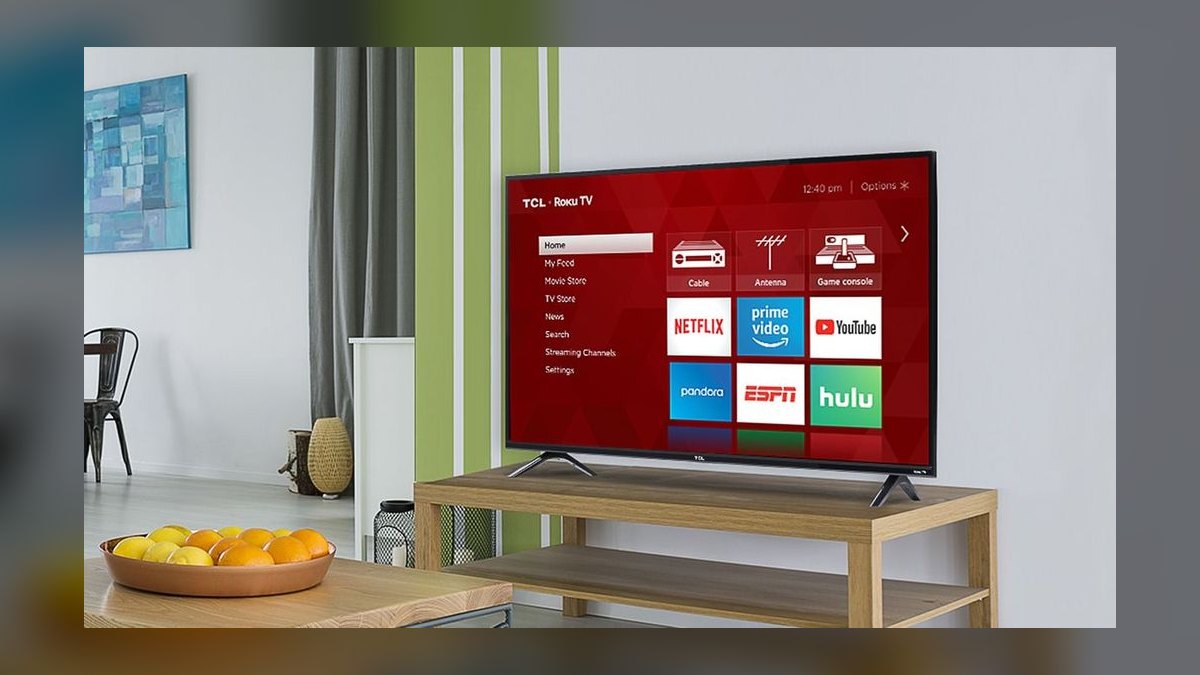
The TCL S4 43" earns the value spot because $249 buys genuine 4K resolution with HDR10 and HDR10+ support, roughly a quarter of what the OLEDs above cost. Roku TV OS is the most responsive and least ad-cluttered budget platform per Wirecutter and CNET testing. Three HDMI inputs cover a console, soundbar, and streaming stick. The direct-lit LED panel runs 60Hz at 16 pounds.
This fits spare bedrooms, dorms, kids' rooms, and any second set where picture quality is secondary to cost. It gives up the Hisense U8N's brightness, local dimming, and HDMI 2.1 entirely, so serious gamers and bright-room viewers should spend the extra $250. HDR is nominal here rather than functional given the panel's limited output. VESA spacing is 200x200.
7Hisense A4K 43-Inch Roku
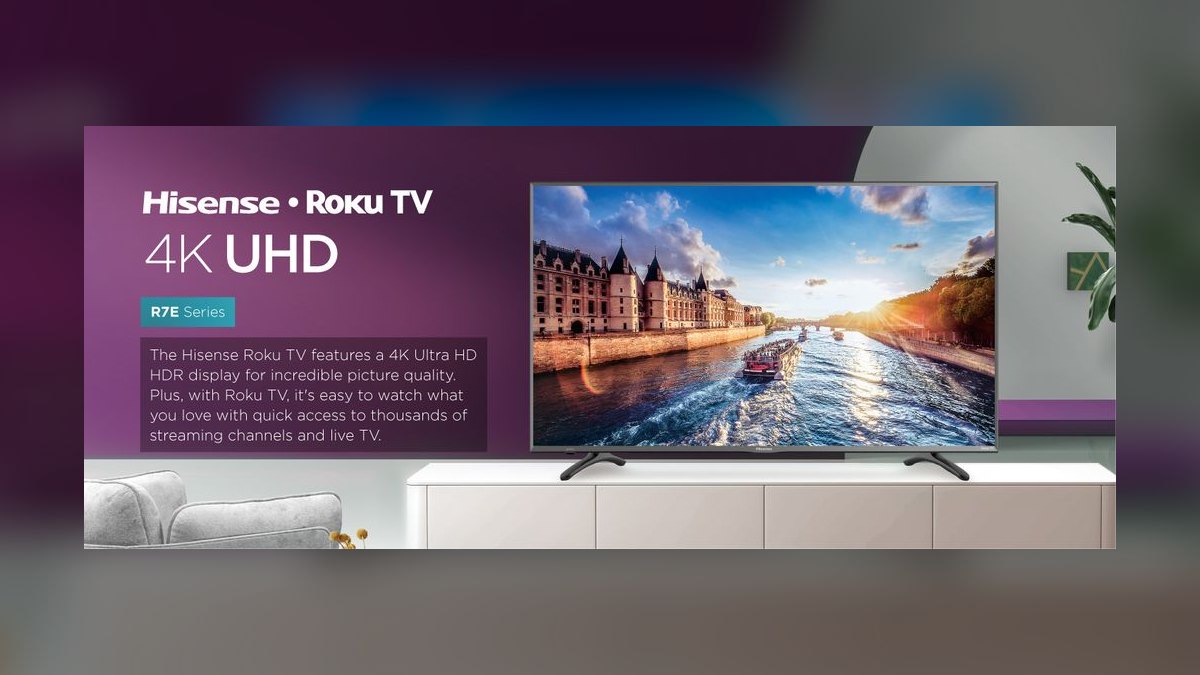
The Hisense A4K 43" sits here as the cheapest 4K Roku TV on the market at $179, undercutting the TCL S4 by $70 while keeping the same platform and three HDMI inputs. HDR10 is supported on a 60Hz direct-lit LED panel. Peak brightness measures around 250 nits, noticeably dimmer than the TCL. At 15 pounds it is the lightest 43-inch set on this list.
This works for sub-$200 buyers filling a kitchen, office, RV bunkhouse, or garage. The 250-nit panel is the concession: it struggles in any room with real daylight, where the TCL S4 stays watchable. Roku TV OS includes AirPlay 2 for iPhone mirroring, and the low weight suits articulating swivel arms and RV walls. VESA is 200x200 with a one-year warranty.
8Insignia F20 Series 32-Inch
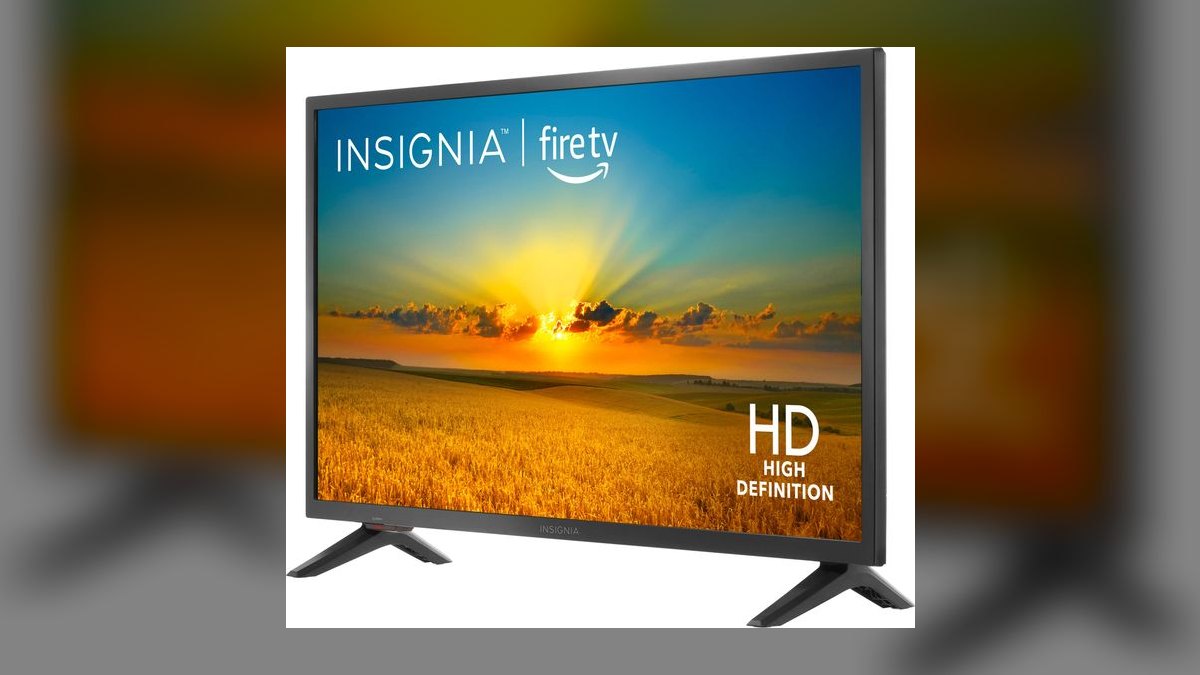
The Insignia F20 32" ranks here on price alone at $139, the cheapest way to get a 32-inch set with Fire TV built in and no streaming stick required. Resolution is 720p rather than 1080p, and three HDMI inputs is generous for the size. The Alexa voice remote ships in the box for hands-free control. At 9.7 pounds it mounts on nearly any cabinet arm.
This belongs on kitchen counters, in garages, workshops, and RV galleys where the screen plays news, cooking shows, and background sports. The 720p panel looks fine from four feet and visibly soft by seven, which is where the Samsung M5's 1080p earns its $40 premium. Fire TV pushes Amazon content harder than Roku does. VESA spacing is 100x100.
9Samsung M5 32-Inch Smart Monitor
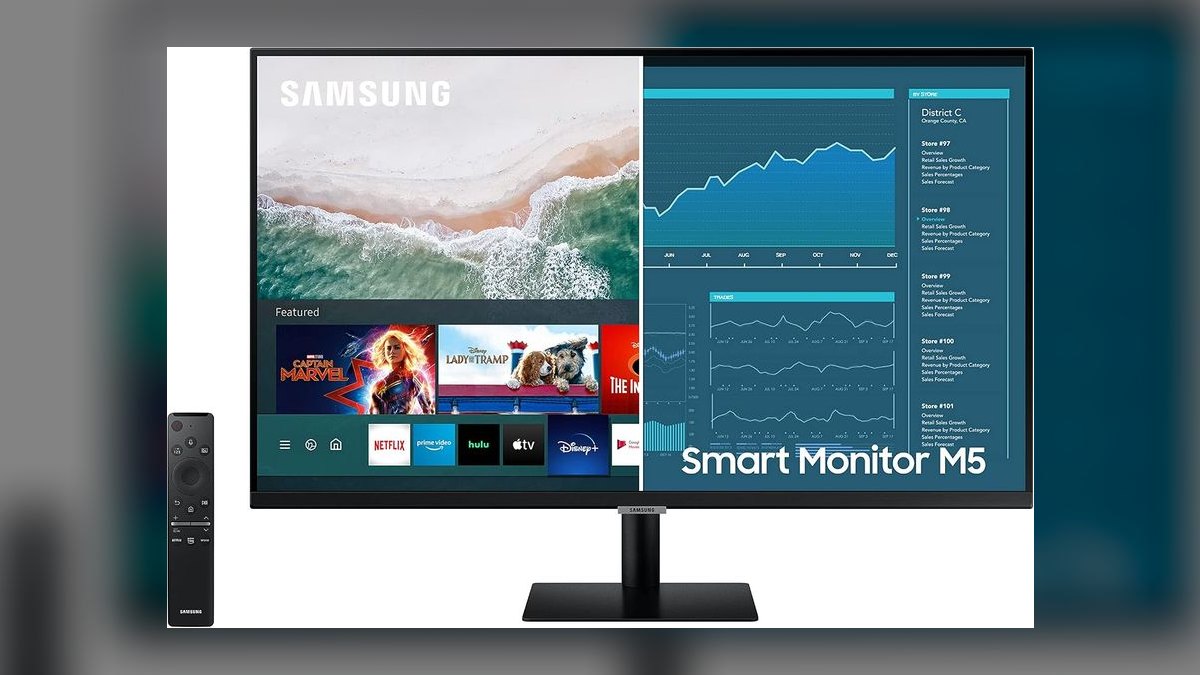
The Samsung M5 32" ranks above the cheapest 720p sets because $179 buys 1080p FHD resolution, which renders text sharply enough for actual office work. Tizen OS is fast and receives long-term firmware support, and PC-on-TV mode connects to a Windows machine without a cable. PurColor processing and HDR10 are included. At 8.6 pounds it is the lightest set on this list.
This suits premium kitchen and home-office buyers who read text on the screen rather than just watch video. Two HDMI ports is the real limit: add a soundbar and a console and you are out of inputs, where the $139 Insignia F20 offers three. AirPlay 2 handles iPhone and iPad mirroring. VESA spacing is 100x100 and the panel runs 60Hz.
10TCL S3 32-Inch Roku
The TCL S3 32" lands last because $129 is the lowest sticker here and the specs match: 720p HD on a 60Hz direct-lit LED panel. What justifies inclusion is Roku OS, which stays ad-lighter than Fire TV, and three HDMI inputs at this price. It runs from a 12V DC adapter with the correct cable, which is why RV and boat builders buy it. Weight is 9 pounds.
This is for RV owners, dorm residents, and secondary kids' rooms where screen size matters more than pixel count. It gives up the Samsung M5's 1080p sharpness and Tizen polish for a $50 saving, so anyone reading text should move up. Against the Insignia F20 at $139, the tradeoff is Roku's cleaner interface versus Alexa voice control. VESA is 100x100 with a one-year warranty.
How we ranked these
Every model was scored on six weighted axes: picture quality at 30% (panel type, measured peak HDR brightness, black level, local dimming zone count), price-to-performance at 20%, smart OS responsiveness at 15%, HDMI count and 2.1 support at 15%, brand firmware track record at 10%, and VESA/weight practicality at 10%. Specs were cross-checked against RTINGS measurements, Wirecutter and CNET reviews, and live B&H and Crutchfield listings.
We deliberately ignored built-in speaker quality, since anyone spending $999 on a 42-inch OLED is adding a soundbar anyway and the Sony's screen-vibration audio is the lone exception worth noting. We also ignored 8K support, ultra-thin bezel design, ambient art modes, and manufacturer contrast ratios, which are unmeasurable marketing numbers. Refresh rates above 144Hz were excluded as irrelevant at these panel sizes.
Related questions
Is a 43-inch TV too big for a bedroom?
Not for most bedrooms. At a typical 6-to-8-foot viewing distance from bed to wall, 43 inches fills roughly a 30-degree field of view, which sits right in the recommended range. It only becomes too large under about 5 feet, where you start scanning your eyes across the panel instead of taking in the whole image at once.
Why do 42-inch OLEDs cost the same as 55-inch models?
OLED production yields scale awkwardly. The 42-inch panels come off the same mother glass as larger sizes but sell in far lower volume, so per-unit fixed costs stay high. Manufacturers also know the 42-inch buyer is often a gaming-monitor shopper willing to pay a premium, so there is no competitive pressure to discount the size.
Does a 32-inch TV need 4K resolution?
No. Human visual acuity at 32 inches and four to six feet cannot resolve the difference between 1080p and 4K. Worse, most 32-inch 4K panels use denser pixel grids that cut brightness and cost more. The Samsung M5 at 1080p is the smarter buy over any 32-inch 4K set at the same price.
Can I mount a small TV on an articulating swivel arm?
Yes, and small TVs are ideal for it. Most articulating arms are rated to 40 pounds. The budget 32-inch sets here weigh 9 to 16 pounds and the 42-inch OLEDs run 22 to 25 pounds, all comfortably under that ceiling. Confirm the VESA pattern first: 100x100 on 32-inch sets, 200x200 or 300x300 above 40 inches.
What refresh rate do I actually need on a small TV?
Sixty hertz is fine for streaming, cable, and casual console play. You need 120Hz or higher only if you own a PS5, Xbox Series X, or a gaming PC and play titles that hit those frame rates. Paying an OLED premium for 120Hz on a kitchen TV that only runs Netflix is money set on fire.
Is Mini-LED better than OLED at 43 inches?
In bright rooms, yes. The Hisense U8N hits roughly 1,500 nits against the LG C5's 800, so it stays watchable in sunlight where OLED washes out. In dim rooms OLED wins decisively on contrast and black level, since Mini-LED still blooms around bright objects on dark backgrounds no matter how many dimming zones it has.
How long do small TVs actually last?
Panel hardware typically runs seven to ten years, but software obsolescence arrives sooner. Samsung, LG, Sony, and TCL push four to five years of firmware and app updates. Off-brand sets often stop within a year, at which point streaming apps break and the TV becomes a dumb display needing an external stick.
Do budget TVs with HDR support actually display HDR?
Barely. HDR10 support is a decoding capability, not a display one. Meaningful HDR needs roughly 400 nits minimum and ideally 600-plus. The Hisense A4K peaks near 250 nits, so its HDR mode mostly just crushes shadows. Treat HDR as a spec that only matters above the $500 tier.
FAQ
What is the best small TV overall in 2027?
The LG C5 OLED 42-inch at $999. Its self-emissive panel produces perfect blacks no LCD can match at this size, and all four HDMI ports are 2.1, supporting 4K at 120Hz with VRR and G-Sync. Input lag measures around 9ms. It is the only small TV that works equally well as a bedroom set and a gaming PC monitor.
What is the best budget small TV?
The TCL S4 43-inch 4K Roku at $249. You get genuine 4K resolution, HDR10 and HDR10+ decoding, three HDMI inputs, and Roku TV OS, which reviewers consistently rank as the least ad-cluttered smart platform. It runs 60Hz with no HDMI 2.1, so serious gamers should look elsewhere, but nothing else near $250 matches the spec sheet.
Which small TV is best for a bright, sunny room?
The Hisense U8N 43-inch Mini-LED at $499. Its roughly 500 local dimming zones drive peak HDR brightness near 1,500 nits, nearly double any OLED on this list. That headroom is what keeps the picture readable against window glare. The tradeoff is visible blooming around bright objects on dark backgrounds, an unavoidable LCD limitation.
How many HDMI ports should a small TV have?
Three minimum. A soundbar, a game console, and a streaming stick consume three inputs immediately, and a two-port TV like the Samsung M5 forces you into an HDMI switch or constant cable swapping. Port count is the spec buyers most often underestimate and the one they regret most six months after purchase.
Is the Samsung S90D worth choosing over the LG C5?
Only if your room has windows. The S90D's QD-OLED panel reaches roughly 1,000 nits against the C5's 800 and delivers 20 to 30 percent more color volume, with a stronger anti-glare coating. But it has just one HDMI 2.1 port versus the C5's four, so anyone connecting multiple current-gen consoles will be juggling cables constantly.
Should I worry about OLED burn-in in 2027?
Not for normal mixed viewing. LG backs the C5 and B5 with a five-year panel warranty specifically covering burn-in, and Sony offers four years on the A90K. Modern pixel-refresh routines and heatsink-backed panels have largely resolved the issue. PC users should still enable pixel shift and avoid parking a static taskbar at max brightness.
Which small TV works best in an RV or boat?
The TCL S3 32-inch Roku at $129. It runs off a 12V DC adapter with the correct cable, which matters when your power system is a battery bank rather than shore power. At 9 pounds with a 100x100 VESA pattern, it mounts on any articulating arm. The Insignia F20 is the Fire TV alternative at 9.7 pounds.
Which smart TV operating system should I choose?
Roku TV wins on responsiveness and the lightest ad load, which is why both budget picks here run it. Google TV has the deepest app catalog but occasionally feels sluggish. LG's webOS and Samsung's Tizen are polished premium platforms with more promotional content. Fire TV makes sense only if you are already invested in Amazon's ecosystem.
Can a 42-inch OLED replace a desktop monitor?
Yes, and the LG C5 is widely used exactly that way. Four HDMI 2.1 ports handle 4K at 120Hz, and OLED response time makes text and scrolling look sharper than any LCD monitor. Sit at least four feet back, enable pixel shift and the screensaver, and keep static desktop elements off maximum brightness during long sessions.
Is the cheapest OLED on this list a good deal?
The LG B5 at $899 is the least expensive OLED available, but it is 48 inches, not 42. You get identical perfect blacks and the full gaming feature set, though the slower α8 processor, two HDMI 2.1 ports instead of four, and roughly 700-nit peak brightness are real cuts. Buy it only if 48 inches physically fits.
Sources
- https://www.rtings.com/tv/reviews/best/small
- https://www.nytimes.com/wirecutter/reviews/best-small-tv/
- https://www.cnet.com/tech/home-entertainment/best-tv/
- https://www.tomsguide.com/best-picks/best-tvs
- https://www.consumerreports.org/electronics/tvs/
- https://www.lg.com/us/tvs
- https://www.crutchfield.com/g_31103/TVs.html
- https://www.bhphotovideo.com/c/buy/Televisions/ci/1108
Related on PULSE
This page will be disappearing soon. Save it to your device for $1 — or read it free while it is here.
@Kory-White- · if Venmo asks, the last 4 of my number are 2012
This page is gone.
This one is off the shelf now. $1 keeps it on your phone for good — the whole page, pictures and diagrams included.
 pulse-reviewsTop 10 Label Makers — Best Overall + Best Value in 2027
 pulse-reviewsTop 10 Ethernet Adapters for MacBook — Best Overall + Best Value in 2027
 pulse-reviewsTop 10 Rugged Phones — Best Overall + Best Value in 2027
 pulse-reviewsTop 10 Posture Correctors — Best Overall + Best Value in 2027
 pulse-reviewsTop 10 Red Light Therapy Devices — Best Overall + Best Value in 2027
 pulse-reviewsTop 10 Document Cameras for Remote Demo Recording in 2027
 pulse-reviewsTop 10 VR Headsets — Best Overall + Best Value in 2027
 pulse-reviewsTop 10 Circular Saws — Best Overall + Best Value in 2027
 pulse-reviewsTop 10 Spot Welders — Best Overall + Best Value in 2027
 pulse-reviewsTop 10 Smart Microwaves — Best Overall + Best Value in 2027