


Top 10 4K TVs — Best Overall + Best Value in 2027
Quality
Certified
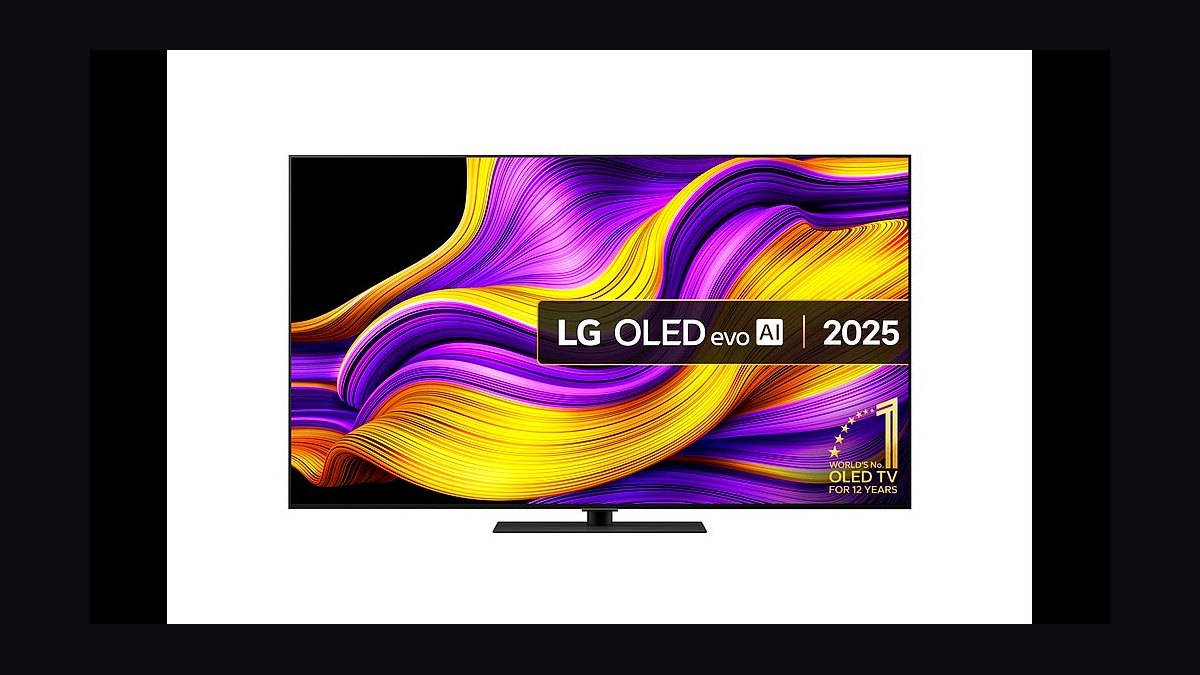
The 10 best 4k tvs are ranked below on measured performance, build quality, price, and how each one actually holds up in daily use rather than how it reads on a spec sheet. Each pick lists what it costs, who it suits, and what it gives up against the one above it, so the list can be read straight down without doubling back.
1LG G5 OLED evo 65"
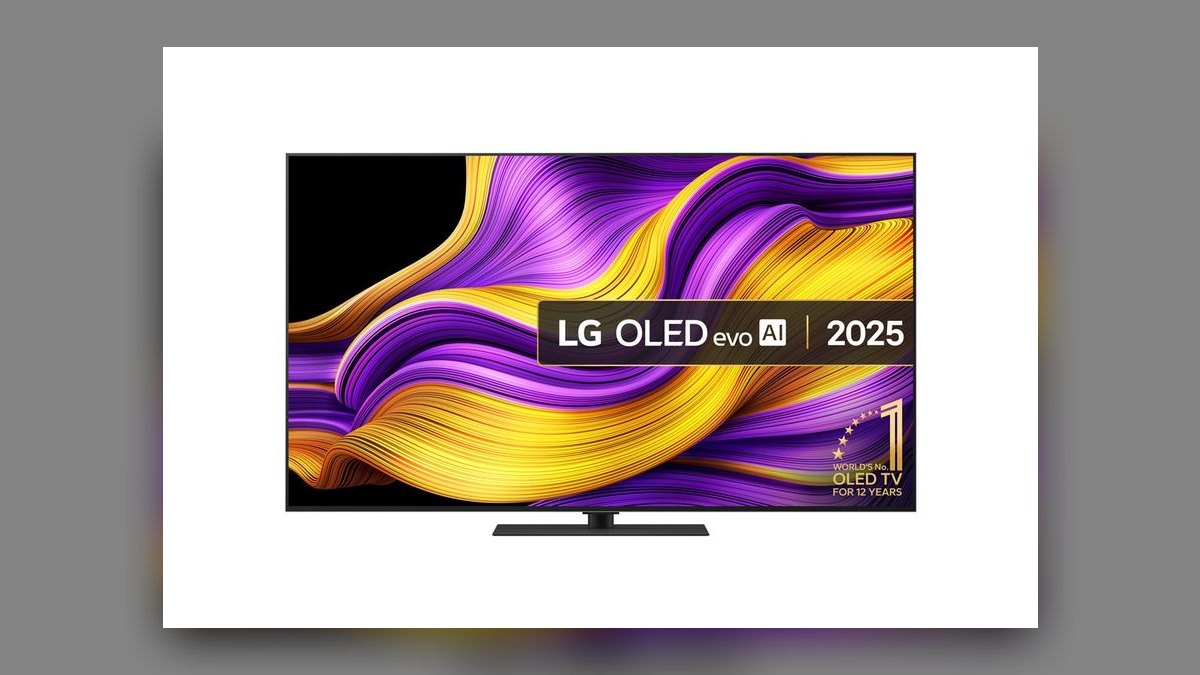
It ranks first because no other panel pairs perfect blacks with this much brightness. The fourth-generation Primary RGB Tandem four-stack WOLED measured 2,393 nits on a 10% window and roughly 470 nits full-screen white, the brightest WOLED shipped. Native 120Hz scales to 4K at 165Hz over HDMI 2.1, with 9.2 ms input lag at 4K/120. Four HDMI 2.1 ports, G-Sync and FreeSync Premium, $3,399.
This is for mixed-use buyers with one room that is sometimes dark and sometimes sunlit, who refuse to pick a side. You trade away $1,500 versus the LG C5, which uses the same α11 Gen2 processor and webOS 24 but peaks near 1,200 nits. In a light-controlled theater the C5 looks nearly identical, so the G5 premium only pays off in daylight. Static UI burn-in risk persists over thousands of hours.
2Sony Bravia 9 Mini-LED 65"
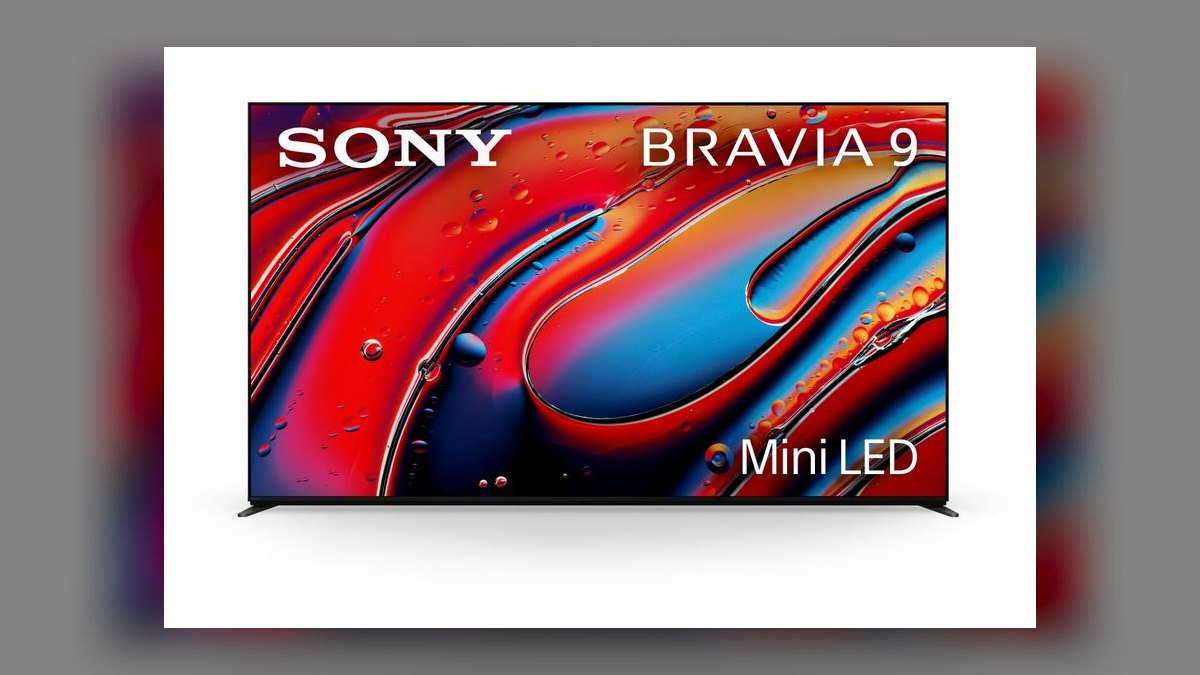
It ranks second because it is the brightest sustained picture here, but on an LCD rather than an OLED. RTINGS measured 2,789 nits on a 10% window from a backlight master drive with roughly 2,000 local dimming zones. The XR Processor remains the best upscaler for 1080p sources, and Acoustic Multi-Audio+ frame tweeters place dialog at the screen. Native 120Hz with VRR and ALLM. Price is $3,499, weight 70.5 lbs.
Buy this for a bright living room where sunlight competes with the screen and a soundbar is not in the budget. You give up perfect blacks, accept blooming around bright objects on dark fields, and get only two HDMI 2.1 ports versus four on the LG G5. It also costs $100 more than the G5 while losing the OLED contrast advantage in any dim viewing session.
3Samsung S95F QD-OLED 65"
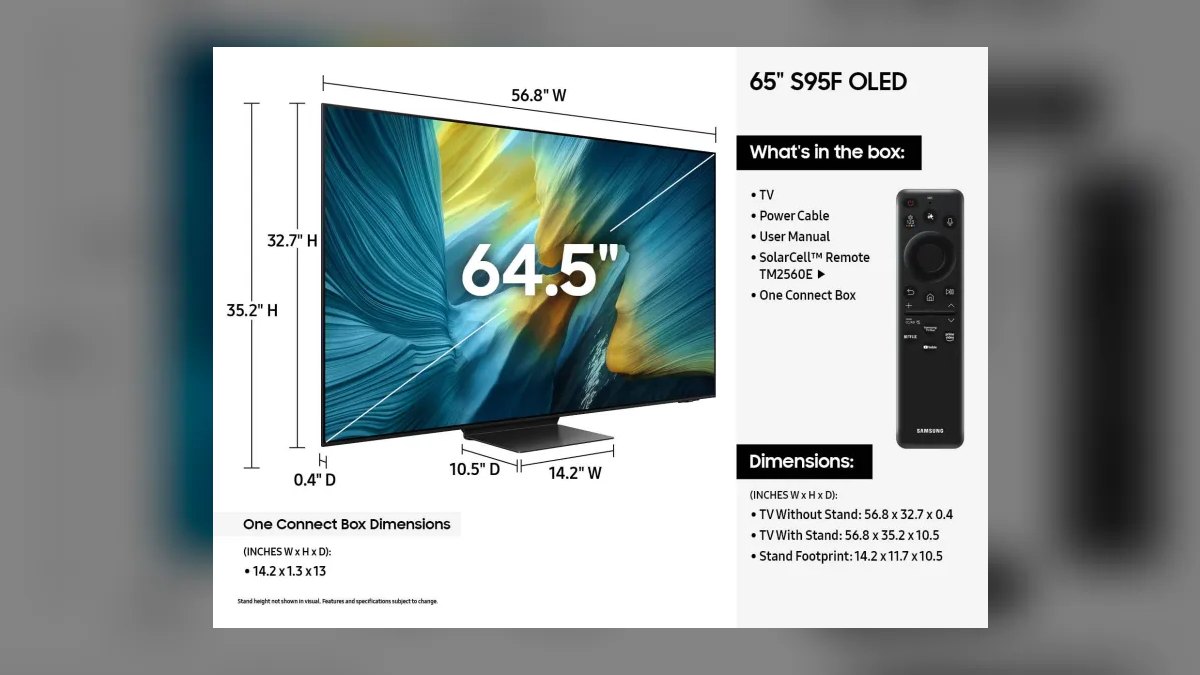
It ranks third on color volume, the widest measured on any consumer panel at roughly 100% DCI-P3. HDTVTest measured 2,138 nits peak on a 10% window, and the glare-free matte coating rejects ambient light better than any glossy OLED here. Native 165Hz refresh, four HDMI 2.1 ports, Tizen 2027 on the NQ4 AI Gen3 processor, and 4.2.2-channel OTS+ audio. Price is $3,299, weight 51.4 lbs.
This suits buyers in a partly lit room who want OLED contrast without a mirror finish. The disqualifying trade is HDR format: Samsung ships HDR10+ only, so Dolby Vision masters on Netflix, Disney+, and Apple TV+ fall back to HDR10. The LG G5 above costs $100 more, hits 2,400 nits, and decodes Dolby Vision, which is why it takes the top slot.
4Sony A95L QD-OLED 65"
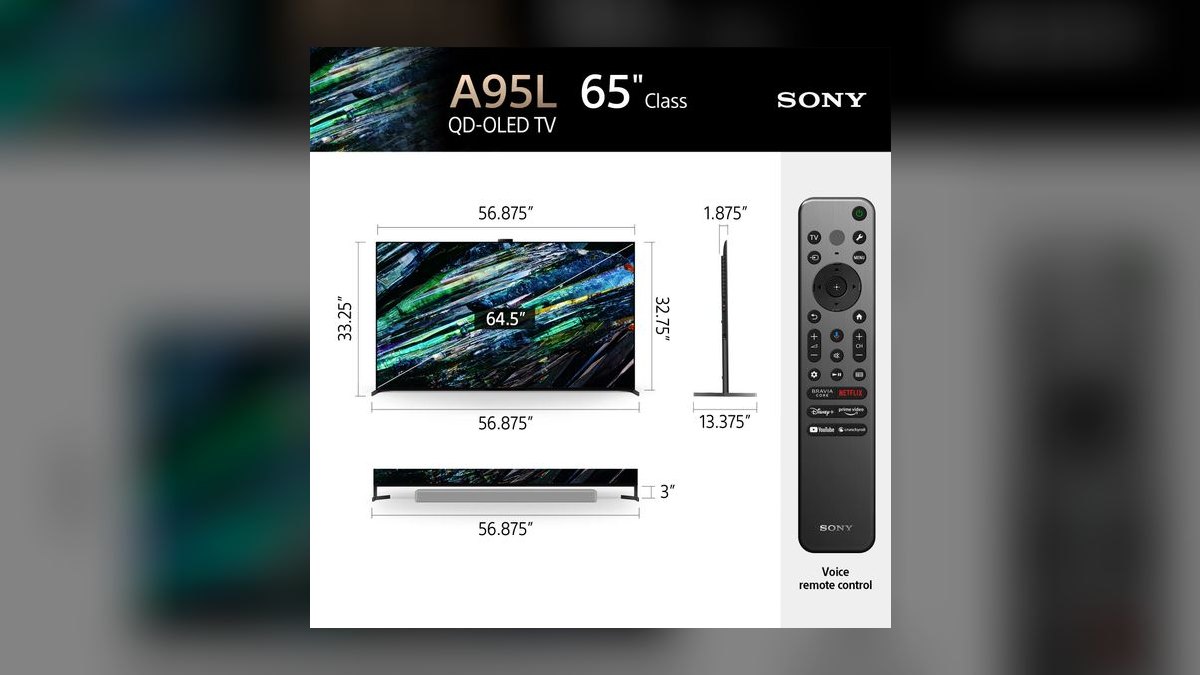
It ranks fourth for accuracy rather than raw output, peaking near 1,300 nits against the S95F's 2,138. XR Triluminos Max processing makes perceived brightness higher than that number suggests, and post-production houses use it as a reference monitor. Acoustic Surface Audio+ vibrates the panel itself as the tweeter. Google TV, Bravia Core with ten IMAX Enhanced credits, $3,499, 57.3 lbs, warranty extendable to five years.
This is the cinephile pick, built for 4K Blu-ray and dark-room viewing where directorial intent matters more than headroom. You sacrifice peak brightness and two HDMI 2.1 ports, leaving only two for a console and soundbar. Against the Samsung S95F directly above, you pay $200 more and lose 800 nits, buying back Dolby Vision support and the best built-in speakers on this list.
5LG C5 OLED 65"
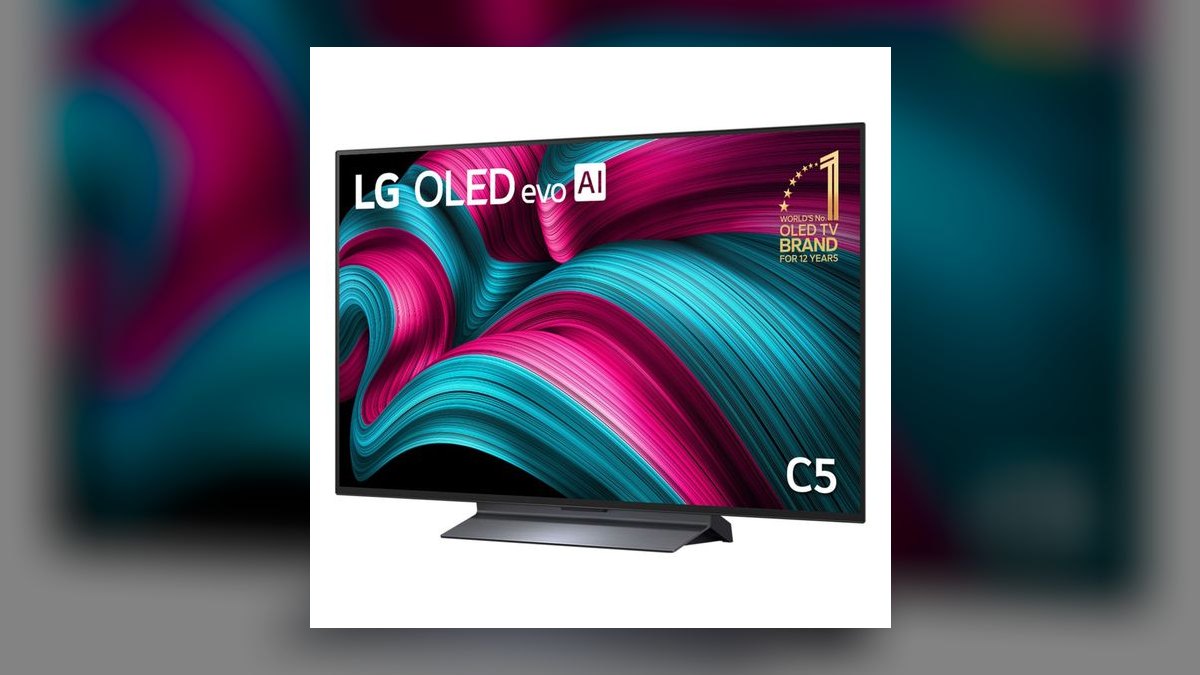
It ranks fifth as the price-performance inflection point of the OLED tier at $1,899. The standard W-OLED panel peaks near 1,200 nits, about half the G5, but carries the identical α11 AI Processor Gen2 and webOS 24. Four HDMI 2.1 ports, native 120Hz, 9.1 ms input lag at 4K/120, plus G-Sync, FreeSync, and VRR. Weight without stand is 48.5 lbs, warranty one year.
Buy this if your room is not brightly lit and console gaming matters, since no TV in this price tier offers four full HDMI 2.1 ports. What you lose against the G5 above is daylight headroom and the 0.96-inch Gallery wall mount, for $1,500 less. Against the Hisense U8N below, you gain perfect blacks and lose 1,800 nits of peak brightness.
6Hisense U8N Mini-LED 65"
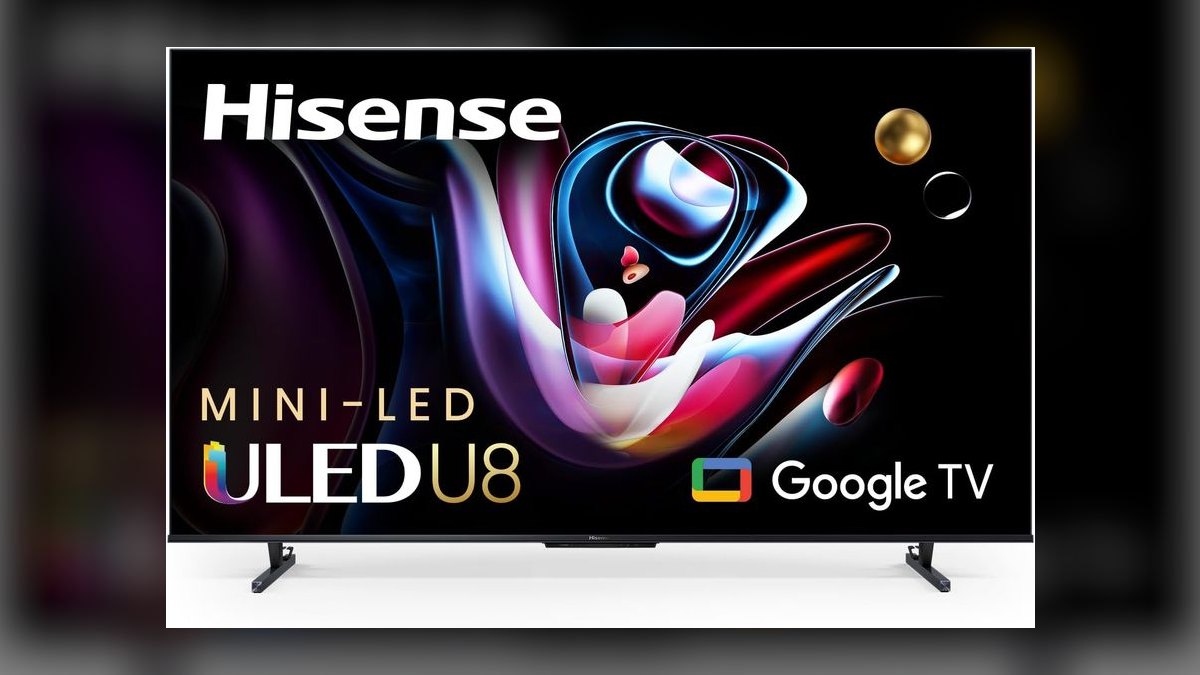
It ranks sixth on price-to-performance, the most-recommended set under $1,500 across RTINGS, Wirecutter, and CNET. RTINGS measured 3,029 nits on a 10% window, beating the $3,499 Sony Bravia 9, from a Mini-LED backlight with over 1,500 dimming zones. Native 144Hz, four HDMI 2.1 ports, Dolby Vision IQ, HDR10+, Google TV, and 2.1.2-channel Atmos audio. Price is $1,299 with a two-year warranty.
This is for buyers who want flagship room-filling brightness and refuse to spend OLED money. Off-axis viewing narrows noticeably past 30 degrees, so a wide couch loses contrast at the ends, and black-level uniformity trails OLED. Against the LG C5 above, you save $600 and gain 1,800 nits, but surrender perfect blacks and the wide seating angle a living room often needs.
7TCL QM8K Mini-LED 65"
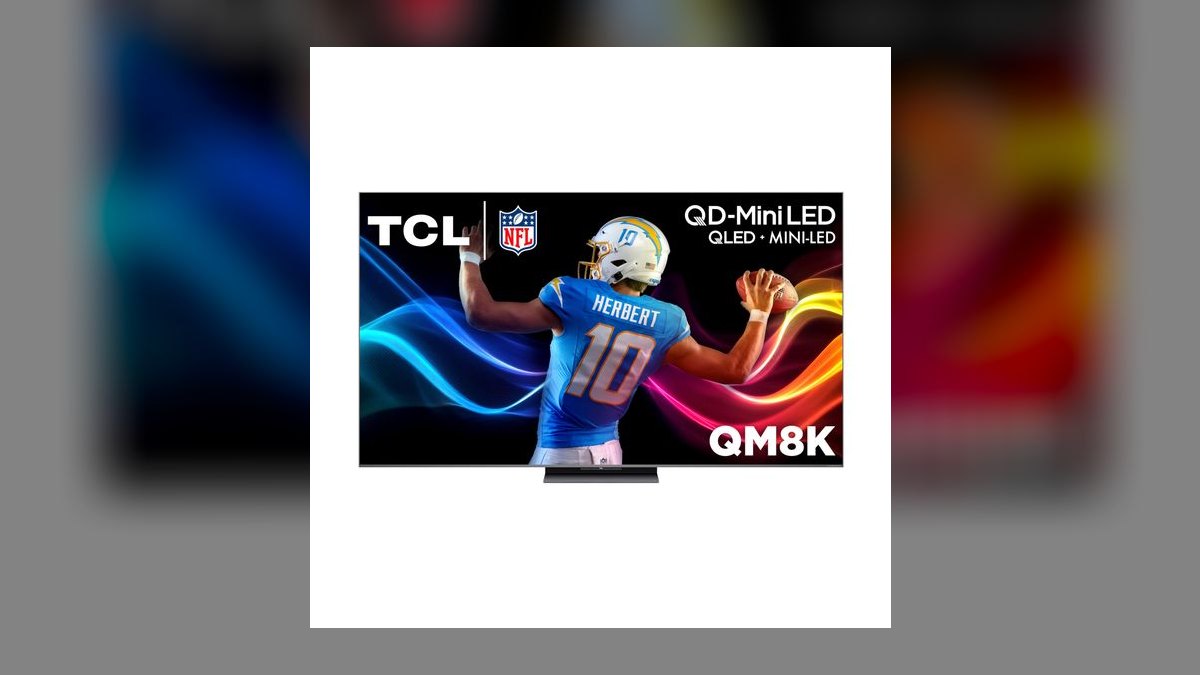
It ranks seventh on dollar-per-square-inch, not on 65-inch merit. Over 5,000 local dimming zones is the highest count on this list, and peak HDR reaches roughly 3,500 nits. Native 144Hz, four HDMI 2.1 ports, the AiPQ Pro processor, Google TV, and full Dolby Vision plus HDR10+. An Onkyo 2.1.2 system handles sound. The 65-inch is $1,699 at 62 lbs; the 85-inch is $2,999.
Buy this only if you want 75 or 85 inches, where it undercuts comparable OLEDs by more than $3,000. At 65 inches it costs $400 more than the Hisense U8N above while trailing it on independent review consensus. The upscaler is measurably weaker than Sony or Samsung on sub-4K sources, which matters if you watch cable or 1080p sports regularly.
8Samsung QN90F Neo QLED 65"
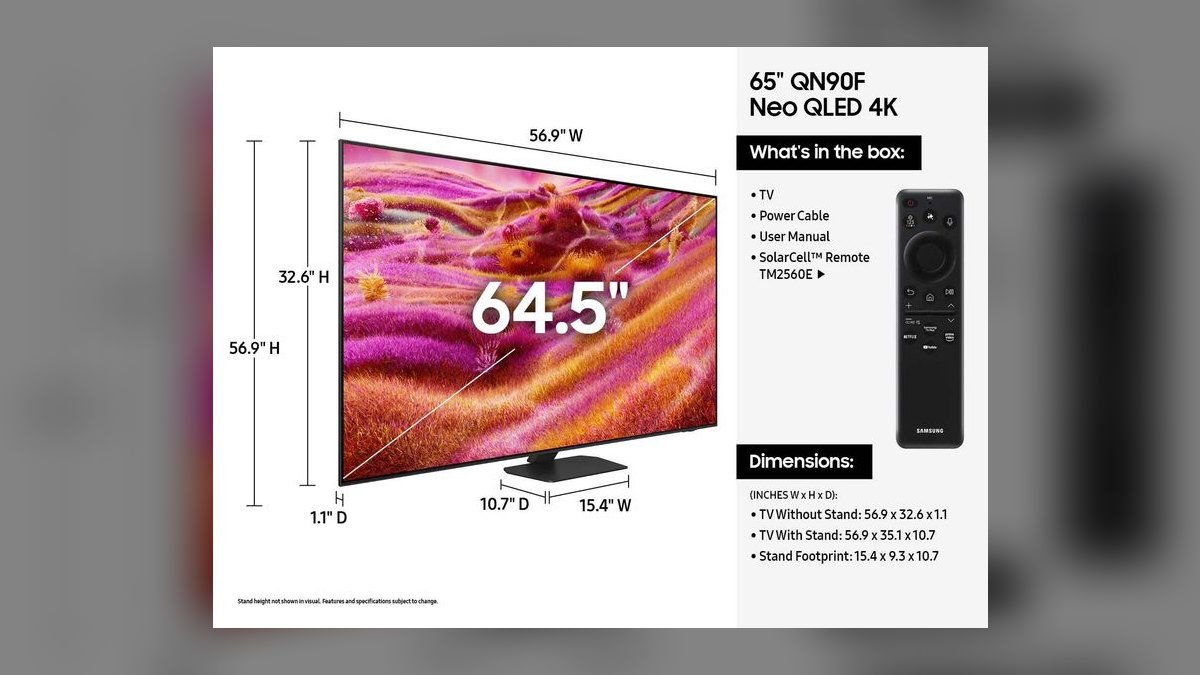
It ranks eighth because $2,799 buys roughly 2,000 nits, less than sets costing half as much. The Mini-LED backlight pairs with the same anti-glare matte coating used on the S95F, the best on any non-OLED here. Native 144Hz, four HDMI 2.1 ports, NQ4 AI Gen3 processor, Tizen 2027 booting in under six seconds, a built-in SmartThings hub, and 4.2.2-channel Object Tracking Sound+.
This makes sense for households already running SmartThings, since the hub controls Matter and Thread devices natively without a separate bridge. The cost is Dolby Vision: HDR10+ only, a real loss on Disney+, Apple TV+, and Netflix. Against the Hisense U8N above, you pay $1,500 more for 1,000 fewer nits, buying glare control, faster software, and home-automation integration.
9Hisense U6N 65"
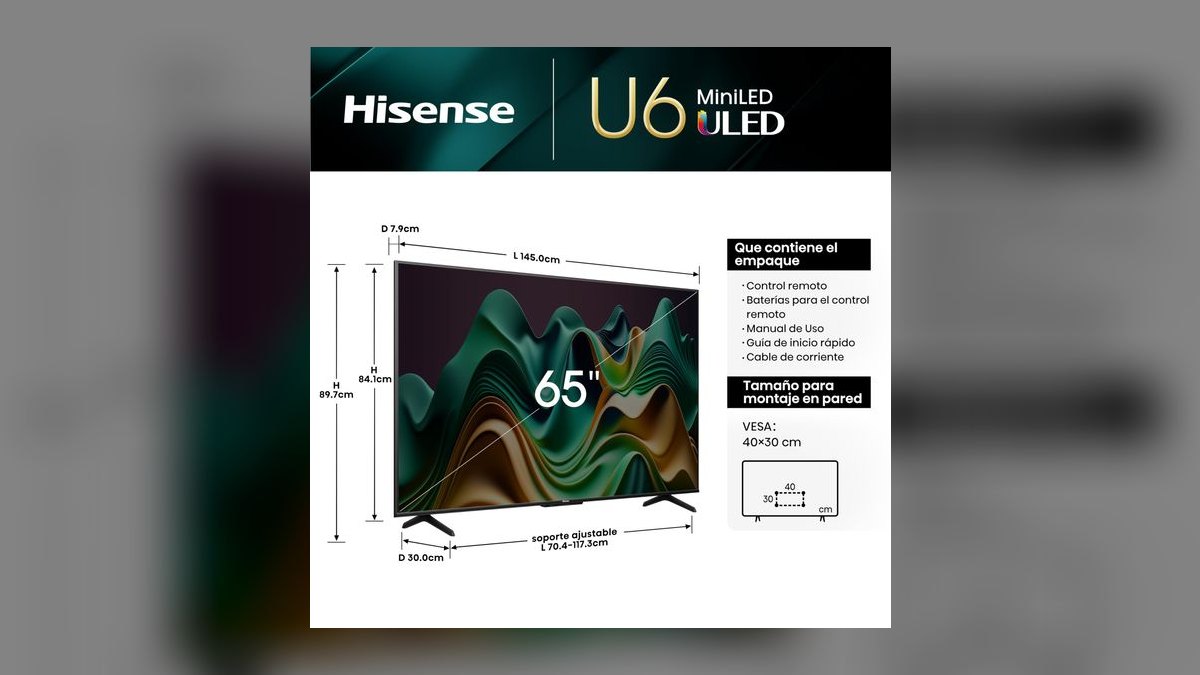
It ranks ninth because $499 for a 65-inch Mini-LED with Dolby Vision has no equivalent. Roughly 250 local dimming zones is five times what any QLED at this price offers, and peak HDR lands near 600 nits. Google TV, the same OS as the U8N and Sony A95L, plus HDR10+ and two HDMI 2.1 ports with ALLM. Weight is 43.4 lbs, and the warranty runs two years.
Buy this for a bedroom, a guest room, or a first apartment where the budget genuinely stops under $600. The panel is 60Hz, the only sub-120Hz set here, and there is no VRR, so console gamers should step up to the U8N for 144Hz. Against that U8N, you give up 2,400 nits and 1,250 dimming zones to save $800.
10LG C5 OLED 42" PC Monitor
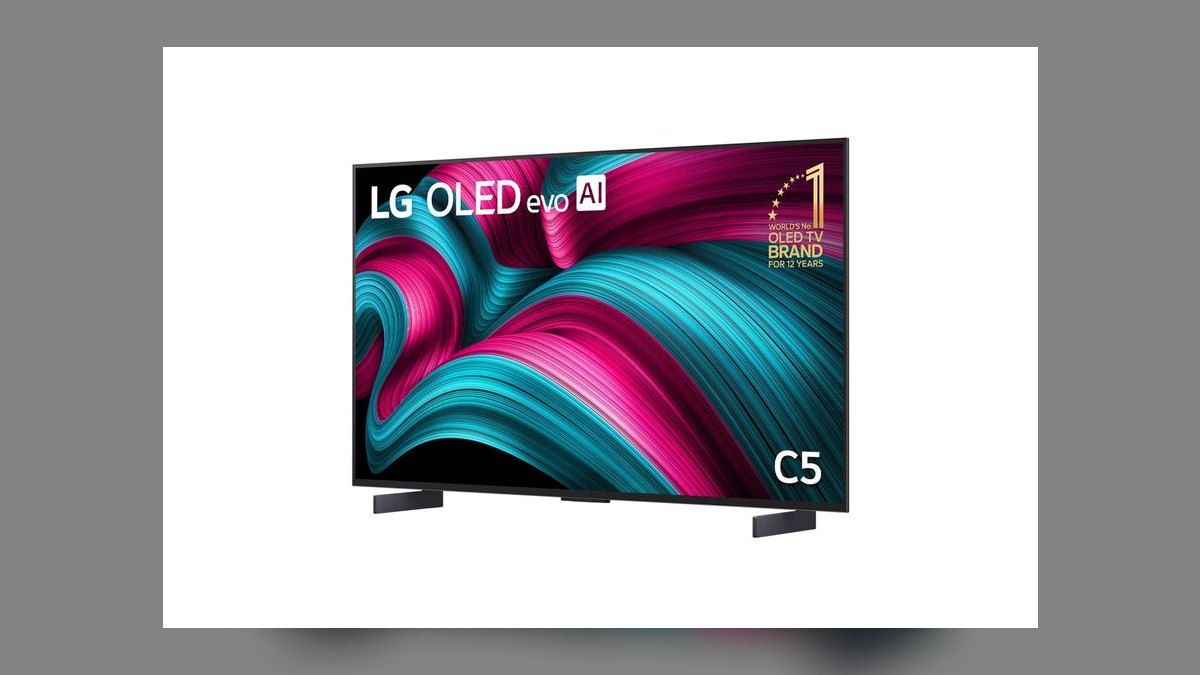
It ranks tenth as a desk display, not a living-room television. The same panel and processor as the 65-inch C5 shrink to 3840x2160 at 138 PPI, the correct density for arm's-length viewing. Native 120Hz, 4K/120 over HDMI 2.1, 9 ms input lag, G-Sync, FreeSync, VRR, and perfect blacks. It weighs 20.9 lbs without the stand, VESA-mounts on a monitor arm, and costs $999.
This is for PC gamers who live at a desk and want OLED contrast at monitor size. It is roughly $400 cheaper than the LG UltraGear 42-inch OLED with better specs. Static UI burn-in risk runs higher here than in the 65-inch C5 above, because taskbars and HUDs sit fixed for hours, so enabling the pixel shifter is not optional.
How we ranked these
Picture quality carried 35 percent of the score: measured ANSI contrast, peak nits on a 10 percent window, color volume, and tone-mapping accuracy. Gaming took 20 percent — 4K@120, VRR, ALLM, and input lag. Smart OS and app support took 15, price-to-performance 15, out-of-box sound 10, and reliability plus firmware-support window 5. Figures came from RTINGS, HDTVTest, Wirecutter, CNET, Consumer Reports, and Digital Foundry.
We deliberately ignored 8K resolution, because at eight to ten feet no 65-inch panel resolves those extra pixels. We ignored quoted dynamic contrast ratios, which are marketing arithmetic rather than measured ANSI contrast, and we ignored AI-upscaling branding, panel thinness, bezel styling, and remote design. Any brightness claim without an independent 10 percent window measurement behind it was not counted toward the score.
What to look for
Room light decides the panel type before budget does. A dark theater room needs only 800 to 1,200 nits, so OLED's perfect blacks win outright. A sun-filled room wants 2,500 nits or more plus a matte coating, which is Mini-LED or QD-OLED territory. After that, count HDMI 2.1 ports against your console, soundbar, and PC load, and check whether Dolby Vision matters to you.
The common mistake is paying for peak brightness a dark room will never use, then discovering the soundbar occupies the only spare 2.1 port. Buyers also over-index on size versus panel quality: a 65-inch flagship beats a 75-inch entry QLED in every measurement that shows on screen. And a Samsung purchase permanently forfeits Dolby Vision on Netflix, Disney+, and Apple TV+.
Related questions
Is OLED or Mini-LED better for a bright living room?
Mini-LED, in most cases. The Sony Bravia 9 hits roughly 2,800 nits and the Hisense U8N about 3,000, versus 1,200 on a standard C5 OLED. In a sun-lit room that headroom matters more than perfect blacks, which you cannot see through glare anyway. The exception is a matte-coated QD-OLED like the S95F, which rejects ambient light unusually well.
How many HDMI 2.1 ports do I actually need?
Count your 4K@120 sources and add one for the soundbar's eARC connection. A PS5 plus an Xbox Series X plus a gaming PC already needs three. That is why the two-port Sony models are a real constraint and the four-port LG, Samsung, TCL, and Hisense sets are not. Streaming sticks and Blu-ray players can sit on the slower ports.
Does burn-in still matter on a 2027 OLED?
For normal mixed viewing, no — pixel shifting and panel refresh cycles handle it. It matters when static elements sit on screen for thousands of hours: a news ticker, a game HUD, or a Windows taskbar. That is why the 42-inch C5 used as a PC monitor carries the highest real risk on this list. Enable the pixel shifter and hide the taskbar.
What is the difference between WOLED and QD-OLED?
WOLED, used by LG, adds a white subpixel to boost brightness and dims color slightly at high output. QD-OLED, used in the Samsung S95F and Sony A95L, converts blue light through quantum dots, producing wider color volume — near 100 percent DCI-P3 on the S95F. Both give perfect blacks. QD-OLED holds color better at peak brightness; WOLED currently goes brighter overall.
Do I need a soundbar with any of these TVs?
Less than you would expect on the Sony models. The A95L vibrates the panel itself as a tweeter and the Bravia 9 uses frame-mounted drivers, so dialog appears to come from the picture. The Hisense U8N and TCL QM8K include up-firing 2.1.2 Atmos systems. Thin flagships like the G5 benefit most from a soundbar, since there is little cabinet volume for bass.
Is Dolby Vision worth picking a TV around?
It depends on what you stream. Netflix, Disney+, and Apple TV+ lean heavily on Dolby Vision, and Samsung supports HDR10+ only, so the S95F and QN90F fall back to static HDR10 on that content. LG, Sony, TCL, and Hisense all support Dolby Vision. If most of your viewing is on those three services, it is a genuine reason to skip Samsung.
How much does local dimming zone count really matter?
It correlates with blooming control, but it is not linear. The TCL QM8K's 5,000-plus zones suppress halos better than the U8N's 1,500, yet the U8N still beats any edge-lit set. Below roughly 250 zones, as on the budget U6N, blooming becomes visible on subtitles and starfields. Algorithm quality matters as much as raw count — Sony does more with fewer zones.
Should I wait for prices to fall after launch?
Usually yes. Flagship panels typically shed a meaningful share of launch price within the first year, and last year's flagship often outperforms this year's midrange at the same money. The exception is value models like the U8N and U6N, which launch near their floor and discount less. Black Friday and Super Bowl weeks remain the two deepest discount windows.
FAQ
Is the LG G5 really worth $1,500 more than the C5?
Only if your room is bright. The G5's four-stack tandem panel reaches about 2,400 nits versus roughly 1,200 on the C5, and it sits under an inch off the wall. Both share the same α11 Gen2 processor, webOS 24, four HDMI 2.1 ports, and perfect blacks. In a dark or curtained room, the C5 delivers a near-identical image for half the money.
Why is the Hisense U8N the best value pick?
It measures like a flagship and prices like a midrange set. RTINGS recorded about 3,029 nits peak, higher than the $3,499 Sony Bravia 9, alongside 1,500-plus dimming zones, a 144Hz native panel, four HDMI 2.1 ports, Dolby Vision IQ, and a two-year warranty at $1,299. The tradeoff is off-axis viewing, which narrows noticeably past about 30 degrees.
Is 8K worth buying in 2027?
For nearly everyone, no. At a typical eight-to-ten-foot seating distance on a 65-inch screen, the eye cannot resolve 8K's additional pixels, and native 8K content remains essentially nonexistent. RTINGS and Wirecutter still recommend 4K at 75 inches and below. The case only appears at 85 inches or larger viewed from under six feet — a setup almost no living room has.
Which TV here is best for PS5 and Xbox Series X?
The LG C5 65-inch at $1,899. It offers four full HDMI 2.1 ports, 120Hz native, roughly 9.1 ms input lag at 4K@120, plus G-Sync, FreeSync, and VRR, with perfect blacks for dark game scenes. If your room is bright or your budget is tighter, the Hisense U8N gives a 144Hz panel and four 2.1 ports at $1,299.
Why do the Sony models only have two HDMI 2.1 ports?
Sony has consistently allocated full-bandwidth 48 Gbps silicon to two ports rather than four on the Bravia 9 and A95L, while LG, Samsung, TCL, and Hisense equip all four. One of those two typically doubles as the eARC output, so a soundbar plus two consoles already exceeds capacity. Plan the layout before buying, or add an HDMI 2.1 switch.
What is the cheapest TV here with genuine HDR?
The Hisense U6N at $499. It uses a Mini-LED backlight with roughly 250 local dimming zones — far more than any edge-lit QLED at that price — and supports Dolby Vision, HDR10+, and Google TV, with about 600 nits peak and a two-year warranty. The limitation is a 60Hz panel with ALLM but no VRR, so gamers should step up.
Which pick is best at 75 or 85 inches?
The TCL QM8K. At $2,999 for the 85-inch it undercuts comparable OLEDs by roughly $3,000, while carrying 5,000-plus dimming zones, about 3,500 nits peak, 144Hz native, four HDMI 2.1 ports, Dolby Vision, HDR10+, and an Onkyo 2.1.2 sound system. Its only real weakness is upscaling sub-4K sources, where Sony and Samsung processors remain ahead.
Do I need to calibrate a new 4K TV?
Not with a colorimeter, for most people. Switch out of the default Vivid or Standard mode into Filmmaker Mode, Cinema, or Movie, then disable motion smoothing unless you are watching sports. That alone removes the large majority of factory inaccuracy on every set here. The Sony A95L is the closest to accurate out of the box and needs the least adjustment.
What refresh rate do I need for PC gaming?
120Hz covers console gaming completely, since PS5 and Xbox Series X cap there. For a PC, higher helps: the LG G5 accepts 4K at 165Hz over HDMI 2.1, the Samsung S95F runs a 165Hz native panel, and the TCL QM8K and Hisense U8N do 144Hz. The 42-inch C5 at 120Hz remains the best desk-sized option because of its size and blacks.
How long will these TVs receive software updates?
LG commits to five years of webOS feature upgrades on the G5 and C5, the longest stated window here. Samsung's Tizen and Sony's Google TV both receive multi-year support but with less specific public commitments. Hisense and TCL, also on Google TV, inherit that platform's update cadence. Avoid off-brand smart TVs, which frequently stop receiving firmware after the second year.
Sources
- https://www.rtings.com/tv/reviews/best/tvs
- https://www.nytimes.com/wirecutter/reviews/best-tv/
- https://www.cnet.com/tech/home-entertainment/best-tv/
- https://www.tomsguide.com/best-picks/best-tvs
- https://www.consumerreports.org/electronics/tvs/
- https://www.hdmi.org/spec/hdmi2_1
- https://www.dolby.com/technologies/dolby-vision/
- https://www.lg.com/us/tvs
- https://www.samsung.com/us/televisions-home-theater/tvs/
- https://www.sony.com/electronics/televisions
Related on PULSE
This page will be disappearing soon. Save it to your device for $1 — or read it free while it is here.
@Kory-White- · if Venmo asks, the last 4 of my number are 2012
This page is gone.
This one is off the shelf now. $1 keeps it on your phone for good — the whole page, pictures and diagrams included.
 pulse-reviewsTop 10 YouTube Lighting Kits — Best Overall + Best Value in 2027
 pulse-reviewsTop 10 1080p External Webcams for Sales Reps in 2027
 pulse-reviewsTop 10 Document Cameras for Remote Demo Recording in 2027
 pulse-reviewsTop 10 Spot Welders — Best Overall + Best Value in 2027
 pulse-reviewsTop 10 Standing Desks $500-$1500 in 2027
 pulse-reviewsTop 10 DVD Players — Best Overall + Best Value in 2027
 pulse-reviewsTop 10 TDS Water Testers — Best Overall + Best Value in 2027
 pulse-reviewsTop 10 Heat-Pump Dryers — Best Overall + Best Value in 2027
 pulse-reviewsTop 10 Tablet Styluses — Best Overall + Best Value in 2027
 pulse-reviewsTop 10 Circular Saws — Best Overall + Best Value in 2027