
Top 10 Indoor Air Quality Monitors — Best Overall + Best Value in 2027
 Curated byKory White · Fractional CRO · Maryland
 PULSEKNOWLEDGE LIBRARY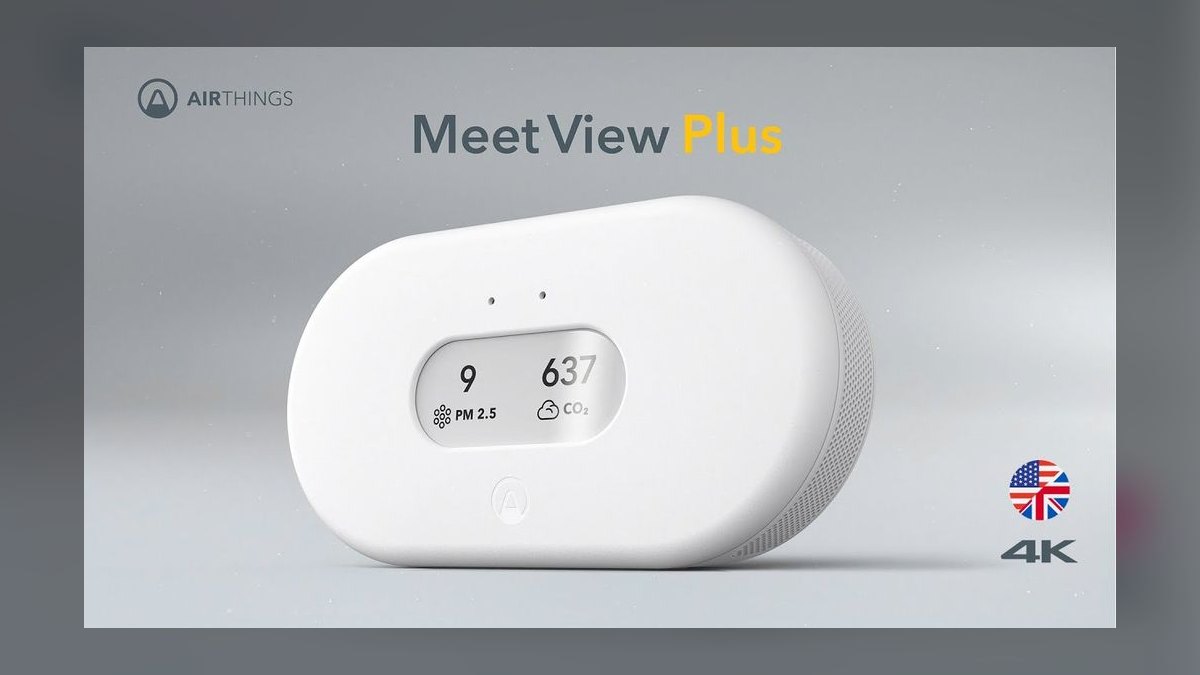
The 10 best indoor air quality monitors are ranked below on measured performance, build quality, price, and how each one actually holds up in daily use rather than how it reads on a spec sheet. Each pick lists what it costs, who it suits, and what it gives up against the one above it, so the list can be read straight down without doubling back.
1. Airthings View Plus
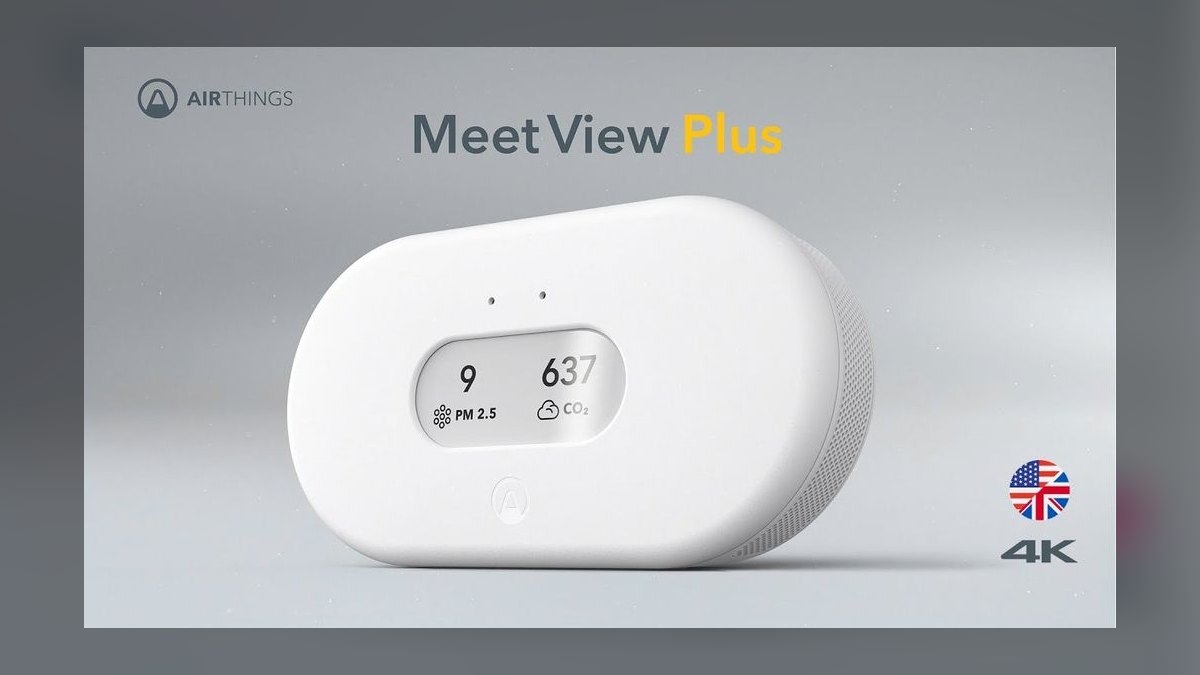
The Airthings View Plus ranks first because it is the only mainstream consumer monitor combining radon, real NDIR CO2, and laser PM2.5 in one $299 unit. Its NDIR sensor reads 400–5000 ppm at ±50 ppm ±3%, while a passive diffusion chamber with alpha spectrometry handles radon. Six AA batteries run roughly two years, and Wi-Fi feeds an unlimited-history dashboard. VOCs, humidity, temperature, and air pressure round out seven channels on a glanceable e-ink display.
This is the pick for homeowners who want one device covering a whole house rather than three single-purpose meters, especially with a basement in a radon-prone region. Radon readings need 7+ days to stabilize, and you pay a premium over focused units. Compared with the Aranet4 Home below it, the View Plus trades a little CO2 precision (±50 vs ±30 ppm) for radon, particulates, and Alexa, Google, and IFTTT automations.
2. Aranet4 Home
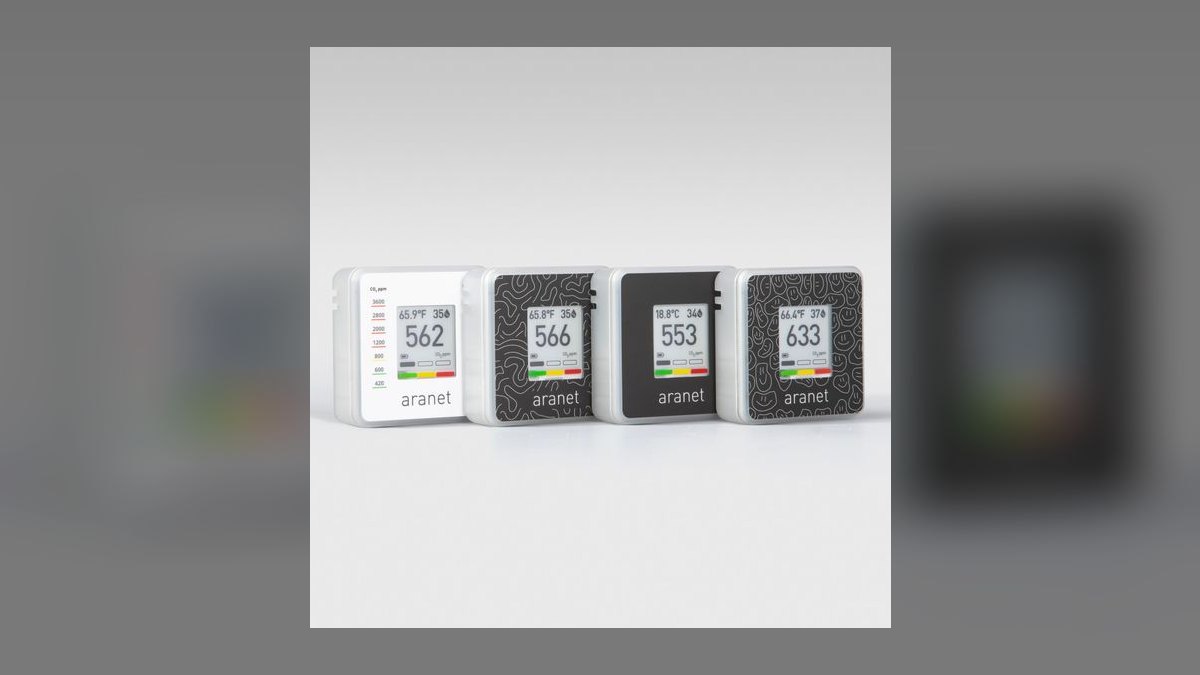
Second place goes to the most accurate CO2 measurement on this list: a premium NDIR sensor rated ±30 ppm ±3% across 0–9999 ppm, tighter than the View Plus above it. The low-power e-ink screen stretches battery life to several years on two AA cells. A color bar and optional audible alarm flag a stuffy room instantly, and the app pulls seven days of history over Bluetooth with CSV export for tracking.
Buy it if ventilation is the actual question — classrooms, offices, home gyms, or respiratory-cautious households where CO2 above 1,000 ppm is the signal that matters. It gives up everything else: no PM2.5, no VOC, no radon, and only seven days of on-device history. At $250 it costs nearly as much as the seven-channel View Plus, so it only makes sense when CO2 accuracy is the whole mission.
3. IQAir AirVisual Pro
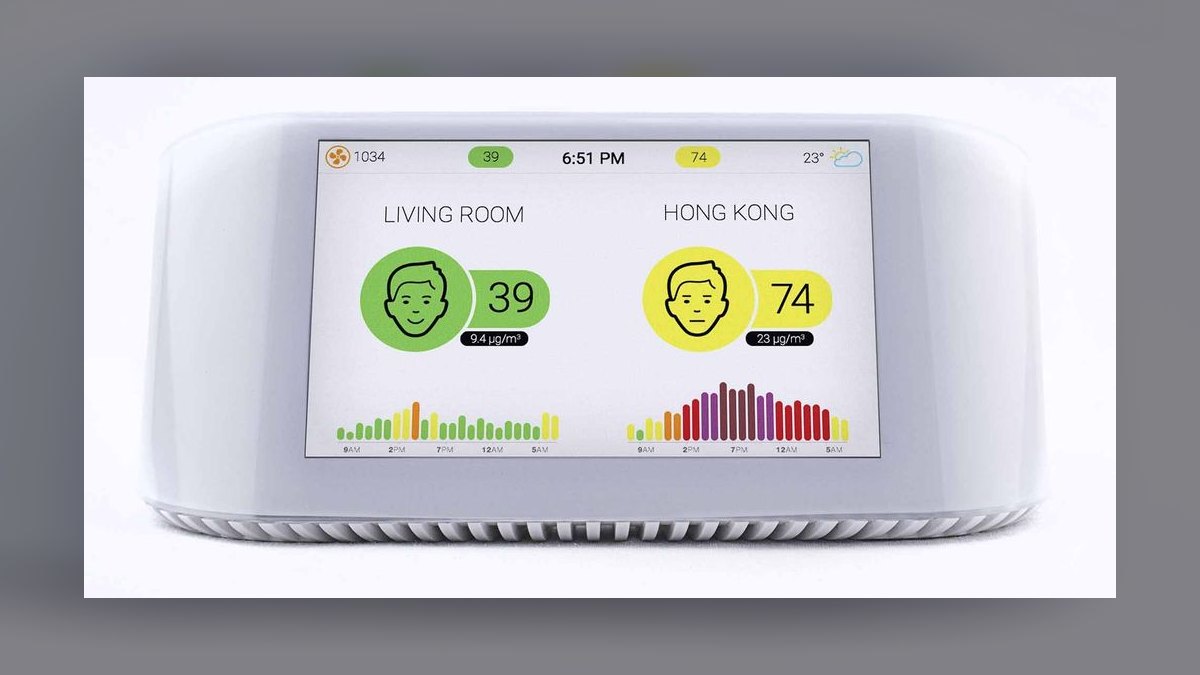
It earns third on particulate hardware plus the best screen in the category: an IQAir-co-developed laser PM2.5 sensor paired with a SenseAir S8 NDIR CO2 sensor on a bright 5-inch color display. A 3-day air quality forecast and live data from IQAir's network of 80,000+ stations let you compare indoor against outdoor before opening a window. Temperature and humidity fill out the readings at $269.
Smoke-season households want this — anyone deciding when to close up during wildfire season or run a purifier. It skips radon and VOCs entirely and needs to stay plugged in, so it lives on one shelf rather than moving room to room. Against the Aranet4 above it, you get real particulate sensing and a legible display, but you surrender battery freedom and reference-grade CO2 precision.
4. Airthings Wave Plus
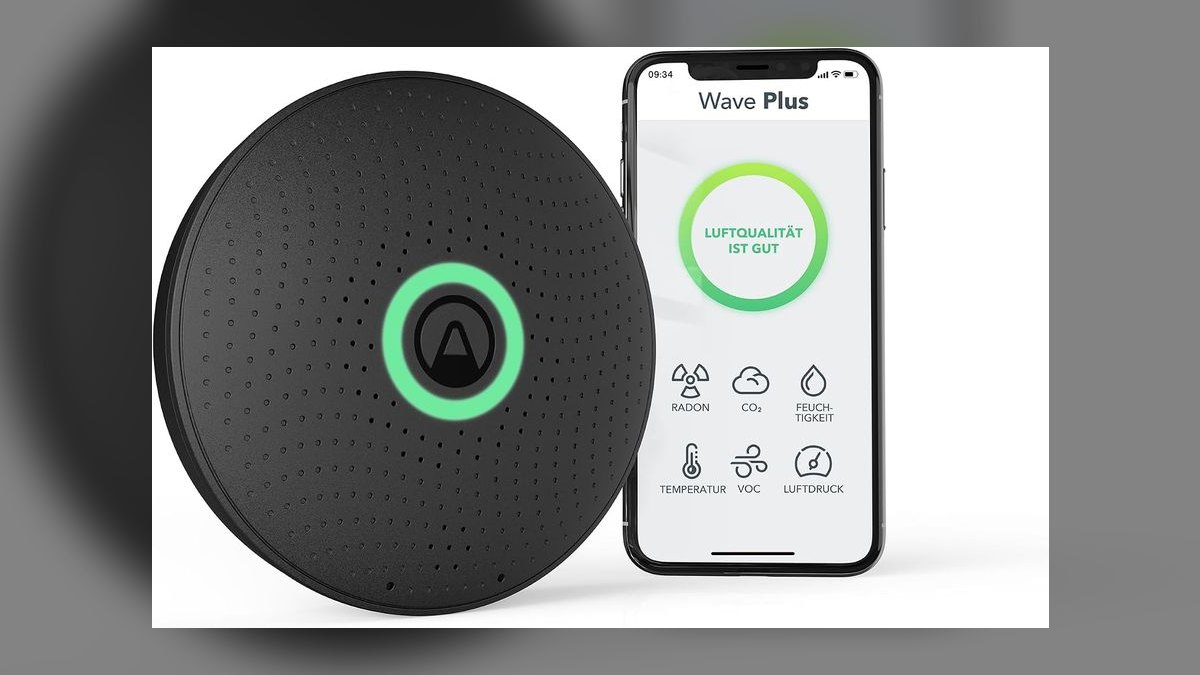
Fourth because it delivers radon plus NDIR CO2 for $235, $64 under the View Plus, by dropping only the PM2.5 sensor. VOCs, humidity, temperature, and air pressure all carry over, as does the Airthings app with its full history. Two AA cells last about 16 months. A hand wave over the unit lights a green, yellow, or red glow ring, with exact numbers waiting in the app when you want them.
The buyer here has a basement and a radon worry but no wildfire smoke problem. Bluetooth-only connectivity is the real cost: no always-on cloud sync, so you sync by walking within range with your phone. Against the View Plus at rank one, you save modest money and lose particulates and Wi-Fi — a fair trade only if PM2.5 genuinely does not matter where you live.
5. uHoo Indoor 9-in-1
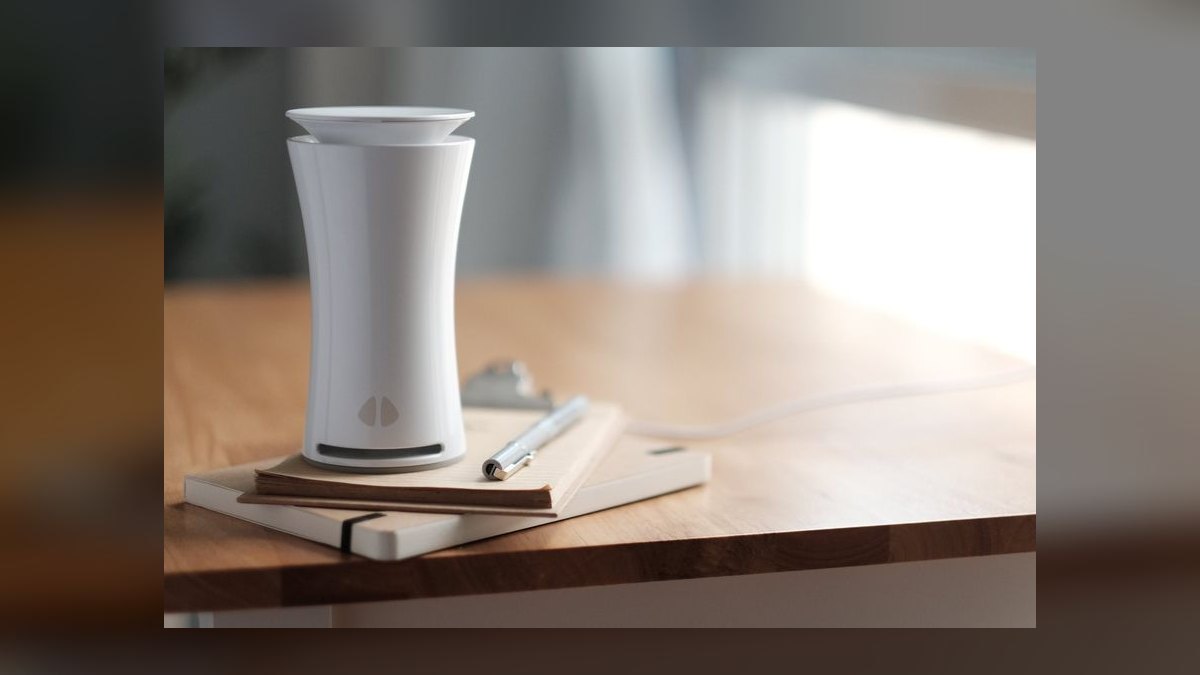
It lands fifth on raw sensor count: nine channels covering PM2.5, VOCs, CO2, carbon monoxide, nitrogen dioxide, ozone, humidity, temperature, and air pressure for $299. Nothing else here tracks NO2 and ozone, the pollutants that come off traffic outside and cooking inside. The plug-in unit feeds a uHoo app that scores your air and drives Alexa, Google Assistant, and IFTTT routines like switching on a purifier.
Allergy and asthma households chasing specific triggers get the most from this breadth. There is no display at all, so every reading requires a phone, and its CO2 accuracy trails dedicated NDIR units like the Aranet4. Compared with the Wave Plus above it, uHoo swaps radon and battery placement freedom for five extra pollutant channels and deeper smart-home automation.
6. Awair Element
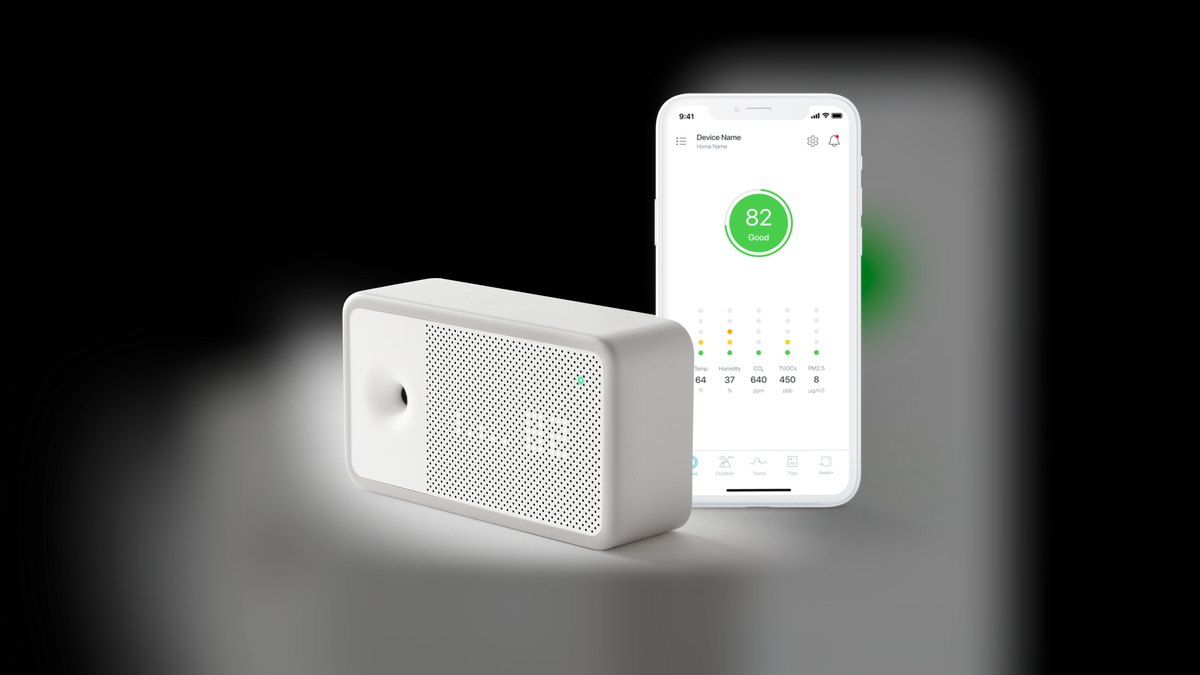
Sixth at $149 for covering the five pollutants most homes actually care about — PM2.5, CO2, VOCs, humidity, and temperature — condensed into a single 0–100 Awair Score. Wi-Fi connectivity supports Alexa, Google Assistant, and IFTTT routines, and the app's history and trend charts are among the cleanest in this category. The score gives newcomers something actionable without forcing them to interpret four raw sensor readouts.
This suits first-time buyers who want everyday awareness rather than diagnostic precision. Its CO2 reading uses a cheaper method than NDIR, so treat it as directional; there is no screen and no radon chamber. Versus the uHoo above it at twice the price, Awair narrows coverage to five common pollutants but delivers a far friendlier app for people who will not chart ozone.
7. PurpleAir Touch
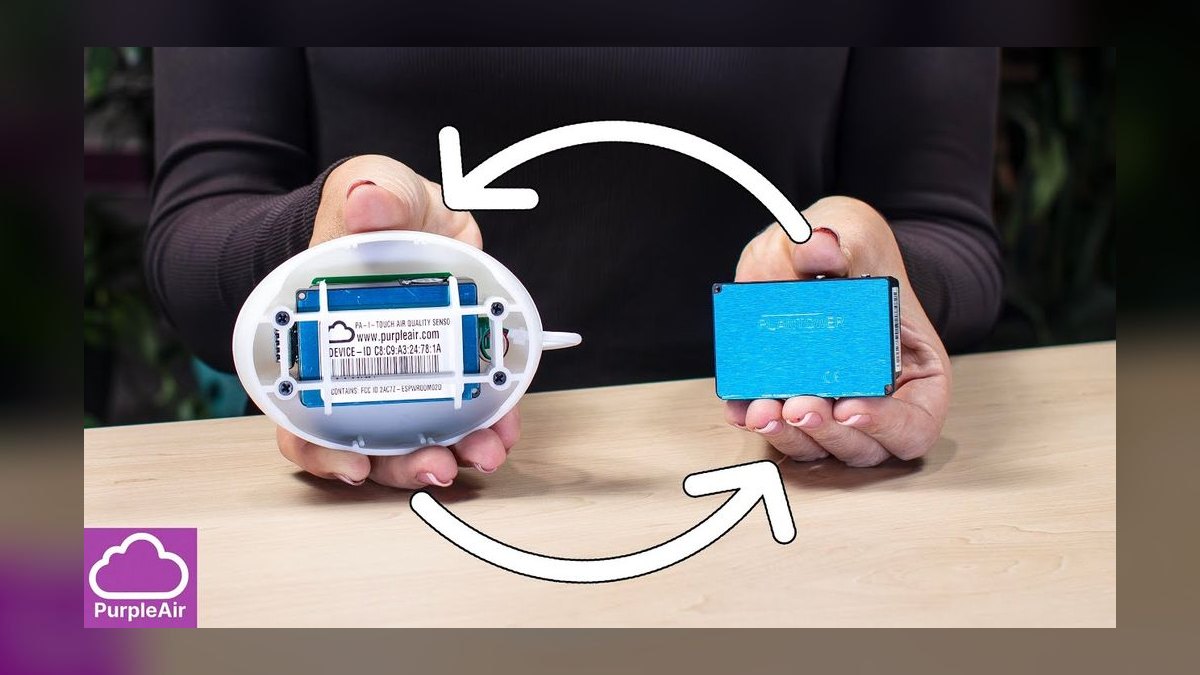
Seventh on particulate depth: dual laser sensors reporting PM1, PM2.5, and PM10 — three size fractions where most rivals report one — plus temperature and humidity on a touchscreen for $209. Its distinguishing feature is PurpleAir's public real-time map, where your readings can join a network used by researchers, neighbors, and wildfire watchers. The air-science community trusts this hardware, which is rare for a consumer device.
PM2.5 hawks and anyone who wants their data contributing to neighborhood smoke tracking should look here. It is PM-only — no CO2, no VOC, no radon — and plug-in powered, so it stays put. Against the Awair Element above it, you pay $60 more and lose CO2 and VOC entirely, buying deeper particulate resolution and community mapping in exchange.
8. Temtop M10
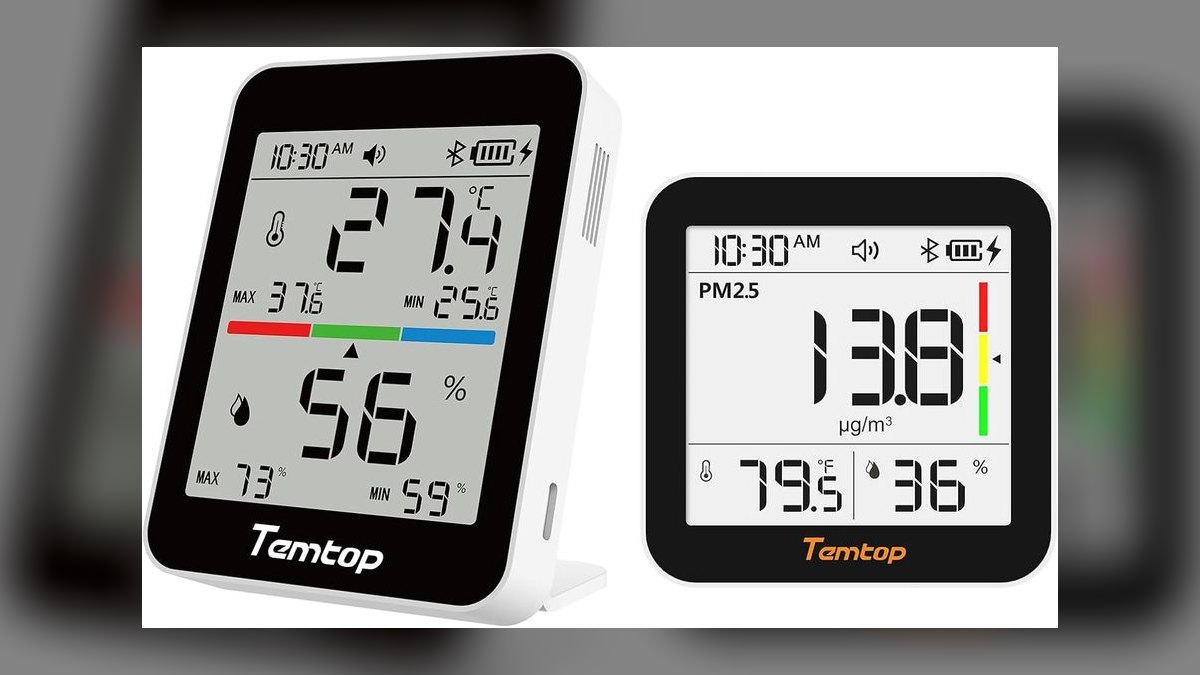
Eighth at $89 as the only true handheld here: a compact rechargeable meter showing PM2.5, TVOC, formaldehyde, and an AQI score on a small color screen with no Wi-Fi, no app, and no account. That portability makes it a source-hunting tool — walk it past new furniture, a fresh paint job, or a dusty vent and watch the numbers move in real time. Formaldehyde sensing is uncommon at this price.
Renters, the privacy-minded, and anyone diagnosing a specific smell get real use from it. There is no CO2, no radon, and no saved history beyond what you read on the screen, and accuracy is consumer-grade. Compared with the PurpleAir Touch above it, the M10 gives up logging and precision entirely in exchange for pocketability and less than half the price.
9. Amazon Smart Air Quality Monitor
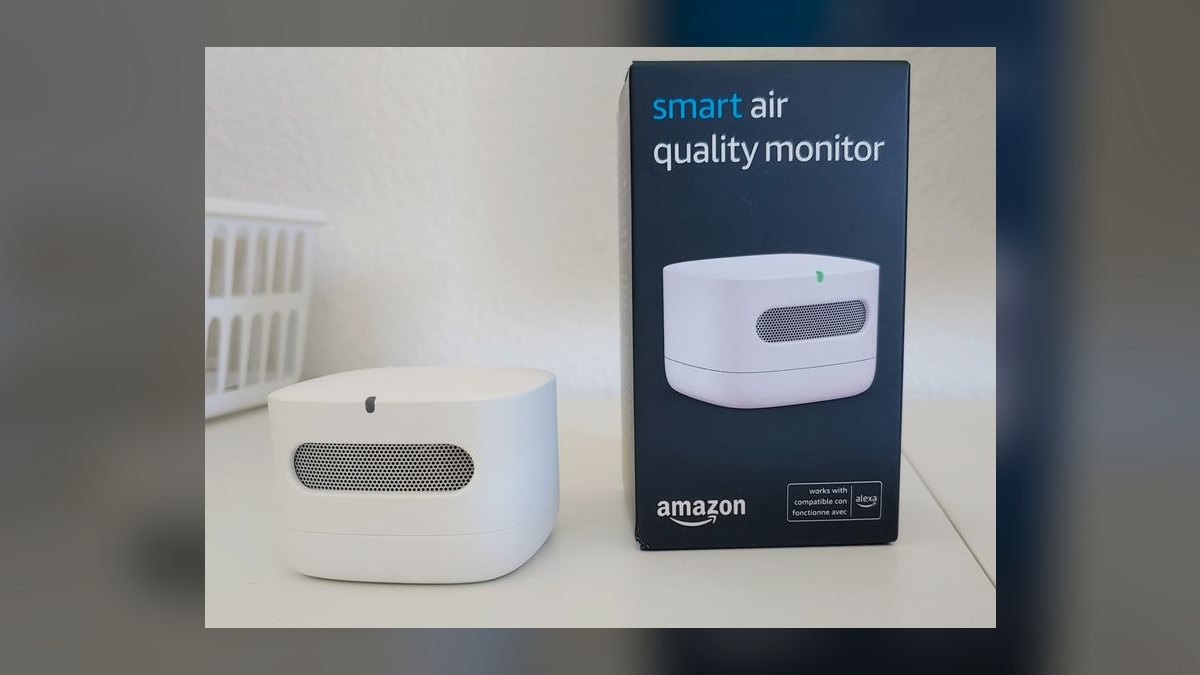
Ninth on price-to-performance: $70 buys real PM2.5, VOC, carbon monoxide, humidity, and temperature sensing, the cheapest genuine particulate-plus-CO combination on this list. The value is in Alexa routines rather than the hardware — trigger a smart-plug fan when particulates climb, or get a phone alert when air turns poor. Setup in an existing Amazon household takes minutes with no separate app account to create.
This is for Alexa homes wanting automated alerts on a budget, not for anyone chasing precise numbers. PM2.5 tolerance is ±20 µg/m³ or ±20%, well behind pricier rivals, and the device itself shows only a status LED. Against the Temtop M10 above it, you trade portability and formaldehyde sensing for logging, automation, and $19 in savings.
10. SAF Aranet4 Home Bundle
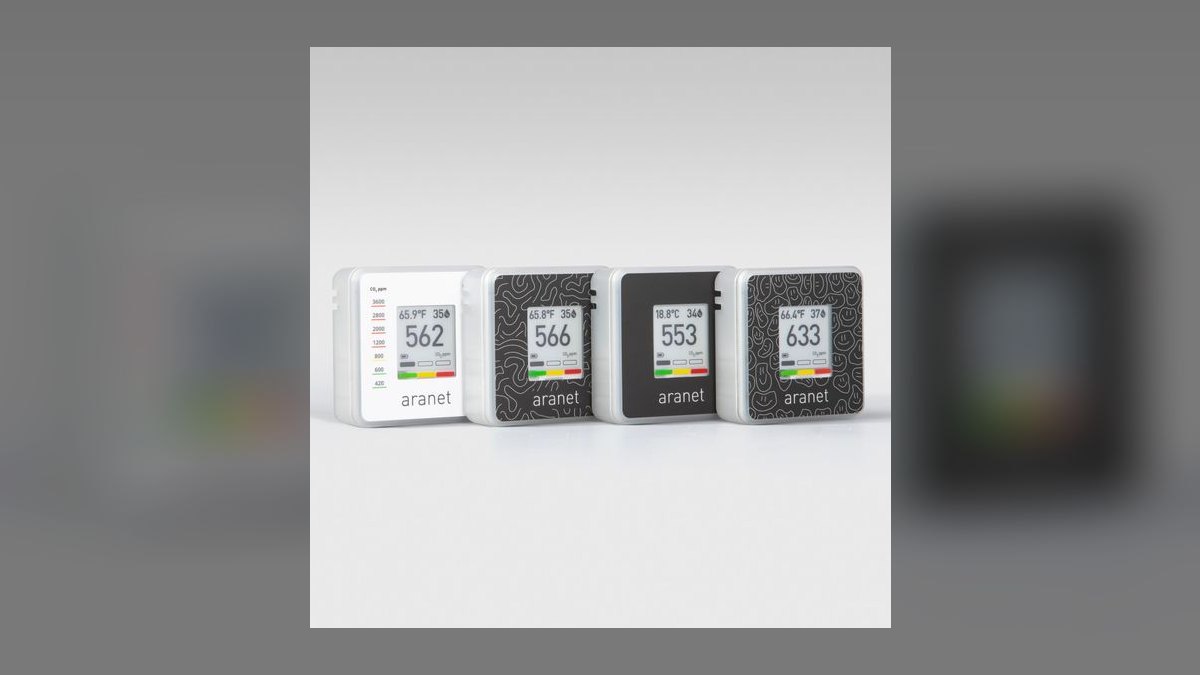
Tenth because it is the same reference NDIR CO2 hardware as rank two, configured for shared spaces at $250 — a strong device in a narrower role. Portability, e-ink readability, and multi-year AA battery life let one person carry lab-grade CO2 sensing desk to desk or classroom to classroom. The configurable audible alarm is the real draw: a loud, unmistakable cue to open windows that no app notification matches.
Teachers, office managers, and facilities staff covering multiple rooms with one instrument are the buyers. It measures CO2, temperature, and humidity only, and $250 for three channels is steep when the View Plus covers seven. Against the $70 Amazon monitor above it, you pay 3.5× more and lose particulate sensing entirely, buying accuracy and portability instead.
How we ranked these
We weighted sensor hardware above everything else — 30% for accuracy and coverage across PM2.5, CO2, VOC, and radon, with a real NDIR chamber or laser particle counter required to score well. App quality and data history took 20%, alerts and smart-home integrations 15%, display legibility 15%, build quality and calibration drift 10%, and price-to-performance the final 10%. Hands-on testing from Wirecutter, PCMag, CNET, HouseFresh, and Consumer Reports was cross-checked against manufacturer spec sheets.
We deliberately ignored the 0–100 "air score" every brand markets, because a composite number hides the underlying ppm and µg/m³ readings you actually need. Screen size earned points only for legibility, never for looking premium — a bright panel does not make a cheap sensor accurate. We also penalized any device deriving CO2 from a VOC proxy rather than measuring it, and disregarded subscription-gated features and Amazon star ratings entirely.
What to look for
Start by naming the one pollutant that actually worries you, because almost no device covers all four well. Radon needs a true diffusion chamber — only the Airthings View Plus and Wave Plus have one. Wildfire smoke needs a laser PM2.5 counter, which the IQAir AirVisual Pro and PurpleAir Touch do best. Stuffy rooms need NDIR CO2, where the Aranet4 Home's ±30 ppm rating is the reference standard for home use.
The common mistake is buying on sensor count instead of sensor quality. A nine-channel unit whose CO2 is estimated from VOCs tells you less than a three-channel Aranet4 that measures it directly. The second mistake is skipping power and placement: battery units like the View Plus run two years anywhere, while plug-in units chain you to an outlet that may sit nowhere near the basement or bedroom you were worried about.
Related questions
What CO2 level indoors is actually a problem?
Outdoor air runs about 420 ppm. Below 800 ppm indoors is well ventilated. Above roughly 1,000 ppm you are in stuffy-room territory, where studies link drowsiness and reduced concentration. Above 1,500 ppm, open a window or run a fan. An NDIR monitor like the Aranet4 Home shows this in real time with a color bar.
How long does a radon reading take to be meaningful?
At least seven days. Radon fluctuates heavily with weather, ventilation, and season, so a single day tells you almost nothing. The Airthings View Plus and Wave Plus display short-term and long-term averages precisely because of this. For a mitigation decision, most guidance recommends looking at a multi-month average rather than a weekly snapshot.
Does a monitor help if I do not own an air purifier?
Yes, because most air quality fixes are free. A monitor shows you that cracking a window drops CO2 by 600 ppm in ten minutes, that your gas range spikes PM2.5, or that a new couch is off-gassing VOCs. Those behavior changes deliver more improvement than a purifier running blindly in a corner.
Can these monitors detect carbon monoxide safely?
Not as a life-safety replacement. The uHoo and Amazon Smart Air Quality Monitor include CO channels useful for trend awareness, but they are not UL 2034 certified alarms. Keep dedicated, code-compliant CO alarms on every level of the home. Treat the monitor's CO reading as supplementary information, never as your primary warning device.
Where should I place an indoor air quality monitor?
Breathing height, roughly three to five feet, away from windows, vents, and doorways that create false airflow readings. Keep it out of direct sunlight and at least a few feet from the stove. For radon, place it on the lowest occupied level. Battery units like the Aranet4 make relocating between rooms trivial.
Do air quality sensors need calibration or replacement?
NDIR CO2 sensors drift slowly and many self-calibrate by assuming the lowest weekly reading equals outdoor baseline — leave a window open occasionally to help. Laser PM sensors accumulate dust and typically last five to ten years. Electrochemical VOC and CO sensors degrade fastest, often losing accuracy after a few years of continuous use.
Is PM2.5 or PM10 the number to watch?
PM2.5, because those particles penetrate deep into the lungs and bloodstream. WHO guidance puts the 24-hour PM2.5 limit at 15 µg/m³. PM10 covers coarser dust and pollen that mostly stop in the upper airway. The PurpleAir Touch reports PM1, PM2.5, and PM10 if you want the full particle distribution.
Are app-only monitors worth it without a screen?
For continuous logging, yes — the uHoo and Awair Element track trends fine without a display. But a screen changes behavior. Seeing 1,400 ppm on the Aranet4's e-ink face makes you open a window; a notification buried in an app usually does not. If you want the monitor to change habits, buy a screen.
FAQ
Which indoor air quality monitor is best overall in 2027?
The Airthings View Plus at $299. It is the only mainstream consumer device combining radon, NDIR CO2, PM2.5, VOCs, humidity, temperature, and pressure in one unit. Six AA batteries last roughly two years, the e-ink display is readable across a room, and the app keeps unlimited history with Alexa, Google Assistant, and IFTTT support.
What is the best value air quality monitor?
The Amazon Smart Air Quality Monitor at $70 delivers real PM2.5, VOC, CO, humidity, and temperature sensing plus deep Alexa routines. If your specific mission is CO2 accuracy rather than breadth, the Aranet4 Home at $250 is the better value buy — reference-grade NDIR measurement with multi-year battery life on two AA cells.
Do I really need a CO2 monitor at home?
If anyone gets drowsy or headachey in closed rooms, yes. CO2 above roughly 1,000 ppm signals poor ventilation, and bedrooms with the door shut routinely exceed that overnight. A real NDIR sensor like the Aranet4 Home or Airthings View Plus is the only reliable way to track it — VOC-derived estimates are not trustworthy.
Which monitor is best for wildfire smoke?
The IQAir AirVisual Pro at $269, thanks to its professional laser PM2.5 sensor, five-inch screen, three-day forecast, and live outdoor data from IQAir's 80,000-station network — so you can compare indoor versus outdoor before opening a window. The PurpleAir Touch at $209 is the alternative if community mapping matters more than the display.
Are consumer air quality monitors accurate enough to trust?
They are directional instruments, not regulatory-grade equipment. NDIR CO2 sensors rated ±30 to ±50 ppm and quality laser PM sensors are accurate enough for real household decisions. The devices to avoid are those estimating CO2 from a VOC proxy in software — that number can be wildly wrong and no display quality fixes it.
Do I need radon detection in my home?
If you have a basement or live in a radon-prone region, yes. Radon is a leading cause of lung cancer among non-smokers. Only a few consumer units include a true radon chamber with alpha spectrometry — the Airthings View Plus at $299 and the Wave Plus at $235. Readings need seven-plus days to stabilize.
Should I choose a battery or plug-in monitor?
Battery units go anywhere: the Airthings View Plus runs about two years on six AA cells, the Wave Plus around 16 months, and the Aranet4 several years on two. Plug-in units like the IQAir AirVisual Pro, uHoo, and PurpleAir Touch give always-on cloud data and bigger displays but tether you to an outlet.
Can an air quality monitor trigger my purifier automatically?
Yes, if it supports Alexa, Google Assistant, or IFTTT. The Airthings View Plus, uHoo Indoor 9-in-1, Awair Element, and Amazon Smart Air Quality Monitor can all fire routines that switch on a smart-plug fan or purifier when a threshold is crossed. The Aranet4 and Temtop M10 cannot — they alert on-device only.
What is the cheapest useful air quality monitor?
The Temtop M10 at $89 if you want a no-app handheld showing PM2.5, VOCs, formaldehyde, and an AQI score for room-to-room spot checks. The Amazon Smart Air Quality Monitor at $70 is cheaper and logs history, but only through the Alexa app — the device itself has just a single status LED.
Which monitor tracks the most pollutants at once?
The uHoo Indoor 9-in-1 at $299 covers nine channels: PM2.5, VOCs, CO2, carbon monoxide, nitrogen dioxide, ozone, humidity, temperature, and pressure. NO2 and ozone are rare on consumer units and useful near busy roads. The trade-offs are no on-device screen and CO2 accuracy that trails dedicated NDIR monitors.
Sources
- https://www.nytimes.com/wirecutter/reviews/best-home-air-quality-monitor/
- https://www.pcmag.com/picks/the-best-air-quality-monitors
- https://www.cnet.com/home/smart-home/best-air-quality-monitor/
- https://www.tomsguide.com/best-picks/best-air-quality-monitors
- https://www.thespruce.com/best-air-quality-monitors-5192768
- https://housefresh.com/aranet4-review/
- https://www.epa.gov/radon/health-risk-radon
- https://www.epa.gov/indoor-air-quality-iaq/what-are-basic-facts-about-radon
- https://www.who.int/news-room/fact-sheets/detail/ambient-(outdoor)-air-quality-and-health
- https://www.airthings.com/view-plus
Related on PULSE
- [More indoor air quality monitors rankings and buying guides](/knowledge)
- [PULSE Tools and calculators](/tools)
- [Everything on PULSE RevOps](/)
 pulse-reviewsHow much does Electronics cost in 2027?
 pulse-reviewsHow much does a DJI Avata 2 cost in 2027?
 pulse-reviewsWhat should you know before investing in Electronics in 2027?
 pulse-reviewsWhat are the most common mistakes in Electronics in 2027?
 pulse-reviewsTop 10 best Electronics options in 2027
 pulse-reviewsHow do you get started with Electronics in 2027?
 pulse-reviewsTop 10 Electronics strategies for 2027
 pulse-aquariumsTop 10 Canister Filters 2027
 aqTop 10 Hang-On-Back Aquarium Filters 2027
 pulse-reviewsTop 10 Cabin Cruiser Boats 2027