


How much does Noise-Cancelling cost in 2027?
Quality
Certified

In 2027, budget Noise-Cancelling earbuds run about $40–$90, mid-tier over-ears $150–$250, and flagships $350–$550, while certified business headsets cost roughly $120–$400 per seat. Add 25–40% over a three-year life for spare ear pads, breakage, and a replacement pool. Street prices sit well below list within a year of launch.
The 40-seat floor that thought this was a $10,000 line item
Picture the situation that sends most people to this question in the first place. An inside sales org has 40 reps on an open floor, two rows of desks, a glass-walled demo room that leaks, and a kitchen that becomes a call center of its own at 11:45 every morning. Talk time is the metric the VP watches. Reps are complaining that they can hear the next pod's discovery call better than their own prospect. Somebody says "let's just buy everyone Noise-Cancelling headsets," and the ops person opens a spreadsheet.
The naive math is one cell wide: 40 seats × $250 = $10,000, approved, done. The real invoice almost never lands there, and the gap is where budgets get embarrassing.
Start with the spare pool. Headsets on a sales floor are not laptops — they get sat on, dropped, yanked off a desk by a mic cable, and left in an Uber. A 10–15% spare allocation is the working default for hardware that lives on a human's head eight hours a day, which turns 40 units into 44–46 units before a single one ships. That is another $1,000–$1,500 on a $250 unit.
Then consumables. Ear pads on a heavily used stereo headset compress, crack, and get grimy on a 9–12 month cycle. Replacement pad kits from the manufacturer typically run $15–$40 a pair depending on whether they are leatherette or the pricier hybrid mesh, and generic pads that cost $8 usually change the seal enough to measurably reduce passive isolation. Budget one pad replacement per seat per year and that is $600–$1,600 annually across the floor. Ear-tip kits for in-ear units are cheaper, roughly $5–$15, but get lost more often.
Then the logistics tail nobody puts in the first spreadsheet: shipping and handling, asset tagging, the hours IT spends pairing dongles and pushing firmware, and — if the headsets are wireless with a USB adapter — the $25–$60 replacement cost every time a dongle disappears into a laptop bag. Extended or advance-replacement warranty programs from business headset vendors commonly price at roughly 10–20% of hardware cost for a two- to three-year term. On a $250 unit that is $25–$50 a seat.
Roll it up honestly and the $10,000 line item is realistically $13,000–$15,000 across a three-year deployment. That is the number to defend, not the sticker.
Now reframe it the way a RevOps buyer should. Amortized, a $250 headset over 36 months is about $6.95 per rep per month. With the spares, pads, and warranty layered in, call it $9–$11 per rep per month. Compare that to the CRM seat, the sales engagement platform seat, the conversation intelligence seat, and the dialer — a stack that routinely runs $200–$400 per rep per month. The headset is one of the cheapest per-seat items in the entire go-to-market budget, and it is the only one that sits between the rep and every conversation the rest of the stack is measuring.
That comparison matters because it changes what question you are actually asking. "How much does Noise-Cancelling cost" is rarely a capital question. It is an adoption question wearing a cost question's clothes. A $99 headset that half the floor refuses to wear because the clamp force gives them a headache by 2pm costs infinitely more per useful hour than a $299 headset that stays on. The failure mode is never "we overspent by $8,000." It is "we bought 40 of the wrong thing and 17 of them live in a drawer."
So the scenario frames three things you have to price separately: the acoustic hardware, the ownership tail, and the probability that people actually wear it. Everything below is about getting those three numbers right.
How Noise-Cancelling actually works, and why it shows up on the invoice

The cost of Noise-Cancelling is not arbitrary vendor margin. It maps almost directly onto a bill of materials and a calibration process that a passive headset does not have. Understanding the chain tells you which price differences are real engineering and which are branding.
Active Noise Cancellation works by measuring the sound arriving at your ear and playing back an inverted copy of it so the two waveforms sum toward silence. There are three architectures, and they cost different amounts:
Feedforward puts a microphone on the outside of the earcup. It samples noise *before* it reaches your ear, giving the processor a head start. It is cheap and effective on steady low-frequency rumble, but it is blind to how the headset actually sits on your specific head, and it is highly sensitive to wind hitting the external mic.
Feedback puts a microphone *inside* the cup, next to the driver, listening to the error signal at the ear itself. It self-corrects for fit and leakage, which is why it handles a mediocre seal better, but it works over a narrower band and can go unstable if the loop is poorly tuned.
Hybrid runs both, plus a DSP that blends them. This is what essentially every serious 2027 product uses, and it is the first real cost step: two extra microphones per side, a dedicated low-latency processor or an ANC block inside the main SoC, and — critically — a tuning pass.
That tuning pass is the underrated cost. The anti-noise signal has to arrive at the eardrum within microseconds of the real noise, which means the acoustic chamber, driver, mic placement, and filter coefficients all have to be characterized together. Vendors do this on artificial-ear test rigs, and premium units get per-unit or per-batch calibration on the production line rather than one set of coefficients for the whole model run. Engineering hours plus line time is exactly why two headsets with the same driver and the same ANC chip can differ by $150.
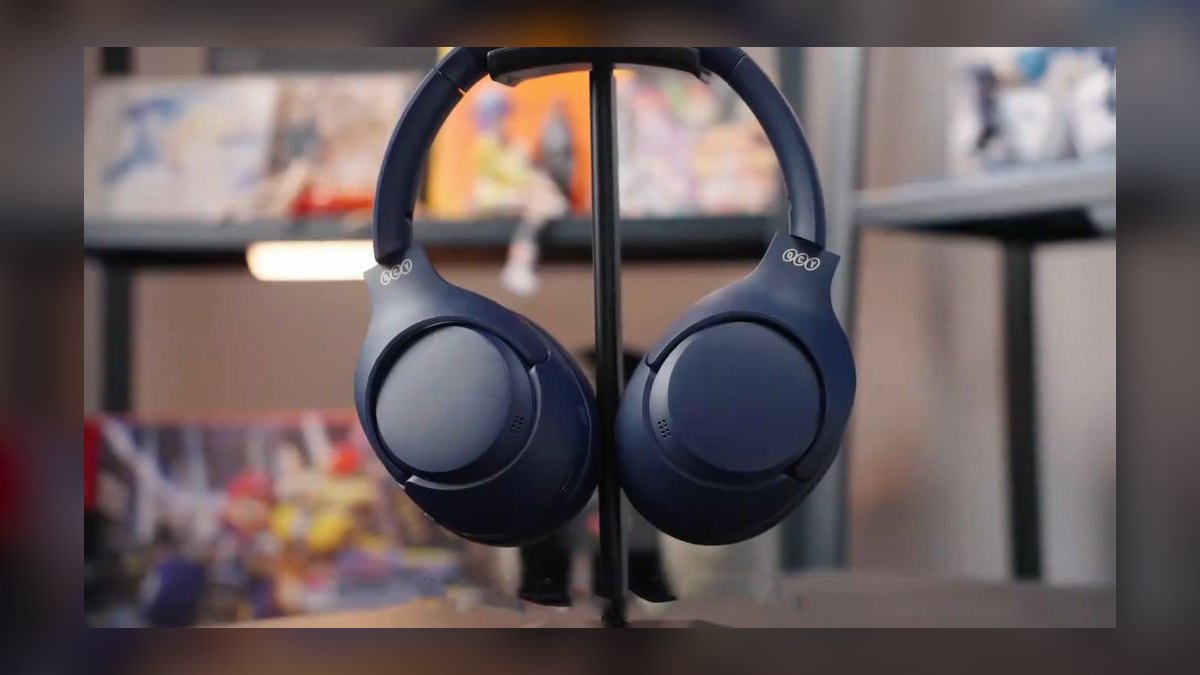
There is also a hard physics boundary that determines what you are buying. ANC is very good below roughly 1 kHz — HVAC hum, engine drone, the low roar of an open office — where wavelengths are long and the system has time to compute a correction. Above about 1–2 kHz it degrades quickly, and the attenuation you feel against consonants, keyboard clatter, and the person laughing three desks away comes mostly from passive isolation: the seal, the pad, the cup volume, the material density. Marketing numbers of "up to 25–30 dB" almost always describe the low-frequency peak, not the broadband average.
This is the single most important cost insight on this page. If your floor's problem is voices, you are largely paying for passive isolation and fit, and a well-sealed over-ear with modest ANC can beat a flashier in-ear with aggressive ANC. If your problem is HVAC, aircraft, or road drone, ANC quality is the whole ballgame and paying up is rational.
Two more line items ride on top. Adaptive ANC adds sensors and logic that re-measure the seal continuously — useful for people who wear glasses or who chew — and typically appears only at the mid-tier and above. Transparency or hear-through mode reuses the same microphone array to pipe the outside world in, and doing it without a tinny, latency-smeared result is genuinely hard, which is why cheap transparency modes sound like a walkie-talkie and expensive ones sound like nothing at all.
Finally, note that the *far end* of your call hears none of this. ANC protects the wearer. What protects the prospect from your floor noise is the outbound microphone array and its beamforming or noise-suppression algorithm — a separate subsystem with a separate cost. Business headsets charge for it. Consumer flagships often skimp on it. Conflating the two is the most expensive mistake in this category, and the next sections put numbers on it.
Real 2027 price bands, tier by tier
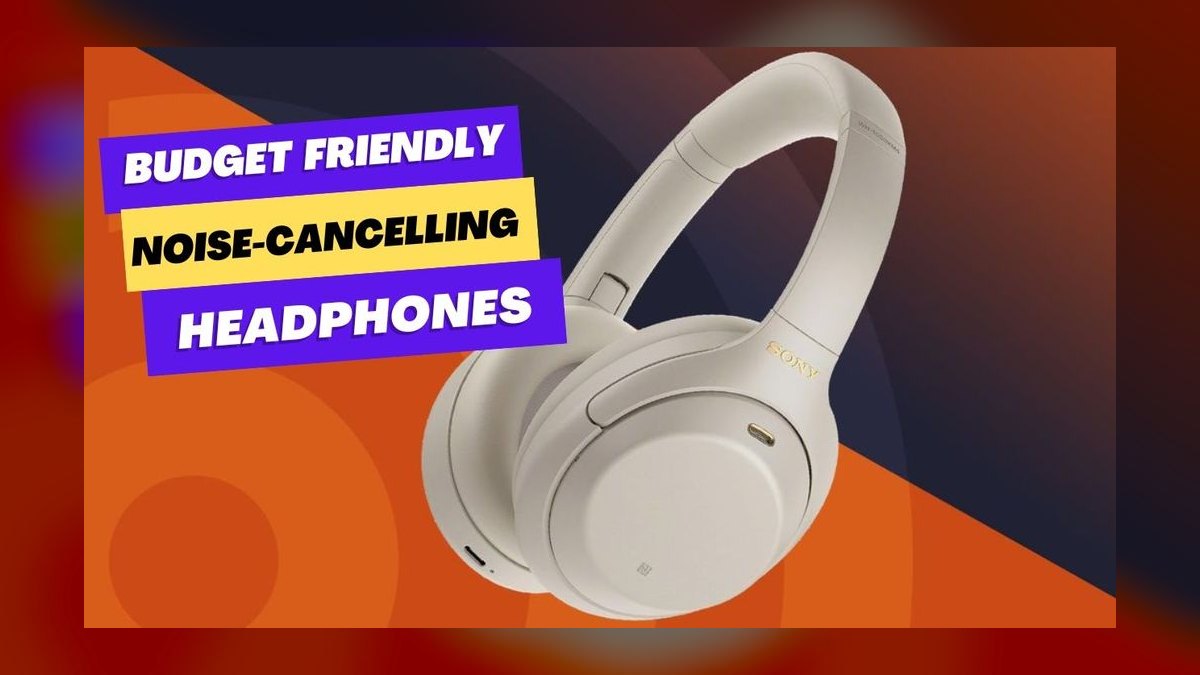
Here is what the money actually looks like. These are working bands for 2027 planning, anchored to how the category has priced through the mid-2020s. Treat the tiers as stable and the individual sticker as volatile.
Entry-level Noise-Cancelling earbuds — roughly $30–$90. This tier barely existed a decade ago and is now crowded, because ANC-capable Bluetooth SoCs have commoditized. Expect real, measurable low-frequency cancellation, mediocre passive isolation, plastic-heavy build, 4–6 hours of battery with ANC on, and outbound mic quality that is fine in a quiet room and poor anywhere else. Perfectly reasonable for a commute or a home office. Not a floor deployment.
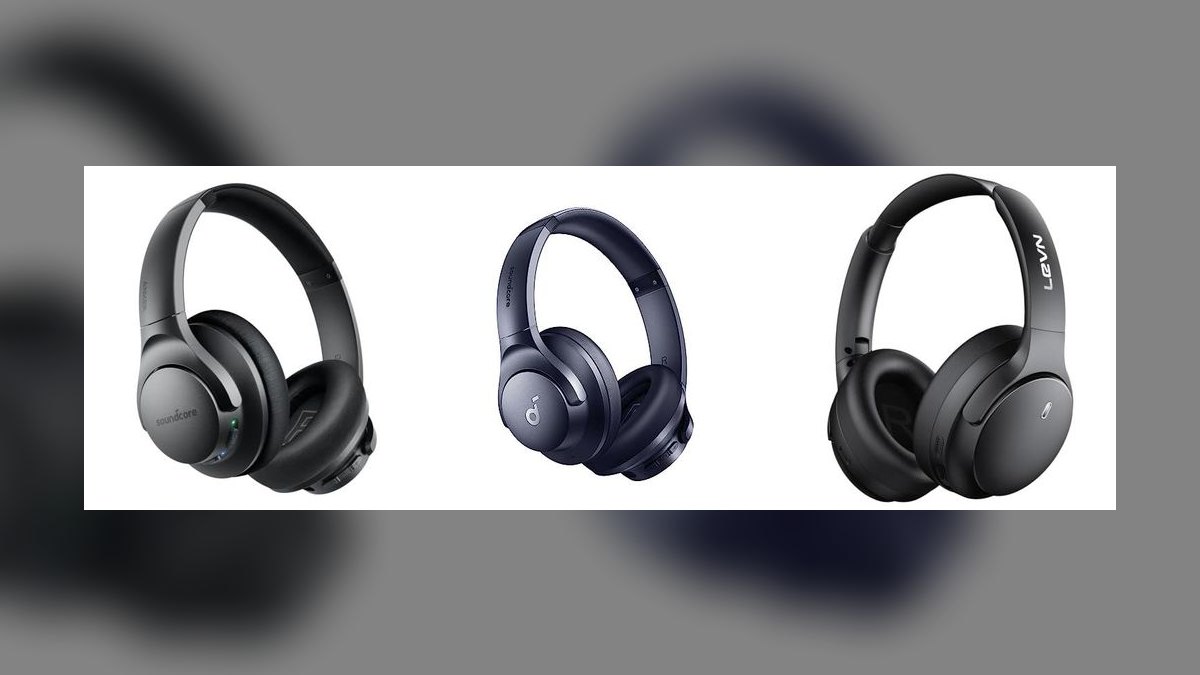
Entry-level over-ear — roughly $50–$120. Brands such as Anker's Soundcore line have held this band for years with 40+ hour battery figures and genuinely competent ANC. The compromises are pad material, hinge durability, and app polish. For a startup floor with no budget, this is a defensible choice if you accept an 18-month replacement cycle instead of 36.
Mid-tier consumer — roughly $150–$250. The value sweet spot. You get hybrid ANC with adaptive behavior, decent transparency, replaceable pads on many models, multipoint Bluetooth that mostly works, and build quality that survives a commute. Most people cannot reliably distinguish this tier from a flagship in a blind listening test in an office.
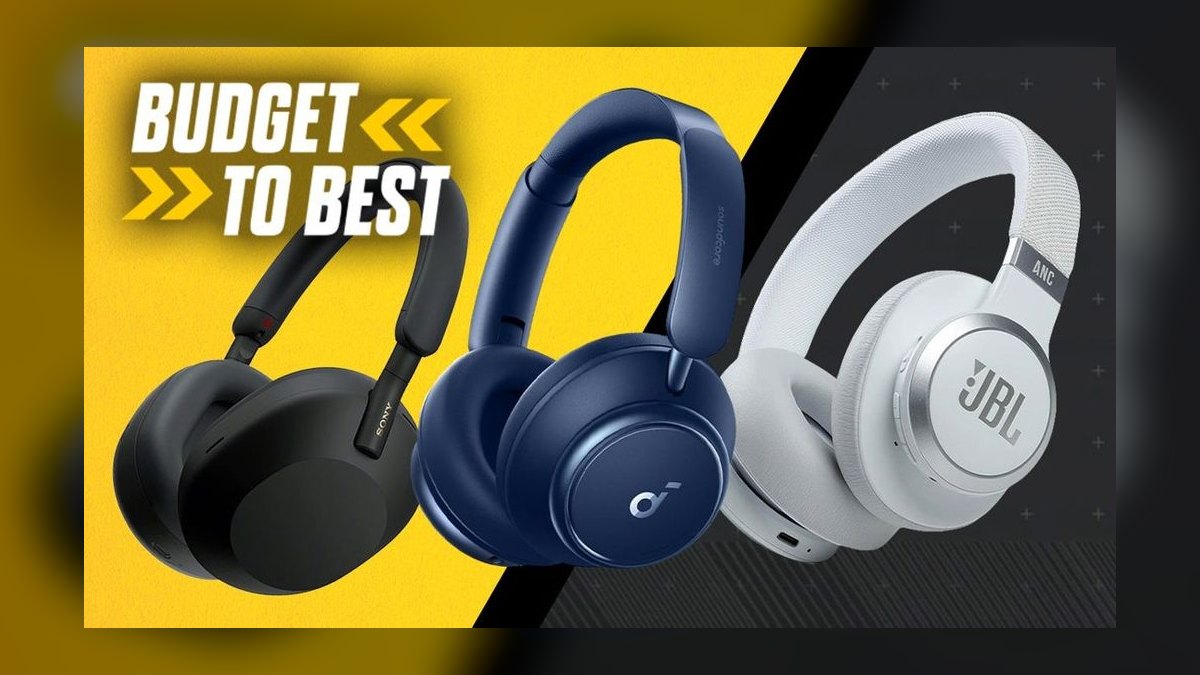
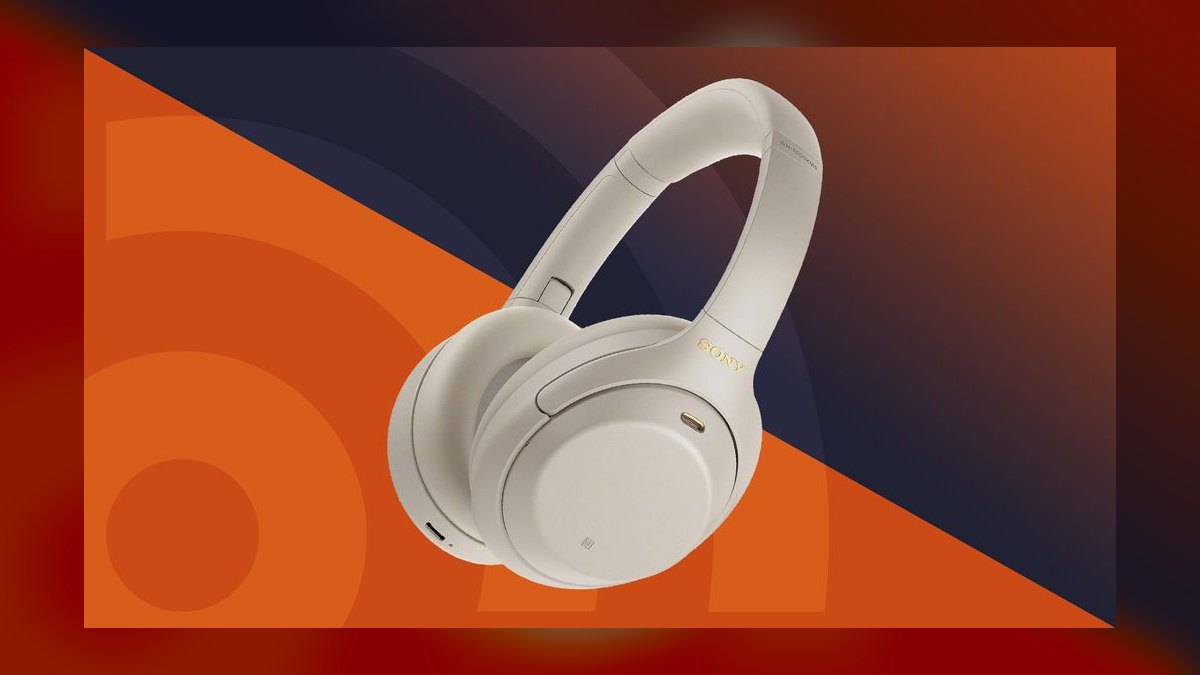
Flagship consumer over-ear — roughly $350–$550 at list. This is where the recognizable names sit. Sony's WH-1000X line has launched around $399, Bose's QuietComfort Ultra headphones around $429, and Apple's AirPods Max at $549. Expect best-in-class low-frequency attenuation, the most refined transparency modes, and premium materials. Also expect these to be poor call-center tools: no boom mic, mic arrays optimized for a person walking down a street rather than a person in a room with 39 other talkers, and no fleet management.
Flagship consumer earbuds — roughly $230–$300, tracking the same launch pattern.
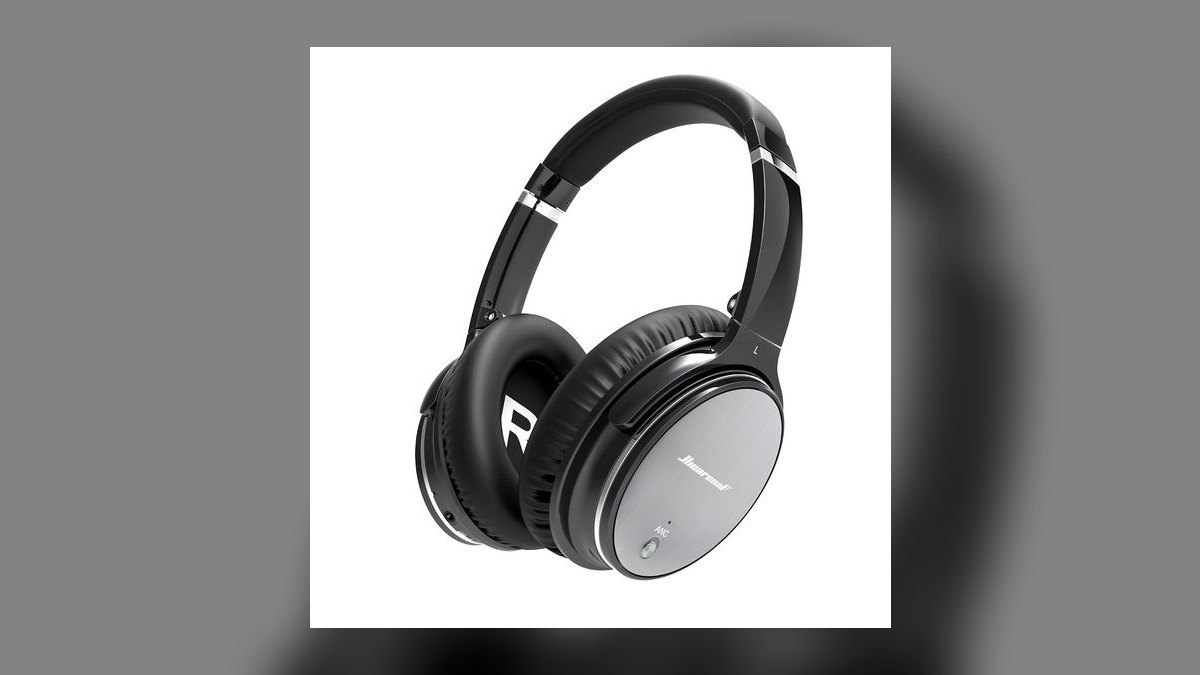
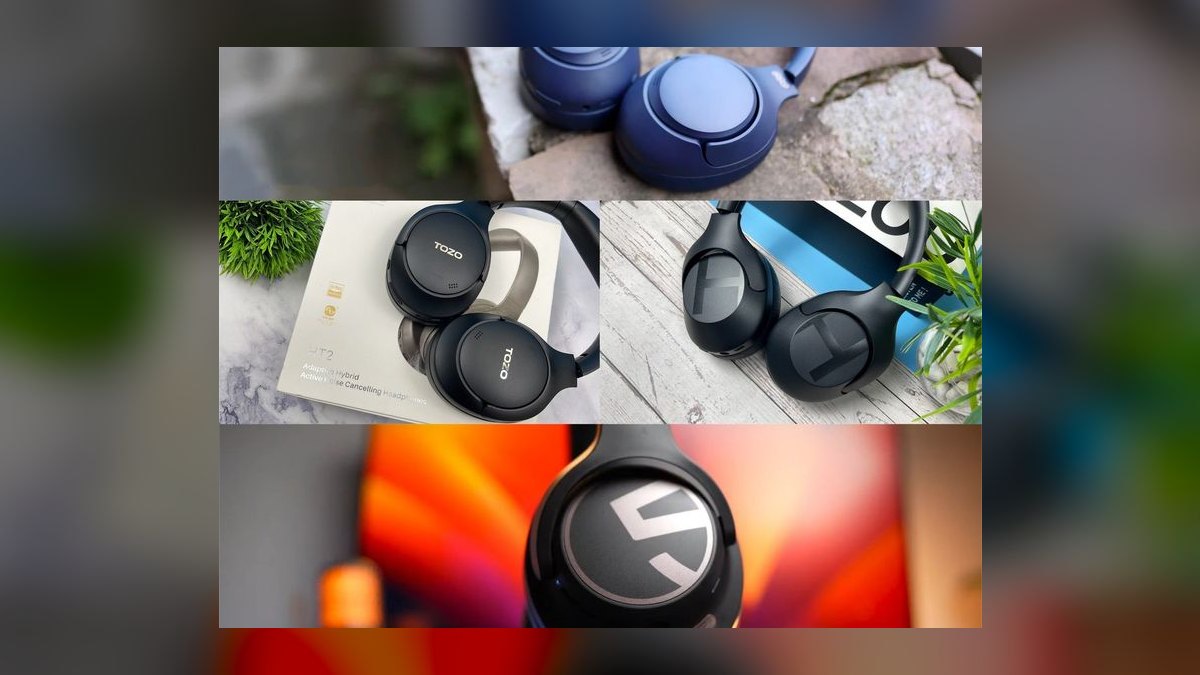
Business / UC headsets — roughly $120–$400 per seat. This is the band that matters for a sales floor, and it is a different product category, not a discount version of the consumer one. Vendors like Jabra (Evolve2 family), Poly (Voyager family, now under HP), and EPOS/Sennheiser build these. What you are paying the premium for: a boom microphone with a real noise-cancelling capsule that puts the mic 2 cm from your mouth instead of 20 cm; certification programs for Microsoft Teams, Zoom, and other platforms that guarantee the call-control buttons work and the audio path is validated; a USB dongle with a proprietary radio that does not fight the office Wi-Fi; device management software so IT can push firmware and read inventory; a busylight so the person walking toward the desk stops; and a warranty and RMA process built for fleets. Mono variants cost less than stereo, wired less than wireless, and ANC-equipped models sit at the upper end of each split.
Specialty tiers. Aviation ANC headsets run roughly $400–$1,300 because they add certified comms hardware and survivability requirements. Industrial ANC earmuffs, the kind sold by hearing-protection manufacturers, generally run $200–$400 and are rated for attenuation rather than tuned for music. Neither belongs on a sales floor, but they explain why "Noise-Cancelling headset" searches surface four-figure prices.
Discount behavior is predictable and worth exploiting. Flagship consumer models routinely trade 25–40% below launch MSRP within 12–18 months, and the deepest discounts cluster around Q4 retail events and the weeks after a successor model is announced. If you can tolerate the previous generation — and acoustically, the generational deltas have been small — you can often buy last year's flagship for this year's mid-tier price. Business headset pricing is stickier at list but responds to volume: reseller quotes at 25+ units commonly land 10–20% under published pricing, and that is a negotiation most ops teams never bother to have.
Where 2027 pushes the bands. Two forces pull opposite directions. Silicon commoditization keeps pushing capable ANC downward, so the budget floor keeps drifting lower and mid-tier keeps absorbing features that used to be flagship-only. Meanwhile component costs, tariffs, currency, and premium materials keep nominal flagship list prices flat-to-rising. The net expectation for 2027: the flagship band holds around $350–$600, the mid-tier gets meaningfully better at the same price, and the sub-$100 tier gets good enough that the "cheap ANC is fake ANC" objection stops being true.
Trade-offs, and the alternatives that are sometimes cheaper
Buying headsets is one solution to a noise problem, not the only one, and a serious cost analysis prices the alternatives.
Buy up vs. buy down. The argument for buying up is amortization and adoption: a $300 business headset that lasts 36 months and is worn all day costs less per worn-hour than a $100 unit replaced at 18 months and abandoned by a third of the floor. The argument for buying down is churn: if your rep tenure averages 14 months and you are hiring aggressively, expensive hardware walks out the door. A practical hybrid is to buy up for tenured reps and the SDR pods that live on the phone, and buy the mid-tier for everyone else, with the good units reassigned as people leave.
Software noise suppression instead of hardware. Every major meeting platform now ships background noise suppression, and dedicated tools do the same at the OS level. This is cheap — often bundled, or a few dollars per user per month — and it is genuinely effective. But understand precisely what it buys: it cleans up what the *far end* hears. It does nothing for the rep who cannot concentrate. If your complaint is "prospects say it sounds like a call center," software is the cheaper fix and you may not need ANC at all. If the complaint is "I can't hear my prospect and I'm exhausted by 3pm," software does not touch it.
Acoustic treatment. Absorptive panels, ceiling baffles, and desk dividers attack the room instead of the head, and they help everyone simultaneously, including people not on calls. Panel treatment is a one-time capital spend with no battery, no firmware, and no breakage. Freestanding phone booths are the premium version and typically run in the low-to-mid four figures each — worth pricing against 40 headsets if you only need two or three people in quiet at any moment.
Passive isolation instead of active. Well-fitted in-ear monitors with foam tips can beat mid-tier ANC on broadband attenuation, including the voice frequencies ANC handles worst, for well under $100. The trade-offs are hygiene, comfort over long shifts, and the occlusion effect that makes your own voice boom in your head.
Refurbished and open-box. Manufacturer-refurbished flagships commonly sell 20–35% below new with a shortened warranty. For a spare pool this is close to free money. For primary units, weigh the warranty gap.
Repairability as a cost lever. A headset with user-replaceable ear pads, a replaceable boom arm, and — rarest and most valuable — a replaceable battery has a materially lower three-year cost than a sealed unit, because lithium cells lose meaningful capacity in 2–3 years of daily charge cycles. A sealed $400 headset with a dead battery in year three is a $400 headset you throw away. A $300 one with a $30 battery service is not.
The honest conclusion of this decision tree is that a large share of teams asking about Noise-Cancelling cost should spend part of the budget on room treatment and outbound suppression, then buy a mid-tier certified headset rather than a flagship consumer one. That combination usually beats the all-flagship plan at a lower total.
Where Noise-Cancelling budgets go wrong
Buying consumer flagships for a call floor. The most common and most expensive error. A $549 consumer headset has a superb listening experience and an outbound mic designed for a solo user on a sidewalk. Put 40 of them on an open floor and prospects hear the whole room, call-control buttons do not map to the dialer, IT has no fleet visibility, and multipoint pairing collides constantly. The $250 certified business headset outperforms it at the job you bought it for.
Confusing ANC with mic noise suppression. Restating it because it drives so much wasted spend: ANC is for the wearer's ears; mic suppression is for the listener. A vendor page that says "noise cancelling microphone" is describing a completely different subsystem than one that says "active noise cancellation." Read which one the spec sheet means before approving the PO.
Believing the dB headline. "Up to 30 dB of noise reduction" is a peak figure at the frequency where the system works best. Independent measurement sites publish full attenuation curves; read those instead. Two headsets with identical headline claims can differ by more than 10 dB in the 500 Hz–2 kHz band where human speech lives.
Ignoring battery aging in the three-year model. Rated battery life is a new-unit number. After ~500 charge cycles — roughly two years of daily use — expect meaningful degradation. If the unit cannot make it through a shift in year three, you have a replacement cost you did not budget. Ask about battery service before you standardize.
Under-sizing the spare pool. Ordering exactly 40 units for 40 seats means the first breakage becomes a rep who cannot work while procurement runs a two-week cycle. 10–15% spares on day one is cheaper than expedited shipping and lost talk time.
Skipping fit and comfort testing. Buy three candidate models, put them on six reps for a full week each, and let the floor vote before you buy 40. Clamp force, weight distribution, and pad material determine whether the hardware is worn, and worn-hours are the only unit of value here. This test costs under $1,000 and routinely prevents a five-figure mistake.
Overlooking hygiene and shared use. If headsets are shared across shifts, you need per-user pads or ear-tip kits and a cleaning protocol, which is a recurring cost. Assigned units are almost always cheaper in practice.
Forgetting hearing safety. ANC reduces the temptation to raise volume to overcome noise, which is a genuine safety benefit. But it also lets people listen at high levels comfortably for long periods. Occupational hearing guidance from public health bodies is worth reading if your team wears these eight hours a day; some business headsets include acoustic-shock limiting for exactly this reason, and it is a legitimate reason to pay more.
Treating this as a one-time purchase. It is a three-year program with consumables. Model it that way in the budget, and the number you defend will be the number you actually spend.
Related questions
Does Noise-Cancelling make my prospect hear less background noise?
No. Active Noise-Cancelling only quiets what the wearer hears. What the prospect hears depends on the outbound microphone and its suppression algorithm — a separate subsystem. Boom-mic business headsets and platform-level noise suppression solve that problem; consumer ANC flagships often do not.
Is a $90 Noise-Cancelling headset actually usable?
For a home office or commute, yes — sub-$100 ANC is genuinely competent in 2027 because the silicon commoditized. The compromises are pad and hinge durability, weaker passive isolation against voices, and poor outbound mic quality. For a shared sales floor, the durability and mic gaps usually cost more than they save.
How long should a headset last before I rebudget?
Plan a 36-month cycle for business-grade hardware and 18–24 months for sub-$120 consumer units. The binding constraint is usually battery degradation after roughly 500 charge cycles, not acoustics. Replaceable pads and a serviceable battery can stretch the cycle by a year.
Should I buy last year's flagship instead?
Usually yes. Generational acoustic improvements have been modest, while prior-generation flagships commonly trade 25–40% below launch price within 12–18 months. The real reasons to buy current-gen are firmware support duration and a specific new feature you have actually tested.
What's the cheapest way to fix a loud open office?
Fix the room and the outbound audio first. Absorptive panels and platform noise suppression cost less per person than 40 premium headsets and help everyone at once. Then buy mid-tier certified headsets for the people who genuinely live on the phone.
FAQ
How much does Noise-Cancelling cost for one person in 2027?
For an individual, budget $40–$90 for entry earbuds, $50–$120 for entry over-ears, $150–$250 for the mid-tier value band, and $350–$550 for a flagship over-ear at list price. Most people are well served in the $150–$250 band; the flagship premium buys refinement and low-frequency depth, not a categorically different experience.
What does a Noise-Cancelling headset cost per seat for a business?
Certified business headsets with ANC generally run $120–$400 per seat depending on mono vs. stereo, wired vs. wireless, and ANC tier. Add roughly 25–40% across a three-year life for a 10–15% spare pool, annual ear pad replacement at $15–$40 a pair, dongle replacements, and an extended warranty at 10–20% of hardware cost.
Why does Noise-Cancelling add so much to the price of an otherwise similar headset?
Because it adds real hardware and real engineering: two or more extra microphones per side, a low-latency ANC processor, a sealed and characterized acoustic chamber, and a factory tuning pass on test rigs. Adaptive versions add sensors and logic. That stack typically accounts for a $40–$120 delta versus a comparable passive model.
Is Noise-Cancelling worth paying for if my problem is people talking nearby?
Partly. ANC works best below about 1 kHz and degrades above 2 kHz, which is exactly where speech intelligibility lives. Against voices, most of your protection comes from passive isolation — the seal, the pad, the cup. Prioritize fit and a well-sealed over-ear design over headline ANC specs, and treat the room if you can.
Can I just expense a consumer flagship instead of a business headset?
You can, and many teams do, but it is usually a false economy on a call floor. Consumer flagships lack a boom mic, platform certification for call-control buttons, a dedicated dongle radio, a busylight, and fleet management. A $250 certified business unit typically outperforms a $549 consumer unit at the actual job and costs less to support.
When is the best time to buy to minimize cost?
Flagship models discount most steeply 12–18 months after launch, immediately after a successor is announced, and during Q4 retail events, commonly 25–40% off list. For business hardware, list prices are stickier but reseller quotes at 25+ units routinely come in 10–20% under published pricing — ask for the volume quote, since most teams never do.
Sources
- https://www.rtings.com/headphones — independent measured noise-isolation and frequency-response curves
- https://www.nytimes.com/wirecutter/reviews/best-noise-cancelling-headphones/ — Wirecutter's tested picks and current street pricing
- https://www.consumerreports.org/electronics/headphones/ — Consumer Reports headphone testing and buying guidance
- https://electronics.sony.com/audio/headphones/all-headphones — Sony's current headphone lineup and list prices
- https://www.bose.com/c/headphones — Bose QuietComfort and Ultra family pricing
- https://www.apple.com/airpods-max/ — Apple AirPods Max specifications and price
- https://www.jabra.com/business/office-headsets — Jabra business headset range and certifications
- https://www.hp.com/us-en/poly.html — Poly (HP) enterprise headset portfolio
- https://learn.microsoft.com/en-us/microsoftteams/devices/certified-hardware — Microsoft Teams device certification program
- https://www.cdc.gov/niosh/noise/about/index.html — NIOSH occupational noise and hearing-loss prevention guidance
Related on PULSE
This page will be disappearing soon. Save it to your device for $1 — or read it free while it is here.
@Kory-White- · if Venmo asks, the last 4 of my number are 2012
This page is gone.
This one is off the shelf now. $1 keeps it on your phone for good — the whole page, pictures and diagrams included.
 pulse-recentTop 10 Emergency Weather Radios — Best Overall + Best Value in 2027
 pulse-reviewsTop 10 Drone Cases — Best Overall + Best Value in 2027
 pulse-reviewsTop 10 Shop Vacuums — Best Overall + Best Value in 2027
 pulse-reviewsTop 10 Battery Chainsaws — Best Overall + Best Value in 2027
 pulse-reviewsTop 10 Sports Earbuds — Best Overall + Best Value in 2027
 pulse-reviewsTop 10 VR Headsets — Best Overall + Best Value in 2027
 pulse-reviewsTop 10 Tire Inflators — Best Overall + Best Value in 2027
 pulse-reviewsTop 10 Ethernet Adapters for MacBook — Best Overall + Best Value in 2027
 pulse-recentTop 10 Retro Gaming Handhelds — Best Overall + Best Value in 2027
 pulse-reviewsTop 10 Drone Batteries — Best Overall + Best Value in 2027