


The 10 Music Festivals with the Most Number of Stages in 2027
Quality
Certified

In 2027 the festivals fielding the most stages are led by Glastonbury (100+ performance areas), then Boomtown, Sziget, EXIT, Fusion, Mysteryland, Tomorrowland, Creamfields, Defqon.1 and Bonnaroo. Counts are self-reported and shift yearly, so treat any figure as a range drawn from recent editions rather than a fixed 2027 number.
What a stage count actually measures
Music programming, not acreage, is what a stage count tracks. A 900-acre site with four stages is a smaller programming operation than a 90-acre site with forty, because the metric is really a proxy for how many simultaneous performance slots a promoter has committed to fill, staff, power, secure and clean for the duration of the event. Read it that way and the rankings stop looking arbitrary.
The problem is that the industry has never agreed on what counts as a stage. In practice you will encounter at least six things that get folded into the same figure:
- Mainstages — the single largest structure, usually a bespoke build, often the festival's visual identity.
- Secondary stages — permanent-scale outdoor stages with their own PA, barrier, pit and production crew.
- Tents and arenas — covered structures, typically 2,000 to 15,000 capacity, common at European electronic events.
- Floors — the German and Dutch term for a themed indoor or covered dance area, frequently counted one-for-one with stages.
- Venues — bars, saloons, shipping-container builds, treehouses and shopfronts inside immersive festival "cities" that host live acts but were never designed as stages.
- Non-music spaces — comedy tents, cabaret, theatre, spoken word, circus, wellness and kids' areas that appear on the site map and often get counted.
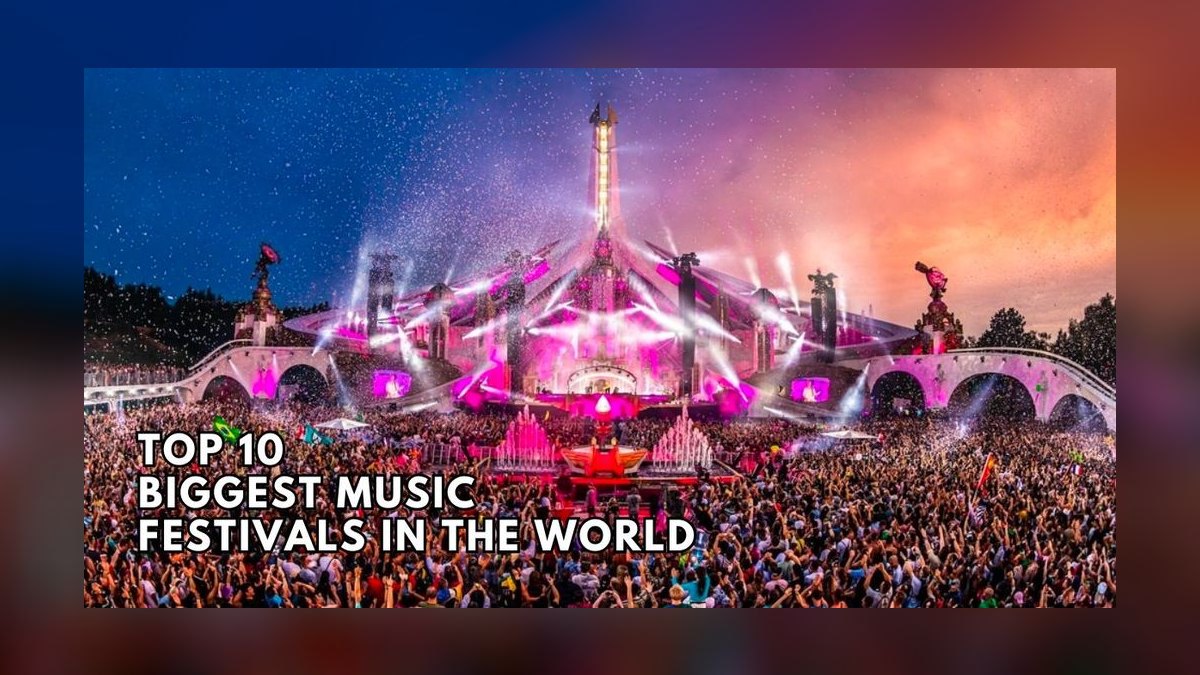
Stages of the last two types are where the inflation lives, and they are the entire reason the top of this list separates so dramatically from the middle.
Ranked by the stage and venue counts their recent editions have supported, the ten to watch for 2027:
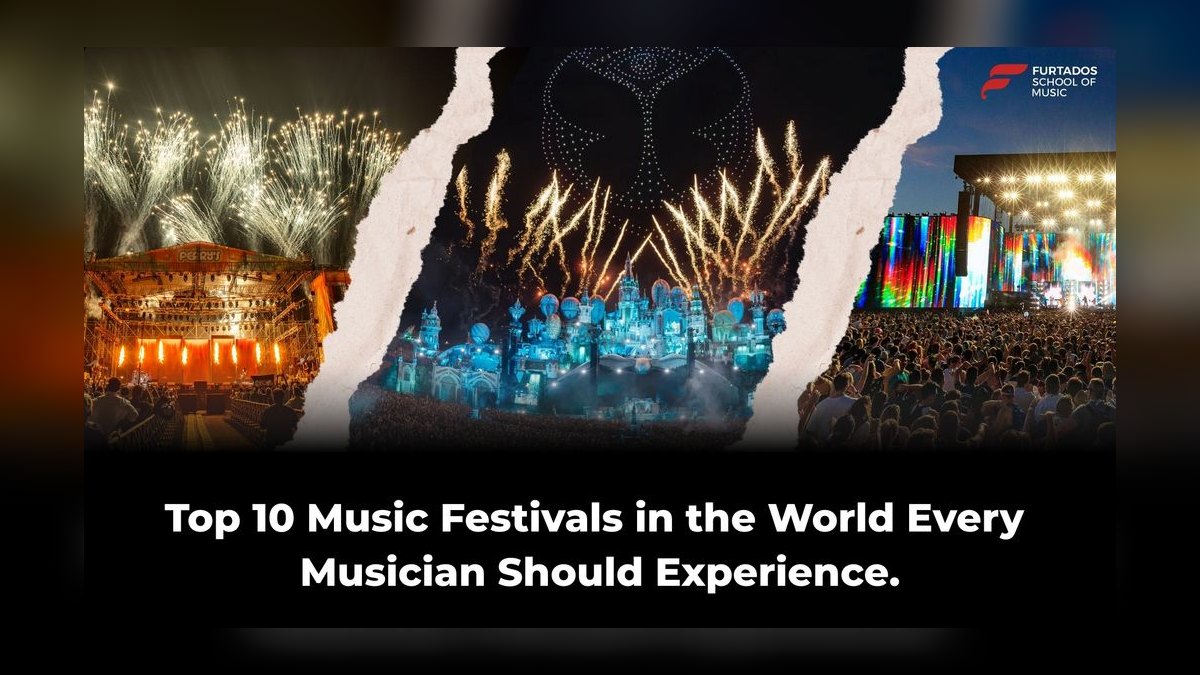
- Glastonbury Festival (Worthy Farm, Pilton, UK) — routinely described as running over 100 stages and performance areas across a site that includes Pyramid, Other, West Holts, Woodsies, Park, Acoustic, Avalon, Left Field, Silver Hayes, the Theatre and Circus fields, the Green Fields, and the late-night South East corner areas including Arcadia, Block9 and Shangri-La. Nothing else in the world is close. Note that Glastonbury takes periodic fallow years to rest the farmland, so confirm on the official site that 2027 is a running year before building plans around it.
- Boomtown (Matterley Estate, Winchester, UK) — an immersive built city divided into districts and chapters, with several dozen stages and venues, many of them narrative sets that double as performance spaces. Boomtown's count varies most from year to year because the city is redesigned around a new storyline.
- Sziget Festival (Óbuda Island, Budapest, Hungary) — a week-long event historically programming dozens of stages and programme venues, including world music, theatre, circus and art spaces alongside the main and electronic stages. Its run length and venue count have been adjusted in recent editions, so verify the current year's programme.
- EXIT Festival (Petrovaradin Fortress, Novi Sad, Serbia) — spreads stages and zones through the tunnels, moats and ramparts of an 18th-century fortress, including the Main Stage, Dance Arena, and a long tail of genre zones. EXIT has publicly discussed its future arrangements, so confirm the host site for 2027.
- Fusion Festival (Lärz, Müritz Airpark, Germany) — a sponsor-free, lottery-ticketed event on a former Soviet airbase running roughly twenty floors and stages more or less continuously for four days.
- Mysteryland (Haarlemmermeer, Netherlands) — the long-running Dutch electronic festival built around a large set of themed stages and areas, typically in the mid-teens to low twenties.
- Tomorrowland (De Schorre, Boom, Belgium) — around fifteen to sixteen stages per weekend, across two weekends, with the highest production spend per stage of anything on this list.
- Creamfields (Daresbury, Cheshire, UK) — roughly fifteen arenas and stages, heavily weighted toward large covered structures.
- Defqon.1 (Biddinghuizen, Netherlands) — a hard dance event running ten-plus colour-coded stages plus the closing Endshow.
- Bonnaroo (Manchester, Tennessee, USA) — the deepest American multi-stage build, with What, Which, This Tent, That Tent, The Other and a set of late-night venues, typically landing near ten.
Just outside: Roskilde, Dour, Coachella, EDC Las Vegas, Wacken Open Air, Primavera Sound and Decibel Outdoor all cluster in the eight-to-fourteen band, and any of them can enter the top ten in a year when a top-ten festival trims its site or takes a fallow year.
How to count the stages at a festival, step by step

Every argument about this ranking is really an argument about method. Fix the method first and the list stops moving.
Step one: get the official site map for the specific edition. Not the marketing page, not last year's map. The site map is the only document that shows every structure the promoter actually built, and it is usually published in the two weeks before doors.
Step two: classify every performance space into one of four tiers. Tier A is a stage with its own dedicated PA, lighting rig, front-of-house position and barrier. Tier B is a covered or open area with a PA and a DJ booth but no barrier or pit. Tier C is a venue-style space — a bar, a set piece, a container build — that hosts programmed acts. Tier D is non-music: theatre, comedy, cabaret, talks, wellness.
Step three: pick a tier cutoff and apply it to every festival identically. A strict count uses A plus B only. That is the count most useful for booking and production comparison, and it puts Tomorrowland, Creamfields and Mysteryland in the low-to-mid teens and Glastonbury around twenty to thirty. A programme count uses A through D. That is the count the festivals themselves publish, and it is where Glastonbury's 100+ figure comes from. Both are defensible. Mixing them across a single list is not.

Step four: deduplicate. Silent discos with three channels are one stage. A stage that gets rebranded on Friday and Saturday is one stage. A stage that runs a different promoter's takeover each day is still one stage. Roaming art cars and sound systems are not stages unless they hold a fixed position for the event.
Step five: normalise for run length. A seven-day festival with forty venues is a different operation from a three-day festival with forty stages. Convert to stage-days — stages multiplied by operating days — when you want a genuine workload comparison.
Step six: cite the source and the year. Every figure in a stage-count list should carry an edition year and a source. Counts that circulate without either are the ones that drift upward over time.
What extra stages cost, how long they take, and the ranges to expect
Adding a stage is never a linear cost. Each one carries a fixed overhead stack that has almost nothing to do with the artists on it: a structure or tent, a PA and monitor package, lighting and power distribution, a generator or a distro spur, a stage manager, audio and lighting crew across the operating hours, security and a barrier team, a medical sightline, cleaning, and a slice of the licence's noise budget.

The spread between the cheapest and most expensive stage on a single site is enormous. A modest covered stage — a small tent, a compact line array, a basic rig — is an order of magnitude cheaper than a mid-sized arena, and a bespoke sculptural mainstage of the kind Tomorrowland builds sits another order of magnitude above that, into custom fabrication, engineering sign-off and multi-month lead times. That is why a festival can jump from eight stages to fifteen without doubling its production budget, and why no festival on this list simply buys its way to the top by adding structures.
Timelines follow the same shape. Rough planning ranges to work from:
- Small tent or venue stage: specified in weeks, built in one to three days on site.
- Mid-sized arena or covered stage: ordered months ahead because the structures are rental-fleet constrained, built in roughly three to seven days.
- Large secondary stage: design locked six-plus months out, build measured in one to two weeks.
- Bespoke mainstage: design starts a year or more ahead, fabrication runs for months, on-site build takes several weeks, and a full technical rehearsal is required before doors.
The load-in window is the real constraint at the top of this list. A site running dozens of stages cannot build them in parallel, because there are finite crane hours, finite forklift drivers, finite trackway, and a single set of site roads that every truck has to share. Multi-stage festivals therefore run a phased build: trackway and power first, then large structures, then small ones, then dress and content, with the mainstage usually last because it consumes the most crane and rigging capacity.
Two failure modes are worth pricing into any 2027 plan. The first is structural risk during build — Tomorrowland lost its 2025 mainstage to a fire days before doors and went ahead by reconfiguring around another stage, which is the clearest recent illustration of why big multi-stage sites keep redundancy in the plan. The second is weather. Bonnaroo's 2025 edition was cut short by flooding, and every outdoor multi-stage site on this list has a wind-speed threshold at which stages close in sequence, largest and most exposed first. A festival's advertised stage count is a fair-weather number.
Where stage-count claims go wrong
Number inflation is the single most common distortion in this category, and it is rarely deliberate. It happens because marketing teams have every incentive to use the broadest possible definition and no incentive to publish a method. Six specific traps:
Counting non-music spaces without saying so. Glastonbury's 100+ figure is honest under a programme count that includes theatre, circus, cabaret, spoken word and the Green Fields. It is not comparable to a count that only includes music stages. Neither figure is wrong; putting them in the same ranked column is.
Counting takeovers as separate stages. A single tent hosting three different curators across three days is one stage with three programmes. Some lineup graphics present it as three, and those graphics get scraped.
Counting roaming systems. Art cars, mobile rigs and parade sound systems are a real part of the experience at several of these events and a real part of the noise budget, but they are not stages under any consistent definition.

Comparing across run lengths. Sziget runs for the better part of a week; Creamfields runs a long weekend. Comparing raw stage counts flatters the longer event on programme depth and the shorter one on daily intensity. Stage-days fixes this in one multiplication.
Assuming last year's count holds. Every festival on this list re-plans its site annually. Stages get cut when a licence tightens, when a structure supplier fails, when a field floods, or when the budget moves toward one hero build. Boomtown in particular redesigns around a new narrative each year, so its count is the least stable in the top five.
Ignoring calendar risk for 2027 specifically. Glastonbury's fallow-year cycle, EXIT's publicly discussed arrangements, and Sziget's recent schedule adjustments all mean the 2027 editions of the top four are not automatic. Anyone building a plan on this list should confirm the 2027 edition exists and check its published site map before treating any figure as current.
The practical test for any stage-count claim: can you name the edition year, the source document, and the tier cutoff? If not, treat it as folklore rather than data.
Picking the right festival by stage count
Stage count is a useful selection filter, but only once you know what you are optimising for — and high counts carry real costs alongside the choice they buy.
If you want maximum discovery, go to the top of the list. A hundred-venue site means you can wander for four days and never see the same room twice, and it means the booking desk had room to take risks on acts that could never justify a mainstage slot. The trade-off is walking distance, decision fatigue, and clashes you cannot resolve.

If you want to see specific headliners cleanly, a high stage count actively works against you. Eight to twelve stages is the sweet spot: enough alternatives to fill dead slots, few enough that the site is crossable in fifteen minutes and the schedule is legible on one page.
If you are programming or pitching, count stages as slots. A festival with forty venues has hundreds of bookable slots and a genuine appetite for developing acts. A festival with eight stages books far fewer acts and fills most of them from a much narrower tier.
If you are producing, the count is a workload figure. Convert to stage-days, then to crew-days, then check it against the load-in window and the site's crane and trackway capacity before agreeing to anything.
If accessibility matters, high stage counts usually mean long distances, uneven terrain and dispersed facilities. The eight-to-twelve band and single-arena-cluster sites are meaningfully easier to navigate.
Related questions
Which single festival has the most stages in the world?
Glastonbury, by a wide margin, under a full programme count that includes theatre, circus, cabaret and spoken-word spaces alongside music stages — routinely described as over 100 performance areas. Under a strict music-only production count its lead narrows sharply but still holds.
Does a higher stage count mean a bigger festival?
No. Capacity and stage count correlate loosely at best. EDC Las Vegas draws enormous nightly crowds across roughly eight or nine stages, while immersive events like Boomtown run far more venues at a fraction of that capacity. Stage count measures programming breadth, not attendance.
Will these 2027 stage counts be confirmed in advance?
Rarely. Most festivals publish a full site map only in the final weeks before doors, and lineup announcements name stages selectively. Treat any pre-announcement 2027 figure as an estimate carried forward from the most recent completed edition.
Which festival adds or removes stages most often?
Boomtown, because its site is a narrative city redesigned around a new storyline each edition, so districts and venues appear and disappear year to year. Sziget and EXIT also vary as programme length and site access change.
FAQ
What counts as a stage at a music festival? There is no industry standard. A strict count includes only spaces with a dedicated PA, lighting rig and front-of-house position. A programme count adds tents, themed floors, venue-style set pieces and non-music spaces such as theatre and comedy. Festivals publish the broader figure; comparisons should state which they used.
Why do published stage counts for the same festival differ so much?

Because different sources apply different cutoffs, count day-by-day takeovers separately, include or exclude non-music programming, and carry figures forward from older editions without rechecking. Always pin a count to an edition year and a source document.
Is Tomorrowland the festival with the most stages? No. Tomorrowland runs roughly fifteen to sixteen stages per weekend, which is high but well behind Glastonbury, Boomtown, Sziget and EXIT on programme counts. What Tomorrowland leads on is production value per stage, not raw quantity.
How should I compare a week-long festival to a weekend one? Use stage-days: multiply the number of stages by the number of operating days. It corrects for the fact that a seven-day event with forty venues and a three-day event with forty stages represent very different production workloads and very different attendee experiences.
Do more stages mean a better experience? Only if you value discovery over convenience. High counts deliver breadth, deep undercards and genuine wandering, at the cost of long walks, scheduling clashes and dispersed facilities. Many attendees get more from a compact eight-to-twelve stage site they can cross quickly.
Should I plan 2027 travel around these rankings now? Check each festival's official site first. Fallow years, site relocations and programme-length changes all affect the top of this list, and no promoter guarantees a stage count in advance. Use the ranking to shortlist, then confirm the specific 2027 edition.
Sources
- https://www.glastonburyfestivals.co.uk/
- https://www.boomtownfair.co.uk/
- https://szigetfestival.com/
- https://www.exitfest.org/
- https://www.tomorrowland.com/
- https://www.creamfields.com/
- https://www.defqon1.com/
- https://www.bonnaroo.com/
- https://www.roskilde-festival.dk/
- https://iq-mag.net/
Related on PULSE
This page will be disappearing soon. Save it to your device for $1 — or read it free while it is here.
@Kory-White- · if Venmo asks, the last 4 of my number are 2012
This page is gone.
This one is off the shelf now. $1 keeps it on your phone for good — the whole page, pictures and diagrams included.
 eventsThe 10 Best Ultramarathons and Trail Races in the World (2027)
 pulse-events10 Best Cruise Lines for Family Reunions in 2027
 eventsThe 10 Best Film Festivals in the World for Independent Filmmakers in 2027
 eventsHow long do the 10 largest music festivals in the world last in 2027?
 pulse-eventsBest Quinceanera and Sweet 16 Venues in Miami (2027)
 pulse-eventsThe 10 Best Las Vegas Bachelor Party Experiences for 2027
 eventsThe 10 Best Food and Wine Festivals in Australia and New Zealand in 2027
 pulse-eventsTop 10 Bachelor Party Destinations in the Mountain West in 2027
 eventsThe 10 Music Festivals with the Highest Ticket Prices in 2027
 pulse-recentHow many people attend the 10 largest corporate retreats in the U.S. in 2027?