


The 10 Music Festivals with the Most Number of Campsites in 2027
Quality
Certified
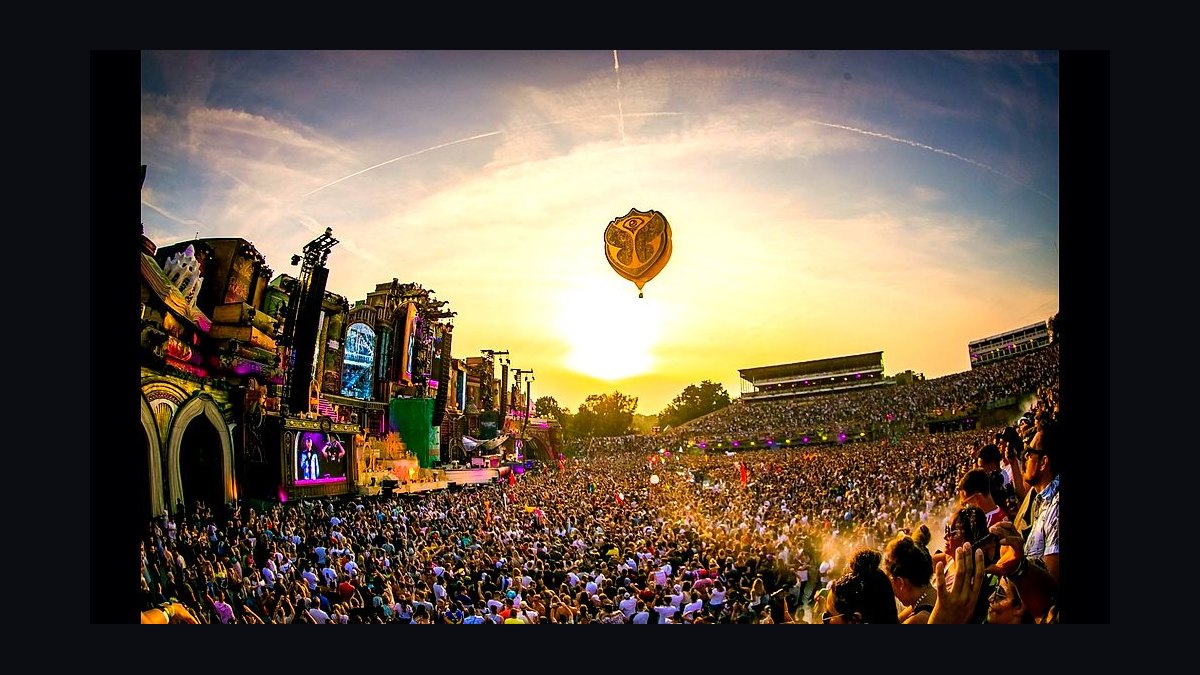
In 2027, the festivals with the most campsites are the multi-day camping giants: Glastonbury, Roskilde, Rock Werchter, Sziget, Download, Reading, Boomtown, Wacken, Tomorrowland's DreamVille, and Bonnaroo. Each holds tens of thousands of pitches or capacity-controlled camping zones, with Glastonbury and Roskilde consistently the largest by pitch count.
The outcome you should expect
If you are planning around campsite capacity in 2027, the practical outcome is that a small number of long-established European and North American festivals hold the overwhelming majority of on-site pitches, and the ranking between them barely moves year to year. Campsite capacity is not a marketing number a festival can raise at will — it is a licensed number, tied to a safety certificate, a defined land parcel, sanitation ratios, and emergency-vehicle access lanes. That is why the same names recur: Glastonbury, Roskilde, Rock Werchter, Sziget, Download, Reading and Leeds, Boomtown, Wacken Open Air, Tomorrowland's DreamVille, and Bonnaroo. These are the ten to plan around.
The concrete expectation is this. At the very top, Glastonbury and Roskilde each accommodate camping populations in the region of 100,000–130,000 people across dozens of named fields or zones. Glastonbury's camping is spread across a working dairy farm of roughly 900 acres, divided into named fields — Pennard Hill, Big Ground, Hitchin Hill, Pylon Ground, Dairy Ground, and so on — with the great majority of ticket holders camping rather than commuting. Roskilde's campsite opens roughly four days before the main music programme and functions as a temporary city; its camping population is the reason the festival is often described as one of Northern Europe's largest short-lived settlements.
In the second tier, expect camping populations in the 60,000–100,000 range: Sziget on Óbuda Island in Budapest, Rock Werchter in Belgium, Download at Donington Park, Reading and Leeds in the UK, Wacken Open Air in Schleswig-Holstein, and Tomorrowland's DreamVille in Boom, Belgium. Bonnaroo in Manchester, Tennessee is the North American outlier — its 700-acre farm site is built around camping, with the majority of attendees sleeping on site, and it is structurally closer to Glastonbury than to a typical American day festival.
The second thing to expect is that "number of campsites" resolves differently depending on what you count. A festival can report a number of camping *zones* (Glastonbury's named fields, Roskilde's lettered areas, DreamVille's themed neighbourhoods), a number of *marked pitches* in premium areas, or a total camping *population*. These three figures diverge by an order of magnitude. A festival with 20 named zones may hold 90,000 campers; a festival with 12,000 numbered pitches may hold fewer people in total but publish a larger-looking pitch count. Any ranking you build has to declare which of the three it uses, or it is not comparable.

Third, expect the premium and pre-pitched share to keep growing while the free-camping share stays flat. Bell tents, pre-erected pods, glamping villages, and campervan fields have expanded at nearly every festival on this list over the last decade, because they monetise the same licensed land at a much higher yield per square metre. Total licensed camping capacity is roughly static; the composition inside it shifts toward paid, marked, serviced pitches. That is the single most reliable directional call you can make about 2027.
What drives that outcome
Campsite counts are the output of four constraints that interact, and understanding them tells you why the ranking is so stable.
Licensed capacity and the safety certificate. In the UK, a festival operates under a premises licence issued by the local authority, informed by a Safety Advisory Group that includes police, fire, ambulance, and highways. That licence names a maximum attendance. Camping capacity is a subset of it. Glastonbury's licence has sat around the 200,000-person mark including crew and traders; the camping population is the bulk of that. A festival cannot add 10,000 pitches because demand exists — it has to return to the licensing authority, and the authority will look at road egress, water supply, and medical provision before it agrees. This is the hardest constraint and the reason the top of the list does not churn.
Land geometry and sanitation ratios. Campsites are not measured only in acres. Planners work in usable pitching area after subtracting fire lanes, emergency-vehicle routes, welfare points, toilet blocks, water stations, and steward posts. A rough working figure used across the industry is that a small tent plus its share of circulation occupies somewhere in the region of 8–15 square metres in free camping, and more in marked or pre-pitched areas where a grid is enforced with defined gaps. Toilet provision is typically planned at roughly one unit per 75–100 campers, with water points and waste stations scaled alongside. Slope, drainage, and ground condition remove further area — a field that floods is a field that cannot be pitched on, which is why festivals on clay soils lose capacity in wet years.
Site tenure and neighbours. Glastonbury camps on Worthy Farm because the farm is owned by the festival's founding family. Bonnaroo owns its Great Stage Park farm. Wacken has grown by acquiring and leasing surrounding agricultural land in a village of a few thousand residents. Sziget sits on an island with a fixed perimeter — you cannot extend an island. Rock Werchter and Tomorrowland operate in dense Flemish municipalities where every extra hectare is negotiated with landowners and local councils. Festivals that own or control adjacent land can grow campsite counts incrementally; festivals hemmed in by water, motorways, or housing cannot, whatever their ticket demand.
Commercial mix. The revenue per square metre of a premium pre-pitched bell tent is many times that of a patch of free camping. So the direction of travel is to carve serviced villages out of general camping: quieter fields, showers, lockers, charging, staffed reception. This does not increase the licensed number of campers; it re-slices it. The visible effect over time is more named camping zones, smaller average zone size, and a higher published "number of campsites" without any change in how many people sleep on site.
Benchmarks and realistic ranges
Use these as planning bands rather than precise figures, because every festival publishes capacity differently and licensed numbers are revised year to year.
Glastonbury Festival, Worthy Farm, England. The largest greenfield music festival campsite in the world by camping population. Total licensed attendance including crew, traders, and performers has been in the region of 200,000; the ticketed public figure is around 140,000–210,000 depending on which licence year and which counting basis you use. The overwhelming majority camp. Camping is organised into named fields rather than numbered pitches, with well over twenty distinct camping areas plus campervan and live-in-vehicle fields, family camping at Kidney Mead, and accessible camping. Note that Glastonbury runs fallow years — the site rests to let the pasture recover — so confirm whether 2027 is an operating year before planning around it.
Roskilde Festival, Denmark. Camping opens roughly four days ahead of the main programme and the camping population routinely runs in the 80,000–100,000+ range against a total attendance including volunteers in the region of 130,000. Camping is divided into lettered and named areas across a large flat site, with dedicated quiet, clean, and themed zones. Roskilde is unusual in that the warm-up camping days are a substantial part of the product, not an add-on.
Sziget Festival, Budapest, Hungary. Held on Óbuda Island with a week-long programme and total attendance frequently reported in the 400,000–500,000 range measured as cumulative daily entries. The camping population on any given night is far smaller — plan on tens of thousands — because the island's perimeter is fixed and much of the audience is local or staying in the city. Sziget's camping is split into standard, quiet, and premium villages plus a campervan area.
Rock Werchter, Belgium. Four days, daily attendance historically in the 80,000–90,000 range with a large dedicated camping site adjacent to the festival terrain, organised into multiple camping zones including a quieter "The Hive" style premium area and a campervan field.
Download Festival, Donington Park, England. A rock and metal festival on a motor-racing circuit with camping spread across multiple named villages and a large arena-adjacent general camping area. Camping population typically in the 60,000–80,000 band, with a well-developed premium and RIP camping tier.
Reading and Leeds Festivals, England. Twin sites over an August bank holiday weekend, each with camping populations in the 60,000–90,000 range. Reading's camping sits along the Thames on Richfield Avenue and is heavily zoned; Leeds camps at Bramham Park. Both are famous for very high tent-abandonment rates, which shapes their post-event operations.
Boomtown Fair, Winchester, England. Capacity in the region of 60,000–70,000, with camping organised thematically to match the festival's city-district design. Boomtown is notable because camping is not an afterthought — the camping districts are part of the narrative environment.
Wacken Open Air, Germany. Roughly 75,000–85,000 attendees in a village of a few thousand, with almost the entire audience camping across a very large area of leased farmland, plus extensive campervan and caravan provision. Wacken's camping-to-attendance ratio is among the highest of any major festival.

DreamVille at Tomorrowland, Boom, Belgium. A purpose-built camping village serving a festival that runs across multiple weekends, with tens of thousands of campers per weekend across tiered products from basic tents to fully serviced cabins and pre-erected accommodation. DreamVille is the clearest example of camping as a premium product line rather than a logistical necessity.
Bonnaroo, Manchester, Tennessee, USA. A 700-acre farm site where camping is the default. Attendance has run in the 65,000–80,000 range in strong years, with the large majority camping on site in general camping "pods," car camping, RV areas, and premium options. Bonnaroo is the main North American entry on any campsite-count ranking.
Two ratios worth carrying: at camping-first festivals, expect 70–90% of attendees to sleep on site; at city-adjacent festivals like Sziget, expect a much lower share. And expect roughly 8–15 square metres of gross site area consumed per free-camping tent once circulation, welfare, and fire lanes are apportioned — useful for sanity-checking any capacity claim you are given.
Risks, edge cases, and failure modes
Fallow years. Glastonbury periodically takes a year off. If 2027 is a fallow year, the top of the ranking changes shape entirely and Roskilde becomes the largest campsite operation in Europe by default. Always confirm the operating calendar before publishing a year-specific ranking.
Counting basis mismatch. The single most common error is comparing a cumulative-attendance figure against a peak-camping figure. Sziget's headline number counts entries across a week; Glastonbury's counts people on site. Put them in the same table without adjustment and you will rank them wrongly by a factor of five. Decide up front whether you are ranking by number of named camping zones, number of marked pitches, or peak overnight camping population — then apply it consistently to all ten.
Weather and ground condition. A wet spring turns pitchable pasture into unusable mud. Festivals have closed camping fields mid-build, moved campers to hardstanding, and in extreme cases capped arrivals. Capacity on paper is not capacity on the day. Sites on clay lose more area to rain than sites on free-draining sand or gravel.
Licence revision after an incident. A serious crowd or fire incident anywhere in the sector tends to produce tighter conditions at the next round of safety advisory meetings — wider fire lanes, lower campers-per-hectare, more stewarding. These changes reduce capacity without any change to land area. Assume a slow ratchet downward in campers per hectare over time.
Local political risk. Festivals in small municipalities depend on continued local consent. Noise complaints, traffic disruption, and land-use disputes have shrunk or relocated campsites before. Wacken-style village festivals and Belgian festivals in dense municipalities carry the most exposure here.
Tent abandonment and waste liability. UK festivals in particular deal with very large volumes of abandoned tents, which is both a cost and a reputational risk. Some festivals have responded with deposit schemes, pre-pitched-only zones, or bans on single-use gear. Each of those changes the effective campsite mix, sometimes reducing the number of free-camping pitches offered.
Premium cannibalisation. As pre-pitched and glamping villages expand, general camping shrinks. For a reader who wants cheap on-site camping, a festival's rising total campsite count can coexist with fewer affordable pitches. Read the product mix, not just the headline capacity.
Sold-out camping versus sold-out tickets. Camping often sells out before general admission at festivals where camping is a separate add-on. Treat camping availability as a distinct inventory from festival tickets.
Multi-weekend structures. Tomorrowland runs across weekends, so a single-weekend camping figure understates the annual campsite throughput and overstates the peak. Say which you mean.
A practical rollout plan
If you are building or verifying a ranking of the ten festivals with the most campsites for 2027, work in this order.
Step one — fix the definition. Write down, in one sentence, what "number of campsites" means for your ranking. Recommended default: peak overnight camping population, with a secondary column for number of distinct named camping zones. Anything else invites the counting-basis error above.
Step two — confirm the operating calendar. Check each festival's official announcement for 2027 dates, and specifically check whether Glastonbury is running or fallow. Note multi-weekend structures.
Step three — pull primary sources only. Use each festival's own camping pages, ticket terms, and site maps, plus the relevant licensing authority documents where they are public. UK premises licences and safety advisory group papers are often published in council committee packs and give you a hard licensed number rather than a press estimate.
Step four — normalise. Convert every figure to your chosen basis. For festivals that publish only total attendance, apply a documented camping share — high for Wacken, Bonnaroo, and Glastonbury; low for Sziget — and label it as an estimate rather than a fact.
Step five — cross-check against land area. Divide camping population by usable camping hectares and sanity-check against the 8–15 square metres per tent band. A festival claiming a density far outside that range is either counting differently or including non-camping land.
Step six — record the product mix. For each festival, note the split between free general camping, marked pitches, pre-pitched, glamping, and campervan or RV. This is what actually matters to a reader deciding where to sleep.
Step seven — date-stamp and set a review. Capacity figures move. Stamp every number with the year it was published and re-check before each edition.
Related questions
Which single festival has the largest campsite in the world?
By peak overnight camping population, Glastonbury Festival at Worthy Farm is generally regarded as the largest, with well over 100,000 people camping across more than twenty named fields on roughly 900 acres of working farmland in Somerset, England.
Does a higher number of camping zones mean more total campers?
No. Zone count and camper count are independent. Festivals often subdivide existing licensed land into more named zones to sell premium, quiet, family, or pre-pitched products. The number of zones rises while the licensed camping population stays flat.
Why do European festivals dominate campsite rankings?
Longer multi-day formats, greenfield or farmland sites, and an audience culture where camping is the default rather than an upgrade. Most large North American festivals are urban day events with no camping at all, which removes them from the ranking entirely.
What is the largest camping festival in North America?
Bonnaroo in Manchester, Tennessee. Its roughly 700-acre farm is designed around camping, with general camping pods, car camping, RV areas, and premium tiers. The majority of attendees sleep on site across the festival's run.
How early do campsites usually open?
Typically one to four days before the main music programme. Roskilde is the notable case, opening camping several days ahead with its own warm-up programme, which is why its camping population is such a large share of total attendance.
FAQ
How many campsites does Glastonbury actually have?
Glastonbury does not publish a pitch count. It organises camping into named fields — Pennard Hill, Big Ground, Dairy Ground, Hitchin Hill, Pylon Ground, Kidney Mead and others — plus campervan, live-in-vehicle, and accessible camping areas. There are well over twenty distinct camping areas, and the camping population runs comfortably into six figures. Any specific pitch number you see quoted is an estimate, not an official figure.
Is the number of campsites the same as the number of tents allowed?
No, and this is the most frequent source of error. "Number of campsites" can mean named camping zones, marked and numbered pitches, or peak overnight camping population. A festival with fifteen zones might hold 90,000 campers, while one advertising 10,000 numbered pitches holds far fewer people. Always check which basis a ranking uses before comparing festivals.
Can a festival simply add more campsites if tickets sell out?
Not easily. Camping capacity is bounded by a premises licence or safety certificate agreed with local authorities, police, fire, and ambulance services, and by sanitation ratios, fire lanes, and emergency-vehicle access. Expanding requires new land, a licence variation, and additional welfare infrastructure. That is why the top of the list barely changes from year to year.
Do campsites at these festivals sell out separately from tickets?
Often, yes. Where camping is a paid add-on — campervan fields, pre-pitched tents, glamping, and premium villages in particular — that inventory is finite and frequently sells out well before general admission. Treat camping as a separate inventory line and book it as soon as it opens if you need a specific type of pitch.
Which festival has the highest share of attendees camping?
Wacken Open Air, Bonnaroo, and Glastonbury sit at the top, where camping is effectively the only practical option given the rural sites and limited local accommodation. Expect 70–90% of attendees to sleep on site. City-adjacent festivals such as Sziget have a much lower camping share because a large part of the audience stays in local accommodation.
Will the number of campsites grow at these festivals by 2027?
Total licensed camping capacity is likely to stay roughly flat, because it is constrained by licence and land rather than demand. What will keep growing is the premium share — pre-pitched tents, serviced villages, and campervan provision — carved out of existing camping land. Expect more named camping zones without a meaningful rise in total campers.
Sources
- https://www.glastonburyfestivals.co.uk/information/camping/
- https://www.roskilde-festival.dk/en/
- https://www.szigetfestival.com/
- https://www.rockwerchter.be/en
- https://downloadfestival.co.uk/
- https://www.readingfestival.com/
- https://www.wacken.com/en/
- https://www.tomorrowland.com/en/festival/dreamville
- https://www.bonnaroo.com/
- https://www.boomtownfair.co.uk/
Related on PULSE
This page will be disappearing soon. Save it to your device for $1 — or read it free while it is here.
@Kory-White- · if Venmo asks, the last 4 of my number are 2012
This page is gone.
This one is off the shelf now. $1 keeps it on your phone for good — the whole page, pictures and diagrams included.
 eventsWhat do professional event planners do differently when designing a wedding timeline in 2027?
 pulse-recentThe 10 Music Festivals with the Most Number of Attendees Per Day in 2027
 eventsThe 10 Best Music Festivals by Attendance in 2027
 pulse-recentThe 10 Music Festivals with the Largest Number of Food and Drink Vendors in 2027
 pulse-recentThe 10 Music Festivals with the Highest Total Attendance Over the Full Event in 2027
 pulse-eventsTop 10 Corporate Retreat Venues in the Mountain West in 2027
 events10 Best Rooftop Party Venues in Major U.S. Cities in 2027
 pulse-recentThe 10 Corporate Retreat Venues with the Most Rooms in the U.S. in 2027
 pulse-events10 Best Cruise Lines for Family Reunions in 2027
 eventsHow many people attend the 10 largest music festivals in the world in 2027?