


The 10 Corporate Retreat Venues with the Most Rooms in the U.S. in 2027
Quality
Certified
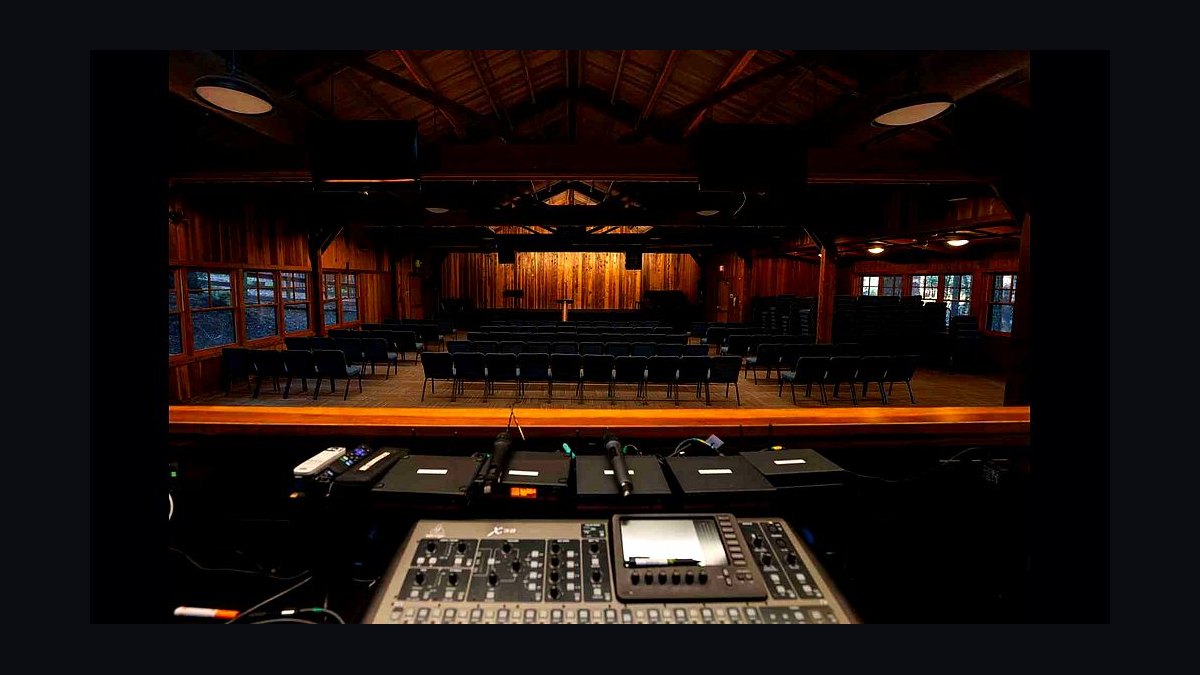
The largest U.S. corporate retreat venues by room count are sprawling conference resorts — Gaylord properties in Texas, Tennessee, Florida and Maryland, Disney's Coronado Springs, MGM and Caesars conference towers in Las Vegas, and Orlando's Rosen Shingle Creek — each offering roughly 1,500 to 4,000 rooms plus dedicated meeting space under one roof.
The 900-person offsite that broke the spreadsheet
Picture a RevOps leader at a mid-market SaaS company that just merged with a competitor. Headcount in the combined go-to-market org jumps from 380 to 910 overnight, and the CRO wants everyone — sales, CS, marketing, partnerships, sales engineering, and the enablement team — in one building for three days in Q1 2027 to rebuild the territory model and relaunch the comp plan. The mandate is simple to say and brutal to execute: one hotel, one campus, no shuttle buses, no splitting the group across two properties on opposite sides of a highway.
That single constraint — everyone under one roof — is what pushes a retreat out of the boutique-lodge category and into the world of properties measured in thousands of rooms. And it changes the math in ways most first-time planners underestimate. A 910-person offsite does not need 910 rooms; it needs somewhere between 700 and 850, because a slice of attendees will share, a slice will be local commuters, and a slice will no-show. But you cannot book 750 rooms at a 300-room lodge, and you cannot book them at a 1,000-room hotel either, because a hotel will rarely sell more than about 60–70% of its inventory to a single group on peak nights. Transient guests, loyalty-program redemptions, existing contracted business, and airline crew blocks all have prior claims on the building.
Run that ratio and the answer falls out immediately. A group needing 750 peak-night rooms is realistically shopping properties with 1,200 to 1,500 rooms minimum, and if the dates are inflexible or fall in a high-demand window, the practical floor climbs toward 2,000. That is why the same twenty or so buildings appear on every large-group shortlist in the country. The set of American hotels that can absorb a four-figure room block *and* seat the whole group for a general session *and* break them into thirty concurrent workshops is genuinely small — smaller than most executives believe when they first say "just find us a big resort."
The scenario also surfaces the second constraint that separates true retreat venues from convention hotels: the group wants the campus to feel like a destination, not a layover. They want a lakefront, a golf course, a pool complex, a beach, or at minimum an atrium big enough that people linger in it after sessions instead of retreating to their rooms. Room count alone does not make a retreat venue. Room count *plus* self-contained amenity density plus contiguous meeting space is the actual filter, and that three-way intersection is what produces the same recurring names.

What "most rooms" actually means when you shop a venue
The phrase "the venue with the most rooms" hides three different measurements, and confusing them is the single most common costing error in large-group planning. Understanding the distinction is what lets a planner read a hotel's sales sheet accurately instead of taking the headline number at face value.
Total keys is the number printed in press releases and on the property fact sheet — every sellable unit in the building, including suites, accessible rooms, and units that may be out of service for renovation. It is the number that ranks properties in "largest hotels" lists. It is also the least useful number for a planner, because no hotel will sell you all of it.
Available block is what the sales team will actually contract to your group on your specific dates. This is typically 50–70% of total keys, and the percentage moves with the calendar. A property might release 70% of inventory to a single group in a soft February window and only 35% during a peak convention week when it can fill the building at higher transient rates. Two hotels with identical key counts can therefore offer wildly different usable capacity depending on what else is already on their books.
Peak-night rooms is what your group actually consumes on its busiest night, and it is the number that drives every clause in the contract — attrition, food-and-beverage minimum, meeting space rental, and comp room ratios. Planners routinely quote total attendee count when the hotel is asking for peak-night rooms, and the two differ by 15–30%.
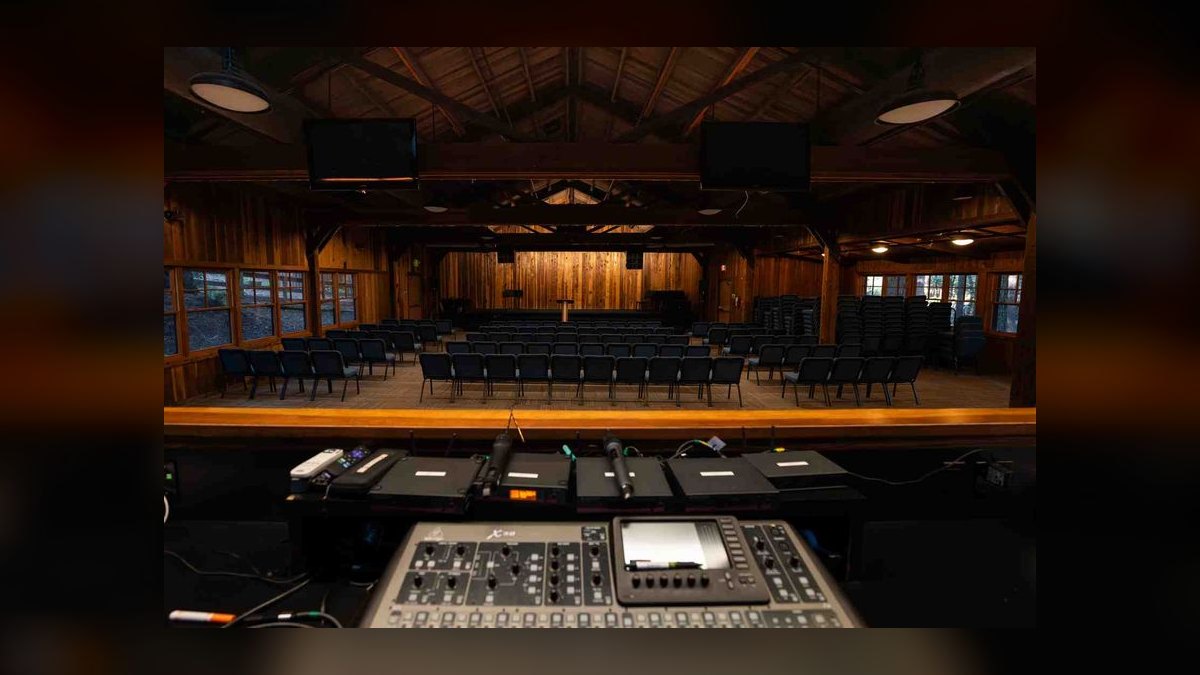
The practical translation looks like this. Take total headcount, subtract expected no-shows (5–10% is a normal planning assumption for internal corporate events, higher for optional attendance), subtract local attendees who will commute, then apply a double-occupancy rate. Most corporate offsites run single-occupancy for director level and above and double for early-career staff, which lands the blended occupancy somewhere between 1.1 and 1.4 people per room. A 900-person event at 1.25 people per room is 720 peak-night rooms. Add 5–8% buffer for the staff, speakers, executives arriving early, and vendors, and the block request goes out at roughly 760–780.
Then apply the 60% inventory rule in reverse: a 770-room peak block wants a property of about 1,300 keys or more to be a comfortable fit rather than a fight. That single arithmetic chain is why the venues below cluster where they do, and why a planner shopping a genuinely large corporate retreat is choosing from a shortlist rather than a market.
The venues that actually carry a four-figure room block
The American properties that combine very large room counts with genuine retreat character fall into four recognizable families. Naming the families matters more than memorizing an exact ranking, because room counts shift with renovations, tower additions, and rebrands — a property that ranks eighth one year may rank sixth the next without anything meaningful changing about its suitability.
The Gaylord family. Marriott's Gaylord Hotels brand exists specifically for this use case, and its properties are consistently among the largest non-gaming hotels in the country. Gaylord Opryland in Nashville is the flagship and one of the largest hotels in the United States outside Las Vegas, with room counts in the high 2,000s and roughly nine acres of indoor garden atriums. Gaylord Texan in Grapevine, Gaylord Palms in Kissimmee, Gaylord National in the Washington, D.C. area at National Harbor, and Gaylord Rockies outside Denver each carry room counts in the roughly 1,500–2,000 range with enormous contiguous exhibit and ballroom space. The brand's defining feature — a climate-controlled atrium with restaurants, water features and walkable "districts" inside the building — is precisely what makes them work as retreats rather than mere conference boxes. Attendees never leave, which is the entire point of an offsite.

The Orlando and Disney cluster. Central Florida is arguably the densest concentration of large-group capacity in the country. Disney's Coronado Springs Resort is Walt Disney World's dedicated convention property, with a room count in the roughly 1,900 range after the Gran Destino Tower addition, paired with a very large ballroom and an outdoor lake campus. Rosen Shingle Creek on Universal Boulevard runs around 1,500 rooms with an on-site golf course. The Hyatt Regency Grand Cyprus, the Orlando World Center Marriott (one of the largest Marriott properties in the world, with a room count around 2,000), and the Signia by Hilton Orlando Bonnet Creek all sit in the same tier. The Orlando advantage is airlift plus purpose-built meeting space plus a labor market that knows how to feed 2,000 people in ninety minutes.
The Las Vegas conference towers. If pure room count is the only criterion, Las Vegas wins outright — MGM Grand, the Venetian and Palazzo complex, Caesars Palace, Wynn and Encore, Mandalay Bay, ARIA, and Bellagio all carry room counts from roughly 3,000 to well over 4,000, with MGM Grand and the Venetian complex among the largest hotels on earth. They also carry the most conference square footage. The trade-off is character: many companies deliberately exclude Las Vegas from retreat consideration on policy grounds, because a gaming floor between the ballroom and the elevator changes the tone of a values-and-strategy offsite. When Vegas is allowed, it is unmatched on capacity, rate, and direct flights.

The destination resort campuses. Properties like the Broadmoor in Colorado Springs, the Greenbrier in West Virginia, the Boca Raton, Grand Hyatt Kauai and the big Hawaii resorts, JW Marriott Desert Ridge in Phoenix, and the Hotel del Coronado area properties sit lower on the room-count ladder — typically 600 to 1,600 keys — but rank highest on retreat feel. They are the answer when the group is 300–600 people and the goal is cohesion rather than raw throughput.
The pattern that matters. A planner ranking American venues strictly by rooms would produce a list dominated by Las Vegas, with Orlando second and Gaylord properties filling the rest. A planner ranking by *retreat suitability at scale* produces a very different order, with Gaylord and the Orlando resort-conference hybrids on top. Both lists are defensible; they answer different questions. Verify current key counts directly with each property's sales office before building a shortlist, because tower openings and renovation closures move these numbers every year.
Real numbers: rates, minimums, and what a large block costs
Large-group economics behave differently from transient hotel pricing, and the differences are worth quantifying because they determine whether a big venue is affordable or ruinous.
Room rates. Group rates at large convention resorts typically run 10–25% below the property's transient rate for the same dates, because the hotel values the guaranteed volume and the food-and-beverage spend that comes with it. In practice, expect roughly $180–$320 per night at Gaylord and Orlando convention properties in shoulder season, climbing to $350–$500 in peak windows. Las Vegas conference-tower group rates often run lower on the room and recover the difference through resort fees and F&B. Destination resorts like the Broadmoor or the Greenbrier price meaningfully higher, often $400–$700, and frequently quote a per-person, per-day inclusive rate rather than a room rate.
Resort fees. Nearly every property in this class charges a mandatory daily resort or destination fee, commonly $30–$50 per room per night. On a 750-room block over three nights that is $67,500 to $112,500 on top of the room rate. Negotiate it — large blocks routinely get it reduced or folded in, but only if it is raised before the contract is signed.

Food and beverage minimums. This is where big-venue budgets actually live. A plated banquet dinner for a large group commonly runs $85–$150 per person before service charge; a full-day meeting package covering breakfast, two breaks and lunch typically runs $95–$165 per person per day. Service charge is 22–26% and is usually taxable, so a $100 menu item lands closer to $130 all-in. For a 900-person, three-day retreat, an F&B commitment of $400,000–$700,000 is a normal order of magnitude, and the hotel will write a minimum into the contract that you owe whether you consume it or not.
Attrition. Contracts typically allow the group to fall 10–20% below the contracted block without penalty. Below that, you pay a percentage of lost room revenue — often 80–90% of the rate on the shortfall. Attrition is negotiable and should be. Ask for a sliding scale by cutoff date and for the right to review the block at 90, 60 and 30 days out.
Comp rooms. The industry convention is one complimentary room per 40 or 50 revenue rooms per night. On a 750-room block that is 15 to 19 comp rooms nightly — real money that should be explicitly captured in the contract, along with whether it accrues cumulatively or nightly.
Meeting space rental. Large convention resorts frequently waive or heavily discount meeting space rental when the room block and F&B minimum are large enough. Do not accept a quoted rental figure without asking what block size makes it disappear.
Audio-visual. Budget $15,000–$60,000+ for general-session production at this scale depending on staging ambition. In-house AV is convenient and expensive; outside AV vendors often save 25–40% but may trigger a facility fee.
Total planning benchmark. A useful all-in benchmark for a large domestic corporate retreat is $900–$1,800 per attendee for three days excluding airfare, and $1,400–$2,600 including it. If a quote lands far outside that band in either direction, something in the assumptions is wrong.
Trade-offs: one giant building versus the alternatives

Choosing the largest available property is not automatically correct. Each option in the capacity ladder buys something and gives something up.
The single mega-property. Everyone under one roof is the strongest argument for a 1,500+ room venue, and it is a real one. Hallway collisions between a sales rep in Denver and a CS lead in Boston are the actual product of an offsite, and they only happen when there is one hallway. The costs are atmosphere and cost-per-head: giant conference hotels can feel institutional, and F&B minimums scale with the building.
Two adjacent properties. Booking a 900-room block across two neighboring hotels — common in Orlando, National Harbor, and downtown cores with connected properties — unlocks capacity and often better rates through competitive bidding. The failure mode is social: the group self-sorts by hotel, informal networking drops, and the general session becomes the only shared experience. This works when the properties genuinely connect on foot in under five minutes and fails when a shuttle is involved.
Buyout of a smaller resort. Taking a 400–600 room destination resort entirely is the highest-cohesion option available. Nobody in the building is a stranger, the branding is total, and the experience is memorable in a way a Gaylord atrium is not. It only works below roughly 700 attendees and typically costs 30–60% more per head.
Regional hub-and-spoke. Running four 225-person regional retreats instead of one 900-person national one cuts airfare dramatically, opens up hundreds of viable venues, and lets each region tailor content. It sacrifices exactly the cross-regional relationship-building that justified the offsite. A reasonable compromise many companies land on: regional meetings three quarters a year, one national gathering annually.

Convention center plus hotel package. For very large groups, a convention center for general sessions with a nearby hotel block gives enormous flexibility and often the lowest cost per square foot of meeting space. It is the least retreat-like option on this list — it feels like work, not like getting away — and is better suited to sales kickoffs than to strategic offsites.
Pitfalls that cost real money at this scale
Booking too late. Properties with 1,500+ rooms sell their prime windows 18–36 months out. A group of 800 shopping for a March date with nine months of lead time is choosing from leftovers, and the rate reflects it. For a 2027 retreat, serious sourcing should be underway well before mid-2026.
Signing an attrition clause you cannot meet. The most expensive mistake in group contracting is contracting the block you *hope* to fill rather than the block you will *certainly* fill. Contract conservatively and add rooms later — hotels almost always accommodate growth, and almost never forgive shortfall. A group that contracts 800 and delivers 640 can owe six figures for rooms nobody slept in.
Ignoring the cutoff date. Rooms not booked by the cutoff release back to the hotel at market rate. Attendees who book late then pay $420 instead of $249 and expense the difference, blowing the travel budget while the group still owes attrition on the unfilled block — losing twice on the same rooms.
Underestimating meeting space needs. A 900-person general session in rounds of ten needs roughly 12,000–15,000 square feet before staging. Add thirty breakouts and the requirement can exceed 40,000 square feet of contiguous space. Sales teams quote total square footage across the property; what matters is contiguous, same-floor, on the days you need it. Ask for a floor plan with your specific dates marked and confirm no other group is sharing your prefunction space.

Missing the airlift check. A venue with 2,000 rooms and one connecting flight from half your regions is a false economy. Before shortlisting, run a quick flight-cost analysis from your top five employee-population cities. Orlando, Las Vegas, Dallas, Denver, Nashville and Phoenix all have strong direct-flight coverage, which is not coincidental to why the largest venues cluster there.
Letting F&B minimums drive the agenda. Groups that commit to a large minimum often end up scheduling meals they do not want to hit it. Negotiate the minimum against a realistic agenda first, and confirm that room service, in-room amenities, and hosted bars count toward it — many contracts exclude categories planners assume are included.
Forgetting the shoulder days. Peak-night pricing dominates negotiation, but arrival and departure nights matter. Groups that arrive staggered across two days pay for a wider window than they need. Cluster arrivals, and negotiate a lower rate for the pre- and post-nights that VIPs and staff will use.
Assuming published room counts are current. Renovations take entire towers offline for a year or more. Verify current sellable inventory with the sales office rather than trusting a fact sheet, a wiki page, or last year's shortlist.
Related questions
How far in advance should we book a 1,000-person corporate retreat?
Eighteen to thirty-six months for prime dates at the largest properties. Twelve months is workable in shoulder season. Under nine months, expect limited date choice, no rate leverage, and possible splits across two hotels.
What percentage of a hotel's rooms can one group book?
Typically 50–70% of total keys, varying by season and existing bookings. Assume 60% when sizing a shortlist. A 750-room peak-night need therefore points toward properties of roughly 1,300 keys or larger.
Is Las Vegas appropriate for a corporate retreat?

It offers unmatched room counts, rates and airlift, but the gaming environment conflicts with some corporate policies and shifts the tone of strategic sessions. Many companies allow it for sales kickoffs and exclude it for leadership offsites.
What does a large corporate retreat cost per person?
A useful benchmark is $900–$1,800 per attendee for three days excluding airfare, and $1,400–$2,600 including it. Destination resorts and buyouts push higher; convention-center formats push lower.
How many rooms does a 900-person event actually need?
Roughly 700–780 peak-night rooms. Subtract no-shows and local commuters from headcount, apply blended occupancy of 1.1–1.4 people per room, then add 5–8% buffer for staff, speakers and vendors.
FAQ
Which U.S. hotel has the most rooms overall?
The largest American hotels by room count are Las Vegas properties — the MGM Grand and the Venetian/Palazzo complex are consistently among the largest hotels in the world, each in the 4,000–7,000 room range depending on how connected towers are counted. Outside gaming markets, Gaylord Opryland in Nashville is among the largest, and the Orlando World Center Marriott is one of the largest Marriott-branded properties anywhere. Confirm current figures with each property, since tower additions and renovations change them.
What is the difference between a conference hotel and a retreat venue?
A conference hotel optimizes for throughput: large ballrooms, efficient breakouts, fast catering. A retreat venue optimizes for cohesion: a campus people want to stay on, outdoor space, and a sense of removal from ordinary work. Gaylord properties and the Orlando convention resorts deliberately try to be both, which is why they dominate large-group retreat shortlists. Below about 600 attendees, a true destination resort usually delivers a better retreat than a larger conference property.

Should we contract the block we hope for or the block we are sure of?
Always the block you are sure of. Hotels accommodate growth readily and rarely forgive shortfall. Contract conservatively, negotiate the right to add rooms at the same rate, and build in review points at 90, 60 and 30 days before arrival. The downside of under-contracting is a modestly higher rate on added rooms; the downside of over-contracting is attrition liability that can reach six figures on a large block.
Do these venues negotiate on meeting space rental?
Frequently, yes. Large convention resorts often waive meeting space rental entirely when the room block and food-and-beverage minimum are substantial enough, because rooms and catering are where their margin lives. Never accept a quoted rental figure without asking what block size or F&B commitment makes it go away — it is one of the easiest concessions to win and one planners most often leave on the table.
Can we split a large group across two hotels without hurting the event?
It can work when the properties are genuinely connected or within a short, weather-protected walk, and when all general sessions and meals happen in one building. It fails when a shuttle is required — attendees self-sort by hotel, informal networking collapses, and the general session becomes the only shared experience. If a shuttle is unavoidable, move up a tier to a single larger property instead.
How much contiguous meeting space does a 900-person retreat need?
Roughly 12,000–15,000 square feet for a general session in rounds of ten before staging, plus breakout space that can push the total past 40,000 square feet of contiguous, same-floor area. Property sales sheets quote total square footage across the whole building, which is not the same thing. Ask for a dated floor plan showing exactly which spaces are yours and whether another group shares your prefunction area.
Sources
- https://www.marriott.com/en-us/hotels/brands/gaylord-hotels/
- https://www.ahla.com/
- https://www.mpi.org/
- https://www.pcma.org/
- https://www.eventmanagerblog.com/
- https://disneymeetings.disney.go.com/
- https://www.visitorlando.com/meetings/
- https://www.visitlasvegas.com/meetings/
- https://www.northstarmeetingsgroup.com/
- https://www.cvent.com/en/resources
Related on PULSE
This page will be disappearing soon. Save it to your device for $1 — or read it free while it is here.
@Kory-White- · if Venmo asks, the last 4 of my number are 2012
This page is gone.
This one is off the shelf now. $1 keeps it on your phone for good — the whole page, pictures and diagrams included.
 pulse-events10 Best Family Reunion Destinations in the Southeast for 2027
 eventsHow many people attend the 10 largest music festivals in the world in 2027?
 pulse-recentThe 10 Music Festivals with the Most Number of Campsites in 2027
 pulse-recentThe 10 Music Festivals with the Most Number of Artists Performing in 2027
 pulse-recentThe 10 Music Festivals with the Most Number of Days in 2027
 pulse-eventsTop 10 Corporate Retreat Venues in the Mountain West in 2027
 pulse-events10 Best All-Inclusive Resorts for Family Reunions in 2027
 pulse-recentThe 10 Music Festivals with the Largest Physical Footprint in 2027
 pulse-eventsThe 10 Best Charleston Wedding Venues in 2027
 pulse-eventsBest Retirement Party Venues in the Washington, D.C. Area (2027)