


How many attendees do the 10 largest corporate retreats in the U.S. host in 2027?
Quality
Certified

No verified public census ranks the 10 largest U.S. corporate retreats, so 2027 attendance must be modeled. Expect the single biggest event to clear roughly 8,000-15,000 attendees, the middle of the top 10 to sit near 3,000-6,000, and the smallest qualifiers around 1,500-2,500, for a combined top-10 total near 40,000-70,000.
The outcome you should expect
If you are sizing the ten largest corporate retreats in the U.S. for 2027, the honest starting point is that no government agency, industry association, or research firm publishes a verified census of corporate retreat attendance. Public conferences often report headcounts because sponsors and exhibitors demand proof of reach; internal retreats have no such incentive, so companies disclose numbers only when it suits a press release or a recruiting pitch. What you can do is model the outcome from comparable, publicly referenced event categories and extrapolate carefully.
The closest public analog to the largest corporate retreats is the large national sales kickoff (SKO) run by Fortune 500 technology, insurance, and pharmaceutical companies. These events routinely gather an entire field sales organization, regional leadership, and partner networks in one location for three to five days. Historically, the biggest of these, hosted by companies with 10,000-plus person sales forces, have drawn 3,000-8,000 attendees when fully in person, and higher when partner and reseller networks are folded in. Direct-sales and franchise organizations, including multi-level marketing conventions, insurance agency conventions, and real estate brokerage conferences, have produced some of the single largest attendance figures in the corporate-retreat-adjacent category, occasionally exceeding 10,000-15,000 when the event doubles as an annual convention.
For 2027 specifically, three forces shape the outcome relative to pre-2020 baselines. First, corporate travel and event budgets have largely normalized after the pandemic, meaning large in-person gatherings are again treated as a strategic lever rather than a discretionary luxury, which pushes attendance counts up compared with the depressed 2021-2022 period. Second, hybrid formats persist: many companies now cap in-person headcount deliberately to control venue and catering costs while streaming keynote content to a much larger remote audience, so a publicly cited "attendees" figure may quietly include thousands of virtual participants alongside a smaller in-person core. Third, headcount growth at the companies most likely to run the largest retreats, in enterprise software, insurance, and financial services, has been uneven since 2023, with some sectors growing sales and partner headcount and others holding flat or trimming, which caps how much larger any single retreat can realistically get year over year.

Net: for the ten largest U.S. corporate retreats in 2027, expect the number-one event to plausibly reach into five figures if it is a hybrid convention-style gathering with a partner or reseller network, expect the middle of the top-10 pack, positions four through seven, to sit in the 3,000-6,000 range, and expect the bottom of the top 10, positions eight through ten, to still clear roughly 1,500-2,500 to qualify for a "largest" ranking at all. Combined, that produces a top-10 total in the neighborhood of 40,000-70,000 attendees, with the wide band reflecting how much definitional choices about hybrid and partner attendance move the answer.
What drives that outcome
Four structural drivers determine how large any single corporate retreat gets, and by extension how the top-10 list shakes out.
The first and largest lever is the size of the invite list itself. A retreat's ceiling is set by how many employees, channel partners, dealers, or franchisees the sponsoring organization has to invite in the first place. A software company with a 4,000-person global sales org has a fundamentally different ceiling than an insurance carrier with 40,000 independent agents nationwide. The latter category is disproportionately represented at the very top of any "largest" list because independent-agent conventions scale with the size of the distribution network, not the size of the corporate payroll.

The second driver is the events and travel budget cycle. Corporate travel and entertainment spend contracted sharply in 2020-2021, partially recovered through 2022-2023, and by 2024-2026 had largely returned to, and in some sectors exceeded, 2019 levels as companies re-embraced in-person gatherings as a retention and culture tool. Budget approval for a flagship retreat is typically locked in 9-18 months ahead of the event, meaning decisions being made in 2026 are what determine 2027's attendance caps. A company tightening its belt in late 2026 will show up as a smaller-than-expected retreat in 2027, even if headcount grew during the same period.
The third driver is the fully-in-person-versus-hybrid decision, now a deliberate cost-and-culture trade-off rather than a pandemic-era necessity. Hybrid formats let organizers cap in-person headcount at whatever the venue and budget allow, often specifically to hit a target room-block cost, while still reporting a large combined "attendee" figure that includes livestream viewers. Two retreats with identical marketing claims of "12,000 attendees" could therefore have wildly different in-person realities: one at 12,000 physically present, another at 2,500 in person plus 9,500 remote.
The fourth driver, easy to overlook, is the marketing incentive itself. Companies that want press coverage, that are recruiting channel partners, or that want to signal market leadership have a direct incentive to publicize, and sometimes round up, attendance figures. Companies running quieter internal offsites for leadership alignment have no such incentive and often do not disclose numbers at all. This asymmetry means the "largest corporate retreats" you can actually find and rank are systematically biased toward organizations that treat the retreat as a public marketing event, not necessarily toward the objectively largest gatherings that simply never publicized their numbers.
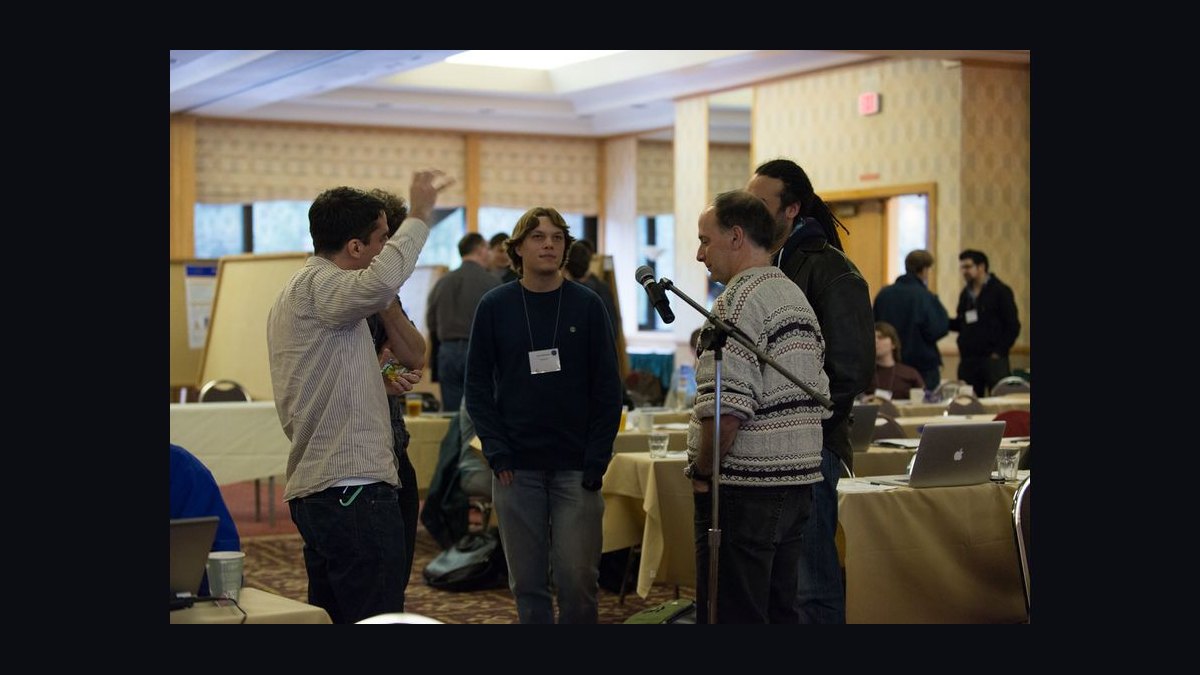
A fifth, subtler driver is the venue contract itself. Resort and convention properties price meeting space, food and beverage, and room blocks in tiers, and the tier a company commits to often becomes the de facto attendance cap. If a property's largest contiguous ballroom seats 4,000 and the overflow plan is a second room with a simulcast, the organizer may cap registration at 4,000 rather than book a second venue, even when demand would support more. That single contract decision can move an event up or down several positions in a national ranking without any change in corporate headcount.
Benchmarks and realistic ranges
Because no unified dataset ranks corporate retreats the way exhibition-industry associations track trade show attendance, the most reliable approach is benchmarking by event category, since attendance counts cluster tightly within each type.
Enterprise sales kickoffs at large technology and software companies typically run 1,500-5,000 in-person attendees when the company's global sales and customer-success organization numbers in the 5,000-15,000 range. These events are usually held at large convention-center-adjacent resort properties in Las Vegas, Orlando, and increasingly Nashville and San Antonio, specifically because those markets have hotel and convention capacity to absorb thousands of rooms in a single week. A company that folds its partner and reseller ecosystem into the same event can push the total toward 6,000-8,000, though the partner share is often a distinct registration category.

Insurance and financial-services agency conventions, run by carriers with large independent-agent or captive-agent networks, represent the upper end of the realistic range. Historically the largest carriers have cleared 8,000-15,000 attendees because the invite list spans independent contractors nationwide rather than a fixed internal headcount. These events function partly as retreats, partly as incentive trips, and partly as sales conventions, and they are consistently among the largest gatherings any single U.S. company convenes in a year. Qualifying for an incentive trip typically requires hitting a production threshold, which naturally caps attendance at a fraction of the total agent network, but that fraction of a 100,000-agent network is still enormous.
Direct-sales and network-marketing conventions have historically produced some of the single largest attendance figures in this category, with flagship annual conventions for the largest direct-sales companies clearing five figures in peak years. The distributor base for these companies can number in the hundreds of thousands nationally, and a meaningful fraction attend the flagship event, especially when the company bundles training, recognition, and product launch into one multi-day program.
Mid-market leadership and all-hands retreats, the more traditional image of a corporate retreat, run far smaller: typically 150-800 attendees for a company-wide offsite at a mid-size firm, and 20-80 for a department- or division-level retreat. These do not compete for a "largest" ranking but represent the overwhelming majority of events that actually use the word "retreat" without irony. Consulting and professional-services firms sit in a distinct band as well: an all-partner meeting at a large global firm can reach 2,000-4,000 attendees because every partner worldwide is invited, which places those events squarely in the middle of a top-10 list.
Putting these bands together, a realistic 2027 top-10 list is likely dominated by insurance and financial-services agency conventions and direct-sales conventions at the top, potentially 8,000-15,000 for the single largest, with enterprise SKOs and large consulting-firm all-partner meetings in the middle tier at 3,000-6,000, and the smallest events that still crack the top 10 sitting around 1,500-2,500. The combined total for all ten lands near 40,000-70,000 attendees, with the spread driven mainly by whether the top two or three events are counted on an in-person or hybrid basis.
Risks, edge cases, and failure modes

Several failure modes make any confident "top 10" list fragile, and they matter whether you are a journalist reporting on this, a vendor pitching into the market, or an events team benchmarking your own retreat against "the largest."
The first failure mode is definitional. "Corporate retreat" gets conflated with "sales kickoff," "annual convention," "user conference," and "incentive trip" in casual usage, and each of those categories has a different typical attendee profile. A ranking that quietly includes user conferences, which are customer-facing rather than employee-facing, will produce a very different top 10 than one strictly limited to internal employee and partner retreats. Deciding the scope before you collect any numbers is the single most important methodological step.
The second failure mode is double-counting hybrid attendees. When a company reports "10,000 attendees," verify whether that figure is in person or a combined in-person-plus-livestream number. Treating a hybrid total as equivalent to a fully in-person gathering overstates the physical scale of the event and misrepresents venue and logistics realities. A useful discipline is to record two numbers for every event: physical headcount and total reported reach, and rank on the physical figure.
The third failure mode is venue capacity as a hard ceiling. Very few U.S. resort or convention properties can comfortably house more than about 10,000-20,000 attendees with adequate meeting space, breakout rooms, and hotel inventory in a single contiguous block. A claimed attendance figure meaningfully above that range for a single-site event should be treated skeptically unless the venue is a major convention center market such as Las Vegas, Orlando, or Chicago known to support that scale. If the claimed number would require more hotel rooms than the host market can supply in one week, the figure almost certainly includes non-physical participants or is inflated.
The fourth failure mode is budget volatility between the planning date and the event date. A retreat planned in 2025-2026 for a 2027 date can shrink significantly if the sponsoring company faces a layoff, a merger, an economic downturn, or a change in executive leadership that deprioritizes large gatherings. Corporate event budgets are among the first line items cut in a downturn, and a company's 2027 retreat could look nothing like its 2026 or 2025 version. Merger activity is a particular wildcard: two companies that each ran 4,000-person retreats may run a single 6,000-person event the year after closing, which reshuffles the list without any organic growth.
The fifth failure mode is that the data source itself may not exist in verifiable form. Because no independent body audits corporate retreat attendance the way exhibition-industry associations track trade show metrics, any "top 10 largest corporate retreats" claim you encounter is very likely built from self-reported press releases. Those carry an inherent incentive to round up and should be treated as directional, not precise. A sixth, related risk is survivorship bias in sourcing: events that never issue a press release are invisible to the researcher, so the list reflects what is public, not what is largest.
A seventh edge case is international attendance. A U.S.-hosted retreat for a global company may include thousands of attendees flying in from other regions, which inflates the U.S. event's headcount without reflecting U.S. employee growth. If the question is about U.S. corporate retreats specifically, decide whether international attendees count toward the total, because for global enterprises the difference can be 20-40 percent of the room.
A practical rollout plan

If your actual goal is to build or defend a "largest corporate retreats" estimate, whether for a research report, a sales pitch to event venues, or internal benchmarking, a disciplined process avoids the traps above.
Step one is to define scope tightly. Decide up front whether you are counting internal employee and partner retreats only, or folding in customer-facing conferences and incentive trips, because mixing categories produces an apples-to-oranges list that collapses under scrutiny. Write the inclusion rule down before you gather a single number, and apply it identically to every candidate event.
Step two is to gather every attendance figure you can find from press releases, trade publications, and event-industry trackers, and to treat every number as self-reported unless a third party, such as a venue, a host-city convention bureau, or an independent journalist, corroborates it. Where a company reports a combined figure, explicitly separate the in-person count from any livestream or hybrid overflow number before ranking it. A 3,000-in-person, 9,000-hybrid event and a 12,000-in-person event are not the same scale of gathering, even if both get reported as "12,000 attendees."
Step three is to cross-check the largest claimed figures against the realistic capacity of the host venue and city. If a company claims an attendance count that would require more hotel rooms than the host market can supply in a single week, that is a strong signal the figure includes non-physical attendees or is simply inflated, and it should be downgraded or footnoted rather than taken at face value. Venue floor plans, ballroom capacities, and published room-block sizes are usually available and make good sanity checks.

Step four is to flag every entry that lacks independent verification, and to resist the urge to present a single precise number for each of the top 10. Because the underlying data is inherently soft, the more defensible output is a set of ranges, for example "8,000-12,000" rather than "9,743," with a clear note on whether the range reflects in-person, hybrid-combined, or unverified self-reported figures. Ranges also survive scrutiny better when a company later revises its own published number.
Step five is to revisit the list annually. Corporate travel budgets, headcounts, and merger activity shift meaningfully year over year, so a 2026 ranking should not be assumed to hold for 2027 without re-checking each organization's current scale and event plans. Build the list as a living spreadsheet with a source column, a verification status column, and a date-stamped attendance figure, so the next update takes hours rather than weeks.
Finally, document your assumptions in the published output. A reader who understands that the top-10 total is a modeled range built from self-reported numbers will trust the analysis more than one presented as a precise census. The credibility of a "largest corporate retreats" estimate comes from transparent method, not from false precision.
Related questions
Why don't companies publish official retreat attendance numbers?
Attendance is treated as internal or competitively sensitive information, and most retreats have no external marketing purpose that would incentivize disclosure, unlike public conferences that report numbers to attract future sponsors and exhibitors.
Are sales kickoffs the same thing as corporate retreats?

They overlap heavily but are not identical. A sales kickoff is specifically sales-org-focused and agenda-driven around targets and training, while a retreat can span any department and may emphasize culture and strategy over quota-setting.
How do hybrid formats affect reported attendee counts?
Hybrid events let companies report a combined in-person-plus-virtual figure that can be several times larger than the physical headcount actually on site, so combined totals should not be read as venue attendance.
What U.S. cities host the largest corporate retreats?
Las Vegas, Orlando, and increasingly Nashville and San Antonio dominate because they combine large convention-center capacity with dense, walkable hotel inventory able to absorb thousands of attendees in a single week.
Do independent-agent or franchise networks change the size calculus?
Yes. Companies with large distributed agent, dealer, or franchisee networks can convene gatherings far larger than their direct employee headcount would suggest, since the invite list spans independent contractors nationwide.
FAQ
How many attendees do the 10 largest corporate retreats in the U.S. host in 2027? There is no verified public census, but based on historical event categories, expect the largest single event to plausibly clear 8,000-15,000, likely an insurance or direct-sales convention, with the rest of the top 10 ranging roughly 1,500-6,000, for a combined top-10 total near 40,000-70,000 attendees.
What is the single biggest driver of retreat size? The size of the invite list, meaning total employee, partner, or independent-agent network size, sets the ceiling far more than any other factor, since even a generous per-capita attendance rate cannot exceed the population eligible to attend in the first place.
Is attendee count the same as in-person headcount? Not always. Many large retreats now report a combined figure that includes livestream or hybrid remote viewers alongside the physical audience, so a reported total can significantly overstate the number of people actually on site during the event.
Why do insurance and direct-sales conventions rank so high? Because their invite lists include independent agents and distributors nationwide rather than a fixed corporate payroll, these networks can be an order of magnitude larger than a typical company's employee headcount, pushing attendance figures well above typical internal retreats.
Could 2027 numbers be smaller than expected due to budget cuts? Yes. Event budgets are typically locked in 9-18 months ahead, so a company tightening spend in late 2026 will show up as a smaller 2027 retreat even if its overall headcount grew during that same period.
What venue capacity limits the largest possible retreat? Very few U.S. markets can comfortably house more than roughly 10,000-20,000 attendees with adequate meeting space and hotel rooms in one contiguous block, which functions as a practical ceiling on any single-site event's realistic size.
Sources
- https://www.eventmarketer.com
- https://www.bizbash.com
- https://www.pcma.org
- https://www.mpi.org
- https://www.iaee.com
- https://www.skift.com/meetings/
- https://www.hotelnewsnow.com
- https://www.selectusa.gov
Related on PULSE
- How do enterprise sales kickoffs differ from smaller regional retreats in budget and format?
- What does a realistic per-attendee cost look like for a large corporate offsite in 2027?
- How should RevOps teams model travel and events budget as part of the annual sales plan?
- What is the ROI case for in-person retreats versus fully virtual all-hands meetings?
- How do independent-agent networks change event planning compared to direct-employee headcounts?
This page will be disappearing soon. Save it to your device for $1 — or read it free while it is here.
@Kory-White- · if Venmo asks, the last 4 of my number are 2012
This page is gone.
This one is off the shelf now. $1 keeps it on your phone for good — the whole page, pictures and diagrams included.
 pulse-recentHow many portable restrooms do the 10 largest music festivals in the world provide in 2027?
 eventsThe 10 Best Music Festivals on a Budget in 2027
 pulse-recentThe 10 Music Festivals with the Largest Total Area in 2027
 eventsThe 10 Music Festivals with the Largest Camping Capacity in 2027
 eventsBest 40th Birthday Party Venues in Chicago, Illinois (2027)
 eventsHow long do the 10 largest music festivals in the world last in 2027?
 pulse-events10 Best Dude Ranches for Family Reunions in 2027
 pulse-eventsBest Quinceanera and Sweet 16 Venues in Miami (2027)
 pulse-recentThe 10 Music Festivals with the Largest Number of Food and Drink Vendors in 2027
 eventsThe 10 Best Engagement Party Venues in Los Angeles, California (2027) in 2027