


Should I open or buy a Jackson Hewitt franchise in 2027?
Quality
Certified
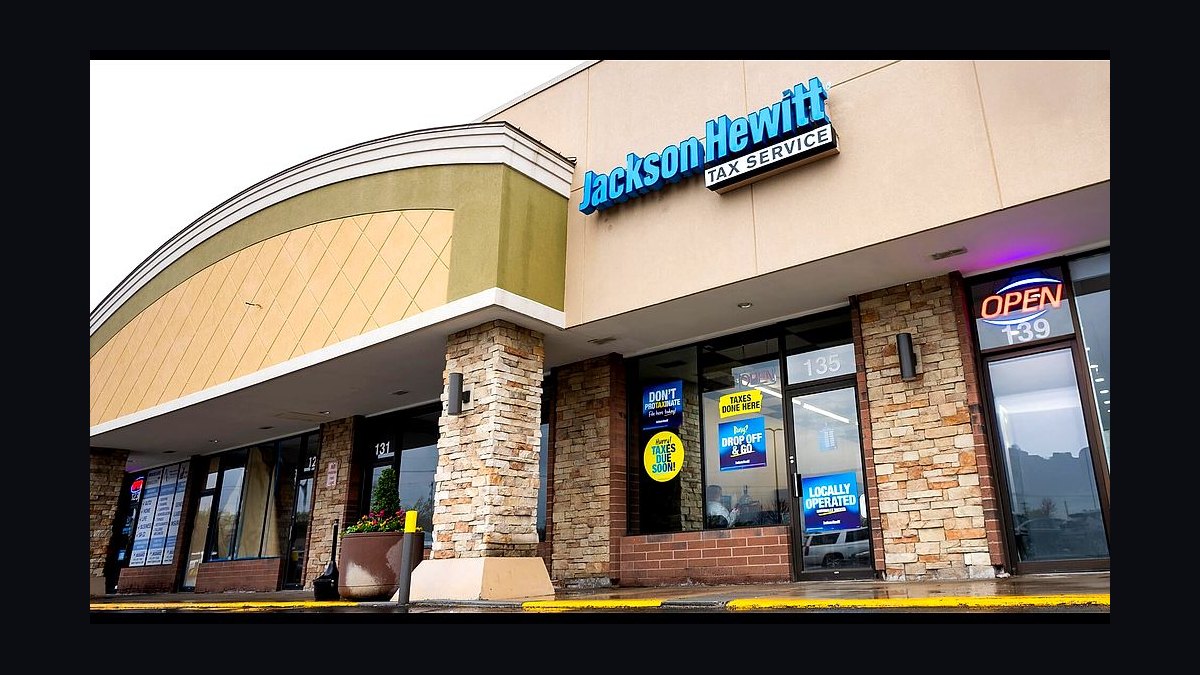
Probably not, unless you already run a tax practice, own a high-traffic retail box, or want a seasonal cash-flow layer on an existing business. Opening a Jackson Hewitt franchise means a $25,000 fee, $50,400–$104,150 total startup, a 9.5% combined royalty-and-marketing load, and a 10-week earning window. Median owner cash flow in Year 1 runs $20,000–$45,000, with breakeven landing in Season 2 or 3 for operators who staff lean.
The outcome you should expect
If you open a standalone Jackson Hewitt storefront in 2027 with no existing client book, the realistic outcome is a slow, compressed climb to profitability rather than a quick win. Franchisee-reported data puts average gross revenue per office near $160,000, with the median closer to $133,000 — meaning half of all offices earn less than that. After the 3% royalty and 6.5% marketing fund (9.5% combined) come off the top, and after paying seasonal preparers $18–$30 per hour for ten frantic weeks, a median-revenue office typically clears $20,000 to $45,000 in owner-discretionary cash flow during its first season. That number has to cover your personal living expenses for the other 42 weeks of the year, because the business itself produces almost nothing outside January through mid-April — off-season revenue is under 12% of the annual total, and most standalone offices run at a loss from May through December.
The more realistic trajectory looks like this: Season 1 is survival — you are learning the software, training or hiring preparers, and building local awareness, and you should expect cash flow at or below the low end of that $20,000–$45,000 range, possibly negative once build-out amortization and lease costs are counted. Season 2 is where most operators either turn the corner or decide to exit — returning clients start to compound, your preparer team is seasoned instead of green, and marketing spend starts converting instead of just introducing the brand. Season 3 is where the franchise model is designed to pay off: payback period averages 2.3 tax seasons for lean operators who work the counter themselves, stretching to 3.5-plus seasons for absentee owners who pay a manager instead of sitting in the chair. If you are financially underwater after three full seasons, the location, the operator, or the competitive environment — not bad luck — is almost certainly the cause.

The outcome also diverges sharply by acquisition path. A greenfield single-unit opening in a market with no existing brand awareness and no personal client book sits at the bottom of the outcome distribution. A Walmart kiosk location, by contrast, inherits 2–3x the walk-in traffic of a standalone strip-center unit because the host store does the foot-traffic work for you — those operators frequently land in the top quartile of revenue ($250,000–$375,000) in their very first season. A resale purchase of an existing, profitable office — inheriting the lease, the equipment, the trained staff, and the returning client list — is the single highest-probability path to being cash-flow positive in Year 1, because you are buying past Jackson Hewitt's Year-1 drag instead of living through it.
What drives that outcome
Three forces determine whether a Jackson Hewitt office turns a profit, and understanding how they interact is more useful than memorizing any single number. The first is the royalty-and-fee structure itself: 9.5% of every gross dollar (3% royalty, 6.5% marketing fund) leaves the office before rent, payroll, or paper costs are even considered. That rate is lower than the 6–8%-plus structures common in food franchising, but tax preparation runs on razor-thin variable margins once you account for seasonal preparer wages, so the 9.5% bite lands harder on the bottom line than it looks on paper. The second force is the compressed operating window — nearly all revenue is generated in a 10-week sprint, which means fixed costs (rent, software, insurance, licensing) have to be absorbed by ten weeks of production instead of fifty-two, inflating the effective cost-per-filing versus a business that earns year-round.

The third and most consequential force in 2027 is the shrinking addressable market for a storefront preparer. IRS Direct File expanded to 24 states for Tax Year 2026 filings and is estimated to have captured 5.8 million returns that would previously have gone to a paid preparer — almost all of them simple W-2 filers, which is exactly the segment Jackson Hewitt has historically relied on for walk-in volume. At the same time, TurboTax Live Assisted and H&R Block's AI-assisted self-prep tools have pulled middle-market self-preparers further upstream. What is left for the storefront is a more specialized, higher-friction segment: earned-income-credit filers, gig workers with messy 1099-K forms, and small-business owners with Schedule C income — clients who take longer to serve but who also cannot self-prepare confidently. The offsetting tailwind is that 75% of U.S. filers still hire a professional, and the gig economy now produces roughly 64 million 1099-NEC and 1099-K recipients who need exactly that kind of help. Jackson Hewitt's Walmart partnership — about 2,800 kiosk locations — is the brand's main structural advantage in this fight, since H&R Block has no equivalent mass-retail footprint; Refund Advance loan volume, up 18% year-over-year and worth $45–$95 in finance-product revenue per loan, is the other lever propping up office economics as DIY software erodes simple-return volume.
Benchmarks and realistic ranges

Use these as underwriting inputs, not promises. Total startup investment for a single Jackson Hewitt storefront ranges $50,400 to $104,150, built from a $25,000 initial franchise fee, $5,000–$25,000 in leasehold improvements (Walmart kiosks sit at the low end, standalone build-outs at the high end), $3,000–$12,000 for equipment and signage, $1,500–$4,000 for software and tech setup, $2,500–$7,500 for initial marketing, $4,000–$14,000 for lease deposits plus three months' rent, $1,000–$2,500 for required training travel, $1,200–$2,500 for insurance and licensing, and a $7,200–$11,650 working-capital cushion. Ongoing cost is the 9.5% combined royalty-and-marketing fund on gross revenue, plus seasonal preparer wages of $18–$30 per hour.
On the revenue side, average gross revenue per office is approximately $160,000, with median revenue at $133,000 and top-quartile offices — generally dense urban locations or strong Walmart kiosks — clearing $250,000 to $375,000. EBITDA margin before owner compensation typically runs 12% to 22%, which on a median-revenue office translates to roughly $19,000 to $35,000 of pre-owner cash flow, consistent with the $20,000–$45,000 owner-discretionary figure once you adjust for how much of that the owner takes as a preparer salary versus pure profit. Payback period averages 2.3 tax seasons for an operator who works the counter and staffs lean, stretching to 3.5-plus seasons for a fully absentee owner paying a manager.

Competitive density matters as much as the raw numbers: Jackson Hewitt operates roughly 5,200 offices nationally (2,800 Walmart kiosks, 2,400 standalone), against H&R Block's 9,000-plus offices, Liberty Tax's 2,300, and an estimated 28,000 independent EAs. A market already saturated with three or more competing storefronts within a tight radius compresses every one of the revenue benchmarks above. On the acquisition side, a resale trades at 1.0–1.5x seller's discretionary earnings — often $45,000 to $120,000 all-in for a profitable book — roughly half the multiple paid for a resale in food or fitness franchising, which is why resale economics look so much more favorable than greenfield economics in this category.
Risks, edge cases, and failure modes
The single clearest failure mode is absentee ownership. This is a personally-operated business model: either the principal sits in the chair from February through mid-April, or the owner pays a manager and a full preparer staff $25,000 or more for those ten weeks, which erodes the cash flow the whole model depends on. Owners who try to run it remotely, or who treat it like a passive investment property, consistently land in the slower 3.5-plus-season payback bucket, and a meaningful share never reach breakeven at all.
The second failure mode is opening with no tax background and no existing client relationships. A first-time owner can spend $50,000-plus on rent, royalty, and payroll before discovering they cannot competently review a Schedule C or confidently handle a gig-worker's stacked 1099-K forms — and lose that client to the independent EA across the street permanently. Operators without a credentialed or AFSP-certified lead preparer in place before opening are disproportionately represented among offices that close after Season 2.

Market structure is the third risk, and it is largely outside the operator's control. A territory already dense with H&R Block, Liberty Tax, or independent EA signage forces a new Jackson Hewitt office into three or four seasons of local marketing just to overcome a brand-recognition deficit — H&R Block's 9,000-plus-office scale versus Jackson Hewitt's 5,200 is a real headwind in any market where both brands compete for the same walk-in. Layered on top is the structural erosion from IRS Direct File's 24-state expansion and continued DIY software advances, which are permanently shrinking the simple-W-2 segment that storefronts have historically relied on for baseline volume — a trend that will not reverse in 2027 and should be underwritten as a continuing headwind, not a one-time dip.
Finally, seasonality itself is a risk many new owners underestimate even when they know the numbers going in. With under 12% of revenue generated outside the January–April window, an owner without six months of banked personal living expenses, or without a secondary income stream such as off-season bookkeeping, can run out of runway during the slow months even in a location that is objectively doing fine on a per-season basis.
A practical rollout plan
Treat this as a 90-day underwriting and decision process, not a 90-day opening timeline — the goal is to kill a bad deal cheaply before you've signed anything. In the first week, pull the current-year FDD, focus on Item 19 (financial performance) and Item 20 (franchisee contacts), and model a worst-case scenario around $110,000 in revenue — roughly the 25th percentile. If that scenario does not service your debt and living expenses, stop here; everything after this point costs real money.

Over the next two weeks, call at least a dozen existing franchisees across three different regions and ask them directly what their gross was last season, what they paid themselves, and what surprised them. Operators in their third season or later tend to answer honestly; anyone who refuses to share numbers at all is a signal to walk away, not a signal to dig harder.
In the following two weeks, physically drive the five-mile radius around your target site, ideally on a weekend afternoon when foot traffic is visible, and count the H&R Block, Liberty Tax, and independent EA signage. More than four direct competitors within three miles is generally a pass unless you are bringing a personal client book that makes the location irrelevant. With the territory validated, spend the next three weeks locking the site itself — end-cap locations next to grocery anchors, or a Walmart kiosk host agreement, consistently outperform isolated strip-center units — and try to negotiate a seasonal nine-month lease (January through September) rather than a standard twelve-month term, since many landlords in this category will accept it.
Before you sign anything, secure a credentialed EA or AFSP-certified lead preparer willing to commit roughly 50 hours a week for the ten-week season, typically at $22–$30 per hour plus a small revenue share. No lead preparer in hand means no franchise agreement — this single hire is the best predictor of whether Season 1 survives. Only sign the franchise agreement and lease once financing, a signed lease, a committed lead preparer, and six months of personal living expenses are all simultaneously in place; if any one of those four is missing, defer the opening to the following tax year rather than opening under financial strain.
Related questions

Is a Jackson Hewitt resale better than opening new?
Yes, in most cases. Resales trade at 1.0–1.5x seller's discretionary earnings, often $45,000–$120,000 all-in, and come with an existing lease, equipment, trained staff, and a returning client list — which removes most of the Year-1 cash-flow drag a greenfield opening has to work through.
How much does the 9.5% royalty and marketing fee actually cost per year?
On a median-revenue office ($133,000 gross), the combined 3% royalty and 6.5% marketing fund works out to roughly $12,600 per year leaving the office before any other operating cost is paid.
Should I skip the franchise and go independent instead?
Only if you already have a 200-plus client book and a credential. Independent operators using Drake Tax or TaxSlayer Pro keep the full 9.5% royalty savings but lose Refund Advance access, Walmart kiosk placement, and brand-driven walk-in traffic.
Is a Walmart kiosk a safer bet than a standalone storefront?
Generally yes. Kiosk locations see 2–3x the walk-in traffic of standalone strip-center units and frequently land in the top revenue quartile in their first season, making them a materially lower-risk entry point than an unproven standalone site.
FAQ
What is the total investment needed to open a Jackson Hewitt franchise? The initial franchise fee is $25,000, and total startup costs for a single storefront typically range from $50,400 to $104,150, covering build-out, equipment, software, and initial marketing. Actual cost depends heavily on lease terms and whether you open a kiosk or standalone location.

How much can I expect to earn in the first year? Average annual revenue per office is around $160,000, with a median of $133,000. Owner-discretionary cash flow in Year 1 typically falls between $20,000 and $45,000 after rent, labor, royalties, and software costs.
What are the ongoing fees I have to pay? You pay a 3% royalty on gross revenue plus a 6.5% marketing fund contribution — 9.5% combined — deducted before any other operating expense, including payroll and rent.
How long does it take to break even? Most franchisees reach breakeven within 2 to 3 tax seasons; lean, owner-operated offices average 2.3 seasons while absentee-owned offices average 3.5 seasons or more.
Do I need to be a tax preparer myself to succeed? Strongly recommended. Owners who cannot personally prepare returns and are unwilling to work roughly 70-hour weeks from February through mid-April consistently underperform owners with a tax background or an existing practice.
Is this a good fit for someone with no tax experience at all? Generally no. The model works best as a seasonal cash-flow layer on an existing business, or for someone who already runs a tax practice or owns a high-traffic retail location — without that foundation, the risk of a low-cash-flow, high-stress first two seasons is significant.
Sources
- FranchiseOverview, Jackson Hewitt FDD summary — https://franchiseoverview.com/company/jackson-hewitt
- Vetted Biz, Jackson Hewitt Franchise Cost & Profit Report — https://www.vettedbiz.com/franchises/jackson-hewitt/
- Sharpsheets, Jackson Hewitt Tax Service Franchise FDD, Profits & Costs — https://sharpsheets.io/blog/jackson-hewitt-tax-service-franchise-fdd-profits-costs/
- Peersense, Jackson Hewitt Franchise Cost & FDD Analysis — https://peersense.com/franchise/jackson-hewitt-inc
- IBISWorld, US Tax Preparation Services Industry Report (NAICS 541213)
- Bureau of Labor Statistics, OEWS 13-2082 Tax Preparers wage data
- ProPublica, investigative coverage of TurboTax and the IRS Free File program
- Franchise Times, reporting on Jackson Hewitt and Walmart kiosk strategy
Related on PULSE
This page will be disappearing soon. Save it to your device for $1 — or read it free while it is here.
@Kory-White- · if Venmo asks, the last 4 of my number are 2012
This page is gone.
This one is off the shelf now. $1 keeps it on your phone for good — the whole page, pictures and diagrams included.
 franchiseShould I open or buy a Kona Ice franchise in 2027?
 franchiseShould I open or buy a Taco Bell franchise in 2027?
 franchiseShould I open or buy a Jiffy Lube franchise in 2027?
 franchiseShould I open or buy a Planet Fitness franchise in 2027?
 franchiseShould I open or buy a Kumon franchise in 2027?
 franchiseShould I open or buy a Bahama Breeze franchise in 2027?
 franchiseShould I open or buy a Crumbl Cookies franchise in 2027?
 franchiseShould I open or buy a Primrose Schools franchise in 2027?
 franchiseShould I open or buy a Sonic Drive-In franchise in 2027?
 franchiseShould I open or buy a Meineke franchise in 2027?