
How Many Employees Should I Schedule Each Shift at My Language School?
 Curated byKory White · Fractional CRO · Maryland
 PULSEKNOWLEDGE LIBRARY
Quality
Certified

Divide each class block's expected enrollment by your per-teacher cap — roughly 6 students per teacher for beginner or intensive classes and 12 for conversational levels — then add one front-desk receptionist per shift. A 24-student beginner block needs four teachers plus a receptionist; a 12-student conversational block needs one teacher plus a receptionist.
Ratio-first staffing versus block-coverage staffing
Every language school owner eventually lands on one of two staffing philosophies, and the difference between them shows up in your labor line within a single term. Understanding both is the prerequisite to deciding how many Employees you Schedule on any given evening.
Ratio-first staffing treats the student-to-teacher cap as the primary constraint and lets headcount float. You set the cap by level — say 6 students per teacher for absolute-beginner and intensive tracks, 10 for intermediate, 12 for conversational and advanced conversation circles — and then every shift's teacher count is a pure division problem. Twenty-four beginners on Monday evening becomes four teachers, because 24 divided by 6 is 4. Eighteen conversational Italian students on Wednesday becomes two teachers, because 18 divided by 12 rounds up to 2. The schedule is a consequence of enrollment, not a habit. Nobody negotiates it. When a teacher asks why Monday has four bodies and Wednesday has two, the answer is arithmetic, not favoritism.
The strength here is pedagogical integrity. Speaking time is the product a language school actually sells. In a 90-minute conversational block with 12 students and one teacher, if you want each student to produce even five minutes of monitored, corrected speech, you have already spent 60 minutes of the block and left 30 for instruction, drills, and transitions. Push that class to 18 and the arithmetic breaks — students go quiet, the confident ones dominate, and the hesitant ones quietly stop renewing. Ratio-first staffing protects that math structurally. The weakness is cost volatility: your labor spend swings with enrollment, and a term where beginner intake surges can push your teaching payroll up 30–40% against a flat tuition forecast if you priced beginner seats the same as conversational seats.

Block-coverage staffing inverts the logic. You decide how many rooms you are willing to run at each time slot, staff those rooms, and cap enrollment to fit. Monday evening runs three rooms, so three teachers, so enrollment closes at whatever three rooms can hold under your caps. Your labor cost per shift is fixed and knowable a term in advance, which makes forecasting trivial and makes the front desk's job simple: when a room fills, the answer to the next caller is "next block" or a waitlist.
The strength is financial predictability and the ability to guarantee a teacher a stable weekly Schedule — which matters enormously for retention in a market where good instructors freelance across three schools. The weakness is revenue leakage. Every turned-away student in a high-demand block is tuition you declined, and language school demand is famously lumpy: September and January intake spikes, a summer trough, a Saturday-morning cluster of working adults who cannot come any other time. A rigid room count during a January surge means you are refusing money in the exact weeks you needed it most.
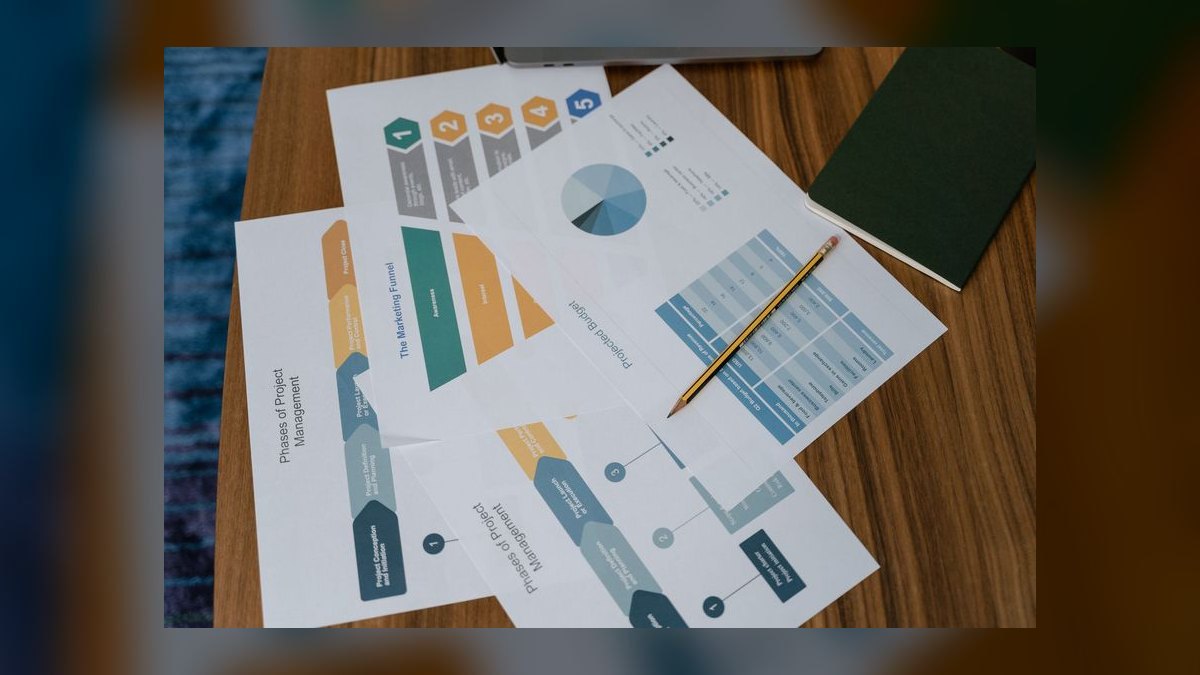
Most schools that survive past year three run a hybrid: a ratio-first core for the levels where quality is fragile (beginner, intensive, exam prep) and block-coverage for the levels where a larger room genuinely works (advanced conversation, film-and-discussion clubs, cultural sessions). The hybrid is where this question gets interesting, and it is where the RevOps discipline of measuring capacity against real demand rather than against habit earns its keep.
How to decide between them
The decision is not a matter of taste. It follows from four measurable properties of your school: enrollment volatility, level mix, teacher supply, and how much of your revenue is committed term-tuition versus drop-in.
Enrollment volatility. Pull the last four terms of block-level enrollment and calculate, for each recurring time slot, the coefficient of variation — standard deviation divided by mean. If your Monday 6:30pm slot has averaged 22 students with a standard deviation of 3, that is roughly 14% variation and block-coverage works fine; you can staff three rooms and be right almost every week. If it averaged 22 with a standard deviation of 9 — a 41% swing — block coverage will either strand a paid teacher in an empty room or turn away eight students. That slot wants ratio-first with a confirmed-enrollment cutoff 72 hours before the block.

Level mix. Count what share of your enrolled seats sit in beginner or intensive tracks. If it is above roughly 40%, ratio-first is nearly mandatory, because the tight 6-per-teacher cap dominates your staffing math and any block-coverage plan will be wrong the moment a beginner cohort forms. If beginners are under 20% of seats and your core is conversational and advanced, block coverage holds up because the 12-per-teacher cap gives you room to absorb variation inside a fixed room count.
Teacher supply. If you have a deep bench of part-time instructors who will pick up a shift with 48 hours' notice, ratio-first is cheap to operate — you flex up on demand. If you are in a market where the qualified pool for a given language is four people and two of them work elsewhere, you cannot flex, and block coverage with a hard waitlist is the honest answer. This is the constraint owners most often ignore. A staffing formula you cannot actually fill is a fantasy, not a plan.
Revenue commitment. Term-tuition committed in advance makes block coverage safe: you know the money and the bodies. Drop-in and pay-as-you-go models make ratio-first necessary, because attendance on any given night is a forecast rather than a fact, and you need the ability to send a second teacher home or call one in.

Run that decision once per level per time slot, not once for the whole school. A single school routinely lands on ratio-first for Monday and Tuesday beginner blocks and block coverage for the Thursday advanced conversation circle, and that is correct — the constraints genuinely differ.
The concrete numbers behind each option
Here is what the two approaches cost and cover in a school of realistic size. Assume a single-location school running evening and Saturday-morning blocks, roughly 180 enrolled students across a 10-week term, split 35% beginner or intensive, 40% intermediate, 25% conversational and advanced.
The caps to start from. Set beginner and intensive at 6 students per teacher. This is the number that survives contact with a real classroom: at 6, a 90-minute block gives every student roughly 10–12 minutes of corrected production plus choral drilling, and the teacher can actually hear individual pronunciation errors. Set intermediate at 8–10. Set conversational and advanced at 12. Exam-prep and one-on-one tracks are their own thing — usually 1:1 through 1:4, priced accordingly. Publish these caps. Put them on the wall of the teachers' room. They are the yardstick every staffing argument gets measured against.

Ratio-first math on a real week. Monday 6:30pm carries 24 beginner Spanish students. At the 6-per-teacher beginner cap, that is 4 teachers — four rooms of six, or two rooms of twelve with two teachers each if you run co-teaching. Not two teachers. The temptation to run 24 beginners with two instructors is exactly the shortcut that produces silent students and a 30% non-renewal rate at term's end. Add one front-desk receptionist and Monday 6:30pm is 5 Employees on the clock.
Tuesday 6:30pm carries 20 intermediate students at a cap of 10, so 2 teachers plus 1 receptionist: 3 Employees. Wednesday 7:00pm carries 12 conversational Italian at a cap of 12, so 1 teacher plus 1 receptionist: 2 Employees. Thursday runs 18 conversational across two languages at a cap of 12, so 2 teachers plus 1 receptionist: 3 Employees. Saturday 9:00am is the heavy block for working adults — 30 students spanning beginner (12), intermediate (10), and conversational (8): that is 2 beginner teachers, 1 intermediate teacher, and 1 conversational teacher, so 4 teachers plus 1 receptionist, and at that concurrency you want a second front-desk body for the first 45 minutes of check-in and inquiry traffic.

Sum the week: 5 + 3 + 2 + 3 + 5.5 (Saturday with the half-shift second receptionist) equals roughly 18.5 shift-slots. At 3.5 paid hours per evening shift including 20 minutes of prep and 15 of wrap, that is around 60–65 paid hours a week for teaching plus front desk, before administration and marketing.
Block-coverage math on the same week. You decide Monday runs 3 rooms, Tuesday 2, Wednesday 2, Thursday 2, Saturday 4. That is 13 teacher shifts plus 5 receptionist shifts, 18 total — nearly identical on paper. The difference is what happens when Monday's beginner cohort hits 24: block coverage says three rooms, so eight beginners per room, which violates the published 6 cap. You either break the cap and degrade the product, or you close enrollment at 18 and decline six students' tuition for the term. Neither is free. Over a 10-week term at a typical adult-education tuition, six declined seats is a meaningful number against a school this size, and the labor to serve them would have been one additional teacher shift per week.
Where each option actually wins on cost. Block coverage's real saving is not headcount — it is scheduling overhead and turnover. A teacher with a guaranteed three-nights-a-week Schedule stays; a teacher who gets two nights one week and four the next takes the stable gig elsewhere, and replacing a qualified instructor in a scarce language costs you weeks of recruiting plus a rocky handoff mid-term. Ratio-first's real saving is that you never pay a teacher to sit in a room with four students, and you never turn away a paying student because a room count said no.

The floor nobody should cross. Never Schedule a shift with zero front-desk coverage. Even a single-class evening needs someone who is not teaching to handle the phone, the walk-in who wants a placement test, the parent asking about the teen track, and the card that declines. A teacher pulled out of a class to run a payment is a teacher who has stopped teaching, and the students in that room notice. If the shift is genuinely tiny — one class, six students — the honest structure is a receptionist who also handles the closing checklist, not a teacher doing double duty.
Class viability floor. Most schools set a minimum of 4–5 students to run a block, below which the class merges into an adjacent level or moves to the next term. Decide that number before the term, publish it in the enrollment terms, and hold it. The alternative — running a two-student class out of guilt — is a subsidy you are paying every week of the term.
Implementation details and sequencing
Getting from "we staff by feel" to a defensible per-shift number takes about three weeks of deliberate work. The sequence matters, because doing it out of order produces a formula nobody trusts.

Week one: set and publish the caps. Sit with your lead instructor and set the per-level cap. Do not do this alone — the instructor who actually teaches beginner Spanish knows within a student or two where the room stops working. Write the caps down by level: beginner 6, intensive 6, intermediate 8–10, conversational 12, advanced conversation 12, exam prep 1:4. Announce them to the whole teaching team in one message so nobody hears a different number. From this point forward the cap is not negotiable per-teacher; it changes only by a deliberate decision at term boundaries.
Week one, in parallel: clean the enrollment data. Pull expected enrollment per class block per day from your registration system. Average it over a trailing two months, and separately note the peak. Flag any block whose enrollment record you do not trust — schools routinely carry ghost enrollments of students who paid in September and stopped attending in October. Reconcile against attendance, not against payment, because you staff for people in the room.
Week two: run the division and stress-test it. For each block, divide expected enrollment by the level cap, round up, add one receptionist. Then run three stress tests. First, the surge test: what does the number become if enrollment comes in 20% over forecast? Second, the absence test: which shifts break if one teacher calls out? Third, the concurrency test: at what point do simultaneous classes overwhelm one front desk — usually somewhere around three or four concurrent rooms, at which point check-in queues and the phone start colliding.

Week two, same pass: build the substitute bench. Ratio-first staffing is only as good as your ability to add a teacher on short notice. Identify two or three qualified part-timers or freelancers per language who will take a call, get them into the payroll and onboarding system before you need them, and give them a standing rate. A bench you have to recruit during a crisis is not a bench.
Week three: place the shifts against real demand and publish. The division tells you how many; the school's rhythm tells you when. Working adults cluster into evenings and Saturday mornings. Beginner intake spikes in September and January and again in a smaller wave after summer holidays. The front desk gets hit hardest in the 20 minutes on either side of a block change, when one group leaves, another arrives, and the phone rings. Staff to those curves, not to a flat weekly grid. Publish the schedule at least two weeks out — teachers with other commitments need the runway, and late schedules are the single most common reason a good part-timer stops picking up your shifts.

The ongoing loop. Once a week, compare actual attendance to the forecast that drove the staffing. If a block runs more than 15% off for three consecutive weeks, re-baseline it — that is a real demand shift, not noise. If it swings wildly week to week, that block belongs on a confirm-72-hours-ahead footing rather than a fixed staffing number.
Tooling, honestly assessed. Shift-scheduling software handles publication, availability, swaps, mobile clock-in, and reminders — the execution layer. It does not decide that Monday's beginner block needs four teachers; you bring that number. Tools that connect to a booking or registration feed can suggest coverage against projected enrollment, which is the closest off-the-shelf equivalent to the method above, but the caps are still yours to set. Pricing models split roughly into per-user and per-location; a single school with a large part-time roster is generally better served by per-location pricing, while a lean, stable crew of full-timers costs less on per-user plans. Prove the method on a spreadsheet or a free tier for one term before paying for anything, because the software only amplifies whatever staffing logic you feed it.
Compliance you cannot skip. If you run teen or after-school classes, minor-labor rules constrain hours and break timing. If you operate in a jurisdiction with predictive-scheduling or fair-workweek rules, late schedule changes carry penalty pay. Both are reasons to publish early and change rarely, and both are worth checking before you design a staffing model that depends on last-minute flexing.
Related questions
What if a block has mixed levels in the same room?
Staff to the tightest cap present. A room holding beginners and intermediates runs at the beginner ratio of 6 per teacher, because beginners need correction density that a larger room cannot deliver. Mixed-level rooms are a signal to split the block at the next term boundary.
Should the owner count as one of the scheduled Employees?
Only if the owner is genuinely on the floor for the whole block and not fielding vendor calls, doing payroll, or leaving mid-class. Owner hours that get interrupted should not appear in the coverage count — schedule them as surplus, not as the plan.
How far ahead should the schedule be published?
Two weeks minimum, three is better. Part-time language instructors typically teach at more than one school, and the school that publishes first gets their availability. Late publication is the most common reason a reliable substitute quietly stops answering.
Does the receptionist need to be a second person during peak blocks?
Once you run three or more concurrent classes, yes — at least for the 45 minutes spanning check-in. Arrivals, phone inquiries, placement-test walk-ins, and payment processing all collide in that window, and one person queues.
How do you handle a teacher calling out an hour before class?
Call the standing bench first. If nobody answers, merge two rooms of the same level only if the combined count still respects the cap; if it does not, run a shortened conversation-practice session with the available teacher and credit the students a make-up session rather than degrade the class quietly.
FAQ
How many students per teacher should a beginner class have?
Six is the working number for beginner and intensive tracks. At that size a 90-minute block gives each student roughly 10–12 minutes of monitored production, plus room for choral drilling and individual pronunciation correction. Push beyond six and the teacher stops being able to hear individual errors, which is the entire reason a beginner pays for a class instead of using an app.
Do I really need a front-desk receptionist on every shift?
Yes. Every shift needs one non-teaching person handling check-ins, phones, walk-in inquiries, and payments. Pulling a teacher out of a running class to process a card is how you lose both the transaction and the room's momentum. On a genuinely tiny shift — one class, a handful of students — the receptionist can also own the closing checklist rather than the teacher covering both roles.
What happens when enrollment comes in higher than forecast?
Add a teacher from the standing bench and split the room, which is why the bench exists. If a block runs over forecast three weeks in a row, that is not a surprise anymore — re-baseline the block's expected enrollment and let the division produce a permanently higher teacher count for that slot.
Should I schedule extra staff for evenings and Saturday mornings?
Those are the peak windows for working adults, so they carry the most enrollment and the heaviest front-desk traffic. Once a peak block runs three or more concurrent classes, add a floater who can cover breaks, absorb an absence, and assist the largest room. Add a second front-desk body for the check-in window.
How do I know my per-teacher cap is set correctly?
Watch two signals. If students report they are not speaking enough, or teachers say they cannot get to everyone, the cap is too high — lower it by one or two. If rooms feel underfilled and the block is losing money against tuition, you can raise the conversational cap cautiously by one or two students, never the beginner cap. Re-evaluate only at term boundaries, never mid-term.
What is the minimum enrollment to run a class at all?
Most schools set a floor of four to five students. Below that, merge the block into an adjacent level or push it to the next term. Publish the floor in your enrollment terms before the term starts so the decision is a policy rather than an argument, and hold it — a two-student class is a subsidy you pay every single week.
Sources
- https://www.dol.gov/agencies/whd/flsa — U.S. Department of Labor, Fair Labor Standards Act (hours, overtime, recordkeeping)
- https://www.dol.gov/agencies/whd/youthrules — U.S. Department of Labor, youth employment rules for scheduling minors
- https://www.sba.gov/business-guide/manage-your-business/hire-manage-employees — U.S. Small Business Administration, hiring and managing employees
- https://www.coe.int/en/web/common-european-framework-reference-languages — Council of Europe, Common European Framework of Reference for Languages (level definitions)
- https://www.britishcouncil.org/ — British Council, English language teaching standards and practice
- https://www.tesol.org/ — TESOL International Association, professional standards for language instruction
- https://www.actfl.org/ — American Council on the Teaching of Foreign Languages, proficiency guidelines
- https://www.irs.gov/businesses/small-businesses-self-employed/independent-contractor-self-employed-or-employee — IRS, employee versus independent contractor classification
- https://nces.ed.gov/ — National Center for Education Statistics, U.S. education data including class size and staffing
Related on PULSE
- [How Many Employees Should I Schedule Each Shift at My Cooking School?](/knowledge/q16001)
- [How do you start a language tutor business in 2027?](/knowledge/q2096)
- [How do you coach a rep to improve their next-steps language?](/knowledge/q13968)
- [How do you phrase a question that helps a rep recognize they are using too much jargon instead of customer language?](/knowledge/q14426)
- [Why are sales enablement teams struggling to keep content relevant when AI buyers scan for specific regulatory language in 2027?](/knowledge/q16426)
This page will be disappearing soon. Save it to your device for $1 — or read it free while it is here.
@Kory-White- · if Venmo asks, the last 4 of my number are 2012
This page is gone.
This one is off the shelf now. $1 keeps it on your phone for good — the whole page, pictures and diagrams included.
 pulse-qHow Many Sales Reps Do I Need to Hire for My Behavioral Health Company?
 pulse-qHow Many Employees Should I Schedule Each Shift at My CrossFit Box?
 pulse-qShould I Hire a Fractional CRO If I Need Interim Leadership During a CRO Search?
 pulse-qHow Many Baristas Should I Schedule Each Shift at My Coffee Drive-Thru?
 pulse-qShould I Hire a Fractional CRO If I Just Hit 5 Million in ARR?
 pulse-qHow Many Employees Should I Schedule Each Shift at My Trampoline Park?
 pulse-qHow Do I Tie Commission to More Than One Product?
 pulse-qHow Many Salespeople Should I Schedule on My Auto Dealership Floor Each Day?
 pulse-qHow Do I Get My Pest Techs to Sell Mosquito and Termite Add-Ons?
 pulse-qShould I Hire a Fractional CRO If I Just Raised a Series A?