


Should I open or buy a Burger King franchise or open an independent sandwich shop in 2027?
Quality
Certified
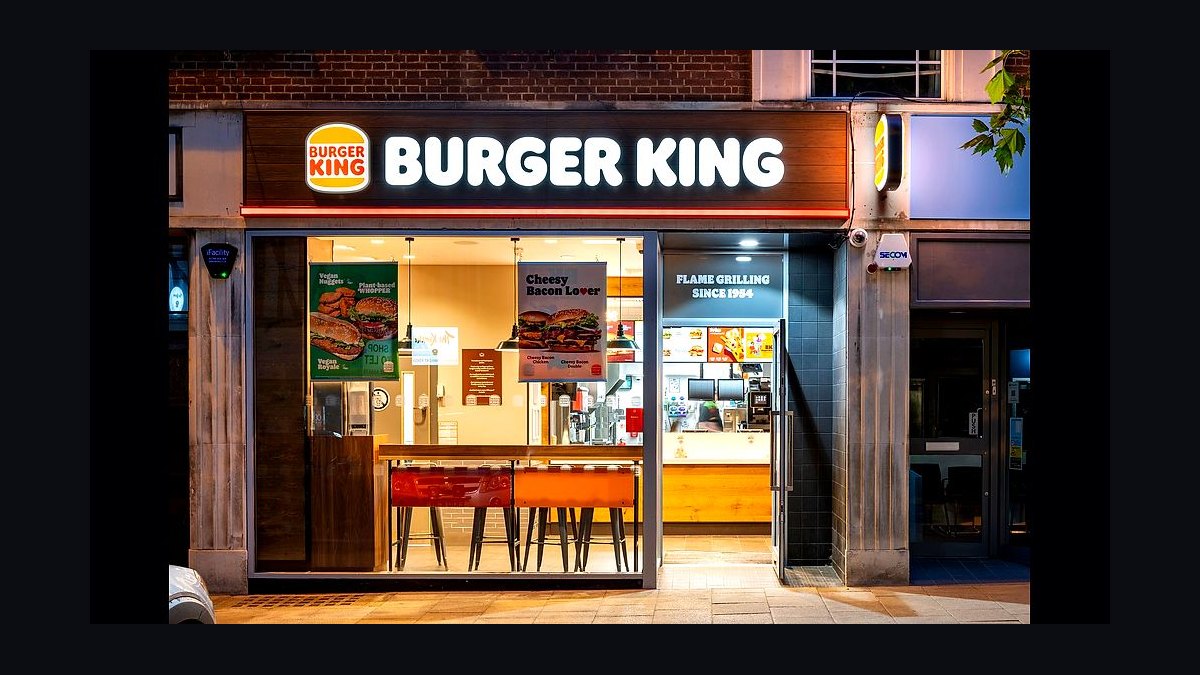
For 2027, a Burger King franchise suits someone with $500,000+ in liquid capital who wants a proven system, national brand recognition, and is comfortable with ongoing royalties and strict operating standards. An independent sandwich shop suits someone with less capital, more culinary vision, and a tolerance for building brand recognition from zero — lower entry cost, no royalty, but full risk and no corporate support system.
What it is and why it matters
The choice between buying a Burger King franchise and opening an independent sandwich shop is really a choice between two different businesses wearing similar clothing — both serve food to walk-in and drive-thru customers, but the operating model, capital structure, and daily job are almost opposite. A Burger King franchise means buying into Restaurant Brands International's system: you get the brand, the supply chain, the marketing fund, the point-of-sale software, the training pipeline, and a playbook that has been refined over decades of unit-level data. In exchange, you give up creative control over the menu, pricing flexibility, and a meaningful share of gross revenue every month in the form of royalty and advertising fees. You are, in effect, licensing a business model rather than inventing one.
An independent sandwich shop is the opposite bet. You own 100% of the brand, the recipes, the pricing, the hours, and the customer relationship. There is no royalty check to write, no franchisor field consultant auditing your fryer temperatures, and no non-negotiable remodel schedule imposed from a corporate office. But you also have no built-in customer base walking in because they recognize the sign, no national ad campaigns driving traffic, no centralized purchasing power to keep food costs down, and no 60 years of operational R&D to fall back on when something breaks. Every mistake is one you have to diagnose and fix yourself, and every dollar of brand awareness has to be earned locally, one customer at a time.
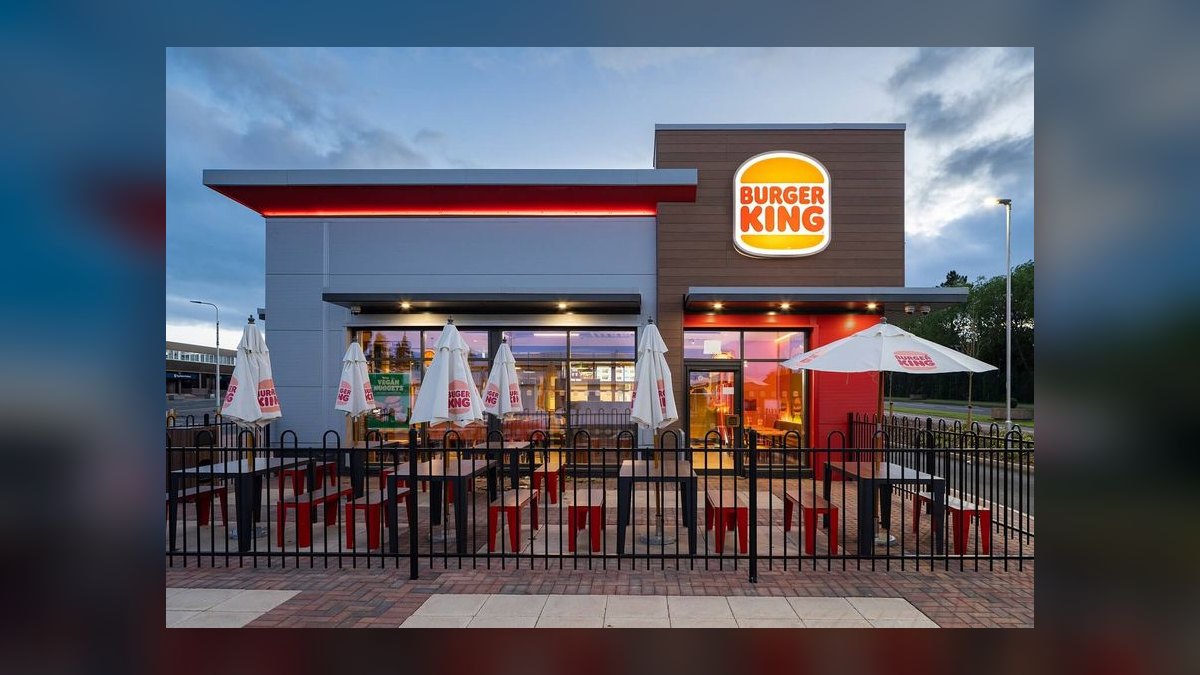
Why this matters in 2027 specifically: quick-service burger chains are in a mature, highly competitized category where same-store sales growth increasingly comes from value menus, digital ordering, and delivery integration rather than new customers discovering the brand — meaning a new Burger King franchisee is buying into a fight for market share, not a growth story. Independent sandwich concepts, by contrast, are riding a longer-running consumer shift toward perceived freshness, customization, and local/authentic positioning, which gives a well-run independent shop a differentiation lever a franchise unit does not have. Neither advantage is free — franchise brand strength has to be paid for, and independent differentiation has to be built and defended — but understanding which lever you are actually pulling is the first real decision point.
The step-by-step process
The mechanical path to opening each business differs enough that treating them the same way in your planning will cause you to miss steps. For a Burger King franchise, the sequence generally runs: submit an initial inquiry through the corporate franchising portal, receive and review the Franchise Disclosure Document (FDD) with a franchise attorney, get financially qualified (net worth and liquid capital screens happen early), attend a Discovery Day where you meet regional leadership, sign the franchise agreement, secure a lease or land through the franchisor's real estate approval process, complete build-out to brand specifications using approved contractors and equipment vendors, send yourself or your managing partner through corporate training (typically several weeks, on operations, food safety, and the point-of-sale system), and then open under a franchisor-supervised launch. Site approval is a real gate here — the franchisor will reject locations that don't meet their trade-area and traffic criteria, which removes some of your control but also filters out genuinely bad sites.

For an independent sandwich shop, there is no gatekeeper approving your plan, which is both the freedom and the danger. The realistic sequence is: write a business plan with a real financial model (not a napkin sketch), scout and negotiate a lease yourself (or buy an existing space), secure financing (SBA 7(a) loans are the most common vehicle for first-time restaurant owners), pull permits from your city/county — this includes a business license, a health department food service permit, a certificate of occupancy, and often a separate grease-trap or hood/fire suppression sign-off — design and build out the kitchen and dining area, develop and cost out your menu with actual plate-cost testing, hire and train staff from scratch with no corporate training program to lean on, set up your own POS and accounting systems, and run a soft-open period to work out kinks before a full public launch. Every one of those steps that a franchisor would normally coordinate for you, you are coordinating yourself, which typically stretches the pre-opening timeline for an independent shop to somewhere between eight months and eighteen months, versus roughly six to twelve months for a franchise unit where the process is templated.
Costs, timelines, and typical ranges
Capital requirements are where the two paths diverge most sharply. A new Burger King franchise historically requires liquid capital in the range of roughly $500,000 and a net worth around $1.5 million just to qualify for consideration, with total investment for a single restaurant — land or lease, construction, equipment, initial franchise fee, and opening inventory — commonly landing somewhere between roughly $1.9 million and $3.9 million depending on whether you're building new, converting an existing building, and what market you're in. On top of that upfront number, ongoing costs typically include a royalty around 4.5% of gross sales and an advertising fund contribution in a similar range, both paid every month regardless of profitability. The initial franchise fee itself is a comparatively small piece of that total, usually in the tens of thousands, but it's the smallest number in the stack — the real capital commitment is construction and equipment.

An independent sandwich shop's capital needs vary far more by concept and location, but a realistic range for a modest counter-service build-out — leased space, kitchen equipment (much of it can be bought used or leased), signage, initial inventory, and working capital to cover the first several months of thin cash flow — typically runs somewhere between $150,000 and $500,000, with many first-time owners landing in the $200,000-$350,000 band when they lease rather than buy, use some used equipment, and keep the footprint under roughly 1,500-2,000 square feet. There is no royalty and no ad-fund tax on revenue, but you should budget your own local marketing line at somewhere around 3-6% of projected revenue if you want traffic to build at a reasonable pace, since that spend doesn't happen automatically the way a franchise ad fund's does.
Timelines to profitability also differ. Franchise units benefit from an established demand curve — a new Burger King often sees meaningful volume from day one because the brand is already known, and many franchise systems model breakeven within the first 12-18 months post-opening for a well-sited unit. Independent shops typically face a slower ramp because they're building awareness from zero; breakeven in the 18-30 month range is common, and the first six months in particular tend to run at a loss while word-of-mouth and repeat-customer habits form. Lease terms matter in both cases — franchise agreements commonly run 20 years and are tied to the franchise term itself, meaning you can't easily walk away from a bad location without also unwinding the franchise relationship, while an independent operator negotiating their own lease has more flexibility to structure shorter initial terms with renewal options.
Where teams get it wrong
The most common mistake on the franchise side is underestimating the cash reserve needed beyond the qualification minimums. Meeting the $500,000 liquid capital bar gets you in the door, but that number is meant to cover the build-out and opening costs — it is not a cushion for a slow first year, an equipment failure, or a construction delay. Franchisees who go in at the minimum qualification level with no additional reserve frequently find themselves cash-strapped exactly when royalty and rent obligations are due regardless of how sales are trending, because those payments are contractual, not discretionary. A second frequent error is underweighting how binding the franchise agreement's operational standards are — remodel cycles, required menu rollouts, and vendor requirements are not negotiable line items, and franchisees who assumed they'd have more local flexibility than they actually do end up frustrated by decisions made at the corporate level that directly affect their unit's costs.

On the independent side, the most common failure mode is undercapitalizing the marketing and awareness-building phase. New owners often budget heavily for the kitchen and the buildout and then treat marketing as an afterthought, not realizing that without a recognized name, foot traffic doesn't materialize on its own — a sandwich shop with excellent food and zero awareness can quietly fail before word-of-mouth ever has a chance to compound. A second frequent mistake is menu overreach: independent owners, freed from a franchisor's tight menu, often try to differentiate by offering too many items, which drives up food cost variance, slows ticket times, and makes inventory management much harder than a focused, repeatable menu would. A third mistake that hits both paths but especially independents is misjudging labor cost as a percentage of revenue during the slow ramp-up period — staffing for the volume you expect at maturity, rather than the volume you'll actually have in month two, burns cash fast.
A mistake specific to comparing the two head-to-head is assuming "franchise" automatically means "lower risk." A Burger King franchise reduces certain risks — brand recognition, proven systems, supply chain — but it does not reduce financial risk in absolute dollar terms, since the total capital at stake is dramatically higher than an independent shop and the ongoing royalty obligation persists whether or not the location is profitable. Independent operators sometimes swing too far the other direction and assume that skipping the franchise fee and royalty automatically makes their venture cheaper to run overall, without accounting for the marketing spend, the operational trial-and-error cost, and the lack of centralized purchasing power that a franchise system provides at scale.
Decision framework: when to choose what
The decision comes down to five practical questions you can answer honestly about yourself and your market. First, capital: do you have $500,000+ in truly liquid, risk-tolerant capital, or is your realistic budget closer to $150,000-$400,000? This alone eliminates one path for most people before anything else matters. Second, control versus structure: do you want a business where the menu, hours, pricing, and brand identity are yours to shape, or do you want a system with guardrails and a support structure already built? Third, local market conditions: is your target area saturated with national burger QSR competitors (which compresses a new Burger King's addressable demand), or is there an underserved appetite locally for a differentiated, quality-forward sandwich concept? Fourth, your operating skill set: are you stronger at following and executing an established playbook precisely, or at creative problem-solving, menu development, and building a brand narrative from scratch? Fifth, risk tolerance and time horizon: can you absorb a 20-year lease and franchise term commitment tied to one brand's fortunes, or do you want the flexibility to pivot, rebrand, or exit on your own schedule?

Neither path is objectively better in 2027 — they are answers to different questions. If the honest answer to "do I have franchise-level capital and do I want a proven, standardized system more than I want creative control" is yes, the Burger King franchise is the more defensible choice despite its size and rigidity. If the honest answer is "I have less capital, I have a real point of view on food, and I'm willing to build a brand from nothing," the independent sandwich shop is the better-aligned choice, understood as a slower, higher-creative-control build rather than a shortcut to lower risk.
Related questions
How much does a Burger King franchise really cost to open in 2027?
Total investment for a single unit typically runs roughly $1.9 million to $3.9 million including construction, equipment, and fees, with liquid capital requirements around $500,000 and net worth around $1.5 million to qualify.
Can I finance an independent sandwich shop with an SBA loan?
Yes — SBA 7(a) loans are the most common financing vehicle for first-time independent restaurant owners, though lenders will still expect a meaningful owner equity contribution and a credible financial model.
Is a smaller, cheaper franchise brand a better middle ground than Burger King or fully independent?
It can be — smaller franchise brands often have lower investment minimums and royalties than Burger King while still providing systems and brand support, worth evaluating if neither extreme fits your capital or risk profile.
How long before an independent sandwich shop turns a profit?
Commonly 18 to 30 months to reach breakeven, versus roughly 12 to 18 months for a well-sited franchise unit benefiting from existing brand demand.
Does owning a Burger King franchise let me set my own menu prices?
Pricing flexibility is limited — franchisors typically require adherence to national or regional pricing and promotional structures, unlike an independent shop where you set every price yourself.
FAQ
Is a Burger King franchise a good investment in 2027? It can be for a well-capitalized owner in an underserved trade area, but the category is mature and competitive, so success depends heavily on site selection and local execution rather than the brand alone carrying sales.
Do I need restaurant experience to open an independent sandwich shop? It's not legally required, but hands-on food service or management experience dramatically reduces the risk of the operational mistakes — labor cost control, food cost management, permitting — that sink first-time independent owners.
What's the biggest financial difference between the two paths? The franchise requires far more upfront capital and a permanent royalty/ad-fund obligation on gross sales, while the independent shop has lower entry cost but no built-in demand or support system.
Can I negotiate the terms of a Burger King franchise agreement? Very little is negotiable — royalty rates, ad fund contributions, design standards, and term length are largely fixed by the franchisor's standard agreement, with negotiation room mainly limited to site-specific real estate terms.
Which path has lower risk of failure? Neither is inherently lower risk in dollar terms — the franchise reduces brand and systems risk but multiplies the capital at stake, while the independent shop lowers capital risk but carries the full weight of building awareness and operations from scratch.
Should local competition affect which one I choose? Yes — heavy saturation of national burger chains in your area weakens the case for a new Burger King, while strong local appetite for distinctive, quality-forward food strengthens the case for an independent sandwich concept.
Sources
- https://www.franchise.org
- https://www.sba.gov
- https://www.entrepreneur.com/franchises
- https://www.qsrmagazine.com
- https://www.restaurantbusinessonline.com
- https://www.franchisedirect.com
- https://www.score.org
- https://www.rbi.com
Related on PULSE
- What's the real all-in cost of opening any fast-food franchise?
- How do I evaluate a franchise's FDD before signing?
- What SBA loan options exist for first-time restaurant owners?
- How do I pick a location for a new restaurant concept?
- Franchise vs. independent: which builds more resale value?
- How much should a new restaurant budget for local marketing?
This page will be disappearing soon. Save it to your device for $1 — or read it free while it is here.
@Kory-White- · if Venmo asks, the last 4 of my number are 2012
This page is gone.
This one is off the shelf now. $1 keeps it on your phone for good — the whole page, pictures and diagrams included.
 franchiseShould I open or buy a Goddard School franchise in 2027?
 franchiseShould I open or buy a Massage Envy franchise in 2027?
 franchiseShould I open or buy a Smoothie King franchise in 2027?
 franchiseShould I open or buy a Culver's franchise in 2027?
 franchiseShould I open or buy an F45 Training franchise in 2027?
 franchiseShould I open or buy a Wendy's franchise in 2027?
 franchiseShould I open or buy a UPS Store franchise in 2027?
 franchiseShould I open or buy a Rita's Italian Ice franchise in 2027?
 franchiseShould I open or buy a Great Clips franchise in 2027?
 franchiseShould I open or buy a Subway franchise in 2027?