
Should I open or buy a Subway franchise or open an independent sandwich shop in 2027?
 Curated by Kory White · Fractional CRO · Maryland
 PULSEKNOWLEDGE LIBRARY
Buy an existing, profitable Subway only if the seller's tax returns prove it; skip new Subway builds. In 2027, an independent sandwich shop wins on margin and menu freedom but demands operator-level involvement. Choose franchise for system support and financeability; choose independent for control, higher ticket, and no perpetual royalty.
What it is and why it matters
The choice looks like a restaurant question. It is actually a question about who controls your pricing, your menu, your food cost, and your exit. A Subway franchise is a license: you pay an initial franchise fee, you sign a franchise agreement with a fixed term, and you pay a percentage of gross sales — not profit — forever. An independent sandwich shop is an asset you own outright: you set the menu, negotiate your own food distribution, keep every dollar above cost, and sell the business to whoever will buy it without a franchisor approving the buyer.
Three structural facts about Subway specifically drive the 2027 decision, and all three are matters of public record rather than opinion.
First, Subway is no longer founder-controlled. Roark Capital, the private-equity firm behind Arby's, Buffalo Wild Wings, Dunkin', Jimmy John's and Inspire Brands, acquired Subway in a deal announced in August 2023 and closed later that year. Private-equity ownership of a franchise system reliably changes the operator experience over a five-to-ten-year hold: more remodel mandates, more technology fees, tighter enforcement of standards, and a strategic emphasis on average unit volume over raw store count. If you sign a twenty-year franchise agreement in 2027, you are signing into whatever that owner decides in 2029 and 2032, and you have almost no vote.
Second, Subway has been shrinking its U.S. footprint for roughly a decade. The system peaked above 27,000 U.S. locations in the mid-2010s and has closed thousands of domestic units since, deliberately, as part of a stated strategy to reduce cannibalization and raise per-store volume. That is genuinely good for the surviving stores. It is a warning for a new buyer for a different reason: a shrinking system means the units currently for sale skew toward the ones the system does not want to keep. The good stores get bought by existing multi-unit operators inside the system before they ever reach a public broker listing.
Third, Subway's per-store sales sit at the low end of the fast-food universe. Subway's own public disclosures and industry reporting have put average unit volume in the mid-to-high five hundred thousands, versus roughly a million or more at Jimmy John's and well over two million at Chick-fil-A. A low AUV is not automatically bad — Subway stores are small, cheap to build, and cheap to staff. But it compresses the arithmetic brutally. On $500,000 in sales, a 12.5% royalty-plus-advertising load takes about $62,500 off the top before you have paid a single hourly wage. On the same $500,000, an independent pays $0.
Why this matters more in 2027 than it did in 2019: labor law has moved. California's FAST Act established a $20/hour minimum for most fast-food chains with 60+ U.S. locations, and it explicitly exempts small independents. Several other states have raised or scheduled increases to their general minimums. A franchised sandwich shop in a covered state carries a labor cost floor that the independent across the street legally does not. That is a new and permanent wedge between the two models, and it did not exist when most of the "franchise vs. independent" advice on the internet was written.
The core trade you are making: the franchise sells you a demand-generation system and a proven build-out, and charges a permanent percentage of revenue for it. The independent gives you a zero-royalty P&L and full menu control, and charges you in unpaid founder labor for the first two to three years while you build demand from nothing.

The step-by-step process
Do not start with "franchise or independent." Start with the site and the numbers, because both models die on the same two variables: rent as a percentage of sales, and whether anyone within a five-minute walk or drive wants lunch.
Step 1 — Define the operating role you are actually signing up for. Write it down honestly. Are you working the line six days a week, or hiring a manager and visiting twice a week? A single Subway with $500,000 in sales cannot carry a $60,000 general manager and still pay you meaningfully. If you need absentee ownership, you need either multiple units or a much higher AUV concept — and neither model gives you absentee income on unit one.
Step 2 — Pull the FDD before you pull anything else. For any franchise, U.S. federal law (the FTC Franchise Rule) requires the franchisor to give you the Franchise Disclosure Document at least 14 calendar days before you sign or pay. Read Item 5 (initial fees), Item 6 (all recurring fees — royalty, advertising, technology, transfer), Item 7 (estimated initial investment range), Item 19 (financial performance representations — this is where AUV lives, and franchisors are not required to include it), and Item 20 (the outlet table: openings, closures, transfers, terminations over the last three years). Item 20 is the single most revealing page in the document. If terminations and non-renewals outnumber openings in your state, that is the system telling you something its salesperson will not.

Step 3 — Talk to ten current franchisees and five former ones. The FDD lists them, including departed operators from the prior year. The former franchisees are the ones worth the phone call. Ask three questions: what did you actually take home last year, what did the last remodel cost you, and would you buy this again.
Step 4 — Underwrite the specific store, not the brand. If you are buying an existing Subway, demand three years of federal tax returns, not a broker's "seller's discretionary earnings" spreadsheet. Reconcile the returns to the POS reports and to the franchisor's royalty statements — the royalty statements are the hardest number to fake, because the franchisor collected on them. If the seller will not produce tax returns, walk. This single discipline eliminates most bad sandwich shop deals.
Step 5 — Price the lease as the real franchise agreement. A ten-year lease at $6,000/month is a $720,000 obligation, usually personally guaranteed. That is larger than the franchise fee, the equipment, and the build-out combined. Target occupancy cost at roughly 6–10% of projected sales. If your rent needs $900,000 in sales to hit 8% and the concept does $550,000, the deal is dead regardless of the sign on the door.
Step 6 — Decide the model, then finance it. SBA 7(a) lenders keep a registry of franchise systems with pre-reviewed agreements, which makes franchise deals faster to underwrite. An independent is financeable too, but you will be selling the lender on your experience and your projections rather than on a brand's track record. Expect roughly 10–30% equity injection either way, plus a personal guarantee and often a lien on your home.
Step 7 — Build a 90-day cash cushion beyond opening costs. Both models routinely underperform projections for the first two quarters. Independents underperform longer because they have no brand pull on day one.
Costs, timelines, and typical ranges
Every number below should be treated as a planning range to be replaced by real quotes in your market. Costs vary enormously by geography, landlord contribution, and whether you inherit an existing kitchen.
Subway new build. Subway has historically been among the cheapest national franchises to open, precisely because the stores are small and require no fryers, no hoods in many builds, and minimal cooking equipment. The initial franchise fee has been in the low tens of thousands, and Subway has periodically run reduced-fee incentives for veterans and for multi-unit operators. Total initial investment for a traditional in-line unit has generally been quoted in the low-to-mid six figures, with non-traditional locations (campus, hospital, travel plaza) running lower. Verify the current Item 7 range in the 2027 FDD — the number has moved upward with construction costs and with Subway's "Fresh Forward" remodel design, and any figure you read on a blog is stale.

Subway ongoing fees. The structure that matters is 8% royalty on gross sales plus an advertising contribution that has historically run around 4.5%. Combined, that is roughly 12.5% of every dollar through the register, paid weekly, regardless of whether you made a profit that week. On $500,000 in sales that is roughly $62,500 per year. On $700,000 it is roughly $87,500. Model it as a fixed percentage line item at the top of your P&L, not as an afterthought.
Buying an existing Subway. Small food-service businesses commonly trade in a range of roughly 2–3x seller's discretionary earnings, with the multiple depending on lease term remaining, equipment age, remodel obligations, and whether the owner works in the store. Two items are frequently missed by first-time buyers: the franchisor's transfer fee (a real four-to-five-figure cost, disclosed in FDD Item 6), and any pending remodel requirement. A store that "must be Fresh Forward by 2029" is a store with a six-figure liability attached, and the seller knows it. Get the remodel status in writing from the franchisor before closing, not from the seller.
Independent sandwich shop. Build-out is where the two models diverge most. If you take a second-generation restaurant space with a functioning kitchen, hood, and grease trap intact, you can open for meaningfully less than a ground-up build. If you are building from a vanilla shell, the hood, HVAC, plumbing, grease interceptor, and ADA restroom work can each run into five figures individually. A realistic independent range spans from well under six figures for a modest second-gen conversion to several hundred thousand for a full build in a high-cost metro. You also carry costs the franchise absorbs: logo and brand design, menu photography, POS selection and configuration, recipe development, and your own supplier relationships.
Timeline. Franchise: typically 3–6 months from application through approval, training, and site approval, plus construction. Subway requires franchisee training before opening. Independent: often faster on paper, because no one has to approve you — but slower in practice, because permitting, health department sign-off, and build-out have no franchisor project manager pushing them. Budget 6–12 months from lease signature to open for either, and assume permitting is the long pole.

The operating P&L, side by side, on $600,000 in sales. Food cost in a sandwich concept typically lands around 28–32%; Subway operators generally buy through the system's purchasing cooperative, which is a genuine advantage on commodity items like turkey, cheese, and paper goods. An independent buying through a broadline distributor at single-unit volume will usually pay more per case — call it 2–4 points of food cost — unless the menu is built around items where a local supplier is competitive. Labor is 28–32% for most counter-service concepts, higher in states with elevated minimums. Occupancy 6–10%. That leaves, before royalty, roughly 25–35% for everything else and profit.
Now apply the wedge: the independent keeps that entire remainder. The franchisee hands 12.5 points of it back. On $600,000, that is roughly $75,000 — often the difference between a job that pays you an owner's wage and a job that pays you a manager's wage. Against that, the franchise buys you national advertising, an app and loyalty program you did not build, a supply chain, a proven layout, and a brand that generates walk-in traffic on day one. Whether $75,000 a year is a fair price for that package is the entire decision, and the honest answer depends on whether your independent concept can actually generate traffic without it.
Ticket size. This is the most underrated independent advantage. Subway's positioning is value; the price ceiling is set by the brand and by national promotions you must honor. An independent shop selling a $16 Italian sub with house-roasted meat on bread baked that morning has no such ceiling. Selling 120 tickets a day at $18 beats selling 200 at $10, with less labor, less waste, and fewer transactions to process.

Where operators get it wrong
Trusting Item 19 as a forecast. A system-wide average is an average. It bundles ten-year-old stores in prime locations with last year's openings. If Item 19 breaks out results by quartile, only the bottom quartile is relevant to your planning, because that is where a new unit starts. If Item 19 does not appear at all, the franchisor has chosen not to make a financial performance representation, and no salesperson is legally permitted to give you one verbally.
Believing the franchise fee is the cost. The fee is the smallest number in the deal. The lease guarantee, the build-out, the remodel obligation, and the perpetual royalty are the real costs. First-time buyers routinely negotiate hard on a $15,000 fee and sign a $700,000 lease guarantee without a lawyer reading it.
Skipping a franchise attorney. The franchise agreement is not negotiable in most systems, but knowing what you cannot negotiate is worth the two-to-four-thousand-dollar review. Specifically: what territorial protection do you actually have (in many systems, very little), what happens at renewal, what remodel can be compelled and on what notice, what the transfer approval process looks like, and whether disputes go to arbitration in the franchisor's home jurisdiction.
Assuming brand equals traffic in every trade area. Subway's national brand awareness is enormous, but awareness does not equal preference. In dense urban markets with strong local sandwich culture, an independent with genuinely better product routinely outperforms the chain across the street. In a highway exit, a rural town, or a hospital lobby, brand recognition is close to decisive and the independent is fighting uphill.

Underestimating what the independent must build from zero. No supply agreement. No recipes. No trained managers. No POS configuration. No marketing calendar. No app. Every one of those is a real project with a real cost, and the founder pays for them in unpaid hours during the exact period when they should be running the line.
Ignoring the exit. A franchised unit sells to a buyer the franchisor approves, under a franchise agreement with whatever term remains. If your agreement has four years left and a remodel due, your buyer pool shrinks and your multiple drops. An independent sells to anyone, but has no brand to sell — the buyer is purchasing your cash flow, your lease, and your equipment. Neither is strictly better; both should be planned for on the day you open.
Not accounting for the labor-law asymmetry. In California, the FAST Act's $20/hour standard applies to national chains meeting the location threshold and exempts small independents. If you operate in a covered jurisdiction, model franchise labor at the mandated floor and independent labor at the market rate, and see whether the gap changes your answer. In many California trade areas, it does.
Choosing based on passion for sandwiches rather than on the P&L. Both models are retail food operations with thin margins and heavy labor management. Enthusiasm for the product does not survive the third consecutive Saturday covering a no-show shift.
Decision framework: when to choose what
Use these as filters in order. The first "no" that matters should end the search for that path.
Choose an existing, profitable Subway when: the seller's three years of tax returns show real, verifiable owner earnings after a market-rate manager's wage; the lease has five-plus years remaining at under 9% of sales; the remodel obligation is either complete or fully priced into your offer; and the price lands near 2–3x defensible SDE. This is the strongest of the four paths available in 2027, because you are buying proven cash flow rather than a projection, and the royalty is already reflected in the historical numbers you verified.
Choose a new Subway build when: you are already a multi-unit operator with infrastructure to absorb it, or the site is non-traditional and captive — a hospital, a university, a travel plaza, a large employer campus — where brand recognition and low build cost combine and there is no competitive alternative within walking distance. For a first-time single-unit operator on a standard in-line retail site in 2027, this is the weakest path: you take the full royalty load and the full build cost while entering a system that has been contracting domestically.
Choose an independent sandwich shop when: you can genuinely operate — you have run a kitchen, managed hourly staff, and controlled food cost; you have a second-generation space that cuts build-out materially; you have a menu with a price point above chain value positioning; and you have a trade area that rewards quality over recognition, meaning dense daytime population, an office or campus lunch crowd, or a neighborhood with an established independent food culture. The zero-royalty P&L is the entire prize, and it is only collectable if you can generate traffic without a national brand.
Choose neither and buy an existing independent when: you find a shop with a decade of neighborhood loyalty, a retiring owner, and clean books. You get the independent's zero-royalty economics and the franchise's proven-traffic advantage in one deal. These are rarely listed publicly; they are found by walking trade areas and asking.
Consider a different franchise entirely if you want the franchise model. If your real requirement is brand support and financeability, compare Subway's economics against other sandwich systems on the two numbers that matter: Item 19 AUV and total fee load. A system with double the AUV and a comparable royalty percentage produces vastly more dollars to the operator, even at a higher initial investment. Pull Item 7 and Item 19 for two or three systems and compare them on the same spreadsheet before defaulting to the most familiar name.
Related questions
How much is Subway's royalty and advertising fee?
The structure is an 8% royalty on gross sales plus an advertising contribution that has historically run about 4.5% — roughly 12.5% of revenue, paid on sales rather than profit. Confirm the exact current figures in Item 6 of the 2027 Franchise Disclosure Document.
Is Subway still closing stores in the U.S.?
Subway has closed thousands of U.S. locations since its mid-2010s peak above 27,000 units, framed as a deliberate strategy to reduce store-on-store cannibalization and raise average unit volume. Check the FDD Item 20 outlet table for the current three-year trend in your specific state.
Can I finance an independent sandwich shop with an SBA loan?
Yes. SBA 7(a) loans fund independent restaurants routinely. Franchise deals move faster because SBA maintains a registry of pre-reviewed franchise agreements, but an independent is fully financeable with a solid business plan, relevant operating experience, and typically a 10–30% equity injection.
Does California's FAST Act apply to an independent sandwich shop?
No. The California FAST Act's $20/hour fast-food minimum applies to limited-service chains meeting the 60-plus-location national threshold and exempts small independents. That creates a real labor-cost gap between a franchised unit and an independent shop in the same California trade area.
What is a fair price for an existing sandwich shop?
Small food-service businesses commonly trade around 2–3x seller's discretionary earnings, adjusted for remaining lease term, equipment condition, and pending remodel obligations. Base the multiple on SDE proven by federal tax returns, never on a broker's recast spreadsheet.
FAQ
Is it cheaper to open a Subway or an independent sandwich shop?
Subway has historically been one of the lower-cost national franchises to enter, because the stores are small and need minimal cooking equipment — but you add a franchise fee and a perpetual ~12.5% of sales. An independent in a second-generation space with an existing kitchen can open for less upfront and pays no royalty ever. An independent building from a vanilla shell is usually the most expensive path of all. Get the current Item 7 range from the FDD and three real contractor bids before comparing.
Should I buy an existing Subway or open a new one?
Buy an existing one, if the numbers verify. A new build asks you to fund the entire investment against a projection, in a system that has been shrinking domestically. An existing profitable unit sells you cash flow you can confirm against three years of federal tax returns and the franchisor's own royalty statements. The catch is that the best units get bought quietly by existing multi-unit operators inside the system, so what reaches public listings is picked over. Also confirm the remodel status in writing with the franchisor before closing.
Can an independent sandwich shop compete with a Subway next door?
In the right trade area, yes — and often decisively. Independents compete on ticket size and quality rather than price: fresh-baked bread, house-roasted meat, a $16 sandwich instead of a $9 one. That works in dense urban neighborhoods, near offices and campuses, and in markets with an established independent food culture. It works poorly at highway exits, in small rural towns, and anywhere a captive audience defaults to a recognized name.
What does Roark Capital's ownership mean for a new Subway franchisee?
Roark Capital acquired Subway in a deal announced in August 2023. Private-equity ownership of a franchise system typically brings a stronger push on average unit volume, more remodel and technology mandates, and tighter standards enforcement over the hold period. If you sign a long-term franchise agreement, you are accepting future decisions you have essentially no vote in. Read Item 6 carefully for the franchisor's right to add or change fees during the term.
How long does it take to open either one?
Plan on six to twelve months from lease signature to opening for both. Franchise approval and training typically run three to six months and happen partly in parallel with site work. Independents skip approval entirely but have no franchisor project manager pushing permits, health department sign-off, and inspections — which is usually the longest pole in either timeline. Build a cash cushion for at least 90 days past opening, because both models routinely miss first- and second-quarter projections.
Do I need a franchise attorney if the agreement isn't negotiable?
Yes. Most franchise agreements are largely non-negotiable, but the value of the review is understanding exactly what you are accepting: territorial protection (often thinner than buyers assume), renewal terms, compelled remodels and their notice periods, transfer approval requirements, and the dispute-resolution venue. A two-to-four-thousand-dollar review against a six-figure investment and a personally guaranteed lease is straightforward insurance.
Sources
- https://www.ftc.gov/business-guidance/resources/franchise-rule-compliance-guide
- https://www.ftc.gov/business-guidance/industry/franchises-business-opportunities
- https://www.sba.gov/funding-programs/loans/7a-loans
- https://www.sba.gov/document/support-sba-franchise-directory
- https://www.dir.ca.gov/dlse/Fast-Food-Minimum-Wage-FAQ.htm
- https://www.subway.com/en-US/OwnAFranchise
- https://www.restaurantbusinessonline.com/financing/subway-sold-roark-capital
- https://www.nrn.com/quick-service/subway-agrees-be-acquired-roark-capital
- https://www.franchisetimes.com/
- https://www.irs.gov/businesses/small-businesses-self-employed/starting-a-business
Related on PULSE
- [What questions should I ask before signing any franchise agreement?](/knowledge.html)
- [How do I read FDD Item 19 without fooling myself?](/knowledge.html)
- [Should I buy an existing small business or start one from scratch?](/knowledge.html)
- [How do I underwrite a commercial lease for a restaurant?](/knowledge.html)
- [What food cost and labor cost percentages should a counter-service shop hit?](/knowledge.html)
- [How do I value a small food-service business for sale?](/knowledge.html)
 franchiseShould I open or buy a McDonald's franchise or open an independent sandwich shop in 2027?
 franchiseShould I open or buy a franchise instead of an independent startup in 2027?
 franchiseShould I open or buy a franchise versus a dealer or distributor model in 2027?
 franchiseShould I open or buy a Habit Burger Grill franchise in 2027?
 franchiseShould I open or buy a Senior Helpers franchise in 2027?
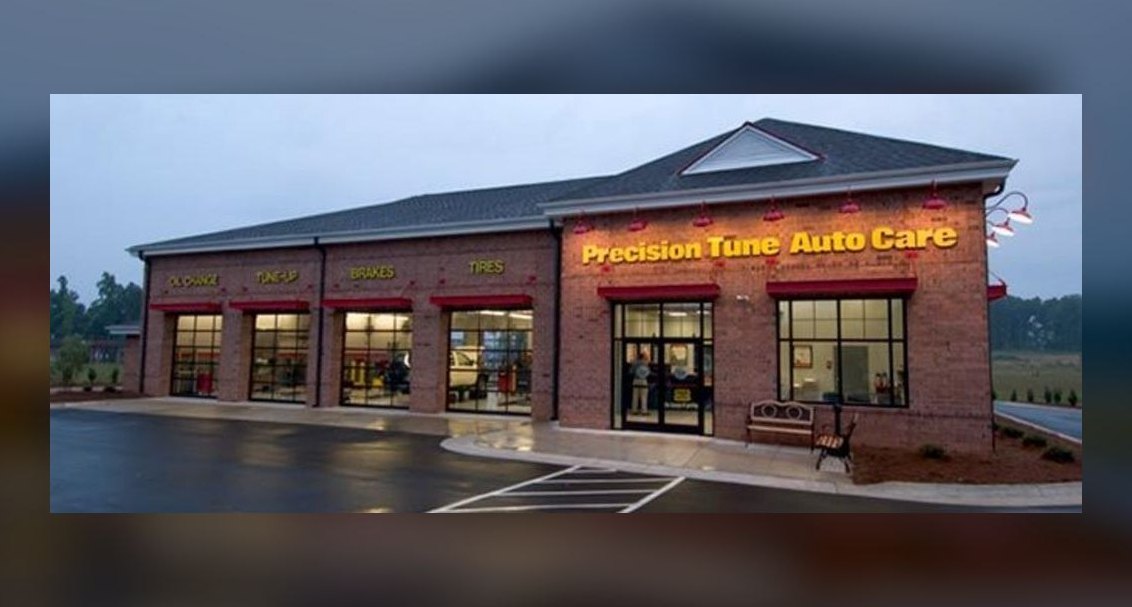 franchiseShould I open or buy a Precision Tune Auto Care franchise in 2027?
 franchiseShould I open a consignment sneaker shop or buy a Stadium Goods franchise in 2027?
 franchiseShould I open or buy a Cinnabon franchise in 2027?
 franchiseShould I open or buy a Rocky Mountain Chocolate Factory franchise in 2027?
 franchiseShould I open or buy a mobile franchise in 2027?