
Best Free Mobile Card & Deck-Building Games of 2027 (Top 10 Ranked)
 Curated byKory White · Fractional CRO · Maryland
 PULSEKNOWLEDGE LIBRARY
The strongest free mobile card and deck-building games of 2027 are Marvel Snap for three-minute matches on 12-card decks, Hearthstone for the widest mode variety, Legends of Runeterra for near-total free card access, and Yu-Gi-Oh! Master Duel for combo depth. Pick by match length, card-earn rate, and how much grinding you tolerate.
The Saturday-morning download that turns into a six-month decision
Picture the actual moment these rankings matter. It is a Saturday, you have forty minutes before you need to leave, and you open the App Store looking for something with more thought behind it than a match-three. You search "card game," get a wall of near-identical thumbnails — anime portraits, glowing card backs, "FREE" badges on every one — and you download three. Two hours later you have three tutorial completions, three starter decks, three sets of daily quests nagging at you, and no idea which one deserves the next six months of your attention.
That is the real cost structure nobody puts on the store page. Downloading is free. Playing is free. What is not free is the collection you build. Every free-to-play card game runs on the same fundamental loop: you accumulate cards slowly through play, faster through money, and the value of your account is measured in how many competitive decks you can assemble at once. Six months into Hearthstone you might have four viable decks. Six months into Legends of Runeterra you might have nearly the entire set. Six months into Magic: The Gathering Arena you might have two decks and a rotation looming that invalidates half of one. That divergence is invisible on day one and enormous on day one hundred and eighty.
The second hidden cost is time-per-session. Marvel Snap matches run about three minutes. A Master Duel match against a full combo deck can run past ten, and a Magic Arena Standard game with a control matchup can push fifteen. If your realistic play window is a bus ride or a lunch break, a fifteen-minute game is not a long game — it is a game you cannot finish, and an unfinished ranked match is a loss on your record in most of these titles. Match length is not a preference detail. It is the single strongest predictor of whether you are still playing in three months.
The third is the shape of the grind. Some of these games gate cards behind randomized packs where a specific card you want may take dozens of openings to appear. Others give you a crafting currency — Hearthstone's dust, Master Duel's gems and craft points, Arena's wildcards — that lets you target the exact card you need. Targeted crafting fundamentally changes the free experience: it converts random luck into a predictable savings problem. "I need 1,600 dust for this legendary" is a plan. "I need this one card out of a pack" is a slot machine.
So the ranking below is not a list of which games are fun. All ten are fun; they have survived in a brutally competitive category by being fun. The ranking is about which ones give a non-spending or low-spending player a defensible path to a competitive deck, in sessions that fit a phone, without a monetization design that quietly punishes you for not opening your wallet.
How the free-to-play card economy actually works underneath
Every game on this list runs the same three-layer machine, and once you can see the layers you can evaluate any card game in about ten minutes.
Layer one is the acquisition faucet. This is every route by which cards enter your account without a purchase: daily quests, win-based rewards, login streaks, event tokens, season pass free tracks, and periodic giveaway packs tied to expansions. The critical number is not "how many packs per week" but "how many packs per week relative to set size." A game handing you eight packs weekly against a 300-card set is far more generous than one handing you twelve against a 700-card set. Legends of Runeterra's weekly vault and region rewards are the standout here — the design intent has always been that a dedicated free player can approach full collection through play. Yu-Gi-Oh! Master Duel is generous in a different way: heavy free gem distribution around events plus a targeted crafting system, so gems convert into the specific cards a combo line requires.

Layer two is the conversion mechanism — how you turn duplicates and currency into the cards you actually want. Hearthstone's dust system lets you disenchant unwanted cards into a universal currency and craft any card at a fixed rate; the exchange is deliberately lossy (you get back a fraction of what crafting costs), which is what keeps the pack economy alive. Magic Arena's wildcards accumulate on a pity-timer basis as you open packs, so a rare wildcard is effectively a guaranteed "pick any rare" voucher earned on a schedule. Marvel Snap's collection track hands out cards in a semi-ordered progression rather than pure randomness, which is why a free Snap account reaches functional deck variety unusually fast for a game with a small card pool.
Layer three is the pressure valve — the paid product. Season passes cluster around $10 monthly, with the bigger passes closer to $15. What matters is what the pass gates. A pass that sells cosmetics, alternate art, extra daily quest slots, and a modest currency bump is benign. A pass that gates a card you cannot otherwise obtain during the season is a competitive tax. Snap's pass historically headlines a new card; Hearthstone's Tavern Pass accelerates the reward track and adds cosmetics; Arena's Mastery Pass converts play into more packs and cosmetics. Read the pass contents before subscribing, because "the pass" is not a uniform product across these games.
The diagram is the whole genre in one picture. The two branch points that decide your experience are the conversion type and the rotation speed. A game with targeted crafting and a slow-moving card pool is survivable indefinitely on zero dollars. A game with random-only acquisition and an aggressive rotation is one where free play eventually means playing a worse deck than the person across from you, every single match.
One more mechanical detail worth understanding: matchmaking. None of these titles openly matches paying players against non-paying players as a monetization lever, and the reputable ones match on rank or rating. What does happen is a soft version of the same thing — at high ranks, the population skews toward people with complete collections, so the deeper you climb the more you feel any collection gap. That is why the honest advice is to evaluate a game by how it plays at the rank you will actually reach, not at the top of the ladder.
Real numbers, ranges, and the ten Ranked picks
Here is the ranked shortlist with the concrete figures that drive each placement. Prices move; treat these as the observed ranges rather than permanent quotes, and check the store page before subscribing.
Marvel Snap — best overall. Second Dinner, designed under Ben Brode, who co-created Hearthstone. Twelve-card decks, one board of three locations, matches around three minutes. The snap mechanic doubles the stakes mid-match and lets you retreat to cut losses, which turns every game into a bluffing problem on top of a board-state problem. Season Pass around $9.99 monthly. No energy timer. Twelve cards means deckbuilding is dense — every slot is a real decision, and there is no filler to hide behind. For a phone, this is the tightest design in the category.

Hearthstone — best mode variety per dollar. Blizzard. Thirty-card class decks, turn-based, a card pool that has grown for over a decade and has grossed well over $1 billion lifetime. Tavern Pass roughly $14.99. The economics are carried by the dust system plus free packs distributed through achievements, events, and expansion launches. The other reason it ranks high is that one install gets you three genuinely different Games: the constructed ladder, Battlegrounds as an auto-battler, and Arena as a draft mode. If constructed goes stale you have somewhere to go without uninstalling.
Legends of Runeterra — most generous to free players. Riot Games. The weekly vault and region-reward system are built so a consistent player can earn nearly the whole set through play. Combat uses alternating actions with spell-stack timing rather than rigid turn blocks, which produces a lot of decision points per turn. Expansion passes land around $10 and lean toward cosmetics. If your constraint is "I will not spend money, ever," this is the pick.
Yu-Gi-Oh! Master Duel — deepest combo ceiling. Konami. The full modern ruleset, thousands of cards, and combo chains that can run a dozen links deep. It cleared 30 million downloads quickly after launch. Free gems flow generously around events, there is no energy system, and craft points let you target specific cards. The tax is knowledge: you need to know what your opponent's deck does mid-combo to interact correctly, and that learning curve is genuinely steep.
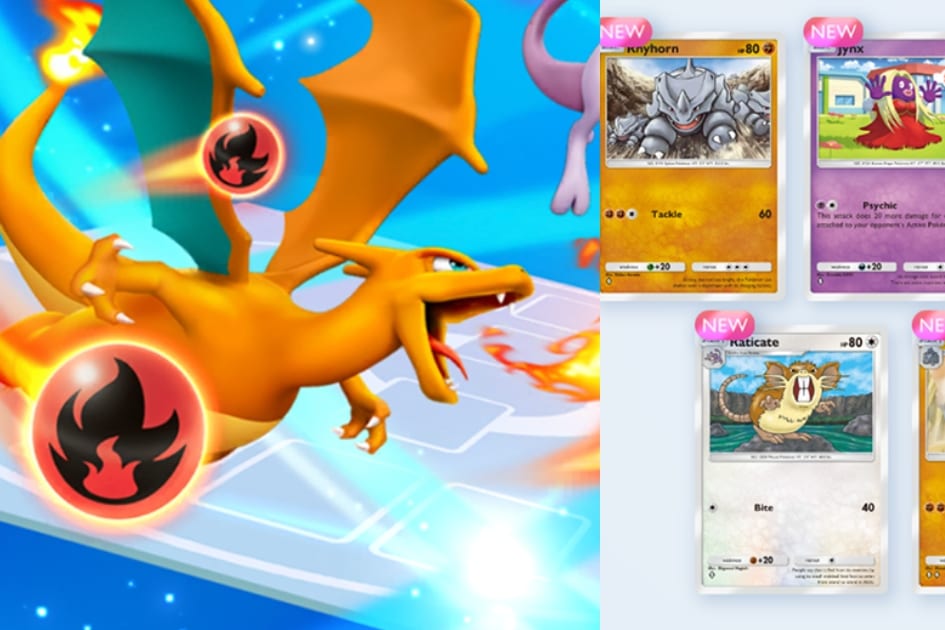
Pokémon TCG Pocket — best collecting loop. DeNA and The Pokémon Company. Two free booster packs daily, simplified duels, and a presentation built around the pack-opening moment. It grossed hundreds of millions within months of its late-2024 launch. Premium Pass around $9.99 monthly adds packs and cosmetics. The ruleset is deliberately lighter than the paper game — that is a feature if you want a five-minute match, a limitation if you want deep interaction.

Gwent: The Witcher Card Game — lowest luck. CD Projekt Red. Two-row board, best-of-three rounds, and no draws from a randomized deck once the round structure is underway, which removes most topdeck swing. Very generous card acquisition, funded largely by cosmetics. The round structure creates a resource-management problem — do you spend cards to win round one or concede it to bank power — that exists nowhere else in the category.
Shadowverse: Worlds Beyond — best combo aggression. Cygames. The evolution mechanic lets creatures transform mid-game, enabling sharp tempo swings and some of the most explosive combo lines available. Known for frequent free pack giveaways. Worlds Beyond modernized the presentation for the current era.
Magic: The Gathering Arena — deepest ruleset, highest upkeep. Wizards of the Coast. The original trading card game with decades of accumulated mechanics. Wildcards are earned free on a pity timer, packs are purchasable, Mastery Pass around $14.99. The honest caveat: keeping a top-tier Standard deck current across rotations is the most expensive proposition on this list, because rotation deletes cards from legality on a schedule.
Cooperative and solo deck-builders — Marvel Champions-style digital adaptations. Player-versus-environment scenarios against AI rather than a ladder. These typically sell one-time content packs instead of running a gacha, which makes spending predictable — you know the price before you buy. Right pick if competitive ladders make you miserable.
Slay the Spire mobile — the one paid outlier. Mega Crit. A roguelike deck-builder, around $9.99 one-time, no microtransactions at all. It is on the list because it is the single best card-strategy experience on a phone and because its total lifetime cost is less than one month of two season passes.
Budget math worth internalizing: zero dollars is viable in all nine free titles, most comfortably in Runeterra, Gwent, Master Duel, and Snap. A single pass at $10-$15 monthly is $120-$180 a year — roughly the cost of one mid-tier console game per quarter. Two passes plus occasional pack buys lands most players in the $250-$400 annual range. Committed crafting sprees to complete a set on release day run well into the high hundreds. Pick a tier and hold it, because the escalation from one pass to three is gradual and nobody notices it happening.
Trade-offs: what you give up with each choice
There is no dominant pick, only a set of honest exchanges. Speed costs depth. Depth costs session length. Generosity costs card-pool size, because a company giving away most of its cards has to make revenue somewhere, usually cosmetics and a smaller release cadence.
Fast versus deep. Marvel Snap's three-minute match is possible because there are twelve cards, three locations, and six turns. That constraint is the design's strength and its ceiling — you will never build a fifteen-piece combo in Snap, because there is no room. Master Duel gives you that combo and charges you eight to twelve minutes plus the cognitive load of tracking your opponent's interaction windows. Neither is better; they are different products for different pockets of time.
Generous versus vast. Runeterra and Gwent hand you cards freely. They also run smaller total card pools and slower expansion cadences than Hearthstone or Arena. If your pleasure comes from a firehose of new mechanics every quarter, generosity may feel like stagnation. If your pleasure comes from mastering a stable meta, it feels like respect.
Rotation versus permanence. Rotating formats — Hearthstone Standard, Arena Standard — keep the meta fresh and prevent decade-old cards from dominating, but they also expire your collection on a schedule. Non-rotating games let a card you earned two years ago still matter. That is a genuine value difference: a dollar spent in a non-rotating game buys a permanent asset, a dollar spent on a rotating Standard card buys a lease.
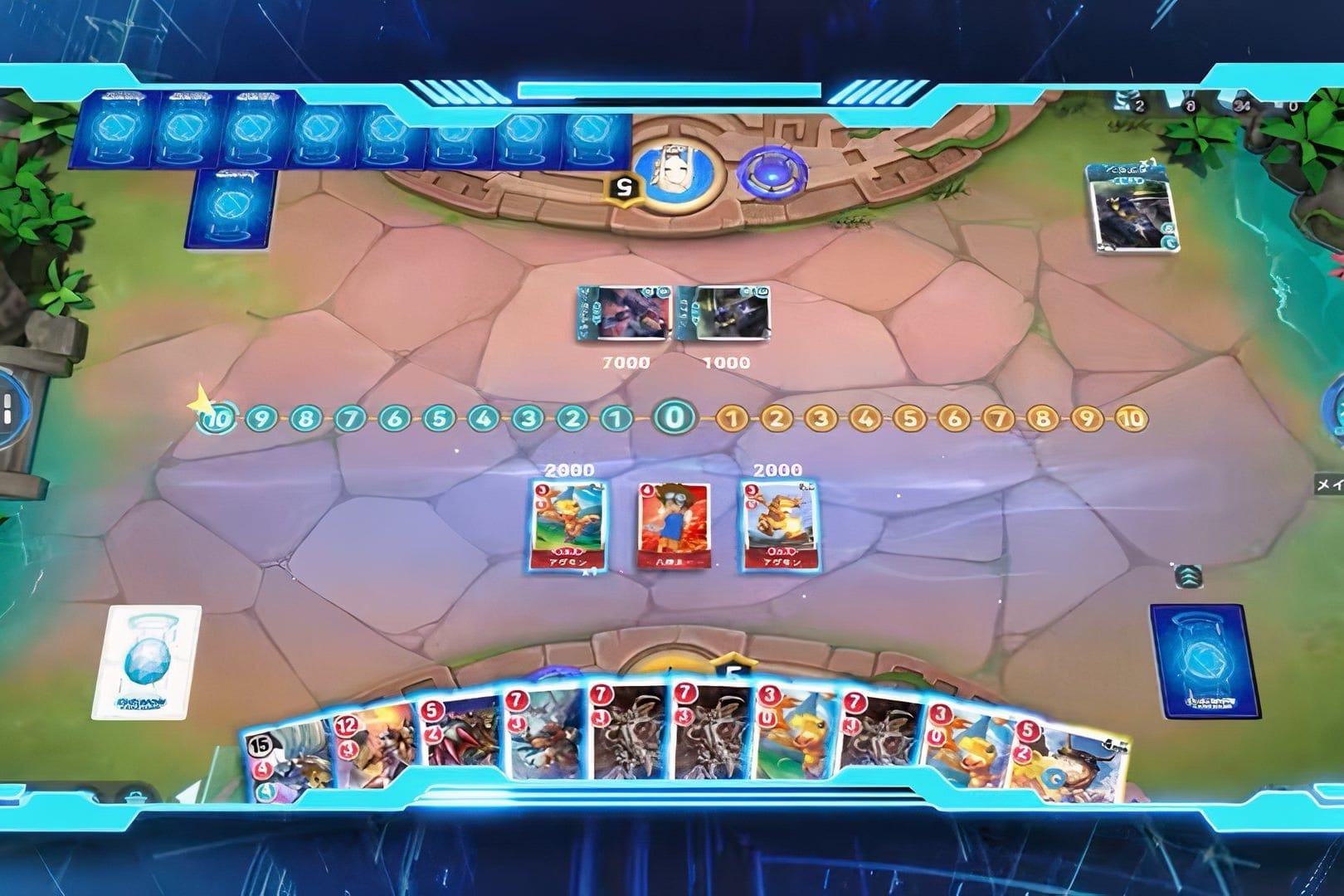
PvP versus solo. The ladder is the engine of every free-to-play card game's retention, and it is also the thing that makes people quit. Losing streaks in a ranked system feel materially worse than losing runs in a roguelike, because a roguelike loss resets to a fresh run while a ladder loss subtracts from a number you have been climbing for weeks. Slay the Spire and the co-op adaptations exist precisely for people who want deck construction without that pressure.
The thirty-day checkpoint at the bottom is the part people skip. Set a calendar reminder. If you are opening the app only to clear dailies and feeling relief when you close it, the game has converted from entertainment into an obligation, and that is the correct moment to leave — before you rationalize a pass purchase to justify sunk time.
Pitfalls that cost people money and months
Chasing the meta deck on day three. The archetype topping the tier lists is usually the most expensive one to build, and it is also the one most likely to be nerfed. Play the cheap aggressive deck the community has identified as budget-viable first. Aggro decks are cheaper across essentially every game in this category because they lean on commons and low-cost cards, and they teach the fundamentals — curve, tempo, resource trading — that transfer to every other deck you will build.

Spreading across four games at once. Every one of these titles is engineered around daily engagement, and four sets of dailies is a part-time job. Two is the practical maximum: one fast game for short windows, one deep game for a real sitting. Anything beyond that and you are grinding rather than playing.
Dusting or crafting before you understand rotation. In Hearthstone and Arena, disenchanting or spending currency on a card months from rotation is destroying value. Check the rotation calendar before any large craft. The same discipline applies to buying an expansion pass late in a season — you are paying full price for a fraction of the track.
Confusing "no energy system" with "no grind." Master Duel and Snap have no energy timers, which is genuinely player-friendly, but the collection grind is still real. Absence of a timer means you can play as much as you want; it does not mean cards arrive faster.
Missing free-pack windows. Expansion launches, anniversary events, and franchise crossovers reliably distribute free packs and currency, and they are time-boxed. Logging in during a launch week costs minutes and can be worth several packs. Missing a launch window is the most common way free players fall behind without noticing.
Buying a pass in a game you have played under two weeks. The pass is a monthly commitment against a game you have not yet learned whether you will still be playing. Wait for the second season. If you are still there, subscribe — you now have evidence.
Ignoring device thermals and battery. These are phone games, and the heavier titles with full 3D card animations will heat a device and drain battery fast on a commute. Most of them expose a low-quality or reduced-animation setting. Turning animations down is the single easiest quality-of-life change and often cuts match time meaningfully by skipping flourishes.
Treating a Ranked climb as a schedule. Ladder resets create urgency by design. Climbing at the end of a season when you are tired produces worse play and worse results than climbing early. If a game's rank reward matters to you, climb in the first two weeks.
Related questions
Is any of this actually pay-to-win?
None of these titles sells raw power directly to your matchmaking. What money buys is speed of collection. A spender assembles the top deck on release day; a free player assembles it weeks later. At mid ranks that gap is negligible. Near the top of the ladder it is real.
How much should a reasonable player budget per year?
Zero is genuinely viable in Runeterra, Gwent, Master Duel, and Snap. One season pass runs roughly $120-$180 annually. Two passes plus occasional pack purchases lands around $250-$400. Set the tier deliberately at the start rather than drifting upward.
Which one should a total beginner install first?
Marvel Snap. Twelve-card decks, six turns, three minutes per match, and a collection track that hands out cards in a semi-guided order. You learn the fundamentals of curve and board evaluation without memorizing hundreds of card interactions first.
Do any of these work without an internet connection?
Slay the Spire runs fully offline once installed. Every other title on this list needs a live connection for matchmaking, collection syncing, and events. Some allow browsing your collection offline, but no meaningful play happens without a connection.
What is the fastest way to evaluate a new card game myself?
Check three things in the first hour: match length, whether there is a targeted crafting currency, and what the season pass actually contains. Those three answers predict almost everything about how the next six months will feel.
FAQ
Are these games truly free, or do you need to spend to be competitive?
All nine free titles are genuinely free to download and play to a competitive standard, but the time cost varies enormously. Runeterra and Gwent are designed so a consistent free player approaches a full collection. Hearthstone and Arena free players typically maintain one or two competitive decks rather than a broad collection. Snap's collection track moves free accounts to functional deck variety quickly because the card pool per deck is small. Spending accelerates collection; it does not buy matchmaking advantages.
How long does a typical match take?
Roughly three minutes in Marvel Snap, five to eight in Pokémon TCG Pocket and Hearthstone constructed, eight to twelve in Master Duel and Runeterra depending on archetype, and ten to fifteen in Magic Arena when control decks meet. Slay the Spire is not a match at all — a full run is thirty to ninety minutes, though it saves and resumes cleanly, which makes it unusually good for interrupted play.
How often does new content arrive?
Major expansions land roughly every three to four months in the largest titles, with balance patches and smaller card drops between them. Free packs and currency are typically distributed around each launch, which is why logging in during expansion week is worth the two minutes it takes.
Is there a real difference between the season passes?
Yes, and it matters. Passes cluster at $9.99 to $14.99 monthly but gate very different things. Some headline a new card, which makes the pass semi-competitive rather than purely cosmetic. Others accelerate a reward track or sell cosmetics and alternate art only. Read the pass contents on the store page before subscribing rather than assuming parity across titles.
Which has the highest skill ceiling?
Yu-Gi-Oh! Master Duel and Magic: The Gathering Arena, for different reasons. Master Duel's ceiling comes from combo-line length and knowing when to interrupt an opponent mid-chain. Arena's comes from the sheer breadth of the rules engine and decades of card interactions. Gwent deserves mention for having the least randomness, which means more of the outcome is attributable to decisions.
Can you play more than one of these seriously at once?
Two is realistic. Each of these Games is built around daily engagement loops, and running three or four sets of daily quests turns a hobby into scheduled labor. The workable pairing is one short-session game for commutes and one deeper game for a real sitting at home.
Sources
- https://www.marvelsnap.com/
- https://playhearthstone.com/
- https://playruneterra.com/
- https://www.konami.com/yugioh/masterduel/
- https://magic.wizards.com/en/mtgarena
- https://www.playgwent.com/
- https://shadowverse-wb.com/
- https://www.megacrit.com/
- https://www.pcgamer.com/
Related on PULSE
- [Best Free-to-Play Mobile Strategy & Base-Building Games of 2027 (Top 10 Ranked)](/knowledge/gm0030)
- [Best Free-to-Play Mobile Games for Low-End Phones in 2027 (Top 10 Ranked)](/knowledge/gm0027)
- [Best Mobile Battle Royale Games of 2027 (Top 10 Ranked)](/knowledge/gm0023)
- [Best Free-to-Play Mobile Gacha RPGs of 2027 (Top 10 Ranked)](/knowledge/gm0022)
- [Best Free-to-Play MOBAs of 2027 (Top 10 Ranked, PC & Mobile)](/knowledge/gm0028)
- [Best Free-to-Play Mobile Games of 2027 (Top 10 Across All Genres)](/knowledge/gm0021)
@Kory-White- · if Venmo asks, the last 4 of my number are 2012
 pulse-aquariumsTop 10 Canister Filters 2027
 aqTop 10 Hang-On-Back Aquarium Filters 2027
 pulse-reviewsTop 10 Cabin Cruiser Boats 2027
 pulse-aquariumsTop 10 Aquarium Filters 2027
 pulse-moviesTop 10 Movies on Netflix 2027
 pulse-moviesTop 10 Movies on Max 2027
 pulse-moviesTop 10 Fantasy Movies of All Time in 2027
 pulse-moviesTop 10 Documentaries of All Time in 2027
 pulse-moviesTop 10 Superhero Movies of All Time in 2027
 pulse-moviesTop 10 Romance Movies of All Time in 2027