
Best Free-to-Play Mobile Games for Low-End Phones in 2027 (Top 10 Ranked)
 Curated byKory White · Fractional CRO · Maryland
 PULSEKNOWLEDGE LIBRARY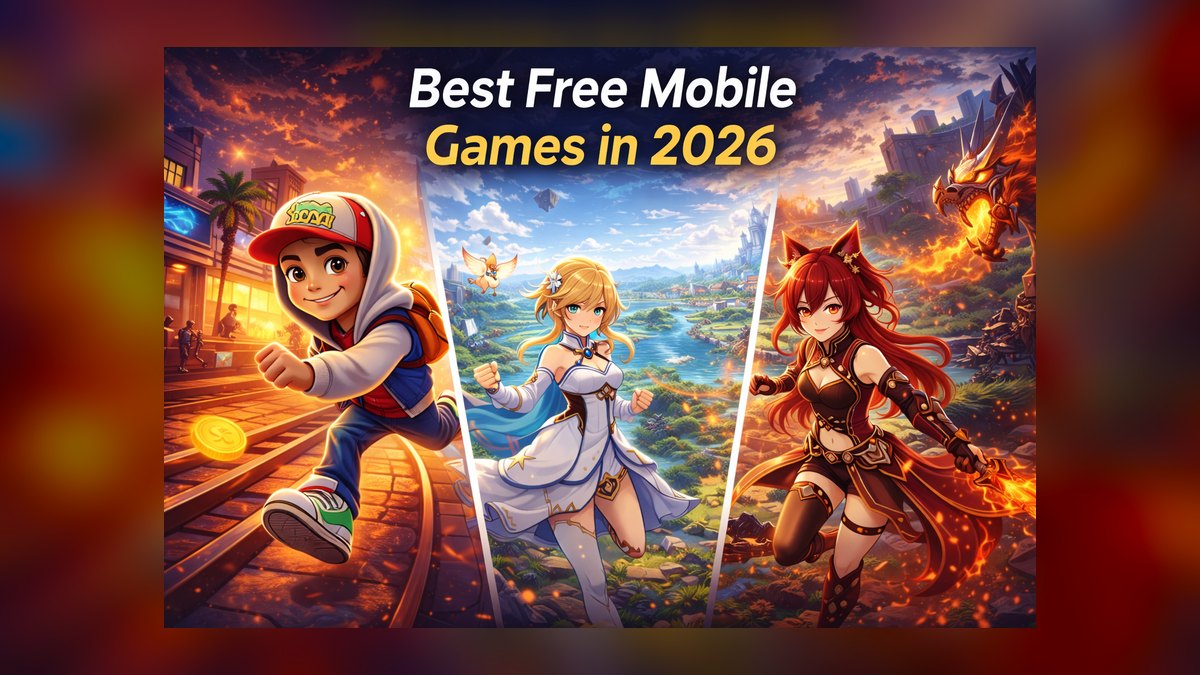
The best free-to-play mobile games for low-end phones are lightweight, short-session titles that run on 2 GB of RAM: Garena Free Fire leads for competitive shooting, Marvel Snap for strategy value, and Subway Surfers, Candy Crush Saga, Clash Royale, and Among Us for near-universal compatibility. All monetize through cosmetics and passes, never required spending.
The outcome you should expect
If you install the ten games ranked below on a budget Android phone — say a 2 GB or 3 GB RAM device with an entry-level Snapdragon or MediaTek chip and 32 GB of storage — the realistic outcome is that eight to ten of them run at a playable frame rate without settings gymnastics, and the total storage footprint stays under roughly 8 GB. That is the whole point of this list. These are not flagship games with a "low" preset bolted on; they are titles whose engines, art direction, and match length were chosen with weak hardware in mind.
Concretely, here is what a player on a low-end phone should expect from each of the ten ranked picks:
Garena Free Fire (Garena) — ranked #1 overall. A 50-player battle royale with roughly 10-minute matches and an install footprint near 1 GB. It was deliberately engineered for devices with 2 GB RAM and older Snapdragon chips, which is why it became one of the most-downloaded games worldwide with enormous player bases in India, Southeast Asia, and Latin America, where budget Android hardware dominates. Monetization is an Elite Pass around $5 per season plus cosmetic diamond spins for skins, gun wraps, and emotes. None of it touches aim or damage. The smaller 50-player lobbies (versus 100 in heavier battle royales) and the shorter round length are the two design decisions that keep frame rates stable on weak silicon.
Marvel Snap (Second Dinner) — ranked #2, best value. A three-minute, six-turn card battler played on a single screen. Because it is turn-based with no real-time 3D rendering, it runs flawlessly on almost any phone. The Season Pass is $9.99 per month, there is no energy timer, and matchmaking is based on skill and collection level rather than wallet. Twelve-card decks and the signature snap-betting mechanic — doubling the stakes mid-match — deliver real strategic depth on hardware that cannot handle an open-world RPG.

Stumble Guys (Scopely) — a 32-player physics party game in the Fall Guys mold, with sub-two-minute obstacle-course rounds and a lean build. It crossed 400 million downloads by choosing accessibility and small install size over visual fidelity. The Stumble Pass runs around $4.99 and everything purchasable is cosmetic. The one caveat: crowded 32-player maps can briefly dip frame rates on the very oldest devices.
Clash Royale (Supercell) — real-time 1v1 card duels, three-minute matches, clean 2D presentation, tiny install. Pass Royale is $11.99 per month, but free progression works fine in lower arenas and the pass mainly accelerates unlocks. The trade-off appears at high trophy levels, where card upgrade levels start to matter.
Brawl Stars (Supercell) — top-down 3v3 brawler, sub-three-minute matches, cartoon art style that performs well on entry-level phones. The 2023 progression overhaul sped up free unlocks substantially, so new players reach the full brawler roster far faster than they used to. Brawl Pass is $4.99 per season. Dual-stick controls and modest 2D-style visuals keep heat and battery drain low.
Subway Surfers (SYBO/Kiloo) — the endless runner that has run on virtually every phone for over a decade. Swipe controls, roughly 150 MB base install, well over a billion lifetime installs. Free with cosmetic characters and hoverboards; coin and key purchases only accelerate cosmetic unlocks. Monthly world-tour map themes keep it from going stale.
Candy Crush Saga (King) — the definitive match-three puzzler. Thousands of levels, a gentle difficulty curve, a 2D engine that demands almost nothing from your hardware, and an install small enough for phones with little free storage. Optional boosters and extra lives exist; the only real gate is a refilling lives timer.
8 Ball Pool (Miniclip) — realistic pool with online 1v1 matches, running smoothly on budget phones thanks to simple 2D physics. Coins and cosmetic cues with stat bonuses are sold, but they are also grindable for free. The turn-based pace means a laggy connection rarely ruins a game — a genuine advantage on cheap phones that often sit on cheap data plans.
Among Us (InnerSloth) — social deduction with deliberately simple 2D graphics, 4-15 player lobbies, and cross-play. Free with ads, or a cheap one-time purchase to remove them, plus optional cosmetic hats, pets, and skins. Matches scale to your group, so one old phone can host or join without difficulty.

Roblox (Roblox Corporation) — a platform of millions of user-made games that scales graphics to your device. On a budget phone the outcome depends entirely on which experiences you open: obbies and simple tycoons run fine, while the most popular high-fidelity experiences will stutter. Optional Robux purchases cover cosmetics and in-experience items.
The expected outcome across the set: zero required spending, roughly $0 to a few dollars a month if you choose to buy a single pass, and no title on this list that gates winning behind payment.
What drives that outcome
Four technical factors explain why these ten games run on hardware that chokes on heavier titles, and understanding them lets you evaluate any future release without waiting for a review.
Render model. Turn-based and 2D games (Marvel Snap, Candy Crush Saga, 8 Ball Pool, Clash Royale, Among Us) never sustain a real-time 3D scene, so the GPU has almost nothing to do between frames. A six-turn Snap match redraws a static board a handful of times. Compare that to a 3D battle royale, which must rasterize terrain, players, and effects sixty times a second. This is why Snap is the single safest install on a genuinely ancient phone.

Concurrent entity count. Free Fire caps lobbies at 50 players instead of 100; Stumble Guys runs 32; Brawl Stars runs 6; Among Us runs 4-15. Every additional networked entity costs CPU for state updates and interpolation. Halving the lobby roughly halves the per-frame simulation load, which is the specific engineering choice that lets Free Fire hold a frame rate on 2 GB devices where 100-player shooters cannot.
Match length and thermal budget. Cheap phones have small heat spreaders and no vapor chamber. Sustained load for twenty minutes pushes them into thermal throttling, where the SoC deliberately drops clocks and your frame rate collapses. A 10-minute Free Fire match, a three-minute Clash Royale duel, or a two-minute Stumble Guys round often finishes before throttling bites. This is why session length is a hardware spec, not just a design preference.
Install size versus available storage. A phone with 32 GB of nominal storage typically exposes about 22-25 GB after the OS and preinstalled apps. Android also needs free space for the cache and for OTA updates; drop below roughly 10% free and the filesystem slows measurably. Subway Surfers at ~150 MB, Candy Crush and Among Us typically under 500 MB to 1 GB, Free Fire and Brawl Stars in the 1-2 GB band, and Roblox variable by loaded experience — the whole list fits where a single 20-30 GB console-style RPG would not.
The fifth driver is commercial rather than technical: these publishers earn revenue from cosmetics, passes, and boosters rather than an up-front price, which means their incentive is to maximize the installed base. A game that excludes 2 GB phones excludes hundreds of millions of potential payers in exactly the markets — India, Indonesia, Brazil, the Philippines — where budget Android dominates. Low-end optimization is not charity; it is the business model. That is also why you should expect these titles to keep supporting old hardware rather than quietly raising minimum specs.
Benchmarks and realistic ranges
Use these ranges to sanity-check your own device before you install anything.
RAM. 2 GB is the practical floor for every game on this list. At 2 GB, expect to close background apps before launching Free Fire or Brawl Stars; the Android system itself will often evict your browser and messaging app when the game claims memory. At 3 GB, all ten run without babysitting. At 4 GB and up you leave this list's constraints behind entirely. Games that need 4 GB or more — large open-world RPGs are the usual example — are outside the scope of this ranking and will stutter or refuse to install on the hardware discussed here.
Storage. Budget for these approximate footprints after first launch and initial asset downloads: Subway Surfers around 150 MB base; Candy Crush Saga and Among Us commonly under 500 MB to 1 GB; Free Fire near 1 GB; Brawl Stars and Stumble Guys in the 1-2 GB band; Clash Royale and 8 Ball Pool small; Roblox highly variable because each experience streams its own assets. Installing all ten realistically lands in the 6-8 GB range, and note that live-service games grow with each seasonal update — reserve headroom rather than filling storage to the brim.
Session length. The design sweet spot across this list is 2-10 minutes: Marvel Snap at three minutes, Clash Royale at three minutes, Brawl Stars under three, Stumble Guys under two per round, Free Fire near ten. That is also the thermal sweet spot for cheap phones. If you want a two-hour session, take breaks between matches rather than chaining twenty back-to-back rounds of the heaviest title.
Spending. The realistic range is $0 to about $12 per month, and the honest answer is that $0 is fully viable across all ten. If you do spend, the published pass prices are: Brawl Pass around $4.99 per season, Stumble Pass around $4.99, Free Fire Elite Pass around $5 per season, Marvel Snap Season Pass $9.99 per month, Pass Royale $11.99 per month. Buying one pass on one game is the sane pattern; buying five is how a free-to-play habit quietly turns into a subscription stack.
Connectivity. Candy Crush Saga and Subway Surfers offer substantial offline play — the correct picks when data is metered or coverage is poor. Among Us supports local-network lobbies, so a group in the same room can play without internet. Free Fire, Marvel Snap, Clash Royale, Brawl Stars, 8 Ball Pool, and Roblox all require a live connection. The turn-based titles (Snap, 8 Ball Pool) tolerate high latency far better than the real-time ones, which matters on congested budget data plans.
Battery. Expect the lightweight 2D and turn-based titles — Candy Crush, Marvel Snap, 8 Ball Pool, Subway Surfers — to use little power and rarely produce noticeable heat. Real-time 3D multiplayer (Free Fire, Brawl Stars, Stumble Guys) draws meaningfully more during matches even though it is optimized for budget devices. On a phone with an aged battery, the practical fix is lowering in-game graphics settings and keeping sessions short rather than expecting the game to solve it for you.
Risks, edge cases, and failure modes
The Roblox trap. Roblox is the one entry on this list whose performance you cannot predict from the app itself. It is a platform, not a game. Simple obbies and tycoons run fine on weak hardware; the flagship community experiences with heavy lighting and large concurrent player counts do not. The failure mode is a new player judging Roblox by the most popular experience on the front page, concluding their phone is broken, and uninstalling. The fix is to deliberately seek out lower-fidelity experiences and treat graphics-heavy ones as off-limits on a 2 GB device.
Live-service creep. Every title here ships seasonal updates, and those updates add assets. A game that installed at 1.2 GB two years ago may sit at 2 GB today. On a 32 GB phone this compounds across five or six installed games until you hit the storage wall mid-download. Practical mitigation: check actual on-device storage every couple of months and uninstall the game you have not opened in six weeks rather than deleting photos.
Thermal throttling on marathon sessions. Discussed above as a driver; here it is a failure mode. The symptom is specific and recognizable: the first two matches feel fine, then frame rate degrades and never recovers until you put the phone down. It is not a network problem and no settings change fixes it once the SoC is hot. Take a five-minute break, or take the case off.
Monetization pressure without pay-to-win. No game ranked on this list gates winning behind payment, but the pressure is not evenly distributed. Free Fire runs heavier limited-time bundle promotion than the rest. Clash Royale's pay curve steepens at high trophy levels where card upgrade levels compound. 8 Ball Pool sells cues with stat bonuses, though they are grindable. Marvel Snap's friction is a slower free card-acquisition pace rather than any matchmaking disadvantage — it matches by collection level specifically to keep that fair. Knowing which pressure applies to which game is how you avoid an impulse purchase.
Account loss. Free-to-play mobile games commonly let you play as a guest. On a budget phone that may be replaced, damaged, or factory-reset more often than a flagship, guest progress is a real risk. Link every account to a durable login — Google, Facebook, Apple, or a publisher account — on day one. Recovering hundreds of hours of Clash Royale or Marvel Snap collection progress without a linked account ranges from painful to impossible.

Fake and repackaged installers. Low-end-phone players are disproportionately targeted by sideloaded APKs promising free diamonds, gems, or Robux. These are the most common malware vector in this space. Install only from the Google Play Store or the official publisher channel. No legitimate source of in-game currency exists outside the game itself.
Ad-supported edge cases. Among Us is free with ads and a cheap one-time purchase to remove them. On very low-end hardware, video ad playback is sometimes heavier than the game itself and can cause a visible hitch. If a free title feels janky specifically between rounds rather than during them, ads are the likely culprit.
Region and market availability. Some titles on this list have market-specific availability histories, and Roblox in particular has faced access restrictions in certain countries at various points. Availability can change; check your regional store rather than assuming a global install works everywhere.
A practical rollout plan
Rather than installing all ten at once and watching your storage fill, work through this sequence over about a week.
Step 1 — Audit the device. Find your exact RAM and free storage in Settings → About phone and Settings → Storage. Write down both numbers. If free storage is under 4 GB, clear space before installing anything; a cramped filesystem causes stutters that look like game performance problems.
Step 2 — Install the two safest titles first. Subway Surfers (~150 MB) and Candy Crush Saga. Both are 2D, both have substantial offline play, and both will run on essentially any device. If either stutters, the problem is your phone's storage or background apps, not the game — diagnose that before going further.
Step 3 — Add one turn-based strategy title. Marvel Snap is the pick here: three-minute matches, no energy timer, and the lightest real-strategy experience on the list. Clash Royale is the alternative if you prefer real-time duels; it is still light but adds live opponent sync.

Step 4 — Test one real-time 3D title. Install Garena Free Fire. This is the load test. Play three consecutive matches and watch for degradation between match one and match three. Smooth through all three means your device handles the heaviest category on this list; visible decay by match three means you should stay in the 2D and turn-based tier.
Step 5 — Layer in social play. Among Us for group voice-chat sessions, Stumble Guys or Brawl Stars for quick competitive multiplayer, 8 Ball Pool for one-on-one skill matches. Add these one at a time and check storage after each.
Step 6 — Approach Roblox deliberately. Install last, and start with lightweight community experiences rather than the front-page hits. Treat it as a variable-cost app, not a fixed one.
Step 7 — Decide on spending after two weeks. Play everything free for two weeks, then buy at most one pass for the single game you actually opened daily. That is the discipline that keeps a free-to-play habit at $5-12 per month instead of $50.
FAQ
Do these games still cost money to enjoy?
No. Every title here is free to download and free to play. They monetize through optional cosmetics, battle passes, or boosters. Marvel Snap's Season Pass is $9.99 per month and Pass Royale is $11.99 per month, but you can play and compete without spending anything at all. The realistic range for a player who chooses to buy one pass is $0 to about $12 monthly.
Will these games drain my battery or overheat my phone?
Lightweight 2D and turn-based games like Candy Crush Saga, Marvel Snap, and 8 Ball Pool use little power and rarely overheat. Battle royales like Free Fire are optimized for budget devices but draw meaningfully more battery during matches. Lowering in-game graphics settings and keeping sessions to 10-20 minutes prevents most thermal throttling.
What should I do first if a game stutters on my phone?
Check free storage before anything else — a nearly full filesystem slows the whole device. Then close background apps, since a 2 GB phone has very little headroom. Only after both should you lower in-game graphics settings. If stuttering appears only by the third consecutive match, that is thermal throttling, and the fix is a break rather than a setting.
Should I link my account or play as a guest?
Link it on day one, using Google, Facebook, Apple, or the publisher's own account system. Budget phones get replaced, damaged, or factory-reset more often than flagships, and guest progress is frequently unrecoverable. Losing a large Marvel Snap collection or a high Clash Royale trophy count to an unlinked account is the single most avoidable mistake on this list.
Where should I download these games from?
The Google Play Store or the publisher's official channel, never a sideloaded APK. Players on low-end phones are heavily targeted by fake installers promising free diamonds, gems, or Robux, and those are the most common malware vector in mobile gaming. There is no legitimate source of in-game currency outside the game itself.
Which single game should I install if I can only pick one?
Marvel Snap if you want depth on the weakest possible hardware — three-minute matches, no energy timer, and a turn-based engine that asks almost nothing of your GPU. Garena Free Fire if you want a full competitive shooter and your device holds a frame rate through three back-to-back matches.
Sources
- https://sensortower.com/ — mobile app download and revenue rankings by market
- https://ff.garena.com/ — Garena Free Fire official site, system requirements and Elite Pass
- https://www.marvelsnap.com/ — Marvel Snap official site (Second Dinner)
- https://supercell.com/en/games/clashroyale/ — Clash Royale official product page
- https://supercell.com/en/games/brawlstars/ — Brawl Stars official product page
- https://sybogames.com/ — SYBO, developer of Subway Surfers
- https://www.king.com/game/candycrush — Candy Crush Saga official page (King)
- https://www.miniclip.com/games/8-ball-pool/ — 8 Ball Pool official page (Miniclip)
- https://www.innersloth.com/games/among-us/ — Among Us official page (InnerSloth)
- https://www.pocketgamer.com/ — Pocket Gamer, mobile game reviews and coverage
Related on PULSE
- [Best Free-to-Play Mobile Strategy & Base-Building Games of 2027 (Top 10 Ranked)](/knowledge/gm0030)
- [Best Free-to-Play Mobile Gacha RPGs of 2027 (Top 10 Ranked)](/knowledge/gm0022)
- [Best Free-to-Play MOBAs of 2027 (Top 10 Ranked, PC & Mobile)](/knowledge/gm0028)
- [Best Free Mobile Card & Deck-Building Games of 2027 (Top 10 Ranked)](/knowledge/gm0024)
- [Best Free-to-Play Mobile Games of 2027 (Top 10 Across All Genres)](/knowledge/gm0021)
- [Best Free-to-Play PC Games on Steam in 2027 (Top 10 Ranked)](/knowledge/gm0025)
@Kory-White- · if Venmo asks, the last 4 of my number are 2012
 pulse-aquariumsTop 10 Canister Filters 2027
 aqTop 10 Hang-On-Back Aquarium Filters 2027
 pulse-reviewsTop 10 Cabin Cruiser Boats 2027
 pulse-aquariumsTop 10 Aquarium Filters 2027
 pulse-moviesTop 10 Movies on Netflix 2027
 pulse-moviesTop 10 Movies on Max 2027
 pulse-moviesTop 10 Fantasy Movies of All Time in 2027
 pulse-moviesTop 10 Documentaries of All Time in 2027
 pulse-moviesTop 10 Superhero Movies of All Time in 2027
 pulse-moviesTop 10 Romance Movies of All Time in 2027