


How much does it cost to play open-world games in 2027?
Quality
Certified

Playing open-world games in 2027 costs most people $400–$900 in year one and $150–$400 per year after that. A console or capable PC dominates the upfront cost, individual titles run $50–$80, and a subscription library plus internet and occasional in-game purchases make up the recurring spend.
The moment the real bill shows up
Almost nobody budgets for open-world gaming correctly, and the reason is that the sticker price on the box is the smallest number in the equation. Picture a fairly typical situation: someone watches a trailer for a sprawling open-world title, sees "$69.99," and mentally files the hobby under seventy dollars. Six weeks later they have spent closer to six hundred, and none of it felt like a decision at the time.
Here is how that happens in practice. The game requires hardware they do not own, or that they own in a form too old to run it acceptably. A current-generation console lands somewhere in the $300–$600 range depending on whether it is a digital-only model, a disc model, or a mid-generation refresh, and whether it is bought at launch pricing or during a holiday promotion. A gaming PC capable of running a modern open world at 1080p with decent frame rates starts meaningfully higher — roughly $700–$900 for a budget build in most markets, and $1,200–$2,000 once you want 1440p with high settings and ray tracing enabled. So the first line item is not $70. It is $300 to $2,000.
Then the accessories arrive. A second controller so someone else can play, because open-world games with co-op or couch modes invite it. That is $50–$75. A headset, because these games are often played late at night in shared housing, and the built-in speaker on a controller is not a substitute: $40–$150 for something that will not fall apart. Storage, which is the sleeper cost nobody anticipates — modern open-world titles routinely occupy 100–150 GB each, and a base console with 500 GB to 1 TB of usable space holds perhaps four to seven of them. An expansion drive or a large NVMe SSD runs $80–$200. If you own three open-world games and a shooter, you will hit the storage wall inside a year.
Then the recurring costs begin. Online play on consoles typically requires a paid subscription tier, which is where the $60–$130 per year sits depending on which tier you select and whether you pay monthly or annually. Annual prepayment is nearly always cheaper per month, sometimes by 30–40%, and the monthly option is where casual players quietly overpay. Internet service is a shared household cost, but if the open-world habit is what pushed a household from a 100 Mbps plan to a 500 Mbps plan for faster downloads on 120 GB patches, some fraction of that $20–$40 monthly delta belongs in the gaming budget honestly accounted.
Then the content treadmill. Open-world games in particular have leaned hard into post-launch monetization: expansion passes at $20–$40, cosmetic bundles, battle passes on live-service open worlds at roughly $10 per season, and currency packs. None of these are required to complete the base game. All of them are engineered to feel required, and the design of an open world — a space you inhabit rather than finish — makes the psychological pull unusually strong. You are not buying a hat for a character you will see for eight hours. You are buying a hat for a character you will see for two hundred.
The broader point worth carrying into every number below: the cost of this hobby is not a price, it is a rate. Anyone who evaluates it as a one-time purchase will be wrong by a factor of five or more. Anyone who evaluates it as an annual rate — hardware amortized over its real lifespan, plus subscriptions, plus a realistic title cadence — will land within a hundred dollars of the truth.
How the spending mechanism actually works

The structure of the cost is layered, and each layer has a different decay curve. Understanding which layer you are standing on tells you where the money is going and where it can be cut without ruining the experience.
The first layer is the platform, and it is a capital expense with a long amortization window. A console bought in 2027 will remain viable for roughly five to seven years, because console generations are long and developers target the installed base rather than the frontier. Divide a $500 console by six years and the true annual platform cost is about $83. A $1,400 PC has a murkier curve — it does not stop working, it degrades in relative capability, and most people do a partial upgrade (GPU, then later RAM and storage) rather than a full replacement. Budget roughly $200–$300 per year in amortized PC cost if you intend to keep pace with new open-world releases at high settings, or $120–$150 per year if you are content to drop settings over time and skip a generation.
The second layer is software acquisition, which is where behavior matters more than price. The same open-world game costs $69.99 at launch, roughly $40–$50 six months later, $25–$35 at the one-year mark, and $15–$25 during a deep seasonal sale in year two. That is not an exception; that is the standard depreciation pattern for premium single-player titles. The person who waits eighteen months plays the same game for a fifth of the price, on hardware that by then handles it better, with the patches that fixed launch-week performance already shipped, and often with the expansion bundled into a "complete" or "definitive" edition. The cost of that patience is spoilers and cultural lag — you are out of the conversation while it is happening.
The third layer is subscription access, and this is the layer that has changed the math most in recent years. Subscription libraries that include a rotating catalog of open-world titles, and in some cases day-one first-party releases, price at roughly $10–$20 per month depending on tier and whether cloud streaming is included. At $15 per month, that is $180 per year. If that subscription replaces three full-price purchases annually, it is a clear win. If you were only going to buy one open-world game a year anyway, it is a loss — you are paying $180 for a $70 habit, and the library's breadth mostly generates a backlog you never touch.
The fourth layer is in-game spend, which is the least predictable and the most personal. For a purely single-player open world with no live-service hooks, this is genuinely zero. For an open world with a seasonal battle pass and a cosmetic store, the observed range across ordinary players runs from $0 to several hundred per year, with a long tail. The honest planning advice is to decide the number in advance, put it in the budget as a fixed line, and treat overruns as a signal rather than an accident.
The diagram makes the branching visible, and the branch that matters most is the second one. Whether you buy at launch or wait is the single largest controllable variable after hardware, and it swings the annual software budget by roughly 60–70% for the same number of games played.
Real numbers by player profile
Abstract ranges are less useful than concrete profiles, so here are four, built from the layer structure above. All figures are USD and assume a single player in a household with existing internet service.

The lapsed returner. Owns nothing current. Buys a digital-only current-gen console at $350–$400, one extra controller at $60, a 1 TB expansion at $120, one open-world game at launch for $70, and an annual online subscription at $80. Year one: roughly $680–$730. Year two, with no new hardware, two games bought on sale at $30 each and the subscription renewed: about $140. Averaged over five years, this profile costs roughly $250 per year — and the average is what actually matters, not the spike.
The patient value player. Already owns a console. Buys nothing at launch. Waits for sales, picks up three open-world titles per year at an average of $22 each, skips the online subscription entirely because they play single-player only. Annual cost: about $66, plus amortized hardware. This is the cheapest honest way to play open-world games well, and the trade-off is purely social and temporal — you are always a year behind.
The subscription-first player. Pays $17 per month for a premium tier that bundles online play with a large library including day-one releases. That is $204 per year. Buys perhaps one title outside the library at $50. Spends $60 on a battle pass across two seasons of a live-service open world. Annual cost: roughly $315, with essentially no purchasing decisions to make. The value here is convenience and variety; the risk is that titles rotate out of the library mid-playthrough, which happens regularly with third-party catalog entries.
The PC enthusiast. Runs a $1,500 build refreshed with a $500–$700 GPU every three to four years. Amortized hardware: roughly $280 per year. Buys four to six open-world games annually, mixing launch purchases and sales, averaging perhaps $40 each — call it $200. Pays no console online fee, since PC multiplayer is generally free, though some services and mods carry small costs. Spends $50 on mod-adjacent tools or content. Annual cost: roughly $530. The upside is the highest visual ceiling, mod support that extends a single open world's life by hundreds of hours, and no platform gatekeeping on online play.

A few cross-cutting benchmarks worth holding onto. Cost per hour is the metric that reframes everything: a $70 open-world game with 60 hours of content costs about $1.17 per hour, which compares favorably against nearly every other entertainment option available. A $70 game abandoned after four hours costs $17.50 per hour, which does not. Electricity is real but small — a console under load draws roughly 150–220 watts, a gaming PC 300–600 watts, so 20 hours a week of play adds somewhere between $2 and $12 to a monthly bill depending on local rates. Bandwidth matters if you are metered: a 120 GB install plus a year of patches can approach 200 GB for one title, which is a meaningful fraction of a 1 TB monthly cap if the household also streams video.
Trade-offs, alternatives, and adjacent paths
Every dollar saved in this hobby costs something else, and the honest way to present the options is as trade-offs rather than tips.
Buying versus subscribing is the central fork. Ownership means the game stays playable regardless of a billing relationship, which matters for a genre you might revisit in five years, and it means physical copies can be resold or lent — recovering perhaps 30–50% of a disc's value if sold within a few months of purchase. Subscribing means near-zero decision cost and access to titles you would never have risked $70 on, which is genuinely how a lot of people discover games outside their usual taste. The break-even is roughly three full-price purchases per year. Below that, buy. Above that, subscribe.
Console versus PC trades upfront capital against long-run flexibility. Consoles are cheaper to enter, cost more to keep online, and offer a fixed and predictable experience. PCs are expensive to enter, free to play online in most cases, and offer two things consoles structurally cannot: aggressive storefront competition that drives sale prices lower, and mods, which for open-world games specifically can multiply a single purchase's value enormously. A modded open world can absorb three hundred hours from a game that shipped with eighty.

Cloud streaming is the third path and the most underrated for cost-constrained players. Streaming tiers priced around $10–$20 per month remove the hardware line item almost entirely — you need a screen, a controller, and a stable connection of roughly 15–25 Mbps. For an open-world game, which is often played in long exploratory sessions rather than twitch-reflex competitive bursts, the added input latency is more tolerable than it would be in a shooter. The trade-off is real, though: input lag, compression artifacts on distant foliage and fine detail (exactly what open worlds are built out of), and total dependence on connection quality. It is the cheapest viable entry point and the least satisfying ceiling.
Older hardware and older worlds deserve mention as a legitimate strategy rather than a consolation prize. A previous-generation console bought used for $150–$220 plays an enormous back catalog of acclaimed open-world titles, most of which now sell for $10–$20. Someone starting from zero could assemble a genuinely excellent hundred-hour open-world library for under $300 all-in. The cost is that you are not playing the new thing, and some online services for older titles get retired.
There are adjacent effects worth thinking about too. Households with multiple players change the math substantially — a subscription with family sharing, or a single console shared across siblings, splits the fixed costs across two or three people and drops per-person annual cost dramatically, often below $150. Conversely, a household where each person wants their own screen and their own copy multiplies almost everything except the internet line.
Pitfalls that quietly inflate the total

Underestimating storage. This is the most common miss. People buy a console, buy three open-world games, and discover the fourth will not fit. The fix is to buy storage deliberately at the start rather than in a panic, and to accept that with big open worlds you will be uninstalling and reinstalling as a routine act. Reinstalling is free but not costless — a 120 GB redownload on a slow connection is an evening.
Buying at launch reflexively. The premium for playing on day one is roughly $40–$50 per title versus waiting a year. If you buy four open-world games a year at launch, launch-day impatience is a $160–$200 annual subscription you never signed up for. Buy at launch for the one or two titles you genuinely cannot wait on, and wait on the rest.
Paying monthly for annual services. Online subscriptions and library tiers almost always discount the annual prepayment. Paying month-to-month for something you will keep for twelve months is a straightforward 20–40% penalty. The only reason to pay monthly is genuine uncertainty about whether you will still be playing in three months, which is a real reason and worth the premium when true.
Subscription stacking. It is easy to end up paying for a console online tier, a first-party library tier, a third-party catalog service, and a cloud streaming add-on simultaneously — four bills that overlap heavily in what they provide. Audit them once a year. Most people playing open-world games need at most two.
The backlog trap. Sales create the feeling of saving money while actually spending it. Buying nine discounted games you will not play is not thrift; it is $180 spent for zero hours of entertainment and an infinite cost per hour. The discipline that works is a hard rule: do not buy the next open-world game until you have finished or genuinely abandoned the current one.
Ignoring the resale and refund windows. Digital storefronts generally offer refunds within a short window and under a playtime cap — often around two hours. If an open-world game runs badly on your hardware, you find that out in the first thirty minutes, and the refund is available if you act rather than hoping a patch fixes it. Physical copies retain resale value that decays fast; selling within the first two months recovers substantially more than selling at month six.
Forgetting expansions in the base budget. A large share of open-world titles ship a substantial paid expansion twelve to eighteen months after launch. If you plan on the full experience, the real price of the game is the $70 base plus a $30 expansion, and the "complete edition" that appears at the two-year mark bundles both for often less than the base game cost at launch. Deciding upfront whether you want the whole world or just the core of it prevents a second unplanned purchase later.
Related questions
Is a console or a gaming PC cheaper for open-world games?
A console is cheaper to enter — roughly $350–$600 versus $700–$2,000 — but costs $60–$130 annually for online play. A PC costs more upfront, plays online free, and gets deeper storefront discounts and mod support. Over five to six years the totals converge closely.
How much do open-world games cost per hour?
A $70 game with 60 hours of content works out to about $1.17 per hour. Bought on sale at $25 with the same playtime, it drops to roughly $0.42. Abandoned after four hours, a full-price purchase costs $17.50 per hour.
Can you play open-world games without buying hardware?
Yes, through cloud streaming tiers priced around $10–$20 monthly. You need a screen, a controller, and roughly 15–25 Mbps of stable bandwidth. The trade-off is added input latency and compression artifacts on the fine environmental detail that open worlds rely on.
Do you need a subscription to play single-player open-world games?
No. Paid online tiers are required for multiplayer on consoles, not for single-player campaigns. A purely solo open-world player can skip that $60–$130 annual cost entirely, though some titles still require an initial online connection to install and patch.
How much storage do open-world games need?
Modern open-world titles commonly occupy 100–150 GB each. A 1 TB drive with system overhead realistically holds four to seven of them alongside smaller games. Expansion storage runs $80–$200 depending on capacity and format.
FAQ
How much does it cost to play open-world games in 2027?
Expect $400–$900 in the first year if you are starting from nothing, and $150–$400 annually after that. The spread depends almost entirely on three choices: console versus PC, launch-day purchases versus waiting for sales, and whether you carry a subscription library. A patient console owner buying only on sale can run under $100 a year; a PC enthusiast buying at launch can exceed $600.
What single change saves the most money?
Waiting twelve to eighteen months to buy. Premium titles depreciate from roughly $70 to $25–$35 within a year, and complete editions bundling expansions often appear by month twenty-four for less than the base game cost at launch. Across four purchases a year, patience saves $160–$200 with no reduction in playtime — only in timeliness.
Are subscription libraries actually worth it?
The break-even is about three full-price purchases per year. At $15–$20 monthly you are spending $180–$240, so if you would have bought three or more $70 titles anyway, the subscription wins outright. If you play one or two open worlds a year, buying is cheaper and the games stay yours. Also weigh that catalog titles rotate out, sometimes mid-playthrough.
Do free-to-play open-world games actually cost nothing?
The entry is genuinely free and a determined player can stay at zero, but the business model depends on a minority spending heavily. Battle passes run about $10 per season, and currency bundles scale from a few dollars to well over a hundred. The practical approach is to set a fixed annual number before starting and treat it as a hard ceiling.
What are the hidden costs people forget?
Storage expansion, which becomes urgent around the fourth big title; the electricity of 20-plus weekly hours on a machine drawing 150–600 watts; bandwidth caps strained by 100 GB installs and recurring patches; a second controller once someone else wants to join; and post-launch expansions that turn a $70 purchase into a $100 one.
Does buying used or older hardware still work?
Yes, and it is the strongest value play available. A used prior-generation console at $150–$220 opens an enormous catalog of acclaimed open-world titles now selling for $10–$20 each. A hundred-plus hour library assembles for under $300 total. The costs are missing new releases and the eventual retirement of online services for older titles.
Sources
- https://www.esrb.org/
- https://www.theesa.com/
- https://www.pcgamer.com/
- https://www.eurogamer.net/
- https://arstechnica.com/gaming/
- https://www.ign.com/
- https://www.gamesindustry.biz/
- https://www.consumerreports.org/
- https://www.eia.gov/
- https://www.howlongtobeat.com/
Related on PULSE
- How much does a gaming PC cost to build in 2027?
- Are game subscription services worth the money?
- How do free-to-play games make money?
- What does cloud gaming actually cost per month?
- How long do game consoles stay supported?
- Is buying games at launch ever worth the premium?
This page will be disappearing soon. Save it to your device for $1 — or read it free while it is here.
@Kory-White- · if Venmo asks, the last 4 of my number are 2012
This page is gone.
This one is off the shelf now. $1 keeps it on your phone for good — the whole page, pictures and diagrams included.
 pulse-recentTop 10 Most Valuable Sealed PlayStation Vita Games to Buy in 2027
 pulse-recentTop 10 Most Expensive Video Games to Develop of All Time in 2027
 pulse-recentWhat is the typical budget breakdown for an open-world game in 2027?
 pulse-recentTop 10 Most Valuable Sealed Neo Geo Games to Buy in 2027
 pulse-recentWhat do professional esports players do differently in their daily practice routines in 2027?
 pulse-recentHow much does a Steam Deck OLED cost in 2027?
 pulse-recentTop 10 Most Valuable Sealed Game Boy Games to Buy in 2027
 pulse-recentTop 10 Most Valuable Sealed Sega Game Gear Games to Buy in 2027
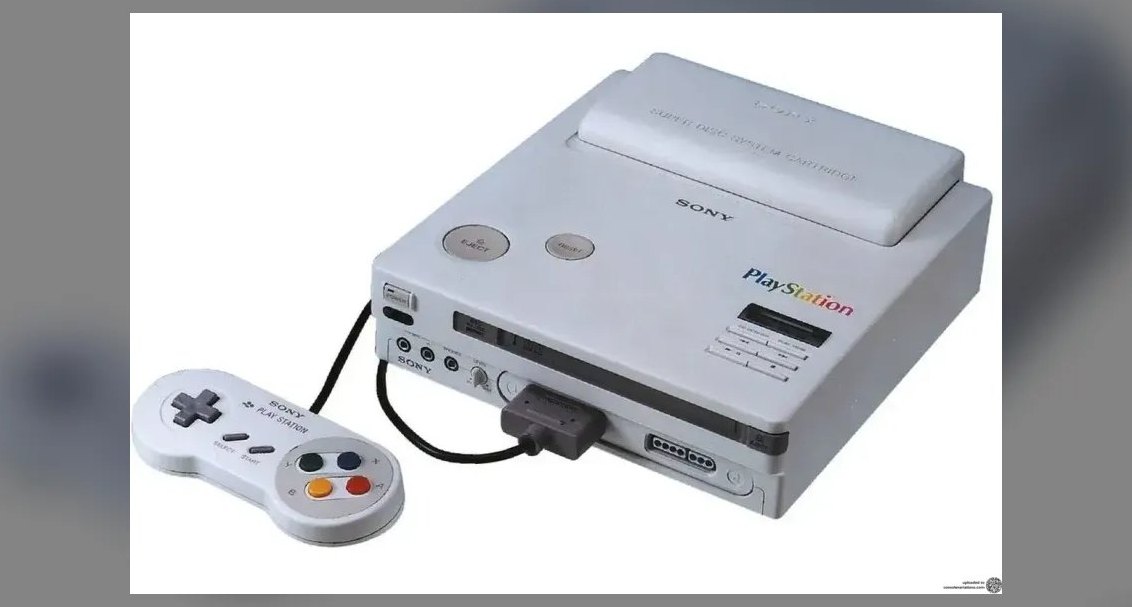 pulse-recentTop 10 Most Expensive Collector's Edition Retro Game Consoles in 2027
 pulse-recentTop 10 Most Expensive Funko Pop Video Game Figures to Buy in 2027