


What is the typical budget breakdown for an open-world game in 2027?
Quality
Certified
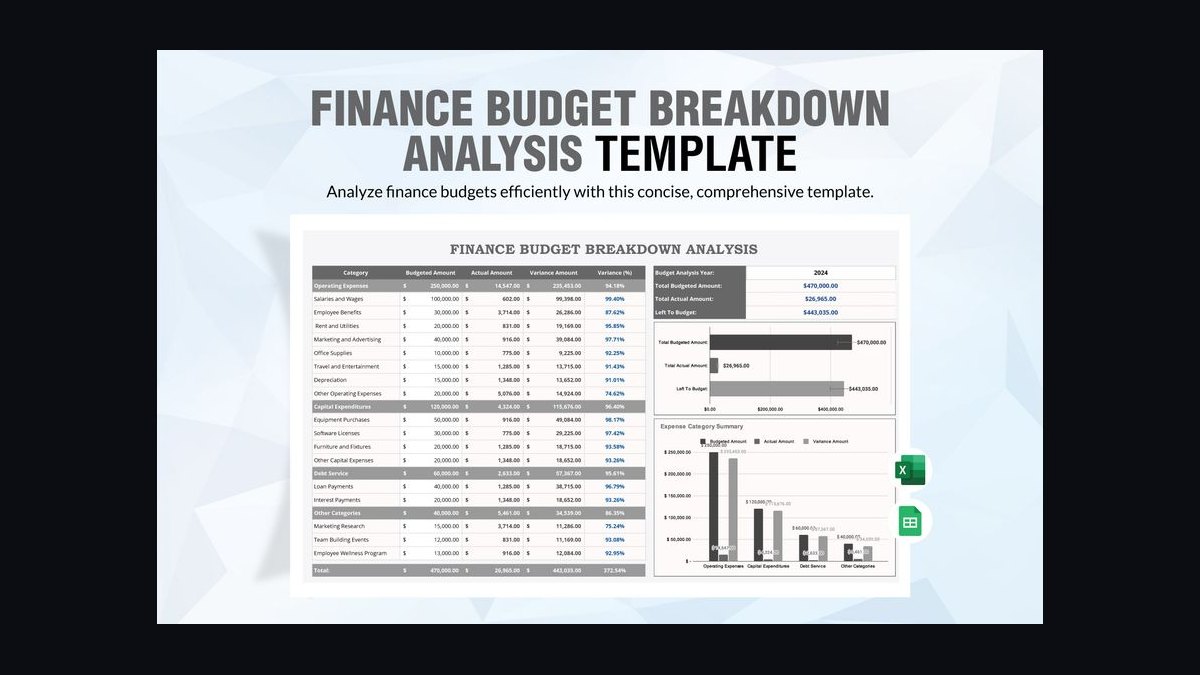
A typical open-world game budget in 2027 ranges from $150 million to $400 million, with roughly 50-60% allocated to development (engineering, art, design), 20-30% to marketing and live operations, 10-15% to post-launch content, and 5-10% to tools, middleware, and overhead. The single largest line item is content creation — world-building, animation, and quest design — which consumes 35-45% of total spend. This breakdown shifts dramatically for live-service titles versus single-player experiences.
What Defines an Open-World Budget in 2027
The open-world genre has become the most expensive category in game development, and the budget breakdown reflects a fundamental economic reality: worlds are expensive to build, fill, and maintain. In 2027, the typical budget for a AAA open-world title sits between $150 million and $400 million, though flagship franchises from major publishers have pushed past $500 million when marketing and multi-year live operations are included. Understanding where this money goes requires looking at the full lifecycle, not just the initial development sprint.
The breakdown starts with pre-production, which typically consumes 5-8% of the total budget. During this phase, teams of 50-100 people spend 12-18 months building prototypes, establishing the art direction, and validating the core gameplay loop. This is where the world's foundational technology gets selected — the engine, the streaming architecture, and the procedural generation systems that will determine how much manual content creation is needed later. For a typical open-world game, pre-production costs run $10-25 million before a single playable level exists.
Production is where the bulk of money goes. A team of 300-600 developers working for 3-5 years represents 55-65% of total spend. Within production, the breakdown splits into several major categories. Engineering and tools development takes 15-20% of the total budget, covering the custom systems needed for world streaming, NPC AI, weather simulation, and physics. Art and environment creation consumes 20-25%, which includes concept art, 3D modeling, texturing, lighting, and the massive task of populating the world with buildings, vegetation, and props. Animation and character work takes another 10-15%, and game design, quest writing, and level layout accounts for 8-12%.

The remaining production dollars go to audio, quality assurance, and project management. Audio for an open-world game is surprisingly expensive — a typical title needs 50-100 hours of orchestral score, hundreds of thousands of voice lines, and dynamic sound design that responds to player position and weather. QA for a world this large is equally demanding, requiring thousands of hours of playtesting across multiple platforms and configurations.
Post-launch content and live operations have grown from an afterthought to a major budget line item. In 2027, most open-world games are designed as platforms, with 12-24 months of planned post-launch support. This typically represents 10-15% of the total budget, covering seasonal content drops, expansions, quality-of-life patches, and community management. Games that pivot to live-service models often see this percentage climb to 25-30% as the development team transitions to a continuous delivery cadence.
Marketing remains a substantial cost, though its share varies wildly by publisher strategy. A typical open-world game spends 20-30% of its total budget on marketing, which includes announcement trailers, gameplay reveals, press events, influencer partnerships, and digital advertising. Games from established franchises with built-in audiences may spend less, while new intellectual properties often need to spend more to build awareness in a crowded market.
The Step-by-Step Budget Planning Process
Budget planning for an open-world game begins with a concrete definition of the world itself. The first step is establishing the playable area's size and density — a game set in a single city like Tokyo might have 20-30 square kilometers of dense urban environment, while a continent-spanning fantasy world could cover 200-300 square kilometers of varied terrain. Density matters more than raw size; a dense 30-square-kilometer city can cost more than a sparse 300-square-kilometer wilderness because every building interior, NPC, and interactive object adds production cost.
The second step is estimating content volume. This means counting quests, missions, side activities, collectibles, and environmental storytelling elements. A typical open-world game ships with 50-80 main quests, 100-200 side quests, and hundreds of smaller activities. Each quest requires design documentation, scripting, voice acting, animation, and testing. A reasonable planning figure is $50,000-200,000 per quest depending on complexity, which means quest content alone can consume $15-30 million of a typical budget.
Technology choices dramatically affect the breakdown. Teams using established engines like Unreal Engine 5 or Unity can reduce engineering costs by 30-40% compared to building a proprietary engine, but they trade that savings for licensing fees and less control over performance. Custom engines offer optimization advantages but require 50-100 engineers working for 2-3 years before content production can begin. In 2027, most teams choose a hybrid approach: using a commercial engine as the foundation while building custom tools for world streaming, procedural generation, and AI behavior.

The production plan translates content estimates into team composition and timeline. A typical open-world game requires 300-600 developers at peak, with the largest teams in art, environment, and engineering. The planning process allocates these developers across the production timeline, accounting for the fact that not all roles are needed at full strength throughout the project. Concept artists and game designers dominate early production, while animators and audio engineers ramp up later, and QA grows steadily as content becomes playable.
Once the production plan is set, the budget breakdown emerges from multiplying team size by salary costs and timeline. A team of 400 developers with an average fully-loaded cost of $150,000 per year (including benefits, overhead, and tools) costs $60 million annually. Over a four-year production cycle, that's $240 million just in personnel — before marketing, external services, or post-launch support. This is why the typical budget breakdown shows development costs dominating: people are the most expensive resource in game production.
The final planning step validates the budget against market expectations. A single-player open-world game with a 30-hour campaign faces different economics than a live-service title designed for hundreds of hours of engagement. The budget must be justified by projected revenue, which means publishers look at comparable titles, franchise strength, platform mix, and monetization strategy. This validation often leads to scope reductions — cutting world size, reducing quest counts, or scaling back planned features — to bring the budget in line with realistic revenue projections.
Costs, Timelines, and Typical Ranges
The budget breakdown for an open-world game in 2027 varies meaningfully by project type, and understanding these variations is essential for anyone planning or evaluating such a project. A single-player narrative-driven open-world game like a new entry in a beloved franchise typically runs $150-250 million in total costs, with development consuming 55-65% and marketing taking 25-30%. These games have a defined lifespan — they launch, receive a few post-launch patches, and the team moves on to the next project.
Live-service open-world games represent a different economic model entirely. The initial development budget for a title like this might be $200-300 million, but the total cost over a 3-5 year lifecycle can reach $500 million or more. The breakdown shifts dramatically: initial development might be only 40-50% of total spend, with ongoing content development, server infrastructure, community management, and seasonal marketing consuming the rest. These games never really finish — the budget breakdown continues to evolve as the player base grows or shrinks, and teams must constantly reallocate resources based on engagement metrics.
Indie and AA open-world games operate on a fundamentally different scale. A successful indie open-world title might cost $5-20 million, with a team of 20-50 developers working for 2-3 years. These projects often use procedural generation to create worlds that would be impossible to build by hand at that budget level. The breakdown for these games skews heavily toward engineering and tools, which might consume 40-50% of the budget, because the technology is doing the heavy lifting that AAA teams do with manual content creation.
Timelines follow predictable patterns across all budget levels. Pre-production runs 12-18 months, production runs 36-60 months for AAA titles, and post-launch support runs 12-24 months. The longest timelines are for new intellectual properties, which need more time for world-building and player education, while sequels can compress timelines by reusing technology and assets. A typical AAA open-world game takes 5-7 years from initial concept to the end of post-launch support.
The cost per hour of player engagement is a useful metric for evaluating open-world budgets. A typical AAA open-world game provides 50-100 hours of main content, with completionists spending 150-300 hours. At a $200 million budget, that's $2-4 million per hour of content — a figure that explains why so many open-world games reuse assets, procedurally generate content, and pad playtime with repetitive activities. The economics simply don't support fully hand-crafted content at that scale.
Regional cost differences also shape the breakdown. Development teams in North America and Western Europe cost 2-3 times more than teams in Eastern Europe, Southeast Asia, or Latin America. Many publishers use a distributed model, keeping core design and engineering in high-cost regions while outsourcing art production and QA to lower-cost regions. This can reduce overall development costs by 20-30%, though it adds coordination overhead and communication challenges.
Where Teams Get the Breakdown Wrong
The most common budgeting error in open-world development is underestimating content density requirements. Teams often plan for a world of a certain size without accounting for how much content is needed to make that world feel alive. A 100-square-kilometer world with one quest per square kilometer feels empty and boring; players expect meaningful activities at every turn. This density expectation drives content costs up 2-3 times beyond initial estimates, and teams either blow their budget or ship a world that disappoints players.

Technology debt is the second major budget killer. Open-world games require massive amounts of custom tooling — world editors, streaming systems, AI frameworks, and procedural generation pipelines. Teams often underestimate the engineering time needed to build these tools, and they cut corners that come back to haunt them during production. A world streaming system that works in a demo but fails at full scale can require 6-12 months of additional engineering work, adding $10-20 million to the budget.
Scope creep during production is another predictable failure mode. As the world takes shape, designers see opportunities for additional content, features, and systems. Each addition seems small in isolation, but the cumulative effect can add 20-40% to the budget. Successful teams use a rigorous change control process, requiring every scope addition to be offset by a scope reduction elsewhere. This discipline is rare, which is why so many open-world games ship late and over budget.
Marketing misalignment creates a different kind of budget problem. Some teams spend heavily on development but underfund marketing, resulting in a great game that fails commercially. Others over-invest in marketing before the game is ready, building hype that the final product can't satisfy. The typical breakdown should allocate marketing based on the game's market position — a sequel to a established franchise needs less awareness building than a new intellectual property, but both need sustained marketing through the launch window and into the post-launch period.
Live operations are frequently underfunded in the initial budget breakdown. Teams plan for a 12-month post-launch window but discover that players expect 24-36 months of content and support. The cost of maintaining a live-service game is $2-5 million per month for a mid-sized title, and $10-20 million per month for a major success. Games that launch without adequate live operations funding either fail to retain players or require emergency budget reallocations that strain the publisher's resources.

Performance optimization is the final underestimated cost. Open-world games push hardware to its limits, and achieving stable frame rates across different platforms requires significant engineering effort. Optimization typically consumes 10-15% of the development budget, but teams that don't plan for it often end up spending 20-25% as they scramble to fix performance issues in the final year of development. This is money that could have gone into content, but it gets consumed by technical debt instead.
Decision Framework for Budget Allocation
The decision framework for an open-world budget breakdown starts with the fundamental question of whether the game is designed as a single-player experience or a live-service platform. This single decision determines the entire budget structure. Single-player games allocate 55-65% to development, 25-30% to marketing, and 5-10% to post-launch support. Live-service games shift toward 40-50% for initial development, 20-30% for ongoing content, 15-20% for marketing, and 10-15% for infrastructure and operations.
The second decision is whether the game is a franchise entry or a new intellectual property. Established franchises can reduce marketing spend to 15-20% because the audience already exists, freeing more budget for development. New IPs need 30-35% for marketing to build awareness and establish the brand, which means less money for content. This trade-off explains why many new open-world IPs launch with less content than their franchise competitors — the marketing requirement is a necessary investment in the brand's future.

World size and density decisions should flow from budget realities, not creative ambition. A team with a $150 million budget should plan for a world of 50-80 square kilometers with moderate density, while a $300 million budget can support 150-200 square kilometers with high density. Trying to build a massive world on a modest budget leads to emptiness and player dissatisfaction. The most successful open-world games match their world scale to their budget, creating focused experiences that feel complete rather than sprawling experiences that feel hollow.
The technology choice also deserves explicit budget consideration. Building on a commercial engine like Unreal Engine 5 costs $5-20 million in licensing fees but saves $30-50 million in engineering time. Custom engines offer performance advantages but require $50-100 million in engineering investment before content production begins. For most teams in 2027, the commercial engine route is the rational choice, with custom tooling built on top to handle open-world-specific challenges.
The final framework element is the contingency reserve. Every open-world game encounters unexpected costs, and the typical breakdown should include 10-15% of the total budget as contingency. This reserve covers everything from technology failures to content rework to extended QA cycles. Teams that skip the contingency reserve are making a bet that nothing will go wrong — a bet that rarely pays off in a genre as complex as open-world development.
Related Questions
How does the budget breakdown compare for a linear single-player game?
A linear single-player game typically costs $50-100 million, roughly half to a third of an open-world title. The breakdown shifts because linear games need less world-building, fewer assets, and shorter QA cycles. Development still dominates at 60-70%, but the absolute numbers are dramatically lower.
What percentage of an open-world budget goes to voice acting?
Voice acting typically consumes 5-8% of an open-world game's total budget. A major title with 50-100 hours of dialogue might spend $10-20 million on voice talent, recording studio time, and localization. This cost scales with the number of quests and NPCs in the world.
How has the budget breakdown changed since 2020?
The biggest change is the rise of live operations, which grew from 5% to 15-25% of total budgets. Development costs have also risen 30-40% due to larger teams and longer timelines. Marketing has stayed relatively stable, though digital advertising now dominates over traditional media.
What is the cheapest way to build an open-world game?
Procedural generation is the most cost-effective approach, reducing world-building costs by 50-70%. Indie teams use tools like Houdini and custom generation systems to create worlds at a fraction of AAA cost. The trade-off is less hand-crafted detail and more repetitive content.
FAQ
What is the single largest cost in an open-world game budget?
Content creation — art, environment building, quest design, and animation — is the largest cost, typically consuming 35-45% of the total budget. This includes the hundreds of thousands of assets needed to populate a world, the voice acting for dozens of characters, and the design work for hundreds of quests.
How much does a typical open-world game cost to make in 2027?
The typical range is $150-400 million for AAA titles, with the average landing around $200-250 million. This includes development, marketing, and post-launch support. Indie and AA open-world games can be made for $5-50 million, while flagship live-service titles can exceed $500 million over their full lifecycle.
Why are open-world games so much more expensive than linear games?
Open-world games require exponentially more content — larger worlds, more assets, more quests, more NPCs, and more systems. A linear game might have 10-20 hours of hand-crafted content, while an open-world game needs 100+ hours spread across a massive playable area. This content volume drives the budget breakdown toward art and design.
What percentage of an open-world budget goes to marketing?
Marketing typically consumes 20-30% of the total budget, though this varies by franchise strength and platform strategy. New intellectual properties often spend 30-35%, while established franchises can get away with 15-20%. Marketing includes trailers, advertising, influencer partnerships, and launch events.
How long does it take to make a typical open-world game?
The typical timeline is 5-7 years from concept to the end of post-launch support. Pre-production takes 12-18 months, production takes 3-5 years, and post-launch support runs 12-24 months. Larger games with more ambitious worlds can take 8-10 years, while smaller titles can be completed in 3-4 years.
Can a small team make an open-world game on a modest budget?
Yes, but the approach must be fundamentally different. Small teams use procedural generation, asset reuse, and stylized art to reduce costs. A 20-person team can build a 50-square-kilometer world for $5-10 million over 3 years, though the content density will be lower than a AAA title.
Sources
- https://www.gamedeveloper.com/business/the-real-cost-of-making-a-video-game
- https://www.statista.com/topics/868/video-games/
- https://en.wikipedia.org/wiki/Video_game_development
- https://www.polygon.com/2023/1/31/23579918/video-game-budgets-cost
- https://www.ign.com/articles/video-game-development-budgets-explained
- https://www.gamesindustry.biz/the-rising-cost-of-game-development
- https://www.bbc.com/news/technology-65358522
- https://www.wired.com/story/video-game-development-costs/
- https://www.investopedia.com/articles/personal-finance/010715/how-much-does-it-cost-make-video-game.asp
Related on PULSE
- How to Estimate a Game Development Timeline Before You Start
- The Hidden Costs of Live Service Game Operations
- When to Build Custom Tools vs. Buy Commercial Engines
- Balancing World Size and Content Density in Game Design
- Marketing Budget Benchmarks for AAA Game Launches
- Post-Launch Content Planning for Open-World Franchises
This page will be disappearing soon. Save it to your device for $1 — or read it free while it is here.
@Kory-White- · if Venmo asks, the last 4 of my number are 2012
This page is gone.
This one is off the shelf now. $1 keeps it on your phone for good — the whole page, pictures and diagrams included.
 pulse-recentTop 10 Most Expensive Sealed Game Boy Advance Games to Buy in 2027
 gamingThe 10 Best PC Game Deals and Discounts on Steam in 2027
 pulse-recentHow much does a gaming desk setup cost in 2027?
 pulse-recentTop 10 Gaming Chairs Under $100 in 2027
 pulse-recentWhat is the difference between a Hall effect and a mechanical switch controller in 2027?
 pulse-recentWhat's the fastest way to become a professional esports commentator in 2027?
 pulse-recentTop 10 Most Expensive Graded Pokémon Base Set Cards in 2027
 pulse-recentWhat is the average electricity cost of running a gaming PC for a year in 2027?
 pulse-recentTop 10 Most Valuable Sealed PlayStation Vita Games to Buy in 2027
 pulse-recentWhat are the most common mistakes new players make in competitive shooters in 2027?