
What is the most common mistake when booking a corporate retreat venue, and how do you avoid it in 2027?
 Curated byKory White · Fractional CRO · Maryland
 PULSEKNOWLEDGE LIBRARY
Quality
Certified

The most common mistake is booking a corporate retreat venue on headline room rate alone, before locking a food-and-beverage minimum, attrition band, and force-majeure language. In 2027, avoid it by pricing the total contracted commitment per attendee, negotiating concessions in writing, and reserving space only after your agenda and headcount range are firm.
The scenario that exposes the trap
An operations lead is told to plan an offsite for the go-to-market org. The rough parameters: about 60 people, three days, somewhere within a two-hour drive of a hub airport, sometime in the second quarter. Finance gives a number — call it $2,000 per head, all-in. The lead calls four properties, gets four rate sheets back, and picks the one showing $229 per night instead of $289. It looks like a clean $60-per-room-night saving across roughly 180 room nights. Around $10,800 back to the budget. Signed the same week, because the space "won't hold."
Six weeks before arrival, the shape of the deal becomes visible. The contract carried a food-and-beverage minimum of $65,000, exclusive of a 24% service charge and local sales tax — which is how a $65,000 commitment becomes closer to $86,000 of actual exposure. The room block was contracted at 65 rooms per night with 90% attrition protection, meaning the company owes for at least 58.5 rooms per night whether or not people show. Headcount landed at 51 because two teams had a customer event collide with the dates. Meeting room rental was waived, but only on the condition that the block stayed at or above 60 rooms — falling below re-triggered $4,500 in space rental. Audiovisual was exclusive to the in-house provider, and a basic setup for one general session room plus two breakouts came in near $9,000 for three days.
The cheaper property was never cheaper. It was cheaper on the single line the buyer happened to compare. This is the mistake in its most ordinary form: treating a venue decision as a room-rate decision when the room rate is often 40-55% of the real spend and almost never the term with the most financial risk in it. The room rate is the one number every property will happily compete on, precisely because the margin lives elsewhere — in banquet food, in beverage, in AV, in service charges, and in the penalty clauses that turn planning uncertainty into the buyer's liability.

Adjacent version of the same error, worth naming because it lands the same way: booking the *date* before the *agenda*. A team that has not decided whether the retreat is a working session, a recognition event, or a strategy offsite cannot know whether it needs one large flat-floor room or five breakouts, whether it needs three dinners or one, or whether people arrive Sunday night or Monday morning. Space and F&B get contracted against a guess, and every subsequent change is a change order at the property's price rather than a negotiation at yours.
How the mechanism actually works
A venue contract is not a price; it is a bundle of commitments with asymmetric penalties. Understanding why the cheap-rate trap keeps working requires seeing what each clause does to your exposure.
Room block and attrition. You contract a number of rooms per night. Attrition sets the percentage you must actually fill — commonly 80-90% — before you owe damages on the shortfall. Damages are usually calculated at the contracted rate, sometimes reduced to a lost-profit figure (often 70-80% of rate) if you negotiate for it. A 65-room block at 90% attrition with a $229 rate exposes you to roughly $13,400 per night of unfilled-room liability at worst case. Attrition at 80% with lost-profit damages on the same block cuts that materially. The rate you compared did not tell you this.

Food and beverage minimum. A guaranteed spend on banquet catering, exclusive of service charge and tax. Properties set it to protect banquet revenue. Buyers routinely misread it as a budget rather than a floor: if you spend less, you pay the difference anyway, and in most contracts you pay it without receiving the food. Service charge (18-26% is the common band in US full-service properties) and sales tax stack on top, and in many jurisdictions the service charge is itself taxable.
Concessions. Waived meeting space, complimentary rooms per some ratio (1 per 40 revenue-producing room nights is a frequent starting point), upgraded rooms, discounted parking, waived resort fees, reduced AV rates. These are real money and they are almost always conditional — tied to the block holding, the F&B minimum being met, or both. A concession that evaporates when your headcount drops is not a concession; it is a second penalty wearing a friendlier name.
Ancillary and exclusive services. AV, internet above a base tier, parking, resort or destination fees, shipping and handling for materials, bartender fees, corkage. Exclusivity clauses on AV are the single largest surprise line in most first-time retreat budgets. Where an in-house exclusive exists, the leverage is to negotiate a percentage discount off the rate card *inside the contract*, not to plan on bringing your own.

Termination and force majeure. Cancellation damages typically slide by proximity to arrival — a common ladder runs from a low percentage of anticipated revenue twelve months out to 100% inside 30 days. Force majeure language written after 2020 is materially different property to property; some now explicitly exclude epidemic and government advisory from excusable events, which is exactly the exclusion a buyer should push back on.
The reason the sequence matters more than any single negotiation: nearly every favorable term is easier to obtain before signature and nearly impossible after. A reduction window that lets you drop the block 10-20% at 90 days without penalty costs nothing to ask for during negotiation and is unavailable at 91 days if it was not written in.
Real numbers, ranges, and benchmarks
Figures below are typical planning ranges for US corporate group business. They vary by market, season, and property tier, and none of them substitute for quotes on your actual dates.
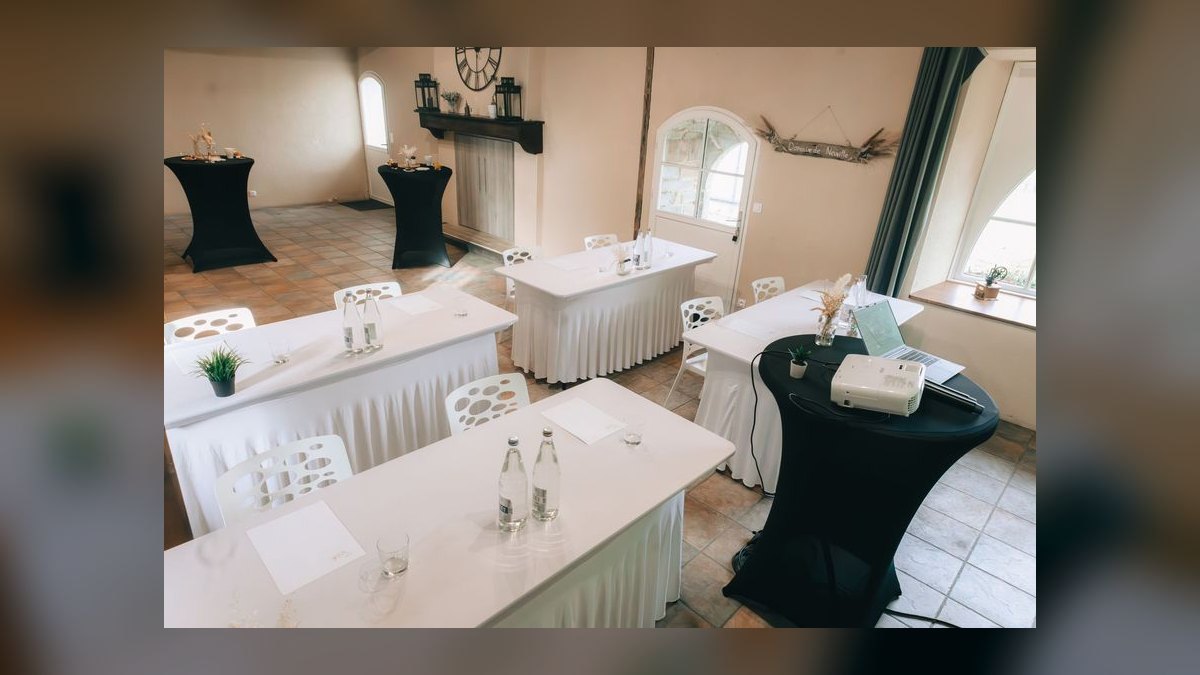
Cost distribution. For a three-day, two-night domestic retreat at a full-service hotel or conference resort, a workable planning split is roughly: guest rooms 40-55% of total, food and beverage 25-35%, meeting space and AV 8-15%, ground transport and miscellaneous 5-10%. Air, if centrally paid, sits outside this and often adds 15-30% on top of the venue-side total. If your model has rooms at 75% of spend, you have not yet accounted for the rest of the contract.
Service charge and tax. Service charge on banquet items commonly runs 18-26%; some properties split it into a taxable service charge and a separate administrative fee. Sales and occupancy taxes on rooms vary widely by city and can exceed 15% in high-tax destinations. Apply a combined multiplier of roughly 1.30-1.45 to any quoted F&B number before comparing bids — quoting practices differ, and one property showing "++" and another showing inclusive pricing will look like a 30% gap that does not exist.
Per-person F&B planning. Continental breakfast, mid-morning break, plated or buffet lunch, afternoon break, and a reception with dinner will typically land somewhere in the $150-300 per person per day range at a full-service property before service charge and tax, higher in top-tier resort and major-city markets. Strip the reception and evening event and you can often plan nearer $90-160. These are planning anchors for building a minimum you can actually hit, not price predictions.

Attrition math. Take contracted rooms per night × nights × attrition percentage to get your protected floor. Then multiply the shortfall against contracted rate to get exposure. A 60-room, two-night block at 85% protects you down to 51 rooms per night; drop to 45 and you owe on 6 rooms × 2 nights × rate. At $250, that is $3,000 — annoying but survivable. The same block at 100% attrition and a $400 rate is $12,000 for the identical miss. Negotiate the percentage and the damages basis; both move.
Cumulative vs. nightly attrition. A frequently overlooked term. Nightly attrition measures each night independently, so a strong Tuesday cannot offset a weak Sunday. Cumulative attrition measures total room nights across the pattern. For retreats with staggered arrivals — which is most of them — cumulative is meaningfully more forgiving and is a reasonable ask.
Booking lead time. For groups of 50-150 in secondary markets, 6-9 months out is a comfortable window; for peak season in primary markets or resort destinations, 9-15 months is realistic. Inside 90 days you are buying whatever is left, and negotiating leverage on concessions drops sharply. Shoulder-season dates and Sunday-through-Wednesday patterns are where the real savings live — often 15-30% below peak-pattern pricing for the same property, which dwarfs the rate haggling most buyers spend their energy on.

Comparable adjacent spend. The same discipline transfers to user conferences, sales kickoffs, and customer advisory boards. A sales kickoff for 200 has the same clause structure with bigger numbers and a harder date constraint; an advisory board for 12 has almost no room block risk but disproportionate F&B minimums relative to size, because small groups often struggle to hit any minimum a property will accept. Small-group buyers should be looking hard at boutique properties, private dining buyouts, and venues without a banquet department at all.
Trade-offs and the alternatives worth pricing
There is no universally correct venue type. There are trade-offs that should be priced deliberately rather than defaulted into.
Full-service hotel or conference resort. Everything under one roof, predictable service standards, real meeting space, and a sales team that will negotiate. Costs more per head, exclusive AV is common, and the contract is the most clause-heavy of the options. Best for groups above roughly 50, for multi-day agendas with breakouts, and for anyone who cannot staff logistics internally.

Dedicated conference center (often IACC-style properties). Frequently priced on a Complete Meeting Package — a per-person, per-day rate bundling room, all meals, breaks, basic AV, and meeting space. The advantage is budget certainty; the sticker looks high and often is not, because it absorbs the lines that ambush hotel budgets. The disadvantage is less flexibility to trade unused components for something you want more.
Boutique hotel buyout. For 20-45 people, taking the whole property can beat a block-plus-space arrangement outright, and it eliminates attrition math entirely because you have bought the building. Trade-off: fewer meeting-specific rooms, thinner AV, and total dependence on one property's availability for your dates.
Non-traditional venue plus separate lodging. A converted warehouse, a working farm, a museum, a private event space. Cheapest on paper, most expensive in coordination — you are now the general contractor for catering, rentals, AV, transport, and insurance. Certificates of insurance, liquor licensing, and load-in restrictions become your problem. Viable when you have an experienced planner and a strong reason for the setting.

Distributed or hybrid. Regional mini-retreats or a shorter central gathering with virtual pre-work. Reduces travel spend and attrition exposure meaningfully, at real cost to the informal connection that is usually the actual point of the offsite.
One trade-off buyers underweight: negotiating leverage is a function of what the property wants. A group that can move dates has enormous leverage. A group locked to a specific week in October has almost none. If your leadership can tolerate a two-week window rather than a fixed date, say so in the RFP — it is often worth more than every other concession combined.
Pitfalls, and the checks that catch them
Comparing bids that are not comparable. One property quotes F&B "++", another quotes inclusive, a third bundles AV. Normalize every bid to the same all-in per-attendee figure before any conversation about which is cheaper. Build one spreadsheet, one set of columns, one tax-and-service assumption applied uniformly.

Signing before the agenda is set. Space and F&B contracted against a guessed agenda guarantees change orders at the property's pricing. Lock the shape of the program — session count, room setups, meal count, arrival pattern — before signature, even if the content is still rough.
Accepting the first attrition and cancellation ladder. These are opening positions. Push for 80% attrition, cumulative rather than nightly, damages calculated on lost profit rather than gross rate, and a reduction window permitting a 10-20% block cut at a defined date without penalty. Ask for resell credit so rooms the property fills from other demand offset your shortfall.
Ignoring force majeure and construction clauses. Read what counts as excusable. Post-2020 language varies enormously. Separately, ask directly whether renovation is scheduled during your dates and get a clause guaranteeing notice and remedy — arriving to a property with a jackhammered lobby is common enough to be worth a sentence in the contract.

Missing the cutoff date. Rooms outside the block release on the cutoff date, typically 21-30 days out, and stragglers then pay whatever the property is charging that week. Calendar the cutoff, and calendar three pickup reviews at 90, 60, and 30 days so you see a shortfall while a reduction window is still open.
Forgetting the non-venue lines. Ground transport, shipping materials, gratuities beyond service charge, room drops (properties often charge $3-7 per room for delivery), printing, activities, and a genuine 10% contingency. Budgets that omit these are not wrong by a rounding error; they are wrong by the contingency.
Not reading the mistake as a process failure. The single-line comparison is rarely one person being careless. It happens when venue selection has no owner, no template, and no second reviewer. The durable fix is procedural: a standard RFP, a standard normalization model, a required legal or procurement review of any contract above a threshold, and a post-event actuals-versus-contract review that feeds the next negotiation. Organizations that do this well are usually the ones that have run enough events to have institutionalized it — which is exactly why the first corporate retreat a company books is the one that goes wrong.
Related questions
How far in advance should we book a corporate retreat?
For 50-150 people, 6-9 months in secondary markets and 9-15 months for peak dates or resort destinations. Inside 90 days you lose most concession leverage and choose from remaining inventory rather than preferred properties.
Is a Complete Meeting Package cheaper than a hotel block?
Often comparable in total, but far more predictable. CMP bundles room, meals, breaks, basic AV, and meeting space per person per day, which removes the F&B minimum and AV surprises that inflate hotel budgets after signature.
What attrition percentage should we push for?
Start at 80% cumulative across the pattern, with damages calculated on lost profit rather than gross room rate, plus a reduction window allowing a 10-20% block cut at a defined date. Properties frequently open at 90% nightly.
Should we hire a third-party planner?
For a first retreat, or anything above roughly 75 people, usually yes. Many planners are commissioned by the property rather than billed to you, though you should confirm the compensation model in writing and understand how it shapes their venue recommendations.
What is the biggest hidden cost after F&B?
Audiovisual, especially where the property holds an exclusive. A general session plus two breakouts over three days can reach five figures. Negotiate a percentage discount off the rate card inside the contract, before you sign.
FAQ
What exactly is a food and beverage minimum?
A contracted floor on banquet spend, quoted exclusive of service charge and tax. If your actual catering spend falls below it, you pay the difference as a penalty without receiving food. It is the clause most often mistaken for a budget rather than an obligation, and it should be set from a realistic meal plan at your low headcount estimate — not your optimistic one.
How do I compare two venue bids fairly?
Normalize both to total contracted exposure per attendee. Include guest rooms with tax, the F&B minimum grossed up by service charge and tax, meeting space rental, AV, resort or destination fees, parking, and internet. Apply the same headcount assumption to both. The bid with the lower headline rate frequently loses once every line is present.
Can we get out of a signed venue contract?
Only under the terms you agreed to. Cancellation damages generally escalate as the date approaches, often reaching a very high percentage of anticipated revenue inside 30 days. Force majeure covers only the events the contract lists as excusable, which is why reading and negotiating that clause before signature matters more than any rate concession.
What is a reduction window and why does it matter?
A negotiated right to shrink your room block by a set percentage at a set date without penalty — for example, 20% at 120 days and another 10% at 60 days. It converts headcount uncertainty from a liability into a managed step-down and is one of the highest-value asks in the entire negotiation because it costs the property little to grant.
Is a non-hotel venue actually cheaper?
On the venue line, usually. In total, often not. You absorb catering, rentals, AV, staffing, transport, insurance, and coordination that a full-service property bundles. It works when you have an experienced planner and the setting genuinely serves the goal. It fails when a team picks it purely on the rental figure.
What should we do differently after the retreat ends?
Run an actuals-versus-contract review within two weeks: where you overspent, where the minimum was hit or missed, which concessions were used, and what the pickup curve looked like versus the block. That document is the single most useful input to your next negotiation, and it is the thing almost nobody produces.
Sources
- https://www.ahla.com/
- https://www.pcma.org/
- https://www.mpi.org/
- https://www.iacconline.org/
- https://www.cvent.com/en/blog
- https://www.northstarmeetingsgroup.com/
- https://www.smartmeetings.com/
- https://www.meetingstoday.com/
- https://www.eventmanagerblog.com/
- https://www.ustravel.org/
Related on PULSE
- How to budget a sales kickoff without blowing the annual events line
- Sales kickoff agenda design: what actually changes rep behavior
- Building an event ROI model your CFO will accept
- Customer advisory board logistics: small groups, outsized cost per head
- Negotiating vendor contracts: the clauses that matter more than price
- Field marketing event calendar planning for a distributed sales org
This page will be disappearing soon. Save it to your device for $1 — or read it free while it is here.
@Kory-White- · if Venmo asks, the last 4 of my number are 2012
 pulse-gatheringsThe 10 Best Savannah Wedding Venues in 2027
 pulse-recentHow far in advance should you send out invitations for a family reunion in 2027?
 pulse-gatheringsThe 10 Best Phoenix Wedding Venues in 2027
 pulse-gatheringsThe 10 Best Mexico All-Inclusive Wedding Resorts in 2027
 pulse-recentWhat are the concrete steps to planning a family reunion, from choosing a date to sending final thank-you notes in 2027?
 pulse-recentThe 10 Best Ways to Save Money on a Family Reunion in 2027
 pulse-gatheringsWhat should you know before investing in Gatherings in 2027?
 pulse-gatheringsThe 10 Best Sedona Wedding Venues in 2027
 pulse-gatheringsThe 10 Best Sonoma County Wedding Venues in 2027
 pulse-gatheringsThe 10 Best Dallas Wedding Venues in 2027