


How much does a 50-person family reunion cost to host in 2027?
Quality
Certified
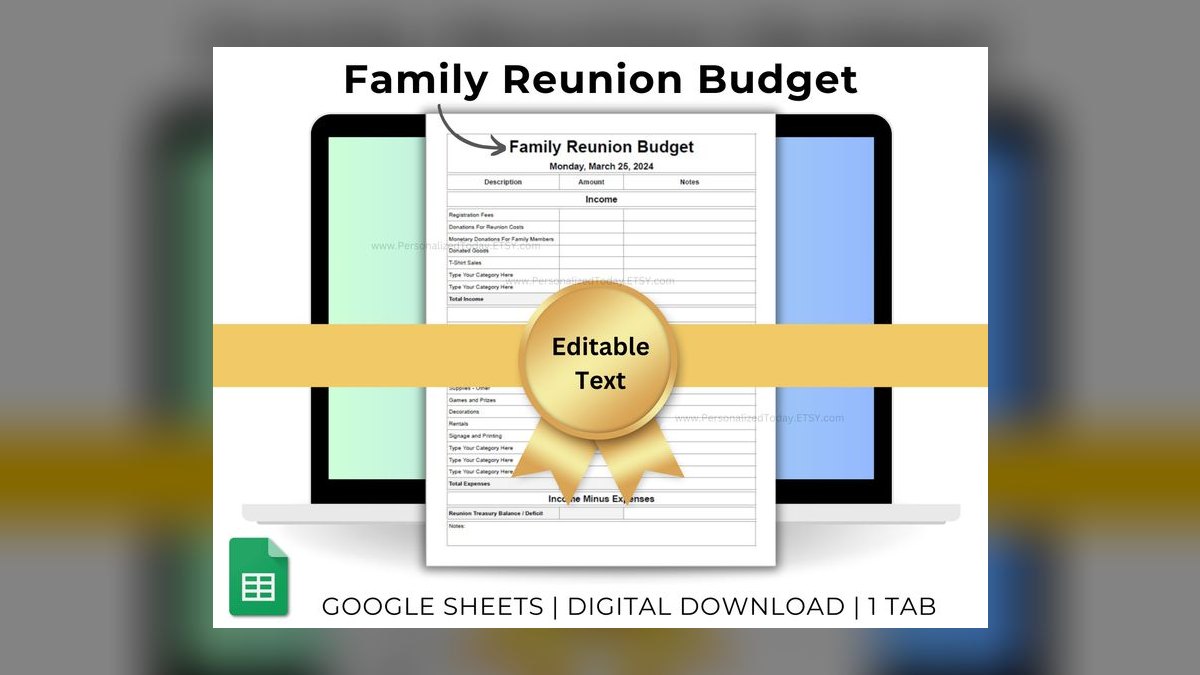
A 50-person family reunion in 2027 typically costs $3,500 to $12,000 total, or roughly $70 to $240 per person, for a two-day event with meals, a venue, and activities. Budget backyard gatherings can land near $1,500; destination weekends with lodging routinely exceed $30,000 once travel and hotel rooms are counted.
The Saturday-and-Sunday reunion that blew its budget
Picture the version most families actually run. Fifty people, three generations, a Saturday-through-Sunday weekend in a mid-sized city where about half the family already lives. The organizing cousin books a park pavilion, plans a Saturday barbecue and a Sunday brunch, orders shirts, and tells everyone the cost will be "about fifty bucks a head." Six weeks later the real number is $128 per person and she is $2,400 out of pocket because collections stalled at 60 percent.
That gap is the single most common financial failure in family reunion planning, and it is almost never caused by one expensive line item. It is caused by four or five items that were never in the original number: the deposit that was non-refundable, the rental tables the pavilion did not include, the insurance certificate the parks department required, the extra 20 percent of food ordered because nobody wanted to run short, and the eight relatives who confirmed and never paid.
Walk the same event with honest arithmetic instead. Fifty attendees, two catered meals, a rented pavilion with a rain backup, basic decorations, a printed program, T-shirts, and a modest kids' activity budget. At the low end — potluck-heavy, public park, volunteer labor — that reunion runs $1,800 to $2,500, or $36 to $50 per person. At a realistic middle — one catered meal, one potluck, a rented hall with tables and chairs included, shirts for everyone, and a small sound system — it runs $4,500 to $7,000, or $90 to $140 per person. At the upper end of a non-destination reunion — full catering both days, a private venue, a photographer, a DJ, and a memory book — it lands between $9,000 and $14,000, or $180 to $280 per person.

None of those numbers include lodging or travel. The moment out-of-town relatives book hotel rooms, the household-level cost of attending doubles or triples, and that is where families quietly lose attendees. A cousin flying in with two kids may spend $1,400 on flights and rooms before contributing a dime to the shared reunion fund. If the shared cost per person also lands at $140, that family of four is looking at $1,960 to attend, and they will decline — politely, late, and after you have already guaranteed a headcount to the caterer.
The practical lesson from that scenario: the reunion budget you publish to the family and the reunion budget you actually manage are two different documents. The published one answers "what do I send you?" The managed one answers "what happens if eight people don't send it?"
How reunion cost actually assembles itself
Reunion cost is not one number, it is four stacked layers, and every layer behaves differently when headcount moves. Understanding which costs are fixed and which are per-head is the whole game, because it tells you what happens when 50 becomes 42 or 61.
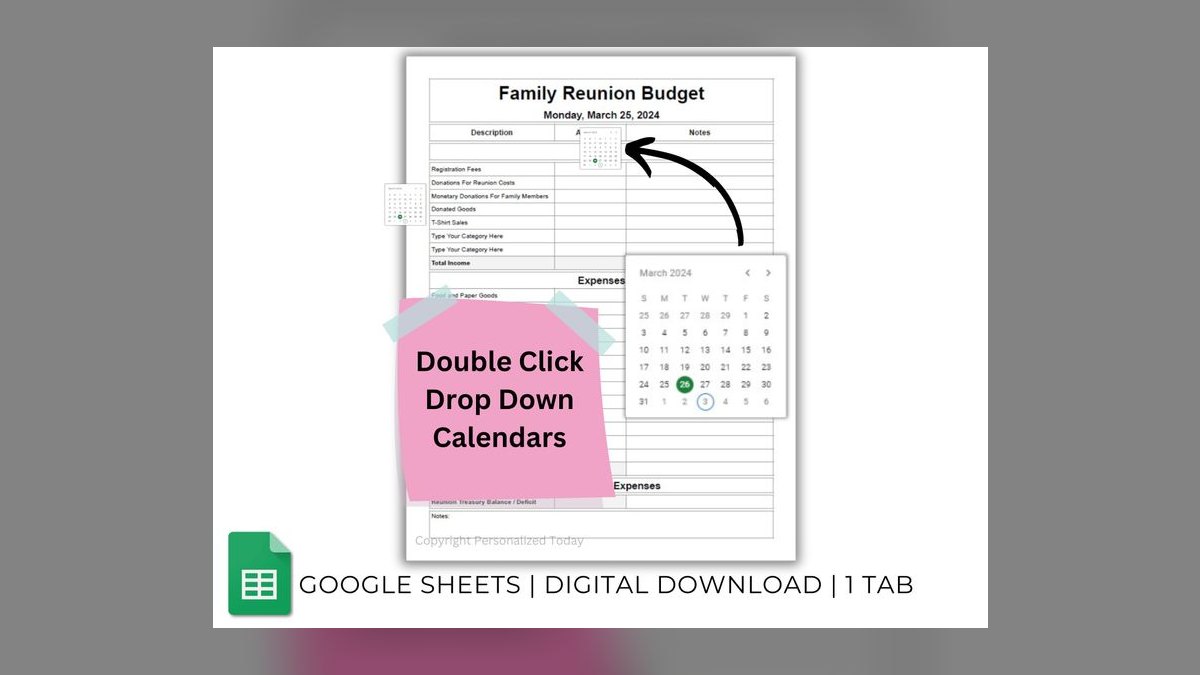
Layer one: fixed costs that do not care about headcount. Venue rental, insurance, permits, the deposit on a sound system, a photographer's day rate, a bounce house rental, the design fee on shirts. If ten people drop out, you still owe all of it. For a typical 50-person reunion this layer runs $600 to $3,500. Every person who drops out makes the per-person share of this layer *worse* for everyone who stays.
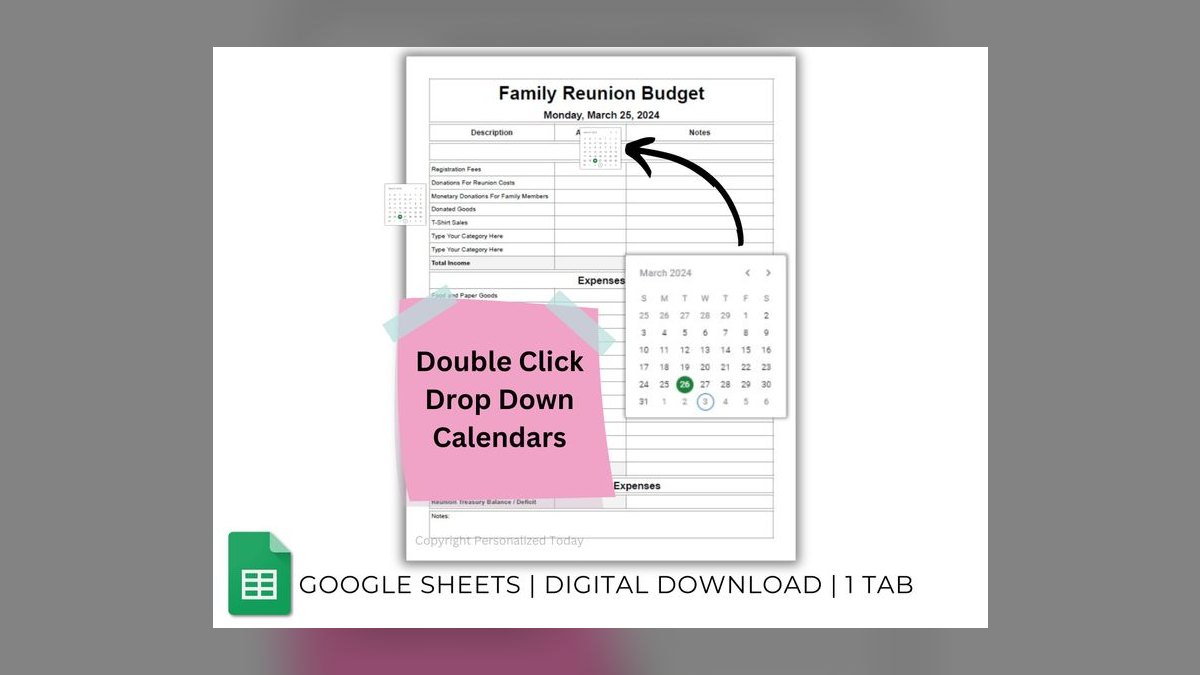
Layer two: per-person costs that scale linearly. Catering per plate, T-shirts, favors, entrance fees at an attraction, per-person insurance riders on some venues. This layer runs $35 to $120 per person for most reunions, and it is the layer you can genuinely cut by simplifying the menu or dropping the swag.
Layer three: stepped costs that jump at thresholds. Rentals price in blocks — tables come in sets, a 20x40 tent covers a certain number and the next size up is a different quote entirely, buses seat 47 or 55. Going from 48 to 52 guests can add a second table rental delivery, a larger tent, or a second shuttle, and a $200 headcount change becomes an $800 one. This is why "about fifty" is a dangerous planning number: fifty sits right on top of several common thresholds.
Layer four: attendee-borne costs you never see. Flights, gas, hotel rooms, pet boarding, time off work. You do not pay these, but they determine who shows up, so they belong in your planning even though they never touch your spreadsheet.
The loop at the bottom of that diagram is the part planners miss. Your published price influences attendance, attendance changes your denominator, and a changed denominator changes the price you should have published. That circularity is why experienced reunion organizers price against a conservative headcount — typically 80 to 85 percent of the RSVP list — and treat the surplus from a full turnout as a buffer rather than as spending money.
One more structural point. The ratio between layer one and layer two determines your risk profile. A potluck-in-a-park reunion is almost entirely layer two, so it flexes gracefully — twelve fewer people means twelve fewer plates and the budget self-corrects. A reunion built around a rented lodge, a photographer, and a live band is mostly layer one, so it is brittle. The same twelve dropouts blow a $1,400 hole that somebody has to cover. Choose the shape of your budget deliberately, not by accident.
Real numbers, line by line, for 50 people
Here is what each category actually costs in 2027 dollars for a group of this size. Ranges reflect regional variation — the low end is rural and small-metro, the high end is major-metro and coastal.
Venue. A public park pavilion permit runs $25 to $200 for a day, sometimes free with a resident reservation, and typically requires booking six to twelve months ahead for prime summer Saturdays. A community center, VFW hall, church fellowship hall, or grange runs $150 to $600 for a day and usually includes tables and chairs. A private event space, winery, barn, or hotel banquet room runs $800 to $3,000, often with a food-and-beverage minimum instead of a flat rental. A vacation rental large enough to host — not sleep — 50 people runs $600 to $2,500 a night, and many listings explicitly cap event headcount, so read the house rules before you book.
Food. This is the largest single line for nearly every reunion. Full-service catering runs $35 to $85 per person including staff. Drop-off catering — trays delivered, you serve — runs $18 to $35 per person. Barbecue by the pound from a local restaurant runs $14 to $28 per person. A taco or pizza truck typically has a $1,200 to $2,500 minimum, which for 50 people works out to $24 to $50 each. A genuine potluck with the host covering meat, drinks, and disposables runs $8 to $15 per person in host cost. For a two-meal weekend, assume you are paying for roughly 1.6 full meals per person once you account for people skipping brunch. Add 10 percent to headcount for food, not 20 — over-ordering is the most common wasted money in reunion budgets.
Drinks and ice. Non-alcoholic for 50 people over a day runs $75 to $200. Add ice at $2 to $4 a bag and expect to need eight to twelve bags for an outdoor summer event. Alcohol, if you provide it, adds $8 to $25 per adult; a BYOB policy moves that cost to attendees entirely and is the single easiest $500 to cut.
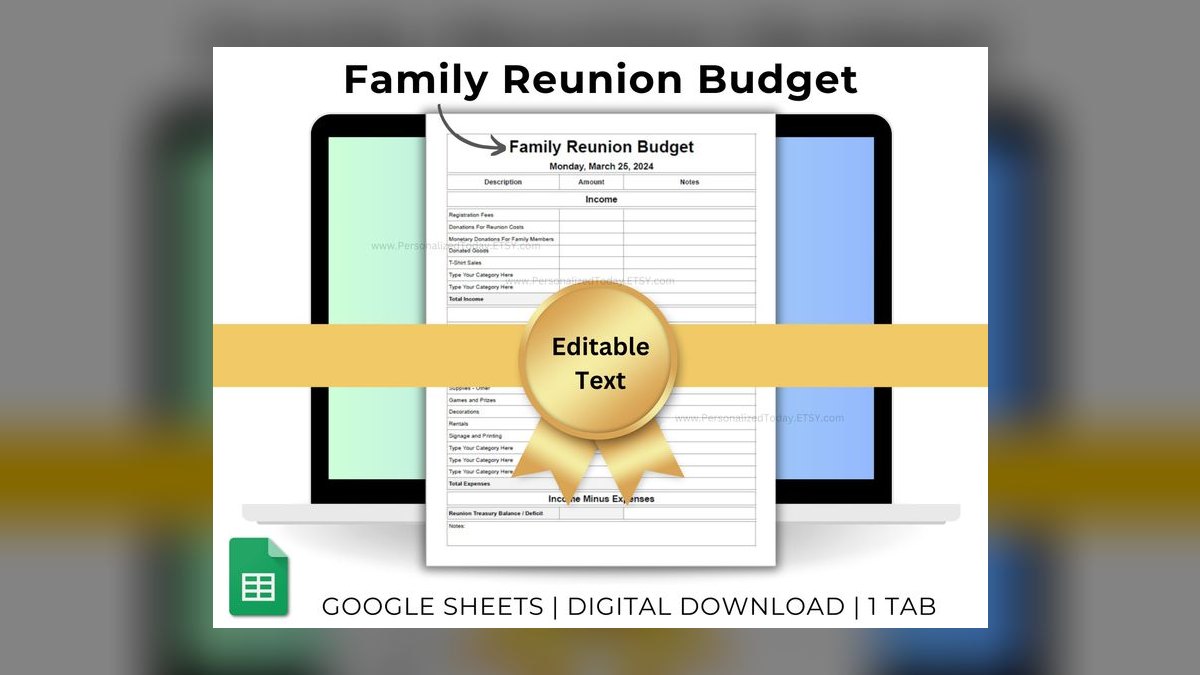
Rentals. Tables and chairs run $8 to $14 per table and $1.50 to $3 per chair, so seating 50 costs roughly $150 to $300 delivered. A 20x40 tent runs $400 to $900. Linens run $8 to $18 each. Portable restrooms run $125 to $300 per unit; one standard unit serves about 50 people for a four-hour event, two if you are running all day or serving alcohol. Delivery and pickup fees of $75 to $150 are usually separate line items, and weekend delivery windows sometimes carry a surcharge.
Insurance and permits. Many municipal parks and rented halls require a one-day special event liability certificate. Expect $75 to $250 for a $1 million policy on a private, non-alcohol family event, and more if you are serving alcohol or bringing inflatables. Amplified sound permits, if required, run $25 to $100. Do not skip this — a venue that requires a certificate will refuse entry on the day without one, and you will have no recourse on your deposit.
Shirts and keepsakes. Screen-printed shirts run $12 to $22 each at a quantity of 50, less if you skip back printing and multiple colors. A printed program or booklet runs $2 to $8 per copy. A soft-cover memory book with photos runs $18 to $45 per copy and is usually sold à la carte rather than included. Custom banners run $60 to $180.
Activities. A bounce house runs $150 to $350 for the day. A yard-game package runs $75 to $200, or near zero if families bring their own. A DJ runs $400 to $1,000 for four hours. A photographer runs $300 to $900 for a two-hour block including a posed group shot, which is the one photo everybody actually wants. Renting a park's ball field or pool block adds $50 to $400.
Contingency. Carry 10 to 15 percent. On a $6,000 reunion that is $600 to $900, and you will use most of it on the things nobody budgets: extra ice, replacement propane, a last-minute canopy, parking, gratuities at 15 to 20 percent on catering, and the two relatives who show up with unannounced guests.
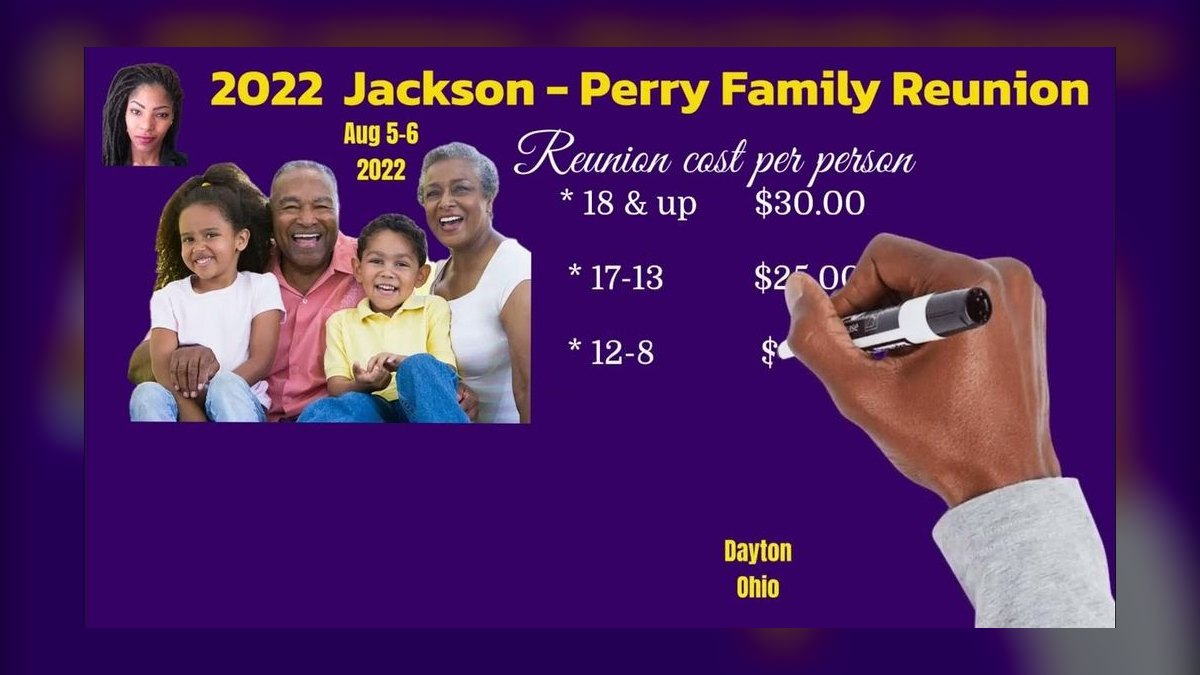
Putting it together for a realistic middle scenario: hall rental $400, insurance $150, drop-off catering for Saturday dinner at $26 per person $1,300, potluck brunch host cost $200, drinks and ice $180, tables and linens $260, shirts at $16 each $800, program $150, DJ $600, photographer $450, decorations $200, contingency $700. Total $5,390, or $108 per person. That is the honest number for the reunion most families are actually picturing when they say "nothing fancy."
What you give up at each budget tier
Every dollar you cut removes something specific, and knowing what it removes lets you cut deliberately instead of discovering the loss on the day.
Under $50 per person. You are in park-and-potluck territory. Public pavilion, families bring dishes, host covers meat and drinks and disposables, everybody wears whatever they own, activities are yard games and a group photo somebody's cousin takes with a phone. What you give up: rain protection, guaranteed seating for elders, and any professional record of the day. What you gain: near-total flexibility on headcount, because almost nothing is fixed. This tier is genuinely good for a one-day reunion of a family that mostly lives locally, and it is the right answer far more often than people assume.
$50 to $100 per person. You add a rented indoor space with a real kitchen and restrooms, one catered or barbecue-by-the-pound meal, shirts, and a modest activity budget. What you give up: full catering both days, live entertainment, professional photography. What you gain: weather independence, which is worth more than any other single upgrade for an outdoor-season reunion. The most common regret in the sub-$50 tier is not having a rain plan; the $50-to-$100 tier buys it.
$100 to $180 per person. Now you get catered dinner, a hosted brunch, a photographer for the group shot, a DJ or a decent rented sound system, and a memory book. What you give up: destination novelty and multi-day programming. What you gain: an event that feels produced, plus artifacts — photos and a book — that outlast the weekend. Families doing a milestone reunion, a matriarch's ninetieth, or a first gathering in a decade should aim here.
$180 to $300 per person and up. Private venue, full catering, professional programming, sometimes a chartered bus for an outing. Above roughly $250 per person you are effectively producing a wedding-scale event, and the coordination load exceeds what one volunteer relative can carry — this is where families start hiring a day-of coordinator at $500 to $1,500.
The destination variable. A cruise or resort reunion changes the math entirely. A three-night cruise cabin for two in 2027 commonly runs $700 to $1,600 including port fees and gratuities, so a family of four spends $1,400 to $3,200 before flights, and 50 people means roughly $17,000 to $40,000 in aggregate household spend. The trade is that the cruise line handles food, lodging, and entertainment as one bundled price, so your organizing labor drops to almost nothing and your shared-fund cost may be under $500 total for a private group gathering and a banner. Group booking desks at major cruise lines and all-inclusive resorts typically offer one free or discounted berth per eight to sixteen booked cabins, which is a real and often-unclaimed savings.
That last node is the real decision rule. A reunion is not optimized by average affordability, it is constrained by the household with the least money, because a reunion that half the family cannot attend has failed regardless of how well it was catered. Ask the tier question before you ask the venue question.
Alternatives worth pricing. A single long afternoon instead of a full weekend cuts cost 40 to 55 percent and removes the second meal, the second venue day, and most of the lodging pressure. A restaurant buyout of a private room, where each household pays its own check, moves the entire food line off the shared fund and often costs the organizer only a room minimum. A rotating-host model, where a different branch of the family hosts each year in their own region, spreads the travel burden across years so no single household is the one always flying. And a two-tier ticket — a full-weekend price and a Saturday-only price — reliably recovers eight to twelve attendees who would otherwise decline outright.
Where reunion budgets actually break

Collecting money late, or informally. The most common failure is not overspending, it is under-collecting. Set a payment deadline four to six weeks before the event and make it the same date as your final headcount deadline to the caterer. Collect through one channel — a single payment app account or one person's ledger — and publish a running paid list to the family. Social pressure collects better than reminders. If somebody has not paid by the deadline, they are not counted, and you say so kindly and in advance rather than absorbing it.
Guaranteeing a headcount you do not have. Caterers and venues want a final number seven to fourteen days out, and you pay for that number whether or not people show. Guarantee to your paid count, never your RSVP count. The delta between the two is typically 10 to 20 percent, which on a 50-person reunion at $30 a plate is $150 to $300 of pure loss.
Ignoring the deposit calendar. Venue deposits are commonly 25 to 50 percent, due at booking, and non-refundable after a cutoff. If you book in November for a July reunion and cancel in May, you may lose everything. Write down every deposit, its amount, and its refund cutoff date in one place the day you pay it.
Under-planning for weather. An outdoor reunion without a rain plan is a coin flip on a four-figure investment. Either book a pavilion with a roof, hold a tent on a refundable option, or reserve an indoor backup with a small deposit. The backup costs $150 to $500 and it is the highest-value insurance in the entire budget.

Forgetting accessibility. Fifty people across three generations means, statistically, several people with mobility limits, someone who cannot manage stairs, and at least a few dietary restrictions. Shade, seating within short walking distance of parking, restrooms that are not a hike, and two or three clearly labeled dietary-alternative dishes cost almost nothing to plan and are the difference between elders staying two hours and staying all day.
Buying too much swag. Shirts are the classic over-order. Print to your paid count plus three, not to your invite list. Leftover shirts in sizes nobody wanted are dead money, and an $800 shirt line can quietly become a $1,100 one.
Letting one person carry it. A 50-person reunion is roughly 40 to 60 hours of planning labor spread over several months. Split it into named roles — money, food, venue, activities, communications — and give each role a budget ceiling it cannot exceed without a group decision. The single-organizer model is how reunions end with one relative resentful and out of pocket, which is also how families stop having reunions.
Skipping the post-event reconcile. Within two weeks, publish what was spent against what was collected, refund any surplus or roll it into next time with the family's agreement, and write down every actual price you paid. That document is worth several hundred dollars to whoever hosts next, and it is the single cheapest thing on this list to produce.
Related questions
How far ahead should we book a venue for 50 people?
Six to twelve months for a prime summer Saturday at a park or popular hall; three to six months for off-season or weekday dates. Cruise and resort group blocks want nine to fifteen months. Late bookings do not just cost more — they eliminate the good options entirely.
What is a fair way to split the cost?

Per-adult with children free or half-price is the most common and best-received model. Per-household flattens the burden onto small families unfairly. Whatever you choose, publish the formula before collecting, not after.
Should we charge a deposit to attendees?
Yes. A non-refundable $20 to $25 per person deposit at RSVP dramatically improves the accuracy of your headcount and funds your venue deposit. It converts casual maybes into real answers months earlier.
Is a potluck actually cheaper for the family overall?
Usually yes, but not free. Fifty people's worth of potluck dishes costs contributing households $15 to $40 each in groceries. It is cheaper in aggregate than catering, and it shifts cost off the organizer, but it is not zero-cost — say so when you ask.
FAQ
What is the single biggest cost driver for a 50-person family reunion?
Food, almost always. Catering at $35 to $85 per person is $1,750 to $4,250 for the group, which is typically 40 to 60 percent of the entire shared budget. The second driver is venue, and the third is whether you are producing a one-day event or a multi-day weekend. Cutting the food model from full-service catering to drop-off trays or barbecue-by-the-pound is the single largest lever available, and it usually costs the event very little in perceived quality.
Can 50 people realistically reune for under $2,000 total?
Yes, if it is one day, at a public park pavilion or someone's property, with a genuine potluck, host-provided meat and drinks, no shirts, and volunteer-run activities. That structure lands between $1,200 and $2,000, or $24 to $40 per person. The constraint is not money, it is weather risk and the labor falling on one household. Recruit five role owners and the sub-$2,000 reunion is entirely achievable.

How much should we hold back as a contingency?
Ten to fifteen percent of the total budget, held in the same account as everything else and not treated as spendable until the event is over. On a $6,000 reunion that is $600 to $900. Typical draws on it are gratuities, extra ice and propane, parking, last-minute rentals, and unannounced guests. If you finish under budget, refund it proportionally or roll it forward with the family's explicit agreement.
Do we need event insurance for a family reunion?
If you are renting a public park, a community hall, a church, or a private venue, almost certainly yes — most require a certificate of liability naming them as additionally insured, and they will enforce it on the day. A one-day $1 million policy for a private family event typically runs $75 to $250, more with alcohol or inflatables. On private property with no vendors it is optional but still cheap peace of mind.
How do we keep out-of-town relatives from being priced out?
Publish the per-person shared cost and the realistic travel-plus-lodging estimate together, so nobody is surprised in month three. Then reduce the travel burden directly: negotiate a hotel block, offer host-family couch space, add a Saturday-only ticket tier, pick a city with a low-cost airport, and consider a quiet subsidy fund seeded by better-resourced households. Rotating the host region across years spreads the burden fairly over time.
Is a cruise or resort reunion cheaper than hosting one ourselves?
Not in total household spend — a three-night cruise commonly runs $700 to $1,600 per cabin plus flights, well above a $100-per-person local reunion. It is cheaper in organizer labor, since food, lodging, and entertainment arrive bundled, and group desks often give one discounted berth per eight to sixteen cabins booked. Choose it for the effort savings and the shared experience, not to save money.
Sources
- https://www.usa.gov/plan-event — general guidance on permits and public-space use
- https://www.nrpa.org/ — National Recreation and Park Association, park facility and pavilion reservation practices
- https://www.sba.gov/business-guide/manage-your-business/get-business-insurance — overview of general and special event liability coverage
- https://www.bls.gov/cpi/ — Consumer Price Index, for food-away-from-home and lodging inflation trends
- https://www.eventbrite.com/blog/ — event planning cost and logistics guidance
- https://www.aarp.org/travel/ — multigenerational travel and family gathering planning resources
- https://www.consumer.ftc.gov/articles/travel-tips — consumer guidance on travel deposits, cancellations, and refunds
- https://www.fda.gov/food/buy-store-serve-safe-food — safe food handling and holding temperatures for large-group serving
Related on PULSE
- How much does it cost to rent a park pavilion for a large group?
- What does full-service catering cost per person in 2027?
- How do you split shared costs fairly across households of different sizes?
- What does event liability insurance cost for a one-day private gathering?
- How far in advance should you book a group hotel block?
- What is a realistic contingency percentage for a volunteer-run event?
This page will be disappearing soon. Save it to your device for $1 — or read it free while it is here.
@Kory-White- · if Venmo asks, the last 4 of my number are 2012
This page is gone.
This one is off the shelf now. $1 keeps it on your phone for good — the whole page, pictures and diagrams included.
 pulse-recentWhat are the essential elements of a corporate retreat agenda in 2027?
 pulse-gatheringsThe 10 Best Big Sur Wedding Venues in 2027
 pulse-recentHow do you budget for a bachelor party in 2027?
 pulse-recentWhat to look for when booking a Hamptons wedding venue in 2027
 pulse-recentThe 10 Best Budget-Friendly Family Reunion Destinations in 2027
 pulse-recentWhat are the concrete steps to planning a family reunion, from first phone call to final headcount in 2027?
 pulse-gatheringsThe 10 Best Santa Barbara Wedding Venues in 2027
 pulse-recentWhat is the most common mistake when booking a corporate retreat venue, and how do you avoid it in 2027?
 pulse-recentThe 10 Best Ways to Save Money on a Family Reunion in 2027
 pulse-gatheringsThe 10 Best Atlanta Wedding Venues in 2027