


How do you build the GTM playbook for a window cleaning service operator in 2027?
Quality
Certified

Build it as a recurring-revenue route business, not a job-by-job trade. Anchor residential windows on a quarterly package, sign commercial property managers to monthly contracts, densify routes to 6–18 customers per square mile, then bundle gutters, pressure washing, and holiday lights onto the same truck to lift average unit volume.
The go-to-market motion in one picture
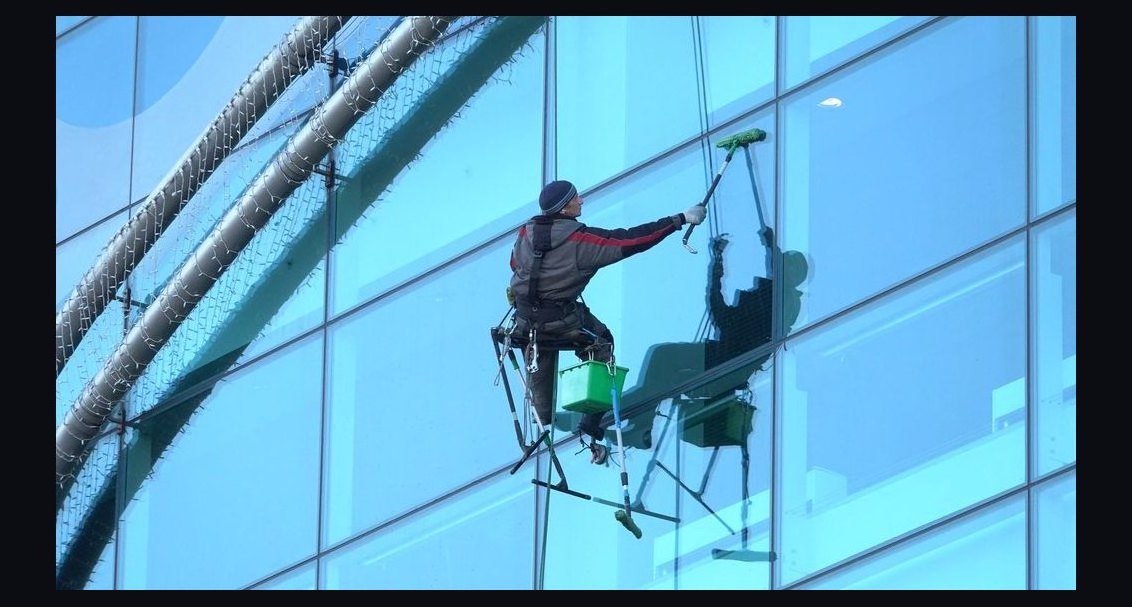
A window cleaning go-to-market plan looks deceptively simple from the outside — knock doors, clean glass, get paid — and that simplicity is exactly why most operators plateau around $180K–$340K in annual revenue per truck. The operators who break past that are running a different machine underneath the same visible work. They treat the first cleaning as customer acquisition, not as the product. The product is the route: a dense, repeating schedule of homes and buildings that a crew can execute with minimal drive time, billed on a cadence the customer barely thinks about.
The motion has four moving parts that feed each other. Demand generation fills the top — local search, referrals, door hangers, truck wraps, and direct commercial outreach. Conversion turns those inquiries into a first job, usually within 24–72 hours of the call, because in local services speed-to-quote is a bigger conversion lever than price. Recurring conversion is the step almost everyone skips: at the end of that first job, the customer either says yes to a quarterly or semi-annual package or they become a one-time transaction you'll pay to reacquire next year. Finally, expansion layers a second, third, and fourth service onto the account.
The economics behind that flow are worth stating in plain numbers. Residential jobs price at roughly $4–$12 per window, producing $180–$580 per visit for a 1,200–3,800 square-foot home, with hard-to-reach glass — skylights, transoms, second-story fixed panes — adding $14–$28 each. Commercial contracts run $280–$2,400 per month on a weekly-to-monthly cadence. Gross margin across the category sits at 58–72% and net margin at 22–38% for well-run shops, which is unusually high for a local service and comes down to three structural facts: no retail location, almost no inventory carry, and very low capital intensity. Equipment runs $8K–$28K per truck, consumables $1K–$4K, and labor consumes 32–44% of revenue.
The mix matters more than most owners realize. Of core window revenue, residential is roughly 70% and commercial 30%. Once add-ons are layered in, a mature operator's total revenue lands near 48% residential windows, 28% commercial windows, and 24% gutters, pressure washing, holiday lights, dryer-vent, and roof soft-washing. That 24% is what separates a $540K truck from a $280K one, and it's captured from customers you already have.

The adjacent lesson here comes from neighboring route businesses. Pool maintenance, lawn care, and pest control all solved this same problem a decade earlier by making the recurring agreement the default sale rather than an upsell offered afterward. Pest control in particular converts the vast majority of first-time treatments into a quarterly plan by quoting the plan price up front and treating the one-time job as the more expensive option. Window cleaning operators who copy that framing — quote the quarterly rate first, show the one-time rate as a premium — convert dramatically more first jobs into route slots without changing anything about how they clean glass.
Who owns what across the revenue org
At solo scale, the answer is uncomfortable: the owner owns everything, and the constraint is calendar hours, not demand. A one-to-three-truck operation — about 88% of the roughly 20,000-plus U.S. operators — typically runs the owner plus one to three helpers, with bookkeeping outsourced. The owner quotes, sells, schedules, cleans, invoices, and chases reviews. The practical move at this stage isn't to hire a salesperson; it's to buy back the two functions that leak the most revenue: quoting speed and follow-up. Field-service software in the Jobber, Housecall Pro, Service Autopilot, ResponsiBid, or Customer Factor family exists specifically to automate quote delivery, recurring scheduling, auto-pay, and review requests. That's the first "hire."

The second real hire is a crew lead, not another cleaner. A crew lead who can run a truck independently — quote small add-ons on site, handle a customer complaint, and enforce the safety routine — is what unlocks the owner's time to sell. Cleaners run roughly $42K–$72K and crew leads $52K–$78K before benefits, so the delta is real but small against the revenue an owner freed up to sell commercial contracts can generate.
At multi-truck scale — four to fifteen trucks, roughly 10% of the category and $640K–$2.8M in annual revenue — the org finally splits into recognizable functions. An operations manager owns routing, capacity, and quality. A crew lead owns each truck. An office manager owns dispatch, invoicing, collections, and the inbound phone. And critically, a dedicated business-development person owns commercial: property managers, commercial real-estate owners, facility managers, restaurant and retail chains, hotels, multifamily, schools, and medical facilities. Three to fifteen trucks at one-to-three-person crews means six to forty-five employees, which is the headcount where informal management stops working.
That BD role deserves specific attention because it's the single most misunderstood seat in the business. Commercial window cleaning is not sold the way residential is. There is no map pack, no yard sign, no referral from a neighbor. It's a relationship and renewal motion closer to facilities procurement than to home services: you get on an approved-vendor list, you supply certificates of insurance, you demonstrate OSHA fall-protection compliance, you bid against incumbents at renewal, and you win partly on reliability history. A BD person who understands that the buyer's real fear is liability and no-shows — not price per pane — will close contracts a price-cutting owner cannot.

Franchise operators — the remaining 2%, including Fish Window Cleaning, Window Genie and Shack Shine under Neighborly, Sparkle Wash, Squeegee Squad, and Men In Kilts — get the org chart handed to them. The franchisor supplies operations manuals, brand, safety training, and marketing systems in exchange for a royalty and ad-fund contribution. Multi-unit franchisees add a district manager and central admin on top. The trade is straightforward: you buy the playbook and give up margin and territory flexibility. It suits operators who want a faster, lower-variance ramp; independence suits owners optimizing for long-run margin who are willing to build systems themselves.
One ownership question that determines more than the org chart: who owns retention? In most small operators, nobody does, and it shows up as customers silently lapsing between the second and third year. Assign it explicitly — usually to the office manager — with a defined trigger like "any package customer without a scheduled next visit within 45 days gets a call." That single assignment moves annual retention toward the 75–85% mature range instead of drifting down toward the 65–70% band where one-time-heavy shops live.
Metrics, targets, and realistic ranges
The metrics that actually run a window cleaning business are route metrics, not marketing metrics. Route density is the master variable: 6–18 customers per square mile is the workable band, and dropping below six costs 28–44% of crew efficiency to windshield time. That efficiency loss is invisible on a P&L — it shows up only as fewer jobs per day at unchanged labor cost — which is why operators chase distant high-ticket jobs that quietly destroy their margin.
Here are the targets a mature operation holds:

Active customers per route: 80–280. Below 80 and the route can't fill a schedule without long drives; above 280 and you're pushing cadence slippage unless you split the route.
Average residential job value: $180–$580, with $220–$420 realistic in year one before add-ons and premium homes shift the mix upward.
Average commercial contract: $280–$2,400 per month. A dozen mid-range contracts produce a floor of predictable revenue that carries the business through slow residential months.
Recurring vs. one-time split: 60:40 in favor of recurring. This is the single number that most predicts enterprise value at exit.
Annual retention: 75–85% at maturity, roughly 72% in year one. Every point of retention is worth more than a point of new-customer acquisition because the acquisition cost is already sunk.
Referral share of new customers: 42–62%. Window cleaning is visible work — a crew on a residential street is an advertisement — and a $25–$80 referral credit compounds that.
Reputation: 4.7-plus stars on 80-plus Google reviews. A top-three map-pack position drives 28–44% of new-customer inquiries, and photos of completed work lift map-pack clickthrough by 22–38%.
Channel contribution: referrals 42–62%, local search and map pack 28–44%, door hangers and EDDM 18–32% at $0.40–$1.20 per door, truck wraps 22–38% at a $2,400–$5,400 per-truck wrap investment. These overlap — a customer can be influenced by three of them — so treat them as attribution ranges, not a budget that must sum to 100%.
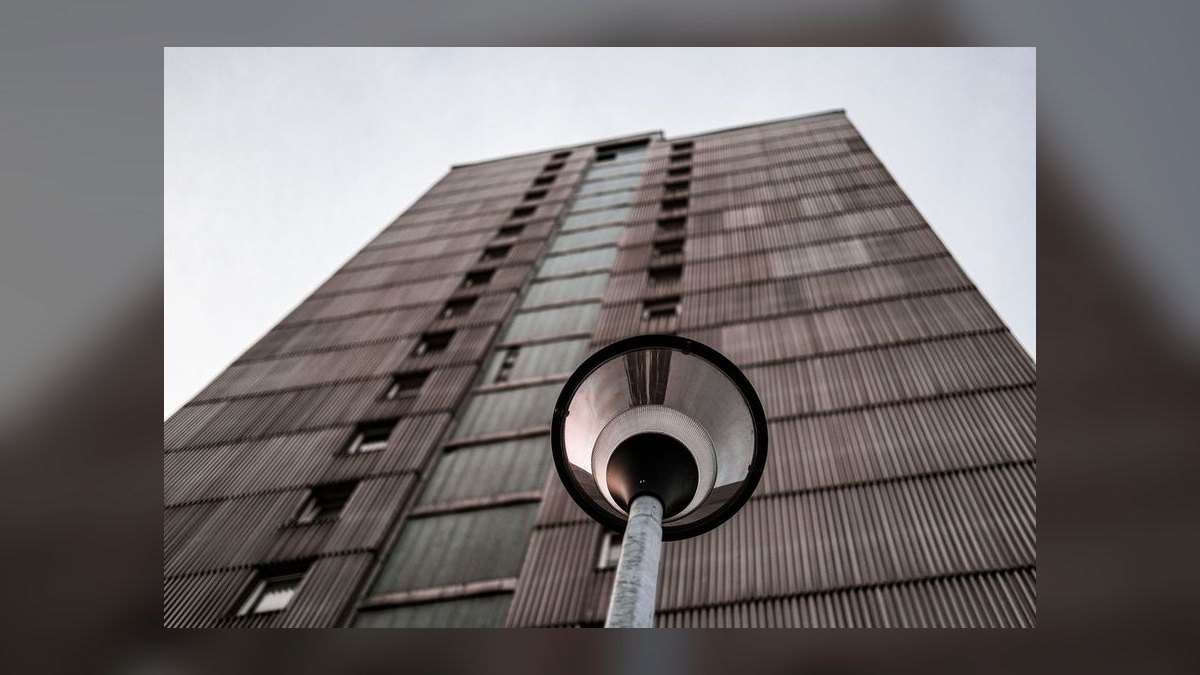
Add-on attach rate: gutter cleaning attaches to 38–58% of existing window customers at $180–$480 per job, one to two times per year, adding 22–32% of annual revenue per attached customer. Pressure washing prices at $240–$680 per job at 55–72% margin against a small $1.4K–$4.8K equipment outlay. Holiday-light install and removal runs $380–$1,400 per home across November through January — six to twelve weeks of high-margin work in what would otherwise be the dead season. Dryer-vent cleaning at $120–$240 is a low-friction retention touch with a genuine safety rationale.
First-year targets: 60–180 active customers by month 12, $8K–$24K in monthly recurring revenue, 60-plus reviews at 4.7-plus stars.
Two derived numbers deserve their own tracking. First, revenue per truck per day — the operational heartbeat that tells you whether density and pricing are working. Second, percentage of revenue under contract or package, which is what a buyer will underwrite. Owner-operator businesses typically trade at 2x–4x seller's discretionary earnings; multi-truck operators with recurring contracts and management depth reach 4x–7x EBITDA. Regional consolidators and franchise systems actively acquire well-run operators, so the recurring percentage is not an abstraction — it is the multiple.
Where the motion breaks down
Safety and insurance treated as cost, not credential. Ladder and elevated work carries real injury risk, and general liability plus workers' compensation runs roughly $2K–$8K per year. Operators who under-insure to protect margin discover the failure mode twice: once when a claim lands, and again every time a commercial property manager asks for a certificate of insurance and a fall-protection training record and they can't produce one. OSHA's fall-protection standards are the reference point. A clean safety record isn't overhead — it's a qualification for the highest-LTV revenue in the category.

Wrong equipment. Water-fed-pole systems running deionized water are the practical standard for safe, spot-free work on upper-story glass, and they change the risk profile by keeping crews on the ground. Consumer-grade squeegees and ladders cost quality, speed, and safety simultaneously. Professional-grade tooling from established suppliers — Ettore, Unger, Tucker, Pulex, and water-fed systems from vendors like Reach-iT and IPC Eagle — is a small line item against the labor hours it saves.
Route sprawl. The most common margin killer. An operator says yes to every job in a fifty-mile radius during year one, and by year three the schedule is unroutable. The discipline is to densify existing zones before expanding: run door hangers on the streets you're already on, offer neighbor discounts, and price distant jobs with a travel premium that makes them either worth doing or easy to decline.
No recurring strategy. One-time-only cleaning caps a truck near $180K–$340K. Quarterly residential packages plus commercial contracts push the same truck to $480K–$1.4M. The mechanism is simple: recurring work eliminates reacquisition cost and fills the calendar in advance, which is what lets you schedule densely instead of reactively.
No bundling. Pure-window operators leave 22–44% of achievable revenue with customers who already trust them. Every service you don't offer is a competitor's foot in the door on your own route.
Underpricing to win. In a category with 20,000-plus operators — most of them single-truck — price competition is constant and mostly self-inflicted. The defensible positions are reliability, insurance, and the ability to handle the glass a competitor can't reach. Discount the cadence, not the job: a 10–22% package discount for quarterly auto-pay trades margin for predictability, which is a good trade. A flat 20% off a one-time job trades margin for nothing.

Seasonality mismanagement. Most markets have a spring surge, a fall gutter season, and a winter trough. Operators who don't build a winter plan — holiday lighting, commercial focus, interior-only residential work — either carry idle crews or lose them and rehire in spring, which is the more expensive option once you count training and quality variance.
How to sequence the build
Sequencing matters because each stage's cash and reputation fund the next. Trying to run commercial BD before you have insurance documentation, reviews, and reliable scheduling wastes the meetings you get.
Months 1–2, pre-opening. State licensing, general liability and bonding, initial equipment, first hire, Google Business Profile with real job photos, and the first marketing push. Capital to enter is $15K–$80K all-in for a solo start: truck and equipment $8K–$50K, consumables $1K–$4K, insurance, bonding and licensing $4K–$12K, and $5K–$20K of working capital. That low barrier is exactly why the field is crowded — differentiation comes from recurring revenue and reputation, not from spend.
Months 1–6, density and reviews. Pick one to three zip codes and saturate them. Every completed job gets a review request the same day and a door-hanger drop on the surrounding streets. The goal isn't revenue yet — it's a defensible map-pack position and a route tight enough to be profitable.
Months 4–9, convert to recurring. Introduce the quarterly package as the default quote. Existing one-time customers get a conversion offer at the discount tier. Target the 60:40 recurring split.
Months 6–12, attach add-ons. Gutters first — highest attach rate, lowest equipment cost, natural seasonal pairing. Pressure washing second. Holiday lights in the first available November.

Year 2, commercial. Now you have insurance history, reviews, and a reliability record. Build the property-manager list and work renewals.
Year 2–3, second truck and crew lead. Only when the first route is genuinely full.
The operating cadence that holds this together is unglamorous. Daily: route execution, customer service, a safety briefing. Weekly: billing, equipment maintenance, marketing review. Monthly: P&L by route and retention analytics. Quarterly: seasonal campaigns — spring windows, fall gutters, holiday lights, winter commercial. Annually: the International Window Cleaning Association convention, license renewals, insurance renewals.
Related questions
Should a new operator start residential or commercial?
Residential. It requires less insurance history, converts faster, generates the reviews that fuel local search, and pays in days rather than on net-30 terms. Commercial is the year-two move, once you have documentation and a reliability record property managers can verify.
How many trucks before the economics change?
Around the fourth truck. Below that, the owner can still touch every route. At four-plus you need an operations layer and a dedicated BD person, which raises overhead but is also what moves the exit multiple from an SDE basis to an EBITDA basis.
What software should a small operator run?
A field-service platform that handles recurring scheduling, automated quoting, auto-pay, and review requests — Jobber, Housecall Pro, Service Autopilot, ResponsiBid, or The Customer Factor are the established options. The specific choice matters far less than actually enforcing recurring scheduling and auto-pay in it.
Does the same playbook work for pressure washing or gutter companies?

Largely yes. Any visible, route-based, weather-dependent home service shares the density, recurring-conversion, and reputation mechanics. The differences are cadence and equipment intensity, not go-to-market structure.
How do you compete against a franchise in your market?
On responsiveness and price flexibility. A franchisee carries a 5–7% royalty and 1–3% ad fund you don't, and operates under territory constraints. Match their professionalism on insurance and uniforms, then out-quote them on speed.
FAQ
How much capital does it take to launch a window cleaning business in 2027?
Roughly $15K–$80K all-in for a solo start: truck and equipment $8K–$50K, consumable inventory $1K–$4K, insurance, bonding and licensing $4K–$12K, and $5K–$20K of working capital. It is among the lowest-capital local-service businesses to enter, which is precisely why the field is crowded. Differentiation comes from recurring contracts and reputation, not from outspending anyone.
Franchise or independent?
Franchise systems supply brand recognition, operating systems, safety training, marketing, and supply scale in exchange for a royalty in the 5–7% range, a 1–3% ad fund, and territory restrictions. Independents keep full margin and full flexibility but must build systems, brand, and demand from scratch. The franchise route fits operators who want a turnkey ramp with less variance; independence fits hands-on owners optimizing for margin and long-run control.

What's the right pricing model?
Price residential per window — roughly $4–$12 each, landing at $180–$580 per visit — and price commercial as a monthly recurring contract at $280–$2,400. Run residential quarterly to semi-annually and commercial weekly to monthly. Offering a 10–22% discount for quarterly auto-pay is the highest-leverage pricing move in the category because it converts one-time jobs into route slots and lifts retention.
How important is multi-service bundling?
It is the primary path to scaling revenue per truck. Layering gutter cleaning, pressure washing, holiday lights, dryer-vent cleaning, and roof soft-washing onto the same crew and truck adds 22–44% incremental revenue at higher blended margins. Each added service also raises switching costs, which quietly improves retention on the core window work.
How important are safety and insurance?
Non-negotiable, and increasingly a sales asset rather than a cost. Elevated work makes injury risk material, so general liability, workers' compensation, OSHA fall-protection training, and proper harness and anchor equipment are table stakes. Commercial property managers frequently require documented proof before a bid is even considered, which turns compliance into a competitive advantage.
What's the exit market for window cleaning operators?
Owner-operator businesses typically sell in the 2x–4x seller's discretionary earnings range, while multi-truck operators with recurring contracts and management depth reach 4x–7x EBITDA. Regional consolidators and franchise systems actively acquire well-run operators, so building recurring revenue, clean financials, and a documented safety record directly raises the multiple.
Sources
- https://www.iwca.org/
- https://www.osha.gov/window-cleaning
- https://www.osha.gov/laws-regs/regulations/standardnumber/1910/1910.28
- https://www.sba.gov/business-guide/plan-your-business/calculate-your-startup-costs
- https://www.bls.gov/ooh/building-and-grounds-cleaning/janitors-and-building-cleaners.htm
- https://www.ftc.gov/business-guidance/resources/franchise-rule-compliance-guide
- https://www.ibisworld.com/united-states/market-research-reports/window-cleaning-services-industry/
- https://support.google.com/business/answer/7091
- https://www.statista.com/topics/1837/cleaning-industry/
Related on PULSE
- How do you build the GTM playbook for a pool cleaning and pool maintenance operator in 2027?
- How do you build the GTM playbook for a locksmith service operator in 2027?
- GTM Playbook for Carpet Cleaning Services in 2027
- How do you build a field service management go-to-market motion in 2027?
- GTM Playbook for Restaurants and Food Service in 2027 — The Complete Operator Guide
This page will be disappearing soon. Save it to your device for $1 — or read it free while it is here.
@Kory-White- · if Venmo asks, the last 4 of my number are 2012
This page is gone.
This one is off the shelf now. $1 keeps it on your phone for good — the whole page, pictures and diagrams included.
 gtm-playbookGTM Playbook for Window Cleaning Services in 2027
 gtm-playbookHow do you build a vertical SaaS for auto dealers (Reynolds / CDK) go-to-market motion in 2027?
 gtm-playbookGTM Playbook for FinTech — The Complete Operator Guide in 2027
 gtm-playbookBakery GTM Playbook 2027 — Wholesale Layer, Custom Cakes, and the $1.8M Independent Operator Path
 gtm-playbookHow do you build an AI for customer success (Catalyst / ChurnZero) go-to-market motion in 2027?
 gtm-playbookGTM Playbook for MarTech and AdTech — The Complete Operator Guide in 2027
 gtm-playbookHow do you build the GTM playbook for a garage door installation and repair operator in 2027?
 pulse-recentHow do you build the GTM playbook for a dog walking service in 2027?
 gtm-playbookGTM Playbook for Concrete Contractors in 2027
 gtm-playbookHow do you build a distribution and wholesale ERP go-to-market motion in 2027?