


GTM Playbook for Mobile Car Wash Services in 2027
Quality
Certified
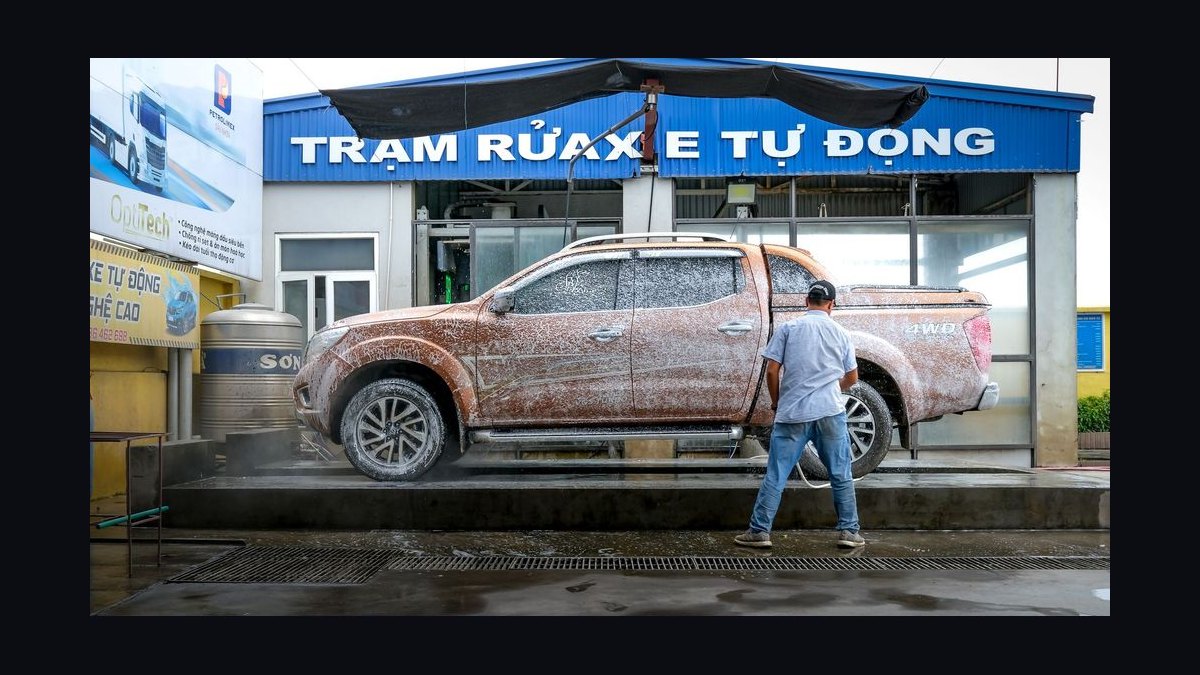
A winning GTM Playbook for Mobile Car Wash Services in 2027 defends two numbers: route density and subscription revenue. Top operators cluster 10-14 washes per truck daily inside a four-zip radius, sell $89-$149 unlimited monthly plans, hold billable utilization above 75%, and clear $18,000-$32,000 per truck monthly.
The go-to-market motion in one picture
The mobile car wash motion is a route-fill problem wearing a lead-gen costume. Buying clicks looks like growth but quietly poisons unit economics: Google Local Services Ads and Meta lead forms run roughly $38-$72 per booked first wash in suburban metros in 2027, which is survivable for a one-time customer and fatal for a $35 wash you hoped to repeat. Operators who win treat every cold contact as fuel for a dense, defensible route rather than a standalone sale, and they refuse to let paid acquisition set the pace of the business.
Three channels do the real work. HOA and apartment partnerships pay the property a $3-$5 per-wash kickback or a flat ~$400/month for posting rights and yield 22-40 booked washes per complex on a visit day — the single strongest acquisition channel for anyone clearing $25K/month per truck, because the prospects are pre-clustered inside one parking lot. Fleet anchor contracts with local dealers, rental lots, and regional rental-car depots pay $18-$28 per car on 15-50 car weekly recurring routes; the per-unit margin is thinner, but the volume anchors a route day and pays net-15, giving you a guaranteed floor before a single retail booking lands. Referral-with-friction gives the referrer one free credit only after the new customer's second paid wash, which filters tire-kickers and pushes referral acquisition cost down to $8-$14 — a fraction of any paid channel.

The motion below shows how each channel funnels into the one thing that matters: an active subscriber base dense enough to keep a truck at 10-14 jobs a day. Notice that every path terminates at the same node. That is deliberate. A Playbook that lets three channels feed three different retail funnels never builds density; a Playbook that forces all three into one subscriber pool compounds.
The governing discipline is geographic concentration over coverage. A truck doing 12 jobs inside a three-mile radius nets $340-$420/day; the same truck spread across a 22-mile radius nets $140-$180/day after fuel and windshield time. The math is not close. Saturate one zip code to 80+ active subscribers before opening the next, and treat "we cover the whole metro" as a warning sign rather than a bragging right. Operators who spread thin to look bigger die at scale, because the drive time between stops silently eats the margin on every wash.
Who owns what across the revenue org
Even a two-truck shop has a full revenue org — it just lives inside three or four people. Assigning explicit ownership is what separates a business from a busy owner-operator, and it is the backbone of any durable Mobile Car Wash Playbook. When roles blur, the owner ends up doing partnership calls at a red light between washes and nothing gets done well.

The owner owns partnerships and pricing. HOA deals, fleet RFPs, and the tier menu are relationship-and-math work that cannot be delegated in year one; the person who sets the $35-$45 express price and the $89 subscription anchor is the person who has to defend the margin when a property manager asks for a discount. This role also owns the two-truck decision — the moment the owner stops washing and starts dispatching, which reliably drops revenue 18-28% before route density recovers. Getting the timing of that handoff wrong is the most expensive mistake in the entire Playbook, so it stays with the person whose money is on the line.
The lead technician owns conversion at the curb. Every tech is trained to deliver a 45-second subscription pitch at handoff — "if you want this every two weeks on autopilot, the unlimited plan is $89/month and your next wash is already on the calendar; want me to set it up before I head out?" Operators tracking this see 22-31% same-day subscription signup versus 6-9% for techs who just hand over a receipt. That single scripted moment is worth more than any ad budget. The lead tech also owns the five-star review ask, which feeds both the referral flywheel and the comp plan, so the person doing the work has a direct financial stake in the review count.

A part-time or fractional dispatcher owns routing and utilization. This is where routing software earns its keep: clustering the next day's jobs, protecting the four-zip radius, and flagging any truck drifting below 75% billable utilization. On fleet accounts this role reconciles time-on-site against the contract so recurring revenue does not silently leak — an unbilled ten-minute add-on on 40 cars a week is real money by month-end. In a one-truck shop the owner wears this hat; the discipline is to treat it as a real function with real metrics, not an afterthought squeezed in at 9pm. Splitting acquisition, conversion, and utilization across named owners is precisely what lets the operation survive the jump to multiple trucks, because each function keeps running even when the owner is heads-down on the next crisis.
Metrics, targets, and realistic ranges
The Playbook lives or dies on a short list of numbers, and every one of them has a realistic 2027 range you can benchmark against. Track these weekly; guessing at them is how operators convince themselves a losing route is fine.
Pricing tiers. Anchor higher on one-time pricing and lower on subscription to force conversion. Express Wash runs $35-$45 one-time (18-22 minutes: exterior foam, wheel clean, tire shine, hand dry) at a ~62% margin target. Wash + Interior runs $69-$89 one-time or a +$25 subscriber add-on (45 minutes, adding vacuum, wipe-down, glass, dash) at ~58% margin. Full Detail runs $189-$279 one-time or a +$140 quarterly subscriber add-on (2.5-3.5 hours, adding clay bar, sealant, leather) at ~64%, because the chemicals barely change between tiers and labor is the real lever you are selling.

Subscription math. At $89/month unlimited exterior and 2.4 average washes per month, the effective price lands around $37 per wash versus $45 one-time — a discount on paper only, because subscribers are dramatically more likely to book slow Tuesday-Wednesday slots, which is exactly the capacity you needed to fill. The premium $149/month wash-plus-monthly-interior tier converts roughly 28-34% of express subscribers within 90 days and lifts monthly customer lifetime value from around $214 to $486. That LTV jump, not the headline wash price, is where durable Mobile Car Wash revenue actually comes from.
The trial trap. A $1 first wash or 50%-off first month trains customers that the discount is the real price and converts to subscription at only 3-5%. A $25 first wash at full price thereafter converts at 17-22% and the lifetime-value gap never opens. Never discount the trial to the floor; a cheap first wash buys a customer who leaves the moment the real price appears.
Utilization and revenue per truck. Target billable utilization above 75% — technicians actively washing at least three-quarters of paid time, with the rest for travel and breaks. Hold that with 10-14 jobs a day inside a tight radius and a healthy subscription mix, and a truck clears $18,000-$32,000/month at roughly 24-31% net margin. Below 60% utilization, the truck cannot cover fixed cost, and no amount of top-line hustle fixes a route that is structurally too spread out.
Software spend. A two-truck operation should budget $340-$520/month on software — roughly 1.4-2.1% of revenue. The stack: a mobile-detail operations and estimating tool for the customer database and payment capture, a routing and dispatch tool that lifts daily job density 12-18% over manual mapping, and a subscription-billing and booking layer for recurring charges and reminders. Underspending here is the most common reason operators stall at one truck; missed bookings and unbilled add-ons quietly cost 8-12% of margin, far more than the software ever would.

Retention economics. A new customer costs $38-$72 to acquire; wash #2 costs $0, so the entire model is engineered to book the second wash before the truck leaves the first. If a customer does not rebook within 14 days, a single text — "your vehicle is due, $5 off if you book in 48 hours" — pulls 18-26% reply rates; wait 21+ days and the same offer pulls only 4-7%. Speed beats discount depth every time, and the re-engagement window is short enough that it has to be automated rather than remembered.
Where the motion breaks down
Most mobile car wash businesses do not fail on demand — they fail on a handful of predictable break points, and a good Playbook pre-empts each one rather than discovering it the hard way.
The two-truck wall. Going from one truck to two is where operators die. The owner stops washing and starts dispatching, revenue drops 18-28% before density recovers, and payroll arrives whether the routes are full or not. Pre-fund eight weeks of payroll (roughly $14K-$22K) before adding truck #2, and do not add truck #3 until truck #2 holds 75% billable utilization for two consecutive months. Truck #2 should anchor a second zip code, never split coverage of zip #1 — splitting erases the density you spent months building and leaves you with two thin routes instead of one dense one.

Turnover. Annual technician turnover in mobile detailing exceeds 40% by multiple trade benchmarks, and replacing a trained tech costs $2,800-$4,200 in recruiting, onboarding, and first-30-day productivity loss. Flat $15-$18/hour bleeds people. A structure of ~$14/hour base plus 12-18% commission on completed ticket revenue plus $3 per five-star review puts a mid-performer at $22-$28/hour all-in and a top performer at $34-$40, dropping turnover toward 18-24%. Hire for two things only: a clean three-year driving record (your commercial-auto carrier prices off the worst driver on the policy, and one bad MVR can add $1,800-$3,400/year per truck) and a genuine willingness to work Saturdays, which are 34-41% of weekly bookings. Everything else is trainable in a two-week paid ride-along.
Churn is friction, not quality. Operators blame cancellations on bad washes; the actual pattern is that most cancellations happen in the self-service portal within 48 hours of a billing event the customer did not expect — a price increase, a missed appointment, or a surprise add-on charge. Send the receipt before the charge, not after, and send a 24-hour pre-charge text for any add-on over $15. Cancellation friction, not service quality, is the lever, and removing it cuts churn sharply at zero acquisition cost. This is the cheapest retention win in the entire model and the one operators consistently ignore.
Compliance and the aggregator trap. General liability plus commercial auto runs $2,400-$4,800/year per truck; add garagekeepers coverage ($600-$1,100/year) the day you first touch a customer's keys, because one scratched vehicle without it costs $8K-$22K out of pocket plus the customer. EPA stormwater-discharge rules under the Clean Water Act apply to mobile washes across nearly every state, and pressure-washing on a driveway without a reclaim mat draws a $500-$2,500 fine in most metros; a $280-$640 mat pays for itself on the first inspection. Finally, on-demand aggregators that offer to "fill your route" for 15-25% per transaction turn a $45 wash into a ~$34-$38 wash and own the customer relationship — use them only to fill the bottom 20% of empty Monday-Tuesday slots, never as a primary channel that quietly rents you your own customers.
How to sequence the build

The Playbook sequences cleanly into a 30/60/90 arc, and the discipline is refusing to run ahead of it — density before expansion, retention before headcount. Each phase has an exit gate; skipping a gate is how you end up with two half-full trucks and a payroll you cannot cover.
Days 1-30 — Foundation. One truck. Operations-and-estimating software bound at the entry tier so the customer database and payment capture exist from wash one. General liability, commercial auto, and garagekeepers coverage bound on day one — before the first key is touched, not after. Three HOA partnerships signed at a flat ~$400/month or a per-wash kickback. The three-tier menu locked at express / wash-plus-interior / full detail. Standardize on two or three proven chemical brands — a concentrate like a professional no-rinse wash solution dilutes far enough to hold per-wash chemical cost around $0.19-$0.34, while cheap drugstore soap doubles that cost and damages clear coat over 8-12 washes, triggering callback claims that erase the savings. The owner does every wash in this phase and learns the real time-on-site numbers, because you cannot dispatch a route whose true durations you have never measured.

Days 31-60 — Density. Stop chasing new zip codes and saturate the first one to 80+ active customers. Turn on the on-truck subscription script at handoff and start tracking same-day signup rate as a hard metric, not a vibe. Launch the 14-day re-engagement text through the ops platform or a business texting line. Add routing-and-dispatch software once the truck reliably crosses eight jobs a day, and let it protect the radius rather than trusting a mental map. This is the phase where route density becomes real and the truck's daily net climbs toward the $340-$420 target — the number that proves the model works before you risk a second payroll.
Days 61-90 — Stack. Push subscription mix above 35% of monthly revenue and hold billable utilization above 75%. Only when both numbers hold for four straight weeks do you hire technician #2, and only after pre-funding eight weeks of payroll. Truck #2 anchors a second zip code; do not split coverage of the first. By the end of the arc the business has traded owner-does-everything for a repeatable system: dense routes, recurring revenue, and a comp plan that keeps trained techs from walking. That system — not any single wash — is the actual product of a Mobile Car Wash Services Playbook.
Related questions
How much revenue can one mobile car wash truck realistically make?
A well-run truck in 2027 clears $18,000-$32,000/month at roughly 24-31% net margin, driven by 10-14 jobs per day inside a tight radius and a subscription mix above 35%. Below 60% utilization or spread across a wide metro, the same truck struggles to cover fixed cost.
Should I offer an unlimited subscription or charge per wash?
Both — but engineer the menu to push subscriptions. Price one-time washes higher ($35-$45 express) and the unlimited plan lower ($89-$149) so the plan reads as a deal. Subscribers fill slow midweek slots and lift lifetime value from ~$214 to ~$486, which is where the real revenue durability lives.
What is the single biggest mistake new operators make?

Taking jobs spread across a wide area to grab revenue fast. It destroys route density, drops utilization below 60%, and makes the 10-14 jobs-per-day target impossible. Saturate one zip code to 80+ active customers before opening the next — concentration beats coverage every time.
How do I keep technicians from quitting?
Replace flat hourly pay with ~$14/hour base plus 12-18% ticket commission plus $3 per five-star review, so mid-performers earn $22-$28/hour all-in. Hire only for a clean three-year driving record and genuine Saturday availability. That structure drops turnover from 40%+ toward 18-24%.
FAQ
What is route density and why does it matter for a mobile car wash?
Route density means clustering jobs inside a small area, ideally a four-zip radius. It lets a truck complete 10-14 jobs a day instead of 5-7, pushing revenue per truck to $18,000-$32,000/month. Without it, fuel and drive time between stops quietly eat the margin on every wash.
How should I price my unlimited monthly subscription?
Most successful operators price unlimited plans between $89 and $149/month, depending on local market, wash frequency, and vehicle mix. Anchor one-time washes higher so the subscription reads as a discount, then let midweek subscriber bookings fill the capacity you actually needed to sell.

What billable utilization rate should I target?
Target above 75% — technicians actively washing for at least three-quarters of paid time, with the remainder covering travel and breaks. Below 60%, a truck cannot cover fixed cost. Utilization, not headcount, is the number that tells you whether the route is dense enough to add another truck.
What tech stack does a modern mobile car wash actually need?
Three layers: an operations-and-estimating tool with a customer database and payment capture, a routing-and-dispatch tool that lifts daily density 12-18%, and a subscription-billing and booking layer. Budget $340-$520/month for two trucks — underspending here is the most common reason operators stall at one truck.
How do I hire and retain good mobile car wash technicians?
Pay base plus per-ticket commission plus a review bonus rather than flat hourly, and offer weekly pay with a clear path to lead tech. Hire for a clean three-year driving record and Saturday availability; train everything else in a two-week paid ride-along. That combination cuts 40%+ industry turnover toward 18-24%.
When is it safe to add a second truck?
Only after subscription mix holds above 35% of revenue and billable utilization holds above 75% for four straight weeks — and only after pre-funding eight weeks of payroll ($14K-$22K). Truck #2 anchors a new zip code; splitting coverage of your first zip erases the density you built.
Sources
- https://www.autolaundrynews.com
- https://www.carwash.org
- https://www.epa.gov/npdes/stormwater-discharges-municipal-sources
- https://www.hiscox.com/small-business-insurance
- https://www.nextinsurance.com
- https://www.sba.gov
- https://quickbooks.intuit.com
- https://stripe.com/billing
Related on PULSE
- GTM Playbook for Used Car Dealerships in 2027
- How do you build the GTM playbook for a used car dealership in 2027?
- GTM Playbook for Mobile Notary Services in 2027
- Notary Services / Mobile Notary GTM Playbook 2027 — RON + Loan Signing Agent and the Operator Path
- Mobile App Development Agency GTM Playbook 2027 — Native, Cross-Platform, and AI-Assisted Dev
- Mobile Detailing GTM Playbook 2027 — Route Density, Fleet Sales, and the Owner-Operator Path
This page will be disappearing soon. Save it to your device for $1 — or read it free while it is here.
@Kory-White- · if Venmo asks, the last 4 of my number are 2012
This page is gone.
This one is off the shelf now. $1 keeps it on your phone for good — the whole page, pictures and diagrams included.
 gtm-playbookHow do you build a distribution and wholesale ERP go-to-market motion in 2027?
 gtm-playbookWhat is the go-to-market playbook for a partner-led (channel) motion in 2027?
 gtm-playbookGTM Playbook for AgTech — The Complete Operator Guide in 2027
 gtm-playbookGTM Playbook for Kitchen and Bath Remodelers in 2027
 pulse-recentWhat are the concrete steps to recruit and sign your first 10 channel partners in 2027?
 gtm-playbookHow do you build the GTM playbook for a driving school in 2027?
 gtm-playbookHow do you build an HR Tech and HRIS go-to-market motion in 2027?
 gtm-playbookHow do you build a livestock management software go-to-market motion in 2027?
 gtm-playbookHow do you build a workforce management go-to-market motion in 2027?
 gtm-playbookThrift Store Chain GTM Playbook 2027 — Donation Network + ShopGoodwill + AI-Augmented Sortation and the .4B Goodwill Operator Path