


What is the step-by-step GTM playbook for launching a sneaker DTC brand in 2027?
Quality
Certified
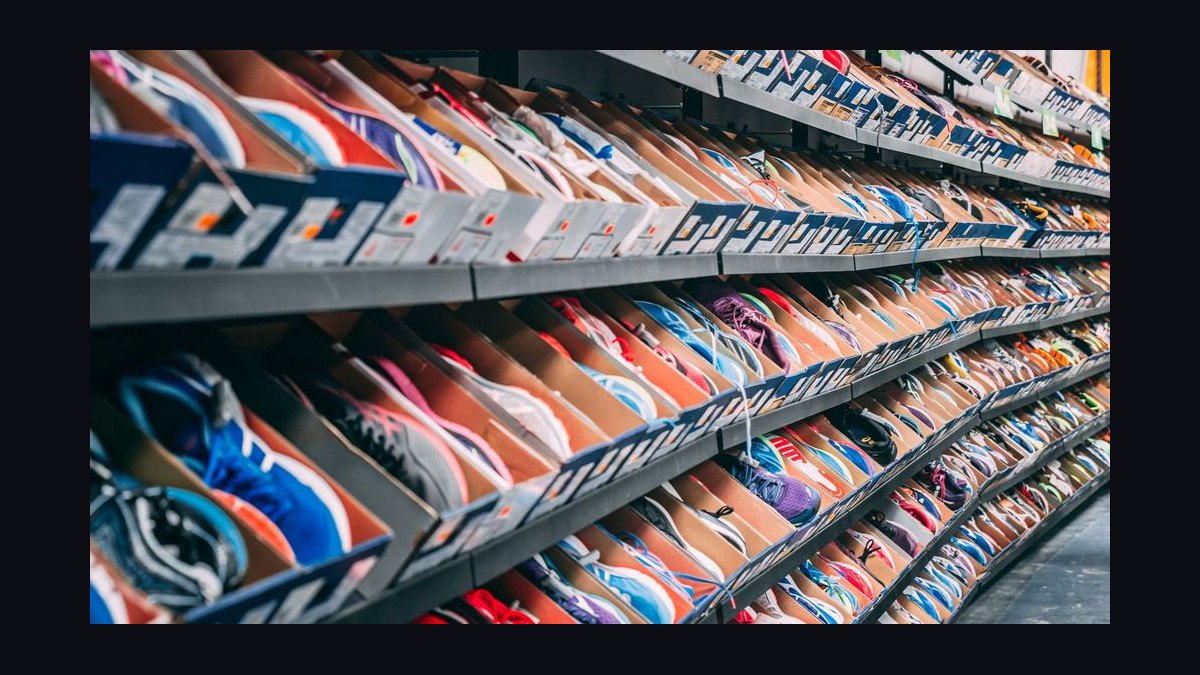
Launching a sneaker DTC brand in 2027 follows a repeatable playbook: pick one narrow wearer segment, validate demand with a pre-order drop before committing tooling money, launch a small hero SKU run, drive first revenue through creator and community channels, then reinvest into repeat purchase. Sequence discipline beats spend.
Segment and ICP first
Most failed sneaker launches die at the segment step, not the product step. Founders describe their buyer as "people who like sneakers," which is not a segment — it is a category. A segment is a group with a shared, unmet job-to-be-done, a shared place where they already gather, and a shared price tolerance. Get this wrong and every downstream number breaks: your ad targeting is diffuse, your creator picks are random, your size curve is guesswork, and your return rate climbs.
Start by writing down the wearer, not the shopper. The wearer is the person whose feet the shoe is on, and their use occasion is the real product spec. A few concrete examples of narrow, defensible segments a small brand can actually own:
- Court-adjacent lifestyle: people who play pickup basketball or padel two to four times a week and want an off-court shoe that reads athletic without being a performance shoe. The job is "look like I play, without wearing a foam blob."
- All-day standers: nurses, hospitality staff, trade-show workers, baristas. The job is eight-to-twelve hours of cushioning with a silhouette that isn't a clinical clog. This segment has extremely high repeat rates because the shoe is consumed, not collected.
- Wide-foot and non-standard sizing: buyers who are structurally underserved by major brands, particularly EE+ widths, US men's 14+, and women's sizes below 6. The job is "a shoe that fits at all," and the willingness to pay a premium is unusually high because the alternative is nothing.
- Material-first buyers: people who screen for vegan uppers, recycled midsoles, or repairability. The job is buying consistent with a value system, and this cohort talks publicly, which lowers acquisition cost.
- Regional or subcultural identity: a city, a music scene, a sport that lacks a dedicated shoe. Small runs, high emotional load.
Once the segment is named, build the ICP into three artifacts you will use for the rest of the launch. First, a wearer profile: age band, the two or three occasions the shoe gets worn, the price they last paid for footwear, and the three brands they currently buy. Second, a watering-hole map: the specific subreddits, Discords, Strava clubs, gyms, forums, YouTube channels, and creators where this segment already congregates. Not "TikTok" — a list of twenty named accounts and ten named communities. Third, a size curve hypothesis: your expected distribution across sizes, because this is where inventory dies. A generic men's curve concentrates roughly two-thirds of units in US 9-12, but a wide-foot or all-day-stander segment skews meaningfully differently, and guessing wrong leaves you holding the tail sizes forever.

The adjacent lesson from other DTC footwear and apparel categories applies here: the brands that survive their second year almost always launched to a group that was already talking to each other. A segment with existing gathering places gives you distribution you do not have to buy. A segment defined only by demographics gives you nothing but a targeting parameter, and paid targeting parameters get more expensive every year.
Finally, pressure-test the segment against a simple question: can you name fifty real people in it, today, whom you could message directly? If not, the segment is a hypothesis, not a market. Go find them before you spend a dollar on tooling.
The motion that fits that segment
Segment determines motion. There are broadly three go-to-market motions available to a new sneaker brand, and picking the one that matches your segment is more important than executing any of them brilliantly.
Drop motion. Limited runs, announced dates, deliberate scarcity, waitlists. This fits identity-driven and subcultural segments where the purchase is partly social. It generates concentrated demand you can actually forecast, which is enormously valuable when you are cash-constrained: you know how many units to make because people told you before you made them. The cost is that drops train customers to wait, and a brand that only drops has a hard time building steady-state revenue. Use drops for launch and for seasonal energy, not as your permanent revenue base.

Always-on utility motion. Continuous availability, replenishment focus, size-and-fit content, review accumulation. This fits all-day standers, wide-foot buyers, and anyone whose purchase is functional rather than expressive. Revenue is less spiky, repeat purchase is higher, and paid acquisition works better because the offer is legible: "a shoe that fits your foot" needs no cultural context. The cost is inventory: you must hold stock across a full size run continuously, and that is working capital.
Community-first / pre-order motion. You sell before you make. Collect deposits or full payment against a production window of eight to sixteen weeks, then produce to order. This is the lowest-risk launch shape and the one most new brands should default to, because it converts your biggest unknown — demand by size — into a known before you commit the money. The cost is trust: you are asking people to wait, and every day of slippage burns goodwill. Communicate delays early and generously.
In practice the strongest 2027 playbook layers them: pre-order the first run, drop the second, then transition the proven SKU to always-on while the next drop builds anticipation.
The channel stack that carries the motion matters just as much. For a first launch, the ranked order that consistently works is: owned list and community first, creator seeding second, organic short-form third, paid social fourth, retail and wholesale last. Reversing that order — starting with paid — is the single most common capital-destroying mistake, because paid social amplifies an offer, it does not create one. If the offer does not convert warm traffic, it will not convert cold traffic; it will just do so expensively.
Creator seeding deserves specificity. Send product to fifty to a hundred micro-creators inside your watering-hole map before launch, with no posting obligation. Expect a fraction to post. What you are buying is not reach — it is proof, plus a library of real-foot imagery you can license and reuse. Wholesale and retail come later because a new brand's landed cost structure usually cannot absorb a 50% keystone margin until unit volumes bring the factory price down.
Unit economics and benchmarks

This is where the playbook becomes arithmetic. A sneaker brand lives or dies on the gap between landed cost and contribution margin after acquisition, and that gap is narrower than founders expect.
Build the model bottom-up, per pair:
- Landed cost = factory FOB price + freight + duty + inbound handling. Footwear duty rates vary substantially by construction and upper material, and they are not a rounding error — model them explicitly rather than assuming a flat percentage. Get the actual classification for your construction before you price.
- Fulfillment = pick, pack, box, and outbound shipping. Sneakers ship in a large, light box, so you pay dimensional weight, not actual weight. This surprises people.
- Returns = your return rate times the cost of a return (inbound shipping, inspection, repack, and the units you cannot resell as new). Footwear return rates run materially higher than most DTC categories because fit is binary — it fits or it does not. Every point of return rate you remove with better fit content is pure margin.
- Payment and platform fees = card processing plus your commerce platform's take.
- Contribution margin = price minus all of the above. This is the number that must exceed your customer acquisition cost.
The healthy shape for a small brand is a landed cost that leaves room for a gross margin comfortably above half of retail before acquisition, because acquisition will eat a large share of what's left. If your first-run economics only work at full price with zero returns and zero discounting, they do not work — you will discount, and you will have returns.

Minimums are the other hard constraint. Footwear factories quote minimum order quantities per color and per size run, and those minimums are the real gating factor on how many colorways you can launch. The discipline is brutal but simple: launch one silhouette in two colorways, not three silhouettes in six. Every additional colorway multiplies your inventory risk without multiplying demand, because your segment is buying the shoe, not the palette. Tooling for a new outsole or last is a separate, larger, one-time cost that you should avoid entirely on a first run — build on an existing last and existing tooling, and save custom tooling for run two or three when you have demand evidence.
Benchmarks worth tracking from day one, with the caveat that you should measure your own baselines rather than chasing published averages:
- Sell-through by week against your production run. A first run that sells through in weeks tells you to reorder immediately; one that stalls at a third tells you the offer or the segment is wrong.
- Return rate, split by reason. Fit-driven returns are fixable with content and a better size guide. Quality-driven returns are a factory problem. Expectation-driven returns are a photography problem. Do not report a single blended number — the split is the diagnostic.
- Repeat purchase rate at 6 and 12 months. Sneakers have a long natural replacement cycle, so a brand with only one SKU has a structurally low repeat rate. This is the argument for adding a second SKU or an accessory line before year two.
- Contribution margin per order, not revenue per order. Revenue growth with negative contribution margin is a countdown timer.
- Payback period on acquisition spend. If you are inventory-financed, payback longer than your inventory cycle means you are borrowing to grow, and that only works if the unit economics are actually positive.
One adjacent economics note that transfers from other physical-goods categories: your cash conversion cycle usually matters more than your margin in year one. You pay the factory before you sell the shoe, often with a deposit at order and the balance before shipment. A brand with 60% gross margin and a 150-day cash cycle can fail while a brand with 50% margin and a 60-day cycle thrives. Pre-orders are attractive precisely because they invert this — the customer's cash arrives before the factory's invoice does.
Common misfires

The failure modes repeat with remarkable consistency across new footwear brands, and nearly all of them are sequencing errors rather than taste errors.
Tooling before demand. Commissioning a custom last and outsole feels like becoming a real brand. It is the fastest way to convert your entire runway into a mold sitting in a factory. Build run one on existing tooling. Earn custom tooling with sell-through.
Too many SKUs at launch. Three silhouettes, six colorways, and a full size run each means your inventory dollars are spread so thin that you stock out of the winner and sit on the losers. Concentrate. One hero SKU, two colorways, deep enough in the core sizes to not embarrass yourself on the reorder.
A size curve copied from a spreadsheet. Your segment's foot distribution is not the category average. Wide-foot buyers, women's segments, and regional markets all skew. Use your pre-order data as the curve — that is the entire point of pre-ordering.
Paid social as the launch strategy. Cold paid traffic against an unknown brand with no reviews, no social proof, and no fit content converts terribly. Paid is a scaling tool applied to a validated offer, not a discovery tool.

Underinvesting in fit content. For a sneaker, the highest-ROI content you will ever make is a size guide that actually reduces returns: on-foot video across multiple foot shapes, an honest "runs a half size small" statement, comparison against the two brands your segment already owns. Every return you prevent is worth more than an incremental order.
Shipping delays communicated late. Pre-order buyers tolerate delay. They do not tolerate silence. Set a shipping window, then update it proactively at the first sign of slippage — before the date passes, not after.
Discounting into the launch. A launch discount trains your segment that full price is a suggestion and sets your reference price permanently lower. If you need a discount to sell run one, the problem is the offer, not the price.
Ignoring the fulfillment reality of returns. Footwear returns come back in a condition spectrum. You need a policy and a process for what is resold as new, what is discounted as B-grade, and what is written off. Deciding this after the first hundred returns arrive is how brands lose track of their actual margin.
Chasing wholesale too early. A retail buyer's order looks like validation and cash. It is often neither: wholesale margin compresses your economics, the order competes with your DTC inventory, and payment terms mean the cash arrives long after you produced the goods. Wholesale is a channel to add once your unit costs have come down, not a lifeline for a struggling launch.
Treating community as a marketing channel. The watering holes you mapped are places where people already talk. Showing up to broadcast gets you ignored or removed. Showing up to participate — answering fit questions, sharing production reality, taking criticism publicly — is what converts a segment into a customer base. This is slow and it does not scale, which is exactly why it is defensible.
Operating model and cadence

A launch is not an event; it is a cadence you run for twelve to eighteen months. The operating model that works is a small set of recurring rituals with clear owners and a short list of numbers reviewed at each one.
Weekly, review five things: units sold by size, sell-through against plan, return rate with reason codes, contribution margin per order, and inbound customer questions clustered by theme. That last one is the most underused input in DTC — the questions people ask before buying tell you exactly what your product page is failing to say. Fix the page, watch conversion move, repeat.
Every two weeks, review the creator and community pipeline: who received product, who posted, what the content produced, and which watering holes are generating traffic that converts versus traffic that bounces. Prune aggressively. A creator relationship that produces engagement but no revenue is a brand-awareness expense, and you should know you are making that trade deliberately.
Monthly, run the inventory and cash review. Weeks of cover by size, reorder trigger points, deposit and balance obligations to the factory, and cash conversion cycle. This is the meeting that keeps you solvent. Set a hard reorder rule in advance — for example, reorder when a size drops below a defined weeks-of-cover threshold — so the decision is made by policy rather than by optimism at midnight.
Quarterly, revisit the segment itself. Are the people actually buying the same people you designed for? Very often they are not, and the honest answer reshapes the next run. If your all-day-stander shoe is selling to people who just want a comfortable sneaker, that is a bigger market and a different product page. Follow the buyers you got, not the buyers you imagined.

Staffing this is lighter than founders expect. A first-year sneaker brand typically needs one person owning product and factory relationships, one owning demand — content, creators, community, paid — and fractional or outsourced help for finance and fulfillment. The failure mode is a founder trying to hold both product and demand simultaneously; product work is deep and slow, demand work is shallow and constant, and they destroy each other when interleaved by the same brain.
The systems stack should stay boring. A commerce platform, an email and SMS tool, a lightweight analytics view that reports contribution margin rather than just revenue, and a shared inventory sheet that everyone actually updates. Resist buying tooling that solves problems you do not have yet. The upstream effect of a complicated stack is that nobody trusts any number in it, and a brand that does not trust its numbers makes production decisions on vibes.
One last cadence element: write a post-run retrospective after every production run. What did the size curve actually look like versus forecast, what did the factory get wrong, what did the pre-order copy over-promise, and what would you change in the next purchase order. Three runs of honest retrospectives will teach you more about your brand than any amount of competitive analysis.
Related questions
How much capital does a first sneaker run realistically require?
It depends entirely on whether you commission custom tooling. Building on existing tooling with one silhouette and two colorways at factory minimums is dramatically cheaper than a custom last and outsole. Model landed cost times minimum order quantity, then add fulfillment, photography, and a working-capital buffer.
Should a new brand pre-order or hold inventory?
Pre-order for run one. It converts your riskiest unknown — demand by size — into data before you spend, and the customer's cash arrives before the factory's balance is due. Transition to held inventory once you have a proven size curve and a SKU with steady sell-through.
When does wholesale make sense?

After DTC unit economics work and factory pricing has improved with volume. Wholesale compresses margin and delays cash, so entering early with high landed costs usually makes a struggling brand worse. Treat it as an expansion channel, not a rescue.
What is the fastest way to reduce footwear return rates?
Fit content. On-foot video across multiple foot shapes, an explicit sizing statement relative to brands your segment already owns, and a size guide built from your own returned-order data. Track returns by reason code so you know whether you have a fit, quality, or expectation problem.
How many SKUs should year one end with?
Usually two to four, not ten. Add the second SKU only once the first has proven repeat demand, and consider an accessory or sock line to shorten the natural replacement cycle rather than diluting attention across additional silhouettes.
FAQ
Do I need a custom outsole to be taken seriously?
No. Plenty of respected small brands build early runs on a factory's existing lasts and tooling, differentiating through materials, color, construction details, and story. Custom tooling is a significant one-time cost with a long payback, and committing to it before you have sell-through evidence is the most common way new footwear brands run out of money. Earn it with run two or three.
How do I forecast the size curve for a first run?

Use pre-orders as the forecast rather than an assumed distribution. If you must estimate before pre-orders, anchor on your specific segment rather than a category average — wide-fit, women's-led, and regional segments all skew away from the standard curve. Then hold back a portion of the run to reorder against actual demand rather than committing every unit up front.
What does a realistic launch timeline look like?
From confirmed factory partner to shipped product, plan in months, not weeks. Sampling and fit iteration take multiple rounds, production windows commonly run eight to sixteen weeks after purchase-order confirmation, and ocean freight adds meaningful time on top. Build the marketing calendar backward from a conservative ship date, and communicate a window rather than a single promised day.
Is paid social worth it at launch?
Not as your primary channel. Cold paid traffic to a brand with no reviews and no proof converts poorly and expensively. Spend the launch window on owned list, creator seeding, and community participation, then apply paid to amplify an offer that has already demonstrated it converts warm traffic. Paid multiplies whatever is already working, including a bad conversion rate.
How do I know when to reorder?
Set a weeks-of-cover threshold per size in advance and let it trigger the decision. Footwear lead times are long enough that reacting after a stockout means months of lost revenue on your best-selling sizes. The corollary: never reorder the full curve evenly — reorder the sizes that sold, in the ratio they sold.
What single metric best predicts whether the brand survives?
Contribution margin per order, tracked alongside cash conversion cycle. Revenue growth means nothing if each order loses money after landed cost, fulfillment, returns, and acquisition. A brand with healthy contribution margin and a short cash cycle can grow slowly and safely; a brand with strong top-line revenue and negative contribution is running a countdown.
Sources
- https://www.shopify.com/blog — Shopify's commerce and DTC operations blog
- https://hbr.org/ — Harvard Business Review, on direct-to-consumer strategy and unit economics
- https://www.mckinsey.com/industries/retail/our-insights — McKinsey retail and consumer insights
- https://www.businessoffashion.com/ — Business of Fashion, footwear and brand-launch coverage
- https://www.retaildive.com/ — Retail Dive, DTC and footwear industry news
- https://www.cbp.gov/trade — U.S. Customs and Border Protection, tariff classification and import guidance
- https://www.trade.gov/ — International Trade Administration, sourcing and import basics
- https://www.sba.gov/business-guide — U.S. Small Business Administration business planning guide
- https://www.nrf.com/ — National Retail Federation, returns and retail benchmarks
Related on PULSE
- How do you build a size curve for a first footwear production run?
- What does a healthy DTC contribution margin model look like?
- How should a new consumer brand sequence its launch channels?
- When should a DTC brand add wholesale distribution?
- How do you cut return rates in apparel and footwear ecommerce?
- What is the right operating cadence for a first-year consumer brand?
This page will be disappearing soon. Save it to your device for $1 — or read it free while it is here.
@Kory-White- · if Venmo asks, the last 4 of my number are 2012
This page is gone.
This one is off the shelf now. $1 keeps it on your phone for good — the whole page, pictures and diagrams included.
 gtm-playbookGTM Playbook for Optometry Practices in 2027
 gtm-playbookHow do you choose between a direct sales and a partner-led go-to-market motion in 2027?
 gtm-playbookHow do you build a robotic process automation (UiPath / Automation Anywhere) go-to-market motion in 2027?
 gtm-playbookWhat is the go-to-market playbook for launching a new product line in 2027?
 pulse-recentGTM Playbook for Specialty Retailers — Niche Assortment, Local SEO, and the Cluster Strategy in 2027
 gtm-playbookGTM Playbook for Tax Attorneys in 2027
 gtm-playbookHow do you build the GTM playbook for a garage door installation and repair operator in 2027?
 gtm-playbookGTM Playbook for Tax Prep Services in 2027
 gtm-playbookGTM Playbook for Title Insurance Companies in 2027
 gtm-playbookWhat is the go-to-market playbook for a land-and-expand motion in 2027?