


“Sell like you'd want to be sold to.” — Quote Card
Quality
Certified

"Sell like you'd want to be sold to" is a shareable 1080×1080 SVG quote card that turns the Golden Rule of selling into a visual asset. It reminds reps to lead with diagnosis, honesty, and respect instead of pressure — the same treatment they'd want as a buyer. Recolor it, download it, drop it in a deck.
The Monday morning that makes the quote worth pinning
Picture a four-person SDR pod on the first Monday of a quarter. The board says 12 meetings booked, 3 held, 1 progressed. The manager's fix is volume: double the touch cadence, add a fourth call attempt, tighten the "what would it take to get you on a call today?" line. By Thursday the dial count is up 60% and the held-meeting count is flat. Connect rates drop because the same 400 contacts are being hit twice as often, and two prospects reply asking to be removed from every list the company owns.
That is the exact moment a quote card earns its pixels. Not as decoration — as a decision rule the pod can point at when someone proposes the fifth call attempt. The card says one thing: run the play you'd want run on you. Would you want a fifth voicemail in nine days from a vendor whose first four gave you nothing? No. So the pod doesn't send it. Instead the rule pushes the conversation toward the variable that actually moves held meetings — relevance of the first touch — because that is the part of the sequence a buyer would rate as worth answering.
This is why the card format matters more than the sentence. A sentence in a Slack message scrolls away in ninety minutes. A 1080×1080 graphic pinned in the channel, dropped as slide 2 of the QBR deck, or set as the header image on the team's enablement wiki page stays in the visual field for the whole quarter. Sales culture is enforced by whatever is visible when a rep is about to do something lazy. The quote card is a cheap, permanent, zero-maintenance version of that enforcement — no software, no seat license, no admin.
The practical framing for a revenue leader: you are not buying inspiration, you are buying a default. Defaults win arguments. When a rep asks "should I use the fake-urgency line about the pricing change?" the card on the wall answers before the manager does. When a marketer asks whether the cancellation flow should have four retention screens, the card answers. It is a one-graphic policy statement, and it costs a download.

Where teams get this wrong is treating the card as the whole program. It isn't. It's the visible surface of a set of behaviors — diagnostic discovery, honest disqualification, a follow-up cadence with a stated end — that have to exist underneath. A poster over a boiler-room floor is just irony. The sections below cover the mechanism the card is shorthand for, the numbers worth tracking, the trade-offs, and the failure modes.
How the mechanism actually works
The quote compresses a real causal chain, and it's worth walking that chain link by link because each link is a place where a rep makes a concrete choice.
Link one: the buyer's threat response. Pressure tactics — artificial deadlines, four-attempt call blitzes, "what will it take today" — put the buyer in a defensive posture. A defensive buyer stops evaluating and starts managing the interaction: shorter answers, vaguer timelines, "send me something in writing." You have not lost the deal yet, but you have lost information, and information is the only raw material discovery produces. Selling the way you'd want to be sold to is, mechanically, a way of keeping the buyer in evaluation mode long enough to learn what they actually need.
Link two: diagnosis before prescription. No doctor you'd return to prescribes before testing. The equivalent in sales is refusing to name a product until you can restate the buyer's problem in their words. Concretely: ask questions that separate symptom from cause ("the forecast is wrong" is a symptom; "three reps own the same account and stage definitions differ by team" is a cause), then read the cause back and get a yes before you open a slide.
Link three: framing the offer in the buyer's units. "It's $X per seat per month" is a cost. "You described roughly six hours a week of manual re-keying across two systems — this removes that step" is a trade. Same number, different unit. The version you'd want as a buyer is the second one, because it lets you do arithmetic instead of react to a price.
Link four: honest disqualification. The hardest link. If the fit isn't there, say so and, where you can, point them somewhere better. You lose the deal and keep the relationship — and you stop spending pipeline hours on something that would have churned in two quarters anyway.
Link five: a follow-up cadence with a declared end. Tell the buyer what you're going to do and then do exactly that: a same-day recap with no pitch, a check-in a few days later, and a final note saying you'll step back unless they reach out. The declared end is the part that reads as respect, and it's the part almost everyone skips.

Read the chain backward and the quote stops being a platitude: retained revenue comes from decisions made on merits, merits require an honest offer, an honest offer requires a real diagnosis, and a real diagnosis requires a buyer who isn't defending themselves. Every high-pressure shortcut severs the chain at link one and then wonders why the pipeline is full of stage-2 deals that never move.
The numbers worth putting on the same slide as the card
A quote card is a values statement, and values statements survive budget season only when someone attaches metrics to them. Here is what to instrument so the card is defensible rather than decorative. Use your own baselines — the point is the measurement design, not borrowed benchmarks.
Discovery talk-time ratio. Record calls and measure rep talk time as a share of the call. A discovery call where the rep talks more than roughly half the time is a pitch wearing a discovery costume. Set a target band, measure weekly by rep, and treat a rep who has crept ten points above the band as the earliest available signal that pressure selling is returning to the floor. This is the single cheapest leading indicator on this list.
Meeting-held rate, not meeting-booked rate. Booked meetings respond to pressure; held meetings respond to relevance. Track both and watch the gap. A widening booked-to-held gap means the team is talking people into calendar slots they don't intend to keep — the exact behavior the card exists to suppress. If held rate is falling while booked rate rises, the pod's activity metric is actively lying to the forecast.
Disqualification rate by stage. Count how many opportunities the team kills, and where. A team that disqualifies almost nothing before a demo is not qualifying; it is demoing everyone and calling the calendar a pipeline. Set an explicit expectation that some share of first calls end with "we're not the right fit" — then check whether it actually happens. If the number is near zero for a full quarter, the card is being ignored.
Stage-2 to stage-3 conversion versus time-in-stage. Pressure inflates stage advancement without changing time-in-stage. If conversion looks fine but deals are sitting in stage 3 for two, three times the historical median, reps are advancing deals on optimism rather than on buyer-confirmed next steps.
Churn and net revenue retention on cohorts closed under different regimes. This is the number that settles the argument. Tag deals by the rep and quarter that closed them, then compare 12-month retention across cohorts. Teams that sold hard into poor-fit accounts show it here — same logo count at close, materially worse revenue a year later. If you can only afford to instrument one thing on this list, instrument this one, because it converts "be nice to buyers" into a revenue statement a CFO reads.

Follow-up sequence completion and opt-out rate. Measure what share of sequences run to their declared end versus getting extended ad hoc, and track the unsubscribe/opt-out rate per thousand sends. A rising opt-out rate is your list telling you, in the only language it has, that the cadence exceeds what a reasonable buyer would tolerate.
Referral and second-purchase share of new pipeline. The delayed payoff of honest selling shows up as inbound that names a person. Tag pipeline source granularly enough to see it. This number moves slowly — give it two or three quarters before judging — but it is the closest thing to a direct measurement of the goodwill the card is asking reps to invest in.
Put three or four of these on one slide behind the quote card and you have converted a poster into a scoreboard. That is the difference between a values statement that survives a reorg and one that gets painted over.
Trade-offs, and what you give up either way
Nobody should adopt this posture believing it is free. It has real costs, and pretending otherwise is itself a form of the overselling the quote warns against.
You trade near-term conversion for cycle-time honesty. Pressure tactics genuinely do close some deals that patience would lose — a buyer on the fence, pushed, sometimes signs. Removing pressure means some of those never close. The bet is that the ones you lose were disproportionately the ones that would have churned, and that the hours freed up compound into better-fit deals. That bet is usually right over a year and frequently wrong over a month, which is why this approach is hardest to hold in the last week of a quarter.
You trade coverage for depth. Diagnostic discovery takes longer per account than a spray sequence. A rep who genuinely researches each first touch cannot work the same list size as one who doesn't. If leadership demands both the activity number and the quality behavior, reps will fake one — and they will fake the one that's harder to inspect. Pick.
Honest disqualification is expensive to a rep on a monthly quota. Telling a prospect "a specialist would serve you better" is easy for a founder and career-threatening for a rep three-quarters into a comp plan with a cliff. If you want disqualification, you have to pay for it: credit qualified-out opportunities in the pipeline review, name reps who walk away from bad fits in front of the team, and make sure the comp plan doesn't punish the behavior the poster demands.

Frictionless cancellation trades measurable saves for unmeasurable goodwill. A retention gauntlet produces a save number you can screenshot. A one-click cancel produces a customer who leaves quietly and sometimes comes back. The first is legible to a board; the second is not. Choosing the second requires a leader willing to defend a number that doesn't exist yet.
Alternatives, honestly stated. Straight transactional selling — fast, scripted, high-volume — genuinely works in some markets: low price point, low switching cost, commodity product, buyer who wants speed over consultation. Forcing consultative discovery onto a $40/month self-serve product is its own kind of disrespect for the buyer's time. Product-led motions sidestep the question by letting the product do the selling. Channel and partner motions move the trust burden to someone who already has it. The quote card is not a claim that consultative selling is universally correct; it is a claim that whatever motion you run, run the version of it you'd be content to be on the receiving end of.
Pitfalls that turn the card into wallpaper
Hanging the poster over an unchanged comp plan. The most common failure by a wide margin. If the plan pays only on closed-won with a monthly cliff and no credit for qualified-out, the card is asking reps to donate income to a principle. They won't, and now you've also taught them that leadership's stated values are decorative. Fix the plan first or don't hang the poster.
Confusing "no pressure" with "no ask." Respectful selling still asks for the decision, still proposes a next step with a date, still says "based on what you told me, I think this is worth doing, and here's why." Reps who mishear the quote as permission to be passive produce pipelines full of pleasant conversations and no commitments. The card says sell — the first word is right there. It says sell the way you'd want to be sold to, not decline to sell.
Using empathy language as a wrapper on the same tactics. "I completely understand, and because I respect your time, I need an answer today" is the old squeeze with a new coat of paint. Buyers detect this faster than they detect plain pressure, and it costs more credibility because it adds insincerity to the original offense. If the behavior underneath hasn't changed, don't dress it in the vocabulary.
Manufacturing the case study. The card's whole premise is that you'd want the truth. Inventing a customer result, rounding a number in your favor, or citing "clients like you" when there is one such client burns the exact asset the approach is built to accumulate. Cite what you can actually name, and where you can't, say so.

Letting the follow-up sequence quietly lose its ending. Teams adopt a three-touch cadence with a declared stop, then a slow quarter arrives and someone adds touch four, then a re-engagement sequence, then a "just circling back" ninety days later. Nobody decides to become the vendor that won't stop emailing; it happens by accretion. Audit the actual sends quarterly against the cadence you published.
Skipping the recolor and shipping off-brand. Small, practical, and surprisingly common: the card ships in the default accent into a deck with a different palette and reads as clip art someone grabbed in a hurry. Recolor it to your brand — background included, transparent if the slide needs it — before it goes anywhere client-facing. The whole point is that the artifact looks deliberate.
Treating one graphic as an enablement program. The card is a reminder, not a curriculum. It works when it sits on top of call reviews, a written qualification standard, a published cadence, and a comp plan that permits walking away. Without those, it is a nice square image, and the team will read it exactly that way.
How to actually deploy it. Recolor to brand, export SVG for anything that scales (slides, banners, print) and PNG for anything that doesn't (Slack, LinkedIn, wiki headers). Put it on the enablement page's header, slide 2 of onboarding, and the channel where deals get reviewed. Then — the part that matters — reference it out loud the next time someone proposes a tactic it forbids. A card nobody cites is decoration; a card that ends an argument is policy.
Related questions
Where should a quote card like this actually live?
Slide 2 of onboarding, the header of your enablement wiki page, and pinned in the channel where pipeline gets reviewed. Visibility at the moment of decision is the whole mechanism — a card filed in a shared drive does nothing.
SVG or PNG?
SVG for anything that scales or prints: slides, banners, posters, Figma. PNG for platforms that want a raster upload — Slack, LinkedIn, most wikis. Export both once; you'll want each within a month.
Does this principle apply to cold outreach?
Yes, and it bites hardest there. Ask whether you'd read your own cold email. If the answer is no, the fix is relevance and brevity in the first touch, not more attempts on the same list.
How do I hold this posture at quarter-end?
Decide the rule before the pressure arrives, in writing, and make the comp plan credit qualified-out opportunities. Principles adopted in week one and tested in week thirteen fail unless the incentive was fixed in between.
What if I don't believe in what I'm selling?

Then the quote gives you a clear instruction: don't recommend it where it doesn't fit. If that leaves you with no honest pitch at all, that's information about the product or the role, not about the principle.
FAQ
What does "sell like you'd want to be sold to" mean in practice?
Concretely: diagnose before you prescribe, quote price in the buyer's units rather than yours, disqualify out loud when the fit isn't there, and run a follow-up cadence with a stated end. It is four behaviors, not a mood. Each one is inspectable in a call recording or a sequence audit, which is what separates it from a slogan.
Who originally said it?
The maxim circulates widely in sales culture without a settled attribution. Treat it as folk wisdom rather than crediting a specific author — inventing an attribution would violate the honesty the line is about. The idea itself is a sales-floor restatement of the Golden Rule, which is far older than the profession.
What are the card's specs and license?
It's a 1080×1080 square quote card delivered as scalable SVG, free to use with no attribution required. Recolor the accent and background — transparent included — using the picker, then download as SVG or PNG. No sign-up, no watermark, no seat license.
Doesn't removing pressure just mean losing deals?
Some, yes — that's the honest trade-off. Pressure closes a subset of fence-sitters. The wager is that those deals skew toward poor fit and early churn, so the revenue you keep at twelve months is higher even when the logo count at close is lower. Tag cohorts by closing regime and measure retention if you want to settle it for your own business rather than take it on faith.
Does this work in B2C and transactional sales, or only complex B2B?
It applies everywhere, but the shape changes. In a fast transactional motion, selling like you'd want to be sold to means clear pricing, no dark patterns, and not forcing a consultation on someone who wants to buy in ninety seconds. Imposing a discovery call on a small self-serve purchase is its own failure of the same principle.
How do I know if the card is actually changing anything?
Watch four numbers: discovery talk-time ratio, the gap between meetings booked and meetings held, disqualification rate before demo, and retention on cohorts tagged by closing quarter. If none of them move within two quarters, the behaviors underneath never changed and the graphic is wallpaper.
Sources
- https://hbr.org/2012/07/the-end-of-solution-sales
- https://hbr.org/2015/12/how-to-negotiate-with-someone-more-powerful-than-you
- https://www.salesforce.com/resources/articles/consultative-selling/
- https://www.dalecarnegie.com/en/courses/sales-training
- https://www.ftc.gov/business-guidance/resources/negative-option-rule
- https://www.nngroup.com/articles/dark-patterns/
- https://www.ama.org/codes-of-conduct/
- https://www.forbes.com/sites/forbesbusinesscouncil/
- https://www.gartner.com/en/sales/topics/sales-strategy
Related on PULSE
- "Sell like you'd want to be sold to." — LinkedIn Banner
- "The best discovery feels like free therapy." — Quote Card
- "Be the signal, not the noise." — Quote Card
- "Run your patch like a business." — LinkedIn Banner
- "Always Be Closing" — Sales Floor Poster
Recently Added — Related
This page will be disappearing soon. Save it to your device for $1 — or read it free while it is here.
@Kory-White- · if Venmo asks, the last 4 of my number are 2012
This page is gone.
This one is off the shelf now. $1 keeps it on your phone for good — the whole page, pictures and diagrams included.
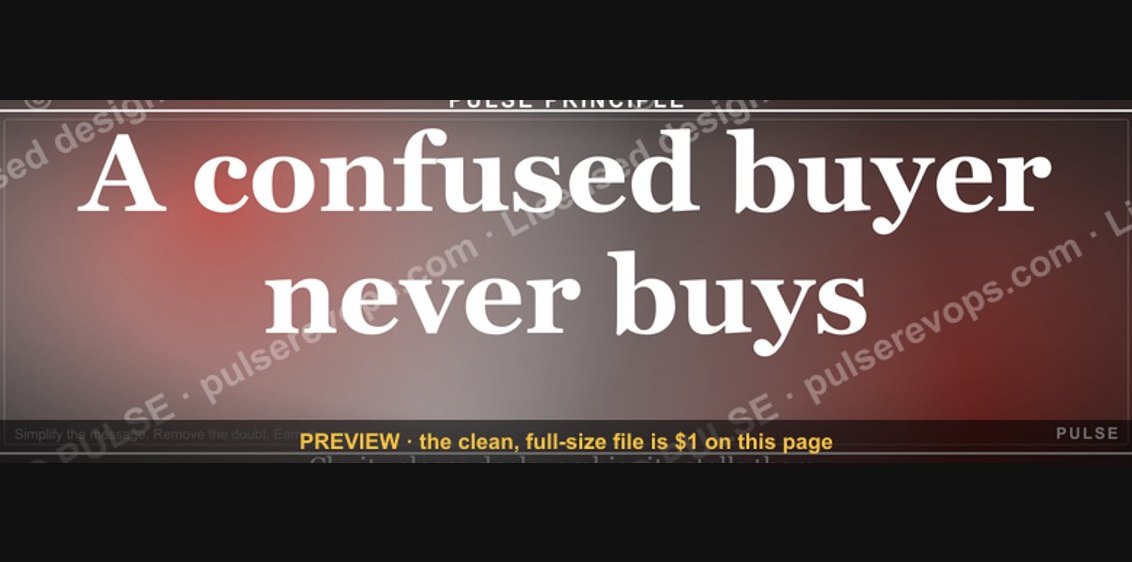 graphic“A confused buyer never buys.” — Quote Card
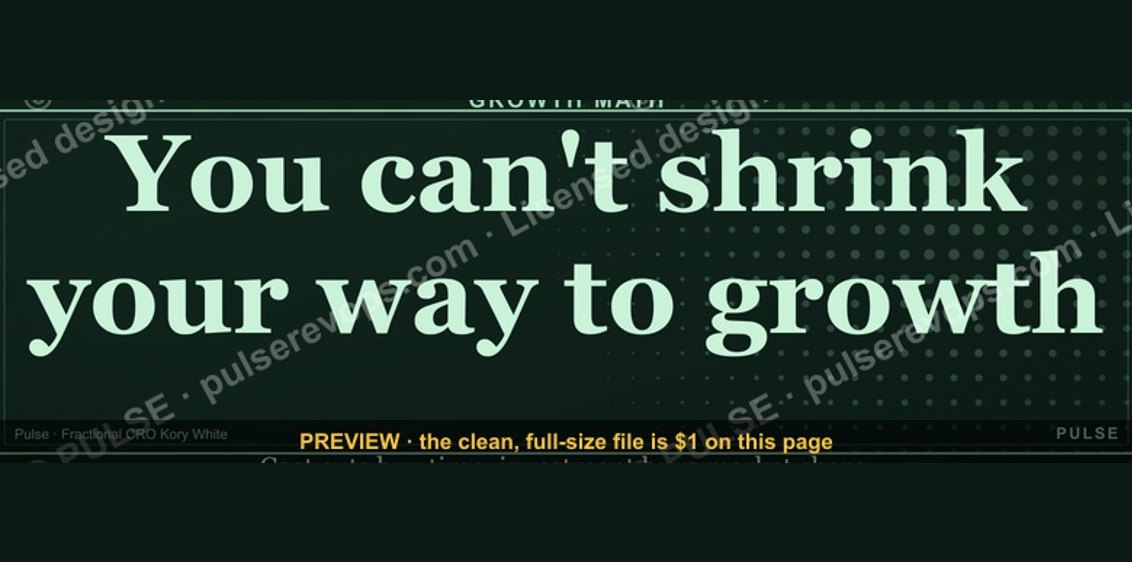 graphic“You can't shrink your way to growth.” — Quote Card
 graphic“Revenue follows relationships.” — Quote Card
 graphic“Slow is smooth. Smooth is fast.” — Quote Card
 graphic“Pipeline Cures All” — Quote Card
 graphic“The riches are in the niches.” — Quote Card
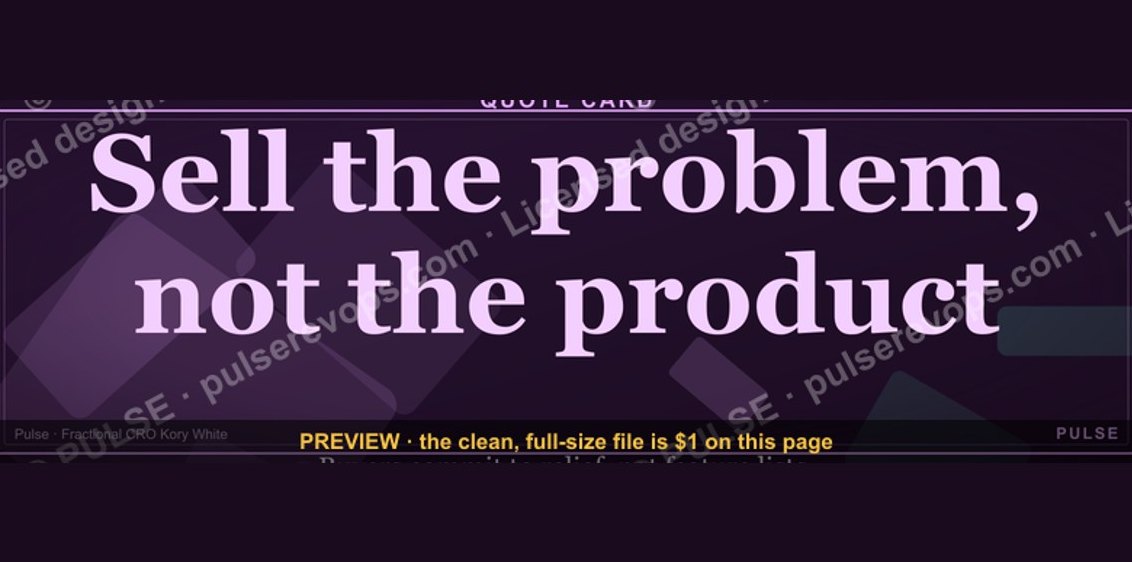 graphic“Sell the problem, not the product.” — Quote Card
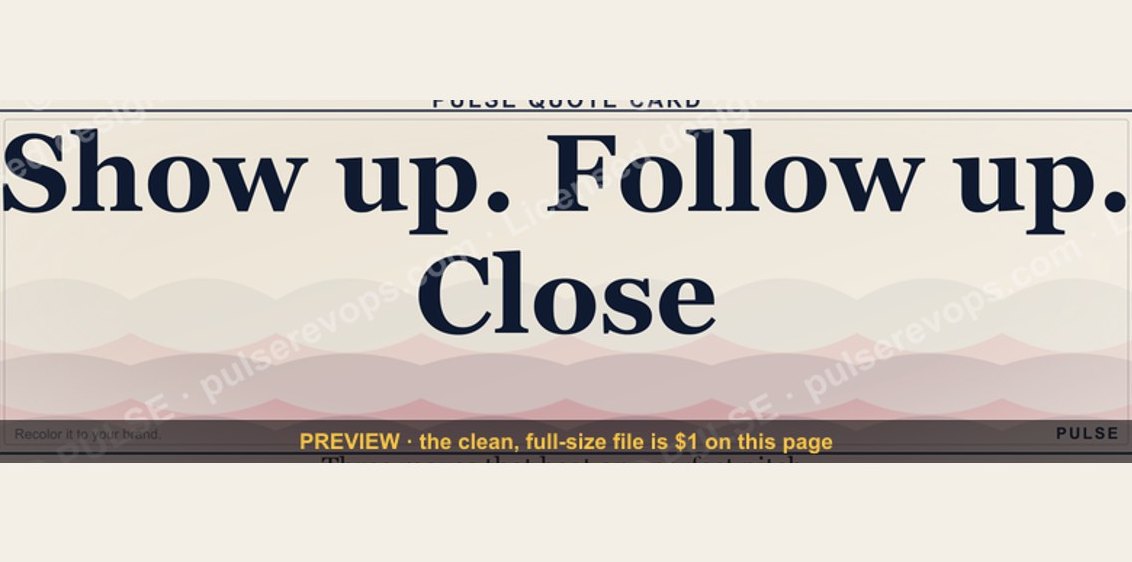 graphic“Show up. Follow up. Close.” — Quote Card
 graphic“Process scales. Heroics don't.” — Quote Card
 graphic“Win the week. The quarter wins itself.” — Quote Card