Pulse ← Industry KPIs
Industry KPIs · industry-kpi
✓ Machine Certified10/10?

What are the key sales KPIs for the Trade Show & Exhibit Services industry in 2027?

📖 9,331 words⏱ 42 min read5/22/2026

What are the key sales KPIs for the Trade Show & Exhibit Services industry in 2027?

Direct Answer

The nine key sales KPIs for the Trade Show & Exhibit Services industry in 2027 are: (1) Projects Booked per Period, (2) Average Project Value, (3) Services Attach Rate, (4) Client Retention Rate, (5) Repeat / Multi-Show Booking Rate, (6) Exhibit Rental / Reuse Rate, (7) Project Gross Margin, (8) Pipeline Coverage vs Show Calendar, and (9) New Client Acquisition.

Together these nine metrics describe the entire revenue engine of a trade show and exhibit services company — a business that designs, fabricates, rents, ships, installs, dismantles, stores, and manages physical exhibits for clients attending conventions and trade shows. They answer four questions a sales leader must answer every week: How many deals are we winning?

How much is each deal worth? How profitably are we delivering it? And how much of that revenue will still be here next year?

Two of the nine — Client Retention Rate and Repeat / Multi-Show Booking Rate — deserve more attention than the rest, because in an industry where the cost to design and build a custom exhibit is high and slow to recover, the economics live or die on whether an exhibitor comes back next show season with the property you already built.

TL;DR

If you run sales for a trade show and exhibit services business, build your scoreboard around these nine KPIs: Projects Booked per Period, Average Project Value, Services Attach Rate, Client Retention Rate, Repeat / Multi-Show Booking Rate, Exhibit Rental / Reuse Rate, Project Gross Margin, Pipeline Coverage vs Show Calendar, and New Client Acquisition.

The order matters. Watch retention and the repeat-revenue metrics first — keeping and re-deploying an exhibitor account beats winning a cold one, because a custom build that gets used at four shows over three years is dramatically more profitable than one used once. Then use the conversion and volume metrics (projects booked, new client acquisition, pipeline coverage) to confirm the top of the funnel is healthy relative to the show calendar.

Finally, use the economics metrics (average project value, services attach rate, project gross margin) to find where revenue and profit are leaking inside deals you already won. This is a seasonal, project-based business: a metric that looks fine on a trailing-twelve-month basis can be hiding a catastrophic gap against the next peak show season.

Always read these KPIs against the calendar, never against a flat clock.


Why Trade Show & Exhibit Services Revenue Works Differently

Most sales-KPI frameworks were written for software or for steady-state recurring-service businesses. Trade show and exhibit services breaks several of their assumptions, and a sales leader who imports a generic dashboard will measure the wrong things. Five structural features make this industry distinct.

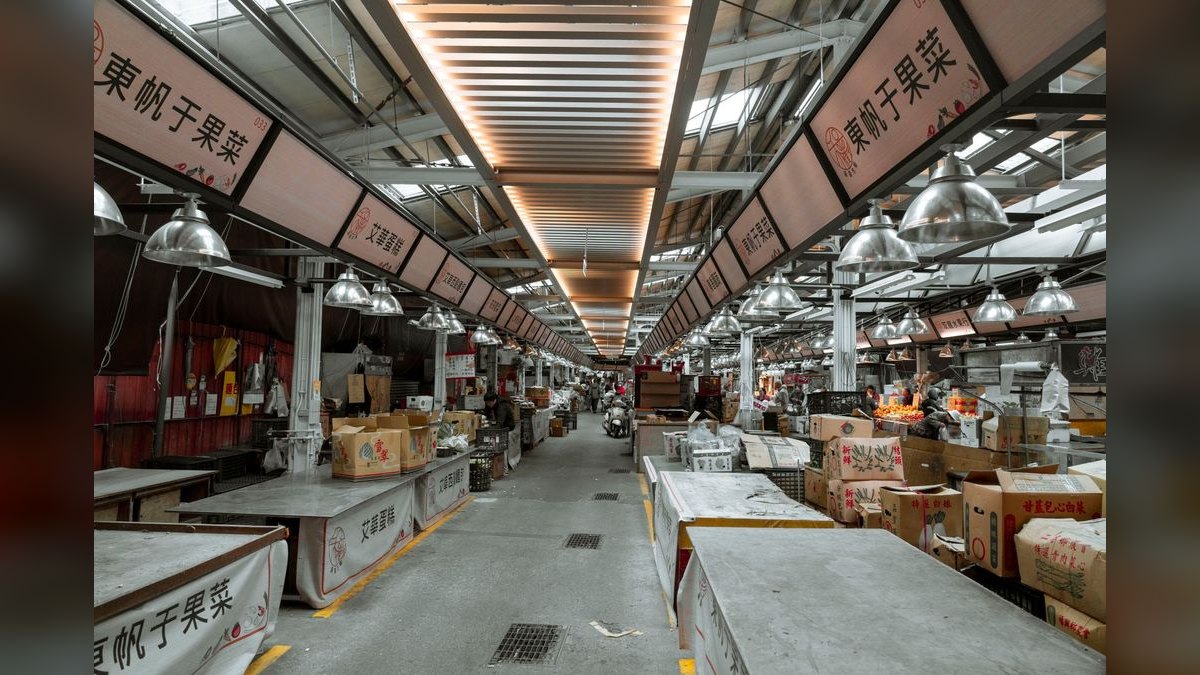
1. Revenue is event-driven and violently seasonal. Exhibitors do not buy on a smooth schedule. They buy against a show calendar — CES in January, HIMSS and Enterprise Connect in the spring, the large medical and manufacturing shows in the fall, and hundreds of regional and vertical events clustered around them.

According to the Center for Exhibition Industry Research (CEIR), which publishes the authoritative *CEIR Index* on B2B exhibition performance, the U.S. exhibition industry runs on a calendar where a large share of total square footage is contracted in a handful of peak months. A trade show company can be 140% of plan in Q1 and 60% of plan in the summer and still be exactly on its annual number.

This is why Pipeline Coverage vs Show Calendar exists as a distinct KPI and why every other KPI must be read seasonally.

2. The product is physical, custom, and capital-intensive. A custom exhibit is engineered and fabricated — wood, metal, laminate, LED, AV integration, custom graphics. The U.S.

Bureau of Labor Statistics classifies much of this work in fabricated structural product and millwork manufacturing, and the labor is skilled and slow. A 20-by-20-foot custom island booth can take hundreds of fabrication hours. That cost is real, it is incurred up front, and it is recovered slowly.

The direct economic consequence: a one-show client is barely profitable, and the entire business model is a bet on Repeat / Multi-Show Booking and Exhibit Rental / Reuse.

3. There are three distinct product economics under one roof. Custom exhibits are high-revenue, high-cost, design-led, and slow. Modular / system exhibits (Octanorm, Aluvision, BeMatrix and similar reconfigurable hardware) sit in the middle — they reuse inventory across clients and reconfigure between shows.

Rental exhibits are the highest-margin and most recurring: the company owns the asset and rents it repeatedly. Average Project Value and Project Gross Margin are nearly meaningless as blended numbers; they must be cut by custom / modular / rental or they will hide the mix shifts that actually move the P&L.

4. A large share of revenue is "show services," not the exhibit itself. Beyond the structure, the exhibitor needs installation and dismantle (I&D) labor, freight to and from the show, drayage / material handling (the often-painful charge for moving freight from the dock to the booth space, billed by hundredweight by the show's general contractor), electrical and rigging, AV, lead retrieval, storage between shows, and on-site supervision.

These services are individually small but collectively can rival the build in revenue, and they carry their own margin profile. Services Attach Rate measures whether the sales team is capturing the full wallet or leaving the logistics revenue to someone else.

5. The best accounts are "programs," not projects. A mature exhibitor does not buy a booth; it runs an exhibit *program* — a portfolio of properties (a 30x30 island, a couple of 20x20s, several 10x10 inline booths) deployed across 8 to 40 shows a year, managed centrally, with asset tracking, refurbishment cycles, and a multi-year design refresh.

Program accounts are the crown jewels: predictable, high-retention, services-rich, and expensive for a competitor to dislodge. Several KPIs below exist specifically to track the conversion of project buyers into program accounts.

flowchart TD A[New Exhibitor Inquiry] --> B{First Project Type} B -->|Rental booth| C[Rental Client] B -->|Modular system| D[Modular Client] B -->|Custom build| E[Custom Client] C --> F[Services Attach: I&D, drayage, electrical, storage] D --> F E --> F F --> G{Books a 2nd show?} G -->|No| H[One-Show Client - low lifetime value] G -->|Yes| I[Repeat / Multi-Show Client] I --> J{Properties + shows centralized?} J -->|No| K[Multi-Project Account] J -->|Yes| L[Program Account - highest retention + margin] L --> M[Multi-year design refresh + refurb cycle] M --> L H --> N{Re-engaged before next season?} N -->|Yes| I N -->|No| O[Churned - rebuild cost lost]

The map above is the revenue engine these nine KPIs instrument. Every KPI in the next section measures one transition on this diagram — the inquiry-to-booking conversion, the project-to-services attach, the one-show-to-repeat conversion, the project-to-program conversion, and the leak at the bottom where churned clients walk away with their rebuild cost stranded.


The 9 Sales KPIs That Matter Most

Each KPI below is broken down five ways: what it measures, why it matters in this specific industry, the benchmark or target to calibrate against, how to act on it when the number moves, and the common failure mode — the way the metric most often gets gamed, misread, or mismeasured.

1. Projects Booked per Period

What it measures. The count of signed, contracted exhibit projects in a defined window — weekly, monthly, or, most usefully in this industry, per show cycle. A "project" is one exhibit engagement for one client at one show (or, for program accounts, one show within the program).

Booked means a signed contract or purchase order with a deposit received, not a verbal yes and not a proposal sent.

Why it matters. Project count is the primary volume signal and the leading indicator for the two scarcest resources in the business: design/engineering capacity and fabrication-shop hours. Exhibits are built to a hard, immovable deadline — the show opens whether the booth is finished or not — so booking velocity has to be matched to shop throughput weeks in advance.

A spike in projects booked without a corresponding plan for labor and shop time does not produce revenue; it produces overtime, outsourced fabrication at thin margin, and quality problems on the show floor. Project count is also the denominator for almost every other KPI here, so it has to be defined cleanly first.

Benchmark / target. There is no universal absolute number — a regional rental house and a national custom builder operate at completely different counts. The right targets are relative: (a) booking pace vs the same point in the prior show cycle (e.g., 80% of projects for the spring season should be booked by the end of the prior November), and (b) booked vs shop capacity expressed as committed fabrication hours against available hours.

A healthy operation enters its peak season with 70–85% of peak-season projects already booked and the balance as named, high-probability pipeline.

How to act on it. Read project count *against the calendar*, not against last month. If bookings for an upcoming peak are behind pace, the lever is not "sell harder in general" — it is to pull forward the specific accounts that historically book that season and to push rental and modular options (faster to deliver) for any late deals.

If bookings are *ahead* of shop capacity, the action is to lock outsourced fabrication partners early at negotiated rates before the season makes them expensive, or to steer marginal deals toward rental inventory.

Common failure mode. Counting proposals or "soft holds" as booked. In a seasonal business, an inflated booked count creates a false sense of security that collapses in the four weeks before a show when soft holds fail to convert. Enforce a single, deposit-based definition of "booked," and track proposals separately as pipeline.

2. Average Project Value

What it measures. Total contracted revenue divided by number of projects, ideally including the full scope — exhibit structure plus attached show services — and ideally reported as a blended figure *and* cut by project type (custom, modular, rental).

Why it matters. Average project value is the monetization metric, but its real job in this industry is to expose mix shift. A custom island build might carry an average value many multiples of a 10x10 inline rental. If blended average project value drops, it can mean three completely different things: prices fell, scope shrank, or the mix tilted toward smaller rental jobs.

Only the first two are problems; the third can actually be *healthy* if those rentals are high-margin and recurring. A blended number alone cannot tell you which, which is why this KPI must always be segmented.

Benchmark / target. Target the *trend within each segment* and the *blended mix*, not an absolute dollar figure. Healthy signals: custom average value flat-to-up year over year (pricing power and scope discipline holding), rental average value stable with rising volume, and a deliberate, planned blended mix.

Set an explicit target for the share of revenue from each segment so a drift is visible as a decision, not an accident.

How to act on it. If custom average value is falling, audit two things: discounting discipline (are reps cutting price to close, or trading concessions for scope and term?) and scope creep absorbed without change orders. If the blended figure is falling purely because rental volume is up, do not "fix" it — instead make sure Project Gross Margin and Exhibit Rental / Reuse Rate confirm the rental growth is profitable, and reframe the goal around total margin dollars rather than average ticket.

For disciplined discount governance that protects average value, the operator playbook in (q9529) and the negotiate-don't-discount framing in (q9537) are directly applicable.

Common failure mode. Measuring exhibit-structure revenue only and excluding show services, which understates true project value by 30–60% and makes the services attach problem invisible. Measure the full client wallet per project.

3. Services Attach Rate

What it measures. The percentage of projects that include one or more attached show-service lines — installation and dismantle (I&D), freight/logistics, drayage coordination, electrical and rigging, AV, graphics, lead retrieval, storage, and on-site supervision — and, in a more advanced cut, the *average number of service lines per project* and *services revenue as a percentage of total project revenue*.

Why it matters. Show services are where margin and stickiness compound. They require no new client acquisition — the exhibitor already needs every one of them, and if your sales team does not sell them, the exhibitor buys them from the show's general contractor or a separate logistics vendor, and you lose both the revenue and the relationship control.

Services also make the account harder to switch: a client whose storage, asset management, and I&D crew you control is far more expensive for a competitor to pry loose than one who only bought a structure. Attach rate is the single fastest lever for growing revenue per account.

Benchmark / target. Target 50–70% of projects carrying multiple service lines, and for program accounts target near-universal attach (90%+). A strong operation also tracks services as a share of total revenue and aims for that share to grow year over year. If attach rate is below 40%, there is a large, immediate revenue opportunity inside the existing book with no new selling required.

How to act on it. Low attach rate is almost always a sales-process problem, not a demand problem. The fixes: make every service line a default line item on the quote template (opt-out, not opt-in); train reps and project managers to position storage and I&D as risk reduction ("your booth shows up on time, undamaged, installed by a crew that knows it") rather than as add-on cost; and compensate on total project margin so reps are not indifferent to the services tail.

Attach selling is structurally similar to land-and-expand motions — the comp-design cautions in (q9526) about not cannibalizing expansion revenue apply.

Common failure mode. Treating attach rate as a binary "any service attached" flag. That hides the difference between a project with one cheap graphics add-on and one with full I&D, drayage, electrical, storage, and supervision. Track the count of service lines and services revenue share, not just the yes/no flag.

4. Client Retention Rate

What it measures. The percentage of exhibitor clients active in the prior 12-month period (or prior show cycle) who book again in the current period. Best practice is to report it three ways: logo retention (did the client come back at all), revenue retention (did the dollars come back), and net revenue retention (did the dollars come back *and grow* through more shows and more services).

Why it matters. Exhibitors exhibit every year — the show calendar repeats — so a retained client is not a one-time win; it is a multi-show, multi-year annuity attached to a property you have already built. Retention is the truest leading signal of revenue durability in this industry.

A company can post a great-looking year on the back of new logos while quietly losing program accounts; the new-logo revenue masks the leak for one cycle and then the bottom falls out. Retention is the metric that strips that illusion away.

Benchmark / target. Target 85–90%+ annual logo retention for the established book, and net revenue retention above 100% — meaning the average retained client grows through additional shows and attached services faster than the book churns. Anything below 80% logo retention signals a structural problem (quality, service, or account management) that no amount of new-business effort can outrun.

The discipline of separating gross, net, and logo retention so the numbers survive scrutiny is covered directly in (q97), (q416), and (q9518), and the same definitions apply cleanly here.

How to act on it. Retention is won in delivery and account management, not in the sale. The actions: instrument a post-show debrief on every project and feed quality and on-time-delivery data back to retention forecasting; build an at-risk flag that fires *before* the next show's booking window, not after a client has gone silent; assign named account ownership for every program account; and run a pre-season re-booking campaign that reaches every prior client well ahead of their historical decision window.

The acquisition-vs-retention operating-model question — who owns the call to shift effort toward defending the base — is laid out in (q9528).

Common failure mode. Measuring retention on a flat 12-month clock instead of on the client's show cycle. A client who exhibits at one fall show looks "churned" every summer and "retained" every fall — pure noise. Measure retention against each client's actual show cadence, and define churn as "missed their expected next show," not "no activity in N days."

5. Repeat / Multi-Show Booking Rate

What it measures. The share of revenue (and the share of clients) coming from exhibitors who book more than one show per period — and, in the strongest version, the share coming from true program accounts running a centrally managed portfolio of properties across many shows.

Why it matters. This is the metric that captures the core economic bet of the business. The cost to design and build a custom exhibit is recovered over its deployments: a property used at one show is barely profitable; the same property used at four shows over three years is excellent.

Multi-show clients amortize the design investment, generate predictable services revenue at every event, and cost almost nothing incremental to sell. They are also far more defensible. Repeat / multi-show rate is the difference between a business that re-wins its revenue from scratch every year and one that compounds.

Benchmark / target. Target 55%+ of revenue from multi-show clients as a baseline, with mature operators pushing well past that. Separately, track the conversion rate from first-time client to repeat client — what percentage of new logos book a second show within 12 months — and target steady improvement, since this conversion is the leading indicator of next year's repeat base.

How to act on it. The lever is to engineer the first project for repeatability and to make the second booking easy. Design first projects (especially custom) with reconfigurability in mind so the property can flex across booth sizes. At project close, present the client's *next* show on the calendar as the natural follow-on and offer a program agreement — multi-show pricing, asset management, and a refurbishment plan.

Track which new logos convert and which go quiet, and intervene on the quiet ones inside the 12-month window. The first-time-to-repeat conversion is the same shape as the ramp-and-onboarding problem in (q467) — a structured early experience drives the second commitment.

Common failure mode. Counting a client who happens to do two unrelated one-off projects as "multi-show" and treating that as equivalent to a program account. They are not. A program account has centralized properties, a refresh cycle, and switching costs; two coincidental projects have none of that. Track program accounts as their own tier.

6. Exhibit Rental / Reuse Rate

What it measures. The percentage of projects fulfilled using company-owned rental inventory or reconfigured existing client-owned properties rather than net-new custom fabrication — plus the utilization / turns on the rental fleet (how many times each rentable asset is deployed per year).

Why it matters. Rental and reuse convert capital assets into recurring, high-margin revenue. A rental booth that turns six or eight times a year is one of the most profitable things a trade show company owns: the fabrication cost is sunk, and each deployment is mostly margin after refurbishment, freight, and labor.

Reuse — reconfiguring a client's existing custom property for a new show rather than building new — protects margin and accelerates delivery, which matters enormously for late-booking deals. A rising rental/reuse rate usually means the business is getting more profitable and more resilient to seasonal swings, because rental can be sold and delivered faster than custom.

Benchmark / target. There is no single right number — a pure custom-design house will run a low rental rate by strategy — but every operator should track fleet utilization (turns per asset per year) and drive it up, and should know its rental rate as a deliberate target rather than an accident.

For operators with a meaningful fleet, six-plus turns per year on core rentable assets is a healthy signal. The KPI framework for rental-asset utilization is closely related to the equipment-rental industry metrics in (ik0043), where time- and dollar-utilization of a fleet is the central economic measure.

How to act on it. If utilization is low, the fleet is too big, too undifferentiated, or poorly merchandised — audit which assets sit idle and either retire them or reposition pricing. If rental demand is outstripping inventory in peak season, that is a capital-allocation signal: model the payback on adding rentable units against the seasonal demand curve before buying.

Train sales to lead with rental for late deals and for clients testing a new show, since speed-to-floor is a genuine selling point.

Common failure mode. Tracking rental *revenue* without tracking *utilization*. Rental revenue can look fine while half the fleet sits in storage — the working assets carry the idle ones, and blended margin hides it. Always pair the rate with turns-per-asset.

7. Project Gross Margin

What it measures. Gross margin percentage on completed exhibit projects — revenue minus direct project cost (materials, fabrication labor, outsourced build, freight, drayage, I&D labor, electrical, on-site supervision) — reported per project, and segmented by custom / modular / rental.

Why it matters. This industry has more ways to lose margin between contract signing and show close than almost any other. Drayage and material-handling charges from the show's general contractor are notoriously volatile and easy to under-estimate in the quote. I&D labor at union show halls is expensive and rule-bound.

Custom fabrication overruns on hours. Last-minute change orders get absorbed instead of billed. Freight gets expedited because a deadline slipped.

Every one of these eats the margin that looked fine on the proposal. Project gross margin is the metric that catches the gap between *quoted* margin and *realized* margin — and that gap is where the profit of the business actually lives.

Benchmark / target. Target 30–45% project gross margin, with the realistic range depending heavily on mix: rental and reuse projects should sit at the top of that band (often higher), full custom builds toward the middle, and any project with a large pass-through services component naturally lower as a percentage even when margin *dollars* are healthy.

The more important target is the quoted-vs-realized variance: keep realized margin within a few points of quoted margin, and treat any project that misses quoted margin by more than 5 points as a reviewable event.

How to act on it. Run a margin post-mortem on every completed project and tag the *cause* of every miss — drayage estimate, fabrication hours, change orders not billed, expedited freight. The pattern in the tags tells you whether to fix estimating (better drayage and labor assumptions in the quote), fix process (a real change-order discipline), or fix pricing.

Build the known-volatile costs into the quote with a contingency, and make change orders a billable event with a signature, not a favor. Justifying the deal-desk or estimating rigor that protects margin is the exact ROI argument in (q9531).

Common failure mode. Reporting only quoted/proposal margin and never reconciling to realized margin after the show. A business that does this can run for years believing it earns 40 points while actually earning 25, and never know which projects bled. Always reconcile post-show.

8. Pipeline Coverage vs Show Calendar

What it measures. The ratio of (booked revenue + weighted pipeline) to the revenue target for an upcoming, specific show season — not a rolling quarter, but the actual peak period the business must cover.

Why it matters. Seasonality makes this the most industry-specific KPI of the nine. Because revenue clusters around show seasons and exhibits take weeks to design and build, the business must be able to *see* whether an upcoming peak is covered far enough in advance to do something about a gap.

A generic rolling-quarter pipeline number is dangerously misleading here: it can look healthy on average while a specific peak season is badly under-covered. Pipeline coverage anchored to the calendar is the early-warning system that prevents a season from being lost before anyone notices.

Benchmark / target. Target 2.5–3x weighted pipeline coverage of each season's revenue target at the start of that season's selling window, tightening toward 1.0–1.2x of *booked* revenue as the season's build deadlines approach. The exact multiple is mechanical, not a rule of thumb: required coverage equals the season's target divided by the company's recent season-pipeline conversion rate, plus a safety buffer.

A business converting season pipeline at 40% needs roughly 2.5x; one converting at 30% needs closer to 3.3x; one at 60% can run nearer 1.7x. The discipline of building coverage targets off real conversion history rather than a generic 3x rule is the substance of the pipeline-review playbooks in (q9519) and (q9638).

How to act on it. Read coverage season by season. If a specific peak is under-covered with enough runway left, the response is targeted: re-engage the accounts that historically book that season but have not yet, and lean on faster-to-deliver rental and modular options for the remaining gap.

If a peak is under-covered with *no* runway left, the honest move is to reset the season forecast and protect margin rather than chase impossible custom builds into overtime. If coverage is far *above* target, the constraint shifts to shop and design capacity — pre-book outsourced fabrication before the season prices it up.

Common failure mode. Measuring pipeline coverage as a single blended company number across all future periods. That blends a well-covered spring with an empty fall and reports a comforting average that describes neither. Coverage must be sliced per show season to mean anything.

9. New Client Acquisition

What it measures. The count — and the booked revenue — of brand-new exhibitor clients booking a first project, ideally segmented by source (referral, show-floor prospecting, inbound, competitive displacement) and by first-project type.

Why it matters. Even with strong retention, the base leaks: companies merge, cut exhibit budgets, exit shows, or go out of business. New client acquisition is what offsets that natural attrition and, more importantly, builds the *future* repeat and program base — every program account was once a first project.

Acquisition is the renewal fuel for the compounding machine. But it is also the most expensive and slowest revenue in the business, so it must be sized deliberately, not maximized blindly.

Benchmark / target. Set a per-season new-client target sized to (a) replace expected attrition plus (b) deliver the planned net growth of the recurring base. The more sophisticated target tracks the new-client-to-repeat conversion rate — what share of this season's new logos book a second show within 12 months — because new logos that never repeat are low-value churn, not real base growth.

A healthy operation also watches new-client acquisition *cost* relative to first-project margin so it does not buy revenue that never pays back.

How to act on it. Treat acquisition as portfolio-balanced against retention, not as a standalone race. If retention is strong and the base is growing, modest, high-quality acquisition is enough — over-investing in new logos at the expense of defending program accounts is a classic value-destroying mistake.

If retention is weak, fix retention *first*; pouring new clients into a leaking bucket only hides the leak for one cycle. Steer acquisition toward sources that historically convert to repeat (referrals from program accounts, competitive displacements at shows) over pure cold volume.

The framework for who owns the acquisition-vs-retention balance and how often that emphasis should flip is in (q9528).

Common failure mode. Celebrating gross new-logo count while ignoring the conversion-to-repeat rate. A team that books many first projects that never come back is generating churn-shaped revenue and an inflated activity number, while the actual recurring base stagnates. Always pair the acquisition count with the second-show conversion rate.


The 9 KPIs at a Glance

#KPIWhat it measuresBenchmark / targetCadence
1Projects Booked per PeriodCount of signed, deposit-backed exhibit projects70–85% of peak-season projects booked entering the season; booked vs shop capacityWeekly + per show cycle
2Average Project ValueFull-wallet revenue per project, segmented by typeTrend up/flat within each segment; deliberate blended mixMonthly
3Services Attach Rate% of projects with multiple service lines50–70% multi-line; 90%+ for program accountsMonthly
4Client Retention Rate% of prior clients re-booking; logo / revenue / net85–90%+ logo retention; NRR >100%Per show cycle + quarterly
5Repeat / Multi-Show Booking RateShare of revenue from multi-show clients55%+ of revenue from multi-show clientsQuarterly
6Exhibit Rental / Reuse Rate% fulfilled by rental/reuse; fleet utilizationDeliberate target; 6+ turns/yr on core rental assetsMonthly
7Project Gross MarginRealized GM% per completed project30–45%; realized within ~5 pts of quotedPer project + monthly
8Pipeline Coverage vs Show Calendar(Booked + weighted pipeline) ÷ season target2.5–3x at season open; ~1.1x booked near deadlinesWeekly, per season
9New Client AcquisitionCount + revenue of first-project clientsSized to attrition + planned growth; watch repeat conversionPer show cycle

How the KPIs Connect: Leading vs Lagging

These nine KPIs are not a flat list — they form a chain. Some are leading indicators that move first and predict the future; some are lagging outcomes that confirm what already happened. Reading them in the wrong order is the most common analysis mistake in this industry.

KPITypePredicts / confirmsReview rhythm
Pipeline Coverage vs Show CalendarLeadingPredicts whether the season's revenue will landWeekly
Projects Booked per PeriodLeadingPredicts shop load and near-term revenueWeekly
New Client AcquisitionLeadingPredicts future repeat/program basePer cycle
Services Attach RateMixedDrives revenue per account; signals process healthMonthly
Average Project ValueLaggingConfirms monetization and mix decisionsMonthly
Exhibit Rental / Reuse RateMixedDrives margin and delivery speedMonthly
Project Gross MarginLaggingConfirms delivery and estimating disciplinePer project
Repeat / Multi-Show Booking RateLaggingConfirms the compounding base is realQuarterly
Client Retention RateLaggingConfirms revenue durabilityPer cycle / quarterly

The practical rule: review leading indicators weekly so problems surface with runway to fix them, and review lagging outcomes monthly or per cycle to confirm strategy is working. A sales leader who only watches retention and margin (both lagging) is steering by the rear-view mirror — by the time those numbers move, the season that caused them is already over.

flowchart TD A[Pipeline Coverage vs Show Calendar] --> B[Projects Booked per Period] C[New Client Acquisition] --> B B --> D[Services Attach Rate] D --> E[Average Project Value] B --> F[Exhibit Rental / Reuse Rate] F --> G[Project Gross Margin] E --> G D --> H[Repeat / Multi-Show Booking Rate] G --> H H --> I[Client Retention Rate] I -->|Retained accounts re-enter pipeline| A G -->|Margin funds reinvestment| C style A fill:#e3f2fd style I fill:#e8f5e9 style G fill:#fff3e0

The loop is the point. Strong retention (bottom) refills pipeline coverage (top) with the lowest-cost, highest-margin revenue in the business, and healthy margin funds the acquisition that builds next year's retained base. Break any link — let attach rate fall, let realized margin slip, let a season go under-covered — and the loop degrades into a business that re-buys its revenue from scratch every year.


The Economics Underneath the KPIs

The nine KPIs are instruments; the economics they instrument deserve their own section, because a sales leader who does not understand *why* the targets are set where they are will misread the dashboard the first time conditions change.

The recovery curve on a custom build

The defining number in this industry is the deployment-recovery curve. When a custom island exhibit is fabricated, the company has spent design hours, engineering hours, material cost, and skilled fabrication labor before the property ever reaches a show floor. That cost is recovered across deployments — each show the property attends contributes margin against the sunk build cost.

A single deployment recovers only a fraction of it; the project is, in isolation, close to break-even or modestly profitable. The second deployment is where the property turns genuinely profitable, and by the third and fourth it is contributing the kind of margin that funds the business.

This is the entire mathematical reason Repeat / Multi-Show Booking Rate and Client Retention Rate sit at the top of the priority order. It is not a soft preference for loyalty — it is the shape of the cost curve.

The same curve explains why a churned client is so expensive. When an exhibitor walks away after one or two shows, the unrecovered build cost is stranded — the property either sits in storage as dead capital or gets cannibalized for parts. The "cost of churn" in this industry is not just lost future revenue; it is a sunk fabrication cost that will never be fully recovered.

This is why the at-risk flag in the CRM must fire *before* the next booking window, and why retention is a delivery-and-account-management discipline, not a sales-closing discipline.

Why rental inverts the curve

Rental economics run the recovery curve in the company's favor instead of the client's. When the company owns the rentable property, *it* controls the deployment count. A rental booth that turns six or eight times a year recovers its build cost in a single season and then becomes one of the highest-margin revenue streams the business has.

Each subsequent deployment is mostly margin after refurbishment, freight, and labor. This is why Exhibit Rental / Reuse Rate is paired with fleet utilization: the rate alone says how much business runs through rental, but utilization says whether the company is actually winning the recovery race on its own assets.

A large fleet at two turns per year is a capital trap; a lean fleet at eight turns is a profit engine.

Fulfillment modelWho owns deployment countBuild-cost recoveryMargin profileDelivery speed
Custom (one-show client)ClientSlow / often incompleteThin until repeatSlow
Custom (program account)Client, but recurringStrong over 3-4 showsHealthy and compoundingSlow first build, fast reuse
Modular / systemShared across clientsFast — inventory reusedSolidModerate
RentalCompanyFastest — company-controlledHighest after first seasonFast

Where the margin actually leaks

Project Gross Margin carries a 30-45% target, but the realized number lives or dies on four cost categories that are notoriously hard to estimate at quote time. Drayage and material handling — the general contractor's charge to move freight from the loading dock to the booth space, billed by hundredweight (cwt) — is volatile, venue-specific, and routinely under-estimated; general-contractor exhibitor service manuals from Freeman and GES publish drayage rate cards per 100 lb that vary materially by venue and by advance-vs-show-site receiving, which is exactly why a single blended drayage assumption in a national builder's quote template systematically misprices the cost.

I&D labor at union convention halls is expensive, rule-bound, and subject to overtime when a build runs late. Fabrication-hour overruns on custom projects happen whenever a design is signed before it is fully engineered. And expedited freight is the silent killer — every slipped internal deadline gets paid for in air freight or premium ground at the end.

A quote that does not carry explicit contingency for these four will systematically over-promise margin. The estimating discipline that closes the quoted-vs-realized gap is the same deal-desk rigor whose ROI is argued in (q9531), and the discount-governance machinery in (q9529) is what stops reps from giving that contingency away to close.


A Worked Example: Reading the Scoreboard

Numbers in isolation do not teach. Consider a mid-size regional exhibit house — call it a company running roughly 180 projects a year across custom, modular, and rental, with a book that is about 60% repeat clients. Here is a season's scoreboard and how a sales leader should read it.

KPIThis seasonPrior cycleTargetRead
Projects Booked (spring peak)717875Behind pace — investigate
Average Project Value (custom)flatflatflat/upHolding — fine
Average Project Value (blended)down 9%—deliberateMix shift, not price
Services Attach Rate44%51%50-70%Falling — real problem
Client Retention (logo)88%89%85-90%Healthy
Client Retention (net revenue)96%103%>100%Warning — accounts shrinking
Repeat / Multi-Show Rate58%57%55%+Fine
Rental / Reuse Rate (fleet turns)4.15.36+Fleet underutilized
Project Gross Margin (realized)31%36%30-45%Bottom of band — slipping
Pipeline Coverage (fall season)1.9x2.8x2.5-3xUnder-covered — act now

The naive read is "logo retention is 88%, repeat rate is fine, we are basically healthy." The correct read is the opposite. Three signals are flashing in the same direction. Net revenue retention has fallen from 103% to 96% while logo retention barely moved — meaning the accounts came back but downsized.

Services attach rate dropped 7 points — the team is not capturing the logistics wallet, which is both lost revenue *and* part of why net retention fell. And realized gross margin slipped 5 points to the bottom of the band while fleet turns fell from 5.3 to 4.1. Put together, the story is not "we are fine" — it is "our accounts are quietly shrinking, we are leaving services revenue on the table, and our rental fleet is too big for current demand." Meanwhile fall pipeline coverage at 1.9x with the season's build deadlines approaching is the most urgent number on the page: it demands immediate re-engagement of the accounts that historically book fall, before there is no runway to build anything.

This is the entire point of reading the nine KPIs as a connected system rather than a checklist. Any one number looked acceptable. Together they told a clear, actionable, and uncomfortable story.


The 12-Month Operating Rhythm

Because the business is calendar-driven, the KPI review cadence should be calendar-driven too. A generic "monthly business review" misses the seasonal structure. The rhythm below maps the scoreboard to the show year.

PhaseTiming relative to peakKPI focusKey actions
Pre-season build4-6 months outPipeline Coverage, Projects BookedRe-engage prior-season clients; lock outsourced fab capacity; offer program agreements
Booking window2-4 months outProjects Booked, New Client Acquisition, Services AttachConvert pipeline; default services onto every quote; steer late deals to rental/modular
Build & deliver0-2 months outProject Gross Margin (quoted), shop capacityLock change-order discipline; manage freight; protect realized margin
Show seasonThe peakOn-site service delivery, supervisionCapture on-site upsell; collect post-show debrief data
Post-season0-2 months afterProject Gross Margin (realized), RetentionReconcile quoted vs realized margin; run post-mortems; fire at-risk flags
Off-seasonTroughRetention, Repeat Rate, fleet utilizationPre-season re-booking campaign; fleet audit; design-refresh planning for program accounts

Two things make this rhythm work. First, the pre-season re-booking campaign in the off-season trough is the highest-leverage sales activity in the calendar — it is where retention is actually won, well ahead of the client's decision window. Second, the post-season margin reconciliation is non-negotiable: a business that never reconciles quoted to realized margin will believe a fiction about its own profitability for years.

The structured weekly pipeline review threads through every phase as the operating heartbeat — the playbook for running it as forecast discipline rather than theater is in (q9519), and the broader question of who owns the seasonal shift in emphasis between defending the base and chasing new logos is in (q9528).


Putting the Scoreboard in Your CRM

A specialized analytics platform is not required. A well-configured CRM and a disciplined cadence will run all nine KPIs. The work is in the setup.

Build the fields once. Every project record needs structured fields the KPIs depend on: project type (custom / modular / rental), show name and show date, season tag, exhibit-structure revenue, services revenue by line, quoted gross margin, realized gross margin, account tier (new / repeat / program), and the client's expected next show.

KPIs you cannot pull from clean structured data will quietly stop being tracked within a quarter.

Model the show calendar as a first-class object. This is the configuration step generic CRMs miss. Create a shows table with dates and seasons, link every project to a show, and set every account's expected re-booking window off its show history. Without this, Pipeline Coverage vs Show Calendar and a correct, cycle-aware Client Retention Rate are impossible to compute.

Build one dashboard per role. Reps see their own accounts, their booking pace vs prior cycle, and their attach rate. Project managers and estimating see quoted-vs-realized margin by project. Sales leadership sees retention, repeat rate, pipeline coverage by season, and the full nine-KPI scoreboard. Same underlying data, three different cuts.

Automate the early-warning flags. The CRM should fire an at-risk alert when a prior client passes its historical decision window without re-booking, when a season's pipeline coverage drops below target with runway remaining, and when a completed project's realized margin misses quoted margin by more than 5 points.

Alerts before the deadline; reports after.

Tie every KPI to a record and an owner. A missed number must resolve to specific accounts, specific projects, and a named person — so the metric produces an action, not just a chart. The cadence that makes this real is a structured weekly pipeline review, run as forecast discipline rather than status theater; the operator playbook for that meeting is in (q9519).

CRM elementPurposeFeeds these KPIs
Project type field (custom/modular/rental)Segment economics2, 6, 7
Shows table + season tagsCalendar-aware analysis1, 4, 8
Services revenue by lineCapture full wallet2, 3
Quoted vs realized margin fieldsCatch the margin gap7
Account tier (new/repeat/program)Track compounding4, 5, 9
Expected-next-show fieldCycle-aware retention4, 5
At-risk + coverage alertsEarly warning4, 8

Counter-Case: When These KPIs Mislead

Every KPI on this list can point a sales leader in exactly the wrong direction under the right conditions. A serious operator knows the failure modes before trusting the dashboard. This section is the adversarial read — the case *against* taking these nine numbers at face value.

Retention can hide a slow-motion downgrade. Client Retention Rate, measured as logo retention, will report 90% even if every retained account quietly downsized from a 30x30 custom island to a 10x10 rental inline and dropped half its services. The logos came back; the revenue did not.

Logo retention with no revenue or net-revenue retention beside it is one of the most flattering, most misleading numbers in this industry. Always read all three retention cuts together — the discipline of separating logo, gross, and net retention so a downgrade cannot hide is exactly the problem worked through in (q416) and (q9518).

A "good" gross margin can mask a capacity disaster. Project Gross Margin can look excellent in a season where the team simply turned away every marginal deal and ran the shop at 60% utilization. Consider the trap directly: a shop that books 40 projects at 42% margin can earn fewer total margin dollars than the same shop booking 60 projects at 34% margin — the lower-percentage season is the more profitable business, with the crew fully employed and fixed fabrication overhead spread across more work.

High margin percentage, low margin *dollars*, idle fabrication capacity, and a furloughed crew is a worse outcome wearing a better number. Margin percentage without absolute margin dollars and shop-utilization context describes a healthier business than the one that actually exists.

Mix matters too: a project that is 70% pass-through services will show a low GM% even when its margin dollars are perfectly healthy — punishing that project for a "low" percentage is a real and common error.

Pipeline coverage is only as honest as the win-rate assumption under it. A reported 3x coverage built on a stale 60% win-rate assumption is actually 1.5x coverage if the real conversion rate has fallen to 30%. Coverage ratios inherit every bit of optimism baked into deal weighting and probability.

In a seasonal business the cost of that error is asymmetric — discover it in the four weeks before a peak and there is no runway to build anything. Re-derive the coverage multiple from *recent* conversion history every season; do not trust a multiple set last year.

Services attach rate can be inflated by trivial add-ons. A binary attach flag will read 80% if four-fifths of projects carry a cheap graphics reprint, while the genuinely valuable, sticky services — full I&D, drayage coordination, electrical, storage, supervision — are barely sold.

The flag says the team is doing great; the revenue and stickiness say otherwise. Always measure service lines per project and services revenue share, never the yes/no flag alone.

Repeat rate counts loyalty that may not exist. A client who books two unrelated one-off projects registers as "multi-show" and inflates the repeat rate, but has none of the switching costs, centralized properties, or refresh cycle of a real program account. The repeat-rate number can look strong while the genuinely defensible program base is flat or shrinking.

Track program accounts as their own tier so coincidental repeats cannot disguise a weak core.

New client acquisition rewards activity that may be churn. A gross new-logo count celebrates first projects that never come back the same as ones that become programs. A team can hit its acquisition target every cycle and grow the recurring base by zero. Acquisition is only as valuable as its conversion-to-repeat rate.

Seasonality breaks every KPI read on a flat clock. This is the meta-failure. Project count, retention, pipeline coverage, average value — every one of them, measured on a rolling 30- or 90-day window, generates pure noise driven by where the calendar happens to sit. A summer trough looks like a collapse; a January peak looks like a boom; neither is a trend.

The single most important guardrail for this entire scoreboard: measure every KPI against the show calendar and prior-cycle comparables, never against a flat clock.

The deeper point: KPIs are instruments, not decisions. They tell a sales leader where to *look*. The judgment — is this mix shift strategy or drift, is this margin number capacity discipline or capacity waste, is this coverage gap a sprint or a lost season — still belongs to a human who understands that this is a seasonal, capital-intensive, relationship-driven business and not a SaaS dashboard.


How This Compares to Adjacent Industries

Trade show and exhibit services sits at the intersection of three industries that have their own KPI frameworks. Borrow from each, but adjust for what is genuinely different.

DimensionTrade Show & Exhibit ServicesEvents / Entertainment (ik0011)Logistics / Freight (ik0018)Industrial Equipment Rental (ik0043)
Primary revenue unitProject / program accountEvent / productionShipment / contract laneRental contract / asset
Recurring driverMulti-show repeat + rental fleetRepeat client / venueContract freight, lane densityFleet utilization, contract renewal
Core margin riskDrayage, I&D labor, fab overrunsProduction cost, talentFuel, capacity, empty milesMaintenance, idle assets
SeasonalitySevere — show calendar drivenHigh — event calendarModerate — peak shippingModerate — construction cycles
Standout KPIPipeline Coverage vs Show CalendarRepeat booking rateCost per shipment / lane marginFleet utilization (time + dollar)

The most useful cross-reads: the fleet-utilization discipline from the Industrial Equipment Rental KPI set (ik0043) maps almost directly onto the Exhibit Rental / Reuse Rate metric — both are about driving turns on a capital asset. The repeat-booking and seasonality thinking in the Events / Entertainment KPI set (ik0011) applies to the multi-show and pipeline-coverage KPIs.

And the labor- and project-margin rigor in the Staffing / Recruiting and Logistics frameworks (ik0034, ik0018) is the right model for controlling the I&D-labor and drayage costs that erode Project Gross Margin. The unique-to-this-industry metric, with no clean analog elsewhere, is Pipeline Coverage vs Show Calendar — because no other industry's revenue is quite so tightly chained to an external, fixed, public calendar.


Frequently Asked Questions

Which of these KPIs should we track first? Start with Client Retention Rate and Repeat / Multi-Show Booking Rate. In a business where a custom exhibit's cost is recovered over multiple deployments, keeping and re-deploying an existing account is structurally more profitable than winning a new one.

Those two metrics protect the revenue base; every growth metric only matters once the base is sound. Add Pipeline Coverage vs Show Calendar immediately after, because it is the early-warning system for the next peak season.

How often should we review these KPIs? Review leading indicators — pipeline coverage, projects booked, new client acquisition — weekly, so a gap surfaces while there is still runway to build exhibits to fix it. Review lagging outcomes — retention, repeat rate, average project value, project gross margin — monthly or per show cycle, with a deeper trend review each quarter.

Always read every number against the show calendar, not a flat 30-day window.

What is the single most important KPI for a trade show and exhibit services business? No single KPI tells the whole story, but if forced to choose, Client Retention Rate measured as net revenue retention is the best leading signal of revenue durability. A net retention above 100% means retained accounts are growing through more shows and more services faster than the book churns — the compounding engine is working.

A weak number means new business is just refilling a leaking bucket.

Do these benchmarks apply to small businesses too? Yes. The benchmark ranges are starting points drawn from how the industry operates, not regulatory thresholds. A smaller regional rental house or design shop should calibrate against its own trailing 12-month and prior-show-cycle baseline and focus on the *trend* — improving cycle over cycle — rather than hitting an exact number immediately.

The KPIs themselves are scale-independent; the targets flex with the operation.

How are these KPIs different from marketing metrics? These are sales KPIs — they measure how revenue is won, delivered, and retained across projects and accounts. Marketing metrics (show-floor leads generated, brand awareness, content engagement) measure demand creation upstream.

Both matter, but the nine KPIs above are what a sales leader in this industry owns directly and is accountable for.

How should custom, modular, and rental be handled in the same dashboard? Segment everything. Average Project Value, Project Gross Margin, and Exhibit Rental / Reuse Rate are nearly meaningless as blended numbers because the three product economics are so different. Report each KPI by segment and the mix as a deliberate target, so a shift toward rental reads as a *decision* rather than a mysterious drop in average ticket.

What about show-services revenue — is it a separate KPI? Show services (I&D, drayage, freight, electrical, storage, supervision) are captured inside Services Attach Rate and inside the full-wallet definition of Average Project Value. Do not measure exhibit-structure revenue alone — that understates true project value by 30–60% and hides the single fastest revenue lever in the business.

How do we keep seasonality from distorting the numbers? Model the show calendar as a first-class object in the CRM, tag every project to a show and season, and compare every KPI to the *same point in the prior show cycle* rather than to last month. A summer trough and a January peak are calendar artifacts, not trends — only prior-cycle comparables separate signal from seasonal noise.


Bottom Line

The nine sales KPIs for the Trade Show & Exhibit Services industry in 2027 — Projects Booked per Period, Average Project Value, Services Attach Rate, Client Retention Rate, Repeat / Multi-Show Booking Rate, Exhibit Rental / Reuse Rate, Project Gross Margin, Pipeline Coverage vs Show Calendar, and New Client Acquisition — form a connected loop, not a flat list.

Retention and repeat revenue feed pipeline; pipeline and acquisition feed bookings; bookings and services feed margin; margin funds the next cycle of acquisition. Watch the leading indicators weekly and the lagging ones per cycle, segment every economic metric by custom/modular/rental, capture the full client wallet including show services, and — above everything — read every number against the show calendar.

Do that, and the scoreboard stops being a set of charts and becomes what it should be: an early-warning system for a seasonal, capital-intensive, relationship-driven business.


Sources

  1. Center for Exhibition Industry Research (CEIR) — *CEIR Index Report*, annual B2B exhibition industry performance benchmark.
  2. Center for Exhibition Industry Research (CEIR) — exhibition industry attendance and net-square-footage metrics.
  3. CEIR — *How the Exhibition Industry Changes* research series on exhibitor behavior and program accounts.
  4. U.S. Bureau of Labor Statistics — Occupational Employment and Wage Statistics, structural metal and millwork fabrication occupations.
  5. U.S. Bureau of Labor Statistics — Producer Price Index, fabricated structural products and millwork.
  6. U.S. Census Bureau — Service Annual Survey, convention and trade show organizers and related services.
  7. U.S. Census Bureau — North American Industry Classification System (NAICS) definitions for exhibition and convention services.
  8. Exhibitor Magazine — *EXHIBITOR* research on exhibit program budgets and cost-per-square-foot benchmarks.
  9. Exhibitor Magazine — annual exhibit-industry salary and operations surveys.
  10. Trade Show News Network (TSNN) — TSNN Top Trade Shows list and industry calendar data.
  11. International Association of Exhibitions and Events (IAEE) — exhibition industry standards and exhibitor research.
  12. Experiential Designers and Producers Association (EDPA) — exhibit-industry design and fabrication practice guidance.
  13. EDPA — guidance on installation and dismantle (I&D) labor practices and show-services standards.
  14. UFI, the Global Association of the Exhibition Industry — *Global Exhibition Barometer*.
  15. UFI — global exhibition industry economic-impact studies.
  16. Events Industry Council — *Economic Significance of Meetings* study.
  17. Skift Meetings (formerly EventMB) — trade show and exhibition industry trend research.
  18. Freeman — exhibition and event general-contractor reporting on attendee and exhibitor trends.
  19. Freeman — research on drayage, material handling, and show-services cost structures.
  20. GES (Global Experience Specialists) — exhibition services and material-handling industry guidance.
  21. American Marketing Association — guidance on trade show ROI measurement and exhibitor metrics.
  22. Harvard Business Review — research on customer retention economics and the cost of acquisition versus retention.
  23. Bain & Company — research on net revenue retention and customer-loyalty economics.
  24. McKinsey & Company — B2B sales-effectiveness and pipeline-management research.
  25. Gartner — B2B sales analytics and CRM-driven KPI guidance.
  26. Forrester Research — B2B revenue-operations and pipeline-coverage benchmarking.
  27. SiriusDecisions / Forrester — demand-waterfall and pipeline-coverage methodology.
  28. American Rental Association (ARA) — equipment- and asset-rental utilization metrics, applied as an analog for exhibit rental fleets.
  29. Deloitte — research on seasonal-business revenue forecasting and cash-flow management.
  30. U.S. Small Business Administration — guidance on seasonal business financial planning and forecasting.
  31. Trade Show Exhibitors Association / industry exhibitor surveys — exhibitor budget allocation and multi-show participation data.
  32. CEIR — research on the relationship between exhibit space size, services spend, and exhibitor retention.
Download:
Was this helpful?  
Deep dive · related in the library
industry-kpiWhat are the key sales KPIs for the Hospital Medical Gas System Installation & Certification industry in 2027?industry-kpiWhat are the key sales KPIs for the Commercial Solar Battery Energy Storage System (BESS) Integration industry in 2027?industry-kpiWhat are the key sales KPIs for the Industrial X-Ray & Non-Destructive Testing (NDT) Services industry in 2027?industry-kpiWhat are the key sales KPIs for the Architectural Sheet Metal & Custom Flashing Fabrication industry in 2027?industry-kpiWhat are the key sales KPIs for the Commercial EV Fleet Charging Depot Management industry in 2027?industry-kpiWhat are the key sales KPIs for the Industrial Cooling Tower Service & Repair industry in 2027?industry-kpiWhat are the key sales KPIs for the Modular Cleanroom Design & Construction industry in 2027?industry-kpiWhat are the key sales KPIs for the Commercial Solar Panel Cleaning & Soiling Management Services industry in 2027?industry-kpiWhat are the key sales KPIs for the Industrial Crane Inspection & Load Testing Services industry in 2027?industry-kpiWhat are the key sales KPIs for the Commercial Fire & Water Damage Restoration industry in 2027?
More from the library
industry-kpiWhat are the key sales KPIs for the Commercial Tire & Fleet Maintenance industry in 2027?industry-kpiWhat are the key sales KPIs for the Mobile Mining & Quarry Fleet Tire Service industry in 2027?industry-kpiWhat are the key sales KPIs for the Industrial Heat Treating & Metal Finishing Services industry in 2027?industry-kpiWhat are the key sales KPIs for the Industrial Compressed Air Systems industry in 2027?industry-kpiWhat are the key sales KPIs for the Commercial Awning & Canopy Fabrication industry in 2027?start-a-business · radon-mitigationHow do you start a residential radon mitigation business in 2027?industry-kpiWhat are the key sales KPIs for the Equine Boarding & Training Facilities industry in 2027?how-to-start · dump-trailer-rentalHow do you start a dump trailer rental business in 2027?sales-training · price-increaseThe Annual Price Increase Rollout: Running a 60-Minute Team Working Session Where Reps Build and Rehearse the Customer-Specific Conversation That Raises Prices Across the Existing Book Without Triggering Churn — a 60-Minute Sales Trainingindustry-kpiWhat are the key sales KPIs for the Mobile Equipment & OTR Tire Retreading industry in 2027?industry-kpiWhat are the key sales KPIs for the Geotechnical & Materials Testing Services industry in 2027?sales-training · proposal-follow-upThe Proposal Follow-Up Sprint: Running a 60-Minute Team Working Session Where Every Rep Audits Every Delivered-But-Undecided Proposal, Diagnoses Why It Stalled, and Builds a Specific Next Move That Forces a Yes or a No — a 60-Minute Sales Trainingindustry-kpiWhat are the key sales KPIs for the Marine Yacht Detailing & Brightwork Restoration industry in 2027?industry-kpiWhat are the key sales KPIs for the Commercial Solar Carport Construction industry in 2027?