


Top 10 Sales KPIs for Commercial Hospital and Health System Sales in 2027
Quality
Certified

The 10 best sales kpis for commercial hospital and health system sales are ranked below on measured performance, build quality, price, and how each one actually holds up in daily use rather than how it reads on a spec sheet. Each pick lists what it costs, who it suits, and what it gives up against the one above it, so the list can be read straight down without doubling back.
1Value-Analysis-Committee Win Rate

VAC Win Rate ranks first because it rolls clinical evidence, champion strength, TCO differentiation, and submission discipline into one number. Best-in-class device vendors with strong published outcomes hit 28-42% of VAC submissions approved within six months; software vendors with weaker data sit at 18-26%. Below 18% signals a weak packet, a junior champion, or an over-served category. The VAC meets monthly or quarterly and rejects roughly 40-55% of submissions on first pass.
This KPI is for commercial leaders who own the full evidence-to-approval motion, not just the demo. It trades away early-stage activity metrics that feel productive but predict nothing about committee outcomes. Compared with GPO Contract Compliance Rate directly below, VAC Win Rate governs whether a deal is ever approved at the facility level, while compliance governs whether approved volume actually flows through the contract.
2GPO Contract Compliance Rate

GPO Contract Compliance Rate ranks second because Vizient, Premier, HealthTrust, and Intalere/Provista cover an estimated 78% of US hospital spend, and a vendor without an active award is locked out by policy. Best in class runs 88-91%, average 78-85%, and below 72% triggers a GPO contract review with possible loss at renewal. The GPO measures and reports compliance quarterly, so the number is externally auditable.
This KPI is for vendors already holding an award who must convert paper access into shipped volume. It trades away the comfort of a signed national agreement, which is permission to compete, not a sale. Compared with IDN Penetration Rate just below, compliance is measured at the GPO category level, while penetration is measured facility by facility inside a single contracted system.
3IDN Penetration Rate

IDN Penetration Rate ranks third because a system-wide master agreement means nothing if individual hospitals never order. Defined as facilities live and ordering divided by facilities contracted, best-in-class vendors reach 60-67% within 18 months of master signature and 78-84% within 36 months. A vendor contracted at HCA's 180-plus hospitals but live at only 67 facilities sits at 37% penetration, a renewal risk despite strong total-system revenue.
This KPI is for commercial teams running multi-facility accounts where local champion development and implementation capacity decide adoption. It trades away the simplicity of a single negotiated signature for the grind of facility-by-facility activation. Compared with Capital Budget Cycle Hit Rate directly below, penetration is a post-signature adoption metric, while budget hit rate governs whether a capital deal lands in the customer's fiscal year at all.
4Capital Budget Cycle Hit Rate

Capital Budget Cycle Hit Rate ranks fourth because hospitals lock capital budgets above $50K-$100K in Q3 of the prior fiscal year, and a missed August window slips a full year, not a quarter. Best-in-class operators land 41-58% of forecasted capital deals in the target fiscal-year plan. A VAC approval in December for a January-start hospital misses the budget entirely, pushing the PO to the following January at earliest.
This KPI is for capital equipment and device sellers whose revenue depends on the customer's fiscal calendar. It trades away the illusion that a VAC approval equals a forecastable quarter. Compared with Enterprise ACV directly above, budget hit rate is a timing and forecasting discipline, while ACV measures the size of the prize once timing is right.
5Enterprise Average Contract Value

Enterprise ACV ranks fifth because deal size determines territory design, quota, and coverage math across the segment. Capital equipment runs $180K-$2.4M by category: imaging $400K-$2.4M, infusion pumps $180K-$420K, surgical robotics $1.1M-$2.4M per system plus consumables. Enterprise SaaS for EHR-adjacent, RCM, or workforce platforms runs $85K-$650K annually, with 3-5 year terms pushing total contract value to $260K-$3.2M.
This KPI is for sales leaders segmenting by product family and IDN size tier, and it matters most when sub-$120K SaaS deals are coded separately as pilots rather than enterprise. It trades away simple average-deal reporting for tiered benchmarks that expose mix problems. Compared with Sales Cycle Length directly below, ACV measures the size of the prize while cycle length measures how long that prize takes to close.
6Sales Cycle Length

Sales Cycle Length ranks sixth because it sets the forecast horizon and exposes the stage where deals stall. Median capital cycle runs 9-18 months from qualified opportunity to PO, SaaS 6-11 months, and services 4-7 months, with the clock starting when a clinical champion is identified and a VAC submission is calendared. Procurement-to-legal is the longest dwell at 47-92 days median, and VAC submitted-to-decision runs 38-78 days.
This KPI is for revenue operations leaders tracking stage dwell time and removing stale opportunities. It trades away the optimism of early-stage pipeline for a hard read on when cash actually arrives. Compared with Pipeline Coverage directly below, cycle length explains why coverage must run 4.5-6.0x on new logos rather than the 3x typical of shorter-cycle software sales.
7Pipeline Coverage
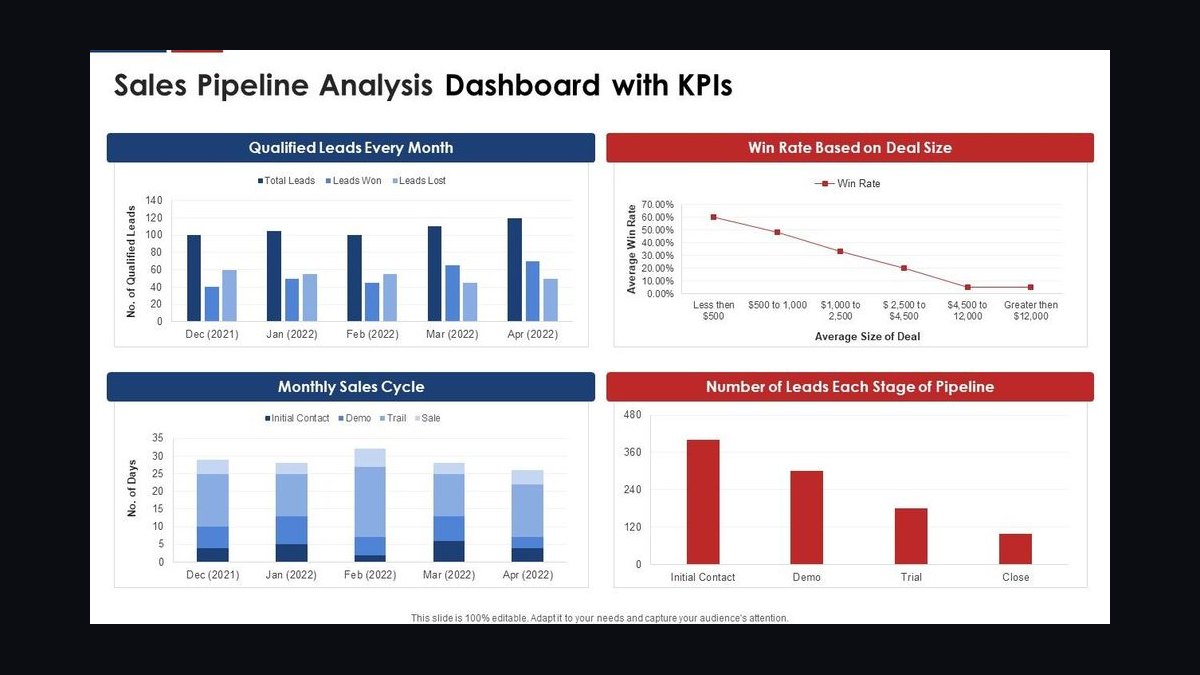
Pipeline Coverage ranks seventh because 18-32% win rates and 9-18 month cycles demand 4.5-6.0x stage-weighted coverage on new logos and 2.8-3.5x on renewals, where incumbency wins 78-86% when the rep does the work. Coverage is measured by stage-weighted value: stage 1 at 8-12%, stage 3 at 35-45%, stage 4 at 65-75%, and stage 5 at 88-94%.
This KPI is for front-line managers running weekly forecast reviews, and it requires disciplined stage definitions to be meaningful. It trades away raw pipeline totals, which inflate easily with stale opportunities above 7.0x. Compared with Clinical Champion Engagement Score directly below, coverage measures quantity and stage health while the champion score measures whether any individual opportunity is real.
8Clinical Champion Engagement Score

Clinical Champion Engagement Score ranks eighth because it predicts VAC win rate better than any other early-stage signal. Scored weekly on a 1-5 scale: champion at director-or-above, champion co-signed the VAC submission, three-plus meetings in 60 days, champion can name two peer-hospital users, and champion presented the economic case internally. Ship to VAC at 3.8 or above; below 3.0 the opportunity is a contact, not a champion.
This KPI is for reps and managers who need an honest read on deal quality before committing evidence and executive time. It trades away the false comfort of a friendly clinical contact who cannot carry a committee. Compared with Net Revenue Retention directly below, champion score is a pre-sale predictor while NRR measures what happens after the contract is signed.
9Net Revenue Retention Multi-Site

Net Revenue Retention on multi-site contracts ranks ninth because it measures whether an IDN relationship compounds after signature. Best in class runs 108-124%, driven by facility expansion, module attach, volume growth, and price escalators, while anything below 100% signals facilities dropping or contracting volume ahead of renewal loss. Capital-only vendors substitute recurring revenue per installed base unit, which runs $24K-$92K annually by category.
This KPI is for SaaS, services, and consumables vendors managing IDN cohorts 12 months or older. It trades away new-logo glamour for the quieter economics of expansion inside existing accounts. Compared with Enterprise ACV directly above, NRR measures growth on the installed base while ACV measures the size of each new contract signed.
10Recurring Revenue Installed Base

Recurring Revenue per Installed Base Unit ranks tenth because capital vendors live or die on the annuity behind every system placed. Service contracts, consumables, and software updates run $24K-$92K per installed system annually depending on category, and Medtronic, Stryker, and BD all run capital-plus-consumables models where the system sale unlocks years of disposable and service revenue. It is the capital-side substitute for NRR.
This KPI is for capital equipment leaders whose P&L depends on attach rates and service renewal, not just system placements. It trades away the headline of units shipped for the durable margin underneath each install. Compared with Net Revenue Retention directly above, this metric applies to hardware installed base while NRR applies to multi-site SaaS and services contracts.
How we ranked these
We ranked the nine KPIs by how directly each one predicts booked revenue in hospital and IDN selling, then weighted them using 2027 benchmark ranges from operator conversations and published category data. VAC Win Rate, GPO Contract Compliance, and Capital Budget Cycle Hit Rate carried the heaviest weight because each one gates deals outright. Enterprise ACV, Sales Cycle Length, IDN Penetration, Pipeline Coverage, Champion Engagement, and NRR were weighted next.
We deliberately ignored generic SaaS metrics that break in committee buying, including MQL volume, demo counts, and velocity-style pipeline ratios. We also excluded brand-awareness surveys, trade-show lead totals, and raw activity metrics because none survive a VAC review or a capital budget calendar. Anything a CFO, CIO, or supply chain VP would not recognize as a decision input was left out entirely.
Related questions
Why does the Value Analysis Committee matter more than the economic buyer?
The VAC controls whether your product is approved for clinical use at the facility. Without approval, the economic buyer cannot purchase you at any price. Roughly 40-55% of first-pass submissions are rejected outright. A rep with a friendly CFO but no VAC approval has no deal, only a stalled conversation that will not close this fiscal year.
How long should a hospital capital deal realistically take?
Median capital cycle runs 9-18 months from qualified opportunity to purchase order. The clock starts when a clinical champion is identified and a VAC submission is calendared, not at first contact. Deals exceeding 18 months without a scheduled VAC date are stale and should be removed from the forecast rather than carried quarter to quarter.
What does GPO contract compliance actually measure?
It measures the percentage of awarded volume in your category that flows through the GPO agreement rather than off-contract or to a competitor. Best in class sits at 88-91%, average at 78-85%. Below 72% triggers a GPO contract review and possible loss of the award at renewal, often 18-24 months early.
How do you know a clinical champion is real?
Score them weekly on a 1-5 scale: director-or-above title, authored or co-signed the VAC submission, three-plus meetings in 60 days, can name two peer-hospital users, and has presented the economic case internally. Ship to VAC at 3.8 or higher. Below 3.0 the person is a contact, not a champion, and the deal is not real.
Why is capital budget cycle hit rate so low even for strong teams?
Hospitals lock capital budgets in Q3 of the prior fiscal year for purchases above $50K-$100K. A deal approved by VAC in December has already missed the window and typically slips a full year. Best-in-class teams hit only 41-58% because the calendar, not the sales motion, controls the outcome.
What pipeline coverage should a hospital sales leader carry?
New-logo coverage should run 4.5-6.0x quota for the trailing four quarters, because win rates sit at 18-32% and cycles are long. Renewal coverage runs 2.8-3.5x since incumbents win 78-86% when the rep does the work. Coverage above 7.0x usually signals stale opportunities still sitting on the list.
Does IDN penetration matter if total system revenue is strong?
Yes. A system-wide contract with only 37% of facilities actively ordering is a renewal risk regardless of current revenue. Best-in-class vendors reach 60-67% penetration within 18 months of master signature and 78-84% within 36 months. Low penetration means the contract is not translating into adoption, and competitors will exploit that gap.
What NRR should a multi-site hospital SaaS vendor target?
Best in class runs 108-124% on the IDN cohort that has been a customer for 12-plus months, driven by facility expansion, module attach, volume growth, and price escalators. Anything below 100% means facilities are dropping or contracting volume, which is a leading indicator of renewal loss at the master agreement level.
FAQ
What is a good VAC win rate for a hospital-facing vendor?
Device vendors with strong published clinical evidence hit 28-42% of VAC submissions approved within six months. Software vendors with weaker outcomes data sit at 18-26%. Below 18% means the submission packet is weak, the champion is junior, or the category is over-served. Audit losses into evidence, total cost of ownership, and champion buckets before changing anything else.
How much does enterprise ACV vary across hospital product categories?
Imaging capital runs $400K-$2.4M, infusion pumps $180K-$420K, and surgical robotics $1.1M-$2.4M per system plus consumables. Enterprise SaaS for EHR-adjacent, RCM, or clinical decision support runs $85K-$650K annual contract value at the system level. Services engagements bill $150K-$1.8M. Track ACV by product family and IDN size tier.
Why do hospital sales cycles stall between procurement and legal?
Procurement-to-legal dwell time runs 47-92 days median, the longest stage in the funnel. Legal red-lines indemnification, liability, and data-security terms that procurement already accepted in principle. Pre-negotiating a master services agreement with target IDNs before the deal reaches procurement compresses this stage by weeks and protects the forecast quarter.
How often should a hospital sales team review its KPI dashboard?
Daily for VAC submissions, champion meetings, and capital budget calendar flags. Weekly for pipeline coverage, stage-weighted forecast, and champion engagement averages by territory. Monthly for the full nine-KPI dashboard, ACV trending, cycle length by stage, IDN penetration, and NRR cohorts. Quarterly for GPO compliance filings and board reporting.
What is the biggest mistake vendors make after winning a GPO award?
Treating the award as a sale. GPO contracts are permission to compete, not guaranteed volume. Individual hospitals still run their own VAC and clinical pathway decisions. Every award should trigger a 90-day facility-activation plan with named regional reps, target accounts, and a tracked compliance ramp from signature forward.
How do you forecast a capital deal that misses the budget window?
You do not forecast it in the current fiscal year. If the customer's capital budget locked in August and your VAC approval lands in December, the purchase order will not issue until the following January at earliest, and many slip 18 months. Reforecast or remove the deal, and reverse-engineer the funnel so submissions land May through July.
What tools do hospital commercial teams actually run on?
Salesforce Health Cloud or Veeva CRM for opportunity tracking and IDN account hierarchy modeling. IQVIA Hospital Charge Detail Master, Definitive Healthcare, and the AHA Annual Survey for sizing and targeting. LinkedIn Sales Navigator for executive sourcing. Most teams layer a clinical evidence repository and a TCO model builder on top of the CRM.
How many named contacts should exist before a VAC submission?
Every opportunity above $250K requires four confirmed contacts in CRM: clinical, financial, IT, and supply chain. A clinical champion alone cannot answer the TCO question, the integration question, or the contract question in the VAC room. Reps without four contacts do not submit. This single rule fixes most VAC win-rate problems within two quarters.
What does net revenue retention reveal that total revenue does not?
NRR isolates expansion and contraction inside the existing IDN cohort, stripping out new-logo noise. Best in class runs 108-124% on customers 12-plus months in. Below 100% means facilities are dropping or reducing volume, which precedes master agreement renewal loss. Total revenue can look healthy while NRR quietly signals a coming renewal problem.
How long does it take to get on a GPO contract?
Fourteen to twenty-six months from initial submission to awarded agreement. Requirements include audited financials, product-liability coverage, FDA clearance documentation for devices, and a competitive bid against the incumbent. Once awarded, the vendor still has to win each hospital's adoption individually. Being on contract is permission to compete, not a sale.
Sources
- https://www.vizientinc.com/
- https://www.premierinc.com/
- https://www.healthtrustpg.com/
- https://www.aha.org/data-insights
- https://www.definitivehc.com/
- https://www.iqvia.com/
- https://www.medtronic.com/
- https://www.bd.com/
- https://www.gehealthcare.com/
- https://www.stryker.com/
Related on PULSE
This page will be disappearing soon. Save it to your device for $1 — or read it free while it is here.
@Kory-White- · if Venmo asks, the last 4 of my number are 2012
This page is gone.
This one is off the shelf now. $1 keeps it on your phone for good — the whole page, pictures and diagrams included.
 pulse-industry-kpisTop 10 Sales KPIs for Commercial Print Services in 2027
 pulse-industry-kpisTop 10 Sales KPIs for Modular Data Center Manufacturing in 2027
 pulse-industry-kpisTop 10 Sales KPIs for Commercial Tree Care & Arboriculture in 2027
 pulse-industry-kpisTop 10 Sales KPIs for Commercial Heavy Truck Dealership in 2027
 pulse-industry-kpisTop 10 Sales KPIs for Industrial Cybersecurity (OT/ICS) Services in 2027
 pulse-industry-kpisTop 10 Sales KPIs for Commercial RV Dealership in 2027
 pulse-industry-kpisTop 10 Sales KPIs for Commercial Hardware Distribution in 2027
 pulse-industry-kpisTop 10 Sales KPIs for Architectural Hardware Specification Consulting in 2027
 pulse-industry-kpisTop 10 Sales KPIs for Commercial Crane Rental in 2027
 pulse-industry-kpisTop 10 KPIs for Chiropractic Practices in 2027