Pulse ← Industry KPIs
Industry KPIs · industry-kpi
✓ Machine Certified10/10?

What are the key sales KPIs for the Commercial Foodservice Grease Trap & FOG Collection Services industry in 2027?

📖 9,537 words⏱ 43 min read5/22/2026

The 9 key sales KPIs for the Commercial Foodservice Grease Trap & FOG Collection Services industry in 2027 are Recurring Service Contract Revenue Share, Route Density, Customer Retention Rate, New Account Acquisition Rate, Revenue per Truck per Day, Average Contract Value, Service Compliance Rate, Gross Margin per Route, and Quote-to-Contract Conversion Rate.

Together these nine metrics tell you whether revenue is healthy, where it is constrained, and which levers actually move it. Tracking them as a connected system — rather than watching top-line revenue alone — is how the operators who win municipal FOG-driven service geographies forecast accurately, defend route margin against volatile disposal and feedstock pricing, and grow without diluting the density that makes every truck profitable.

The fastest way to use this guide: read the lead trio first (KPIs 1, 2, and 3), confirm the other six against the 2027 benchmark bands in Section 2.10, and act on any KPI in the red-flag zone of Section 8.5 the same month it appears.

1. Why Commercial Foodservice Grease Trap & FOG Collection Services Revenue Works Differently

1.1 What the industry actually does

Commercial foodservice grease trap and FOG (fats, oils, and grease) collection services pump out, clean, and maintain the grease interceptors and grease traps installed at restaurants, commercial kitchens, hotels, hospitals, school and corporate cafeterias, supermarkets with deli or bakery operations, and food manufacturing facilities.

A grease interceptor is a passive treatment device — required by plumbing code under the *Uniform Plumbing Code* (UPC) Chapter 10 and the *International Plumbing Code* (IPC) Section 1003 — that separates fats, oils, and grease from kitchen wastewater before it reaches the municipal sewer.

When the trap fills, FOG passes through into the sewer collection system, where it congeals, narrows the pipe, and ultimately causes a sanitary sewer overflow (SSO). The U.S. Environmental Protection Agency has identified FOG as the single largest cause of sewer line blockages nationally, and that fact is the entire economic foundation of this industry: because uncollected grease causes overflows, municipalities mandate that food service establishments (FSEs) pump their interceptors on a fixed schedule, and that mandate converts a messy maintenance chore into a recurring, route-based service business.

The companies in this space run vacuum trucks — typically 1,500 to 4,000 gallon tank capacity — staffed by one or two technicians who drive a daily route of scheduled stops, pump each interceptor, document the volume removed, leave a service manifest, and haul the collected grease waste (called "brown grease" or "trap waste") to a permitted disposal or processing facility.

Many operators also collect used cooking oil (UCO, or "yellow grease") from the same accounts in a separate tank, because yellow grease is a sellable rendering and biodiesel feedstock rather than a waste. The combined service — scheduled trap pumping plus UCO collection, often bundled with drain line jetting and FOG compliance reporting — is the modern shape of the business.

1.2 Key terms used throughout this guide

Because the KPIs below depend on industry-specific vocabulary, it helps to fix the terms first.

TermWhat it means
Grease interceptor / grease trapA passive plumbing device that separates fats, oils, and grease from kitchen wastewater before it reaches the sewer. Larger in-ground units are usually called interceptors; smaller under-sink units, traps.
FOGFats, oils, and grease — the material the device captures and the named target of municipal control ordinances.
Brown grease / trap wasteThe mixed grease, water, and solids pumped out of an interceptor. It is a waste stream with a disposal cost.
Yellow grease / used cooking oil (UCO)Spent fryer oil collected separately. It is a sellable rendering and biodiesel feedstock, not a waste.
FSEFood service establishment — the restaurant, kitchen, or cafeteria that is the customer.
POTWPublicly owned treatment works — the municipal authority whose pretreatment program enforces the FOG ordinance.
ManifestThe service document recording date, volume removed, hauler permit, and disposal site — the customer's compliance proof.
25 percent ruleThe common ordinance trigger requiring a pump-out before FOG and solids fill 25 percent of the device's liquid depth.
Route-dayOne truck operating for one service day — the denominator for density and revenue-per-truck metrics.

1.3 Why the revenue model is structurally different from generic field service

Revenue in this industry behaves differently from a standard field-service or contracting business in five specific ways, and every one of those differences is the reason a particular KPI exists.

Revenue is a regulatory annuity. Customers do not buy grease trap pumping because they want it; they buy it because a municipal FOG control ordinance, enforced by the local sewer authority or publicly owned treatment works (POTW) under its pretreatment program, requires it. Most ordinances follow either a fixed time interval (commonly every 30, 60, or 90 days) or the "25 percent rule" — the interceptor must be pumped before FOG and solids occupy 25 percent of the device's liquid depth, a standard rooted in the model FOG ordinance language promoted by EPA and the Water Environment Federation.

Because the requirement is legal, not discretionary, demand is extraordinarily stable and recurring. That is why Recurring Service Contract Revenue Share is the first KPI.
Profit is created by geography, not by the work itself. The labor of pumping a trap is largely the same whether the next stop is two minutes away or forty minutes away. The truck, the driver, the insurance, and the disposal trip are mostly fixed per route-day. So profit is a function of how many billable stops you can complete between the first pump of the morning and the disposal run at the end.

Pack the stops tightly and the route is highly profitable; spread them across a metro and the same revenue barely covers cost. That is why Route Density and Gross Margin per Route are core KPIs and why thinking in routes — not in individual accounts — is the central management discipline.

A lost account damages more than its own line item. When a restaurant closes, switches providers, or stops paying, you do not simply lose that account's revenue. You lose a stop on a route, which means the truck now drives the same miles for fewer dollars, raising the cost-to-serve on every remaining stop on that route.

Churn is therefore self-amplifying in a way it is not in non-route businesses. That is why Customer Retention Rate sits in the lead trio.

Part of your "cost" is actually a commodity you sell. Used cooking oil collected from accounts is sold into the rendering and biodiesel feedstock market. Yellow grease and UCO prices are quoted in the *Jacobsen* and *USDA Agricultural Marketing Service* rendered-products reports and move with soybean oil, renewable diesel demand, and the federal Renewable Fuel Standard (RFS) D4 RIN value.

When feedstock prices are high, UCO collection is a profit center that can materially lift route economics; when they fall, that cushion thins. This commodity exposure is why Average Contract Value and Gross Margin per Route must be read together and never in isolation.

Your deliverable is documentation as much as it is a clean trap. The FSE must prove to its sewer authority that it pumped on schedule. The manifest you leave — date, volume removed, hauler permit number, disposal facility — is the customer's compliance evidence. If you miss a pump or fail to document it, the customer is exposed to a municipal violation and fine.

Reliability and paperwork are the product. That is why Service Compliance Rate is a sales KPI and not merely an operations metric: in this industry, compliance reliability is the single strongest retention and referral driver.

1.4 The strategic shape of growth

Put those five forces together and the strategy becomes clear. The prize is to win enough accounts inside a defined service geography to build dense, efficient routes; lock those accounts into compliant recurring agreements that renew automatically; price the route to keep margin ahead of volatile fuel and disposal cost; and harvest the used cooking oil stream as a second revenue line.

Growth that adds scattered accounts far from existing routes can *increase revenue while decreasing profit* — exactly why this industry needs a KPI system, not a revenue number. The nine KPIs below are that system.

flowchart TD A[Municipal FOG Ordinance Requires Scheduled Pumping] --> B[FSE Must Hire a Permitted Hauler] B --> C[Recurring Service Contract Signed] C --> D[Account Added to a Geographic Route] D --> E{Is the Route Dense?} E -- Yes --> F[High Stops per Truck Day] E -- No --> G[Truck Drives Miles Between Few Stops] F --> H[Strong Gross Margin per Route] G --> I[Weak Gross Margin per Route] H --> J[Profit Funds More Trucks and Sales] I --> K[Price Increase or Route Redesign Needed] C --> L[Used Cooking Oil Collected as Feedstock] L --> M[Yellow Grease Sold to Rendering or Biodiesel] M --> H J --> N[Win More Accounts in Same Geography] N --> D

2. The 9 Sales KPIs in Depth

This section walks all nine KPIs in priority order. For each one you get a plain definition, the calculation, why it matters specifically in grease trap and FOG collection, and a 2027 benchmark range. Track them together; any single metric in isolation can mislead, and Section 5 shows exactly how.

2.1 Recurring Service Contract Revenue Share

What it measures. Recurring Service Contract Revenue Share is the percentage of total service revenue that comes from scheduled, contracted grease trap and FOG collection service, as opposed to one-time emergency pump-outs, overflowing-trap callouts, and unscheduled spot work.

How to calculate it. Recurring Service Contract Revenue Share = (Revenue from scheduled contracted services ÷ Total service revenue) × 100, measured over a trailing twelve months to smooth seasonality.

Why it matters in this industry. Contracted route revenue is the regulatory annuity described in Section 1 — predictable, forecastable, routed efficiently, and renewing because the underlying ordinance does not go away. One-time emergency pumps, by contrast, are unforecastable, arrive at inconvenient times, force a truck off its planned route, and usually signal a customer who has *not* been on a compliant schedule.

A business living on emergency calls is not really in the recurring-service business; it is in the firefighting business, and firefighting does not scale. The single most reliable predictor of whether a grease collection company can be valued as a stable, sellable asset is the share of revenue that is contracted and recurring.

Private-equity roll-ups of liquid-waste and environmental-services platforms consistently pay higher multiples for books with high recurring share, because the cash flow is annuity-like.

2027 benchmark. Target 78 to 90 percent of revenue from recurring service contracts. Below roughly 70 percent, the business is dangerously exposed to unforecastable demand; above 90 percent is excellent and typical of mature operators with disciplined contracting. New entrants often start in the 50 to 65 percent range and should treat moving up this scale as their first strategic priority.

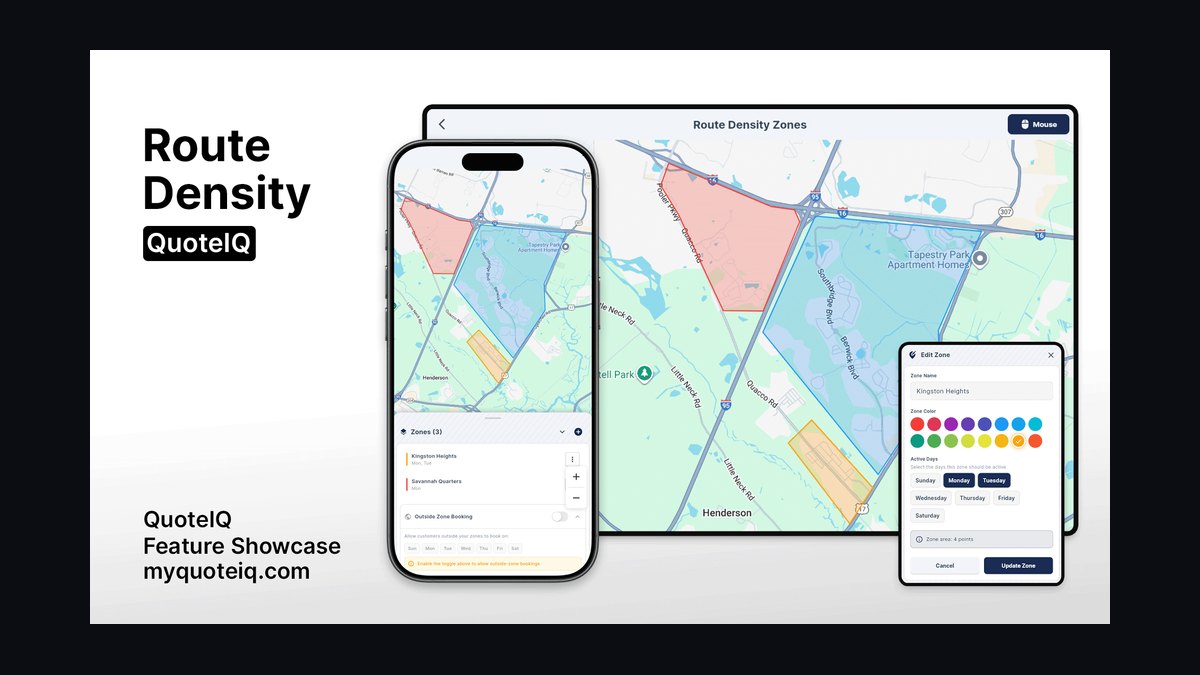
2.2 Route Density

What it measures. Route Density is the average number of completed, billable service stops per truck route-day.

How to calculate it. Route Density = Total completed service stops in the period ÷ Total truck route-days operated in the period. A truck that runs five days a week contributes roughly 21 to 22 route-days a month.

Why it matters in this industry. Route Density is the core profit lever of the entire business. As established in Section 1.2, the truck, the driver, the insurance, the licensing, and the daily disposal trip are largely fixed costs per route-day. Each additional stop spreads those fixed costs across more revenue while adding only the marginal cost of pumping one more trap and the short drive to it.

A route running 9 stops a day and one running 18 can have nearly identical fixed cost but double the revenue — and the difference falls almost entirely to gross margin. This is why a grease collection company's most valuable asset is not its truck fleet but its *map*: a tight cluster of accounts is worth far more per dollar of revenue than the same revenue scattered across a county.

Density also makes a price increase survivable — a dense route can absorb a fuel-cost spike that would push a thin route into a loss.

2027 benchmark. Target 14 to 22 stops per truck route-day for a typical mixed urban and suburban operator. Dense urban cores with many small interceptors can run higher; rural territories with long drive times and large interceptors will run lower and should compensate with higher per-stop pricing.

Below 10 stops per day, the route is structurally unprofitable and needs redesign, repricing, or consolidation.

2.3 Customer Retention Rate

What it measures. Customer Retention Rate is the percentage of contracted foodservice accounts retained year over year, excluding accounts lost solely because the restaurant permanently closed.

How to calculate it. Customer Retention Rate = (Contracted accounts active at period end that were also active at period start ÷ Contracted accounts active at period start) × 100. Track a separate "involuntary churn" figure for permanent restaurant closures so you can see controllable churn clearly.

Why it matters in this industry. Retention is not just a revenue metric here; it is a route-economics metric. As Section 1.2 explained, every lost account thins the route and raises the cost-to-serve on every remaining stop. Lose three accounts off a route and the truck still drives nearly the same loop across fewer billable stops — so churn quietly erodes Route Density and Gross Margin per Route at once.

The good news is that this is a naturally high-retention industry: switching is friction the customer rarely wants, the service is regulatory and not optional, and a provider who never misses a pump and always leaves clean documentation gives the customer no reason to shop. The bad news is that one missed pump, one overflow on the customer's watch, or one municipal fine traceable to your missed service can end a multi-year relationship in a single afternoon.

Retention in grease collection is earned through Service Compliance Rate.

2027 benchmark. Target a 90 to 95 percent annual customer retention rate on controllable churn. Mature operators with strong compliance discipline reach 95 percent and above. Restaurant-industry closure rates mean some involuntary churn is unavoidable; that is why you measure it separately rather than letting it mask a controllable-churn problem.

2.4 New Account Acquisition Rate

What it measures. New Account Acquisition Rate is the number of new contracted accounts signed per month within the service geography.

How to calculate it. New Account Acquisition Rate = Count of newly signed recurring service contracts in the month. Segment it by route or zone so you can see whether new accounts are landing where they raise density.

Why it matters in this industry. Growth here is not just "more accounts" — it is *more accounts in the right place*. A new account on an existing route adds a stop, raises density, and lifts margin without adding a truck; it is almost pure profit. A new account forty minutes from any existing route either forces a wasteful detour or, eventually, a whole new truck and route that starts life thin and unprofitable.

So acquisition must be measured with geography in mind. Acquisition also offsets the natural attrition from restaurant closures: even at 93 percent retention, an operator with 600 accounts loses about 42 a year and must replace them just to stand still. New Account Acquisition Rate, segmented by zone, tells the sales team not only how fast to sell but *where*.

2027 benchmark. Target 12 to 25 new contracted accounts per month for an established regional operator running several trucks. A single-truck local operator at route capacity may target far fewer and focus on infill within its existing loop; a multi-market platform in expansion mode will run higher.

The quality test is the share of new accounts landing on or near existing routes — aim for the majority.

2.5 Revenue per Truck per Day

What it measures. Revenue per Truck per Day is total service revenue divided by the number of truck route-days operated — the daily output of the business's primary revenue-producing asset.

How to calculate it. Revenue per Truck per Day = Total service revenue in the period ÷ Total truck route-days operated in the period. Include UCO sales attributable to those routes if you want a true picture of what each truck-day generates.

Why it matters in this industry. The truck is the revenue engine. Every truck-day has a hard cost floor — driver wages, fuel, depreciation, insurance, maintenance, disposal — and Revenue per Truck per Day tells you whether each day of running that engine clears that floor with margin to spare.

It is essentially Route Density multiplied by effective price per stop (plus UCO upside), so it captures two levers in one number: are the routes tight, and is the work priced correctly. A falling figure with stable density means pricing has slipped behind cost; a falling figure with stable pricing means routes are thinning.

Reading it next to Route Density tells you which.

2027 benchmark. Target $1,400 to $2,800 in revenue per truck per day. The wide range reflects real differences in market mix: urban routes with many small traps and short drives cluster at the lower-revenue, higher-stop-count end, while suburban and light-industrial routes servicing larger interceptors at higher ticket prices reach the upper end.

Persistently below $1,200 per truck-day, a route is unlikely to clear its fully loaded cost.

2.6 Average Contract Value

What it measures. Average Contract Value is the annualized recurring revenue per contracted account.

How to calculate it. Average Contract Value = Total annualized recurring contract revenue ÷ Number of contracted accounts. Track it separately for trap-pumping-only accounts versus accounts that also buy UCO collection, jetting, or reporting, so the mix is visible.

Why it matters in this industry. Average Contract Value tells you how much each account is worth and which direction the book is moving. It rises for three healthy reasons: you are winning larger accounts with bigger interceptors and more frequent ordinance-mandated service; you are attaching add-on services such as drain line jetting, FOG compliance reporting, and UCO collection; and you are holding disciplined price increases against fuel and disposal inflation.

It can also rise for an unhealthy reason — a wave of emergency one-time work at premium prices — which is why you read it alongside Recurring Service Contract Revenue Share. The most profitable operators steadily lift Average Contract Value through service attachment, because every add-on dollar lands on a stop the truck is already making and converts to margin at an exceptional rate.

2027 benchmark. Target $900 to $4,500 in annualized average contract value. A small quick-service restaurant on a quarterly pump of a modest interceptor sits near the bottom of the range; a hotel or large institutional kitchen on monthly service of a large in-ground interceptor, plus jetting and reporting, sits near the top.

The portfolio average for a healthy mixed-book operator typically lands in the $1,400 to $2,400 band.

2.7 Service Compliance Rate

What it measures. Service Compliance Rate is the percentage of contracted services completed on or before the schedule the customer's FOG ordinance requires — not merely completed, but completed *on time* relative to the regulatory cadence.

How to calculate it. Service Compliance Rate = (Services completed on or before their ordinance-required date ÷ Total services scheduled in the period) × 100.

Why it matters in this industry. This is the KPI that most clearly separates grease trap and FOG collection from generic field service, and the reason it belongs on a *sales* dashboard rather than only an operations report. The customer's reason for buying is regulatory compliance.

A missed or late pump does not just inconvenience the customer — it can put them in violation of a municipal FOG ordinance, expose them to a fine from the sewer authority's pretreatment program, and, in a worst case, leave them holding the bill for a grease-caused sanitary sewer overflow.

The moment your service failure causes the customer a regulatory problem, you have handed your competitor the account. Conversely, a provider with a near-perfect compliance record becomes effectively un-fireable: the customer's switching risk outweighs any price they might save. Service Compliance Rate is therefore the strongest leading indicator of Customer Retention Rate, and a clean compliance record is the most powerful proof point a salesperson can carry into a new bid.

2027 benchmark. Target a Service Compliance Rate above 97 percent, with best-in-class operators sustaining 99 percent or higher. Anything below 95 percent should be treated as an active retention emergency, because the gap is being measured in lost accounts even before it shows up in the churn number.

2.8 Gross Margin per Route

What it measures. Gross Margin per Route is route revenue minus the direct cost of running that route — driver labor, fuel, vehicle cost and maintenance, and grease disposal or treatment fees — expressed as a percentage of route revenue. UCO revenue from the route is netted in.

How to calculate it. Gross Margin per Route = ((Route revenue + attributable UCO revenue − driver labor − fuel − vehicle cost − disposal fees) ÷ (Route revenue + attributable UCO revenue)) × 100, calculated route by route, not just company-wide.

Why it matters in this industry. A company-wide gross margin can hide a thin or losing route inside a healthy average; calculating margin route by route exposes exactly where money is made and lost. It is also the KPI most exposed to outside forces the operator does not control: diesel prices, brown-grease disposal tipping fees, and — through netted UCO revenue — yellow grease feedstock prices that swing with soybean oil and renewable diesel demand.

Because those inputs move, Gross Margin per Route is the early-warning system for repricing: when disposal fees rise or UCO prices fall, route margin compresses first, and a disciplined operator catches it here before the bottom line is hit. It is the financial mirror of Route Density — density creates the opportunity for margin, and this KPI confirms whether it was captured.

2027 benchmark. Target a 35 to 48 percent route gross margin. Dense, well-priced urban routes reach the top of the band; long-drive rural routes and routes serving low-margin emergency work sit lower. A route persistently below 25 percent gross margin needs repricing, consolidation, or, if it cannot be fixed, planned exit.

2.9 Quote-to-Contract Conversion Rate

What it measures. Quote-to-Contract Conversion Rate is the percentage of new-account service quotes and bids that become signed recurring service contracts.

How to calculate it. Quote-to-Contract Conversion Rate = (Number of quotes that became signed recurring contracts ÷ Total number of quotes issued) × 100, measured over a trailing period long enough to let slow-deciding accounts close.

Why it matters in this industry. Most new accounts in grease collection are won competitively — a restaurant opens, a property manager rebids a portfolio, or an unhappy account solicits proposals — so the bid is where growth is actually decided. Quote-to-Contract Conversion Rate measures whether your pricing, your routing offer, and your compliance reputation are competitive at the point of decision.

A low conversion rate usually signals one of three fixable problems: pricing out of step with the local market, quoting accounts too far from existing routes to offer an attractive price, or losing on reliability reputation. A very *high* conversion rate is not automatically good — it can mean you are underpricing and leaving margin on the table.

Read with Average Contract Value and Gross Margin per Route, conversion rate tells you whether you are bidding to win profitable, dense work or simply buying revenue.

2027 benchmark. Target a 35 to 52 percent quote-to-contract conversion rate. Conversion is structurally higher when quoting accounts on existing routes — the marginal cost of the stop is low, so the price can be sharper — and lower when bidding work far from your map. Above 65 percent, audit pricing for money left on the table; below 25 percent, audit pricing, route fit, and reputation.

2.10 The nine KPIs at a glance

#KPIWhat it tells youRole2027 benchmark
1Recurring Service Contract Revenue ShareHow much revenue is a predictable regulatory annuityLeading78-90%
2Route DensityWhether the core profit lever is being pulledLeading14-22 stops/truck-day
3Customer Retention RateWhether route economics are stableLeading90-95% annual
4New Account Acquisition RateWhether growth is replacing churn and adding densityLeading12-25 new accounts/month
5Revenue per Truck per DayWhether the revenue engine clears its cost floorConfirming$1,400-$2,800/truck-day
6Average Contract ValueHow much each account is worth and the direction of mixConfirming$900-$4,500 annualized
7Service Compliance RateWhether you are delivering the regulatory productLeadingAbove 97%
8Gross Margin per RouteWhether pricing keeps pace with cost to serveConfirming35-48% per route
9Quote-to-Contract Conversion RateWhether bids win profitable, dense workConfirming35-52%

2.11 Worked calculation: turning raw data into the KPIs

The formulas above are abstract until you run them on numbers. The example below takes one truck's single route over one month and computes the route-level KPIs end to end, so the arithmetic is concrete.

The inputs. Route 3 ran 21 route-days in the month, completing 336 billable stops. Total trap-pumping revenue was $39,900, and used cooking oil from those same stops sold for $3,150. Direct route costs were: driver labor $9,200, fuel $4,100, vehicle cost and maintenance $3,400, and brown-grease disposal fees $7,650.

MetricCalculationResult
Route Density336 stops ÷ 21 route-days16.0 stops/truck-day
Revenue per Truck per Day (trap only)$39,900 ÷ 21$1,900/day
Revenue per Truck per Day (with UCO)($39,900 + $3,150) ÷ 21$2,050/day
Total direct route cost$9,200 + $4,100 + $3,400 + $7,650$24,350
Total route revenue$39,900 + $3,150$43,050
Gross Margin per Route($43,050 − $24,350) ÷ $43,050 × 10043.4%

Reading the result. Route 3 is healthy: density at 16.0 sits inside the 14-22 band, Revenue per Truck per Day at $2,050 is comfortably mid-range, and a 43.4 percent gross margin lands in the upper half of the 35-48 percent benchmark. Note the Section 5.3 caution in action — strip the $3,150 of UCO revenue out and margin on trap revenue alone falls to roughly 38.9 percent.

Still inside the band, so the trap-pumping pricing is genuinely sound, not propped up by feedstock value. That single recomputation keeps the margin number honest.

3. How the 9 KPIs Connect — Reading Them as a System

3.1 The lead trio versus the confirming six

The nine KPIs are not equal in *timing*. Three of them — Recurring Service Contract Revenue Share, Route Density, and Customer Retention Rate — are leading indicators. They move first and tell you where revenue is heading before the closed numbers confirm it.

The other six confirm, explain, or price what the lead trio sets in motion. This is why the dashboard guidance in Section 6 puts the lead trio at the top and reviewed most often.

KPIRoleTypical review cadence
Recurring Service Contract Revenue ShareLeadingMonthly
Route DensityLeadingWeekly
Customer Retention RateLeadingMonthly
New Account Acquisition RateLeading-ishWeekly
Revenue per Truck per DayConfirmingWeekly
Average Contract ValueConfirmingMonthly
Service Compliance RateLeading (of retention)Weekly
Gross Margin per RouteConfirmingMonthly
Quote-to-Contract Conversion RateConfirmingMonthly

3.2 The causal chain

The KPIs form a chain, and understanding the chain is what turns a dashboard into a management tool. Service Compliance Rate drives Customer Retention Rate, because reliability keeps a regulatory customer from shopping. Retention plus New Account Acquisition Rate together drive Route Density, because density is simply the net account count concentrated in a geography.

Route Density drives both Revenue per Truck per Day and Gross Margin per Route, because tight routes spread fixed cost. Quote-to-Contract Conversion Rate and Average Contract Value determine the *quality* of the accounts feeding density. And Recurring Service Contract Revenue Share sits over all of it, telling you whether the whole machine is built on annuity revenue or on firefighting.

flowchart TD A[Service Compliance Rate Above 97 Percent] --> B[Customer Retention Rate Holds at 90 to 95 Percent] C[New Account Acquisition Rate 12 to 25 per Month] --> D[Net Account Growth in Geography] B --> D D --> E[Route Density Rises to 14 to 22 Stops per Day] F[Quote to Contract Conversion 35 to 52 Percent] --> G[Accounts Won Are Priced and Routed Well] G --> E E --> H[Revenue per Truck per Day 1400 to 2800] E --> I[Gross Margin per Route 35 to 48 Percent] J[Average Contract Value Grows via Add Ons] --> H J --> I H --> K[Recurring Service Contract Revenue Share 78 to 90 Percent] I --> K K --> L[Predictable Forecast and Higher Business Valuation] L --> M[Profit Reinvested into Trucks Sales and Routes] M --> C

3.3 What "good" looks like across the set

A healthy operator in 2027 shows all nine KPIs inside their benchmark bands *at the same time*, and shows them moving in the same direction. Rising density with rising margin and stable retention is genuine, durable growth. Rising revenue with falling density and falling margin is the warning sign of unprofitable expansion.

The system view makes that distinction visible — the whole reason this industry needs nine KPIs and not one.

4. KPI Benchmarks by Operator Profile

The benchmark ranges in Section 2 are industry-wide. They land differently depending on the size and shape of the operator. Use the table below to find the profile closest to yours and read the benchmarks accordingly.

KPISingle-truck local operatorRegional multi-truck operatorMulti-market platform
Recurring Service Contract Revenue Share65-80%80-90%85-92%
Route Density12-18 stops/day15-22 stops/day16-24 stops/day
Customer Retention Rate88-93%91-95%92-96%
New Account Acquisition Rate2-6 / month12-25 / month30+ / month
Revenue per Truck per Day$1,200-$2,000$1,500-$2,600$1,800-$3,000
Average Contract Value$800-$2,500$1,200-$3,500$1,500-$4,500
Service Compliance Rate95-98%97-99%98-99.5%
Gross Margin per Route30-42%35-46%38-50%
Quote-to-Contract Conversion Rate30-48%35-52%38-55%

A few notes on reading this table. A single-truck operator should not feel behind for sitting at the lower end of New Account Acquisition Rate — at route capacity, infill and retention matter far more than raw new-logo count. A multi-market platform earns the higher recurring-share and route-margin bands through disciplined contracting and route engineering, not through anything a smaller operator cannot eventually replicate.

The benchmark is a direction of travel, not a verdict.

4.1 Seasonal and regional adjustment

Two real-world factors shift these numbers and should be accounted for before judging a result. First, FOG volume is seasonal: holiday-quarter restaurant volume fills interceptors faster, which can compress the interval between ordinance-required pumps and lift both stop counts and emergency callouts in November through January.

Second, ordinance cadence varies by jurisdiction — a market dominated by 30-day ordinance requirements produces structurally higher Route Density and Revenue per Truck per Day than a market built on 90-day cadences, simply because the same accounts generate more service events per year.

Always compare a route to its own history and to peer routes in the same ordinance environment, not to a national average.

5. Counter-Case: When These KPIs Mislead

KPIs are tools, and tools used carelessly cut the wrong thing. Every metric in this guide can point you in the wrong direction under specific conditions. A mature operator knows the failure modes as well as the benchmarks.

5.1 Route Density that looks great but isn't

A route can show 24 stops per day and still be unprofitable if those stops are tiny quick-service interceptors at rock-bottom prices, or if "completed stop" is being counted on visits where the trap could not be fully serviced. High density is only valuable when paired with healthy Revenue per Truck per Day and Gross Margin per Route.

Never celebrate Route Density alone — read it next to the margin it produced. Conversely, a deliberately lower-density route built around large, high-ticket institutional interceptors can out-earn a dense route of small accounts; density is a means to margin, not the goal.

5.2 Retention that hides a slow-motion problem

A 94 percent Customer Retention Rate looks healthy, but the headline can conceal two dangers. First, if your *most profitable, densest* accounts are the ones leaving and being replaced by scattered low-value ones, retention holds steady while route economics quietly decay. Second, if controllable churn and involuntary closure churn are blended into one figure, a worsening service problem can be masked by a quarter with few restaurant closures — or a healthy operation can look troubled during a wave of closures it did not cause.

Always segment retention by account value and by controllable versus involuntary churn.

5.3 Gross Margin per Route distorted by feedstock swings

Because UCO revenue is netted into Gross Margin per Route, a sharp rise in yellow grease feedstock prices can lift route margin even while the operator's pricing has fallen behind on fuel and disposal cost. The margin looks fine — until feedstock prices revert and the underlying pricing problem is suddenly exposed.

When feedstock markets are elevated, pressure-test route margin by recalculating it at a normalized, mid-cycle UCO price. If the route only clears its benchmark thanks to peak feedstock prices, the trap-pumping pricing itself needs attention.

5.4 A conversion rate that is "too good"

A Quote-to-Contract Conversion Rate of 75 percent feels like a triumph and is often a symptom. Winning three of every four bids usually means pricing is below the market-clearing level — the company is buying revenue and donating margin. The fix is not to lose bids on purpose; it is to raise price until conversion settles into the healthy band and verify that Gross Margin per Route improves.

Conversion rate must always be read for *profitable* wins, never raw win count.

5.5 Acquisition rate that erodes the map

New Account Acquisition Rate counts new logos, and a sales team compensated on that count alone will sign accounts wherever they can find them — including far from any existing route. Each off-route account drags Route Density and Gross Margin per Route down even as the acquisition KPI looks excellent.

This is the most common way a growing grease collection company quietly becomes less profitable. The discipline is to measure acquisition *by zone* and weight compensation toward accounts that land on or near existing routes.

5.6 Compliance rate measured too loosely

Service Compliance Rate is only meaningful if "compliant" is defined against the *ordinance-required* date, not your own internal schedule. An operator who quietly slips a route's internal cadence will show 99 percent compliance against the loosened target while customers drift toward genuine ordinance violations.

Anchor the metric to the regulatory cadence — the date the customer's sewer authority actually requires — or the number is comfortable fiction.

5.7 The summary rule

KPIThe misleading signalThe cross-check
Route DensityHigh stop count, low-value stopsRevenue per Truck per Day + Gross Margin per Route
Customer Retention RateHealthy headline, decaying mixSegment by account value + controllable vs. involuntary churn
Gross Margin per RouteMargin propped by peak UCO pricesRecalculate at normalized feedstock price
Quote-to-Contract ConversionVery high conversionCheck for underpricing vs. Gross Margin per Route
New Account Acquisition RateStrong new-logo countMeasure acquisition by route zone
Service Compliance Rate99% against an internal scheduleRe-anchor to ordinance-required date

The unifying lesson: no KPI in this industry is trustworthy in isolation. The nine are a system, and the system is the safeguard against any single number misleading you.

6. How to Track These KPIs in Your CRM

You do not need a specialized analytics platform to run these nine KPIs. A well-configured CRM, paired with your routing software and a disciplined monthly review, is enough. What matters is that the data is captured cleanly at the source and assembled into one view.

6.1 The data fields every record must carry

The KPIs are only as good as the fields behind them. Before building any dashboard, make sure every account, opportunity, and work order in the system carries the fields these metrics depend on.

Record typeRequired fieldsKPIs it feeds
AccountRoute/zone, interceptor capacity (gallons), ordinance-required cadence, service frequency, contracted vs. one-time flag, UCO collection flagRoute Density, Service Compliance Rate, Recurring Share, ACV
Opportunity / QuoteQuoted value, route zone, win/loss status, win/loss reason, close dateQuote-to-Contract Conversion, New Account Acquisition
Work order / Service eventScheduled date, ordinance-required date, completed date, volume removed (gallons), truck/route ID, technicianService Compliance Rate, Route Density, Revenue per Truck per Day
ContractAnnualized recurring value, add-on services, renewal/anniversary date, recurring-revenue flagAverage Contract Value, Recurring Share, Retention
Route ledgerRoute revenue, driver labor, fuel, disposal fees, vehicle cost, attributable UCO revenueGross Margin per Route

The two fields most often missing — and most damaging when missing — are the ordinance-required cadence on the account (without it, Service Compliance Rate cannot be measured against the regulatory standard) and the route/zone tag on both accounts and quotes (without it, Route Density and zone-segmented acquisition cannot be built).

6.2 Build one dashboard, lead with the trio

Build a single dashboard that shows all nine KPIs at once. Place the three leading indicators — Recurring Service Contract Revenue Share, Route Density, Customer Retention Rate — at the top, sized largest. Put a visible target line or benchmark band on every chart so the team sees the goal, not just the current value.

Add a route-level drill-down for Route Density and Gross Margin per Route, because the company-wide average for those two will always hide the route that needs attention. Most field-service CRM and routing platforms used in liquid-waste collection can produce this with native reporting; the discipline is in the field hygiene of Section 6.1, not in buying more software.

6.3 The standing monthly KPI review

Hold a standing monthly KPI review and run it the same way every time. Walk the nine metrics in priority order. For any KPI sitting outside its benchmark band, do not move on until the meeting has named one specific corrective action and one accountable owner with a date.

Review the lead trio and the weekly-cadence KPIs more often — in the regular pipeline and dispatch meeting — so problems are caught between monthly reviews. The discipline of reviewing the full set together, in order, rather than reacting to whichever number someone happened to notice, is what separates a forecast you can trust from a hopeful guess.

6.4 A simple monthly review agenda

StepFocusOutput
1Lead trio: Recurring Share, Route Density, RetentionDirection call: improving, flat, declining
2Acquisition and conversionAre new accounts replacing churn and landing on-route?
3Revenue per Truck per Day and Gross Margin per Route, by routeList of routes outside benchmark
4Service Compliance Rate, by routeAny route below 97% flagged as retention risk
5Average Contract Value and add-on attachmentService-attachment opportunities named
6Action assignmentOne owner + date per off-benchmark KPI

7. Worked Example: A Regional Operator's KPI Story

Benchmarks become useful only when you can see how they behave on a real book of business. The following worked example follows a fictional but realistic regional operator — call it Tri-County Grease & FOG — across four quarters of 2027. It is built only from the nine KPIs in this guide and shows exactly how the system view catches problems a revenue number would hide.

7.1 The starting position

Tri-County runs five vacuum trucks across one metropolitan area split into four service zones. At the start of 2027 its book is roughly 540 contracted accounts plus a thin stream of one-time emergency work. Top-line revenue has grown about 8 percent year over year, and the owner is, on the surface, satisfied. The nine KPIs tell a sharper story.

KPITri-County Q1 2027Benchmark bandRead
Recurring Service Contract Revenue Share74%78-90%Slightly low
Route Density13.1 stops/truck-day14-22Low end
Customer Retention Rate89%90-95%Slightly low
New Account Acquisition Rate19 / month12-25Healthy
Revenue per Truck per Day$1,620$1,400-$2,800Lower-middle
Average Contract Value$1,510$900-$4,500Mid
Service Compliance Rate94.5%Above 97%Problem
Gross Margin per Route33%35-48%Slightly low
Quote-to-Contract Conversion Rate44%35-52%Healthy

The revenue number said "growth." The KPI set said something sharper: acquisition and conversion are fine, so the business can *win* work — but Service Compliance Rate at 94.5 percent is below benchmark, and that single weak metric is dragging a chain. Low compliance is suppressing retention (89 percent), and weak retention is thinning routes (13.1 stops per day), and thin routes are holding margin under benchmark (33 percent).

The 8 percent revenue growth was real, but it was being bought with heavy acquisition spending to replace customers the company was losing through poor service reliability. That is a treadmill, not growth.

7.2 The diagnosis and the intervention

Reading the causal chain from Section 3.2, the owner correctly identifies Service Compliance Rate as the root, not the symptom. Investigation shows two zones share a dispatcher whose manual scheduling routinely lets monthly accounts slip several days past their ordinance-required date during the busy holiday period.

The fix is operational: anchor every account's schedule to its ordinance-required date rather than an internal target (the Section 5.6 discipline), add an automated alert when a service event approaches its required date, and rebalance the two strained zones.

The intervention costs almost nothing and touches only scheduling discipline — but watch what it does to the system over the year.

7.3 Four quarters of movement

KPIQ1Q2Q3Q4
Service Compliance Rate94.5%97.1%98.4%99.0%
Customer Retention Rate89%90%92%94%
Route Density13.113.614.916.2
Revenue per Truck per Day$1,620$1,680$1,820$1,985
Gross Margin per Route33%34%38%41%
Recurring Service Contract Revenue Share74%76%80%83%
New Account Acquisition Rate19181716

Three things in this table are worth pausing on. First, the lead indicator moved first: Service Compliance Rate corrected within one quarter, well before retention and density responded — exactly the timing logic of Section 3.1. Second, the confirming KPIs followed in sequence: retention recovered, then density rose as fewer accounts left the routes, then Revenue per Truck per Day and Gross Margin per Route both climbed because the trucks were now spreading fixed cost across more stable stops.

Third, and least intuitive, New Account Acquisition Rate *fell* — from 19 to 16 per month — and that was good news. The arithmetic makes it concrete: at 89 percent retention on 540 accounts, Tri-County was losing roughly 59 accounts a year to controllable churn and had to sign nearly all of its 19 monthly wins just to stand still; at 94 percent retention it loses about 32, so the same 16 monthly signings now add real net density instead of plugging a leaking bucket.

With retention healthy, growth came from fewer, better-placed new accounts, and the sales spend per net account added dropped sharply.

7.4 The lesson

By Q4, Tri-County's revenue growth looked similar to Q1's — but the *quality* of that growth was transformed: routes denser, margin eight points higher, no acquisition treadmill. A revenue dashboard would have shown "growth" in both quarters and missed the story entirely. The nine-KPI system showed that Q1's growth was fragile and Q4's was durable, identified the single root cause, and confirmed the fix a full quarter before it reached the bottom line.

8. How to Set Your Own Baselines and Targets

Industry benchmark bands are a starting reference, not a destination. The operators who get the most from these nine KPIs translate the bands into their own baselines and a realistic improvement path.

8.1 Establish a clean baseline first

Before setting any target, measure each of the nine KPIs over a trailing twelve months so seasonality (Section 4.1) is averaged out. A baseline from a single holiday quarter will overstate density and emergency work; one from a slow quarter will understate them. Twelve months of history, route by route, is the honest starting line.

8.2 Set targets as movement, not as the benchmark ceiling

A KPI two bands below benchmark should not be given a target at the top of the benchmark range for the coming year — that invites a demoralized team and gamed numbers. Set the next 12-month target as meaningful, achievable movement *toward* the band, then re-target annually. Steady, believable progress compounds; an unreachable target gets ignored.

Current position relative to benchmarkSensible 12-month target
Inside the bandHold; aim for the upper half
Just below the bandReach the lower edge of the band
One clear step belowClose roughly half the gap
Far outside the bandDiagnose root cause; target a single visible improvement

8.3 Pick one or two priority KPIs, not nine

Trying to improve all nine KPIs at once spreads attention too thin to move any of them. Use the causal chain in Section 3.2 to find the *root*: if several KPIs are weak, the upstream one — usually Service Compliance Rate or Route Density — is where the leverage is. Fix the root, and the downstream KPIs improve on their own, as Section 7 demonstrated.

8.4 Tie targets to owners and to the monthly review

A target with no owner is a wish. Each priority KPI should have one accountable owner and appear by name in the standing monthly review of Section 6.3, with progress checked every month and the target reset every year. The pairing of a clean baseline, a movement-based target, a named owner, and a recurring review is the operating system that turns these nine numbers into results.

8.5 Red-flag thresholds — when a KPI demands action this month

Benchmark bands describe healthy performance. A separate, lower set of thresholds marks the point where a KPI is no longer a coaching item but a problem that should not wait for the next quarter. Keep this reference next to the dashboard.

KPIRed-flag thresholdWhy it is urgent
Recurring Service Contract Revenue ShareBelow 65%The business is running on unforecastable emergency work
Route DensityBelow 10 stops/truck-dayThe route is structurally below break-even
Customer Retention RateBelow 85% controllable churnRoutes are decaying faster than acquisition can refill
Revenue per Truck per DayBelow $1,200The truck likely is not clearing its fully loaded cost
Service Compliance RateBelow 95%Customers are drifting toward ordinance violations
Gross Margin per RouteBelow 25% on a routeThe route is near or below cash break-even
Quote-to-Contract Conversion RateBelow 25% or above 70%Pricing or route-fit is badly off in one direction

A KPI in red-flag territory should trigger a same-month diagnosis and a named owner before the standing review even arrives — not a number to watch trend over a quarter.

9. A 2027 Outlook for the Industry's KPIs

Three forces are shaping where these benchmarks move through 2027, and a forward-looking operator should watch all three.

Tighter and better-enforced FOG pretreatment programs. Municipal sewer authorities continue to strengthen and digitize FOG control programs under their EPA-delegated pretreatment authority. More jurisdictions are moving to electronic manifesting and online compliance portals, which makes Service Compliance Rate both more visible to the regulator and more valuable as a sales differentiator.

Operators with clean, digitally documented compliance records will find Quote-to-Contract Conversion easier to win.

Volatile but structurally supported feedstock value. Used cooking oil and yellow grease remain in demand as renewable diesel and sustainable aviation fuel capacity expands, keeping a structural floor under feedstock value through price swings tied to soybean oil and Renewable Fuel Standard policy.

This keeps UCO collection a meaningful contributor to Average Contract Value and Gross Margin per Route — and keeps the Section 5.3 warning relevant.

Consolidation pressure on multiples. Liquid-waste and environmental-services roll-ups continue to acquire regional grease collection books, and they price on exactly the KPIs in this guide — recurring revenue share, retention, route density, route margin. Whether or not an operator intends to sell, managing to these nine metrics is now also managing valuation.

10. Frequently Asked Questions

Which of these KPIs should we track first? Start with the three leading indicators — Recurring Service Contract Revenue Share, Route Density, and Customer Retention Rate. They move earliest and tell you where revenue is heading before it shows up in closed numbers. Add the remaining six within a quarter so you are managing the complete set.

If you can only fix one thing first, fix the data fields in Section 6.1, because every KPI depends on them.

How often should we review them? Review Route Density, New Account Acquisition Rate, Revenue per Truck per Day, and Service Compliance Rate weekly in your pipeline and dispatch meeting. Review the full set of nine in a dedicated monthly KPI review. Quarterly, compare your numbers against the 2027 benchmark ranges and reset goals.

Are these benchmark targets realistic for a smaller company? Yes. The ranges in Section 2 reflect typical healthy performance across company sizes, and the operator-profile table in Section 4 breaks them down by scale. A single-truck or newer operation should expect to sit at the lower end of most ranges and treat the upper end as a goal to grow into.

A smaller operator at route capacity should weight retention and infill over raw new-account count.

What if our numbers are far from these benchmarks? A KPI well outside its benchmark is a starting point, not a verdict. Pick the one or two metrics furthest from target, diagnose the specific cause — a thin route, a pricing gap, a compliance slip — assign an owner, and re-measure next month.

Steady movement toward the benchmark matters far more than hitting every number at once.

Why is Service Compliance Rate a sales KPI and not just an operations metric? Because in this industry the product *is* regulatory compliance. A missed or late pump can put the customer in violation of a municipal FOG ordinance and is the fastest way to lose a contract. Compliance reliability is the strongest leading indicator of retention and the most persuasive proof point in a new bid — a revenue metric, not merely an operational one.

How does used cooking oil value affect these KPIs? Used cooking oil collected from accounts is sold as a rendering and biodiesel feedstock, and its value is netted into Average Contract Value and Gross Margin per Route. When feedstock prices are high, route margin gets a real lift; when they fall, that cushion thins.

The risk, covered in Section 5.3, is that peak feedstock prices can mask a trap-pumping pricing problem — so pressure-test route margin at a normalized UCO price.

Should we customize these KPIs for our business? The nine KPIs here are the ones that matter most across the Commercial Foodservice Grease Trap & FOG Collection Services industry, so treat them as the fixed core. You may add one or two metrics specific to your model — average interceptor capacity served, or emergency-callout rate — but resist tracking dozens.

The discipline of a focused set is what makes the monthly review actually drive decisions.

How do these KPIs relate to other route-based service industries? The route-density logic, recurring-contract focus, and compliance-driven retention pattern in this guide are shared by adjacent route and liquid-waste businesses. For comparison, see the KPI frameworks for Industrial Vacuum Truck Services (ik0196), Industrial Tank Cleaning & Confined Space Services (ik0200), Industrial Wastewater Treatment Plant Contract Operations (ik0213), Stormwater Management & Detention System Contracting (ik0179), Commercial Water Filtration & Purification Services (ik0178), and Commercial Refrigerated Transport & Reefer Trucking (ik0230) — each balances route economics against recurring service revenue in a similar way.

11. Conclusion

The Commercial Foodservice Grease Trap & FOG Collection Services industry is not measured by revenue — it is measured by nine specific sales KPIs that, read together, reveal whether the business is a stable regulatory annuity or a firefighting operation in disguise. Recurring Service Contract Revenue Share confirms the annuity.

Route Density and Gross Margin per Route prove that geography is being turned into profit. Customer Retention Rate and Service Compliance Rate guard the route economics. New Account Acquisition Rate and Quote-to-Contract Conversion Rate feed the routes with the right work.

Revenue per Truck per Day and Average Contract Value confirm that the revenue engine and the book of business are both healthy. Lead your dashboard with the three leading indicators, hold the cost and reliability lines, review all nine every month against the 2027 benchmarks, and you will forecast accurately and grow profitably in an industry where, more than most, revenue growth and profit growth are not the same thing.


Sources and further reading

  1. U.S. Environmental Protection Agency — *Controlling Fats, Oils, and Grease (FOG) Discharges*, National Pretreatment Program.
  2. U.S. EPA — 40 CFR Part 403, General Pretreatment Regulations for Existing and New Sources of Pollution.
  3. U.S. EPA — *Report to Congress on Impacts and Control of Combined Sewer Overflows and Sanitary Sewer Overflows*.
  4. U.S. EPA — *Sanitary Sewer Overflows (SSOs)* program guidance, identifying FOG as a leading cause of sewer blockages.
  5. U.S. EPA — Model FOG control ordinance language for publicly owned treatment works (POTW) pretreatment programs.
  6. Water Environment Federation (WEF) — *Controlling Fats, Oils, and Grease at Food Service Establishments*, Manual of Practice.
  7. International Association of Plumbing and Mechanical Officials (IAPMO) — *Uniform Plumbing Code (UPC)*, Chapter 10, grease interceptor sizing and installation.
  8. International Code Council (ICC) — *International Plumbing Code (IPC)*, Section 1003, grease interceptor requirements.
  9. Plumbing and Drainage Institute (PDI) — Standard PDI-G101, testing and rating of grease interceptors.
  10. ASME A112.14.3 / ASME A112.14.4 — Standards for grease interceptors and grease removal devices.
  11. National Restaurant Association — *State of the Restaurant Industry* report, food service establishment counts and closure trends.
  12. North American Renderers Association (NARA) — rendering industry overview and yellow grease / used cooking oil market data.
  13. National Renderers Association — *Pocket Information Manual*, rendered-products definitions and feedstock categories.
  14. The Jacobsen — yellow grease and used cooking oil price benchmarks and rendered-products market reporting.
  15. USDA Agricultural Marketing Service — National Weekly Rendered Products report (yellow grease, choice white grease pricing).
  16. U.S. Energy Information Administration (EIA) — biodiesel and renewable diesel production and feedstock consumption data.
  17. U.S. EPA — Renewable Fuel Standard (RFS) program, D4 biomass-based diesel RIN framework.
  18. National Renewable Energy Laboratory (NREL) — research on used cooking oil and waste-grease feedstocks for renewable diesel and sustainable aviation fuel.
  19. U.S. Department of Energy, Alternative Fuels Data Center — biodiesel feedstock and waste-grease conversion data.
  20. Grease Recycling and rendering industry trade reporting — *Render Magazine* (North American Renderers Association).
  21. Water Environment Federation — *Pretreatment Program* technical resources and POTW industrial pretreatment guidance.
  22. U.S. EPA — *Industrial User Permitting Guidance Manual* for pretreatment programs.
  23. National Association of Clean Water Agencies (NACWA) — municipal FOG program and sewer collection system management resources.
  24. American Public Works Association (APWA) — sewer collection system maintenance and FOG management best practices.
  25. Environmental Research & Education Foundation (EREF) — liquid and solid waste industry data and disposal-cost trends.
  26. National Waste & Recycling Association (NWRA) — liquid waste and grease hauling industry guidance.
  27. U.S. Department of Transportation, Federal Motor Carrier Safety Administration (FMCSA) — commercial vehicle and hazardous-materials transport regulations relevant to grease hauling.
  28. U.S. Energy Information Administration — weekly on-highway diesel fuel price series (route fuel cost input).
  29. State environmental agency FOG and pretreatment program guidance documents (e.g., California State Water Resources Control Board, Texas Commission on Environmental Quality, North Carolina DEQ FOG programs).
  30. U.S. Small Business Administration — guidance on recurring-revenue service business operations and route-based service models.
  31. International Facility Management Association (IFMA) — facility maintenance and vendor management practices for food service grease management.
  32. Underwriters Laboratories / NSF International — sanitation and equipment standards relevant to commercial kitchen grease management.
Download:
Was this helpful?  
⌬ Apply this in PULSE
Gross Profit CalculatorModel margin per deal, per rep, per territory
Deep dive · related in the library
industry-kpiWhat are the key sales KPIs for the Hospital Medical Gas System Installation & Certification industry in 2027?industry-kpiWhat are the key sales KPIs for the Commercial Solar Battery Energy Storage System (BESS) Integration industry in 2027?industry-kpiWhat are the key sales KPIs for the Industrial X-Ray & Non-Destructive Testing (NDT) Services industry in 2027?industry-kpiWhat are the key sales KPIs for the Architectural Sheet Metal & Custom Flashing Fabrication industry in 2027?industry-kpiWhat are the key sales KPIs for the Commercial EV Fleet Charging Depot Management industry in 2027?industry-kpiWhat are the key sales KPIs for the Industrial Cooling Tower Service & Repair industry in 2027?industry-kpiWhat are the key sales KPIs for the Modular Cleanroom Design & Construction industry in 2027?industry-kpiWhat are the key sales KPIs for the Commercial Solar Panel Cleaning & Soiling Management Services industry in 2027?industry-kpiWhat are the key sales KPIs for the Industrial Crane Inspection & Load Testing Services industry in 2027?industry-kpiWhat are the key sales KPIs for the Commercial Fire & Water Damage Restoration industry in 2027?
More from the library
industry-kpiWhat are the key sales KPIs for the Architectural Curtain Wall Engineering & Fabrication industry in 2027?industry-kpiWhat are the key sales KPIs for the Pharmaceutical Cold Chain Logistics industry in 2027?industry-kpiWhat are the key sales KPIs for the Mobile Sandblasting & Industrial Surface Restoration industry in 2027?sales-training · cost-of-inactionThe Cost-of-Inaction Business Case: Running a 60-Minute Team Working Session Where Every Rep Quantifies What the Prospect’s Status Quo Is Costing Them in Real Dollars So the Deal Stops Losing to "Do Nothing" — a 60-Minute Sales Trainingindustry-kpiWhat are the key sales KPIs for the Commercial Aquatics & Pool Facility Construction industry in 2027?industry-kpiWhat are the key sales KPIs for the Commercial Elevator Cab Interior Manufacturing industry in 2027?industry-kpiWhat are the key sales KPIs for the Commercial Spray Polyurethane Foam Roofing Contracting industry in 2027?how-to-start · dump-trailer-rentalHow do you start a dump trailer rental business in 2027?sales-training · price-increaseThe Annual Price Increase Rollout: Running a 60-Minute Team Working Session Where Reps Build and Rehearse the Customer-Specific Conversation That Raises Prices Across the Existing Book Without Triggering Churn — a 60-Minute Sales Trainingindustry-kpiWhat are the key sales KPIs for the Mobile Forklift & Material Handling Equipment Service industry in 2027?industry-kpiWhat are the key sales KPIs for the Commercial Ice & Refrigeration Plant Operations industry in 2027?industry-kpiWhat are the key sales KPIs for the Veterinary Specialty & Emergency Hospital industry in 2027?q-and-a · start-a-businessHow do you start a defensible space and wildfire mitigation business in 2027?industry-kpiWhat are the key sales KPIs for the Architectural Metal Roofing & Wall Panel Fabrication industry in 2027?