
The 10 Best AI Tools for SEO in 2027
 Curated byKory White · Fractional CRO · Maryland
 PULSEKNOWLEDGE LIBRARY
The 10 best ai tools for seo are ranked below on measured performance, build quality, price, and how each one actually holds up in daily use rather than how it reads on a spec sheet. Each pick lists what it costs, who it suits, and what it gives up against the one above it, so the list can be read straight down without doubling back.
1. Surfer SEO

Surfer SEO ranks first because it closes the loop between keyword research and publishable drafts. Its Content Editor scores writing in real time against top-ranking pages, targeting word count, headings, and NLP terms pulled straight from the SERP. The built-in Surfer AI writer generates full articles from a keyword and brief, then scores them against that same model. Native Google Docs and WordPress integrations keep the score visible while you write.
It's built for content marketers, SEO writers, and small agencies who live inside the draft rather than the crawl report. Pricing starts around $99/month for Essential, with AI credits sold per tier. Compared to Semrush below, it trades broad keyword and backlink data for deeper, faster on-page optimization — buy this one first if you can only buy one.
2. Semrush

Semrush ranks second as the closest thing to a full SEO operating system, which costs it the top spot on focus but wins it on breadth. Its database exceeds 26 billion keywords with a trillion-plus link backlink index, feeding the Keyword Magic Tool, Position Tracking, and Site Audit. The AI layer arrived as Copilot, an assistant that surfaces prioritized issues, plus ContentShake AI for drafting and optimizing articles.
It's best for agencies, in-house teams, and technical SEOs juggling multiple clients who need research, links, and content under one login. Plans run $140/month for Pro up to roughly $500/month for Business. Unlike Surfer SEO above, which focuses purely on content scoring, Semrush trades some drafting precision for competitive research and link-building depth.
3. Ahrefs
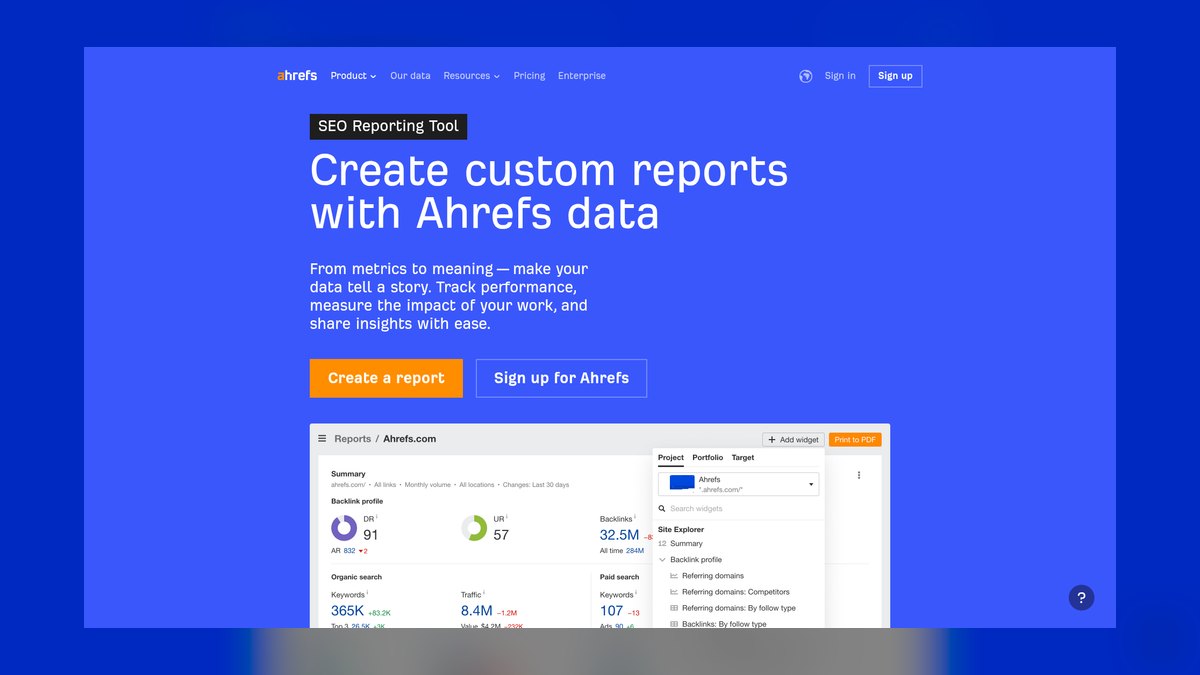
Ahrefs ranks third on the strength of the cleanest, most aggressively refreshed backlink index in the industry, which anchors its Domain Rating as an industry benchmark. Site Explorer, Keywords Explorer, Content Explorer, and the Site Audit crawler are daily drivers for link-focused analysts. It added an AI Content Helper and AI-assisted clustering, but deliberately stays research-first rather than chasing a writing product.
It's best for link builders, SEO analysts, and publishers who prioritize data accuracy over AI drafting. Plans start around $129/month for Lite. Where Semrush above bundles content tools into a broader suite, Ahrefs stays narrower and sharper on link data — its new AI Overviews tracking inside Rank Tracker is the standout 2027 addition.
4. Clearscope

Clearscope ranks fourth as the premium pick for editorial teams that treat content quality as non-negotiable, grading drafts on a clean A++ to F scale against current SERP terms. Its term recommendations are widely regarded as the most precise in the category, and the interface deliberately does content optimization and little else. A content inventory tracks how published pages decay over time, prompting timely refreshes.
It's best for content teams, editorial publishers, and agencies shipping high-stakes long-form work where one underperforming page is expensive. Pricing starts around $189/month with no cheap entry point. Compared to Surfer SEO at the top, Clearscope drops the AI-writing bundle entirely and charges more for narrower, more precise scoring.
5. MarketMuse
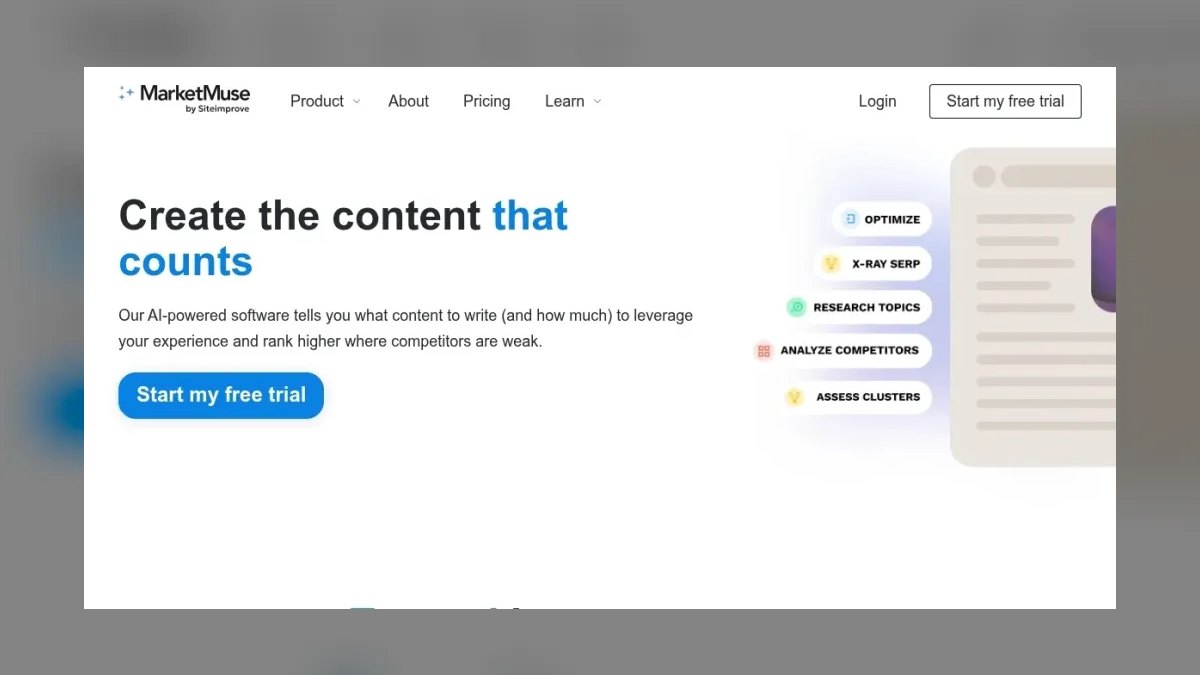
MarketMuse ranks fifth for approaching SEO through topic authority rather than single-keyword optimization, modeling your site against a topic to return Personalized Difficulty and Topic Authority scores. Its content briefs are among the most detailed available, mapping questions, subheadings, and related terms. The planning layer showing content gaps and surplus across an entire site is what separates it from pure on-page graders.
It's best for content strategists and editorial planners building topic clusters rather than chasing one-off posts. A genuinely useful free plan exists, with paid tiers starting around $149/month. Unlike Clearscope above, which grades individual drafts, MarketMuse plans entire content ecosystems — it fits poorly if you only optimize one article at a time.
6. Frase
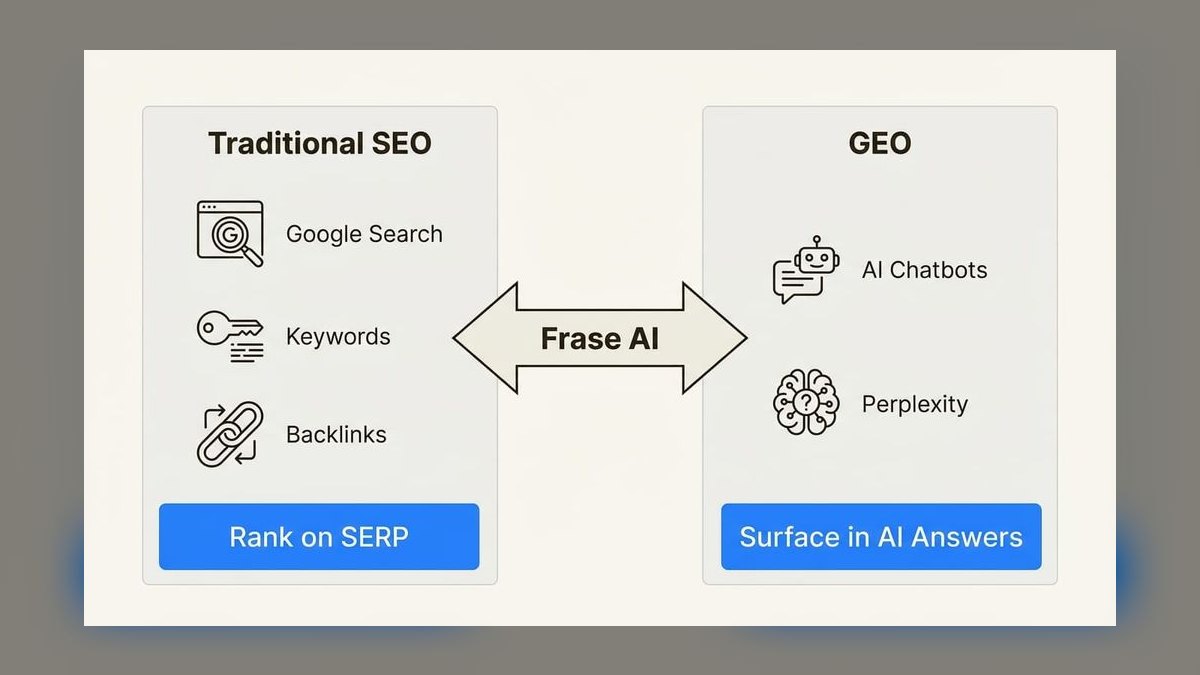
Frase ranks sixth for packing SERP research, content briefs, and AI writing into an affordable package that punches above its price. It scrapes top results for a query, builds a brief in seconds, and lets you draft against an optimization score in the same workspace. Its answer-focused approach anticipated the AI-answer era now defining search, ahead of pricier competitors.
It's best for freelancers, bloggers, and lean content teams wanting brief-to-draft speed without enterprise pricing. Plans start around $15/month with AI usage limits, scaling for unlimited drafting. Unlike MarketMuse above, which plans whole topic clusters, Frase optimizes for speed on individual articles rather than site-wide strategy.
7. Scalenut

Scalenut ranks seventh by combining keyword planning, content optimization, and AI long-form generation into one guided workflow. Its Cruise Mode walks users from keyword to finished draft in a guided sequence, while the Content Optimizer scores against live competitors and flags missing terms. The SEO Hub clusters keywords and plans topical coverage without requiring a separate tool.
It's best for small businesses and marketers wanting an end-to-end pipeline without stitching multiple tools together. Entry pricing sits around $39/month for Essential. Compared to Frase above, Scalenut offers more guided, beginner-friendly generation at a somewhat higher price point, sitting between budget tools and full-scale suites.
8. NeuronWriter
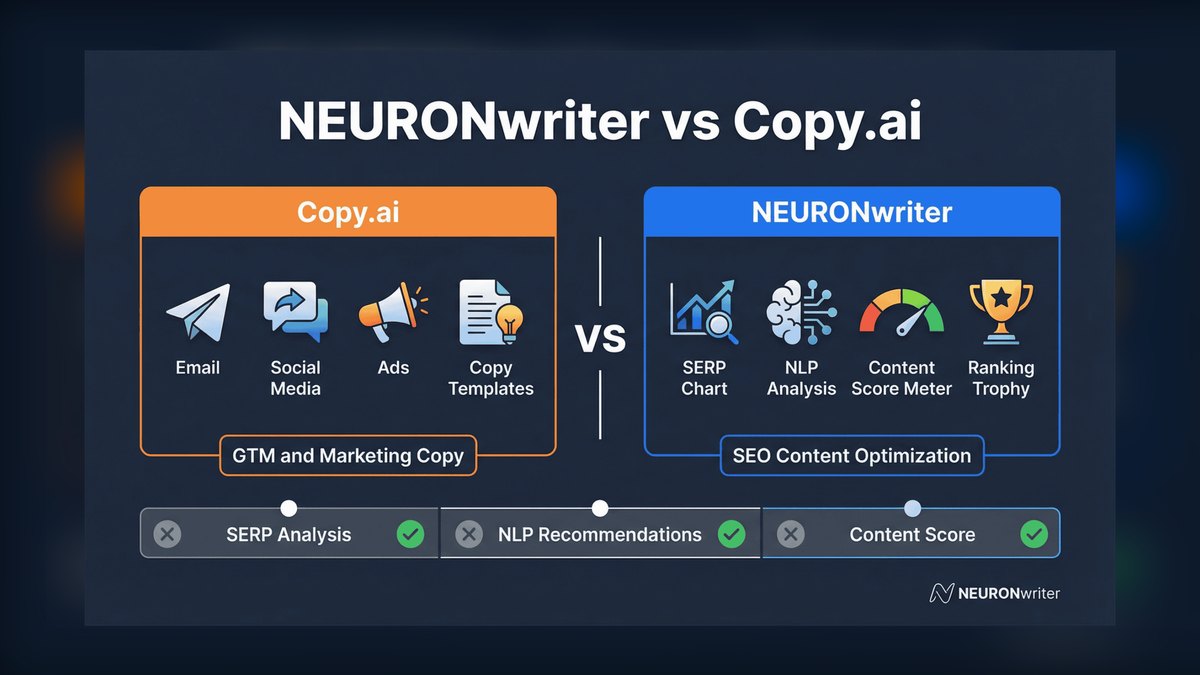
NeuronWriter ranks eighth as the best-value pick, delivering serious NLP content optimization at a fraction of the cost of the category leaders. It analyzes the SERP, builds a content score from competitor term usage, and provides semantic recommendations, competitor analysis, and AI drafting — core functionality that Surfer or Clearscope charge triple for. Internal linking suggestions and plagiarism checks round out the toolset.
It's best for freelancers, affiliate marketers, and budget-conscious agencies needing real optimization data without a premium subscription. Plans start around €23/month (roughly $25), often less annually. Unlike Scalenut above, NeuronWriter skips guided generation flows in favor of denser, cheaper, pure optimization data.
9. SE Ranking
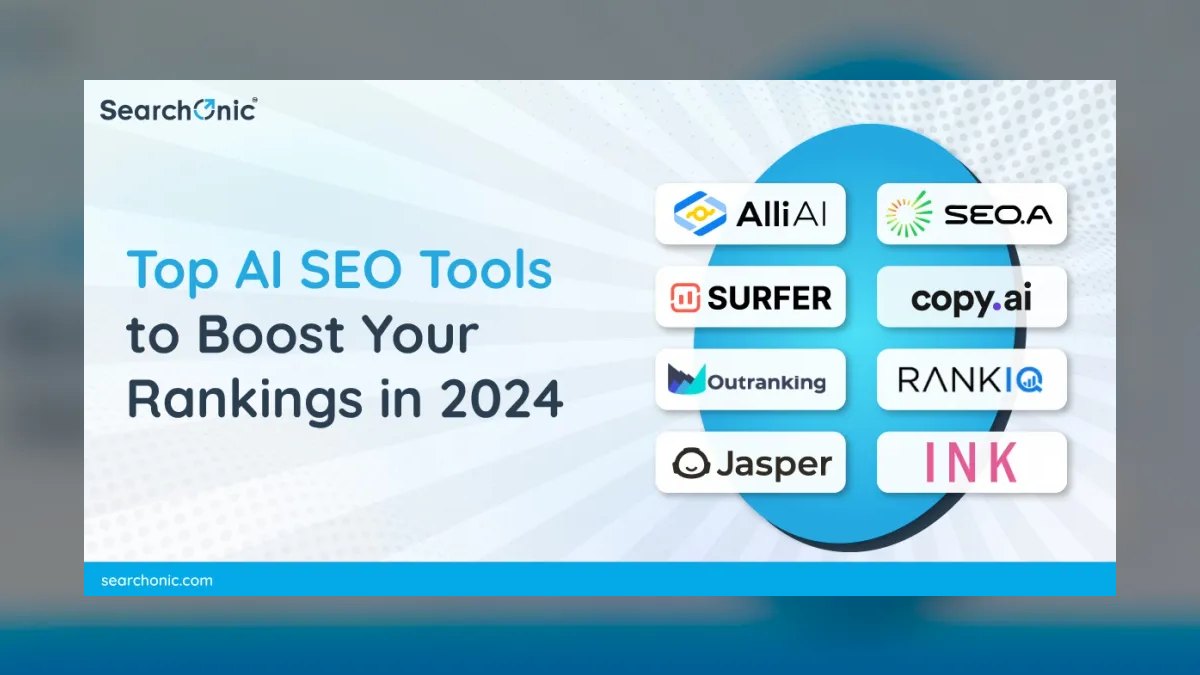
SE Ranking ranks ninth as an affordable all-in-one platform covering keyword rank tracking, site audits, competitor research, and an AI writer without Semrush- or Ahrefs-level pricing. Its rank tracker is precise and supports local and mobile tracking, and the on-page SEO checker gives clear, actionable fixes. Project dashboards make client reporting straightforward for smaller teams.
It's best for small agencies and SMBs wanting a credible full-suite tool at a mid-market price. Plans start around $65/month, scaling with keywords and projects tracked. It won't match the data depth of NeuronWriter's specialized optimization above, but it covers a wider set of SEO tasks for less than the top-tier suites.
10. Writesonic
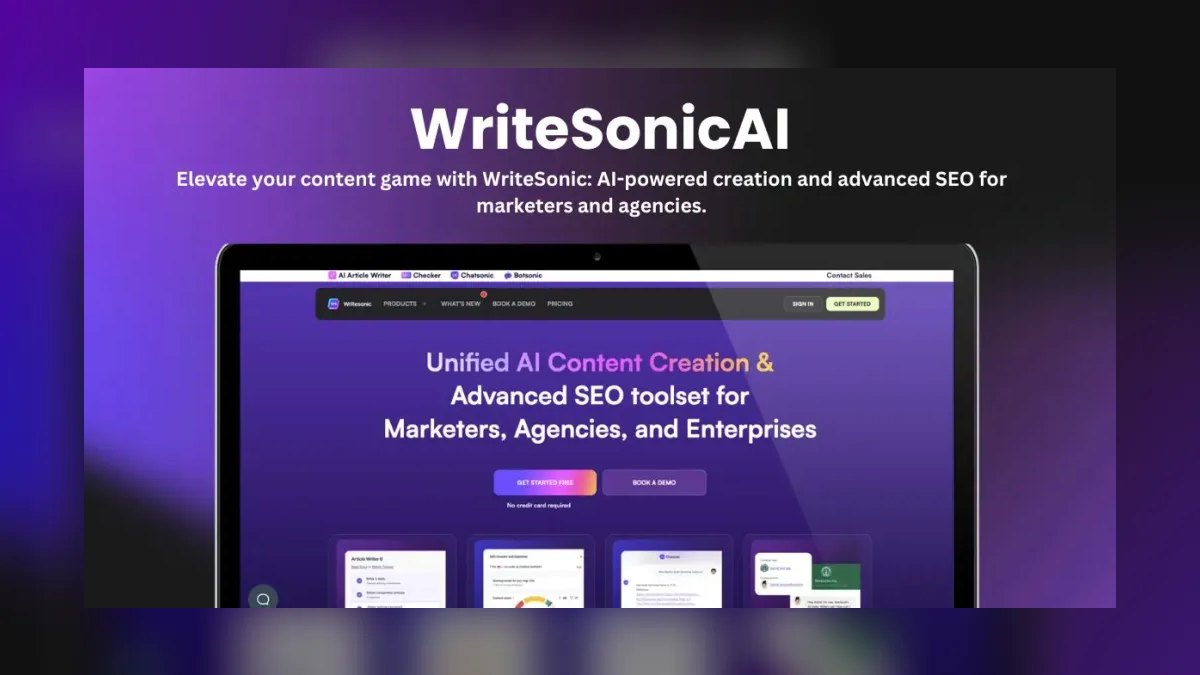
Writesonic ranks tenth as the AI-writing-forward option with real SEO features attached, closing out the list on speed rather than research depth. Its drafting engine produces long-form content quickly, and the platform added SEO optimization, fact-checking, and Chatsonic for research and real-time data. A 2027 push into AI Overviews tracking and brand-mention monitoring keeps it relevant for answer-engine visibility.
It's best for high-volume content teams and marketers prioritizing generation speed with optimization guardrails layered on top. Pricing scales with word and credit usage, with affordable entry tiers. Unlike SE Ranking above, Writesonic isn't a research suite at all — treat it as a drafting and monitoring tool, not a SERP analyzer.
How we ranked these
Each tool was scored on five weighted factors: SERP and NLP modeling (30%), which rewards analyzing live top-ranking pages for real terms, entities, and structure rather than generating generic text; AI output quality (25%), meaning drafts need light editing, not a rebuild; data depth (20%), the size and freshness of keyword and backlink indexes; workflow fit (15%), covering Google Docs, WordPress, and brief integrations; and value (10%), price weighed against capability including free tiers.
Deliberately ignored: vendor-reported customer counts and G2 star averages, since both are gameable and don't reflect ranking outcomes; raw feature-list length, which rewards bloat over usefulness; generic AI writing fluency divorced from SEO context; and marketing claims about 'AI-powered' anything without a visible scoring or SERP-analysis mechanism behind it. Enterprise-only add-ons priced outside typical SMB and agency budgets were noted but not allowed to inflate a tool's overall rank.
What to look for
What actually matters is matching the tool to the job you do daily: if you write or edit content, prioritize real-time SERP scoring and AI drafting (Surfer, Clearscope, NeuronWriter); if you manage a multi-client operation, prioritize keyword and backlink depth (Semrush, Ahrefs). Check whether AI Overview and generative-answer tracking is included or a paid add-on, since that's now core functionality, not a nice-to-have, in any 2027 evaluation.
The most common mistake is buying a full research suite like Semrush or Ahrefs expecting it to also write ranking-ready drafts, then being disappointed by bolted-on AI writers that lag purpose-built optimizers. The second mistake is picking the cheapest content grader without checking its NLP-term precision against a real SERP first; a $15/month tool that mis-scores terms wastes more editing time than a pricier, accurate one saves in subscription cost.
Related questions
Should I choose Surfer SEO or NeuronWriter if I'm on a tight budget?
NeuronWriter is the better fit under a tight budget — it delivers the same core SERP-term scoring and AI drafting as Surfer for roughly a quarter of the price, starting near €23/month versus Surfer's $99/month. Surfer's edge is a more polished interface and deeper Topical Map planning, but NeuronWriter covers the actual optimization workflow freelancers and affiliate marketers need daily.
Can I use Ahrefs and Surfer SEO together?
Yes, and many operators do — Ahrefs handles backlink analysis, keyword research, and technical audits, while Surfer handles on-page content scoring and drafting. They solve different problems rather than overlapping, so running both isn't redundant. Budget-conscious teams often pair Ahrefs Lite (~$129/month) with Surfer Essential (~$99/month) instead of a single $500/month all-in-one platform.
Why did Clearscope rank lower than Surfer despite better term precision?
Clearscope's term recommendations are widely regarded as the most precise in testing, but it was scored down on value and workflow breadth — it starts at $189/month, offers no AI-writing bundle comparable to Surfer AI, and does little beyond content grading. Surfer ranked higher because it combines strong precision with drafting, audits, and lower cost, serving more use cases per dollar.
Is MarketMuse worth it if I only publish one article a week?
Probably not. MarketMuse's real value is topic-cluster planning and Personalized Difficulty scoring across a whole site — features that shine when you're mapping dozens of pages, not writing occasionally. A single-article-per-week operator gets more immediate value from a per-article optimizer like Frase or NeuronWriter, saving MarketMuse's $149/month for when the content calendar actually scales up.
How does AI Overview tracking actually change which tool I should buy?
If a large share of your target queries already trigger Google's AI Overviews, prioritize tools that track and optimize for them specifically — Ahrefs, Semrush, and Surfer all added this in 2027, while older-generation optimizers didn't. Ignoring this shifts your buy toward classic ten-blue-links optimization on queries where that ranking position no longer drives clicks.
What's the real difference between Frase and Scalenut?
Frase is cheaper and leaner, starting near $15/month, built around fast SERP-based briefs and a lightweight optimization score for freelancers and lean teams. Scalenut costs more (~$39/month) but adds a guided end-to-end workflow, Cruise Mode, and a keyword-clustering SEO Hub, making it the better pick for small businesses that want a structured pipeline rather than a fast, minimal tool.
Should agencies pick Semrush over Ahrefs for client work?
For agencies juggling SEO, PPC, and content reporting across multiple clients under one login, Semrush's broader suite (Copilot, ContentShake AI, Position Tracking) usually wins on convenience. Ahrefs still edges it out on backlink data accuracy and Domain Rating reliability, so link-building-focused agencies often keep both, or default to Ahrefs and add a separate content optimizer instead of Semrush's bundled one.
Does a higher price always mean better AI SEO output?
No. Clearscope and Semrush charge premium prices, but NeuronWriter's SERP-modeling and term recommendations perform close to Surfer's at a quarter of the cost, and Frase generates usable briefs for a fraction of MarketMuse's price. Price mostly tracks data breadth and workflow polish, not raw optimization accuracy — test the actual term suggestions before assuming cost equals quality.
FAQ
Which AI SEO tool is best overall in 2027?
Surfer SEO is the best overall pick because it combines real-time Content Score scoring, SERP Analyzer research, and Surfer AI drafting in one workspace, so content moves from keyword to ranking-ready draft without switching tools. Semrush is the strongest runner-up for teams that also need backlink and rank-tracking data alongside content.
What's the best free or cheapest AI SEO tool to start with?
MarketMuse offers a genuinely useful free plan with limited queries, making it a no-cost way to test topic-cluster planning. For paid entry, Frase starts near $15/month for briefs and light drafting, and NeuronWriter starts near €23/month for full NLP scoring — both far cheaper than Surfer or Semrush.
Do these tools guarantee higher Google rankings?
No tool guarantees rankings — Google's algorithm weighs hundreds of signals beyond on-page term matching, including backlinks, user experience, and page experience. These tools improve the odds by aligning content with what's already ranking and flagging technical gaps, but they're an input to strategy, not a substitute for good content and a healthy site.
Which tool has the largest keyword database?
Semrush leads with a keyword database exceeding 26 billion keywords, paired with a backlink index running into the trillions of links. Ahrefs is close behind and is generally considered more accurate on backlink freshness and Domain Rating, even though its raw keyword count trails Semrush's.
Can I fully automate content publishing with these AI tools?
You shouldn't. Every tool here still expects a human editor to fact-check and refine AI drafts before publishing. Google's spam policies specifically penalize scaled, unedited AI content, and none of these platforms are designed or marketed as fully autonomous publishing pipelines — they accelerate drafting and optimization, not remove human review.
Is Ahrefs or Semrush better for a solo blogger?
Neither is ideal for a solo blogger on a budget — both are priced and built for agencies and technical SEOs, starting near $129-140/month. A solo operator gets more direct value from a content optimizer like NeuronWriter or Frase, adding a research suite later once traffic and revenue justify the cost.
How often should I re-check a tool's term recommendations against a live SERP?
Do it before switching or renewing any subscription, and roughly quarterly afterward, since SERPs and Google's ranking signals shift. Run the same target keyword through your current tool and one alternative, then compare their suggested terms against what the actual top-ranking page uses — the tool matching reality most closely is doing its job.
What's the biggest new feature across AI SEO tools in 2027?
AI Overview and generative-answer tracking is the standout 2027 addition — Ahrefs, Semrush, Surfer, and Writesonic all added ways to see when your pages surface inside Google's AI Overviews or get cited by other generative engines. As zero-click search grows, this tracking has moved from a nice-to-have to a core evaluation criterion.
Sources
- https://surferseo.com/
- https://www.semrush.com/
- https://ahrefs.com/
- https://www.clearscope.io/
- https://www.marketmuse.com/
- https://www.frase.io/
- https://neuronwriter.com/
- https://developers.google.com/search/blog/2023/02/google-search-and-ai-content
Related on PULSE
- [More ai tools for seo rankings and buying guides](/knowledge)
- [PULSE Tools and calculators](/tools)
- [Everything on PULSE RevOps](/)
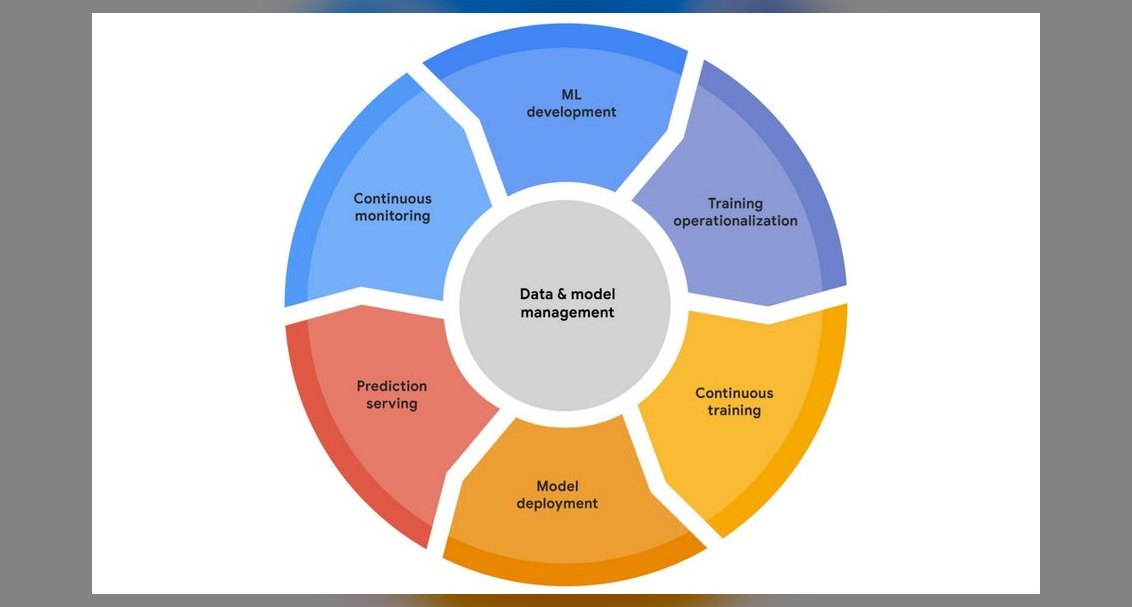 pulse-ai-infrastructureThe 10 Best MLOps Platforms in 2027
 pulse-ai-infrastructureHow do you prevent prompt injection at the infrastructure layer?
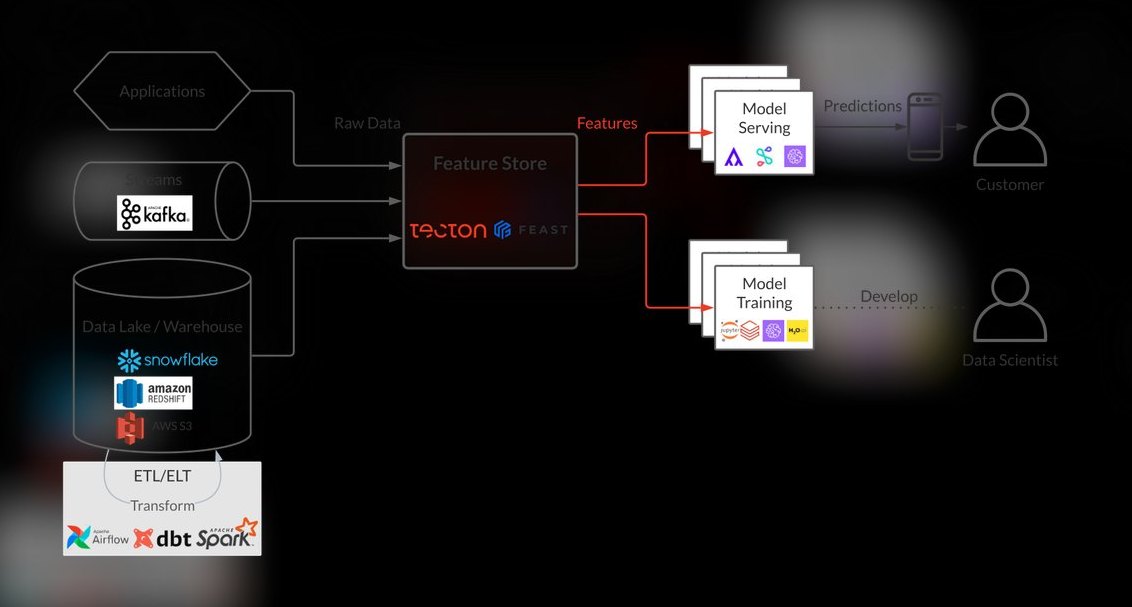 pulse-ai-infrastructureWhat is a feature store and do you still need one for LLM apps?
 pulse-ai-infrastructureHow do you route requests across multiple LLM providers?
 pulse-ai-infrastructureWhat is a vector index and how do HNSW and IVF differ?
 pulse-ai-infrastructureThe 10 Best GPU Cloud Providers for AI Training in 2027
 pulse-ai-infrastructureThe 10 Best AI Tools for Web Illustration in 2027
 pulse-ai-infrastructureThe 10 Best AI Tools for Presentations and Slide Decks in 2027
 pulse-ai-infrastructureThe 10 Best AI Tools for Tax Preparation in 2027
 pulse-ai-infrastructureThe 10 Best AI Tools for DevOps Automation in 2027