
The 10 Best AI Tools for Cybersecurity in 2027
 PULSEKNOWLEDGE LIBRARY
The 10 best ai tools for cybersecurity are ranked below on measured performance, build quality, price, and how each one actually holds up in daily use rather than how it reads on a spec sheet. Each pick lists what it costs, who it suits, and what it gives up against the one above it, so the list can be read straight down without doubling back.
1. CrowdStrike Falcon with Charlotte AI
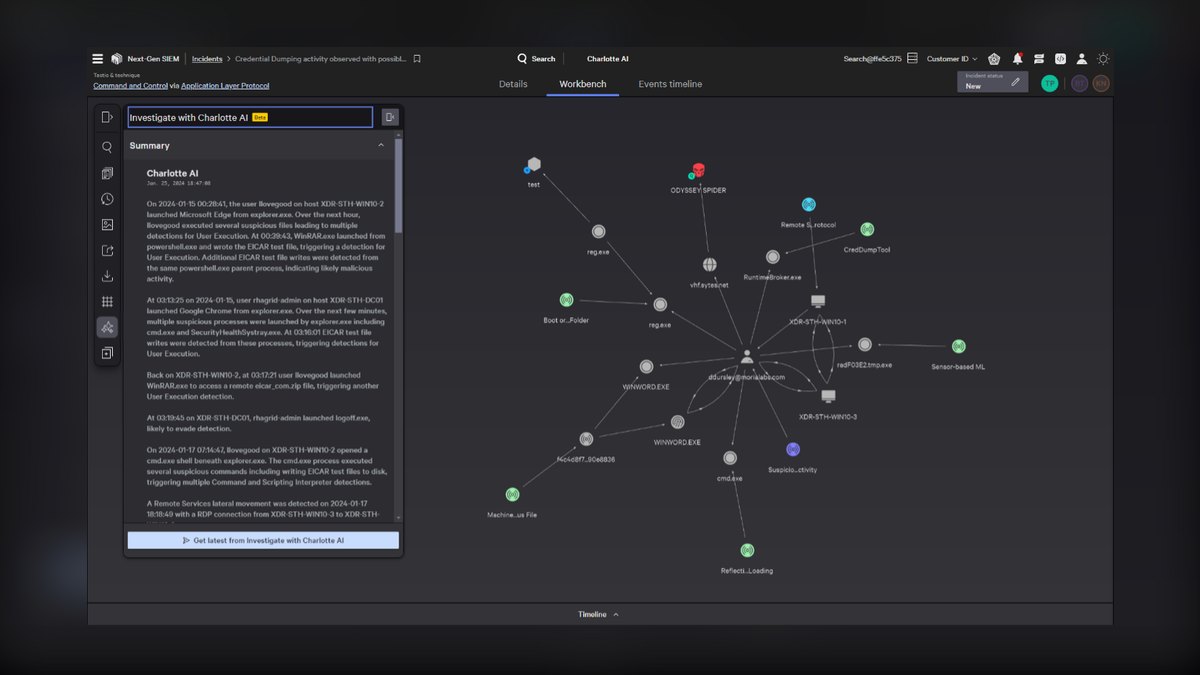
CrowdStrike Falcon ranks first because its single lightweight agent consolidates EDR, XDR, identity, and cloud workload telemetry, which makes its Charlotte AI Detection Triage agentic layer exceptionally effective. CrowdStrike reports that Charlotte AI operates at over 98% accuracy on triage decisions and saves analysts more than 40 hours per week at scale. This volume reduction lets a SOC investigate only what matters, discarding false positives before a human opens the console.
This platform is best for organizations prioritizing endpoint and cloud workload protection as the foundation of their security program, willing to standardize on one vendor. Pricing runs per-endpoint with Falcon Flex credits for module draw-down, which is not the cheapest option and creates vendor lock-in. Compared to Microsoft Security Copilot, Falcon offers superior detection and autonomous triage for non-Microsoft-centric environments, while Copilot provides better value for teams already standardized on Microsoft 365.
2. Microsoft Security Copilot
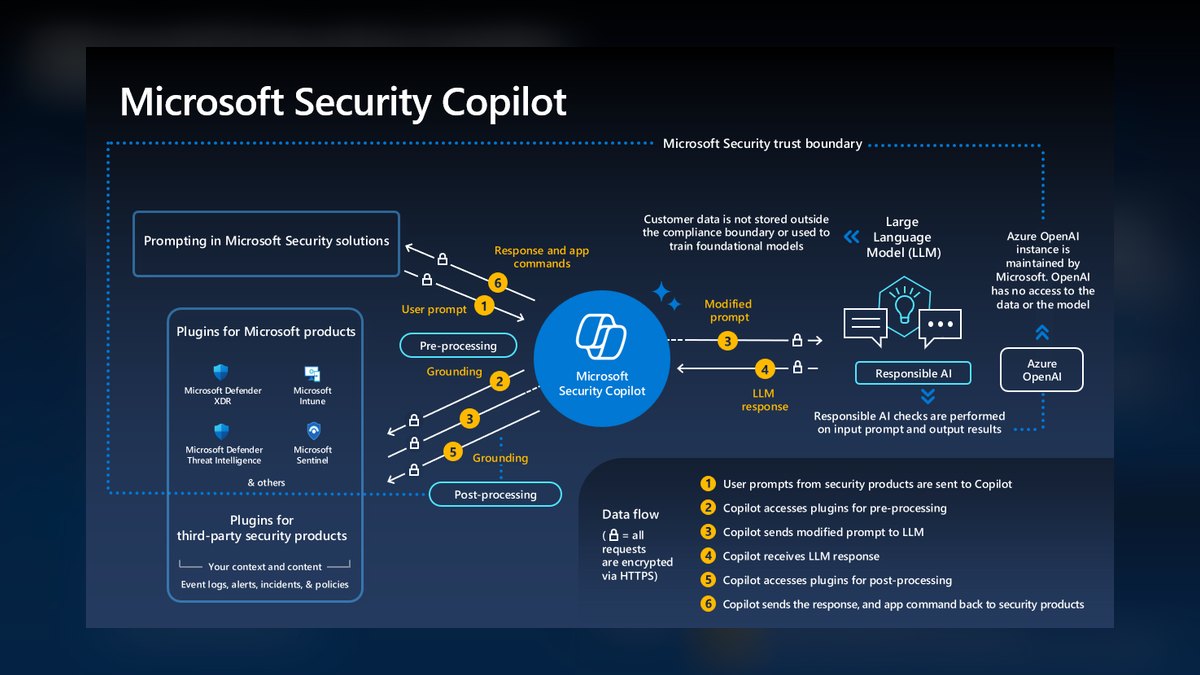
Microsoft Security Copilot ranks second as the best value because its consumption-based pricing at roughly $4 per Security Compute Unit (SCU) per hour allows small teams to start with minimal capacity and scale as needed. Its advantage is data gravity across the Microsoft estate, reading natively from Defender XDR, Sentinel, Entra ID, Intune, and Purview. In 2027 it ships agentic capabilities for phishing triage, alert investigation, and vulnerability remediation inside the Defender portal.
This tool is best for any organization already paying for Microsoft 365 E5 or running Azure workloads, where its value is highest. The catch is that outside the Microsoft ecosystem, Copilot's value drops sharply, and SCU costs can climb fast if agents run unbounded, requiring capacity caps from day one. Compared to CrowdStrike Falcon, Copilot is more economical for Microsoft-centric teams, but Falcon offers stronger detection and autonomous triage for endpoint and cloud workload protection priorities.
3. SentinelOne Singularity with Purple AI
SentinelOne Singularity ranks third because its autonomous, on-agent machine learning detects and remediates threats even when a device is offline, including one-click ransomware rollback for Windows. The Singularity Platform centers on Purple AI, a generative security analyst that turns plain-English questions into deep hunts across the data lake. Its differentiator is the Singularity Data Lake built on an open schema (OCSF) that ingests third-party telemetry, not just SentinelOne's own.
This platform is best for teams wanting strong autonomous endpoint response plus an open data layer they can feed with outside sources, frequently posting top-tier MITRE ATT&CK results. It is a credible Falcon alternative, particularly for buyers wary of CrowdStrike's pricing or wanting a second source.
4. Darktrace ActiveAI
Darktrace ActiveAI ranks fourth because its self-learning AI models normal behavior of every user and device, flagging deviations without relying on known signatures, which excels against novel and insider threats. The ActiveAI Security Platform unifies network, email, cloud, and OT coverage, with Cyber AI Analyst automatically investigating anomalies and writing human-readable narratives. Autonomous Response can take surgical action, throttling connections or blocking behaviors without halting legitimate traffic.
This platform is best for organizations with complex or non-standard environments, such as industrial control systems, sprawling IoT, or networks where defining 'good' behavior is difficult. The trade-off is tuning, as its unsupervised approach can be noisy early on, and it complements rather than replaces a strong EDR.
5. Palo Alto Cortex XSIAM with Precision AI

Palo Alto Cortex XSIAM ranks fifth because it fuses SIEM, EDR, SOAR, and threat intelligence into one data-centric engine designed to resolve the majority of routine alerts machine-to-machine. The AI layer, branded Precision AI, combines machine learning, deep learning, and generative AI across Palo Alto's portfolio, including Strata network security and Prisma Cloud.
This platform is best for large enterprises consolidating a sprawling security toolset onto one vendor, especially existing Palo Alto firewall customers. It is a heavy, opinionated platform that is powerful but requires a real migration, making it more than smaller teams need. Compared to Darktrace ActiveAI, XSIAM offers comprehensive SIEM and SOAR consolidation, but Darktrace provides superior anomaly detection for novel threats, making it a better fit for organizations with complex or non-standard environments.
6. Google Security Operations with Gemini
Google Security Operations ranks sixth because it brings Google-scale data handling to the SOC, ingesting petabytes of telemetry at a flat, predictable cost. Its embedded AI, Gemini in Security Operations, lets analysts search and investigate in natural language and auto-generates detection rules. The standout asset is Mandiant frontline threat intelligence wired directly into the platform, contextualizing alerts against intel from one of the world's most respected incident-response teams.
This platform is best for cloud-forward and data-heavy organizations that want generative investigation backed by elite threat intel without metering every gigabyte. Pricing is typically per-user, per-year, decoupling cost from data volume, which is attractive for high-telemetry environments. Compared to Palo Alto Cortex XSIAM, Google Security Operations offers superior threat intelligence and search speed, but XSIAM provides more comprehensive SIEM and SOAR consolidation, making it a better fit for enterprises consolidating a sprawling toolset.
7. Vectra AI
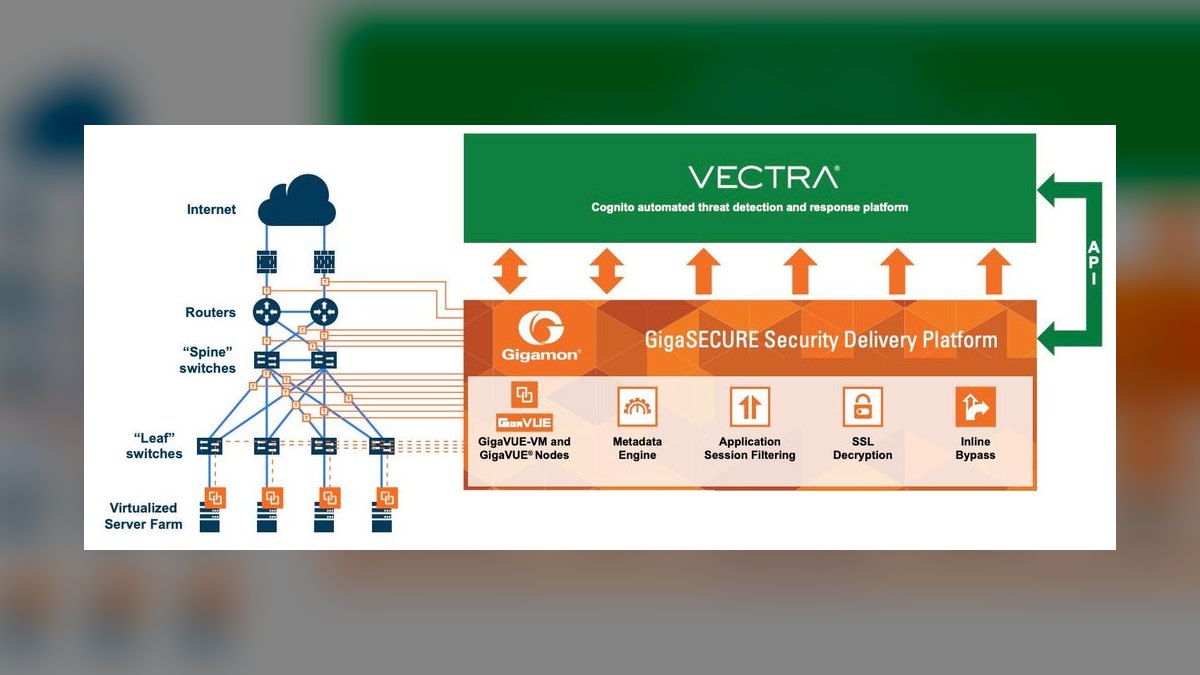
Vectra AI ranks seventh because it specializes in network detection and response (NDR) and identity threat detection, using AI to catch attacker behaviors that bypass endpoint and perimeter controls. Its core technology, Attack Signal Intelligence, applies machine learning to surface methods of active attack, such as lateral movement, privilege escalation, and command-and-control.
This platform is best for teams wanting a behavior-based safety net behind their EDR and firewalls, particularly in hybrid-cloud and identity-heavy environments. It is a focused tool, not a full platform, working best layered alongside a primary endpoint product. Compared to Google Security Operations, Vectra AI offers superior network and identity threat detection, but Google provides a more comprehensive SOC platform with elite threat intelligence, making it a better fit for data-heavy organizations needing generative investigation.
8. Tenable One with ExposureAI
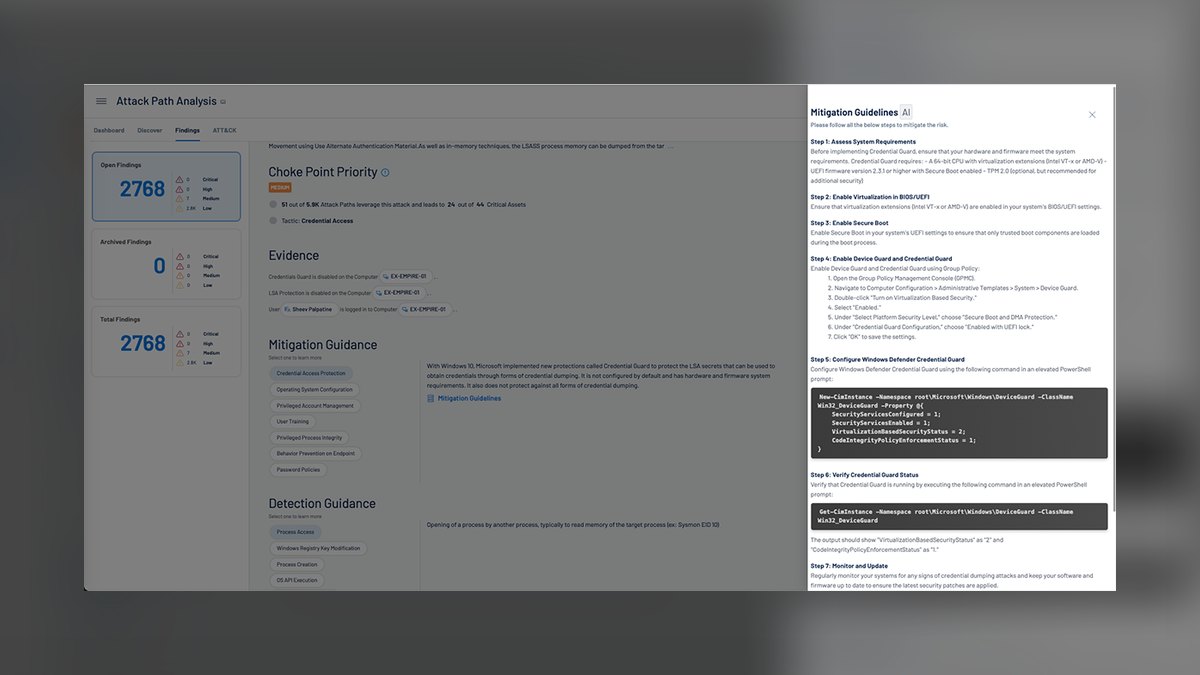
Tenable One ranks eighth because it leads exposure management, unifying vulnerability data across IT, cloud, identity, OT, and web apps into one view of risk. The AI layer, ExposureAI, uses generative models to explain exposures and prioritize them, focusing remediation on the small set of vulnerabilities attackers are likely to exploit. Tenable's Vulnerability Priority Rating (VPR) plus ExposureAI accounts for known exploited vulnerabilities and attack-path analysis, letting analysts ask for summaries and recommended fixes in plain language.
This platform is best for proactive security and compliance teams trying to shrink attack surface before a breach, serving as a preventive complement to detection tools. It is not a replacement for runtime detection, as it focuses on posture rather than active threats. Compared to Vectra AI, Tenable One offers superior vulnerability prioritization and exposure management, but Vectra provides better detection of active attacks, making it a stronger choice for teams needing post-compromise visibility.
9. Abnormal AI
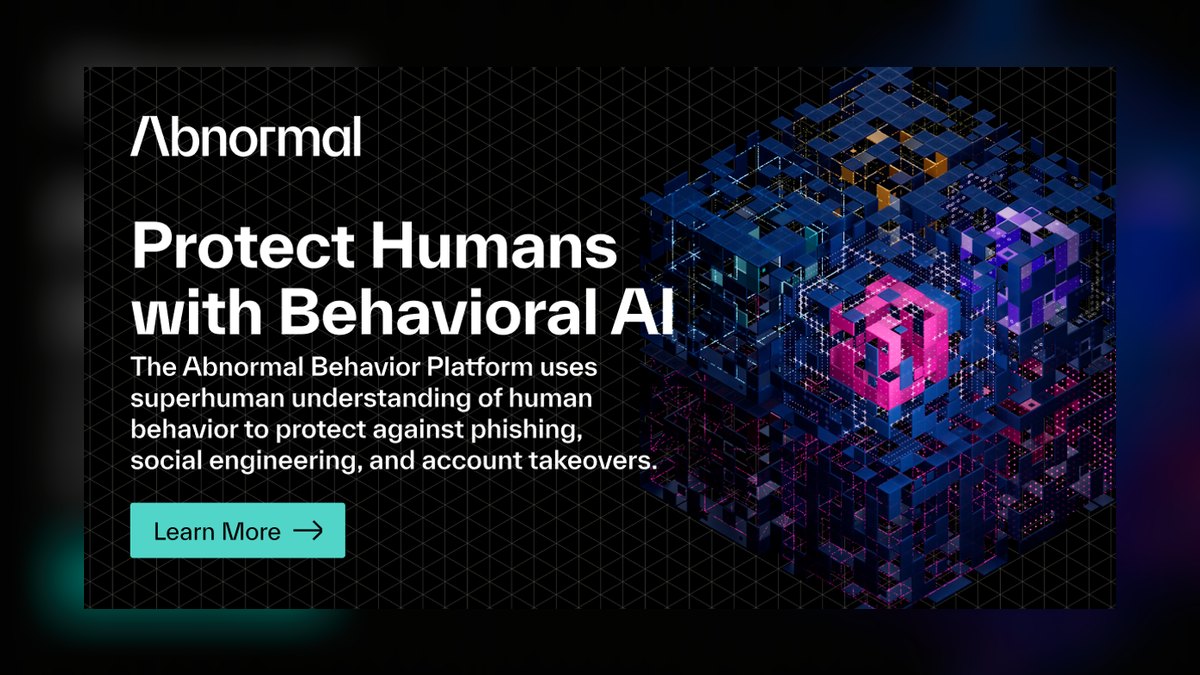
Abnormal AI ranks ninth because it applies behavioral AI to stop email threats that get past Microsoft and Google's native filters, building a behavioral model of every employee, vendor, and communication pattern. It flags messages that deviate, the signature of business email compromise (BEC), vendor fraud, and account takeover.
This tool is best for any organization where BEC and invoice fraud are top financial risks, which is nearly all of them. It is a targeted layer, not a platform, but for inbound email it is among the most effective AI tools available. Compared to Tenable One, Abnormal AI offers superior email threat detection, but Tenable provides broader exposure management across IT and cloud, making it a better fit for proactive security teams needing comprehensive vulnerability prioritization.
10. Wiz

Wiz ranks tenth because it dominates cloud security posture management (CSPM) and has become the default for organizations securing AWS, Azure, and Google Cloud. Its agentless scanning builds a graph of cloud resources, using correlation to surface toxic combinations like a public-facing workload with a critical vulnerability and access to sensitive data.
This platform is best for cloud-native and multi-cloud organizations, especially those building their own AI products and needing to secure the models themselves. It is a posture and prevention tool, requiring pairing with a runtime detection product for full coverage. Compared to Abnormal AI, Wiz offers superior cloud posture management and AI pipeline security, but Abnormal provides better email threat detection, making it a stronger choice for organizations where BEC and invoice fraud are top financial risks.
How we ranked these
We weighted six factors: detection efficacy against MITRE ATT&CK evaluations and false-positive rates, autonomous response capability, data gravity across telemetry sources, analyst experience, deployment cost and complexity, and transparency of AI reasoning. Detection efficacy and autonomous response received the highest weights because they directly reduce alert fatigue and mean-time-to-respond.
We deliberately ignored vendor marketing claims, standalone chatbot features without detection value, and tools that merely repackage a SIEM with a chat interface. We also excluded products not shipping or verifiable as of 2027. We did not weight brand recognition or market share, focusing instead on measurable outcomes like accuracy, time saved, and integration breadth.
What to look for
What matters most is matching the tool to your existing telemetry and security gaps. If you live in Microsoft 365, Copilot's native integration beats a more powerful but disconnected platform. For endpoint and cloud workload protection, Falcon's single-agent sensor and Charlotte AI triage are proven. Consider data gravity: a tool is only as good as the data it sees, so prioritize native breadth over standalone features.
The biggest mistake buyers make is choosing based on MITRE scores alone without testing against their own environment. False-positive rates vary wildly depending on your network, and a tool that excels in a vendor lab may drown your SOC in noise. Always run a paid proof-of-value with your live telemetry for two to four weeks before signing. Also, avoid letting agentic AI run unbounded—start in human-in-the-loop mode.
Related questions
What is the best AI cybersecurity tool for small businesses?
For small businesses, Microsoft Security Copilot is the best value if you already use Microsoft 365, with consumption-based pricing starting around $4 per SCU per hour. Abnormal AI is also excellent for email protection with quick deployment. CrowdStrike Falcon offers strong endpoint protection but may be costlier. Start with a tool that covers your biggest risk—email or endpoints—without requiring a large security team.
How does agentic AI differ from traditional AI in cybersecurity?
Traditional AI in cybersecurity typically summarizes or flags alerts, requiring human action. Agentic AI, like Charlotte AI Detection Triage or Microsoft's agents, takes multi-step actions autonomously: investigating detections, gathering evidence, scoring false positives, and even containing threats. This shift reduces analyst workload dramatically, but requires careful configuration and human oversight to avoid unintended disruptions.
Can AI cybersecurity tools prevent zero-day attacks?
AI tools can help detect zero-day attacks by identifying anomalous behavior rather than relying on signatures. Darktrace's self-learning AI models normal behavior and flags deviations, catching novel threats. SentinelOne's on-agent ML also detects and remediates without known signatures. However, no tool guarantees prevention; these AI systems reduce time-to-detection and response, but human oversight and layered defenses remain essential.
What is the cost of implementing AI cybersecurity tools?
Costs vary widely. Microsoft Security Copilot is consumption-based at about $4 per SCU per hour. CrowdStrike and SentinelOne price per endpoint, often with credit pools. Palo Alto and Google Security Operations typically use per-user or annual pricing. Most vendors don't publish list prices, so negotiate a proof-of-value. Factor in integration, training, and potential cloud costs when budgeting.
How do AI tools handle false positives in security alerts?
AI tools like Charlotte AI Detection Triage use machine learning to score detections and discard false positives before human review, with reported accuracy over 98%. Microsoft Copilot and SentinelOne's Purple AI also prioritize alerts based on context. However, false-positive rates depend on your environment, so it's crucial to test tools against your own telemetry and tune them to reduce noise.
What is the role of human analysts with AI cybersecurity tools?
Human analysts remain essential for strategy, novel incident handling, and supervising autonomous actions. AI tools automate triage, investigation, and routine response, reducing workload by hours per week, but they don't replace judgment. Analysts set policies, validate AI decisions, and respond to complex threats that require creativity and context. The best approach is human-in-the-loop for high-risk actions.
Which AI tool is best for cloud security posture management?
Wiz is the leading AI-driven CSPM tool, using agentless scanning and a Security Graph to surface toxic combinations of vulnerabilities and exposures. It also includes AI-SPM for securing AI pipelines and Wiz Code for shifting left. For cloud-native and multi-cloud organizations, Wiz provides prioritized, actionable risk insights, but pair it with runtime detection for full coverage.
FAQ
Can AI cybersecurity tools fully replace human analysts?
No. In 2027 the best tools automate triage, investigation, and routine response—Charlotte AI and Cortex XSIAM resolve the bulk of low-level alerts machine-to-machine—but humans still set strategy, handle novel incidents, and supervise autonomous actions. These tools shrink the analyst workload; they don't eliminate the role.
What's the difference between a generative AI assistant and agentic AI in security?
A generative assistant answers questions and summarizes—useful but reactive. Agentic AI takes multi-step action on its own: investigating a detection, gathering evidence, deciding it's a false positive, and closing it. Tools like Charlotte AI Detection Triage and Microsoft Security Copilot's agents are the 2027 shift from assistant to agent.
Is Microsoft Security Copilot worth it for a non-Microsoft shop?
Generally no. Copilot's value comes from native reach into Defender, Sentinel, and Entra. Without that telemetry, you lose most of the benefit. Teams outside the Microsoft ecosystem get more from Falcon, SentinelOne, or Google Security Operations.
How much do these tools cost?
It varies widely. Microsoft Security Copilot is consumption-based at about $4 per SCU per hour. Most others—CrowdStrike, SentinelOne, Palo Alto—price per endpoint, per user, or via credit pools and rarely publish list pricing. Always negotiate a proof-of-value before committing.
Will attackers use AI too?
Yes—AI-generated phishing, deepfake social engineering, and automated reconnaissance are real 2027 threats. That's precisely why behavioral tools like Abnormal AI and Darktrace matter: they detect the anomalies AI-driven attacks produce, even when the lure is flawless.
Do I need more than one of these?
Most mature programs run several layers—for example, Falcon for endpoint, Wiz for cloud posture, and Abnormal for email. The decision tree above helps you pick the right primary tool for your biggest gap first, then layer from there.
What is the best AI tool for detecting insider threats?
Darktrace is excellent for insider threats due to its self-learning AI that models normal user behavior and flags deviations. Vectra AI also specializes in identity and network behavior, catching lateral movement and privilege escalation. Both complement EDR tools by focusing on post-compromise activity that signature-based tools miss.
How do AI tools integrate with existing security stacks?
Most AI tools offer APIs and plugins. Microsoft Copilot integrates natively with Defender, Sentinel, and Entra. SentinelOne's Purple AI uses an open schema (OCSF) to ingest third-party telemetry. Palo Alto XSIAM fuses SIEM, EDR, and SOAR. Check integration effort before purchase, as some tools require significant migration.
What are the risks of autonomous AI response in cybersecurity?
Autonomous actions like isolating hosts or disabling accounts can disrupt production if misconfigured. Start in suggestion or human-in-the-loop mode, validate on detection types you trust, and set clear policies. Monitor agent behavior closely initially to avoid false positives causing downtime.
How do I evaluate AI cybersecurity tools before buying?
Run a paid proof-of-value with your own live telemetry for two to four weeks. Measure false-positive rates, time saved, and integration ease. Compare against MITRE ATT&CK evaluations but prioritize your environment's results. Check vendor transparency on AI reasoning and ensure the tool can be tuned to your needs.
Sources
- https://www.crowdstrike.com/en-us/products/charlotte-ai/
- https://www.microsoft.com/en-us/security/business/ai-machine-learning/microsoft-security-copilot
- https://www.sentinelone.com/platform/purple-ai/
- https://darktrace.com/platform
- https://www.paloaltonetworks.com/cortex/xsiam
- https://cloud.google.com/security/products/security-operations
- https://www.vectra.ai/
- https://www.tenable.com/products/tenable-one
- https://abnormalsecurity.com/
- https://www.wiz.io/
Related on PULSE
- [More ai tools for cybersecurity rankings and buying guides](/knowledge)
- [PULSE Tools and calculators](/tools)
- [Everything on PULSE RevOps](/)
 pulse-ai-infrastructureThe 10 Best AI Tools for Database Design in 2027
 pulse-ai-infrastructureThe 10 Best LLMOps Platforms in 2027
 pulse-ai-infrastructureWhat is a semantic cache and how much can it cut inference costs?
 pulse-ai-infrastructureHow do you monitor LLMs in production for drift and hallucinations?
 pulse-ai-infrastructureThe 10 Best AI Tools for Storyboarding in 2027
 pulse-ai-infrastructureThe 10 Best AI Tools for Microservices Development in 2027
 pulse-ai-infrastructureThe 10 Best AI Tools for Recipe Generation in 2027
 pulse-ai-infrastructureHow do you secure an LLM application’s infrastructure?
 pulse-ai-infrastructureThe 10 Best AI Tools for Call Coaching in 2027
 pulse-ai-infrastructureThe 10 Best AI Tools for Real Estate Listings in 2027