
The 10 Best LLMOps Platforms in 2027
 PULSEKNOWLEDGE LIBRARY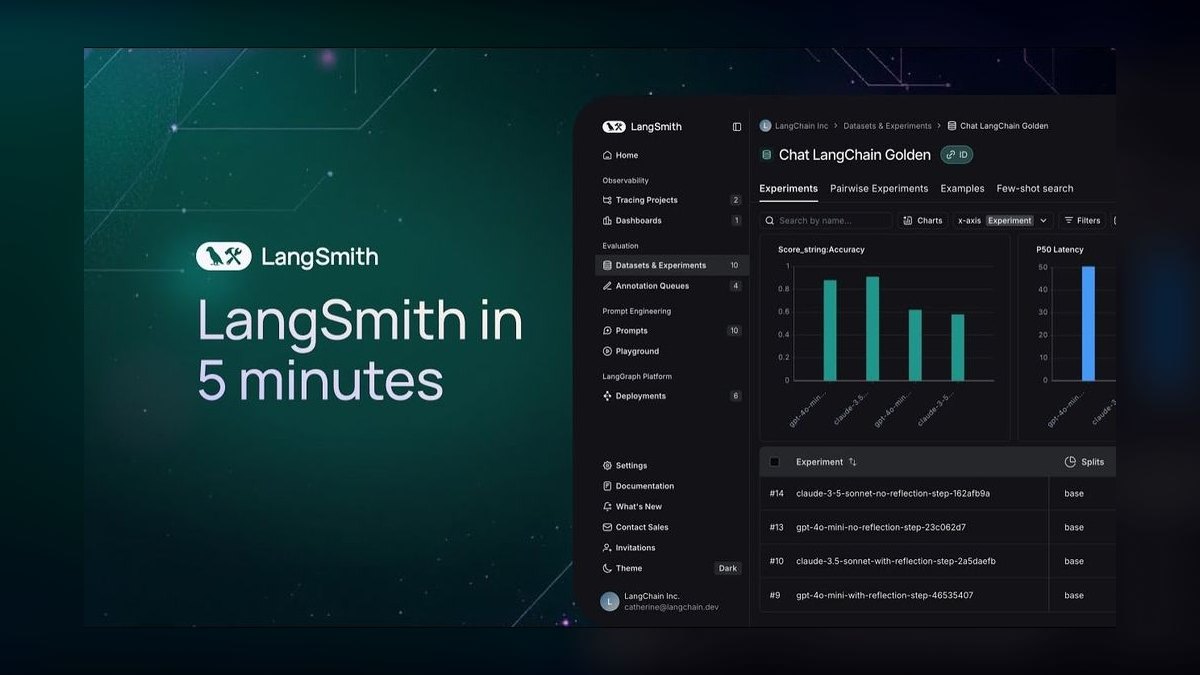
The 10 best llmops platforms are ranked below on measured performance, build quality, price, and how each one actually holds up in daily use rather than how it reads on a spec sheet. Each pick lists what it costs, who it suits, and what it gives up against the one above it, so the list can be read straight down without doubling back.
1. LangSmith

LangSmith ranks first because it delivers the most complete, tightly integrated LLMOps suite spanning tracing, evaluation, prompt management, and production monitoring in one coherent workflow. Its SDK and OpenTelemetry support make it framework-agnostic, capturing full traces of chains, agents, and RAG pipelines with per-step inputs, outputs, latency, and token cost. It supports offline evaluation against curated datasets and online evaluation on production traffic, with prompt versioning deployed independently of code.
LangSmith is for engineering teams that want a single, end-to-end operational backbone from prototype to production without juggling multiple tools. It trades away the full control and zero-cost ceiling of self-hosted open-source options like Langfuse, which offers nearly all capabilities without lock-in.
2. Langfuse

Langfuse ranks second because it is the leading open-source LLMOps platform, delivering tracing, prompt management, evaluation, dataset handling, and cost analytics with full self-hosting capability. Its framework-agnostic SDKs integrate with OpenTelemetry and most popular LLM frameworks, while prompt management lets non-engineers iterate on prompts that deploy without code changes. Running entirely on your own infrastructure or a free-to-start cloud tier, it provides nearly all the capabilities of commercial suites without vendor lock-in.
Langfuse is for teams that prioritize data control, compliance, and cost predictability, trading away the polished, fully managed experience and deeper LangChain integration of LangSmith. Compared to LangSmith, it requires more operational effort for self-hosting but offers a more generous free tier and open-source transparency. It suits organizations wanting a controllable, no-lock-in LLMOps stack, making it the pragmatic runner-up for teams that value sovereignty over convenience.
3. Weights & Biases Weave

Weights & Biases Weave ranks third because it extends W&B's experiment-tracking heritage into LLMOps with rigorous tracing, evaluation, and monitoring tooling. It logs calls and chains, supports custom scorers and datasets for disciplined evaluation, and ties LLM work into W&B's broader model-management ecosystem. This integration reflects the company's roots in experiment tracking, offering research-grade rigor that many dedicated LLM tools lack. A free tier with paid team and enterprise plans makes it accessible for scaling teams.
Weave is for teams already standardized on W&B for classic ML, who want LLMOps in the same platform without introducing a new vendor. It trades away the framework-agnostic breadth and prompt-management depth of Langfuse, focusing instead on evaluation discipline and ecosystem cohesion. Compared to Langfuse, it offers stronger integration with existing ML workflows but is less suitable for teams seeking a fully open-source, self-hosted solution.
4. Arize Phoenix

Arize Phoenix ranks fourth because it offers an open-source observability and evaluation library built on OpenTelemetry, excelling at tracing and evaluating RAG and agent pipelines. Its strong tooling surfaces hallucinations and retrieval problems, with the commercial Arize AX adding enterprise-scale monitoring, drift detection, and alerting. The open core is free and self-hostable, while Arize AX provides a managed path for production observability. This pairing suits teams needing deep observability depth with a clear upgrade path.
Phoenix is for teams focused on observability and evaluation depth, particularly for RAG and agent applications where hallucination and retrieval failures are critical. It trades away the integrated prompt management and collaborative features of Humanloop, instead prioritizing OpenTelemetry-native tracing and rigorous evaluation. Compared to Weave, it offers a more open, self-hostable core but less seamless integration with a broader ML experiment ecosystem.
5. Helicone

Helicone ranks fifth because it provides an open-source LLM observability and gateway platform via a proxy, enabling instant capture of logs, costs, latency, and caching with minimal code change. Its one-line integration routes requests through its proxy, offering request tracing, cost tracking per user or feature, prompt management, and an AI gateway with caching and rate limiting. This low-friction model makes it one of the fastest ways to gain cost and usage visibility across LLM calls.
Helicone is for teams wanting rapid cost and usage visibility plus a gateway, trading away the deep evaluation and dataset management of Phoenix. Compared to Phoenix, it offers a more streamlined integration path but less sophisticated RAG-specific evaluation tooling. It suits organizations needing to control spend and latency across many providers quickly, with the gateway features providing governance that pure tracing tools lack.
6. Comet Opik

Comet Opik ranks sixth because it is an open-source platform for tracing, evaluating, and monitoring LLM applications and agents, with robust evaluation metrics including LLM-as-judge and hallucination/relevance scorers. It logs traces, manages datasets, and integrates with Comet's experiment-tracking ecosystem, offering a strong open option backed by an established ML platform vendor. The platform supports agent workflows and provides built-in and custom metrics for rigorous assessment.
Opik is for teams wanting open-source evaluation and observability with a managed option, trading away the proxy-based gateway features of Helicone. Compared to Helicone, it offers deeper evaluation capabilities and dataset management but lacks built-in routing, caching, and budget enforcement. It suits organizations that need robust, programmable evaluation metrics and are comfortable with a slightly more complex integration than Helicone's one-line proxy.
7. Humanloop
Humanloop ranks seventh because it focuses on the collaborative side of LLMOps, enabling product managers, domain experts, and engineers to iterate on prompts and run evaluations together in one workspace. It versions prompts, supports systematic offline and online evals, and captures human and end-user feedback to drive improvement. This emphasis on cross-functional collaboration makes it well suited for teams where non-engineers shape LLM behavior. It is a commercial platform with tiered plans.
Humanloop is for product teams iterating on prompts with non-engineers, trading away the deep technical tracing and self-hosting options of Comet Opik. Compared to Opik, it offers a more polished collaborative interface and human feedback loops but less flexibility for code-first evaluation customization. It suits organizations where prompt management and stakeholder involvement are more critical than raw observability depth.
8. Portkey

Portkey ranks eighth because it is an AI gateway and LLMOps control plane that sits between applications and dozens of model providers, adding routing, fallbacks, load balancing, caching, budgets, virtual keys, and observability. It unifies access to many providers behind one API, tracks cost and latency per request, and lets platform teams enforce guardrails and spend limits centrally. This governance and reliability focus distinguishes it from pure tracing tools. An open-source gateway is available, with managed paid tiers.
Portkey is for platform teams centralizing multi-model access and spend, trading away the collaborative prompt management and evaluation depth of Humanloop. Compared to Humanloop, it offers superior multi-provider routing and cost governance but lacks the cross-functional workspace for non-engineers. It suits organizations running multiple models across teams that need centralized control over reliability and budgets. For platform engineers prioritizing governance and provider flexibility over collaborative iteration, Portkey provides a robust control plane that Humanloop does not.
9. MLflow
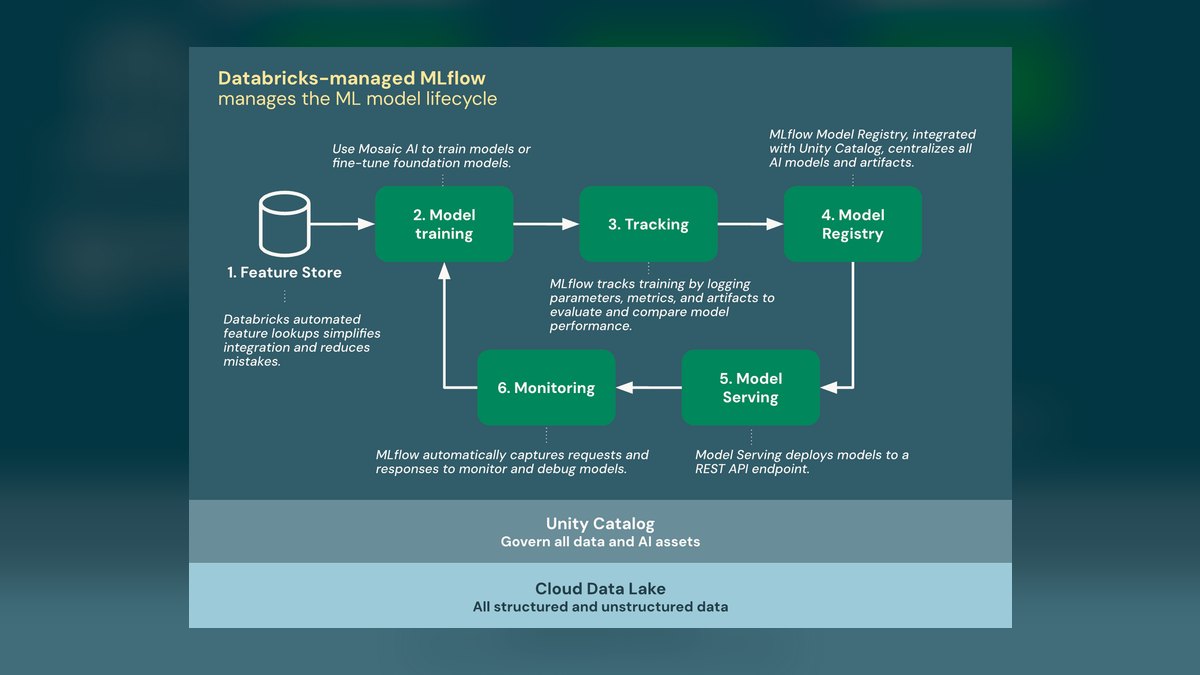
MLflow ranks ninth because it is the widely adopted open-source ML lifecycle platform that has expanded into GenAI with prompt management, tracing, and evaluation alongside its established model registry and experiment tracking. For teams already running MLflow for classic ML, its LLM features let them manage prompts, trace LLM calls, and run evaluations in the same tool, with a unified registry across model types. This consolidation is pragmatic where MLflow is the incumbent.
MLflow is for teams already standardized on MLflow, trading away the specialized LLM gateway features of Portkey. Compared to Portkey, it offers a unified platform for classic and generative ML but lacks multi-provider routing, caching, and budget enforcement. It suits organizations where consolidation with existing ML workflows matters more than advanced LLM-specific governance.
10. TruLens
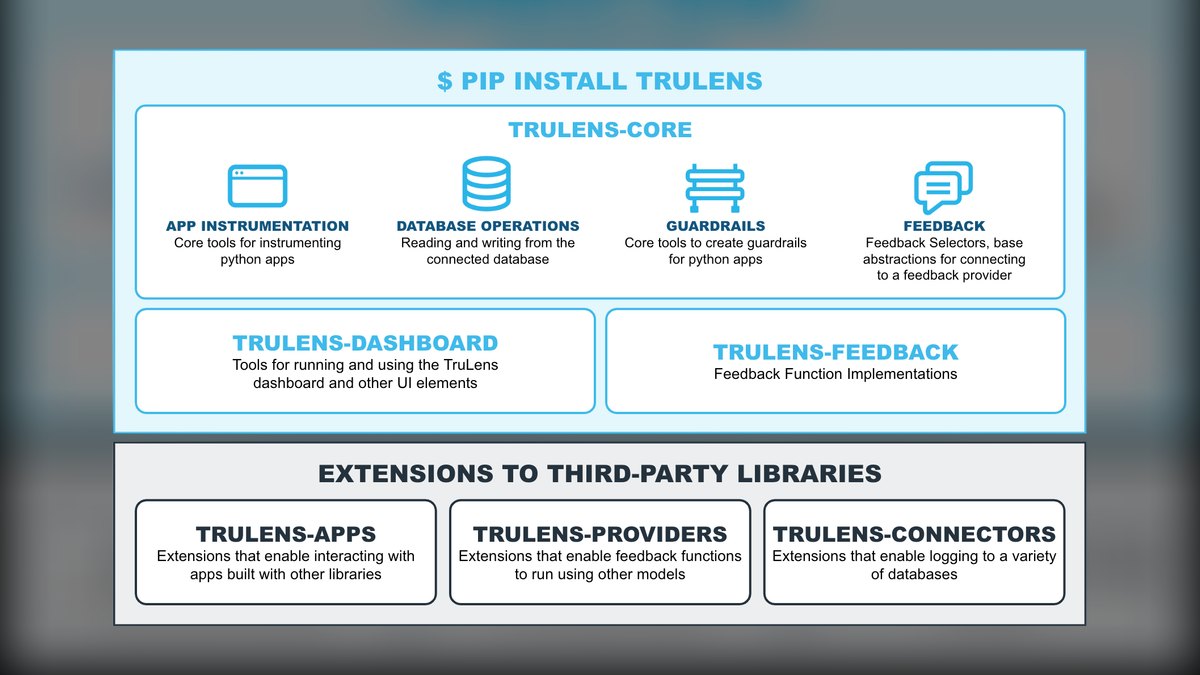
TruLens ranks tenth because it is an open-source library for evaluating and tracking LLM applications, especially RAG pipelines, using feedback functions that score outputs for groundedness, context relevance, and answer relevance. It instruments applications to log and evaluate each run, systematically measuring and reducing hallucination and retrieval failures. This code-first approach provides rigorous, programmable RAG evaluation that is free and open-source. It is ideal for teams needing customizable evaluation without a full platform.
TruLens is for teams needing rigorous, customizable RAG evals, trading away the broader lifecycle management and integration of MLflow. Compared to MLflow, it offers more specialized evaluation depth for RAG but lacks model registry, experiment tracking, and prompt management. It suits developers who want a focused, code-first evaluation library to complement other tools, rather than a comprehensive platform. For teams prioritizing programmable evaluation metrics over operational breadth, TruLens provides a lightweight, effective solution that integrates well into existing workflows.
How we ranked these
We evaluated each platform on five weighted criteria: observability and tracing depth, evaluation capabilities, prompt management, integration breadth, and deployment/cost flexibility. Observability and evaluation received the highest weights because debugging non-deterministic chains and ensuring output quality are the hardest production challenges. We also considered framework-agnostic support, OpenTelemetry compatibility, and whether the platform offered self-hosting or a managed service.
We deliberately ignored marketing claims, brand recognition, and subjective UI preferences. We did not penalize platforms for lacking features outside the core LLMOps scope, such as fine-tuning or model training. We also excluded purely closed-source tools without a free tier or trial, as we believe hands-on evaluation is essential. Finally, we did not consider platforms that were not verifiably operational and documented as of early 2027.
What to look for
When choosing between these platforms, focus on your primary pain point. If you need deep tracing and a unified workflow, LangSmith is the safest bet. If you require data control and no lock-in, Langfuse or another open-source option is better. For evaluation rigor, consider Weave, Phoenix, or TruLens. If cost and multi-provider governance are the issue, a gateway like Portkey or Helicone is essential.
Also, check integration with your existing stack and whether the pricing model scales with your usage.
The biggest mistake is choosing a platform based on a demo or feature list without testing it on your actual workloads. Many teams pick a tool for its tracing UI, then discover it lacks the evaluation or prompt management features they need. Another common error is ignoring the operational cost of self-hosting, which can exceed SaaS fees. Always run a pilot with your real data and evaluate the total cost of ownership, including migration and maintenance.
Related questions
What is LLMOps and how does it differ from MLOps?
LLMOps is the practice of operating large language model applications in production, focusing on prompt management, tracing, evaluation, and observability of chains and agents. It overlaps with MLOps but adds concerns specific to non-deterministic, prompt-driven systems, such as prompt versioning, hallucination evaluation, multi-step chain tracing, and provider/cost governance.
What are the key features to look for in an LLMOps platform?
Key features include deep tracing and observability, built-in and custom evaluation capabilities, prompt versioning and management, framework-agnostic SDKs or OpenTelemetry support, and flexible deployment options (self-host or SaaS). Also consider cost tracking, alerting, and integration with your existing ML or data stack.
How do LLMOps platforms handle prompt management?
They provide versioning, collaboration, and deployment of prompts independent of code. This allows non-engineers to iterate on prompts and deploy changes without a full code release. Features often include prompt registries, diffing, rollback, and the ability to test prompts against datasets before production rollout.
What is the role of evaluation in LLMOps?
Evaluation is critical for ensuring output quality and catching regressions. Platforms offer offline evaluation against curated datasets, online evaluation on production traffic, and LLM-as-judge or custom scorers. They also manage datasets and experiments, enabling systematic testing of prompts and model changes before deployment.
Can I use these platforms with any LLM framework?
Yes, the leading platforms are framework-agnostic. They integrate via their own SDKs or OpenTelemetry, so they work with any LLM application regardless of whether you use LangChain, LlamaIndex, or custom code. This flexibility is essential for teams with diverse tech stacks.
What is the difference between an LLMOps platform and an AI gateway?
An LLMOps platform centers on observability, evaluation, and prompt management across the LLM lifecycle. An AI gateway sits in the request path to unify providers, route, cache, and enforce budgets. Many teams use both, and some products combine these functions, like Portkey and Helicone.
How do I choose between self-hosted and managed LLMOps platforms?
Self-host (e.g., Langfuse, Phoenix, Opik) when data residency, compliance, or cost control matter and you have the ops capacity. Use a managed platform (e.g., LangSmith, Humanloop, Arize AX) when you want the fastest path and minimal infrastructure to run. Consider your team's expertise and long-term maintenance costs.
FAQ
What is LLMOps and how is it different from MLOps?
LLMOps is the practice of operating large language model applications in production — prompt management, tracing, evaluation, and observability of chains and agents. It overlaps with MLOps but adds concerns specific to non-deterministic, prompt-driven systems: prompt versioning, hallucination evaluation, multi-step chain tracing, and provider/cost governance.
Why do I need tracing for LLM apps?
LLM chains, agents, and RAG pipelines involve many steps, and when output is wrong you need to see which step failed — the retrieval, a tool call, or the final prompt. Tracing records every step's inputs, outputs, latency, and token cost so you can debug non-deterministic behavior that ordinary logs cannot explain.
Can I use these platforms without LangChain or a specific framework?
Yes. The leading platforms — LangSmith, Langfuse, Phoenix, Opik, Helicone — are framework-agnostic and integrate via their own SDKs or OpenTelemetry, so they work with any LLM application regardless of how it is built.
Should I self-host or use a managed LLMOps platform?
Self-host (Langfuse, Phoenix, Opik, Helicone, MLflow) when data residency, compliance, or cost control matter and you have the ops capacity. Use a managed platform (LangSmith, Humanloop, Arize AX) when you want the fastest path and minimal infrastructure to run.
How do LLMOps platforms help control cost?
They track token usage and cost per request, user, and feature, surface expensive calls, and — in gateway products like Portkey and Helicone — add caching, budgets, virtual keys, and provider fallbacks so you can enforce spend limits and route to cheaper models where appropriate.
What is the difference between an LLMOps platform and an AI gateway?
An LLMOps platform centers on observability, evaluation, and prompt management across the LLM lifecycle. An AI gateway (Portkey, Helicone, and others) sits in the request path to unify providers, route, cache, and enforce budgets. Many teams use both, and some products combine them.
What is the RAG triad in evaluation?
The RAG triad refers to three key evaluation metrics for retrieval-augmented generation: groundedness (whether the answer is supported by the retrieved context), context relevance (whether the retrieved context is relevant to the query), and answer relevance (whether the answer addresses the query). Tools like TruLens use feedback functions to score these.
Which LLMOps platform is best for teams already using MLflow?
MLflow itself is a strong choice because it offers prompt management, tracing, and evaluation alongside its established model registry and experiment tracking. This keeps all ML and LLM operations in one place, avoiding the need to adopt a separate tool.
Are there open-source LLMOps platforms with commercial support?
Yes. Langfuse, Arize Phoenix, Comet Opik, and Helicone are open-source with managed cloud offerings. This allows you to start with the open-source version and upgrade to a managed service when you need support, scalability, or additional features.
Sources
- https://docs.smith.langchain.com/
- https://langfuse.com/docs
- https://weave-docs.wandb.ai/
- https://docs.arize.com/phoenix
- https://docs.helicone.ai/
- https://www.comet.com/docs/opik/
- https://humanloop.com/docs
- https://portkey.ai/docs
- https://mlflow.org/docs/latest/
- https://www.trulens.org/
Related on PULSE
- [More llmops platforms rankings and buying guides](/knowledge)
- [PULSE Tools and calculators](/tools)
- [Everything on PULSE RevOps](/)
 pulse-ai-infrastructureThe 10 Best AI Tools for Database Design in 2027
 pulse-ai-infrastructureWhat is a semantic cache and how much can it cut inference costs?
 pulse-ai-infrastructureHow do you monitor LLMs in production for drift and hallucinations?
 pulse-ai-infrastructureThe 10 Best AI Tools for Cybersecurity in 2027
 pulse-ai-infrastructureThe 10 Best AI Tools for Storyboarding in 2027
 pulse-ai-infrastructureThe 10 Best AI Tools for Microservices Development in 2027
 pulse-ai-infrastructureThe 10 Best AI Tools for Recipe Generation in 2027
 pulse-ai-infrastructureHow do you secure an LLM application’s infrastructure?
 pulse-ai-infrastructureThe 10 Best AI Tools for Call Coaching in 2027
 pulse-ai-infrastructureThe 10 Best AI Tools for Real Estate Listings in 2027