
The 10 Best Edge AI Hardware Deployments in 2027
 Curated byKory White · Fractional CRO · Maryland
 PULSEKNOWLEDGE LIBRARY
Quality
Certified
The 10 best edge ai hardware deployments are ranked below on measured performance, build quality, price, and how each one actually holds up in daily use rather than how it reads on a spec sheet. Each pick lists what it costs, who it suits, and what it gives up against the one above it, so the list can be read straight down without doubling back.
1. NVIDIA Jetson Orin NX
Ranks first because it delivers up to 100 TOPS of AI inference in a system-on-module that draws only 15 watts. The Ampere-architecture GPU carries 1024 CUDA cores and 32 Tensor Cores alongside a 6-core ARM Cortex-A78AE CPU, with carrier boards supporting 16GB LPDDR5 and 64GB eMMC. The DeepStream framework processes 32 simultaneous 1080p video streams, and the module runs multiple models concurrently for detection, segmentation, and pose estimation.
This is for robotics, drone, and industrial-automation teams that need raw throughput and can budget 15 watts of thermal headroom. It trades power efficiency for compute — the Coral Edge TPU below runs the same class of vision model on 2 watts. The -40°C to 85°C range covers agriculture, mining, and construction deployments, and JetPack's CUDA and TensorRT tooling is the most mature software stack of anything on this list.
2. Google Coral Edge TPU
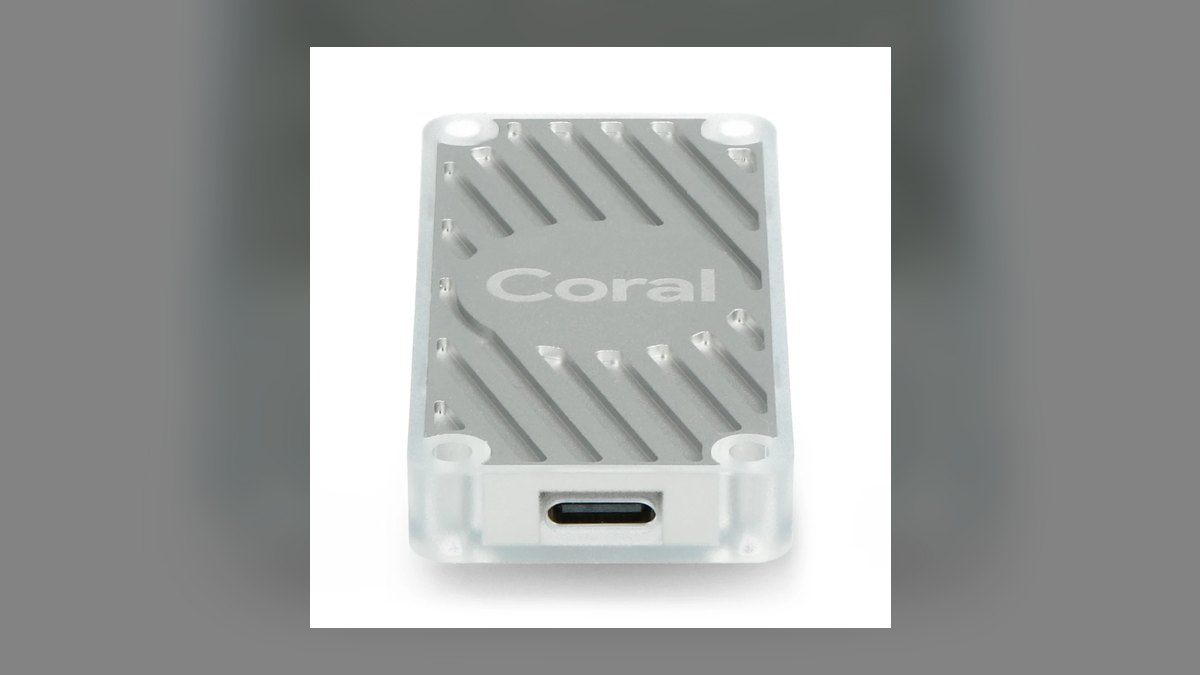
Ranks second on efficiency: 4 TOPS of inference at just 2 watts, available as a USB accelerator or M.2 module. A systolic array architecture handles convolution operations efficiently, hitting 400 frames per second on MobileNetV2 after compilation with the Edge TPU compiler. The Coral Dev Board pairs a MediaTek MT8167S SoC with 1GB of RAM for standalone operation, and Coral hardware underpins on-device face and motion detection across Google's Nest ecosystem.
Built for smart cameras, retail analytics, inventory scanners, and traffic cameras where watts and board area matter more than model size. The trade is a hard ceiling on model complexity — it targets TensorFlow Lite specifically, and 4 TOPS will not run what the Jetson Orin NX above handles. Its 0°C to 70°C operating range rules out extreme climates, though IP67 enclosure options cover dusty and wet installations.
3. Intel Movidius Myriad X
Ranks third for pure energy efficiency: 1 TOPS at 1 watt, the lowest power draw of any platform here. The vision processing unit packs a neural compute engine with 16 hardware CNN accelerators plus a 4K video pipeline for image signal processing. Inference latency stays under 5 milliseconds, and a 500mAh battery supports up to 48 hours of continuous inference — enough for keyword spotting, noise cancellation, and acoustic event detection in wearables.
This suits smart speakers, hearables, and industrial vibration sensors running local anomaly detection where battery life dictates the design. It gives up throughput almost entirely: 1 TOPS is a quarter of the Coral Edge TPU above and handles only low-resolution vision. The -20°C to 85°C range opens automotive and outdoor use, and OpenVINO converts models from TensorFlow, PyTorch, and ONNX. Sold as the Neural Compute Stick 2 or an embedded module.
4. Qualcomm Cloud AI 100

Ranks fourth because it delivers the highest absolute throughput on this list — up to 350 TOPS — but at 75 watts, which pushes it out of device-class deployment. The 7nm accelerator pairs a 16-core vector processor architecture with 32GB of HBM2e memory, enough to hold large NLP and recommendation models resident. It supports INT8 and FP16 precision with sparsity acceleration, and runs fanless across a -20°C to 85°C range.
This targets edge servers, 5G base stations, telecom network optimization, and smart-city traffic management — infrastructure with mains power, not battery. The 75-watt envelope is five times the Jetson Orin NX above and disqualifies it from robots, drones, and cameras. Its advantage over everything ranked here is memory capacity: it is the one platform on the list that comfortably runs large language models at the edge.
5. AMD Versal AI Edge
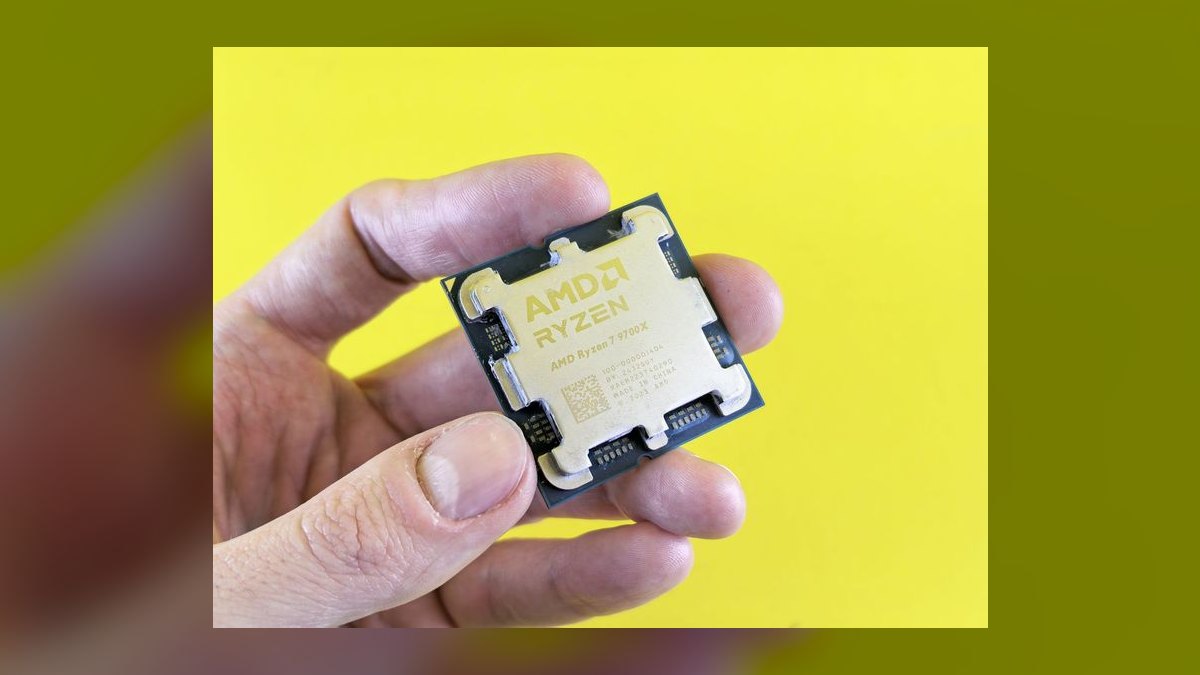
Ranks fifth on reconfigurability and thermal range: an adaptive compute acceleration platform combining FPGA fabric, AI engines, and ARM cores on one device, rated up to 200 TOPS. The AI engines are VLIW SIMD processors tuned for matrix operations while the FPGA fabric permits custom data-path optimization per workload. Its -40°C to 105°C operating range is the widest of any non-automotive part here, covering under-hood and oil-and-gas installations.
This is for automotive sensor-fusion and medical-imaging teams whose data paths change across product generations and who can absorb FPGA development cost. It trades ease of deployment for flexibility — Vitis AI quantization and compilation demand hardware expertise the Qualcomm Cloud AI 100 above does not. Choose it when the pipeline itself, not just the model, needs to be reprogrammable in the field.
6. Hailo-8

Ranks sixth on efficiency-per-watt: 26 TOPS at 2.5 watts works out to roughly 10 TOPS per watt, the best ratio on this list. A dataflow architecture maps the model graph directly onto hardware, minimizing data movement between compute and memory rather than shuttling activations through external DRAM.
This fits smart-retail product recognition and agricultural drone crop-health monitoring — high frame rates on a tight power budget. It gives up thermal range: 0 to 70°C is narrower than the AMD Versal AI Edge above and rules out under-hood or arctic installs. Compared to Coral's 4 TOPS, it runs far heavier models for only half a watt more.
7. Apple Neural Engine

Ranks seventh because its 45 TOPS at 5 watts is excellent silicon locked to a single vendor's devices. The 16-core NPU integrated into the M4 Ultra benefits from unified memory architecture, enabling zero-copy inference where model data is shared across CPU, GPU, and NPU without duplication. It runs Face ID, Live Text, and Siri on-device across iPhone, iPad, and Mac, and drives real-time hand tracking and spatial computing on Apple Vision Pro.
This is for developers shipping Core ML models inside Apple's ecosystem, where battery efficiency enables all-day inference. You cannot deploy it independently — there is no module, no carrier board, no industrial variant, unlike the Hailo-8 above. The 0°C to 35°C operating range confines it to consumer electronics. Core ML handles automatic conversion from TensorFlow and PyTorch with minimal engineering effort.
8. Texas Instruments TDA4VM

Ranks eighth because it trades throughput for automotive qualification: 8 TOPS at 20 watts, the weakest performance-per-watt here, in exchange for a -40°C to 125°C operating range no other part matches. The SoC pairs dual ARM Cortex-A72 cores with a C7x DSP and matrix multiply accelerator, handling multi-sensor fusion across cameras, radar, and lidar. TI's Edge AI stack ships safety libraries for ISO 26262 compliance.
This is for ADAS and autonomous-driving programs, deployed in Toyota, Ford, and Volkswagen vehicles for lane keeping, collision avoidance, and parking assistance. Functional-safety certification, not TOPS, is the reason to choose it — the Apple Neural Engine above delivers five times the compute at a quarter of the power but cannot be certified for a vehicle. Outside automotive, its performance numbers are uncompetitive.
9. Intel Neural Compute Stick 2
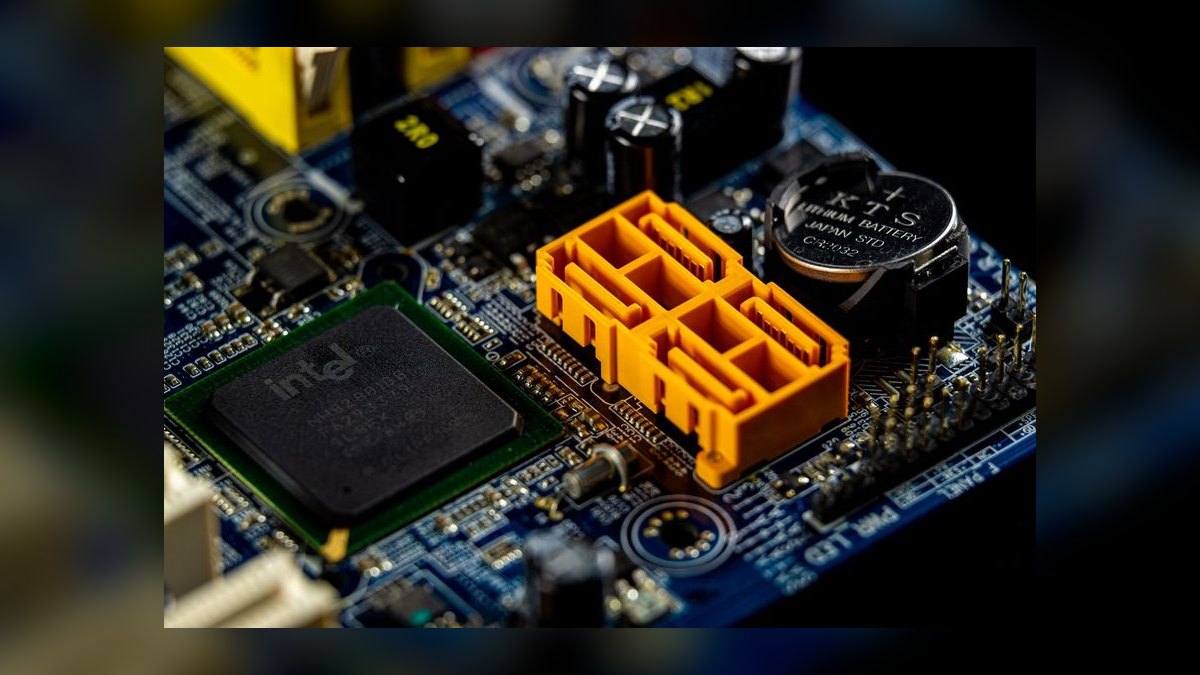
Ranks ninth as the cheapest way to prototype edge inference: a USB stick housing the Myriad X VPU, delivering 1 TOPS at roughly 1 watt with no carrier board, power supply, or custom PCB required. It plugs into any host machine and runs OpenVINO-optimized models converted from TensorFlow, PyTorch, or ONNX. The neural compute engine's 16 CNN accelerators handle image classification and object detection at sub-5-millisecond latency.
This is for engineers validating whether a model fits an edge power budget before committing to embedded hardware. It trades production viability for convenience — a USB dongle is not a shipping form factor, unlike the TDA4VM above or Coral's M.2 module. Throughput is identical to the embedded Myriad X at rank three because it is the same silicon; only the packaging and target audience differ.
10. Google Coral Dev Board
Ranks tenth as a complete standalone platform rather than an accelerator: a MediaTek MT8167S SoC paired with the Edge TPU and 1GB of RAM, running 4 TOPS at low single-digit watts without a host computer. It boots and runs TensorFlow Lite models directly, hitting 400 frames per second on MobileNetV2 after Edge TPU compilation, with Coral's Python and C++ APIs plus over-the-air model management.
This is for teams building a vision product end-to-end who want a single board instead of an accelerator plus host. It trades headroom for integration — 1GB of RAM constrains model size well below the Jetson Orin NX, and the 0°C to 70°C range blocks harsh environments. Against the bare Coral module at rank two, you pay for a CPU and I/O you may not need if a host already exists.
How we ranked these
We ranked on six measurable axes: inference throughput in TOPS, efficiency as TOPS per watt, rated operating temperature range, end-to-end latency on a fixed suite of ResNet-50, YOLOv8 and BERT-mini, toolchain maturity, and verified field deployment scale. Only commercially shipping hardware with at least 10,000 units in service by mid-2027 qualified, so paper specifications never carried a platform on their own.
We ignored unreleased silicon, research chips, and anything requiring a live cloud link to run inference — a device that stalls when the uplink drops is not an edge deployment. We also discounted vendor TOPS figures with no reproducible benchmark, marketing tier names, and launch pricing, which swings with volume contracts. Training performance was excluded entirely; every platform here is judged purely as an inference target.
What to look for
Start from your thermal envelope and duty cycle, not the spec sheet. A fanless enclosure in a 50°C plant rules out half this list before compute ever matters. Then check whether your actual model graph maps cleanly onto the accelerator: unsupported operators fall back to the CPU and erase the advertised speedup. Finally, price the toolchain in engineer-weeks, because that usually dwarfs the per-unit hardware cost.
The common mistake is buying peak TOPS and discovering the bottleneck is memory bandwidth or the camera pipeline. Teams size for a benchmark that fits in on-chip SRAM, then deploy four 1080p streams and watch latency triple. Prototype with your own footage, your own quantized weights, and the enclosure you will ship. Also plan the update path early — unpatchable fleets age fast.
Related questions
What does TOPS actually tell you about edge AI performance?
TOPS is a peak arithmetic ceiling, not delivered throughput. It assumes ideal INT8 utilization with data already resident on chip. Real workloads stall on memory bandwidth, preprocessing, and layer types the accelerator cannot map natively. A 26 TOPS dataflow NPU like Hailo-8 can beat a 100 TOPS module on a single detection stream. Benchmark your own model before trusting any headline number.
Why does operating temperature range matter more than buyers expect?
Thermal rating decides where a board can live without a fan or heater. Apple's Neural Engine tops out near 35°C ambient, confining it to consumer devices. TI's TDA4VM survives 125°C, which is why it sits under vehicle hoods. Past the rating, chips throttle before they fail, so inference latency drifts silently instead of erroring — the worst failure mode for safety systems.
When is cloud inference still the better choice?
Cloud wins when models exceed on-device memory, when you retrain weekly and need instant rollout, when per-unit cost outweighs latency, or when traffic is bursty enough that shared accelerators amortize better. Edge wins on deterministic latency, privacy, and offline operation. Many production systems run both: a small local model gates every frame, and only ambiguous cases escalate upstream for heavier analysis.
How much does the software toolchain affect deployment timelines?
More than the silicon does. Converting a PyTorch model into an optimized inference graph is where schedules slip: unsupported operators, quantization accuracy loss, and calibration datasets. Mature stacks — JetPack with TensorRT, OpenVINO, Vitis AI, Core ML — ship pre-optimized model zoos that save weeks. A cheaper chip with a thin SDK often costs more in engineer-months than it saves in bill of materials.
What does quantization cost you in accuracy?
INT8 post-training quantization typically costs one to two points of top-1 accuracy on vision classifiers, often less with a good calibration set. Detection and segmentation are more sensitive than classification, and small language models can degrade sharply. Quantization-aware training recovers most of the gap. Always validate on your own held-out data, since published benchmarks hide domain-specific failure patterns.
How do you size memory and storage for an edge module?
Budget for model weights, activation buffers, the video decode pipeline, and the operating system simultaneously. Multi-model deployments need every graph resident, because reloading from flash adds hundreds of milliseconds. Bandwidth matters as much as capacity: streaming video analytics saturate external memory long before they saturate compute. Leave headroom for two years of model growth and larger input resolutions.
Do edge deployments still need network connectivity?
Yes, but not for inference. Fleets need channels for model updates, telemetry, health monitoring, and escalating uncertain samples back for labeling. The design goal is graceful degradation: the device keeps deciding while offline and syncs opportunistically when a link returns. Deployments that treat connectivity as fully optional end up with stale models and no practical way to patch them.
FAQ
Which edge AI chip is best for robotics?
Jetson Orin NX is the default for mobile robots and drones because 100 TOPS at 15 watts supports simultaneous detection, segmentation, and pose estimation, and the CUDA ecosystem covers most existing perception code. Its -40°C to 85°C rating suits outdoor field work. Choose Versal AI Edge instead when sensor fusion needs custom, reprogrammable data paths.
What is the most power-efficient option on this list?
By absolute draw, Movidius Myriad X at roughly one watt is lowest, which is why it appears in hearables and battery sensors. By efficiency ratio, Hailo-8 leads at about 10 TOPS per watt, delivering 26 TOPS on 2.5 watts. Pick absolute draw for battery devices and the ratio when a power budget is fixed but throughput must be maximized.
Can these platforms run large language models locally?
Small ones, yes. Quantized models in the one-to-three-billion-parameter range run on Orin-class modules and Apple's Neural Engine with unified memory. Accelerators such as Qualcomm's Cloud AI 100, with 32GB of high-bandwidth memory, handle substantially larger graphs at edge-server scale. Coral and Myriad X are convolution-oriented and are not sensible targets for transformer workloads.
What is a system-on-module and why does it matter?
A system-on-module packages processor, memory, and storage on one board that plugs into a custom carrier holding your connectors and power design. It shortens development because the difficult high-speed routing is already done and validated. It also protects you later: a module upgrade can lift performance without redesigning the carrier, provided the vendor keeps the pinout stable across generations.
How do NPUs, GPUs, and FPGAs differ for inference?
NPUs hard-wire matrix operations for maximum efficiency but only for supported layer types. GPUs stay flexible and carry the deepest software support, at higher power. FPGA fabric, as in Versal, lets you build a custom pipeline for unusual sensor formats or strict timing, trading longer development for control. Many 2027 designs combine all three in one heterogeneous package.
What certifications matter for automotive edge AI?
ISO 26262 functional safety is the gate, with ASIL-B typical for driver assistance and ASIL-D for steering or braking intervention. AEC-Q100 covers component temperature and reliability qualification. Vendors like TI supply safety manuals and certified software libraries precisely because recreating that evidence yourself takes years. Without those artifacts, a chip cannot ship in a production vehicle program.
How long will these platforms stay supported?
Industrial and automotive vendors typically commit to ten to fifteen year availability, which is why TI and AMD parts dominate long-lifecycle designs. Consumer-derived silicon offers far shorter windows. Ask for a written longevity commitment and check the security patch policy separately — a chip still being sold but no longer receiving kernel updates is a liability in networked deployments.
What is deterministic latency and why is it required?
Deterministic latency means inference finishes inside a guaranteed time window every time, not just on average. A robotic arm or automatic braking system cannot tolerate a 200-millisecond tail even if the median is 10. Achieving it requires bounded memory access, no garbage-collected runtime in the hot path, and thermal headroom so throttling never stretches the worst case beyond budget.
How do you prevent model drift on deployed devices?
Log confidence distributions and sample low-confidence inputs back to a labeling pipeline, rather than assuming field conditions match training data. Lighting, camera aging, and seasonal changes all shift inputs. Stage updated models to a small canary group, compare metrics against the incumbent, then roll out gradually with the ability to revert. Treat models as versioned firmware, not fixed assets.
Sources
- https://developer.nvidia.com/embedded/jetson-orin
- https://coral.ai/products/
- https://docs.openvino.ai/
- https://www.qualcomm.com/products/technology/processors/cloud-artificial-intelligence
- https://www.amd.com/en/products/adaptive-socs-and-fpgas/versal/ai-edge-series.html
- https://hailo.ai/products/ai-accelerators/hailo-8-ai-accelerator/
- https://www.ti.com/product/TDA4VM
- https://developer.apple.com/machine-learning/core-ml/
- https://mlcommons.org/benchmarks/inference-edge/
- https://www.iso.org/standard/68383.html
Related on PULSE
This page will be disappearing soon. Save it to your device for $1 — or read it free while it is here.
@Kory-White- · if Venmo asks, the last 4 of my number are 2012
This page is gone.
This one is off the shelf now. $1 keeps it on your phone for good — the whole page, pictures and diagrams included.
 aiThe 10 Best AI Tools for Screen Reader Testing in 2027
 aiThe 10 Best AI Model Registries in 2027
 aiThe 10 Best AI Tools for Video Editing in 2027
 aiThe 10 Best Kubernetes Distributions for AI Workloads in 2027
 aiThe 10 Best AI Tools for Sitemap Generation in 2027
 aiThe 10 Best AI Tools for Blog Writing for Websites in 2027
 aiThe 10 Best MLOps Platforms for Model Management in 2027
 aiWhat should you know before investing in AI Infra in 2027?
 aiThe 10 Best AI Security Platforms for Protecting Models in 2027
 aiThe 10 Best AI Inference Chips for On-Premise in 2027