
Best way to quarantine new plants to avoid snail infestation?
 Curated byKory White · Fractional CRO · Maryland
 PULSEKNOWLEDGE LIBRARY
Quality
Certified

Isolate every new plant for 14 to 21 days in a separate room or bench, bare-root it, rinse and inspect the root ball and leaf undersides, pot it in fresh sterile mix, and check it after dark with a flashlight twice weekly. Release only after two consecutive clean inspections with no eggs, slime trails, or fresh feeding damage.
The nursery pot that seeded three seasons of damage
Picture a common sequence. A gardener buys six hostas and two ferns from a big-box garden center in early spring, sets them straight into a shaded bed, and waters them in. Nothing happens for three weeks. By late May, the hosta leaves are shredded — irregular holes with smooth, scalloped edges, not the ragged chew of a caterpillar — and the damage is worst on the plants nearest the two new ferns. By July it has spread eight feet in every direction. The following spring it is worse, because the population that arrived in two nursery pots overwintered in the mulch and laid again.
That is the actual failure mode, and it is worth understanding precisely, because it explains why quarantine works and why casual inspection does not. What arrived was almost certainly not an adult snail crawling visibly on a leaf. Adults are easy to spot and easy to flick off. What arrived was some combination of: a clutch of eggs buried in the top two centimeters of potting mix; a juvenile the size of a pinhead tucked into the crown where leaf bases meet the root ball; or an adult wedged into the drainage hole underneath the pot, where nobody looks. Nursery pots are close to ideal snail habitat — consistently moist, shaded by the canopy of the plant itself, packed with organic peat and bark, sitting on gravel or ground cloth that stays damp under overhead irrigation, and typically standing shoulder to shoulder with hundreds of other pots so that anything mobile can move freely across the whole block.
Nurseries are not negligent for this. Growing plants in containers under irrigation is exactly the condition molluscs prefer, and a nursery that keeps its stock alive and lush is by definition keeping conditions that snails like. Reputable growers bait and scout, but scouting catches adults on the surface. Eggs in the medium are effectively invisible without deliberately disturbing the root ball, which no retailer does before a sale.
There is a second, quieter version of the same scenario worth naming, because it catches experienced gardeners who are careful about retail purchases. A neighbor divides a clump of daylilies and hands over a garbage bag of divisions with field soil clinging to the roots. A plant swap distributes fifty pots of mixed provenance in an afternoon. A landscaper delivers three yards of bulk topsoil or a pallet of sod. Every one of these is a higher-risk vector than a clean nursery container, and none of them comes with even the token scouting a commercial grower performs. The same protocol applies, and for bulk material the honest answer is that you cannot quarantine three yards of soil — you site it away from beds, keep it uncovered and drying, and accept that you are monitoring rather than screening.

The cost asymmetry is what makes the protocol worth the trouble. Quarantining a plant costs you two to three weeks of delayed planting, a bag of fresh potting mix, and maybe fifteen minutes of total handling. Missing an infestation costs you multiple seasons of ongoing damage, repeated bait applications, and in the case of certain species, a permanent resident population you will never fully eliminate. In parts of the Pacific Northwest and coastal California, gardeners simply live with established populations of *Cornu aspersum* and various *Deroceras* slugs because eradication from an established bed is not realistic. Prevention is the only high-leverage move available.
What quarantine actually does to the life cycle
Quarantine is not a treatment. It is a detection window, and understanding that distinction changes how you run it. You are not trying to kill everything on the plant during the isolation period. You are trying to make anything present become visible before the plant reaches a place where hiding is easy and damage is expensive.
The mechanism hinges on egg biology. Common garden snails and slugs lay clutches of translucent, gelatinous eggs — typically a few dozen per clutch, roughly 2 to 4 millimeters across for snails and smaller for many slugs — in moist soil crevices, under debris, or a centimeter or two below the surface. Those eggs look like a small cluster of tapioca pearls or fish roe and are genuinely easy to miss against light-colored perlite. Depending on species and temperature, they hatch in something like two to four weeks, faster in warm conditions and slower when cold. That hatch interval is the entire logic of the quarantine period. If you hold a plant in isolation for two to three weeks under conditions that permit hatching, eggs that were invisible on day one become mobile juveniles you can find on day fourteen — provided you are actually looking, and looking at the right time of day.

This is why the common advice to "quarantine for a week" is too short and why the sometimes-heard advice to keep the plant bone dry is counterproductive. A bone-dry pot suppresses hatching and suppresses activity. The eggs do not die; they wait. You then plant out a pot that passed inspection because nothing in it was awake. Better to keep the plant at normal moisture, let the biology run, and catch what emerges.
The second mechanism is behavioral. Snails and slugs are overwhelmingly nocturnal and thigmotactic — they seek tight, dark, humid contact spaces. A daytime inspection of a plant is close to worthless as a screen. An inspection at 10pm with a flashlight, or at dawn, or during and just after rain, is a genuinely different measurement. Add a deliberate trap: a scrap of untreated board, a piece of cardboard, an inverted grapefruit or melon rind, or an upturned clay saucer placed on the medium surface or beside the pot. Anything present will be underneath it by morning. This costs nothing and converts a passive wait into an active detection instrument.
The third mechanism is substrate replacement. Bare-rooting a plant and repotting into fresh, bagged sterile mix removes the medium where eggs are most likely to be sitting. This is the single highest-yield step in the whole protocol and it is the one people skip because it feels aggressive. It is safe for most herbaceous perennials, most houseplants, and most nursery-grown shrubs in active growth, though it stresses the plant and should be done in shade with immediate rewatering.
Timelines, dimensions, and what the numbers should actually be
Concrete parameters, with the honest ranges rather than false precision.

Isolation duration: 14 to 21 days minimum. Three weeks is the safer default because it clears a full egg-hatch interval for most common species under most conditions. If the plant is quarantined during cold weather — below roughly 50°F / 10°C — extend it, because development slows substantially and a short cold quarantine proves nothing. Some gardeners in high-risk regions run a full 30 days on anything acquired from an unknown source. If you are quarantining outdoors in mild autumn or spring weather, three weeks is generally sufficient.
Isolation distance: as far as practical, with a hard surface underneath. A separate room is ideal for houseplants. Outdoors, a bench, table, or pallet several meters from any bed, sitting on concrete, gravel, or a paved surface rather than on soil or mulch. The surface matters more than the distance — a pot standing directly on damp mulch gives anything inside an easy exit and gives anything outside an easy entrance, which quietly invalidates the whole exercise. A bench raised even 60 to 90 centimeters off the ground with dry, clean legs is a meaningful barrier on its own.
Inspection cadence: twice weekly, after dark. Six or so inspections across a three-week window. Each takes two or three minutes per plant. Use a bright handheld light. Check the leaf undersides, the leaf axils where petioles meet the stem, the crown at soil level, the outside of the pot, the rim lip, the drainage holes, and the saucer or bench surface underneath. Slime trails are the highest-value signal because they persist after the animal has moved on and they show up as a dried, silvery, slightly iridescent track. A UV flashlight in the 365 to 395 nanometer range makes fresh trails somewhat easier to see at night and costs very little, though it is a convenience rather than a requirement — a good white LED works.

Egg identification: clear-to-white spheres, roughly 2 to 4 mm, in clusters of a few dozen. Found in the top 1 to 3 centimeters of medium, in root-ball crevices, along the inner pot wall where medium meets plastic, and under any surface debris. They are distinguishable from slow-release fertilizer prills, which are the single most common false positive — prills are uniformly sized, evenly distributed, usually amber or green-tinted, and firm; eggs are clustered, translucent, and collapse under light pressure. Perlite is the other false positive, and it is opaque white and irregular rather than spherical and clear.
Barriers: copper strip 5 centimeters or wider. Copper's deterrent effect is real but narrow strips are routinely crossed, and the effect degrades as the copper oxidizes to a dull brown patina — plan on cleaning or replacing it every few months outdoors. Treat copper as one layer, never as the sole gate. It is most useful as a bench-leg or pot-rim band during the quarantine window rather than as a permanent garden solution.
Diatomaceous earth: food-grade, applied as a dry ring. DE works by abrasion and desiccation and it stops working the moment it gets wet. In a covered, dry quarantine bench it holds for a couple of weeks; in the open with any rain or overhead watering it needs reapplication after every wetting. Wear a dust mask when applying — the fine silica dust is a respiratory irritant, which is a real and often-omitted caveat.
Iron phosphate bait: the standard low-risk chemical option. Iron phosphate pellets are widely available, approved for organic production in many jurisdictions, and considered substantially lower risk to pets, birds, and wildlife than the older metaldehyde products. Scatter thinly around the quarantine bench rather than piling it — heaps are less effective than dispersed pellets. Read and follow the label rate; it varies by product. Metaldehyde is genuinely dangerous to dogs and is restricted or banned in a number of places, and there is no good reason to use it for a quarantine bench when iron phosphate exists.

Soap or saline dips: use with care and only where warranted. A brief rinse in plain water is safe for nearly everything and mechanically dislodges a lot. Dish soap solutions can strip cuticle wax and burn foliage on succulents, ferns, and many soft-leaved plants; if you use one, keep the concentration low, keep the contact brief, rinse thoroughly afterward, and test one leaf first. Saline dips are commonly used in the aquarium hobby for aquatic plants and are not appropriate for terrestrial ones. Be skeptical of any protocol that claims a specific high kill percentage for a household dip — those numbers are rarely from controlled work on the species in your pot.
Realistic outcome: substantial risk reduction, not zero risk. A well-run three-week quarantine with substrate replacement catches the large majority of introductions. It does not catch everything, and no honest protocol claims it does. The point is to convert an unmanaged, invisible risk into a managed, mostly-visible one.
Choosing your level: three protocols and what each costs you
Not every plant deserves the same treatment, and pretending otherwise means you will abandon the protocol entirely by the third weekend. Tier your response to the risk.
Tier one — visual screen only. Appropriate for: bare-root dormant stock, bulbs, seed-grown plugs from a sealed tray, tissue-cultured material, and anything that arrived with no medium at all. Cost: five minutes. What you do: inspect the material, rinse it, plant it. The risk here is genuinely low because there is no medium to hide eggs and no persistent moist habitat.
Tier two — standard quarantine. Appropriate for: routine nursery container stock from a known retailer, in a region where you do not already have a serious mollusc problem. Cost: three weeks of bench space and roughly twenty minutes of cumulative handling. What you do: stage on a hard surface away from beds, inspect the pot exterior and drainage holes, top-dress or scrape and replace the top 3 centimeters of medium, run night checks twice weekly with a board trap, plant out after two clean checks. You skip the full bare-root, which saves plant stress and your time, and you accept slightly more residual risk in exchange.
Tier three — full protocol with substrate replacement. Appropriate for: plants from swaps, gifts, unknown provenance, mail-order from a region with different pests, anything where you saw damage or slime on arrival, and anything going into a bed you have worked hard to keep clean. Cost: three weeks, plus a bag of mix, plus real handling time and some transplant stress on the plant. What you do: everything in tier two plus full bare-root, root rinse, discard of the original medium into the trash or a hot compost pile rather than onto a garden bed, repot into fresh bagged mix, and the full 21-day window.
The trade-offs worth naming explicitly:

*Bare-rooting versus leaving the root ball intact.* Bare-rooting is the highest-yield detection step and also the highest-stress step for the plant. Actively growing herbaceous plants tolerate it well if done in shade with immediate watering and a few days of reduced light. Woody plants in leaf, plants with taproots, and anything already stressed by shipping tolerate it poorly. When in doubt on a valuable specimen, do a partial: wash away the outer and top layers of medium where eggs concentrate, leave the inner core intact, and extend the quarantine window to compensate.
*Chemical bait versus physical exclusion.* Bait is easier and works on animals you never see. Exclusion is slower to set up and has no residual toxicity concerns. During quarantine, exclusion should be primary — the whole point is to observe, and a bait that kills something silently at 2am also destroys the evidence you needed. Use bait around the bench perimeter as a backstop, not on the medium surface where it would eliminate the very juveniles you are trying to detect.
*Extending quarantine versus planting on schedule.* The pressure to plant is real, particularly with a narrow spring window. The honest calculus: a perennial planted three weeks late loses a few weeks of establishment in its first season and catches up. A snail population introduced on schedule costs you every subsequent season. If the calendar genuinely does not permit a full window, plant out but flag the location, and run night checks on that specific spot for the following month — a shortened quarantine plus targeted post-planting monitoring beats abandoning the idea entirely.

*Quarantine versus nursery-side prevention.* The cheapest intervention is upstream. Look at plants before you buy them: turn the pot, check the drainage holes, look at the medium surface, check whether the retailer's benches are sitting on wet ground cloth, look for scalloped feeding damage on nearby stock. Buying from a retailer whose plants stand on raised benches over gravel rather than on soaked matting meaningfully reduces what you have to screen for later.
Where the protocol quietly fails
Most quarantine failures are not exotic. They are the same handful of gaps, and every one of them is avoidable once you know to look.
The pot stands on soil or mulch. This is the most common failure by a wide margin. The gardener does everything else right — bare-roots, repots, inspects — and then sets the quarantine pot on a mulched path beside the bed because that is where the shade is. Anything in that pot walks out the drainage hole the first damp night. Anything in the mulch walks in. Put it on concrete, gravel, a paved patio, or a raised bench with clean legs.
The old medium goes onto a bed or an open compost pile. You carefully bare-root the plant, then dump the nursery mix — the most likely location of the eggs — into your compost heap ten feet from the vegetable garden. Cool compost does not reliably kill mollusc eggs, and an open heap is prime habitat. Bag the discarded medium and bin it, or add it to a genuinely hot, actively managed pile.

Inspection happens in daylight only. A daytime look at a plant is a very weak test. The animals are hidden under the rim, in the crown, or below the surface. Half the value of quarantine comes from the timing of the check, not the length of the wait.
The quarantine is run bone dry to "discourage" pests. Dry conditions suppress activity and suppress hatching, so the plant passes an inspection that never had a chance to detect anything, then wakes the whole clutch up as soon as it hits an irrigated bed. Keep normal moisture. You want the biology to run its course where you can see it.
Only the foliage gets inspected. The leaves are the least likely hiding place. The rim underside, the drainage holes, the space between the root ball and the pot wall, the crown, and the saucer are where things actually are. Lift the pot and look at its underside every single time.

The clock is not restarted after a find. You spot one juvenile on day twelve, remove it, feel good, and plant out on day fourteen as originally scheduled. But finding one is evidence that a clutch hatched, and clutches do not hatch in perfect synchrony. Any positive find resets the window to zero and escalates the tier.
Tools and hands carry material between the quarantine bench and the beds. Trowels, gloves, saucers, and reused pots move medium around. Rinse tools between the quarantine area and the garden, and do not reuse an unwashed nursery pot straight into a clean bed. Reused pots should get a hot wash and a scrub, particularly around the rim and drainage holes.
Post-planting monitoring stops at day zero. The quarantine ends when the plant goes into the ground, and attention ends with it. Give every newly planted specimen a flag or a note and check that spot at night twice over the following month. It costs almost nothing and it is the layer that catches whatever the bench window missed.
Nothing gets written down. Over two or three seasons, a two-column note — source and outcome — tells you which suppliers, which plant types, and which times of year actually produce problems for you. That turns an undifferentiated protocol applied to everything into a targeted one applied where it earns its keep, which is the difference between a habit you sustain and one you abandon.
Related questions
Does quarantine also handle slugs, or only snails?
The same protocol handles both. Slugs share the nocturnal habit, the moisture requirement, and the buried-egg strategy, and they are arguably easier to introduce because they hide deeper in the medium and are smaller as juveniles. Night inspection and substrate replacement work identically for both.
How should I quarantine aquatic or pond plants?
Different problem, different method. Aquatic plants go into a separate holding container of dechlorinated water for two to four weeks, with the container inspected for egg masses on the glass and on plant surfaces. Snail eggs on aquatic plants appear as clear jelly blobs on leaves rather than buried in medium.
Can I just freeze or heat-treat the root ball instead of waiting?
Both are used commercially but are hard to apply well at home. Freezing kills many plants outright, and hot-water treatment requires holding a precise temperature for a precise duration that varies by species — get it wrong and you cook the roots. For home use, the isolation window is safer and nearly as effective.
What if I already have an established snail population in my beds?
Then quarantine shifts from prevention to avoiding reinforcement, and it still matters — new introductions can bring different species with different tolerances. Pair it with habitat reduction: reduce standing debris, water in the morning so surfaces dry by night, and hand-collect on damp evenings, which remains the most effective single control.
Is there any point quarantining a plant going into a container, not a bed?
Yes, though the stakes are lower. A contained pot is easier to isolate and treat later than an open bed. Run the shorter tier-two version, and keep the new container physically separated from your other pots for the first month.
FAQ
How long should a new plant stay in quarantine?
Fourteen days is the working minimum and twenty-one days is the better default, because that spans a typical egg-hatch interval for common garden species. Extend it in cold weather, when development slows and a short window proves nothing. Extend it to a month for plants from unknown sources, plant swaps, or any material that arrived with visible slime or feeding damage.
Do I really need to bare-root the plant, or is inspecting enough?
Bare-rooting is the single most effective step because it removes the medium where eggs actually sit, and no amount of surface inspection reaches a clutch buried two centimeters down. That said, it stresses the plant, so for valuable woody specimens a reasonable compromise is washing off the outer and top layers of medium, leaving the core intact, and extending the isolation window to compensate.
Does copper tape actually work?
It has a real deterrent effect, but the practical caveats matter more than the headline. Narrow strips get crossed, oxidized copper loses much of its effect, and a single band is easily bridged by a leaf touching the ground on both sides. Use strips at least five centimeters wide, keep the surface clean, and treat copper as one layer in a stack rather than a gate you can trust alone.
Will diatomaceous earth solve this on its own?
No. DE works by abrasion and desiccation, which means it is completely inactive once wet — and quarantine conditions involve regular watering. It is useful as a dry ring on a covered bench that you reapply after every wetting, and useless as a set-and-forget barrier outdoors. Wear a dust mask when applying it; the fine silica dust is a respiratory irritant.
Is it safe to dip plants in soapy water?
Sometimes, with care. A plain water rinse is safe for nearly everything and does most of the mechanical work. Soap solutions can strip cuticle wax and scorch foliage on succulents, cacti, ferns, and many soft-leaved plants, so keep the concentration low, keep contact brief, rinse thoroughly, and test one leaf first. Treat any protocol claiming a precise kill percentage for a household soap dip with skepticism.
What do snail eggs look like, and how do I tell them from fertilizer prills?
Eggs are translucent-to-white spheres roughly two to four millimeters across, found in clusters of a few dozen in the top few centimeters of medium or in root-ball crevices, and they collapse under light pressure. Slow-release fertilizer prills are the usual false positive — they are uniformly sized, evenly scattered rather than clustered, often amber or green-tinted, and firm rather than gelatinous.
Sources
- UC IPM — Snails and Slugs Pest Notes
- RHS — Slugs and snails guidance
- Penn State Extension — Slugs and snails in the landscape
- Oregon State University Extension — Slug control
- Missouri Botanical Garden — Slugs and snails
- University of Minnesota Extension — Slugs in home gardens
- Washington State University Extension — Slug management
- USDA APHIS — Plant pest and disease programs
- National Pesticide Information Center — Metaldehyde and pet safety
Related on PULSE
- [How do you quarantine and dip new corals?](/knowledge/aq1121)
- [Top 10 best aquarium snail varieties 2027](/knowledge/aq0079)
- [Top 10 Nerite Snail Varieties 2027](/knowledge/aq0452)
- [Top 10 Most Invasive Aquarium Plants to Avoid](/knowledge/aq0521)
- [What is old tank syndrome and how do you avoid it?](/knowledge/aq1103)
- [Top 10 Mistakes to Avoid When Setting Up a Freshwater Aquarium](/knowledge/aq0489)
This page will be disappearing soon. Save it to your device for $1 — or read it free while it is here.
@Kory-White- · if Venmo asks, the last 4 of my number are 2012
This page is gone.
This one is off the shelf now. $1 keeps it on your phone for good — the whole page, pictures and diagrams included.
 pulse-aquariumsHow to cycle a saltwater aquarium without using live rock?
 pulse-aquariumsTop 10 Automatic Fish Feeder Timers for Vacation Care (2027, Dial vs. Digital)
 pulse-aquariumsBest small, low-maintenance fish for a 5-gallon desk tank?
 pulse-aquariumsBest LED lighting schedule for low-light aquatic plants like Java moss?
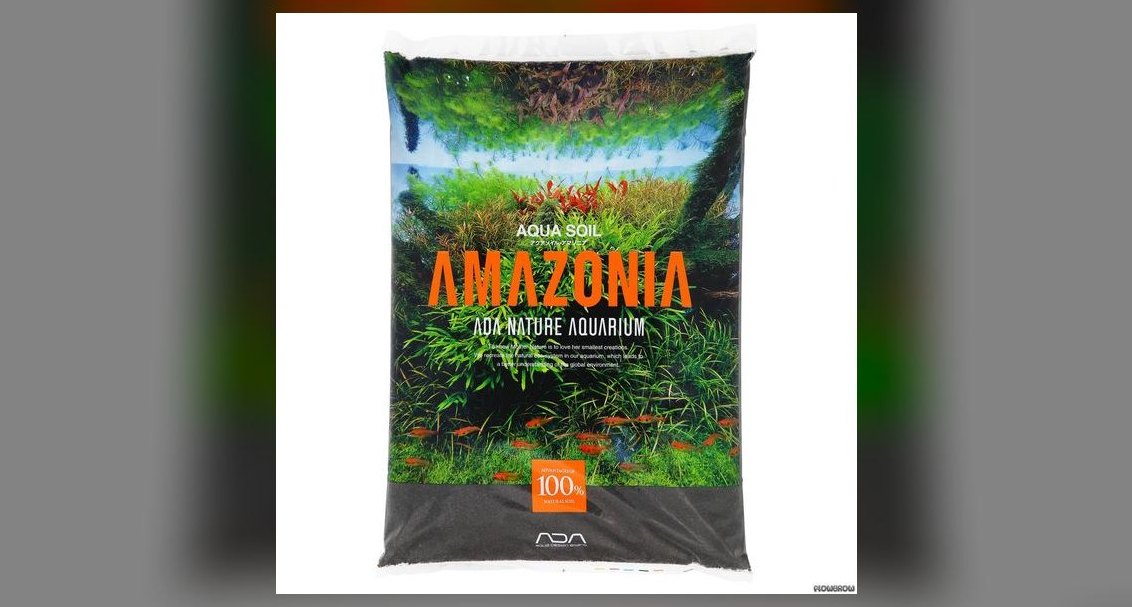 pulse-aquariumsTop 10 Planted Aquarium Substrates Compared 2027
 pulse-aquariumsTop 10 Snail-Free Algae Eaters for Small Community Aquariums in 2027
 pulse-aquariumsHow to acclimate saltwater fish from the LFS without drip acclimation?
 pulse-aquariumsBest automatic fish feeder for pelleted food that doesn't clog or overfeed?
 pulse-aquariumsHow to treat ich in a planted tank without harming invertebrates?
 pulse-aquariumsHow to set up a hospital tank for fin rot without medicating the main display?