
How do you remove ammonia from an aquarium quickly?
 Curated byKory White · Fractional CRO · Maryland
 PULSEKNOWLEDGE LIBRARY
To remove ammonia from an aquarium quickly, immediately perform a large water change (50–75%) with dechlorinated, temperature-matched water, then dose a binder like Seachem Prime to detoxify any ammonia that remains. Boost biological filtration by seeding the filter with mature media or bottled nitrifying bacteria such as FritzZyme TurboStart 900, Dr. Tim's One and Only, or Seachem Stability. For stubborn spikes, run zeolite (freshwater only) in a media bag or a Poly-Filter pad (Poly-Bio-Marine). Re-test with an API Freshwater Master Test Kit every 2–4 hours and repeat water changes until ammonia reads 0 ppm. Continuous monitors like the Seneye Home/Reef can alert you to a spike, but a manual water change is always the fastest fix.
#
Why Ammonia Spikes Happen and Why Speed Matters
Ammonia (NH₃) becomes dangerous to fish above roughly 0.02 ppm of the free (un-ionized) form, damaging gills and causing distress within hours. Spikes are usually caused by overfeeding, a dead fish or snail decaying out of sight, a stalled or cleaned-out filter, an uncycled new tank, or medications that suppress the bacteria colony. Because damage accumulates fast, you need a reactive protocol that works in minutes, not days.
Step 1: Immediate Water Change
The fastest way to dilute ammonia is a 50–75% water change using water that matches tank temperature (within about 2°F) and is treated with a dechlorinator. Seachem Prime is ideal here because it both removes chlorine/chloramine and binds ammonia into a non-toxic form for 24–48 hours. A Python No-Spill Clean and Fill makes large changes easy. For saltwater tanks, pre-mix synthetic salt (e.g., Instant Ocean or Tropic Marin) to the correct salinity before adding it.
Step 2: Chemical Binders and Media
After the water change, add a chemical ammonia binder to protect fish between changes:
- Seachem Prime — detoxifies ammonia, nitrite, and nitrate for up to 48 hours. Dose 1 cap (5 mL) per 50 gallons; up to 5x dose is safe in an emergency.
- API Ammo-Lock — locks ammonia into a non-toxic form; a good backup binder.

For physical removal, use zeolite (an ammonia-adsorbing resin) in a media bag, or a Poly-Filter pad (Poly-Bio-Marine). Zeolite works in freshwater and can be recharged by soaking in a strong salt solution; do not rely on it in saltwater, where it releases adsorbed ammonia. A canister such as the Fluval 407 or Oase BioMaster loaded with Seachem Matrix gives you the bio-capacity to keep ammonia at zero long term.
Step 3: Boost Biological Filtration
Ammonia is converted by nitrifying bacteria (Nitrosomonas, then Nitrobacter/Nitrospira) into nitrite and then nitrate. To accelerate this, add live bacteria:
- FritzZyme TurboStart 900 — multi-strain; freshwater and saltwater versions.
- Dr. Tim's One and Only — widely trusted for fast cycling.
- Seachem Stability — liquid bacteria that helps absorb ammonia spikes.

The single most effective move is to borrow mature filter media (a seasoned sponge or bag of ceramic media) from an established tank and run it in your filter. This seeds a live bacteria colony immediately.
Step 4: Monitor and Repeat
Test ammonia every 2–4 hours with a liquid kit — the API Freshwater Master Test Kit is the reliable standard; avoid test strips for accuracy during an emergency. If ammonia stays above 0.25 ppm after 4 hours, repeat Steps 1–3. Stop only after ammonia reads 0 ppm and holds there for 24 hours.
Continuous Monitors: Helpful, Not a Substitute
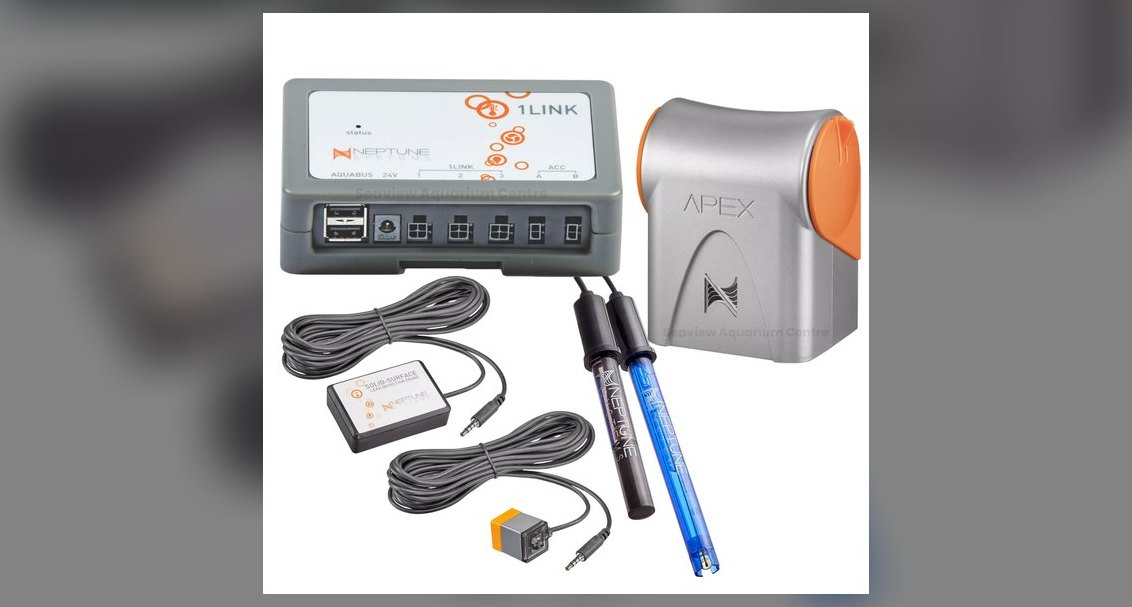
Devices like the Seneye Home/Reef use optical sensors to read free ammonia continuously and send phone alerts, and controllers such as the Neptune Systems Apex can automate dosing and water-change reminders. These tools are useful, but they fail in predictable ways:
- Biofilm buildup on the sensor (needs regular cleaning).
- Calibration drift on pH/ammonia probes (needs periodic recalibration).
- Network outages that drop alerts.
Always keep a manual liquid test kit on hand for verification. In a real spike, a bucket and dechlorinator beat any sensor.
Long-Term Fix: Prevent Future Spikes
Once ammonia is at 0 ppm, address the root cause:
- Overfeeding — feed small amounts fish finish in 1–2 minutes; an auto-feeder like the Eheim Everyday Fish Feeder helps portion control.
- Filter maintenance — rinse mechanical media in old tank water (never tap) so you don't kill the bacteria colony.
- Stocking levels — don't overstock; understocked, well-filtered tanks rarely spike.
- Dead livestock — remove dead fish, snails, and uneaten food promptly before they decay.

A properly sized canister such as the Fluval 407 with Seachem Matrix bio-media gives most freshwater tanks ample biological capacity to keep ammonia at zero.
Understanding the Limitations of Quick Fixes: What Binders and Zeolites Can and Cannot Do
While water changes and chemical binders are the fastest tools to address an ammonia spike, it’s critical to understand their limitations to avoid a false sense of security. Seachem Prime and similar dechlorinators that claim to “detoxify” ammonia do not remove it from the water; they convert toxic ammonia (NH₃) into a less toxic form (ammonium, NH₄⁺) or bind it temporarily. This binding is not permanent—it typically lasts 24–48 hours before the ammonia can become bioavailable again. If your biological filter is still compromised, the ammonia will reappear once the binder’s effect wears off, potentially causing a second spike that is just as dangerous as the first.
Zeolite is a natural volcanic mineral that acts as an ion exchanger, trapping ammonia ions (NH₄⁺) in its porous structure. It is highly effective in freshwater aquariums for rapid, short-term ammonia removal—often reducing levels from 2–4 ppm to near zero within 1–2 hours. However, zeolite has several critical drawbacks:
- It cannot be used in saltwater because the high salt content displaces the ammonia from the zeolite, releasing it back into the water.
- Zeolite becomes saturated after 12–24 hours of heavy use, at which point it stops working and must be replaced or regenerated (by soaking in a high-salt solution, which is impractical for most hobbyists).
- It does not help establish biological filtration; in fact, by removing ammonia, it can starve the beneficial bacteria you are trying to grow, potentially prolonging the cycle.

Poly-Filter pads are a more versatile alternative—they absorb ammonia, nitrite, nitrate, and many medications or toxins, and change color to indicate saturation (e.g., yellow for ammonia). They work in both fresh and saltwater and can last 2–4 weeks before needing replacement, depending on the severity of the spike. However, they are not a substitute for water changes; they are best used as a backup to maintain low levels between changes.
The key takeaway: Binders and zeolites are triage tools, not cures. They buy you time—typically 24–48 hours—to fix the underlying cause (e.g., a dead fish, overfeeding, or a crashed filter). Relying solely on them without addressing the root problem will lead to recurring spikes that stress or kill your fish. Always pair these methods with aggressive water changes and biological filter support.

How to Diagnose the Root Cause of an Ammonia Spike to Prevent Recurrence
Removing ammonia quickly is only half the battle; the other half is figuring out *why* it spiked so you can stop it from happening again. A systematic investigation can save your fish from repeated stress and potential loss. Here is a step-by-step diagnostic process to perform immediately after the initial water change:
1. Check for visible decay. Look for a dead fish, snail, shrimp, or plant matter that may have rotted undetected. Even a single small fish (e.g., a neon tetra) decomposing in a 20-gallon tank can raise ammonia to 1–2 ppm within 12 hours. Remove any carcass or large dead plant leaves immediately. If you find nothing visible, proceed to the next step.
2. Evaluate your filter. A “crashed” or stalled biological filter is the most common cause of sudden ammonia spikes. Did you recently clean the filter media with tap water (which kills bacteria with chlorine)? Did you replace the filter cartridge or sponge entirely? Did the filter stop running for more than 2–4 hours due to a power outage or pump failure? If yes, your beneficial bacteria colony has been severely reduced. In this case, you need to re-seed the filter as fast as possible. Add bottled nitrifying bacteria (e.g., FritzZyme TurboStart 900 or Dr. Tim’s One and Only) directly into the filter chamber, and consider adding a mature sponge from a healthy, cycled tank if available.

3. Review recent changes. Did you add new fish, increase feeding, or start using a new medication (especially antibiotics like erythromycin or kanamycin, which can kill nitrifying bacteria)? Did you rearrange the substrate or add new driftwood that might be leaching ammonia? Each of these can trigger a spike. For example, overfeeding by even 10–20% can cause uneaten food to decay, producing ammonia within hours. Reduce feeding to once every 2–3 days until ammonia reads 0 ppm consistently.
4. Test for a “silent cycle” in new tanks. If your tank is less than 8 weeks old and you added fish before it was fully cycled, the ammonia spike may be part of the natural cycling process. However, even in a cycling tank, ammonia should never exceed 1–2 ppm for more than 24 hours. If it does, you are overstocked or overfeeding relative to your bacteria colony’s capacity. In this case, perform daily 25–50% water changes and dose a bacterial supplement until nitrite appears (usually 5–14 days).

5. Consider hidden sources. Some substrates (e.g., certain soils or “active” aquasoils) can leach ammonia for the first 2–4 weeks. Also, tap water in some regions contains chloramine, which breaks down into ammonia when dechlorinated. If you use a dechlorinator that does not bind ammonia (like basic sodium thiosulfate products), you may be adding 0.5–1.0 ppm of ammonia with every water change. Switch to a product like Seachem Prime or API Ammo Lock that neutralizes chloramine-derived ammonia.
By identifying the root cause—whether it’s a dead fish, a cleaned filter, or overfeeding—you can take targeted action to prevent future spikes. Keep a log of your tank’s parameters (ammonia, nitrite, nitrate, pH, temperature) and any changes you make; this will help you spot patterns and react faster next time.
Long-Term Strategies to Build Resilience Against Ammonia Spikes
Once you’ve handled the immediate emergency, the goal is to create a system that is naturally resistant to ammonia spikes—so that even if something goes wrong (a power outage, a new fish, or a feeding mistake), your tank can recover without crisis. Here are three proven long-term strategies that experienced aquarists use to build this resilience:

1. Oversize your biological filtration. The single most effective way to prevent ammonia spikes is to have more nitrifying bacteria than your tank’s bioload requires. This means using a filter rated for a tank 2–3 times larger than your actual tank volume. For example, a 20-gallon tank should use a canister filter rated for 40–60 gallons (e.g., Fluval 207 or Eheim 2213). Alternatively, add a second filter (like a sponge filter) for redundancy. This gives you a “buffer” of bacteria that can handle temporary increases in ammonia (e.g., from a dead fish or extra feeding) without a visible spike. Aim for a total filter media volume of at least 10–15% of your tank’s water volume (e.g., 2–3 liters of media for a 20-gallon tank).
2. Use a deep, mature substrate. A 2–3 inch layer of fine gravel or sand (especially if it has been established for 6+ months) develops a large population of anaerobic bacteria that consume ammonia and nitrates. This “biological substrate” acts as a secondary filter. Avoid vacuuming the substrate too aggressively; only clean the top ½ inch during water changes to avoid disturbing the deeper bacteria. Adding live plants like Java fern, Anubias, Hornwort, or Water sprite also helps—they absorb ammonia directly as a nutrient, competing with algae and reducing spikes. A heavily planted tank (50–75% plant coverage) can often handle a missed water change or a small overfeed without any measurable ammonia.

3. Implement a proactive testing and maintenance schedule. Don’t wait for fish to show distress. Test ammonia, nitrite, and nitrate at least once a week—more often if you have a new tank, recently added fish, or are trying a new food. Use a liquid test kit (like the API Freshwater Master Test Kit) because test strips are less accurate. Record your results in a log. If you see ammonia rising above 0.25 ppm, even if fish seem fine, take action immediately (a small 20–30% water change and a dose of bacteria supplement). Over time, you’ll learn your tank’s “normal” patterns and can spot problems early.
4. Keep emergency supplies on hand. Stock a small “ammonia emergency kit” that includes: a bottle of Seachem Prime (or equivalent binder), a bag of zeolite (for freshwater only), a Poly-Filter pad, and a bottle of FritzZyme TurboStart 900 or Dr. Tim’s One and Only. Having these ready means you can react within minutes, not hours. Also, keep a Python No-Spill Clean and Fill or a similar water change system accessible—delaying a water change because you can’t find your equipment can turn a manageable spike into a lethal one.
By combining these long-term strategies—oversized filtration, a mature substrate with live plants, regular testing, and an emergency kit—you create a tank that is far less likely to experience dangerous ammonia spikes. And when they do occur (because no system is perfect), you’ll have the tools and knowledge to handle them quickly and safely.
FAQ
What is the fastest way to remove ammonia from an aquarium? Perform a 50–75% water change with dechlorinated, temperature-matched water, add Seachem Prime, and dose FritzZyme TurboStart 900 bacteria. This can drop ammonia from a dangerous level to near-zero within an hour or two.
Can I use ammonia-absorbing pads like Poly-Filter? Yes. Poly-Filter (Poly-Bio-Marine) pads adsorb ammonia, nitrite, and heavy metals. Place one in a high-flow spot such as a canister outlet. The pad changes color as it saturates and should be replaced when exhausted.
Do continuous monitors work for freshwater tanks? Yes — the Seneye Home is the freshwater-focused model, and Neptune's Apex with an ammonia probe works in fresh or salt. They alert you to spikes but do not replace manual water changes.
How often should I test ammonia during a spike? Every 2–4 hours with a liquid kit. The API Freshwater Master Test Kit is the reliable choice. Stop once ammonia reads 0 ppm and holds for 24 hours.
Can I use bottled bacteria from a different brand than my filter? Yes — nitrifying bacteria are not brand-specific. FritzZyme and Dr. Tim's work with any filter media. Add bacteria a little after Prime, since heavy Prime dosing can briefly slow bacterial activity.
Is zeolite safe for all fish? Zeolite is safe in freshwater but releases adsorbed ammonia in saltwater, so use Poly-Filter or fresh activated carbon in marine tanks instead.
Related on PULSE
- [How do I remove brown diatom algae from aquarium glass without chemicals?](/knowledge/aq0476)
- [Top 10 Aquarium Test Kits for Accurate Ammonia, Nitrite, and Nitrate](/knowledge/aq0899)
- [Top 10 Aquarium Test Kits for Monitoring Ammonia and Nitrite](/knowledge/aq0826)
- [Top 10 Aquarium Test Kits for Monitoring Ammonia, Nitrite, and Nitrate](/knowledge/aq0729)
- [How do you do a fishless cycle with ammonia?](/knowledge/aq1133)
- [Top 10 Water Test Kits for Monitoring Ammonia and Nitrates](/knowledge/aq0866)
Sources
- Seachem Prime product page
- Fritz Aquatics FritzZyme TurboStart 900
- API Freshwater Master Test Kit
- Dr. Tim's One and Only nitrifying bacteria
- Seneye home aquarium monitor
- Poly-Bio-Marine Poly-Filter
Bottom Line
To remove ammonia quickly, perform a large dechlorinated water change, dose Seachem Prime to detoxify the remainder, and boost biological filtration with bottled bacteria or mature media. Continuous monitors can warn you early, but manual water changes remain the fastest, most reliable fix. Keep a liquid test kit and a binder on hand so you can react within minutes and avoid losing fish.
*How to remove ammonia from an aquarium quickly with water changes, Seachem Prime, and FritzZyme bacteria in 2027.*
 pulse-aquariumsTop 10 Clownfish Varieties for Saltwater Aquariums in 2027
 pulse-aquariumsTop 10 Aquariums strategies for 2027
 pulse-aquariumsHow do you set up a low-tech planted shrimp tank?
 pulse-aquariumsTop 10 Reef-Safe Tangs for Saltwater Aquariums in 2027
 pulse-aquariumsTop 10 Aquarium Air Pumps in 2027
 pulse-aquariumsHow do you choose the right filter for your aquarium?
 pulse-aquariumsHow do you set up a planted aquarium for beginners?
 pulse-aquariumsTop 10 Aquarium Controllers for Smart Tanks in 2027
 pulse-aquariumsHow do you treat ich in a freshwater aquarium?
 pulse-aquariumsHow do you raise water hardness in a shrimp tank?