
How do I manage nutrient export in a reef tank in 2027?
 PULSEKNOWLEDGE LIBRARY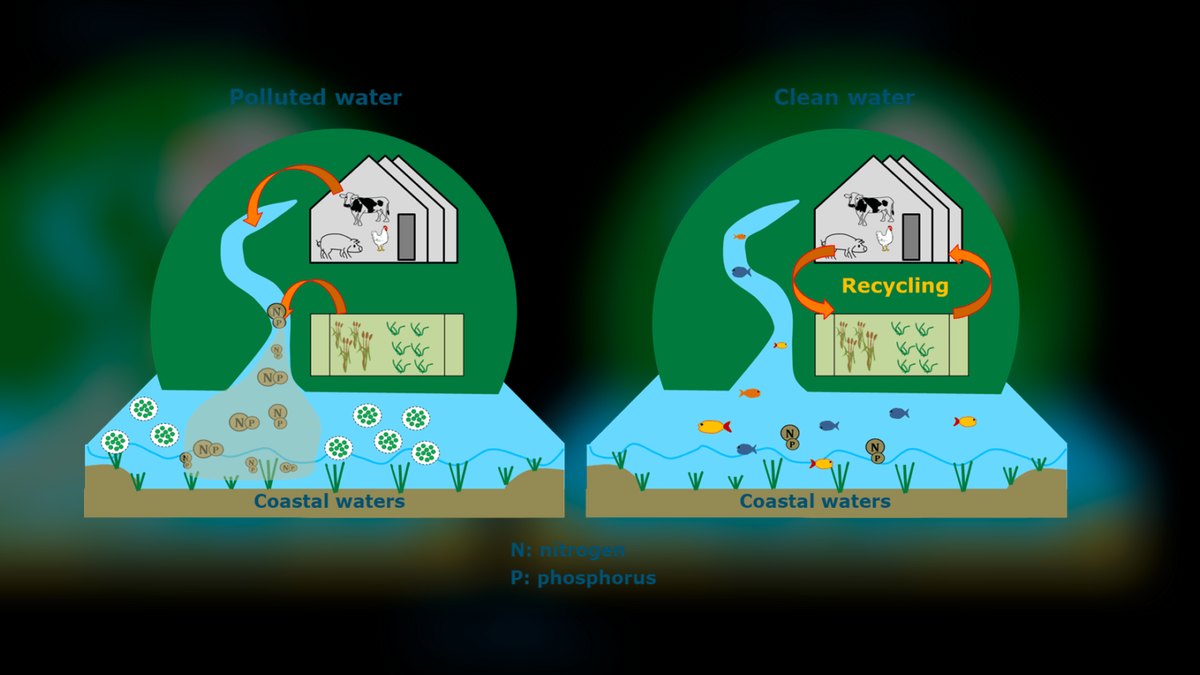
Manage nutrient export in a reef tank by matching removal to input: feed measured amounts, run protein skimming and mechanical filtration, and pick one primary biological path — refugium macroalgae, carbon dosing, or algae scrubber — then hold nitrate near 2–10 ppm and phosphate near 0.03–0.10 ppm with weekly testing and small corrections.
The two main export paths, compared
Every nutrient control strategy on a reef tank is a variant of two philosophies, and almost every argument in the hobby is really an argument about which one you picked. The first is assimilatory export: you grow something on purpose, let it absorb nitrogen and phosphorus into its tissue, then physically remove that tissue from the system. Refugium macroalgae (chaeto, caulerpa, ulva), turf algae scrubbers, and mangroves all live here. The second is bacterial export: you supply a carbon source so heterotrophic bacteria multiply, consume nitrate and phosphate in a roughly fixed ratio as they build biomass, and then you strip that bacterial floc out with a protein skimmer. Vodka, vinegar, sugar, and the commercial all-in-one bacterial-driver products all live here. A third category — chemical binding — is not really export at all in the biological sense; granular ferric oxide (GFO), lanthanum chloride, and aluminum-oxide media bind phosphate to a substrate you throw away. It is a scavenger, not an engine, and it does nothing for nitrate.
The practical differences matter more than the theory. Assimilatory export is slow, forgiving, and self-limiting. A refugium that is running out of nitrogen simply stops growing; it does not crash your tank. It also strips phosphate and nitrate in whatever ratio the algae needs, which is close enough to the ratio corals need that it rarely pulls one to zero while the other sits high. The cost is space, light, and mediocre throughput. A 10-gallon refugium harvesting a fist-sized clump of chaeto weekly is exporting a modest amount of nitrogen — meaningful on a 75-gallon mixed reef with two fish, marginal on a 180 with fifteen.
Bacterial export is fast, powerful, and unforgiving. Carbon dosing can take a tank from 40 ppm nitrate to 5 ppm in three weeks. It can also take it from 10 ppm to undetectable in four days if you overshoot, and undetectable nitrate on an SPS-dominant reef is how you get pale, receding tissue and a cyanobacteria bloom filling the vacuum. Carbon dosing also demands a skimmer that actually works, because the bacteria are the export vector — if you grow the floc and never remove it, you have moved nutrients from dissolved to particulate and solved nothing. Worse, the bacteria consume oxygen; heavy dosing in a poorly-oxygenated tank can drop dissolved oxygen enough to stress fish overnight.
The honest answer for most tanks is that these are not exclusive. The common stable configuration in 2027 looks like: skimmer plus filter socks or a roller mat as the always-on mechanical baseline, a refugium as the steady biological engine, and either a small carbon dose or a reactive GFO run as the adjustable trim. You pick a primary and keep the secondary in reserve rather than running three aggressive systems simultaneously and having no idea which one caused a swing.
How to decide between them
The decision comes down to four inputs: your bioload relative to volume, your coral mix, how much sump space you have, and how much day-to-day attention you can reliably give the tank.
Start with coral mix, because it sets the target and the target sets the tool. An SPS-dominant tank wants low but nonzero nutrients — roughly 2–5 ppm nitrate and 0.02–0.05 ppm phosphate — and it wants them *stable*, because acropora respond to swing more than to level. A mixed or LPS/soft-dominant tank runs comfortably at 5–15 ppm nitrate and 0.05–0.15 ppm phosphate and tolerates wobble. If you are SPS-dominant, stability is worth more than power, which argues for a large refugium plus a small, extremely consistent carbon dose rather than an aggressive one. If you are mixed or softie-dominant, you likely need less export than you think and should be careful not to strip the tank.
Next, bioload versus volume. A rough working heuristic: a lightly stocked reef under about 1 inch of adult fish length per 5 gallons of total water volume can usually be held in range by skimming, water changes, and a modest refugium. Above that, and especially in fish-heavy tanks where feeding is the point, you need a real engine. Heavy-feeding systems — large tangs, an anthias shoal, multiple daily feedings — generate more dissolved nitrogen than a refugium of realistic size can absorb, and that is exactly the case where carbon dosing plus a strong skimmer earns its complexity.

Then sump space. This is the boring constraint that decides more setups than any water-chemistry argument. A refugium worth having wants at least 15–20% of display volume, adequate depth for a tumbling clump, and a dedicated light. If your sump is a three-chamber all-in-one with a skimmer already crowding it, a refugium is not on the table and you should stop pretending it is. An external algae scrubber or an in-sump scrubber cartridge takes far less footprint for comparable throughput and is the correct answer for space-constrained systems.
Finally, attention budget. Carbon dosing requires that you actually test weekly and actually adjust. If you dose a fixed amount for six months without testing, you will eventually either bottom out or drift up, and both look like mystery problems later. Refugium harvesting is forgiving of a skipped week. If you travel, if the tank is in an office, if you know your realistic testing cadence is "when something looks wrong" — pick the forgiving path.
One more decision rule that saves a lot of grief: if only phosphate is high and nitrate is fine, do not carbon dose. Carbon dosing removes both in a bacterial ratio, so pushing hard enough to fix phosphate will drive nitrate to zero long before phosphate lands. That is the classic path to a dinoflagellate outbreak. Use GFO or lanthanum for a phosphate-only problem and leave the nitrate alone.
The inverse also holds. If nitrate is 40 ppm and phosphate is 0.02 ppm, adding GFO makes things worse — you will bottom phosphate while nitrate sits untouched, and the resulting imbalance is a well-known trigger for both dinos and cyano. Fix the high one with a tool that targets it, and stop reaching for the media you happen to have on the shelf.
The numbers behind each option
Water changes. The math here is underappreciated and worth internalizing, because it sets a floor on what water changes can do. A water change dilutes proportionally: swapping 10% of volume removes 10% of the dissolved nutrient standing stock at that instant. If your tank sits at 30 ppm nitrate, a 10% change takes it to 27 ppm — and if your daily production is meaningful, it is back near 30 within a week. Water changes are excellent for trace element replenishment, for exporting things you cannot test for, and for a fresh start; they are a poor primary nutrient engine on a system that is genuinely overloaded. To use dilution alone as your nitrate control you would need weekly changes in the 30–50% range on a high-input tank, which is expensive in salt and hard on stability.

Protein skimming. A skimmer exports organics *before* they mineralize into nitrate and phosphate, which is why it is the highest-leverage single piece of equipment. Practical sizing: buy for roughly 1.5–2× your total system volume rather than nameplate rating, because manufacturer ratings assume light bioload. A skimmer on a heavily-fed tank should produce visible dark skimmate steadily, not a cup of tea-colored water every three days. Skimmers are also badly affected by neglect — a fouled air intake, a salt-crept venturi, or a neck that has not been wiped in a month cuts performance sharply. Wipe the neck weekly; it is the single cheapest performance gain in the sump.
Refugium. A well-lit chaeto refugium tumbling under adequate PAR will roughly double in mass over one to three weeks depending on nutrient availability and light. Harvest when it fills its space, removing about a third to a half and leaving the rest to regrow — a bald refugium takes weeks to recover and exports nothing in the interim. Light matters more than most people admit: a weak clip-on light gives you a chaeto ball that sits there looking green and exports almost nothing. Run the refugium light on a reverse cycle to the display (roughly the display's dark hours) if you want the pH-buffering benefit of offset photosynthesis, which typically narrows the daily pH swing.
Carbon dosing. The universally correct starting protocol is *start low, ramp slowly, test often*. Begin at roughly a quarter of any product's or calculator's suggested full dose, hold for a week, test, and increase by no more than about 25% of the current dose per week. Expect the first visible response in 1–3 weeks — often as a light bacterial haze or a change in skimmate. Signs you are going too fast: sudden water cloudiness, a skimmer overflowing, white bacterial film on rock or sand, or fish breathing hard. Any of those means cut the dose in half immediately and increase aeration. Split the daily dose across multiple small doses if you can — a doser delivering small amounts many times a day is dramatically more stable than one large slug.

GFO. Granular ferric oxide binds phosphate and is best run *reactively* — a small charge, tumbling gently, until phosphate lands in range, then pulled or reduced. Run it too aggressively and you strip phosphate to zero, which triggers exactly the pest algae problem you were trying to solve. Signs of overshoot are pale coral tissue and a phosphate reading that will not register on a hobby test. GFO also needs replacing on exhaustion, not on a calendar — it stops working long before it looks used up, so test rather than guess.
Lanthanum chloride. Extremely effective on phosphate, and extremely easy to misuse. It precipitates phosphate into a fine particulate that must be captured — dosed into a filter sock or a dedicated reactor with fine mechanical filtration downstream, never dumped into the display. Undosed-into-a-sock lanthanum has irritated fish gills in enough anecdotal reports that the safe practice is universal: dose slowly, into flowing water, upstream of fine mechanical media, and never chase a large drop in one session.

Feeding. The largest single lever, and the free one. Every gram of food is the nutrient input; export is only ever chasing it. Feeding practices that meaningfully reduce dissolved input without starving fish: rinse frozen food in RO/DI and drain the pack juice (that juice is heavily phosphate-loaded), feed smaller amounts more often rather than one large slug, and target-feed corals rather than broadcasting. Automatic feeders are a common hidden cause of creeping nutrients because nobody re-checks the portion after the first month.
Building the system and sequencing changes
The order in which you do things determines whether you get a clean result or a mystery. The reliable sequence is: measure, fix mechanical, fix inputs, then add a biological engine, then trim.
Measure first, and measure honestly. Before changing anything, get a baseline: nitrate and phosphate at the same time of day on two or three separate days, using a test kit you trust. Cheap phosphate kits in particular struggle below 0.1 ppm, which is exactly the range that matters on a reef — if you are managing an SPS system, a low-range phosphate checker or a lab-style test is not optional. Record the numbers. You cannot evaluate any intervention without a baseline, and "the tank looks better" is not data. A simple log with date, nitrate, phosphate, and what changed that week is worth more than any piece of equipment.

Fix mechanical filtration before anything clever. Detritus sitting in a sump or trapped in a low-flow dead spot is a nutrient reservoir that keeps remineralizing. Filter socks need changing every 2–3 days or they become the source rather than the sink; a roller mat solves this by advancing automatically. Blow out rockwork with a turkey baster or powerhead before water changes so the suspended detritus gets siphoned out rather than resettling. Check for dead spots — a corner where detritus visibly accumulates is telling you the flow pattern needs a powerhead angled differently. This step alone often drops nutrients enough that no engine is needed.
Fix inputs next. Audit feeding for a week: weigh or count what actually goes in, including whatever the automatic feeder dispenses and whatever the person who feeds when you travel adds. Check your RO/DI output with a TDS meter — a spent DI resin passing 5–10 TDS is quietly adding phosphate and silicate to every top-off gallon, and silicate feeds diatoms. Replace the sediment and carbon prefilters on schedule and the DI resin on TDS reading, not on calendar. Check your salt mix too; some mixes carry measurable nitrate or phosphate, which matters most on a large water-change regimen.

Then add exactly one biological engine and give it time. The single most common self-inflicted wound is starting a refugium, adding GFO, and beginning carbon dosing in the same week, then having no idea what did what when the tank swings. Add one. Wait four to six weeks. Test weekly. Only then evaluate.
Then trim. Once the primary engine has settled, if you are still off target, add the secondary tool at the smallest useful dose and ramp gently.
Sequencing during a reduction. If you are bringing a badly overloaded tank down, go slower than feels necessary. Corals adapt to a nutrient regime, and a fast drop from 50 ppm nitrate to 5 ppm will bleach tissue that was perfectly happy at 50. A safe rate of change is on the order of cutting the standing concentration by no more than roughly a third per month. Yes, that means a genuinely dirty tank takes a full season to bring into range. Tanks that got there in two weeks are the ones posting bleaching threads afterward.

What to do when it goes wrong. Three failure signatures cover most of it. *Cyanobacteria* — dark red-purple sheets on sand and rock — usually means detritus plus low flow plus available nutrients; fix flow and siphon it physically before reaching for chemicals. *Dinoflagellates* — brown snotty strands with bubbles, worst in the afternoon — are strongly associated with nutrients stripped too low, and the counterintuitive fix is usually to *raise* nutrients back into range, stop GFO, and cut carbon dosing. *Green hair algae* is the straightforward one: nutrients are genuinely high, export is genuinely insufficient, and manual removal plus a real engine is the answer.
Maintenance that keeps it working. Wipe the skimmer neck weekly. Harvest the refugium on a schedule you keep. Change or clean mechanical media before it becomes a source. Test weekly during any active change and at least biweekly once stable. Recalibrate the refractometer monthly. And write it down — the log is what turns "the tank is acting weird" into "nitrate has climbed 3 ppm a week since I changed feeders," which is a solvable problem instead of a mystery.
Related questions
What nitrate and phosphate levels should I target?
Most stable reefs sit at 2–10 ppm nitrate and 0.03–0.10 ppm phosphate. Go toward the low end for SPS-dominant systems, the higher end for LPS and softies. Zero on either test is a problem, not a goal — it invites dinoflagellates and pale tissue.
Can water changes alone control nutrients?
Only on lightly stocked tanks. Dilution is proportional, so a 10% change removes 10% of the standing stock — meaningful when input is low, futile when it is high. Water changes are best treated as trace-element replenishment plus a supplement to a real export path.
Is carbon dosing safe for a beginner tank?
It can be, with discipline: start at a quarter dose, ramp no faster than 25% per week, run a working skimmer, and test weekly. Without weekly testing it is genuinely risky — overshoot bottoms nutrients fast and can drop dissolved oxygen overnight.
Why did my nutrients crash and pest algae appear anyway?
Stripped-too-low is a recognized trigger. Dinoflagellates in particular thrive when nitrate and phosphate are undetectable and competing organisms are starved out. The fix is usually to back off export, restore measurable nutrients, and let the biological competition re-establish.
Do I need both a refugium and a skimmer?
They do different jobs. The skimmer removes organics before they mineralize; the refugium consumes what already has. Running both is common and complementary. If you must pick one on a fish-heavy system, the skimmer does more work per unit of space.
FAQ
How long before a new refugium starts making a difference?
Expect four to eight weeks before you see a measurable change in nitrate or phosphate. The macroalgae has to establish, colonize, and reach a mass where its growth rate meaningfully competes with your daily input. A refugium that has been running two weeks and "isn't working" simply has not started yet. Judge it by growth rate first — if the clump is visibly larger week over week, it is exporting, even if the test numbers lag.
My skimmer stopped producing skimmate after I started dosing. What happened?
Two likely causes. If it happened immediately, the carbon source changed surface tension and the skimmer needs re-tuning — adjust the water level or the neck height and let it re-stabilize for a day or two. If it happened after weeks of successful dosing, you may have driven nutrients low enough that there is genuinely less organic material to pull. Test before adjusting; a dry skimmer on a clean tank is normal, but a dry skimmer on a dirty tank means something is broken.
Should I run GFO continuously or reactively?
Reactively, in almost all cases. Continuous GFO on a passive schedule is how tanks end up with undetectable phosphate and a dinoflagellate problem. Run a small charge, test twice a week while it works, and pull or reduce it once phosphate lands in your target range. Treat it as a tool you deploy against a specific reading, not as permanent equipment.
Does an algae scrubber replace a refugium?
Functionally, largely yes — both are assimilatory export via algal growth, and both are harvested. The scrubber trades biodiversity for footprint: it exports efficiently in a fraction of the space, but a refugium also gives you a pod population and a low-flow sanctuary that feeds the display. If space allows a refugium, most people prefer it. If it does not, a scrubber is a legitimate primary engine, not a compromise.
Why does everyone say zero nutrients is bad?
Because corals are photosynthetic animals that need nitrogen and phosphorus for tissue, and their zooxanthellae need it too. Strip both to undetectable and you get pale, thin tissue and slowed growth. Separately, a nutrient vacuum removes the competitive pressure that keeps nuisance organisms in check — dinoflagellates in particular exploit conditions where nothing else can grow. The goal is low and stable, not absent.
How often should I actually test?
Weekly during any active change — starting a dose, adding media, changing feeding — and at least every two weeks once the system is stable and you understand its trend. Test at the same time of day for comparability, and log the results. The trend line over eight weeks tells you far more than any single reading, and it is the only way to catch a slow drift before it becomes a bloom.
Sources
- https://reefbuilders.com/
- https://www.reef2reef.com/
- https://www.advancedaquarist.com/
- https://reefs.com/
- https://www.nature.com/subjects/coral-reefs
- https://oceanservice.noaa.gov/facts/coral.html
- https://ocean.si.edu/ecosystems/coral-reefs
- https://www.usgs.gov/special-topics/water-science-school/science/nitrogen-and-water
- https://www.epa.gov/nutrientpollution/problem
Related on PULSE
- How do I dial in alkalinity stability on a mixed reef?
- What causes dinoflagellate outbreaks and how do I clear them?
- How do I size a protein skimmer for my system volume?
- What is the right lighting schedule and PAR range for SPS?
- How do I set up a refugium in a small sump?
- How do I diagnose and fix cyanobacteria on the sand bed?
 pulse-aquariumsTop 10 Geophagus Eartheater Cichlids 2027
 pulse-aquariumsTop 10 Protein Skimmers 2027
 pulse-recentHow do I introduce fish to a newly cycled reef tank in 2027?
 pulse-aquariumsTop 10 Clown Loach Centerpiece Fish 2027
 pulse-aquariumsTop 10 Dosing Pumps for Automatic Reef Supplement Dosing in 2027
 pulse-aquariumsTop 10 Quarantine Tank Setup Mistakes in 2027
 pulse-recentHow do I aquascape live rock for a reef tank in 2027?
 pulse-aquariumsTop 10 Betta Fish Tail Types 2027
 pulse-recentHow do I choose the right lighting schedule for a reef tank in 2027?
 pulse-aquariumsTop 10 Hatchetfish Surface Swimmers 2027