
How Do I Budget a Micro-Cinema or Screening-Room Buildout?
 Curated byKory White · Fractional CRO · Maryland
 PULSEKNOWLEDGE LIBRARY
Budget a micro-cinema or private screening-room buildout at $180 to $450+ per square foot for a finished room, with the all-in number landing between $250,000 and $1.6 million for a 1,500-to-4,000 sq ft space depending on seat count, sound system, and projection. The single move that saves the most money is putting the landlord on the hook for the shell: demand a turnkey or warm-shell delivery plus a tenant improvement (TI) allowance of $40 to $90 per square foot, and never sign a lease that delivers a "cold dark shell" unless the free rent and TI dollars cover the $60-to-$120 per sq ft it costs to bring in HVAC, electrical service, and a code-compliant ceiling. The expensive part of a micro-cinema is not the screen; it is the acoustic isolation (you are building a box inside a box) and the HVAC, because a dark room full of bodies and a 4K laser projector throwing 2,000 to 5,000 lumens generates serious heat. Budget $25 to $55 per sq ft for acoustic treatment and isolation and oversize your cooling to roughly 400 to 600 sq ft per ton instead of the usual 500-to-700, which is the difference between a $14,000 rooftop unit and a $22,000 one. Get those two line items right and the rest of the project behaves.
What Are the Exact Line Items in a Micro-Cinema Budget?
Here is where the money actually goes on a 2,500 sq ft, 40-seat micro-cinema:
- Acoustic isolation and treatment: $60,000–$140,000. Resilient channel, double 5/8" drywall, mass-loaded vinyl (roughly $2.50–$4 per sq ft of wall), decoupled stud walls, and a floating floor if you share a demising wall with a noisy neighbor. An STC 60+ wall assembly is the target if you want to run reference-level sound past 10 p.m. without a noise complaint.
- Projection and screen: $30,000–$120,000. A 4K laser projector runs $8,000–$45,000 for home-theater grade (e.g., Sony VPL-XW5000ES or Epson LS12000); commercial-grade Barco or Christie projectors run $25,000–$60,000 used/refurbished, $80,000–$150,000 new. An acoustically transparent screen runs $3,000–$15,000; the booth, lens, and mount add the rest.
- Sound system: $35,000–$150,000. A proper Dolby Atmos 7.1.4 or 9.1.6 layout needs 12-to-18 speakers, dual subs, and a cinema processor. The amps and DSP are where integrators pad bids.
- Seating: $25,000–$120,000. Recliners run $800–$3,500 a seat; fixed theater seating runs $300–$900 a seat. Riser platforms add $8,000–$25,000.
- HVAC: $40,000–$90,000. Oversized cooling, quiet diffusers, and sound-attenuated ductwork so the air handler does not bleed into your quiet scenes.
- Lighting, electrical, and controls: $30,000–$70,000. Dimmable 2700K LED, dedicated circuits for AV, and a Crestron or Lutron control layer.
That is $220,000 to $690,000 before soft costs. Add 8–12% for architect/engineer fees, 5–10% contingency, and 2–4% for permits.
How to Not Get Screwed by the Landlord or Contractor
This is where most first-time operators lose $50,000 to $150,000 they never had to spend.
Make the TI allowance real, not theatrical. Landlords love quoting a big TI number and then burying "allowance disbursed upon completion, single draw, against paid invoices" in the work letter. That means you front the entire buildout and wait 60-to-90 days for reimbursement. Negotiate for progressive draws (monthly, against AIA G702/G703 forms) so the landlord's money flows alongside yours. Also confirm the allowance covers soft costs (architect, permits, low-voltage), not just "hard construction" — that exclusion alone can swallow $30,000–$60,000.
Kill the "landlord's contractor" markup. Many leases require you to use the landlord's general contractor or pay a construction management fee of 3–5% of hard costs to "supervise." On a $500,000 buildout that fee is $15,000–$25,000 for someone who reads your invoices. Push to use your own licensed GC and cap any landlord oversight fee at $5,000 or 1%, whichever is less.

Get acoustic and HVAC in writing as performance specs, not products. A cheap contractor will install the speakers you spec and then deliver a room that leaks bass into the suite next door. Write the contract to a measurable outcome — "STC 60 demising walls, NC-25 background noise, ≤ 35 dBA HVAC at any seat" — and hold 10% retainage until a third-party acoustician verifies it.
Demand a fixed-price (lump-sum or GMP) contract, not cost-plus. On a specialized room with custom risers and isolation, cost-plus with no guaranteed maximum is a blank check. A guaranteed maximum price (GMP) with shared savings keeps the GC honest.
Watch the change-order trap. Specialized AV buildouts average 8–15% in change orders. Require that any change over $2,500 needs your written sign-off before work proceeds, and that the GC's change-order markup is capped at 10–15%, not the 20–25% they'll try for.
Lease Terms That Protect a Single-Use Room
A screening room is a special-purpose space — if you fail, the next tenant can't reuse your isolated box easily, which gives the landlord leverage and gives you a reason to push back.
- Get 4–8 months of free rent to cover the build period; you cannot pay rent on a room you can't open.
- Negotiate a TI amortization option: if the landlord won't write a check, have them fund the buildout and amortize it into rent at 7–9% interest — often cheaper than a construction loan at 11–13%.
- Cap CAM increases at 3–5% annually and audit rights on the operating-expense pass-throughs.
- Secure a personal-guaranty burn-off — full guaranty year one, dropping to 6 months' rent by year three, zero by year five.
- Lock an early-termination / co-tenancy clause if you're in a mixed-use or retail center anchored by a tenant that could leave.
Operating Math: What the Room Has to Earn
Before you over-build, run the back-of-envelope. A 40-seat micro-cinema at $22 a ticket, 65% occupancy, 14 shows a week grosses roughly $8,000 a week, or $416,000 a year on tickets alone. Food and beverage typically adds 30–45% of ticket revenue at 75–80% gross margin, which is where the actual profit lives — so spend on a real concessions/bar buildout ($40,000–$120,000) before you spend on the eighteenth Atmos speaker. If your buildout is $600,000 and you finance $400,000 at 12%, debt service is roughly $53,000 a year; the room has to clear that plus rent of $4,000–$12,000 a month before you take a dollar.
Hidden Cost Centers Most First-Time Operators Miss
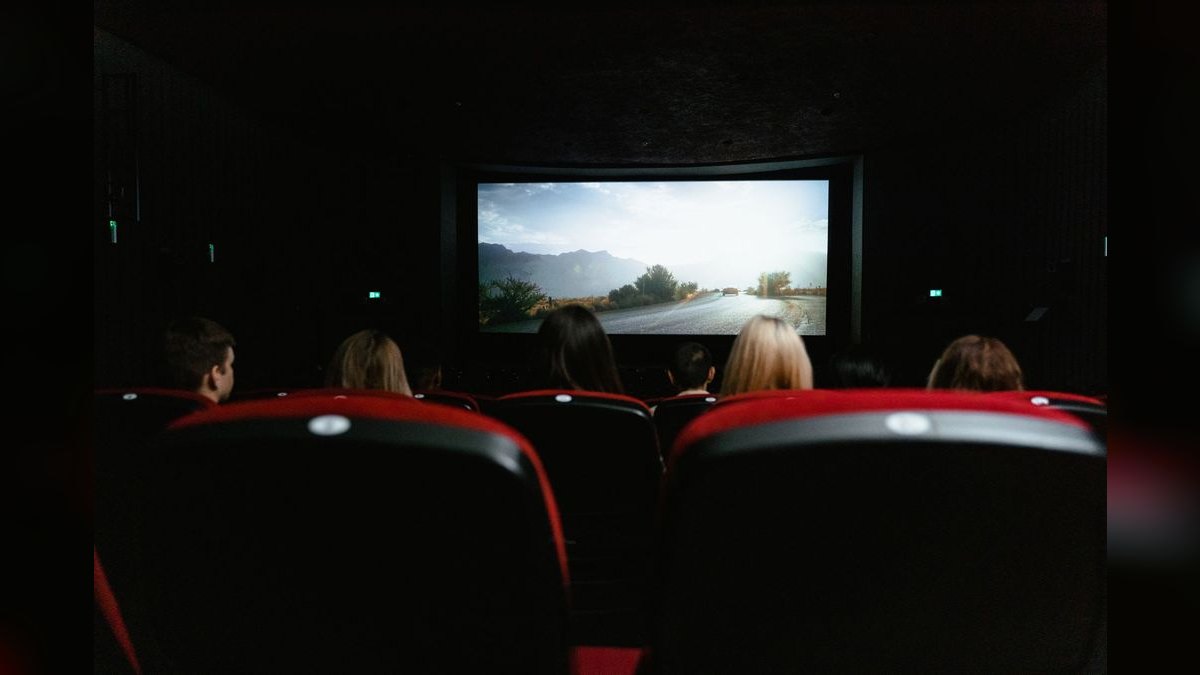
Beyond the obvious line items—projection, sound, seating—three budget killers routinely blow up micro-cinema builds. Acoustic isolation is the first: if your screening room shares a wall, floor, or ceiling with other tenants, you will need a floated room-within-a-room construction that adds $25 to $55 per square foot. A single layer of 5/8-inch drywall on resilient channels might cost $8/sq ft, but a decoupled double-stud wall with mass-loaded vinyl and acoustic caulk runs $18–$30/sq ft. HVAC zoning is the second: a standard office HVAC system cannot handle the heat load of a projector, rack equipment, and 20–40 bodies in a sealed, dark room. Expect to spend $8,000–$18,000 on a dedicated mini-split or variable-refrigerant-zone system for a 2,000 sq ft room. Emergency egress and fire rating is the third: many screening rooms require a second exit, fire-rated corridor construction, and sometimes a sprinkler retrofit. An egress door with panic hardware and rated wall assembly can add $4,000–$12,000; sprinkler modifications for a single room often run $6,000–$15,000 depending on local code. Budget an extra 15–20% above your initial build cost for these three items alone.
Three Budget Tiers Based on Real-World Projects
From actual screening-room builds across the U.S. (2022–2025), projects fall into three practical tiers:
Tier 1 – "Home-Theater Plus" ($180–$260/sq ft): A single 12–20 seat room using a 4K laser projector (e.g., Sony VPL-XW5000ES or Epson LS12000, $4,000–$8,000), a 100–120-inch acoustically transparent screen ($1,500–$4,000), 5.1.2 or 7.1.4 Dolby Atmos sound ($6,000–$15,000), basic acoustic panels on walls ($3,000–$7,000), and tiered seating on a simple riser ($200–$400 per seat). Total for a 1,500 sq ft room: $270,000–$390,000.
Tier 2 – "Boutique Micro-Cinema" ($260–$350/sq ft): 20–40 seats with commercial-grade Barco or Christie digital cinema projectors ($25,000–$60,000 used/refurbished, $80,000–$150,000 new), a 150–200-inch screen ($5,000–$12,000), full Dolby Atmos 9.1.6 or 11.1.8 ($20,000–$45,000), proper acoustic construction with floated walls and ceiling clouds ($15,000–$35,000), and motorized masking or drapery ($4,000–$10,000). Total for a 2,500 sq ft room: $650,000–$875,000.
Tier 3 – "Premium Private Screening Suite" ($350–$450+/sq ft): 30–60 seats with a Sony SRX-R810P or Barco DP4K cinema projector ($100,000–$200,000), a 250–350-inch perforated screen ($12,000–$25,000), full commercial audio with QSC or Meyer Sound ($40,000–$80,000), complete acoustic isolation with decoupled concrete slab and double-stud walls ($40,000–$80,000), automated lighting and curtain systems ($10,000–$25,000), and luxury seating with power recline and cupholders ($800–$1,500 per seat). Total for a 3,500 sq ft room: $1.2M–$1.6M.
How to Negotiate Your Landlord Contribution (Without Getting Burned)
Your lease negotiation is the single biggest lever on your budget. Here is the playbook: target a warm-shell delivery (HVAC stubbed, electrical panel sized, floor slab leveled, walls framed but unfinished) with a TI allowance of $50–$80 per square foot. If the landlord offers a cold-dark shell, demand the allowance covers the $60–$120/sq ft gap. Always get a three-bid minimum from licensed contractors and submit the lowest to the landlord for approval—do not let them pick the contractor. Negotiate free rent of 3–6 months during buildout, and push for a TI letter of credit so you are not fronting cash. Never accept a "base building" allowance without a written scope of work; one operator we advised ended up spending $18,000 on a 200-amp electrical upgrade the landlord claimed was "standard." Get everything in writing, including the exact square footage of the screening room (not the whole suite), and have a commercial real estate attorney review the lease before you sign.

FAQ
What is the typical cost per square foot for a micro-cinema buildout? Expect to budget between $180 and $450+ per square foot for a finished screening room. The final cost depends heavily on your choice of seating, acoustic treatments, and projection or sound equipment.
How much should I set aside for a 1,500 to 4,000 sq ft space? The all-in budget for a room in that size range typically falls between $250,000 and $1.6 million. Smaller rooms with basic finishes sit at the lower end, while larger spaces with premium audio-visual systems push toward the top.
What are the biggest cost drivers in a micro-cinema buildout? The sound system, projection equipment, and acoustic treatments are the largest line items—often 30 to 50 percent of the total. Seating and lighting also add significant cost, especially if you choose luxury recliners or custom dimming controls.
Can I reduce costs by using existing space instead of new construction? Yes, retrofitting an existing room can save 15 to 30 percent compared to a ground-up buildout. However, you may still need to invest in soundproofing, HVAC upgrades, and electrical work to meet cinema standards.
How long does a typical micro-cinema buildout take? Most projects take 8 to 16 weeks from design approval to completion. Delays often come from custom millwork, specialized AV installation, or permitting, so plan for a buffer of a few extra weeks.
What hidden costs should I plan for? Don't forget permits, architectural fees, and ongoing maintenance like projector lamp replacements or HVAC servicing. These can add 10 to 20 percent to your initial budget, so set aside a contingency fund of at least 15 percent.
Sources
- CBRE, *U.S. Construction Cost Trends*
- JLL, *Office and Specialty Fit-Out Cost Guide*
- Cushman & Wakefield, *Tenant Improvement Cost Guide*
- RSMeans (Gordian), *Building Construction Cost Data*
- NAIOP, *TI Allowance and Work Letter Best Practices*
- BOMA International, *Operating Expense and CAM Pass-Through Standards*
- Dolby Laboratories, *Dolby Atmos Cinema Design Guidelines*
- THX, *Certified Cinema Acoustic and Calibration Guidelines*
Related on PULSE
- [How Do I Budget an Escape Room Buildout?](/knowledge/bo0147)
- [How Do I Budget a Winery Tasting Room Buildout?](/knowledge/bo0169)
- [What's the average cost to run new electrical for a private server room buildout in 2027?](/knowledge/bo0308)
- [How Do I Budget an Ambulatory Surgery Center Buildout?](/knowledge/bo0219)
- [How Do I Budget a Dry Cleaner Buildout?](/knowledge/bo0170)
- [How Do I Budget a Senior Living or Assisted Living Buildout?](/knowledge/bo0188)
This page will be disappearing soon. Save it to your device for $1 — or read it free while it is here.
@Kory-White- · if Venmo asks, the last 4 of my number are 2012
 buildoutsHow Do I Budget a Commissary or Shared Kitchen Buildout?
 buildoutsHow Do I Budget a Garden Center or Nursery Buildout?
 buildoutsHow Do I Budget a Warehouse or Industrial Buildout?
 buildoutsHow Do I Budget a Trampoline Park Buildout?
 buildoutsHow Do I Budget a Veterinary Clinic Buildout?
 buildoutsHow Do I Budget a Call Center or BPO Office Buildout?
 buildoutsHow Do I Negotiate a Lease and Buildout for a Vape or Smoke Shop?
 buildoutsHow Do I Budget an Indoor Golf or Golf-Simulator Buildout?
 buildoutsHow Do I Negotiate a Lease and Buildout for Doggy Daycare or Boarding?
 buildoutsHow Do I Budget a Gym or Fitness Studio Buildout?