
How Do I Budget a Nightclub Buildout?
 Curated byKory White · Fractional CRO · Maryland
 PULSEKNOWLEDGE LIBRARY
Budgeting a nightclub buildout requires understanding that this is one of the most capital-intensive hospitality uses. Industry reports from CBRE and JLL indicate hospitality fit-out costs typically range from $200–$500+ per square foot for high-end entertainment venues. The budget is dominated by four critical systems: sound and acoustics, lighting and visual, bar and beverage infrastructure, and specialized HVAC designed for high-occupancy crowds. The fastest way to reduce costs is to take over a former nightclub or large bar that already carries A-2 assembly occupancy, a high occupant load, a grease-free bar layout, sprinklers, and adequate exits, because converting a retail or restaurant space triggers the full assembly-occupancy code stack.
What Are the Four Budget-Dominating Systems in a Nightclub Buildout?
The nightclub buildout budget is not evenly distributed across line items — four systems consume the vast majority of capital. The sound system typically includes main speakers, a wall of subwoofers, dance-floor fills, DJ-booth monitors, and a digital processor. Acoustic isolation is a separate but related cost at $30 to $60 per square foot, essential to prevent bass from leaking to neighboring properties and triggering noise complaints. Lighting and visual covers moving heads, LED video walls, lasers requiring a variance permit for projected-beam shows, DMX or grandMA control, and trussing with a stamped structural rigging letter. The bar program — typically 2 to 4 stations — includes multiple cocktail wells, glycol draft towers, walk-in coolers, ice machines, glass-washers, and POS at each station. Bar count directly drives revenue because short lines mean more drinks sold per hour. Finally, HVAC and ventilation is sized for the heat and CO2 load of a packed dark room at 1 a.m., requiring roughly 350–450 square feet per ton of cooling plus heavy makeup air.
How Does Occupant Load Dictate the Entire Nightclub Budget?
The legal occupant load is the single most important number in a nightclub buildout because it determines exit width, bathroom fixture count, sprinkler requirements, and ultimately peak-night revenue. A 600-capacity club needs specific egress: multiple rated exits with panic hardware, illuminated exit signs, and a total exit width calculated by the International Building Code at 0.2 inches per occupant for stairs and 0.15 inches per occupant for doors. Each exit door with panic hardware, fire-rating, and framing costs $8,000 to $15,000 installed, and a 600-cap club typically needs four to six such doors. The bathroom fixture count is equally strict: the code requires one toilet per 40 occupants for women and one per 100 for men, plus one urinal per 100 men and one lavatory per 200 occupants. For a 600-cap club with a 50/50 gender split, this means approximately 8 toilets for women and 3 toilets plus 3 urinals for men, costing $80,000 to $200,000 for the restroom buildout alone. Spending $3,000 to $6,000 on a code consultant during due diligence to certify occupant load, exit width, and fixture count in writing can prevent a $200,000 retrofit later.
What Lease Terms Are Critical for a Nightclub Buildout?
The lease structure for a nightclub is fundamentally different from standard retail because of the long construction timeline, high capital investment, and noise-sensitive operation. Free rent of 6 to 12 months is standard because clubs have the longest builds (4 to 9 months) and you cannot pay rent on a dark room. The TI allowance should be $40 to $80 per square foot, paid in monthly draws and covering soft costs like design and permits. The operating-hours and noise clause must confirm 2 a.m. or 4 a.m. operation with amplified sound in writing — this is the single most important term for a club because a noise complaint can shut down your business. If the landlord funds extra buildout beyond the TI allowance, amortize at 7–9% rather than borrowing at 12–14% from a bank. A guaranty burn-off from full year one to 6 months by year three caps your personal exposure, which is critical since clubs have short business half-lives. Finally, an exclusive entertainment use clause plus co-tenancy protects you so the center cannot lease next door to a competing club.
How Do You Avoid the Three Biggest Cost Surprises: Acoustics, HVAC, and Egress?
The three line items that separate a nightclub buildout from a standard retail fit-out are acoustic isolation, specialized HVAC, and egress compliance, and each can balloon unexpectedly if not scoped early. Acoustic treatment — soundproofing walls, floating floors, and isolated ceiling clouds — typically runs $15 to $35 per square foot depending on the noise ordinance in your municipality. A 6,000 sq ft club might spend $90,000 to $210,000 just to keep the bass from rattling neighboring apartments, and this cost is non-negotiable if you are in a mixed-use building or near residential zones. HVAC for a nightclub is not a standard rooftop unit: you need a system that handles 20 to 30 air changes per hour (versus 4 to 6 in an office) because of body heat, CO2 from patrons, and fog-machine haze. Expect $25 to $45 per square foot for a dedicated club-grade HVAC system, or $150,000 to $270,000 on a 6,000 sq ft space. Egress — the number, width, and location of exits — is dictated by your occupant load. A club with a 400-person capacity typically needs four to six exits with panic hardware, rated doors, and illuminated exit signs, costing $8,000 to $15,000 per door when including framing, hardware, and fire-rating. Ignoring any of these three can stall your permit approval or force a costly retrofit that adds 15–20% to your total budget.
What Is the Operating Math That Makes a Nightclub Profitable?
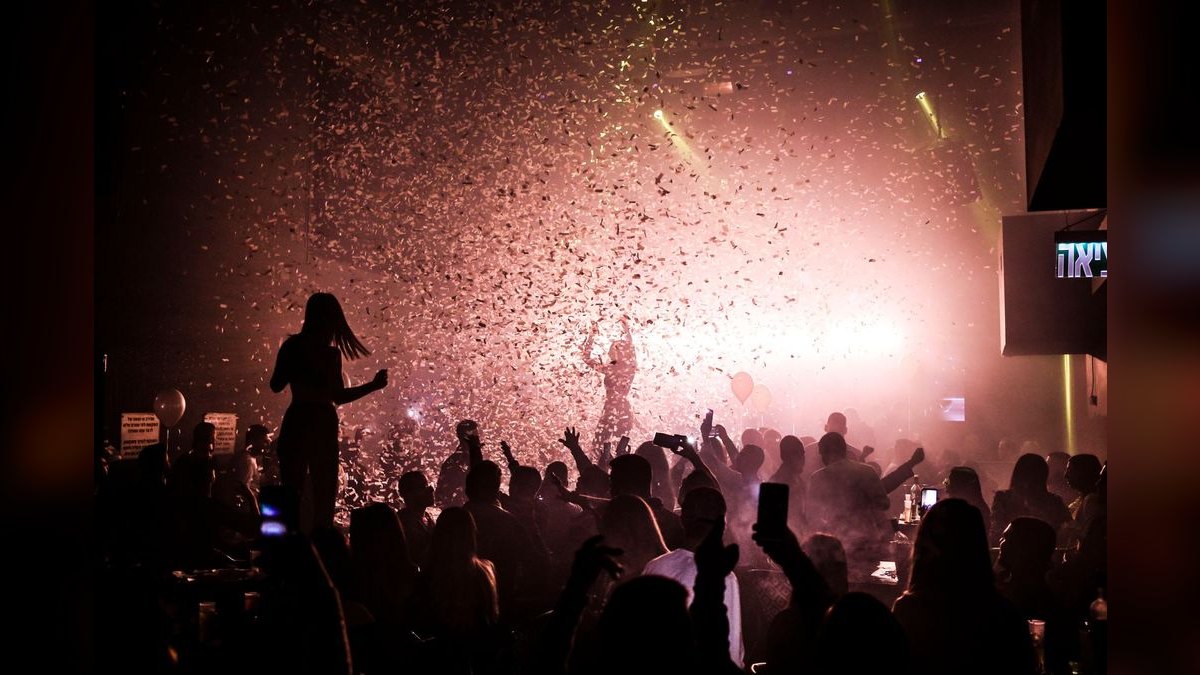
The revenue model of a nightclub depends entirely on bar and bottle service throughput, not cover charges. A 600-cap club open two nights a week with $20 to $40 cover charges grosses $30,000 to $60,000 per week at the door, but the door barely covers staffing and security. Bar and bottle service carry the business: a busy club nets $25 to $60 per head in drinks, and bottle service runs $400 to $3,000 per table at 80%+ margin. That is why you build more bar stations and more VIP tables before another $50,000 of lasers. If your buildout is $1.8 million financed at $1.2 million with a 13% interest rate, debt service is approximately $110,000 per year. The room must clear that plus rent of $12,000 to $40,000 per month and a payroll that swings hard by night. Build the revenue-generating systems — bars, VIP, throughput — first, and the spectacle systems second. A common mistake is spending $100,000 on a video wall before ensuring the bar can serve 200 drinks per hour.
How Do You Budget the "Wet" vs. "Dry" Bar Decision and Back-of-House?
The bar budget is one of the most underestimated line items because owners assume all bars cost the same. In a nightclub, you are almost certainly building "wet" bars with sinks, ice bins, glass washers, floor drains, and grease traps (if you serve food). A single wet bar station — including plumbing, drainage, stainless steel, and a three-compartment sink — runs $25,000 to $50,000 installed. A club with four bars (main, VIP, bottle-service, and a service bar) can spend $100,000 to $200,000 before you add refrigeration, glass racks, and POS terminals. Dry bars (no running water) are cheaper at $8,000 to $15,000 each, but they limit service speed and require a separate wash station. Back-of-house is another overlooked cost: you need a dedicated ice machine room (vented, with floor drain), a glass-washing area with a commercial dishwasher ($5,000 to $12,000), a bottle storage room with lockable shelving, and a security office with camera monitors. These non-glamorous spaces often consume 15% to 20% of your total square footage and cost $50 to $100 per square foot to finish because they require heavy-duty flooring, washable walls, and dedicated ventilation.

FAQ
What is the typical cost per square foot for a nightclub buildout? Expect to spend between $200 and $500 per square foot, higher than almost any other hospitality use because the room is essentially a custom sound, light, and HVAC machine built for high occupancy. Real-world examples from Las Vegas mega-clubs like XS, Omnia, and Hakkasan have reported buildout costs in the tens of millions for their scale.
How much should I budget for a 5,000-square-foot nightclub? A 5,000 sq ft space will likely cost $600,000 to $1.5 million, with the lower end assuming existing infrastructure and the upper end including premium finishes and advanced AV. For comparison, a typical Las Vegas Strip nightclub like Marquee or Jewel operates at 15,000–40,000 sq ft with buildout costs exceeding $10 million.
Can I save money by renovating an existing nightclub? Yes, but only modestly — renovating an existing club can cut costs by 10% to 20% if the layout and electrical are already suitable, but you still face $150 to $350 per square foot for modern upgrades. Taking over a former nightclub space in Las Vegas (e.g., converting a former club space at The Venetian or Wynn) can save significantly on shell construction.
What are the biggest hidden costs in a nightclub buildout? Soundproofing, fire suppression, and ADA compliance often surprise owners, adding $50,000 to $200,000 depending on local codes and building condition. In Las Vegas, noise ordinances near residential areas on the Strip or in Downtown require expensive acoustic engineering.
How long does a typical nightclub buildout take? Construction usually runs 4 to 8 months, with permitting adding 2 to 4 months, and rushed timelines often inflate costs by 15% to 30% due to overtime and expedited shipping. Las Vegas mega-clubs like Zouk at Resorts World took over a year for full buildout.
What is the fastest way to reduce my nightclub buildout budget? Focus spending on the dance floor and bar as the only high-cost zones, keep restrooms and storage simple, and phase the AV install to cut initial spend by 30% to 50%. Real venues like LIV at Fontainebleau Miami Beach prioritize bar throughput over elaborate stage design.
How many bars should a nightclub have for optimal revenue? Most clubs run 2 to 4 bars to keep lines short, and bar throughput is the entire business. A 600-cap club typically needs a main bar, a VIP bar, a bottle-service station, and a service bar. Las Vegas venues like Tao and Marquee operate 4+ bars to handle peak crowds.
Do I need a laser variance permit for a nightclub? Yes, if you use projected-beam laser shows. You need a variance from the FDA Center for Devices and Radiological Health, plus a stamped letter from a laser safety officer, which adds $5,000 to $15,000 to the permitting process.
What electrical service size does a nightclub need? Most clubs require 800 to 1,600 amp electrical service, with a service upgrade costing $40,000 to $120,000. This covers AV, HVAC, bar equipment, and general lighting, plus dedicated circuits for emergency egress.
Should I hire a code consultant for a nightclub buildout? Yes, spending $3,000 to $6,000 on a code consultant during due diligence to certify occupant load, exit width, and fixture count in writing can prevent a $200,000 retrofit later.
Sources
- CBRE, U.S. Construction Cost Trends
- JLL, Hospitality and Entertainment Fit-Out Cost Guide
- Cushman & Wakefield, Tenant Improvement and Work Letter Benchmarks
- RSMeans (Gordian), Building Construction Cost Data
- NAIOP, TI Allowance and Lease Negotiation Best Practices
- BOMA International, Operating Expense and CAM Pass-Through Standards
- International Code Council, International Building Code — Group A-2 Assembly Occupancy
- U.S. FDA Center for Devices and Radiological Health, Laser Light Show Variance Requirements
- National Fire Protection Association, NFPA 101 Life Safety Code for Assembly Occupancies
- Visit Las Vegas, Nightlife Guide — Real Venues
Related on PULSE
- [How Do I Budget an Ambulatory Surgery Center Buildout?](/knowledge/bo0219)
- [How Do I Budget a Dry Cleaner Buildout?](/knowledge/bo0170)
- [How Do I Budget a Senior Living or Assisted Living Buildout?](/knowledge/bo0188)
- [How Do I Budget a Sports Bar Buildout?](/knowledge/bo0209)
- [How Do Change Orders Blow Up a Buildout Budget, and How Do I Cap Them?](/knowledge/bo0040)
- [How Do I Budget a Salon or Spa Buildout?](/knowledge/bo0110)
This page will be disappearing soon. Save it to your device for $1 — or read it free while it is here.
@Kory-White- · if Venmo asks, the last 4 of my number are 2012
 buildoutsHow Do I Budget a Warehouse or Industrial Buildout?
 buildoutsHow Do I Budget a Bookstore-Cafe Buildout?
 buildoutsHow Do I Budget a Call Center or BPO Office Buildout?
 buildoutsHow Do I Negotiate a Lease and Buildout for a Pharmacy?
 buildoutsHow Do I Budget a Brewery or Taproom Buildout?
 buildoutsHow Do I Budget a Commissary or Shared Kitchen Buildout?
 buildoutsHow Do I Budget a Gas Station or Convenience Store Buildout?
 buildoutsHow Do I Budget an Escape Room Buildout?
 buildoutsWhat Is a Go-Dark Clause and Should I Fight for One?
 buildoutsHow Do I Budget a Sushi Restaurant Buildout?