


How do I negotiate a lease that allows me to recoup buildout value upon sublease in 2027
Quality
Certified
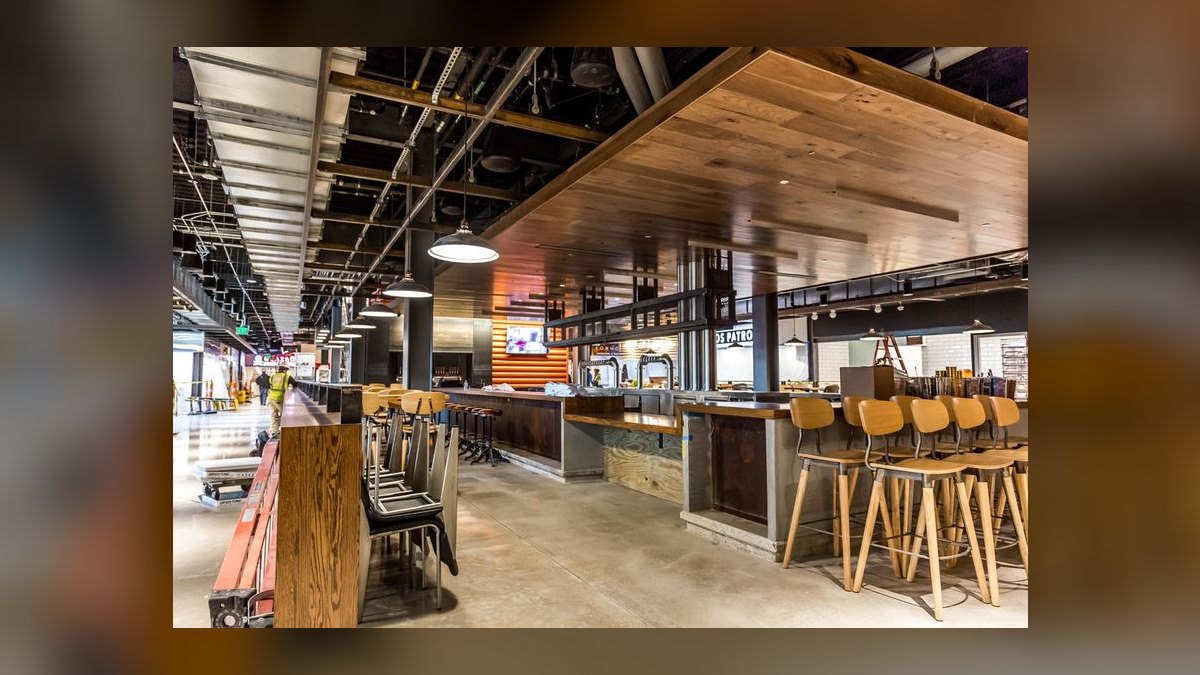
Negotiate the right before signing: add a lease clause stating that on any approved sublease or assignment, the incoming subtenant — or the landlord, if it recaptures — pays you the unamortized balance of your tenant improvements, straight-line over the initial term, backed by a documented cost schedule attached as an exhibit.
The commercial deal in plain terms
Strip away the vocabulary and this is a fight over who owns a pile of drywall, conduit, ductwork, and millwork that is physically bolted to somebody else's building. You paid for it. The landlord's standard-form lease says it becomes theirs — usually in a clause labeled "Alterations" or "Improvements," which reads something like: all alterations shall become the property of Landlord upon installation and shall remain upon the premises at the expiration or earlier termination of this Lease. That single sentence is why tenants who spend real money on a space walk away with nothing when they leave early.
The economics are worth stating clearly, because most tenants misprice their own position. When you build out a space, you are spending capital on an asset with a life longer than your occupancy. A code-compliant HVAC upgrade, a new electrical service, a demised corridor, upgraded restrooms, a raised-floor data room — these outlive your lease term. Landlords know this. The improved space re-leases faster and at a higher rate than the shell you started with. Your buildout is, functionally, a capital contribution to the landlord's asset that you are financing at 100% and depreciating on a schedule you did not choose.
The recoupment negotiation reframes that. Instead of arguing about ownership — a fight you will lose, because the improvements really do become fixtures — you negotiate about *value transfer*. Ownership can stay with the landlord. What you want is a contractual payment obligation triggered by the events that end your occupancy early: a sublease, an assignment, a landlord recapture, or an early termination for redevelopment. In each of those cases, somebody else captures the benefit of your capital. The clause simply says they pay for it.
Three terms carry most of the weight, and it helps to keep them distinct:
Unamortized balance. The portion of your documented buildout cost that has not yet been "used up" by your own occupancy. If the space is improved for a ten-year term and you leave at year four, six years of value remain. That remaining value is what you are trying to recover.
Recoupment clause. The provision obligating a subtenant or assignee to pay you that balance as a condition of taking possession. It sits alongside — not inside — the sublease rent.
Recapture. The landlord's right to take the space back rather than approve your sublease. Standard in most institutional forms. Without a payment condition attached, recapture is the loophole that swallows the whole recoupment clause: the landlord simply recaptures, keeps the improvements, and re-leases at market.
One reality check before you go into the negotiation. Full recoupment is not a market standard the way a cure period or a non-disturbance agreement is. You are asking for something landlords will treat as a concession, and you will trade for it. The tenants who get it are the ones who ask in the letter of intent, before any capital is committed and while the landlord still wants the deal. The tenants who don't get it are the ones who raise it in year three, after the space is built and their leverage is a memory.
How the buildout and recoupment process flows
The sequence matters more than any single clause, because each stage either preserves or destroys your ability to collect later. Here is how a well-run deal moves from term sheet to eventual recovery.
Walk the stages deliberately.

Letter of intent. One line: "Tenant shall have the right to recover the unamortized cost of Tenant's improvements from any subtenant or assignee, or from Landlord in the event of recapture." It is non-binding, but it establishes the deal point. Removing something from an executed LOI requires the landlord's counsel to explain themselves, which is a meaningfully higher bar than never having raised it.
Lease drafting. The language belongs in two places — the Alterations article (carving your improvements out of the automatic-vesting language, or at least out of the *free* automatic-vesting language) and the Assignment and Subletting article (the payment trigger). Cross-reference them. Clauses that live in only one article get read narrowly.
The cost exhibit. This is the step tenants skip and later regret. Attach a schedule listing improvement categories with budgeted costs, and include a provision that the schedule will be updated with actual documented costs within some window after substantial completion — 60 or 90 days is typical. Without it, you will spend the sublease negotiation arguing about what your buildout cost, with the other side's incentive pointing firmly downward.
Construction and documentation. Keep invoices, change orders, lien waivers, and the architect's final certification in one file. Three or five years later, when a subtenant's counsel asks you to substantiate the number, the file is your case.
The exit event. When it arrives — and if you are negotiating this clause, you already suspect it might — the mechanics should run themselves. You calculate the balance from the exhibit, present it with backup, and the clause does the arguing for you.
There is an upstream point worth noting: the same discipline applies whether you are the tenant improving the space or the party evaluating an assumption of someone else's improved space. Companies acquiring a business with leased locations inherit these clauses. Diligence on a target's leases should specifically look for recoupment rights, because an assumable recoupment right is a real asset on the target's balance sheet that nobody has booked, and a missing one is a hidden cost of the eventual site consolidation.
Costs per square foot, timelines, and ranges

You cannot negotiate recoupment intelligently without a defensible sense of what the buildout will actually cost and how long the money stays at risk. The numbers vary enormously by market, product type, and finish level, so treat any figure you are given — including from a broker — as a starting point to verify with local contractor pricing rather than a fact.
What drives the per-square-foot number. Second-generation space with existing HVAC distribution, restrooms, and a usable ceiling grid costs a fraction of a cold dark shell where you are bringing in mechanical, electrical, plumbing, and life-safety from scratch. The single biggest cost variable in most office deals is not finishes; it is mechanical and electrical scope. A tenant taking a floor with adequate existing MEP and just reconfiguring partitions is in a different cost universe from one adding supplemental cooling for a lab or a data closet.
Where the money sits. Rough allocation for a typical office fit-out: general conditions and demolition, partitions and doors, ceilings and flooring, MEP and life safety, millwork and specialties, then the soft costs. Soft costs — architecture, engineering, permits, expediting, project management, moving, cabling, security systems — routinely run a meaningful fraction of hard costs and are the category most commonly omitted from recoupment definitions. Fight to include them. Your architect's fee is as much a part of the improvement's value as the drywall it specified.
Allowance versus tenant spend. Landlords fund some portion through a tenant improvement allowance. This creates the most common drafting trap in the whole exercise: the landlord will argue the improvements were substantially their money, so recoupment is double-dipping. The correct answer, and the one to draft, is that recoupment applies only to *Tenant's Excess Cost* — total documented improvement cost minus the allowance actually funded. That is clean, fair, and much easier for a landlord's counsel to approve than a clause that appears to hand back money the landlord already spent. Define the term explicitly and use it consistently.
Timelines. Design and permitting typically consume more calendar than construction in dense jurisdictions. Space planning and construction documents run weeks; permitting is the wildcard and can stretch from a few weeks to several months depending on the municipality and whether your scope triggers plan review for mechanical, sprinkler, or accessibility upgrades. Construction on a straightforward office fit-out is measured in months, not weeks. Long-lead equipment — switchgear, rooftop units, custom glass — has been the dominant schedule risk in recent years and should be ordered off early-release packages rather than waiting for a full permit set.
The amortization math. Straight-line over the initial term is the standard you want. Total Tenant's Excess Cost divided by term months, multiplied by months remaining at the exit event. If you spent excess cost on a 120-month term and sublease with 66 months left, you are claiming 66/120 — 55% — of your excess cost. Simple, checkable, no appraiser required. Resist "fair market value of the improvements," which sounds fair and is a machine for generating disputes: two appraisers, two numbers, a fee split, and a delay you cannot afford while you are carrying rent on empty space.
Interest on the balance. Some tenants push for the unamortized balance to accrue a stated interest rate, on the theory that they financed the landlord's asset. This is a genuine ask and occasionally granted, usually at a modest fixed rate, and usually in soft markets. It is a good second-tier trade — something to concede when you need to close the gap on the primary clause.
Where the deal terms slip
Recoupment clauses fail in predictable ways. Nearly every failure traces to language that looked acceptable in draft and turned out to have a hole in it under pressure.
Recapture with no payment condition. The dominant failure mode. Your recoupment clause is beautifully drafted and binds the subtenant, and the landlord simply exercises recapture, takes the space back, and owes nothing. Fix: make the payment a *condition precedent* to recapture. Draft it so that Landlord's recapture notice is void unless accompanied by payment of the unamortized balance within a stated window — 30 days — and that if payment is not made, the proposed sublease proceeds as if consent were granted. Partial recapture gets a pro-rata payment based on rentable square feet taken.
Consent used as a slow-motion veto. A landlord who cannot legally refuse consent unreasonably can still take four months to say yes, by which point your subtenant has leased elsewhere. Fix: a hard response deadline with a deemed-consent consequence. Fifteen to thirty business days after a complete submission package, with silence deeming consent. Define what a complete package is so the landlord cannot restart the clock with a document request on day 29.

Profit-sharing clauses eating the recoupment. Most leases give the landlord 50% of sublease "profits" over your base rent. If the recoupment payment is not carved out of the profit definition, you hand the landlord half of the very capital you were trying to recover. Fix: define excess consideration to exclude the recoupment payment, brokerage commissions, legal fees, free rent granted to the subtenant, and the cost of any subtenant-specific alterations. That carve-out list is standard and rarely contested once raised.
Cost documentation that never got assembled. The clause references "documented costs" and nobody documented them. Three years later, the general contractor has been acquired, your project manager left, and the file is scattered across two inboxes. Fix: the post-completion exhibit update described above, treated as a closing item on the construction project rather than an afterthought.
Deducting for depreciation twice. Landlords sometimes insert both a straight-line amortization *and* a deduction for "wear, tear, and obsolescence." That is double-counting — straight-line amortization already reflects the consumption of value over your occupancy. Push back and say exactly that; it is a clean argument that usually wins.
Definition drift on what counts. "Tenant Improvements" undefined means an argument later about whether cabling, security systems, specialty lighting, supplemental cooling, and attached millwork are in or out. Fix: define by reference to the approved construction documents and the cost exhibit, not by category adjectives. Trade fixtures and personal property you intend to remove should be explicitly excluded, since you are taking those with you.
Affiliate carve-outs that cut the wrong way. Permitted-transfer language letting you assign to an affiliate or successor without consent is valuable — protect it. But watch for the mirror-image landlord carve-out exempting affiliate transfers from the recoupment payment obligation. If your successor by merger takes the space, that is fine; if the landlord's affiliate takes it recapture-style and pays nothing, that is a hole.
Sequencing the ask badly. Raising recoupment for the first time in the second lease redline, after the landlord has already conceded on rent, term, and allowance, reads as a late grab and gets a reflexive no. It belongs in the LOI alongside the other economic terms, where it is one item among many rather than a surprise.
A decision framework for what to trade

Not every deal supports a full recoupment clause, and pushing hard for one in a market where you have no leverage can cost you concessions worth more. Work the decision in order.
Step one: size the exposure. Multiply your expected excess cost by the probability you exit early. A stable business on a five-year term in a space it plans to keep has modest exposure. A venture-funded company on a ten-year term that may double or halve headcount within three years has enormous exposure. The second company should spend real negotiating capital here; the first probably should not.
Step two: read the market honestly. In a market with elevated vacancy and heavy sublease inventory, landlords compete for creditworthy tenants and flexibility gets granted. In a tight submarket with a queue of tenants for the same floor, you will get consent standards and permitted transfers and not much else.
Step three: pick the fallback ladder. If full recoupment is refused, descend in this order — each rung is worth having on its own:
- Recoupment from a subtenant only, with no landlord payment obligation on recapture. Weaker, but preserves the sublease market value of your space.
- A shared formula — you recover a stated percentage of the unamortized balance, with the landlord keeping the rest. Fifty-fifty is a common landing spot.
- A capped dollar amount, negotiated as a hard number rather than a formula. Easier for landlords to approve because their downside is quantified at signing.
- Recapture-only protection: the landlord may recapture, but must pay the unamortized balance to do it. This one clause alone removes the worst outcome.
- No recoupment, but a right to remove and take specified improvements — supplemental HVAC units, generators, security systems, specialty equipment — at expiration. Not cash, but real value, and often granted when cash recoupment is refused.
Step four: reduce the exposure instead. If the clause is unwinnable, change the shape of the deal. Shift more scope into landlord's work funded by the landlord and delivered turnkey. Take second-generation space that needs less. Negotiate a larger allowance in exchange for slightly higher base rent, converting your capital outlay into an amortized rent obligation the landlord carries. That last move is often the cleanest resolution: you did not recover the buildout because you never funded it.
Step five: match the clause to the asset type. Office and flex space is where recoupment is most negotiable, because the improvements are genuinely re-usable by the next tenant. Retail is harder — landlords treat a build-out as a fixture that ties to the merchandising of the center, and the next tenant will demolish it anyway. Industrial and warehouse sit in between; racking, dock equipment, and office mezzanines within a warehouse are often better handled as removable property than as recoupable improvements. Medical and lab space is its own category: the improvements are expensive, highly specialized, and valuable only to a narrow set of successors, which cuts both ways — the landlord knows the space is hard to re-let generically, but also knows a competing practice would pay dearly for it.
What the clause looks like in practice
Concepts are easy; the drafting is where deals are won. A workable structure has five moving parts, and it is worth being able to describe them from memory when you are across the table.
Definition. "Tenant's Excess Cost" means the aggregate documented cost of the Tenant Improvements shown on the approved construction documents, including architectural, engineering, permitting, project management, and cabling costs, less the Allowance actually disbursed by Landlord. Attach the exhibit. Require a true-up within 90 days of substantial completion.
Amortization. Tenant's Excess Cost amortizes on a straight-line basis in equal monthly increments over the initial term, commencing on the rent commencement date. The Unamortized Balance at any date equals Tenant's Excess Cost multiplied by remaining initial term months divided by total initial term months. State the formula in words in the lease. Formulas written out survive personnel turnover; formulas implied by a defined term do not.

Sublease trigger. As a condition to Landlord's consent to any sublease or assignment, the subtenant or assignee shall pay Tenant the Unamortized Balance, and Landlord's consent shall not be conditioned upon, delayed by, or withheld because of such payment. Note the second half — without it, a landlord can decline consent on the stated ground that the subtenant "objects to tenant's improvement charge," which is a refusal dressed as a market observation.
Recapture condition. If Landlord elects to recapture, Landlord shall pay Tenant the Unamortized Balance within 30 days of the recapture notice; failing which the recapture election is void and Tenant may proceed with the proposed sublease without further consent. This is the sentence that makes the rest enforceable.
Excess consideration carve-out. In computing any amounts payable to Landlord as excess sublease consideration, there shall first be deducted the Unamortized Balance paid to Tenant, brokerage commissions, legal fees, free rent or other concessions granted to the subtenant, and the cost of any alterations made for the subtenant.
Two practical notes. First, this is a specialist's document. Commercial lease negotiation is a distinct practice area, and a lawyer who does a dozen of these a year knows which landlords in your market have already accepted which language — that institutional knowledge is worth more than the hourly rate difference. Second, your broker's incentives are worth thinking about clearly. Tenant representation brokers are genuinely useful here and often carry the negotiation, but their commission ties to the deal closing, not to how the clause performs in year five. Read the clause yourself, or have counsel who is not commission-motivated read it.
A last adjacent thought. Everything above concerns recovering value on the way out, but the same analysis run at signing changes what deal you want on the way in. A tenant who genuinely internalizes that unrecovered buildout is a real cost will lean toward second-generation space, shorter initial terms with extension options, landlord-funded turnkey delivery, and furniture and equipment that can walk out the door. That is not a failure to negotiate the clause. It is the clause doing its job before it was ever written — telling you what the space actually costs.
Related questions
Does a recoupment clause apply if I assign the lease rather than sublease?
Only if the clause says so. Draft it to cover "any sublease, assignment, or other transfer of Tenant's interest." Assignment is often the cleaner exit — the assignee takes the whole lease — and it is exactly the scenario a sublease-only clause fails to reach.
Can I claim the unamortized balance if I go dark but keep paying rent?
No. Recoupment triggers on a transfer or recapture, not on vacancy. Going dark while paying rent leaves you with the full obligation and no recovery event. If closure is plausible, negotiate a termination option with a stated fee instead.
Who calculates the unamortized balance when the time comes?
You do, from the cost exhibit and the stated formula, with backup documentation delivered to the landlord and subtenant. Build in a short objection window — ten business days — after which the calculation is deemed accepted. Otherwise disputes have no natural end.
Does a landlord's mortgage lender have to approve this clause?
Sometimes. Institutional lenders review lease forms and can object to landlord payment obligations. Raise it early; if the lender balks at a landlord-funded recapture payment, the subtenant-payment half of the clause usually survives untouched.
Is recoupment worth pursuing on a short lease term?
Rarely worth heavy trading below about three years, because the balance amortizes quickly and the absolute dollars are small. Spend that leverage on consent standards, permitted transfers, and a termination option instead.
FAQ
What percentage of buildout value can a tenant realistically recover?
There is no market-standard percentage — it is purely a function of what you negotiated and when you exit. Tenants who secure full straight-line recoupment recover 100% of the unamortized balance, which shrinks as the term runs. Tenants who settle for a shared formula commonly land near half. Tenants with no clause recover nothing, which is the most common outcome by a wide margin.

Can I recoup buildout value if I sublease below my own rent?
Yes, if the clause is drafted independently of rent. The recoupment payment is a separate obligation from the sublease rent — the subtenant pays you the unamortized balance as a condition of possession and separately pays the sublease rent, which may be below what you pay the landlord. Keep the two obligations in separate sentences so a subtenant cannot argue they are one negotiation.
Will a subtenant actually agree to pay for improvements they did not commission?
Often, when the improvements are genuinely useful to them — a subtenant taking a finished, furnished, cabled space avoids months of construction and their own capital outlay. The pitch is straightforward: they are buying occupancy on day one instead of week thirty. Where the improvements are highly specific to your business, expect the payment to be discounted or refused, which is why the recapture-payment half of the clause matters.
Does this apply to retail and restaurant spaces the same way?
Less cleanly. Retail and restaurant landlords generally treat build-out as fixtures integral to the premises, and the next operator will usually gut it anyway. In those categories, the more productive negotiation is a removal right for equipment — hoods, walk-ins, refrigeration, POS infrastructure — plus a clear definition of trade fixtures you own outright and may take with you.
Can I add recoupment rights to a lease I already signed?
Only when you have something the landlord wants. Renewal, expansion, or an early extension are the natural moments — you are giving term, so you can ask for the clause. A standalone amendment request with nothing offered in return is almost always declined, because the landlord's current position is already the best one available to them.
What is the single most important provision if I can only get one?
The recapture payment condition: if the landlord takes the space back, it pays the unamortized balance. Without it, every other protection you negotiated can be routed around with a single recapture notice. With it, your worst case has a floor.
Sources
- https://www.boma.org/ — Building Owners and Managers Association, commercial lease standards and measurement
- https://www.icsc.com/ — International Council of Shopping Centers, retail lease practice resources
- https://www.nar.realtor/commercial — National Association of Realtors, commercial real estate guidance
- https://www.corenetglobal.com/ — CoreNet Global, corporate real estate and occupancy strategy
- https://www.irem.org/ — Institute of Real Estate Management, lease administration resources
- https://www.americanbar.org/groups/real_property_trust_estate/ — ABA Real Property, Trust and Estate Law Section
- https://www.sba.gov/business-guide/manage-your-business/buy-assets-equipment — U.S. Small Business Administration, guidance on business assets and leasing
- https://www.irs.gov/publications/p946 — IRS Publication 946, How to Depreciate Property
- https://www.uli.org/ — Urban Land Institute, commercial development and real estate research
Related on PULSE
- Can I negotiate a lease that converts my buildout allowance into equity in the building?
- How should I structure a lease to reclaim buildout value if I'm evicted for redevelopment?
- How do I negotiate a lease and buildout for a daycare?
- How do I negotiate a lease and buildout for a tattoo studio?
- How do I negotiate a lease and buildout for a vape or smoke shop?
- How do I negotiate a lease and buildout for a private or charter school?
This page will be disappearing soon. Save it to your device for $1 — or read it free while it is here.
@Kory-White- · if Venmo asks, the last 4 of my number are 2012
This page is gone.
This one is off the shelf now. $1 keeps it on your phone for good — the whole page, pictures and diagrams included.
 boCan I get the landlord to reimburse my moving and storage costs during the buildout in 2027
 boHow should I structure a lease to reclaim buildout value if I'm evicted for redevelopment in 2027?
 boCan I get a landlord contribution for my move costs after the buildout finishes in 2027
 boHow do I negotiate a co-tenancy clause that triggers reduced rent if my buildout is delayed in 2027?
 boWhat’s the cheapest way to add a kitchenette to a raw shell office without triggering new fire sprinklers in 2027
 boCan I require the landlord to use my preferred subcontractors for the buildout in 2027?
 boCan I sublease a space mid-buildout and recover my construction costs in 2027?
 boHow do I handle a landlord who refuses to allow weekend or night construction in 2027?
 pulse-buildoutsHow much does Buildouts cost in 2027?
 boCan I use a lease escalation clause to offset future buildout maintenance costs in 2027