


Purple Cow by Seth Godin — Cliff Notes Summary for Sellers
Quality
Certified
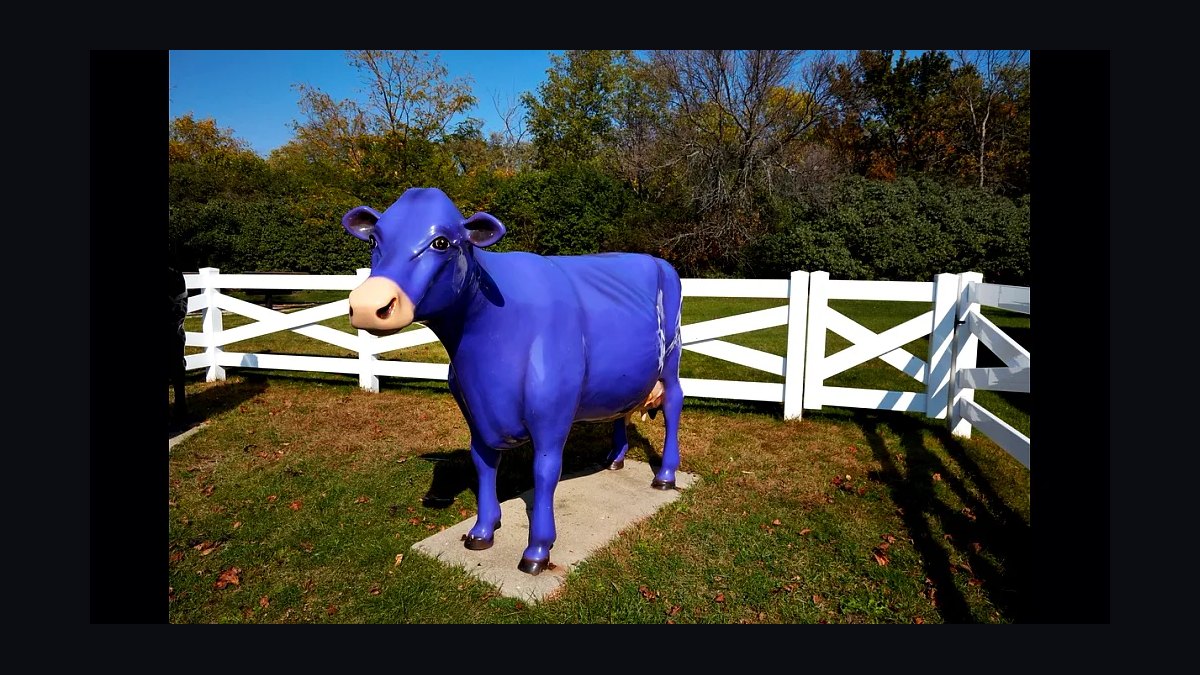
Purple Cow (Seth Godin, Portfolio 2003) argues that in an attention-scarce market, advertising no longer creates demand — remarkable products do. Godin's fifth P is the product itself: build something worth remarking on, ship it to obsessed niche fans (Otaku), and let their word-of-mouth carry it mainstream. Very good is invisible.
What Purple Cow actually argues and why sellers should care
Godin opens the book with a drive through France. His kids are delighted by the brown dairy cows in the pastures — for about twenty minutes. By the end of the first hour the cows are invisible. A *purple* cow, though, would be interesting. That image carries the whole 145-page argument: remarkability is not a quality bar, it is a visibility precondition. Anything that looks like everything else in its category gets filtered out before it is ever evaluated.
The structural claim underneath the metaphor is the part sellers usually skip. Godin says the engine that powered American marketing from roughly 1950 to 2000 — he calls it the TV-Industrial Complex — is dead. That flywheel worked like this: buy television advertising, use the demand it creates to win retail shelf space, use the volume from shelf space to fund more advertising. It rewarded average products marketed at average people, because reach was cheap and attention was captive. Godin's argument is that DVRs, fragmented internet attention, and plain consumer ad-blindness broke the first link in the chain. Once interruption stops converting, the entire downstream flywheel stalls.
The replacement is not a better ad. It is a different sequence: build a remarkable product first, then aim it at the people who spread things. Godin's precise definition of "remarkable" is the sentence sellers should memorize — *worth making a remark about*. Not better. Not well-executed. Worth telling a colleague about, unprompted, without being asked to. And then the line that does the real work: the opposite of remarkable is not "bad," it is "very good." Very good is what a committee approves, what a competitive-analysis spreadsheet produces, and what no buyer remembers on Friday.

For a revenue leader this reframes a familiar diagnosis. When pipeline is thin, the default assumption is a top-of-funnel volume problem — more sequences, more SDRs, more channels. Godin's model says that if nobody talks about you unprompted, more outbound just buys you a larger sample of indifference. The Purple Cow test is uncomfortable precisely because it puts the failure upstream of the sales team: no amount of activity fixes a brown cow.
He formalizes it as an addition to the marketing P's. The textbook four are Product, Pricing, Promotion, Placement; Positioning was added as a fifth in the era of Ries and Trout. Godin adds Purple Cow as a sixth — and insists it is not a campaign, a tagline, or a brand promise. It is a property of the thing you sell. "The remarkable thing about the Purple Cow is that it must be the product itself." If marketing has to manufacture the interestingness, the interestingness isn't there.
The anchor terms of the book matter for how it reads in 2026: this is a *Summary* of a manifesto, not a methodology, and its target reader today is closer to a founder than a CMO. It tells you *why* to be remarkable and gives almost no instruction on *how*. That gap is the book's main weakness and the reason it works best paired with an operational positioning text.
How the Purple Cow model runs end to end

Godin borrows the Idea Diffusion Curve from Everett Rogers, filtered through Geoffrey Moore's *Crossing the Chasm* (1991): Innovators → Early Adopters → Early Majority → Late Majority → Laggards. The classic reading is that you march left to right, and the hard part is the gap between Early Adopters and the Early Majority. Godin's twist is about who can even *see* you. In a saturated market, only Innovators and Early Adopters are actively looking for new things. Everyone else is busy. So the mainstream is not a market you can address directly — it is a market you reach *through* somebody.
That somebody is the Otaku. Godin imports the Japanese term (literally "your house," used for an obsessive enthusiast) and calls it the most important word in marketing. The Otaku is the person who drives forty minutes out of the way for a specific hot dog, who has read every post the founder ever wrote, who maintains a spreadsheet comparing every tool in a category nobody else finds interesting. Godin's instruction is blunt: find the Otakus and serve them, because they do the rest of the marketing for you. He later uses "sneezers" for the same population — people who spread an idea-virus through their networks.
This is the single most predictive idea in the book. Community-led growth, Reddit-first launches, Discord servers, and practitioner Slack groups all run this play: you do not launch to the market, you launch to the twelve people in the market who cannot stop talking. Every credible product-led-growth story of the last decade — Notion, Figma, Linear, Vercel — started with a devoted niche that evangelized before any paid channel existed.
The loop closes with two ideas most readers forget. First, milk the cow: once you have a Purple Cow, extract every dollar of attention and margin from it while it's still remarkable, because competitors are copying it right now. Second, the sequel problem: every cow turns brown. Remarkability is a perishable asset. When Krispy Kreme's "HOT DONUTS NOW" sign appeared in every gas station, the sign stopped being remarkable — the scarcity that made it interesting was gone. The marketer's real job is to invent Cow #2 *while* Cow #1 is still throwing off cash, not after it stalls. Most companies fail this exact transition: they reinvest the proceeds of the first cow into defending the first cow.
Read the loop as a cycle, not a launch checklist. The failure mode is not entering it wrong — it's stopping at step "milk the cow" and treating a temporary advantage as a permanent position.
The case studies, and what each one actually costs
Godin spends a large share of the book on short case chapters, most two to four pages. They are worth reading as a taxonomy of *which axis* a company chose to be remarkable on, because each axis carries a different cost profile.
JetBlue (2000) chose in-flight experience: leather seats, live seat-back television, a single class of service on transcontinental routes, at low-cost-carrier prices. The axis is product experience, and the cost is capital — you cannot fake a fleet. That kind of cow takes years and heavy balance-sheet commitment before word-of-mouth starts.
Krispy Kreme chose distribution scarcity: deliberately under-distribute, open one store per market, hang a neon "HOT DONUTS NOW" sign, and let the Otakus turn a doughnut run into an event. The axis is availability, and it is nearly free — but it is also the fastest to erode, because the only thing keeping it remarkable is restraint that a growth-hungry board will eventually override.
Curad chose packaging inside a commodity category: kids' character-themed adhesive bandages. Same gauze, same adhesive, same price band — a purple cow in a category where the incumbent had owned the shelf for decades. Cheap to execute, easy to copy, but it moved share because nobody else bothered.
Dutch Boy did the same trick in paint. For roughly a century, paint shipped in a heavy round metal can you pried open with a screwdriver and poured badly. Dutch Boy shipped a square plastic can with a side handle, a twist-off lid, and a pour spout. They changed nothing about the paint and won shelf space and share on the container alone. This is the cleanest illustration in the book that the cow lives in the product, not the campaign — and that "product" includes everything the customer touches.
Starbucks chose the whole experience: store design as a third place, an Italian vocabulary customers had to learn, consistent ritual — converting a commodity into a several-dollar purchase. Hard Manufacturing went the other direction entirely, building premium hospital cribs at a price point most manufacturers considered absurd, and owning a niche nobody else found worth serving. Logitech made mice remarkable — wireless, ergonomic shapes, dedicated gaming SKUs — while competitors shipped beige plastic. MP3.com built distribution that artists could not ignore even as the labels fought it.
Two honest observations about the ranges here. First, the axis you pick determines your timeline: packaging and distribution cows (Curad, Dutch Boy, Krispy Kreme) can ship in a quarter or two; experience and capital cows (JetBlue, Starbucks, Hard Manufacturing) take years and real money. Second, the cheap cows decay fastest. A square paint can is copyable within a product cycle; a fleet configuration and a service culture are not.
The durability question is the one to bring into a planning meeting. Ask which axis you're choosing, roughly how long until a competent competitor could copy it, and whether you can finish milking it before that happens. If the copy window is shorter than the payback period, you have a gimmick rather than a cow.
Where sellers and revenue teams get this wrong
Mistaking a campaign for a cow. The most common failure is reading Purple Cow as a permission slip for louder marketing — a stunt video, a provocative billboard, a rebrand. Godin's entire point is the inverse. If the remarkable thing lives in the promotion layer, the product underneath is still a brown cow, and the stunt just accelerates how quickly people discover that. A memorable ad for a forgettable product produces one round of attention and no second-order word-of-mouth.
Optimizing for "no objections" instead of "strong reaction." Godin's risk reframe is the part most organizations cannot operationalize: *in a crowded marketplace, fitting in is failing.* Committees are structured to remove anything polarizing, because individual careers are damaged more by visible failure than by invisible mediocrity. The output is a parade of very-good products that offend nobody and get remembered by nobody. The practical test he implies: if the spec sheet doesn't make somebody in the room uncomfortable, you probably shipped the safe version.
Treating remarkability as an accident. You do not stumble into a Purple Cow. Godin insists the decision is made *before* you ship — you name the axis (speed, design, price, distribution, packaging, service, personality) and build past the point where the committee gets nervous. Teams that skip this step ship a bundle of small improvements across every axis and end up outstanding on none.
Aiming at the mass market first. The instinct is to make the product acceptable to the largest possible audience at launch. That guarantees a brown cow, because acceptable-to-everyone means remarkable-to-nobody. Godin's sequencing is deliberately narrow: serve the Otaku, let them carry it. In practice this means launch messaging that a niche loves and the mainstream doesn't understand yet — the opposite of what most launch committees approve.
Milking the cow forever. The sequel problem eats companies that succeeded once. Cash from the first cow gets reinvested in defending the first cow — more ads for a thing that's no longer surprising. Godin's discipline is to fund Cow #2 while Cow #1 is still profitable, which requires deliberately spending good money during a good year.
Assuming word-of-mouth is a channel you can buy. Referral programs and incentives don't manufacture Otaku. They can accelerate an existing remark; they cannot create one. If the honest answer to "would a customer describe us to a peer without being asked" is no, referral spend is a tax on a problem it can't solve.
Choosing your axis: a decision framework
Godin doesn't provide a decision procedure, so here's one consistent with the book. The question is never "should we be remarkable" — it's *on which single axis*, given what you can defend.

Start by testing whether you actually have a product problem. Ask a dozen recent customers what they told a colleague about you, verbatim. If the answers are generic — "solid tool," "good support," "does the job" — you have a brown cow and no marketing spend will fix it. If a few of them light up about one specific thing, you already have an axis; the work is amplifying it rather than inventing a new one.
Then match the axis to your constraints. If you have capital and time, experience and product axes (the JetBlue/Starbucks path) are the most defensible but slowest. If you have neither, packaging, distribution, and personality axes (Curad, Dutch Boy, Krispy Kreme) ship fast and cheap but decay fast — take them only if you can convert attention into a durable asset (a community, a data moat, a brand) before the copy lands. If you own an unglamorous niche, the Hard Manufacturing path — be overwhelmingly the best at something nobody else wants to serve — is the most underrated route in the book.
The framework's job is to force one choice. A plan that improves speed *and* design *and* price *and* service is a plan to be very good, which Godin classifies as the most dangerous outcome available.
What holds up and what has aged in 2026
Holds up. The core thesis has gotten stronger, not weaker. Attention is scarcer than it was in 2003, and algorithmic feeds punish average content harder than 2003 television ever did. The Otaku concept predicted community-led growth almost exactly — Reddit-first launches, Discord servers, practitioner Slack groups. The generation of product-led-growth companies reads as a set of textbook Purple Cows, each committed to one axis: Linear on speed and design opinion, Notion on flexibility, Figma on real-time collaboration, Vercel on developer experience. None of them bought their way in.

The AI era arguably strengthens the argument. When execution gets cheaper, "very good" gets commoditized first — anyone can now ship a competent landing page, a competent app, a competent feature. Lowering the floor doesn't lower the ceiling; it just means the floor is crowded. Remarkability becomes the scarce input.
Has aged. The case studies date the book badly, and honestly so. Krispy Kreme went public, over-expanded, and turned brown in public view — a live demonstration of the sequel problem the book warns about. MP3.com was acquired and shut down. JetBlue's cow eroded after a widely covered operational meltdown. The 2003 framing that DVRs were killing television advertising under-shot the actual cause: the ad-supported web did far more damage than time-shifting ever did.
The bigger limitation is methodological. The book is thin on *how* to engineer remarkability beyond "be brave and pick an axis." That's why the Purple Cow strategy reads best as the front half of a pair — Godin supplies the *why*, and an operational positioning text (April Dunford's *Obviously Awesome* is the usual recommendation) supplies the *how*. Read on its own, Purple Cow tends to produce conviction without a next step.
The Monday-morning takeaway for a revenue leader is one question: would a customer make a remark about us, unprompted, to a peer? If the honest answer is no, that is not a positioning problem or a marketing problem. It's a product problem, and outbound volume will not solve it.
Related questions
Is Purple Cow worth reading in full, or is a summary enough?

It's about 145 pages of short chapters and reads in one sitting. The argument is simple enough that a summary carries most of it; the case studies are the part worth skimming, mainly as a taxonomy of which axis each company chose.
How does Purple Cow relate to Crossing the Chasm?
Moore argues you cross from Early Adopters to the Early Majority with a complete whole-product offer. Godin argues you can't cross at all unless the product is remarkable enough that Early Adopters choose to carry it across for you. Complementary, not competing.
What's the difference between a Purple Cow and a differentiator?
A differentiator is a claim you make on a comparison chart. A Purple Cow is something a customer repeats to a peer without prompting. Most differentiators fail that test — they're true, checkable, and completely unmemorable.
Does Purple Cow apply to B2B, or only consumer products?
It applies, but the axis differs. B2B cows tend to live in onboarding speed, support quality, pricing model, or documentation — the parts of the experience a practitioner actually talks about internally. The Otaku in B2B is the power user who evangelizes in their team's Slack.
FAQ
What is the Purple Cow in one sentence?
A product so remarkable — surprising, unusual, worth talking about — that customers spread it themselves, which Godin argues is the only marketing channel that still reliably works in an attention-scarce market.
What is an Otaku and why does Godin care so much about it?
An Otaku is an obsessive niche enthusiast. Godin's claim is that you cannot reach the mainstream directly in a saturated market, so you serve the Otaku instead and let them evangelize. It's the intellectual foundation of modern community-led growth.
Why does Godin say the opposite of remarkable is "very good"?
Because "bad" at least gets noticed and corrected. "Very good" is the committee-approved output that satisfies every requirement, offends nobody, and gets filtered out as background noise. It's the most expensive way to be invisible.
What is the sequel problem?
Every Purple Cow eventually turns brown as competitors copy it and novelty wears off. The sequel problem is that companies reinvest the profits from the first cow into defending it, rather than funding the next one while cash is still strong.
Is Purple Cow still relevant now that AI has commoditized execution?
Arguably more relevant. AI lowers the cost of shipping something competent, which makes "very good" cheaper and more crowded. It does nothing to make a product worth talking about, so the remarkable axis becomes the scarcer advantage.
What should a revenue leader do differently after reading it?
Run the unprompted-remark test on recent customers, then pick exactly one axis to push past the committee threshold this quarter — speed, design, price, distribution, packaging, service, or personality — and ship that version instead of the safe one.
Sources
- https://www.penguinrandomhouse.com/books/294685/purple-cow-new-edition-by-seth-godin/
- https://seths.blog/
- https://en.wikipedia.org/wiki/Purple_Cow_(book)
- https://en.wikipedia.org/wiki/Seth_Godin
- https://en.wikipedia.org/wiki/Diffusion_of_innovations
- https://en.wikipedia.org/wiki/Crossing_the_Chasm
- https://www.ted.com/talks/seth_godin_how_to_get_your_ideas_to_spread
- https://hbr.org/2013/01/three-things-you-need-to-know-a
- https://www.aprildunford.com/obviously-awesome
- https://www.investopedia.com/terms/f/four-ps.asp
Related on PULSE
- Tribes by Seth Godin — Cliff Notes Summary for Sellers
- This Is Marketing by Seth Godin — Cliff Notes Summary for Sellers
- Permission Marketing by Seth Godin — Cliff Notes Summary for Sellers
- Crossing the Chasm by Geoffrey Moore — Cliff Notes Summary for Sellers
- Obviously Awesome by April Dunford — Cliff Notes Summary for Sellers
- Contagious by Jonah Berger — Cliff Notes Summary for Sellers
This page will be disappearing soon. Save it to your device for $1 — or read it free while it is here.
@Kory-White- · if Venmo asks, the last 4 of my number are 2012
This page is gone.
This one is off the shelf now. $1 keeps it on your phone for good — the whole page, pictures and diagrams included.
 book-summaryPermission Marketing by Seth Godin — Cliff Notes Summary for Sellers
 book-summaryThis Is Marketing by Seth Godin — Cliff Notes Summary for Sellers
 pulse-recentSales EQ by Jeb Blount — Top 10 Key Takeaways for Sales Leaders in 2027
 pulse-recentThe Greatest Salesman in the World by Og Mandino — Top 10 Key Takeaways for Sales Leaders in 2027
 pulse-recentSnap Selling by Jill Konrath — Top 10 Key Takeaways for Sales Leaders in 2027
 pulse-recentWhat is the first concrete step in SPIN Selling by Neil Rackham for structuring a discovery call in 2027?
 pulse-recentWhat are the concrete steps in Sandler Rule #7 for handling a prospect's budget objection in 2027?
 pulse-recentWhat is the step-by-step process for Strategic Selling by Miller Heiman in 2027?
 pulse-recentWhat is the first concrete step in The Sandler Rules by David Mattson for a sales leader to implement the system in 2027?
 pulse-recentWhat are the concrete steps to implement the Sandler Rules for Sales Leaders by David Mattson in 2027?