


Tribes by Seth Godin — Cliff Notes Summary for Sellers
Quality
Certified
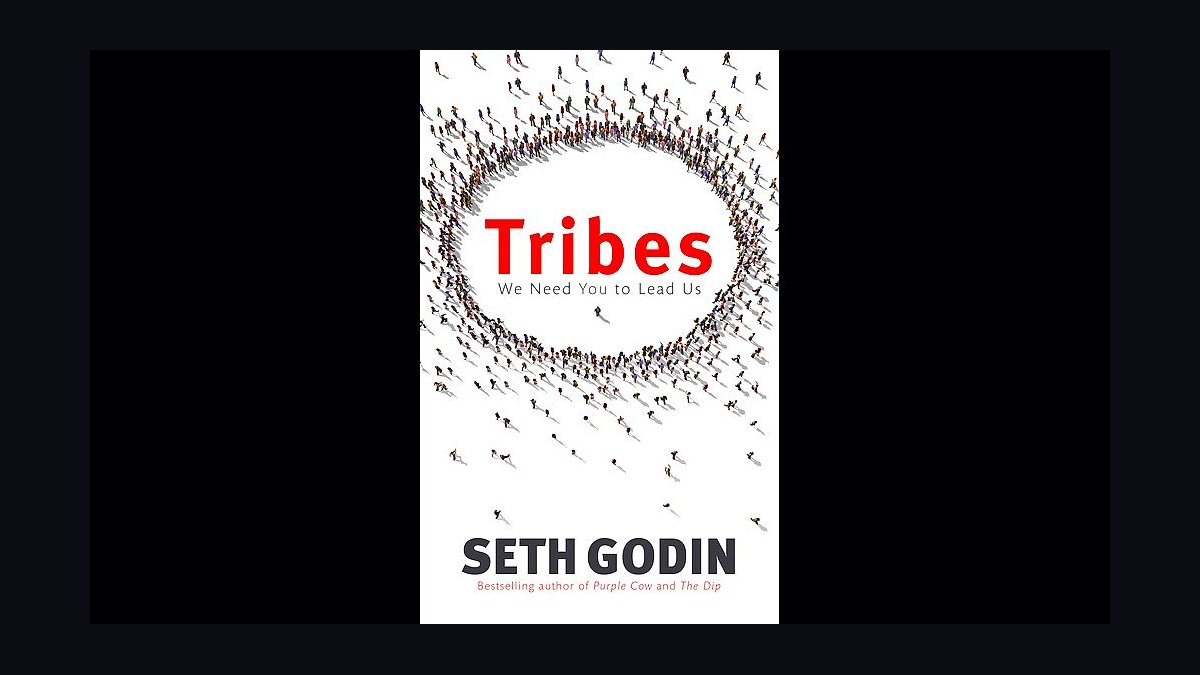
*Tribes: We Need You to Lead Us* is Seth Godin's 2008 manifesto arguing that the internet ended geography as a constraint on community, so anyone willing to lead can build one. Godin defines a tribe as a group connected to each other, a leader, and an idea — and says leadership requires willingness, not permission.
The rep who out-earned the phone bank
Picture two sellers hired the same Monday into the same mid-market SaaS team, same territory split, same 60-account patch, same quota. Rep A does what the playbook says: 60 dials a day, 40 cold emails, a LinkedIn connection blast with a templated note. Rep B does 25 dials, 20 emails — and spends the reclaimed 90 minutes writing one specific, opinionated post per week about the operational failure mode she keeps seeing in her category, then replying to every single comment on it by hand.
For the first two quarters Rep A wins. Activity metrics reward him, his manager praises him in the weekly forecast call, and Rep B looks like she is goofing off on social media. Around month seven the curve bends. Rep B's posts have accumulated a following of a few thousand practitioners who do the job she sells into. They comment. They DM her questions unrelated to her product. Three of them have changed jobs and brought her in at the new company. Two have started tagging her in threads where someone else asked the question she answers weekly. By month eighteen a meaningful share of her pipeline arrives inbound with her name already attached to it, and her cost per meeting is a fraction of Rep A's, whose numbers have flattened because the list is finite and the reply rate keeps eroding.
Nothing about that story is a trick. It is the core mechanic of *Tribes* running on a modern channel. Godin's claim, written a decade before anyone said "community-led growth," is that the mass market was an artifact of two scarcities — broadcast airtime and physical proximity — and that once the internet removed both, influence would reorganize around small, passionate, geographically scattered groups that share an interest and follow someone. Rep A is selling into a mass market that no longer exists. Rep B built a tribe.

The book opens on a political example rather than a commercial one. Joe Trippi's 2003 Howard Dean campaign was the first modern campaign organized around meetups, blog comments, and small-dollar online donations rather than television buys. Dean lost the nomination, and that loss is exactly why the case is instructive: the model worked even when the candidate did not. The mobilization mechanism outlived the campaign and has been visible in every subsequent movement, product launch, and go-to-market motion that grew by giving people a reason to find each other.
The scenario generalizes well beyond software sales. A commercial HVAC owner who posts weekly teardowns of botched rooftop-unit installs builds the same asset a SaaS AE does. So does a freight broker who explains detention-charge math to shippers, a med-device rep who writes the surgical-workflow notes nobody at the manufacturer will publish, or a fractional CFO who breaks down one real cap table a month. The channel changes; the mechanism does not.
How a tribe actually assembles
Godin's central diagnostic is a four-part test, and it is the most useful page in the book because it tells you instantly whether you have a tribe or merely an audience. A tribe requires: a shared interest, a way to communicate, leadership, and a cause. Two of those the internet now hands you free — the shared interest already exists somewhere, and the channel costs nothing to open. The other two stay scarce, which is the whole explanation for why so few tribes form despite the low barrier.

The distinction that carries the book is Sheepwalkers versus Heretics. A Sheepwalker is the compliant employee, customer, or citizen trained by school and process to do exactly what they were told and nothing more. Godin is explicit that Sheepwalkers are not lazy — they are obedient, which is a different failure. A Heretic looks at the status quo, decides it is wrong or insufficient, and leads people toward something better, accepting that this costs safety and status. Heretics are not contrarians for sport; the belief is load-bearing.
From that split comes the most-quoted line in the book: heretics build tribes, managers run pyramids. The industrial org chart is a control structure. A tribe is a network optimized for movement. You cannot administer a tribe with pyramid instruments — QBRs, PIPs, top-down quota cascades — and you cannot run a pyramid on tribe energy, because tribe members leave the moment leadership stops. The two operating systems are genuinely incompatible, which is why "let's build a community" initiatives launched inside a marketing org's quarterly plan almost always die: the plan is a pyramid artifact.
The leadership work itself decomposes into four jobs, in order. Initiate — somebody has to post first, host the first dinner, open the first Slack, write the first manifesto. Godin's line is that initiation is the only credential, and most would-be leaders never lead because they wait for permission or budget. Connect members to each other — this is the job accidental leaders skip. A tribe where every relationship routes through the founder is fragile and dies when the founder rests; a tribe where members find business partners, customers, and friends among themselves survives the founder's bad quarter. Cohort programs, batch-based accelerators, and revenue-leader membership orgs all spend more effort on member-to-member introductions than on expert content, and that is why. Create shared culture — language, symbols, rituals, and a named enemy. CrossFit has WODs. Sales methodologies function the same way: reciting MEDDPICC or Challenger vocabulary is a shibboleth that signals belonging and lowers the coordination cost inside the group. Commit — show up weekly, for years. Godin is unsparing that the cost of leadership is endurance, not creativity.

The second non-negotiable is belief. You cannot lead a tribe you do not believe in, and Godin's argument is that members detect the absence of belief faster than any other signal. This is the structural reason agency-built communities stall, ghostwritten executive personas plateau at low engagement, and outsourced "thought leadership" programs produce impressions without pipeline. His test is one question: what change are you trying to make, and would you keep trying to make it if nobody paid you? If the answer is no, stop — the tribe will not form. If the answer is yes, the tribe is already half-built and you simply have not invited anyone yet.
What the numbers look like when you run this
*Tribes* is a manifesto, not a data book — it carries almost no benchmarks — so the honest move is to be precise about what the book asserts and general about everything it does not measure. Godin's own hard number is the physical one: roughly 147 pages, readable in a single sitting. That matters practically. It is a book you can hand to a rep on a Friday and discuss on a Monday, which is not true of most sales canon.

The quantities that matter for execution are ones you set yourself, and the ranges are worth stating plainly because vague commitment is how tribes die. Cadence: one substantive post or issue per week is the floor that most practitioners converge on — enough to stay present, sparse enough to survive a bad month. Horizon: plan in years, not quarters. Godin's framing is that most would-be leaders quit long before the compounding starts, and his own blog has run for roughly two decades of near-daily posts, which is the actual demonstration of the thesis. Anecdotally the inflection tends to arrive somewhere past the first year, which is precisely why the twelve-month mark is where most people abandon the effort.
Size is the number people get wrong. Kevin Kelly published his "1,000 True Fans" essay the same year *Tribes* came out, and the two arguments interlock: the constraint is not headcount, it is leadership willingness plus a real cause. A thousand engaged practitioners who trust you outperform a hundred thousand passive followers on every metric that converts. For a seller, the practical threshold is smaller still — a few hundred people who do the job you sell into, who reply and share, will change your pipeline mix.
Effort budgeting is where this becomes a real trade. Assume 3 to 6 hours a week: roughly one hour to write, one to two to reply to every comment and DM by hand, one to make introductions between members, and the balance for a periodic live session once the group is large enough to warrant one. That is real capacity taken from prospecting activity, and any manager measuring you on dials will see it as a deficit for the first two or three quarters. Go in expecting to defend it.
The one macro claim worth stating carefully: community-led motions have become a mainstream acquisition strategy in B2B software, especially at higher deal sizes where a single relationship justifies far more investment than a paid click ever could. That direction of travel is well documented across the industry, and it is the strongest validation Godin's 2008 thesis could have received — but treat specific market-share percentages you see quoted as marketing material unless you can trace them to a real study.

Where the model breaks is also worth quantifying honestly. If your average contract value is small and your buyer is transactional, the payback horizon on 36 months of weekly output may never clear. Tribe-building is a high-fixed-cost, low-marginal-cost strategy. It rewards categories with long sales cycles, repeat buyers, and buyers who talk to each other; it punishes one-and-done commodity sales where nobody in the buying population has any reason to convene.
Choosing between leading a tribe and everything else
The trade-off is not "tribe versus no tribe." It is where you spend a finite weekly hour budget, and there are four credible options.
Outbound volume buys you predictability and fast feedback. Dials and sequences produce a measurable number this month; you can staff it, script it, and forecast off it. The costs are equally clear: the list is finite, response rates decay as everyone else works the same list, and none of the effort accumulates. The pipeline you built in January does nothing for you in June. It is the right choice when you need coverage now, when territory is fresh, or when the org's compensation math genuinely does not permit an eighteen-month bet.
Paid acquisition buys speed and dials up or down instantly, which is why finance likes it. It also stops the moment the budget stops, and the cost per acquisition tends to climb as competitors bid into the same intent. It is a rental, not an asset.
Partner and channel motions borrow someone else's tribe. This is the most underrated middle path: rather than spending three years building an audience, you show up consistently inside an existing one — an established community, a practitioner podcast, a well-run industry association, a complementary vendor's customer base. You give away real expertise there. You get distribution years earlier than you could build it, at the cost of never owning the relationship and always operating under someone else's rules.

Leading your own tribe is the slowest and the only one that compounds. It survives job changes, which is the part sellers systematically undervalue — when Rep B moves companies, the tribe moves with her; when Rep A moves, his sequences and list do not.
The practical answer for almost everyone is a blend with a moving ratio. Fund the current quarter with outbound and paid, borrow an existing tribe to shorten the cold-start problem, and protect a small fixed slice — three hours, defended like a customer meeting — for the thing that compounds. As the owned channel starts producing inbound, shift the ratio. Do not flip the whole allocation at once on the strength of a manifesto; Godin is writing to give you courage, not a capacity plan.
There is also an organizational version of the same trade. A company deciding whether to build a customer community faces the pyramid-versus-tribe incompatibility directly: if the community is owned by a marketing team measured on MQLs, it will be instrumented as a lead source, members will feel it, and it will hollow out. Communities that work are usually run by someone with genuine standing in the practice and enough political cover to protect the group from the quarterly number.
Where this goes wrong in practice
Quitting at month four. The single most common failure, and the most boring. The output feels loud to you and invisible to everyone else for a long stretch. The fix is mechanical: commit to a specific number of weeks up front, publish on a schedule you can hold during your worst month rather than your best, and refuse to evaluate results before the horizon you set. Judging a compounding strategy on quarterly data guarantees you kill it.

Faking the belief. Picking a cause because it looks commercially convenient produces content that reads like it — hedged, agreeable, and saying nothing a competitor would contest. Run the cause test honestly before you start. If you cannot name a position your buyers hold but your competitors will not say out loud, you do not have a cause yet, and no posting cadence will manufacture one.
Making yourself the bottleneck. Every conversation routing through you feels flattering and is a structural weakness. The tribe cannot survive your vacation, your bad quarter, or your job change. Fix it deliberately: introduce two members to each other every week, name the connection out loud, and step back from threads where a member can answer better than you. A leader whose absence is not noticed for a week has built something real.
Confusing an audience with a tribe. Follower counts, downloads, and open rates measure consumption, not movement. An audience listens; a community talks; a tribe moves toward a cause under a leader. Test yours: do members talk to each other without you, and can they state the cause in their own words? If not, you have a distribution channel — useful, but not the thing Godin is describing.
Monetizing too early or too hard. The moment the group perceives itself as a lead list, the trust that made it valuable evaporates. Give away the expertise that would normally sit behind a form. Let the commercial relationship arrive as a consequence rather than a mechanism, and keep the sales motion visibly separate from the community motion.
Copying tactics instead of the mechanism. Plenty of people read the surface — post daily, use hooks, build a newsletter — and skip the four requirements. Tactics without a cause produce a content treadmill with no leverage. Start from what change you want and let the format follow.

Building on rented ground exclusively. Every platform that hosts your tribe can change its algorithm, its terms, or its existence. Godin's 2008 toolkit was blogs, Meetup, and early Facebook, and the specific examples now read as period pieces even though the argument holds. Own an email list. Treat every social platform as a place you rent attention and route people somewhere you control.
Assuming courage is still the binding constraint. In 2008, publishing an opinion under your own name was genuinely risky and the personal-brand playbook was rare. It is now closer to commodity, and the modern toolkit — newsletter platforms, private community software, asynchronous video, cross-org messaging — has collapsed the cost of leadership Godin assumed. What still separates real tribes from content channels is the same two things the internet never made free: a cause you actually believe, and the endurance to show up for years. That is where the whole *Tribes* strategy for sellers ultimately lives.
Related questions
How is a tribe different from an audience or a community?
An audience consumes, a community converses, a tribe moves toward a shared cause under a leader. Leadership and cause are the two ingredients that separate Godin's tribe from a download count or a Facebook group. Without both, you have distribution rather than a movement.
Do you need a large following to lead a tribe?
No. Kevin Kelly's "1,000 True Fans," published the same year, makes the complementary case: the constraint is leadership willingness and a real cause, not headcount. A few hundred engaged practitioners who reply and refer will change a seller's pipeline mix more than a hundred thousand passive followers.
What should a seller do first on Monday morning?

Name one belief about your category that your buyers hold and your competitors will not say publicly. Post it. Reply to every comment by hand. Repeat weekly and defend the hour on your calendar like a customer meeting. That is the entire starting playbook.
Where does Tribes sit in Godin's other work?
It is the middle of a three-book arc. *Permission Marketing* (1999) argues for earning attention rather than interrupting for it, *Tribes* (2008) organizes that attention into a movement, and *This Is Marketing* (2018) is the operating manual for deploying it.
Does this apply outside B2B software?
Yes, and often better. Trades, logistics, professional services, and niche manufacturing have practitioner populations that convene readily and are underserved by publishing. The mechanism is identical; only the channel changes.
FAQ
Is Tribes worth reading if you have already read This Is Marketing?
Yes. *This Is Marketing* is the operating manual and *Tribes* is the manifesto that explains why the manual exists. Read *Tribes* for the argument and the nerve it takes to start, then the later book for the mechanics of positioning, audience selection, and delivering the change you promised.
How long is the book and how should it be read?
It is roughly 147 pages of short, punchy chapters — a single-sitting read. Treat it as a provocation rather than a reference. The useful exercise is to finish it and immediately answer the cause test in writing, because the book's value is what it makes you decide, not what it makes you memorize.

Why do most tribes fail?
Three reasons, in rough order of frequency: the leader quits before the compounding starts, the leader does not actually believe in the cause and members sense it, and the leader makes themselves the single point of connection instead of introducing members to each other. All three are avoidable, and all three are behavioral rather than tactical.
Can a company build a tribe, or does it have to be an individual?
Both work, but companies fail more often because tribes are incompatible with pyramid management. If the community is owned by a team measured on lead volume, it will be instrumented as a lead source and members will feel it. Successful company-led tribes are usually run by someone with real standing in the practice and cover from the quarterly number.
What has aged badly in the book?
The 2008 examples — early Facebook groups, Meetup, and the platforms of that moment — read as period pieces. Godin also underestimated how far monetization and community infrastructure would lower the cost of leadership, and overestimated how much courage publishing under your own name would require once the personal-brand playbook became widespread.
Is community-led growth just Tribes with a new name?
Largely, yes. The modern practice — building a practitioner group, letting members find each other, converting trust into pipeline — is the four requirements executed with better tooling. Godin's contribution was naming the mechanism a decade before the category existed, which is why he is under-cited by the people using it.
Sources
- https://www.penguinrandomhouse.com/books/292734/tribes-by-seth-godin/
- https://seths.blog/
- https://kk.org/thetechnium/1000-true-fans/
- https://hbr.org/2008/12/lessons-from-the-obama-campaign
- https://www.britannica.com/biography/Howard-Dean
- https://www.ted.com/talks/seth_godin_the_tribes_we_lead
- https://www.pewresearch.org/internet/2009/04/15/the-internets-role-in-campaign-2008/
- https://www.nytimes.com/2008/10/26/business/26marketing.html
- https://www.wired.com/2004/01/dean-4/
Related on PULSE
- Purple Cow by Seth Godin — Cliff Notes Summary for Sellers
- This Is Marketing by Seth Godin — Cliff Notes Summary for Sellers
- Permission Marketing by Seth Godin — Cliff Notes Summary for Sellers
- Contagious by Jonah Berger — Cliff Notes Summary for Sellers
- The Tipping Point by Malcolm Gladwell — Cliff Notes Summary for Sellers
- The 12 Week Year by Brian Moran and Michael Lennington — Cliff Notes Summary for Sellers
This page will be disappearing soon. Save it to your device for $1 — or read it free while it is here.
@Kory-White- · if Venmo asks, the last 4 of my number are 2012
This page is gone.
This one is off the shelf now. $1 keeps it on your phone for good — the whole page, pictures and diagrams included.
 pulse-recentSales Engagement by Manny Medina — Top 10 Key Takeaways for Sales Leaders in 2027
 pulse-recentThe Customer Success Professional’s Handbook by Ashvin Vaidyanathan — Top 10 Key Takeaways for Sales Leaders in 2027
 pulse-recentObviously Awesome by April Dunford — Top 10 Key Takeaways for Sales Leaders in 2027
 pulse-recentInsight Selling by Mike Schultz and John Doerr — Top 10 Key Takeaways for Sales Leaders in 2027
 pulse-recentSPIN Selling by Neil Rackham — Top 10 Key Takeaways for Sales Leaders in 2027
 pulse-recentSelling Above and Below the Line by Skip Miller — Top 10 Key Takeaways for Sales Leaders in 2027
 pulse-recentThe Sales Acceleration Formula by Mark Roberge — Top 10 Key Takeaways for Sales Leaders in 2027
 book-summaryLittle Red Book of Selling by Jeffrey Gitomer — Cliff Notes Summary
 pulse-recentWhat is the first concrete step in Sandler Rule #4 for a sales leader to implement in 2027?
 pulse-recentSnap Selling by Jill Konrath — Top 10 Key Takeaways for Sales Leaders in 2027