
What’s the key lesson from *Pitch Anything* about managing your own anxiety before a high-stakes pitch?
 PULSEKNOWLEDGE LIBRARY
The key lesson from *Pitch Anything* is that pitch anxiety comes from a status problem, not a preparation problem. Oren Klaff argues you feel fear because you enter as the supplicant asking for something. Fix the frame — become the prize, control the tempo — and the same adrenaline reads as focus instead of panic.
The forty minutes before a Series A room
Picture the situation Klaff writes from: a founder sits in a lobby with a deck they have rehearsed eleven times, and their hands are cold. Nothing about the deck has changed since yesterday, when they delivered it flawlessly to their co-founder over coffee. What changed is the room. Behind the door are four people who control capital, who have seen a hundred pitches this quarter, and who will decide in the first few minutes whether this one is worth their attention. The founder's body knows the stakes and has started preparing for a physical confrontation it cannot win.
Watch what that does mechanically. Working memory contracts, so the third bullet of slide four evaporates. Speech rate climbs — many nervous presenters speak noticeably faster than their rehearsed pace, which compresses a twenty-minute pitch into fifteen and strips out every pause the argument needed to land. Breathing moves from the diaphragm into the upper chest, which thins the voice and removes the low resonance listeners unconsciously read as authority. The founder starts filling silences, because silence now feels like judgment. And critically, attention flips inward: instead of reading the room, they are monitoring themselves, running a continuous self-audit of how badly this is going.
Klaff's diagnosis of this scenario is what makes the book unusual. Most advice would treat it as an arousal problem and prescribe breathing, rehearsal, or reframing nerves as excitement. Klaff treats it as a *positional* problem. The founder is anxious because of the structural relationship they have accepted with the room: they need money, the room has money, therefore the room judges and they perform. Every physiological symptom above is a downstream consequence of having agreed to be the one on trial. You can breathe your way to a slightly calmer supplicant, but you are still a supplicant, and the room still reads it.
This is why he insists the intervention has to happen before the door opens, at the level of position rather than physiology. The founder who walks in having genuinely decided that this deal has to clear their bar too — that they are choosing an investor as much as being chosen — has a different body. Not because they did a breathing exercise, but because the threat that was driving the response has been redefined. There is no predator in the room if you are not prey in the room.

The practical test Klaff implies is simple and worth running on yourself before any high-stakes meeting: finish the sentence *"If this goes badly, then..."* If the honest answer is "then I'm exposed as a fraud" or "then I've wasted my one shot," you are in the supplicant frame and your body will behave accordingly. If the answer is "then this particular counterparty wasn't the right fit and I go to the next one on the list," the anxiety has nowhere to attach. Notice that the second answer is often *true* and simply not believed — which is why Klaff's work is less about lying to yourself than about actually arranging your position so the confident reading is the accurate one.
Why the status read hijacks your body before your argument gets a hearing
Klaff builds his method on a rough three-layer model of the brain that he uses as a working metaphor rather than a literal neuroanatomy lecture. The oldest layer — what he calls the crocodile brain — handles survival: it scans for threat, novelty, and reward, and it does so fast and crudely. The middle layer processes social and emotional information: where you rank, whether you belong, whether this person is safe. The newest layer does the reasoning, the language, the careful argument — which is precisely the layer your slides are written for.
The problem is the order of operations. The old layer processes first and decides whether the new layer gets bandwidth. When it registers a status threat — a room full of people who outrank you and are about to evaluate you — it does what it evolved to do: it prepares the body for a physical emergency and it deprioritizes expensive, slow cognition. That is the mechanism behind every symptom in the lobby scenario. You are not losing your argument because your argument is weak; you are losing access to the part of yourself that can deliver it.
The same mechanism runs on the other side of the table, which is the half people forget. Your audience's crocodile brain is also filtering, and it filters *you* first. It asks, roughly: is this dangerous, is this new, is this worth the calories? A pitch that opens with company history and a market-size slide fails all three tests, and the room's attention drops before your reasoning ever arrives. Klaff's argument is that anxiety management and audience management are the same problem viewed from two ends — both are about keeping an ancient, impatient filter satisfied long enough for the actual content to matter.
This is why he is dismissive of purely internal fixes. Positive self-talk operates in the newest layer, which is the layer that just got throttled. Telling yourself "I'm confident, I'm prepared" during a hijack is asking a system that has been taken offline to override the system that took it offline. It occasionally works, and it works most reliably for people who were not that anxious to begin with. What reliably changes the old layer's read is changing the *inputs* it is reading: your position in the room, your tempo, whether you are seeking approval or granting access.

The diagram makes the causal claim explicit: the fork is at the top, not the bottom. Everything in the left-hand column is a symptom of a decision made before you spoke. That is the structural reason Klaff's fix is upstream — you are not trying to suppress the outputs, you are trying not to trigger the branch.
One nuance worth holding onto: the goal is not zero arousal. A completely flat presenter is not persuasive, and the physiological signature of intense focus overlaps heavily with the signature of fear — elevated heart rate, heightened attention, adrenaline. Klaff's framing is that the raw activation is fuel and the interpretation is what determines whether it burns clean. Managing anxiety, in his sense, means routing the activation, not extinguishing it.
Frames, and the specific ones that trigger the spike
Frame is Klaff's term for the unspoken set of assumptions about who holds status and who sets the terms. Two frames meet in every meeting and they do not merge; one absorbs the other, usually within the first minute, usually without anyone naming it. His claim about anxiety is precise: the moment you feel a spike mid-pitch is almost always the moment your frame lost, or was attacked and you did not respond.
He catalogs several recurring frames, and it is worth knowing them by name because naming one in the moment is most of the defense:

The power frame. The counterparty behaves as though the meeting is a favor being granted — checking a phone, arriving late without acknowledgment, delegating attention to a junior person. It is often not personal; it is a habit of people whose time is genuinely scarce. But it is the single most reliable anxiety trigger, because it explicitly ranks you.
The time frame. "We've only got fifteen minutes, actually." This compresses you, and compression is where prepared pitches die — you rush, you skip the parts that earn belief, you arrive at the ask having established nothing.
The analyst frame. The room pulls you into spreadsheet detail early: unit economics, cohort tables, sensitivity analysis. Klaff's objection is not that numbers are bad but that cold analysis early kills the emotional thread that makes anyone care about the numbers. It also puts you in the position of being examined, question by question, which is structurally the supplicant position.
The prize frame. This is Klaff's counter, and the one he treats as the actual anxiety cure. You hold the position that what you have is scarce and that this counterparty needs to demonstrate fit. The behavioral signature is not aggression — it is a willingness to qualify them, to let silences sit, and to be genuinely comfortable with the outcome where you do not proceed.

The reason the prize frame dissolves anxiety, in his account, is that anxiety requires an asymmetry of need. Fear of judgment presupposes that the judgment matters more to you than to them. When you have arranged matters — actually arranged them, not just narrated them — so that your alternatives are real, the asymmetry flattens and the fear has no purchase.
That word *actually* is doing heavy lifting, and it is the most common place people misread the book. Frame control is not a costume. If you have one prospect, no pipeline, and eleven days of runway, standing in a doorway telling yourself you are the prize is theater, and experienced counterparties read theater instantly — a performed prize frame is more damaging than an honest supplicant frame, because it adds inauthenticity to weakness. The durable version of the strategy is to *build* the position: run several conversations in parallel so no single one is decisive, qualify hard enough that you would genuinely decline a bad fit, and know your alternative before you walk in. Then the frame is a description rather than a claim, and your body knows the difference even when your audience cannot articulate it.
What the practice actually costs — a realistic accounting
Klaff is emphatic that state is physical and conditioned, not intellectual, and the book's most-copied technique is a pre-pitch ritual: get alone, recall a specific memory of being genuinely in command, amplify it until you can feel it in your body, and pair it with a distinctive physical gesture so the gesture can later summon the state. Because this technique gets quoted more than it gets examined, it is worth being straight about the evidence and the cost.
On evidence. The anchoring technique comes out of the NLP tradition, and NLP's specific claims have not held up well under controlled testing. What *does* have reasonable support is narrower and still useful: reappraising arousal as excitement rather than anxiety measurably improves performance on stressful tasks in Alison Wood Brooks's research; slow diaphragmatic breathing reliably shifts autonomic state; and cue-based conditioning of routines is well established in sports psychology, where pre-performance routines are standard practice. Klaff's ritual is best understood as a folk-psychology assembly of those real effects. Treat it as a routine that works through attention, breathing, and conditioning — not as evidence that a thumb-press rewires an amygdala.
On time. The ritual itself is short — two to five minutes of genuine isolation before the meeting. The cost is not the ritual, it is the conditioning. A cue that has been paired with a state a handful of times does nothing under real pressure. The sports-psychology pattern is daily, low-stakes repetition over weeks, so the routine is automatic before it is needed. Budget a few minutes a day for several weeks, not an hour the night before. If you are pitching next Tuesday and have never done this, the honest advice is to use breathing and reappraisal — both of which work cold — and start the conditioning for the quarter after.

On where the hours actually go. The single largest return in Klaff's system is not the ritual at all; it is the front of the pitch. He argues the crocodile-brain filter renders its verdict early — the first minutes decide whether the rest gets a hearing — and that the whole pitch should fit inside roughly twenty minutes, because sustained attention degrades sharply past that. That has a direct scheduling consequence: rehearse the opening minutes disproportionately. If you have ten hours of preparation, four of them belong to the first ninety seconds and the framing move that follows. The tail of the deck matters far less than most preparers believe, and rehearsing it evenly is the most common misallocation.
On tempo. Anxious presenters speak fast, and speed is legible as low status. A practical, checkable target: record a rehearsal, time it, and compare against your live run. If the live delivery is materially shorter than rehearsal, you rushed, and the fix is mechanical — put deliberate full stops after each of your three or four load-bearing sentences and let them sit. Klaff would frame the pause as a status signal: only someone comfortable in the room is willing to let silence happen in it.
On decline rates. Be realistic about outcomes so a "no" does not register as a personal verdict. Investor pitching is a numbers game with a heavily negative base rate — the overwhelming majority of pitched deals do not close, and that is true for good companies with good pitches. Internalizing this is itself an anxiety intervention: if you expect most conversations to end in no, a no stops being evidence about you and becomes an expected draw from a known distribution. Klaff's prize frame and this statistical reality point the same direction — you are running a process, not sitting an exam.
What you give up, and when a different approach is better
Klaff's method has real costs, and the book undersells them. Being honest about the trade-offs is what lets you use the parts that work.

The prize frame can read as arrogance, and the penalty is asymmetric. Klaff's stylistic register is combative — deliberately so, since he came up pitching capital-markets deals where interrupting and reframing is expected behavior. That register transfers badly. In enterprise software, in healthcare, in most consultative B2B sales, and in essentially any culture with strong deference norms, aggressive frame-play reads as a red flag about how you will behave as a partner for the next four years. The audience-appropriate version keeps the *position* — real alternatives, willingness to walk, tempo control — and drops the theater.
It is optimized for short, one-shot, high-stakes rooms. The method assumes a compressed pitch to people you may never see again. Complex enterprise deals run months across many stakeholders, and there the reliable anxiety reducer is not frame combat but process control: multi-threading the account, mutual action plans, knowing exactly where you stand. If your fear is "I don't know if this deal is real," the answer is qualification discipline, not a power pose.
Frame work does not fix substance. If the anxiety is a rational signal that the numbers are weak, the demo is broken, or you cannot answer the obvious objection, no amount of state management resolves it. It masks it for twenty minutes and then the question comes. The healthy use of anxiety here is diagnostic: write down what specifically you are afraid of being asked, and note how many items on that list are *legitimate holes*. Those are a work list, not a mindset problem.
The point of the fork is that "manage your anxiety" is four different problems wearing one label, and Klaff's answer is the correct one for exactly one of them. Applying frame control to a substance gap wastes the preparation window on the wrong work. Applying breathing exercises to a status asymmetry produces a calm person who still loses the room. Diagnose first.

When Klaff is clearly right. Short pitch, unfamiliar high-status audience, a real alternative in your pocket, and a tendency to over-explain and seek approval — that is the exact profile the book was written for, and the frame strategy will do more for you than any other single intervention.
When to reach elsewhere. Clinically significant performance anxiety — panic symptoms, avoidance of career-relevant situations — is a different category and responds to established treatment, not to a business book. Klaff is writing about ordinary high-stakes nerves. If the pattern is severe or persistent, that is a matter for a professional, and treating it as a frame problem delays getting the right help.
Where this goes wrong in practice
Performing the frame instead of holding it. The most common failure. Someone reads the book on Sunday and arrives Monday manufacturing dominance: a hard handshake, a pointed comment about their own schedule, refusing to answer a reasonable question. Counterparties who negotiate for a living detect this immediately, and it costs more credibility than plain nervousness would have. The corrective is sequencing — build the underlying position first (alternatives, qualification, a real walk-away point), and let the behavior follow from it rather than substituting for it.
Treating the ritual as a talisman. An unconditioned gesture has no effect under pressure, and discovering that mid-pitch adds a second failure — now you are anxious *and* your technique did not work. If you have not put in the weeks of pairing, do not rely on it in the room. Use what works cold.
Confusing tempo control with slowness. "Let silences sit" gets misapplied as a uniformly slow delivery, which is deadly. Klaff's argument is about *contrast* — the old brain is a novelty detector and flat delivery reads as nothing worth attending to. Vary the pace, and place the pauses deliberately after the sentences that carry weight.

Over-rehearsing the wrong material. Preparing the deck evenly, slide by slide, feels productive and mostly is not. The opening minutes decide whether anything after them is heard. Rehearse the first ninety seconds until it is automatic, know your three load-bearing claims cold, and accept that slides fourteen through twenty will be improvised or skipped.
Suppressing arousal instead of routing it. Trying to feel nothing degrades performance, because the physiological activation you are killing is the same activation that produces presence and energy. Aim for excitement, not calm.
Ignoring the diagnostic value of the fear. Anxiety is sometimes accurate. If you cannot answer the obvious objection, your body is right to be nervous, and the useful response is to spend the preparation window closing the hole rather than managing the feeling about it.
Frame combat with the wrong audience. Reading a room's culture matters more than executing the technique. A procurement committee, a hospital system, a government buyer, and a growth fund reward completely different postures. The transferable core of the *Pitch Anything* strategy is the position and the tempo; the swagger is regional dialect, and speaking it in the wrong region is a self-inflicted wound.
Related questions
Does the prize frame work if you genuinely need the deal?
Not as theater. If you have no alternative, counterparties read the performance. The workable version is to create real optionality first — parallel conversations, a viable no-deal path — so the position is accurate rather than claimed. Otherwise, prefer honest competence over manufactured leverage.
How is this different from "reframe nerves as excitement"?
Reappraisal treats the arousal; Klaff treats the cause. Reappraisal is well-supported and works cold, so use it. But if the underlying driver is a status asymmetry you have accepted, relabeling the feeling leaves the asymmetry — and the audience's read of you — untouched.
Should I still rehearse heavily?
Yes, but unevenly. Rehearse the opening minutes and your three load-bearing claims until automatic; let the back half stay flexible. Even rehearsal across a twenty-slide deck is the most common misallocation of preparation time, because attention is decided early.
Does any of this apply to internal presentations?
The frame logic does. Internal pitches carry the same status dynamics with higher recurrence, so a performed dominance frame is far more costly — you have to work with these people tomorrow. Keep the tempo control and the real alternatives; drop the combative register entirely.
FAQ
What is the single sentence version of the lesson? Your anxiety is a status read, not a preparation failure — change your position in the room and the physiology follows. Klaff's whole system flows from the claim that you feel fear because you have accepted the role of the one being judged, and that this role is negotiable before the meeting starts.
Is the crocodile brain a real neuroscience concept? Not literally. The triune-brain model Klaff draws on is a simplification that neuroscientists consider outdated as anatomy. It survives here as a useful working metaphor for a real phenomenon: fast, pre-conscious threat and novelty filtering that gates slower reasoning. Use the metaphor for the intuition; do not cite it as science.
Does the anchoring ritual actually work? Its NLP heritage has weak experimental support, but the components overlap with things that do work — conditioned pre-performance routines from sports psychology, slow breathing, and arousal reappraisal. It needs weeks of daily pairing to fire reliably. If your pitch is soon, use breathing and reappraisal instead; both work without conditioning.
How long should the pitch itself be? Klaff argues for roughly twenty minutes, on the grounds that sustained attention degrades sharply past that point and that the audience's verdict forms in the first few minutes anyway. Longer pitches do not add persuasion; they add opportunities to lose the room. Build for twenty and know what you cut if you get fifteen.
What if the anxiety is telling me something true? Then listen to it. Write down every question you are afraid of being asked and mark which ones represent genuine gaps. Those are a work list. Frame control applied to a substance problem buys you twenty minutes of composure before the hole surfaces anyway.
Is frame control manipulative? It is manipulative when it is a performance — claiming scarcity you do not have. It is not manipulative when it is descriptive: you built real alternatives, you qualified honestly, and you are willing to walk. Klaff's own framing is about negotiating from strength rather than desperation, and the difference between the two versions is whether the underlying position is real.
Sources
- https://www.mheducation.com/highered/product/pitch-anything-innovative-method-presenting-persuading-winning-deal-klaff/9780071752855.html
- https://www.hbs.edu/faculty/Pages/profile.aspx?facId=641042
- https://hbr.org/2014/06/how-to-turn-anxiety-into-excitement
- https://www.apa.org/topics/stress/manage-social-anxiety
- https://www.ncbi.nlm.nih.gov/pmc/articles/PMC5455070/
- https://www.nih.gov/news-events/nih-research-matters
- https://www.mayoclinic.org/diseases-conditions/social-anxiety-disorder/symptoms-causes/syc-20353561
- https://www.ted.com/talks/amy_cuddy_your_body_language_may_shape_who_you_are
- https://www.ycombinator.com/library/6q-how-to-pitch-your-startup
Related on PULSE
- [What's the main lesson from *Pitch Anything* for presenting to a skeptical board in 2027?](/knowledge/bs0354)
- [Pitch Anything by Oren Klaff — Cliff Notes Summary & Key Takeaways](/knowledge/bs0014)
- [What's the most persuasive story structure from *Pitch Anything* for a product demo in 2027?](/knowledge/bs0396)
- [What's the critical lesson from *The JOLT Effect* about reducing buyer anxiety?](/knowledge/bs0345)
- [What's the critical lesson from *The JOLT Effect* about managing indecisive buyers in a recession?](/knowledge/bs0372)
- [What's the key insight from *The Challenger Sale* about teaching customers something they don't know?](/knowledge/bs0402)
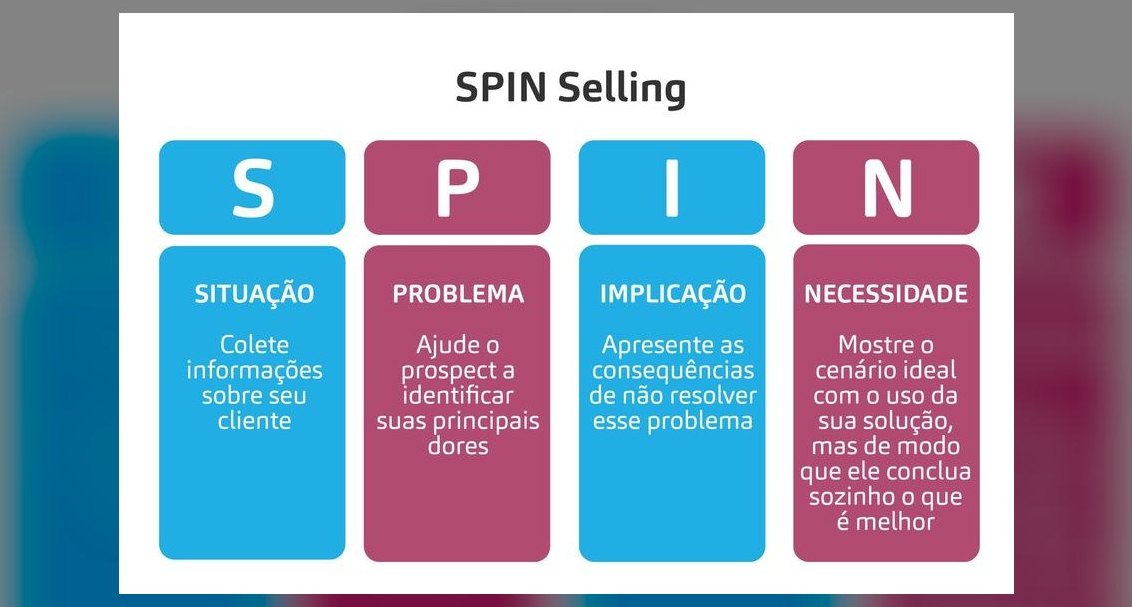 bsHow does *SPIN Selling* apply to selling software to non-technical buyers in 2027?
 bsWhat’s the main strategy in *Pitch Anything* for holding attention in 2027?
 bsWhat’s the core model in *Predictable Revenue* for cold email sequences that actually get replies?
 bsHow can *Influence: The Psychology of Persuasion* improve your email marketing in 2027?
 bsWhat’s the key strategy from *Fanatic Prospecting* for staying motivated during a slump?
 pulse-booksHow much do executive book summary subscriptions like getAbstract or Blinkist cost in 2027?
 bsHow does *Predictable Revenue* help you scale outbound sales in a competitive market in 2027?
 bsHow does *The Sales Acceleration Formula* use data to predict which new hires will succeed in 2027?
 bsWhat’s the best chapter in *How to Win Friends and Influence People* for leading a team in 2027?
 bsWhich chapter of *Influence: The Psychology of Persuasion* is most useful for marketers in 2027?