
Hacking Growth by Sean Ellis and Morgan Brown — Top 10 Key Takeaways for Sales Leaders in 2027
 Curated byKory White · Fractional CRO · Maryland
 PULSEKNOWLEDGE LIBRARY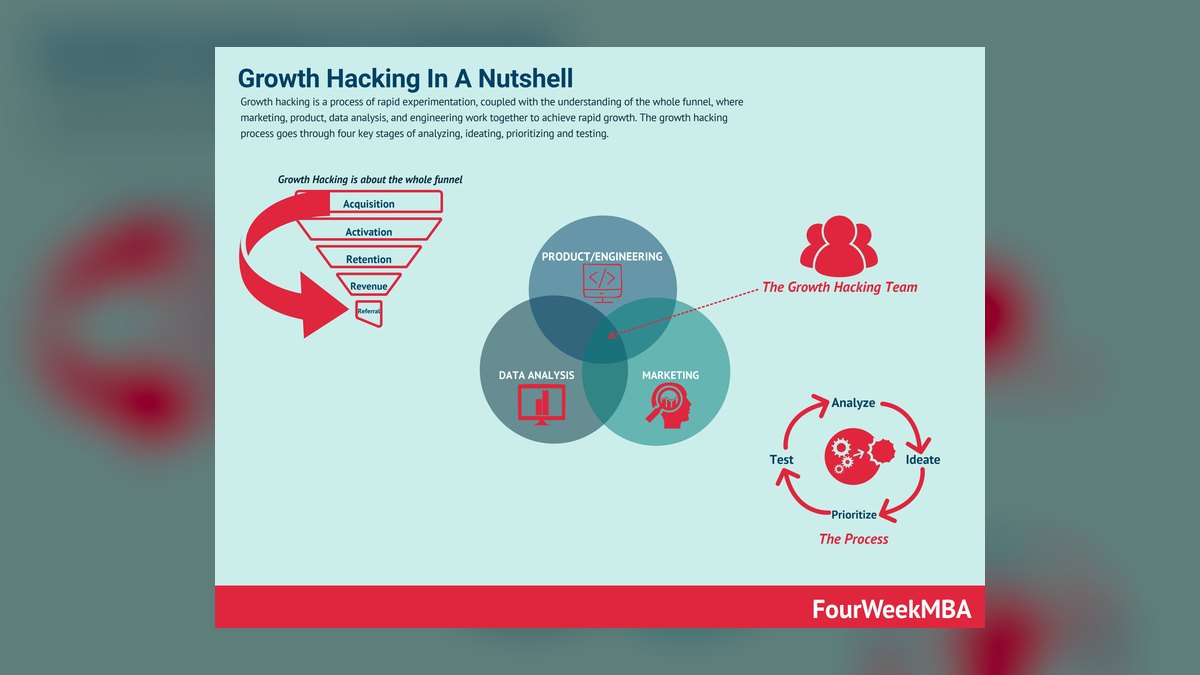
Hacking Growth by Sean Ellis and Morgan Brown gives sales Leaders a compounding playbook: build a cross-functional growth team, find the one metric that matters, run high-tempo experiments, and treat retention as the real revenue engine. In 2027, with buyers self-educating and pipelines fragmenting, these Takeaways matter more than ever — growth is a system, not a territory strategy.
What it is and why it matters
Sean Ellis and Morgan Brown wrote *Hacking Growth* as a working manual for companies that need to grow faster than their headcount allows. Ellis ran early growth at Dropbox and LogMeIn and is widely credited with coining the phrase "growth hacking"; Brown is a longtime operator and writer on product and growth. The book's core argument is that growth is not a marketing department's job, a sales team's quota, or a product roadmap — it is a cross-functional discipline with its own team, its own process, and its own scoreboard.
For sales Leaders, the relevance in 2027 is blunt. The buying committee has grown, self-serve research happens before a rep is ever contacted, and the classic "more reps, more calls, more pipeline" lever has hit diminishing returns in most categories. Meanwhile, expansion revenue inside existing accounts now carries more of the growth burden than net-new logos at many software businesses. That shift means sales cannot be a downstream function that receives marketing-qualified leads and closes them. It has to sit inside the growth loop.
The book frames this as the difference between a siloed funnel and a growth engine. A siloed funnel optimizes each stage independently: marketing owns awareness, SDRs own outreach, AEs own close, CS owns renewal. A growth engine optimizes the whole system against one shared outcome, and every function can see how its work moves that outcome. Ellis and Brown are explicit that the growth team is not a rebrand of marketing — it is a small, senior, cross-functional unit (product, engineering, design, data, marketing, and yes, sales) that owns a single growth objective and runs experiments against it.
Three ideas from the book do most of the work for a sales Leader:
Product-market fit comes first, and it is measurable. Ellis's "must-have" survey asks users how they would feel if they could no longer use the product. The commonly cited threshold is roughly 40% answering "very disappointed" as a signal that a product has a real pull. Below that, no amount of sales pressure produces durable revenue — you get churn that eats the pipeline you just built.
One metric governs. The book calls it the "one metric that matters" (OMTM). Not a dashboard of twenty KPIs, but a single number that best represents the value being delivered to customers at this stage. For an early sales motion it might be qualified opportunities per week; for a scaling business it might be net revenue retention. The point is forcing prioritization.
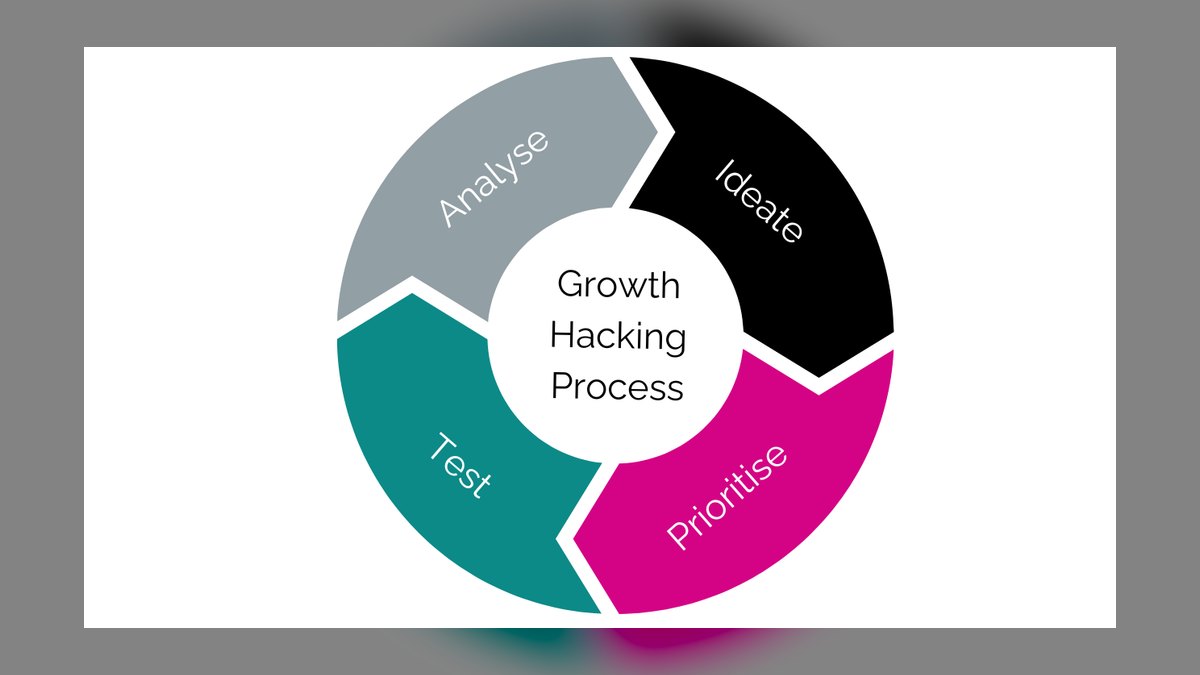
Growth is a process of high-tempo experimentation. The book's engine has four steps: analyze, ideate, prioritize, test. Teams run many small experiments, most of which fail, and compound the winners. The discipline is in the volume and the rigor, not in any single clever idea.
Why this matters specifically to sales Leaders rather than only to marketers: the book's most transferable insight is that the highest-leverage growth levers usually sit at the seams between functions. Activation sits between product and sales. Expansion sits between sales and CS. Referral sits between sales and marketing. A sales Leader who only manages the close stage is managing the least improvable part of the system.

The step-by-step process
The book's growth process is often summarized as a loop, and it maps cleanly onto a sales organization that wants to operate with more velocity and less guesswork. Here is how the loop runs in practice.
Step one: analyze. Before any experiment, the team instruments the funnel end to end and finds where value leaks. In a sales context this means mapping the real journey — first touch, research, trial or demo, technical validation, procurement, onboarding, first value, expansion — and attaching a measurable conversion rate to every handoff. Most teams discover that the biggest drop-off is not where they assumed. A common finding is that the loss happens between "demo completed" and "technical validation started," which is a process problem, not a persuasion problem.
Step two: ideate. The book recommends generating ideas in volume and from every function, not just from leadership. A useful practice is a standing idea backlog where anyone — an SDR, a solutions engineer, a CSM — can submit a hypothesis in a fixed format: *If we do X, then metric Y will move by Z, because of evidence W.* That format forces the submitter to name the metric and the mechanism, which kills vague suggestions like "improve onboarding."
Step three: prioritize. Ellis and Brown describe a scoring approach that weighs potential impact, confidence in the hypothesis, and ease of implementation. The exact weights matter less than the discipline of ranking. A high-impact, low-confidence experiment is worth running if it is cheap; a high-impact, low-confidence experiment that takes two quarters is usually a trap.

Step four: test. Run the smallest version that can produce a real signal. In sales, that often means a limited cohort — one region, one segment, one sequence — rather than a global rollout. Define the success threshold and the sample size before you start, or you will rationalize any result after the fact.
Step five: decide and feed back. Winners get scaled and the underlying mechanism gets documented so it can be repeated. Losers get archived with the learning attached, because the archive itself becomes an asset. The loop then restarts with a better-instrumented funnel.
The tempo matters as much as the steps. The book's argument is that a team running ten well-designed experiments a month will outlearn a team running one perfect experiment a quarter, even if the hit rate is identical. For a sales organization, that means carving out protected capacity — even 10 to 15% of selling time — for experiments rather than treating every hour as quota time.
One structural note the book is emphatic about: the growth team needs a dedicated owner, not a committee. Someone has to be accountable for the OMTM and empowered to pull people from product, engineering, and sales into a test. In smaller companies this is often a founder or a head of growth; in larger ones it is a named leader with real authority. Sales Leaders who want to participate in this loop should expect to contribute a rep or two, some pipeline data, and a willingness to let a test run without demanding immediate quota credit.

Costs, timelines, and typical ranges
The book is not a budgeting manual, but its process has predictable cost and time shapes that sales Leaders should plan around. Being realistic here prevents the most common failure mode: expecting growth-hacking results on a quarterly cadence with no dedicated resources.
Team cost. A functioning growth team is small — typically three to seven people — but senior. The book's examples lean on people who can build, measure, and decide without handoffs. In compensation terms, that means you are funding a handful of high-cost generalists rather than a large group of narrow specialists. For a mid-market company, the fully loaded cost of a small cross-functional growth pod commonly lands in the range of a few hundred thousand dollars a year once you count product, engineering, and analytics time that is borrowed rather than hired. The borrowed time is the hidden cost and the one most often under-planned.
Tooling cost. Instrumentation is the non-negotiable spend. Product analytics, session replay, CRM hygiene, and experimentation tooling together typically run from low five figures to well into six figures annually depending on scale. The book's point is not that you need the most expensive stack — it is that you cannot run the loop blind. A team without reliable funnel instrumentation is not doing growth hacking; it is doing opinion.
Timeline to first signal. Expect the first meaningful experiment results in four to eight weeks if the funnel is already instrumented. If instrumentation has to be built, add one to two quarters before any test produces a trustworthy read. This is the single biggest source of disappointment: Leaders approve a growth initiative in January and expect a pipeline impact by March, when the honest answer is often Q3.

Timeline to compounding. The book's compounding claim is real but slow. Individual experiments rarely move a company-level metric. The gains come from stacking winners over several quarters. A reasonable planning assumption is that a disciplined growth program produces visible, attributable improvement in the primary metric over two to four quarters, and that the rate of improvement accelerates as the experiment backlog matures.
Experiment volume. A mature team runs on the order of ten to thirty experiments per month across the funnel. Early-stage teams run far fewer — three to five — because setup and analysis dominate. If your organization is running fewer than three experiments a quarter, you do not have a growth process; you have occasional projects.
Expected hit rate. Most experiments fail. A commonly cited working assumption is that roughly one in five to one in ten produces a meaningful win. That ratio is not a problem to fix — it is the cost of learning. The implication for budgeting is that you fund a portfolio, not a bet.

Retention economics. The book's retention emphasis has a direct financial shape. Small improvements in retention compound dramatically because they raise the lifetime value of every customer acquired, which in turn justifies higher acquisition spend. Teams that ignore retention often find that a 5% improvement in acquisition cost is erased by a 5% decline in renewal rate. For sales Leaders, this argues for treating net revenue retention as a first-class number in the same review where pipeline is discussed.
Sales-specific cost. The most under-budgeted line is the opportunity cost of rep time. Every hour a rep spends on an experiment is an hour not spent on a live deal. The book's answer is to keep experiments narrow and to prefer changes that ride along with existing workflow — a new qualification question, a revised discovery script, a different handoff trigger — over changes that require reps to adopt an entirely new motion.
Where teams get it wrong
The book is as useful for its warnings as for its method. Several failure patterns show up repeatedly, and most of them are organizational rather than analytical.
Treating growth hacking as a tactic instead of a system. The most common error is reading the book as a list of clever tricks — referral loops, viral mechanics, growth hacks — and skipping the operating model. Tactics without instrumentation and a governing metric produce a pile of disconnected projects. The book's own framing is that the process is the product.

Skipping product-market fit. Ellis's must-have threshold exists to prevent teams from pouring fuel on a fire that will not catch. If fewer than roughly 40% of users say they would be very disappointed to lose the product, the honest move is to fix the product, not to hire more reps. Sales Leaders who inherit a weak-fit product and are measured only on new logos will build a churn problem they cannot sell their way out of.
Too many metrics. A dashboard with twenty KPIs is a way of avoiding a decision. The one metric that matters exists because prioritization requires a single number to optimize. Teams that refuse to choose end up optimizing everything slightly and nothing meaningfully.
Experiments without pre-registered success criteria. If the threshold is set after the result, the experiment teaches nothing. This is especially common in sales, where attribution is messy and any result can be narrated as a win.
Optimizing acquisition while ignoring retention. The book's funnel is not a straight line to purchase; it is a loop. Teams that celebrate new logos while renewal quietly erodes are borrowing growth from the future. In 2027, with buyers more likely to expand inside existing vendors than to switch, this is a costly blind spot.

Letting the growth team become a silo. If the growth pod runs experiments that sales never adopts, the work does not compound. The book's cross-functional mandate is not decorative — it exists so that winners get absorbed into the standard motion. A growth team that reports to marketing and never speaks to sales will produce interesting findings and no revenue.
Confusing activity with learning. Number of experiments run is a vanity metric if none of them are designed to produce a decision. Ten sloppy tests are worth less than three rigorous ones.
Under-investing in instrumentation. Without reliable funnel data, every debate becomes an argument about whose anecdote is more persuasive. The book treats analytics as infrastructure, not overhead.
Expecting a permanent growth team. Growth teams are often temporary by design — they exist to find a repeatable motion, then hand it to the operating functions and move to the next constraint. Sales Leaders who treat the growth pod as a permanent lead-gen vendor miss the point.

Decision framework: when to choose what
The book's guidance is stage-dependent, and applying the wrong play at the wrong stage is a reliable way to waste a year. The framework below maps the choice to the situation.
The logic in plain terms:
Before product-market fit, do not scale sales. The must-have survey and churn interviews are the gate. Hiring reps into a weak-fit product accelerates cash burn and creates a churn liability. This is the book's least popular and most important message for revenue Leaders.
If retention is the constraint, fix the loop before the top. Onboarding, activation, and expansion are the highest-leverage levers. Sales should own the expansion motion directly — expansion is a sales motion, not a support outcome. A useful test is to check whether your best expansion accounts share a common activation pattern; if they do, the play is to replicate that pattern deliberately.

If acquisition is the constraint but the funnel is blind, build instrumentation first. Running experiments without measurement produces opinions, not learning. The book treats the analytics layer as a prerequisite, not a parallel workstream.
If the bottleneck is early in the funnel, marketing and SDRs lead. Messaging, channel selection, and qualification criteria are the levers. Sales Leaders should contribute the disqualification data — the patterns in deals that never close are often the best source of better targeting.
If the bottleneck is late, sales and solutions engineering lead. Discovery quality, technical validation, and the handoff between AE and implementation are usually where late-stage deals stall. These are the experiments a sales Leader can run without waiting for anyone else.
Always re-measure and re-enter. The framework is a loop, not a one-time diagnosis. The constraint moves as you fix it, and the OMTM should move with it.
Related questions
What is the "one metric that matters" in a sales context?
It is the single number that best represents value delivered at your current stage. Early on it might be qualified demos per week; at scale it is often net revenue retention. The discipline is choosing one and letting it govern prioritization.
How many experiments should a sales team run per quarter?
Early teams run three to five per quarter while instrumentation matures; mature teams run ten to thirty per month across the funnel. Below three per quarter you have projects, not a growth process.
What is the must-have survey threshold?
Ellis's survey asks how users would feel if they could no longer use the product. Roughly 40% answering "very disappointed" is the commonly used signal of product-market fit. Below that, fix the product before scaling sales.
Does growth hacking replace sales?
No. It changes what sales owns. Reps become participants in a cross-functional loop, contributing disqualification data, running late-funnel experiments, and owning expansion — rather than being the only engine of revenue.
How long before a growth program shows results?
First trustworthy experiment reads take four to eight weeks if the funnel is already instrumented; add one to two quarters if it is not. Visible compounding typically takes two to four quarters.
FAQ
Why does a book written for marketers matter to sales Leaders in 2027?
Because the buying process has moved. Buyers research before contacting a rep, expansion revenue carries more of the growth burden, and the highest-leverage levers sit between functions. The book's cross-functional, experiment-driven model is the operating system that makes those seams productive rather than leaky.
What is the single most important Takeaways from Hacking Growth for a sales Leader?
That growth is a system with a governing metric and a repeatable experiment loop, not a set of tactics. The second most important is the product-market fit gate — do not scale a sales motion onto a product that users would not miss.
How does the growth team interact with the sales org day to day?
It borrows capacity and data. Reps contribute disqualification patterns and late-funnel hypotheses; the growth pod runs the tests and hands back validated changes. The critical rule is that winners get absorbed into the standard sales motion rather than living only inside the pod.
What does "growth hacking" actually mean, given the name?
Despite the name, it is disciplined experimentation at high tempo, not shortcuts. Ellis and Brown describe a loop of analyze, ideate, prioritize, and test, run continuously against one metric, with most experiments failing and the winners compounding.
Where do most sales organizations go wrong with this?
They run tactics without instrumentation, refuse to pick one metric, optimize acquisition while retention erodes, and let the growth team become a silo whose findings never reach the field. Each of these breaks the loop.
Is the 40% must-have threshold a hard rule?
It is a widely used heuristic, not a law. It is best treated as a directional signal that prompts deeper customer research. The underlying point stands: scaling sales before the product has real pull creates churn you cannot out-sell.
Sources
- https://www.amazon.com/Hacking-Growth-Fastest-Growing-Companies-Breakthrough/dp/045149721X
- https://growthhackers.com/
- https://www.seanellis.me/
- https://morganbrown.com/
- https://hbr.org/2016/05/the-end-of-solution-selling
- https://www.mckinsey.com/capabilities/growth-marketing-and-sales/our-insights
- https://www.gartner.com/en/sales/insights
- https://www.productplan.com/glossary/product-market-fit/
Related on PULSE
- Product-market fit signals every sales leader should track
- Building a cross-functional growth pod inside a sales organization
- Net revenue retention as the primary revenue metric
- Running high-tempo pipeline experiments without breaking quota
- The must-have survey: using it to gate sales hiring
- From funnel to growth loop: restructuring revenue operations
 pulse-recentThis Is Marketing by Seth Godin — Top 10 Key Takeaways for Sales Leaders in 2027
 pulse-recentContagious by Jonah Berger — Top 10 Key Takeaways for Sales Leaders in 2027
 pulse-recentMade to Stick by Chip Heath and Dan Heath — Top 10 Key Takeaways for Sales Leaders in 2027
 pulse-recentBlue Ocean Strategy by W. Chan Kim and Renee Mauborgne — Top 10 Key Takeaways for Sales Leaders in 2027
 pulse-recentPlay Bigger by Al Ramadan — Top 10 Key Takeaways for Sales Leaders in 2027
 pulse-recentThe 22 Immutable Laws of Marketing by Al Ries and Jack Trout — Top 10 Key Takeaways for Sales Leaders in 2027
 pulse-recent$100M Leads by Alex Hormozi — Top 10 Key Takeaways for Sales Leaders in 2027
 pulse-recent$100M Offers by Alex Hormozi — Top 10 Key Takeaways for Sales Leaders in 2027
 pulse-recentTraction by Gabriel Weinberg and Justin Mares — Top 10 Key Takeaways for Sales Leaders in 2027
 pulse-recentBuilding a StoryBrand by Donald Miller — Top 10 Key Takeaways for Sales Leaders in 2027