
Traction by Gabriel Weinberg and Justin Mares — Top 10 Key Takeaways for Sales Leaders in 2027
 Curated byKory White · Fractional CRO · Maryland
 PULSEKNOWLEDGE LIBRARY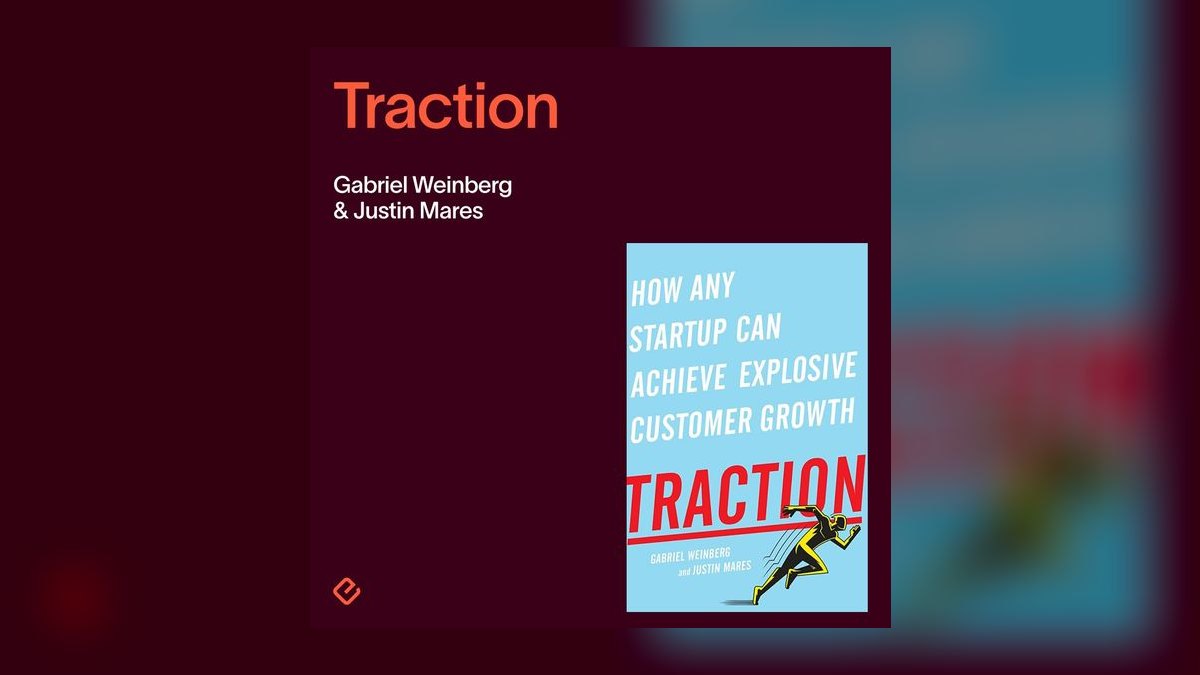
Traction by Gabriel Weinberg and Justin Mares argues that startups grow through nineteen repeatable channels, not one silver bullet. For sales leaders in 2027, the top takeaways are: test channels in parallel, measure traction before scaling spend, pick one channel to dominate, build a sales motion that matches buyer intent, and treat distribution as a product problem. Weinberg and Mares frame traction as the measurable evidence that a strategy works.
The two growth options compared: channel breadth versus channel depth
The central tension in *Traction* is whether a company should spread effort across many acquisition channels or concentrate on one. Weinberg and Mares call the first approach the "nineteen channels" mindset and the second the "one channel that works" discipline. The book's Bullseye Framework resolves this by running breadth first, then depth. For a sales leader in 2027, this maps directly onto two competing operating models: a diversified demand engine that runs paid search, outbound, partnerships, content, and events simultaneously, versus a focused engine that commits 80% of budget and headcount to a single dominant channel.
The breadth option looks attractive because it hedges risk. If paid social costs rise, outbound still fills pipeline. If a partner changes terms, events still generate leads. But breadth has a hidden cost: every channel needs its own expertise, tooling, creative, and measurement. A team running six channels badly will usually lose to a team running one channel well. The book is explicit that most startups fail not because they picked the wrong channel but because they never committed enough to any single channel to make it work.

The depth option looks risky because it concentrates exposure. But depth produces compounding advantages. A sales team that owns one channel deeply learns its economics, its conversion curves, and its failure modes. They can forecast with confidence, negotiate better vendor terms, and build repeatable playbooks. The trade-off is real: if that channel saturates or gets disrupted, the pipeline drops fast. That is why the Bullseye Framework exists — to find the right channel before committing.
In 2027, the comparison has shifted because buyer behavior has fragmented. A single buyer might discover a vendor through a podcast, validate it through a peer community, and convert through a sales-assisted trial. That means "one channel" rarely means one touchpoint. It means one primary acquisition motion with supporting touches. Sales leaders who confuse channel depth with single-touch attribution will misread their own data.

The practical comparison comes down to three questions. First, how much runway do you have to experiment? Second, how measurable is each channel within a 30-60 day window? Third, does your sales cycle allow you to attribute revenue to a specific channel? If runway is short, breadth is a luxury. If measurement is weak, depth is a guess. If the sales cycle is long, you need leading indicators, not lagging revenue.
Weinberg and Mares also distinguish between traction and growth. Traction is evidence that a channel works; growth is scaling that evidence. A sales leader who skips the traction phase and jumps to growth will burn budget on a channel that never had product-market fit behind it. The book's insistence on measuring traction before scaling is one of its most durable Takeaways for 2027, when paid acquisition costs continue to rise and boards demand capital efficiency.
How to decide between them
Deciding between breadth and depth is not a philosophical choice; it is a sequencing decision. The Bullseye Framework in *Traction* gives a concrete three-phase process that sales leaders can run as a quarterly operating cadence. Phase one is brainstorming: list every channel that could plausibly reach your buyer. Phase two is ranking: score each channel on cost, reach, time-to-signal, and fit with your sales motion. Phase three is testing: run cheap experiments on the top three, then commit to the winner.

For a 2027 sales organization, the ranking criteria matter more than the channel list. Cost per qualified opportunity, not cost per lead, should drive the ranking. Time-to-signal matters because a channel that takes nine months to show results will consume your entire experiment budget before you learn anything. Fit with your sales motion matters because a self-serve channel paired with a high-touch sales team creates friction that neither side can fix.
The decision also depends on the stage of the company. An early-stage team with a handful of reps should run breadth experiments with founder-led selling. A scaling team with a dedicated SDR function should run depth plays with clear ownership. A mature team should run a portfolio: one dominant channel, one emerging channel, and one experimental channel. This portfolio approach is the practical synthesis of the book's argument.

Weinberg and Mares emphasize that the decision should be data-driven but not paralyzed by data. Many teams over-invest in attribution tooling before they have enough volume to attribute anything. The book's advice is to use the simplest measurement that answers the question: did this channel produce customers at an acceptable cost? If the answer is unclear, the experiment was too small.
There is also a cultural dimension. Breadth cultures reward curiosity and experimentation. Depth cultures reward mastery and repetition. Sales leaders need both, but at different times. The mistake is running a depth culture while asking for breadth results, or vice versa. The book's framework gives permission to be narrow when the data supports it and to stay broad when it does not.

Finally, the decision should be revisited on a fixed schedule. Channels decay. What worked in 2024 may not work in 2027. The Bullseye Framework is not a one-time exercise; it is a recurring loop. Sales leaders who treat channel selection as a permanent decision will find themselves defending a declining channel instead of building a growing one.
Concrete numbers behind each option
The book does not prescribe exact budgets, but it does give a structure that sales leaders can translate into numbers. A typical breadth experiment runs three to five channels with 5-10% of the total acquisition budget each, leaving 50-70% in reserve for the winner. A typical depth commitment allocates 70-80% of budget and headcount to one channel, with 10-15% held for emerging channels and 10% for experiments.

In 2027 terms, consider a company with a $1M annual acquisition budget. A breadth quarter might spend $50K on paid search, $50K on outbound tooling and list building, $50K on a partner co-marketing pilot, and $50K on a content and webinar program. That leaves $800K uncommitted. If one channel produces qualified opportunities at a cost that supports the unit economics, the next quarter shifts $600-700K into that channel and reallocates the rest.
The numbers that matter most are not the budget splits but the unit economics. Cost per qualified opportunity, opportunity-to-close rate, average contract value, and payback period determine whether a channel deserves depth. A channel with a $2,000 cost per opportunity and a 20% close rate on a $30,000 contract has a $10,000 customer acquisition cost and a three-month payback. That channel deserves depth. A channel with a $500 cost per lead but a 2% close rate on the same contract has a $25,000 acquisition cost and a longer payback. That channel needs more testing, not more budget.

The book also warns against vanity metrics. Impressions, clicks, and even leads can mislead if they do not convert to revenue. Sales leaders should insist on pipeline-weighted metrics: qualified opportunities, pipeline value, and closed-won revenue by channel. In 2027, with attribution under pressure from privacy changes and multi-touch journeys, the most reliable number is often a self-reported "how did you hear about us" field combined with cohort analysis.
Another concrete number is the experiment duration. The book suggests giving each channel enough time to produce a signal, but not so much time that it consumes the budget. A practical rule is 30-60 days for paid channels and 90-120 days for content, partnerships, and community. If a channel has not produced a qualified opportunity in that window, it is a candidate for elimination.

The final number is the concentration threshold. A healthy depth strategy usually means one channel produces 50-70% of new pipeline, with the remainder spread across two or three supporting channels. If one channel produces more than 80%, the business is fragile. If no channel produces more than 30%, the business is unfocused. The Bullseye Framework aims for the middle.
Implementation details and sequencing
Implementing the Bullseye Framework as a sales leader requires more than a spreadsheet. It requires a cadence, ownership, and a willingness to kill channels that do not work. The first step is to assign an owner for each experiment. That owner is responsible for the hypothesis, the budget, the creative, the measurement, and the recommendation. Without ownership, experiments drift.
The second step is to define the hypothesis in falsifiable terms. "We believe outbound to mid-market SaaS companies will produce 20 qualified opportunities per month at a cost below $1,500 each within 60 days." That is testable. "We think outbound might work" is not. The book's emphasis on measurable traction applies directly here.

The third step is to build the measurement before the campaign. That means defining what counts as a qualified opportunity, how it will be tracked, and who will review the data. In 2027, with sales and marketing data spread across CRM, marketing automation, and billing systems, the measurement layer is often the hardest part. Sales leaders should invest in a simple dashboard that shows cost per qualified opportunity by channel, updated weekly.
The fourth step is to run the experiments in parallel but review them on a fixed cadence. A weekly standup for experiment owners, a monthly review of results, and a quarterly decision on where to commit depth. This cadence prevents the common failure mode of running experiments forever without ever committing.

The fifth step is to document the playbook when a channel wins. The playbook should include the target segment, the messaging, the sequence, the tools, the metrics, and the failure modes. This documentation is what allows the channel to scale beyond the original team. Weinberg and Mares stress that traction without a playbook is luck; traction with a playbook is a strategy.
The sixth step is to reallocate ruthlessly. When a channel wins, the budget and headcount should follow within one quarter, not one year. When a channel loses, it should be shut down or parked, not kept alive out of sunk-cost loyalty. This is the discipline that separates companies that grow from companies that stall.
Related questions
What is the Bullseye Framework in Traction?
It is a three-phase process: brainstorm all possible channels, rank them by cost and time-to-signal, then test the top three cheaply before committing to the winner. Weinberg and Mares designed it to prevent startups from scaling a channel that never worked.
Why do most startups fail at traction?
Most fail because they never commit enough to a single channel to make it work. They spread budget thinly across many channels, never reach the volume needed for a signal, and conclude that no channel works when the real problem is insufficient depth.
How does Traction apply to sales teams in 2027?
It applies as an operating cadence: run quarterly channel experiments, measure cost per qualified opportunity, commit to the winner, and build a playbook. The framework is channel-agnostic, so it works for outbound, partnerships, events, and digital demand generation.
What is the difference between traction and growth?
Traction is evidence that a channel produces customers at an acceptable cost. Growth is scaling that evidence with more budget and headcount. The book argues that scaling before traction is the most common and most expensive mistake.
FAQ
What are the nineteen channels in Traction?
Weinberg and Mares list nineteen traction channels, including viral marketing, public relations, unconventional PR, search engine marketing, social and display ads, offline ads, search engine optimization, content marketing, email marketing, engineering as marketing, targeting blogs, business development, sales, affiliate programs, existing platforms, trade shows, offline events, speaking engagements, and community building. The exact list matters less than the framework: test many, commit to one.
Is Traction still relevant in 2027?
Yes, because the framework is about process, not tactics. Specific channels rise and fall, but the discipline of testing, measuring, and committing remains. In 2027, with rising acquisition costs and fragmented buyer journeys, the book's insistence on measurable traction is more relevant than ever.
How long should a channel experiment run?
Paid channels typically need 30-60 days to produce a signal. Content, partnerships, and community channels need 90-120 days. The key is to define the signal in advance and stop when the window closes without a result.
What metrics should sales leaders track per channel?
Cost per qualified opportunity, opportunity-to-close rate, average contract value, customer acquisition cost, and payback period. Vanity metrics like impressions and clicks should be secondary. Pipeline-weighted metrics are the most reliable.
How do you know when to kill a channel?
Kill a channel when it fails to produce qualified opportunities at an acceptable cost within the predefined window. Sunk cost should not influence the decision. Park the channel if it shows promise but needs a different segment or message.
Can you run the Bullseye Framework with a small team?
Yes. A small team can run three experiments with minimal budgets and founder-led selling. The framework scales down as well as up. The constraint is time, not money, so limit the number of concurrent experiments to what the team can properly measure.
Sources
- https://tractionbook.com/
- https://www.gabrielweinberg.com/
- https://medium.com/@justinmares
- https://en.wikipedia.org/wiki/Traction_(book)
- https://www.ducttapemarketing.com/
- https://a16z.com/
- https://www.ycombinator.com/library
- https://hbr.org/
- https://www.reforge.com/
Related on PULSE
- Sales pipeline forecasting models for 2027
- How to run a channel experiment without a data team
- Building a sales playbook from scratch
- Customer acquisition cost benchmarks by industry
- Attribution in a privacy-first world
- When to hire your first sales rep
 pulse-recentThis Is Marketing by Seth Godin — Top 10 Key Takeaways for Sales Leaders in 2027
 pulse-recentContagious by Jonah Berger — Top 10 Key Takeaways for Sales Leaders in 2027
 pulse-recentMade to Stick by Chip Heath and Dan Heath — Top 10 Key Takeaways for Sales Leaders in 2027
 pulse-recentBlue Ocean Strategy by W. Chan Kim and Renee Mauborgne — Top 10 Key Takeaways for Sales Leaders in 2027
 pulse-recentPlay Bigger by Al Ramadan — Top 10 Key Takeaways for Sales Leaders in 2027
 pulse-recentThe 22 Immutable Laws of Marketing by Al Ries and Jack Trout — Top 10 Key Takeaways for Sales Leaders in 2027
 pulse-recent$100M Leads by Alex Hormozi — Top 10 Key Takeaways for Sales Leaders in 2027
 pulse-recent$100M Offers by Alex Hormozi — Top 10 Key Takeaways for Sales Leaders in 2027
 pulse-recentHacking Growth by Sean Ellis and Morgan Brown — Top 10 Key Takeaways for Sales Leaders in 2027
 pulse-recentBuilding a StoryBrand by Donald Miller — Top 10 Key Takeaways for Sales Leaders in 2027