 Pulse Reviews and Analysis
Best Nissan Leaf Model Years (Ranked)
 Curated by Kory White · Fractional CRO, CRO Syndicate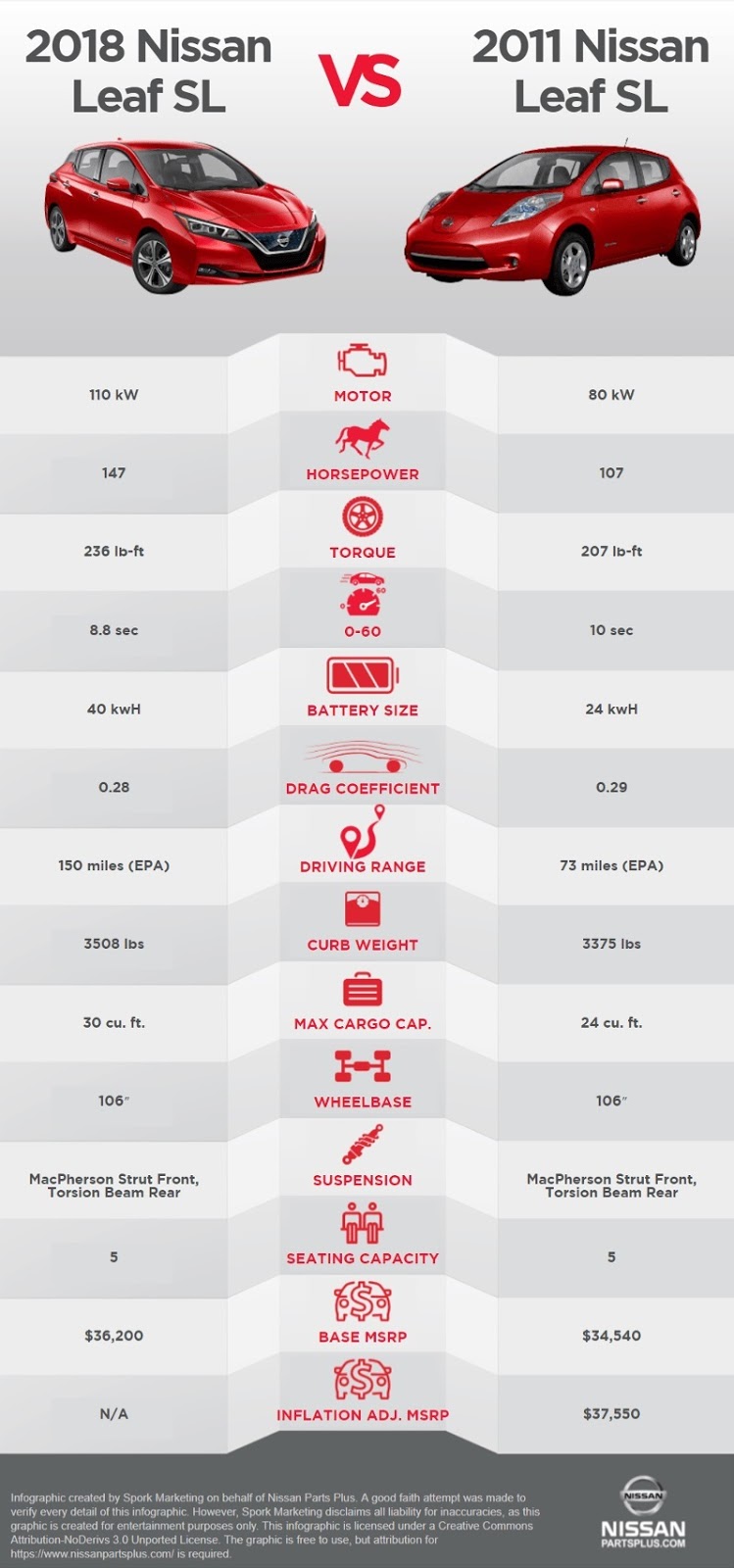
Best Nissan Leaf Model Years (Ranked)
The Nissan Leaf was the world's first mass-market electric car, launched in late 2010, and it remains one of the most affordable ways into EV ownership on the used market. Across two generations it has used air-cooled lithium-ion battery packs, which makes battery health, capacity, and climate history the single most important factors when shopping.
Early 24 kWh packs degraded quickly in hot regions, while later 40 kWh and 62 kWh packs hold up far better. The Leaf also uses the now-orphaned CHAdeMO fast-charging standard, a real consideration for road trips. This ranking covers the best Leaf model years, their battery sizes, range, the rapid-charge "Rapidgate" limitation, and where the value lies today.
Direct Answer
The best overall Nissan Leaf is the 2019-2022 Leaf Plus (62 kWh), which delivers roughly 215-226 miles of EPA range, a 160-kW motor, and the most usable real-world capability of any Leaf, with battery chemistry that ages gracefully. For shoppers focused on value, the best value is the 2018-2019 second-generation Leaf S/SV (40 kWh), offering about 150-151 miles of range, modern styling, and ProPILOT availability at a steep used discount.
Avoid the 2011-2012 24 kWh first-generation cars unless the price is very low and the battery has been verified, since those early packs are the most prone to heavy degradation, especially in hot climates.
1. 2019-2022 Leaf Plus (62 kWh, ZE1) 🏆 BEST OVERALL

The Leaf Plus is the high point of the nameplate. Its 62 kWh battery and 160-kW (214 hp) motor deliver around 215-226 miles of EPA range and noticeably stronger acceleration than the standard car. The larger pack also runs cooler relative to its capacity, so it degrades more slowly than the smaller batteries.
This is the Leaf to buy if you want one as a primary vehicle rather than a commuter.
Trims include S Plus, SV Plus, and SL Plus, with ProPILOT Assist, a 360-degree camera, and quilted leather available. The main caveat remains "Rapidgate" — repeated DC fast charges trigger heat-related throttling because the pack is air-cooled. For daily Level 2 charging, that limitation rarely matters.
2. 2018-2019 Second Generation (40 kWh, ZE1) 💎 BEST VALUE

The redesigned second-generation Leaf brought a conventional crossover-influenced shape, a 40 kWh battery, a 110-kW (147 hp) motor, and about 150-151 miles of EPA range. It introduced the e-Pedal one-pedal driving system and optional ProPILOT Assist highway driver aid.
Build quality and interior materials took a clear step up over the first generation.
The best value is a 2018-2019 S or SV bought used: prices have fallen sharply, yet the car offers genuinely usable range and modern features. The 40 kWh pack is still air-cooled, so check battery health bars and capacity, but it holds up far better than the old 24 kWh unit. For a low-cost daily EV, this is the smart pick.
3. 2020-2022 Second Generation (40 kWh)

The later 40 kWh standard Leaf carries the same 150-151 miles of range but benefits from minor running improvements, expanded standard Safety Shield 360 driver aids on many trims, and newer infotainment. These cars are typically the newest, lowest-mileage affordable Leafs you can find used.
The SV trim is the sweet spot, bundling ProPILOT Assist, alloy wheels, and a larger touchscreen. As with all 40 kWh cars, the air-cooled pack means you should still verify the battery health gauge and avoid examples that lived in extreme heat. For buyers who want the cleanest second-generation standard-range Leaf without paying Plus money, these years are an excellent compromise of price, age, and equipment.
4. 2023 Second Generation (Refreshed)

The 2023 Leaf received a styling refresh, a simplified trim lineup (S and SV Plus), and standard alloy wheels and a black grille. The 40 kWh and 62 kWh packs continued, offering roughly 149 miles and 212 miles respectively. It is the newest Leaf and therefore carries the longest remaining battery and powertrain warranty.
As the most current used option, the 2023 commands the highest prices in the lineup, but it brings the most up-to-date technology and the freshest battery. The SV Plus remains the recommended configuration for its longer range. Buyers who want a nearly new Leaf with maximum remaining warranty coverage, and who can charge at home on Level 2, will find the 2023 a low-risk choice.
5. 2016-2017 First Generation (30 kWh)

For 2016, Nissan introduced a 30 kWh battery on SV and SL trims, lifting EPA range to about 107 miles from the earlier 84-mile figure. This was a meaningful upgrade that made the first-generation Leaf far more usable for daily driving and the occasional longer trip.
However, the 30 kWh "lizard" packs developed a reputation for faster-than-expected capacity loss, prompting a battery-related software and warranty response from Nissan. Some affected cars received replacement packs under warranty. Buy only with a documented battery health check and ideally evidence of a strong State of Health reading.
When the pack is healthy, a 30 kWh Leaf is a capable, very affordable used commuter EV with modern-enough range.
6. 2013-2015 First Generation (24 kWh, US-built)
From 2013, US Leaf production moved to Smyrna, Tennessee, and Nissan added a more efficient heat-pump cabin heater on SV and SL trims, improving cold-weather range. The 24 kWh pack delivered around 84 miles of EPA range, and a new entry S trim lowered the price of admission.
These years also brought the "lizard" battery (2015), a revised chemistry meant to better resist heat-related degradation than the very earliest cells. They remain budget commuter cars best suited to short, predictable daily routes. Always verify the battery capacity bars and prefer cars from cooler climates.
As cheap, no-frills city EVs, healthy 2013-2015 Leafs can make sense for the right low-mileage use case.
7. 2019-2022 Leaf SL Plus (Top-trim 62 kWh)

The SL Plus is the fully loaded version of the long-range Leaf, pairing the 62 kWh battery with leather seating, a Bose audio system, a 360-degree camera, and standard ProPILOT Assist. It shares the same 215-226 mile range and strong 214-hp motor as other Plus models.
This trim makes sense for buyers who want maximum equipment and comfort in a Leaf and can find one at a reasonable used price. It carries the same air-cooled pack and Rapidgate fast-charging caveat as every other Leaf, so it is best for home charging. As a well-equipped, long-range, affordable used EV, a clean SL Plus delivers the most complete Leaf ownership experience short of a newer model.
8. 2018-2019 Leaf SV (40 kWh, ProPILOT)

The SV is the most sensible second-generation standard-range trim. It adds ProPILOT Assist, a 7-inch touchscreen with Apple CarPlay and Android Auto, alloy wheels, and a more complete feature set than the base S, while keeping the 40 kWh pack's 150-151 miles of range.
Used examples are plentiful and affordable, and the SV's blend of technology and price makes it a strong everyday commuter. As with all 40 kWh cars, confirm the battery health gauge and service history. The e-Pedal one-pedal mode is genuinely useful in stop-and-go traffic.
For a buyer who wants modern driver aids without stepping up to the pricier Plus models, the 2018-2019 SV is a value-led standout.
9. 2011-2012 First Generation (24 kWh, Japan-built)
The original 2011-2012 Leaf was a landmark car as the first mass-produced EV, but it is the riskiest used buy today. The early 24 kWh Japan-built packs lacked the later "lizard" heat-resistant chemistry and degraded fastest, particularly in hot states like Arizona and Texas.
EPA range was just 73 miles when new and is often much lower now.
These cars are extremely cheap, which is their main appeal. Treat any survivor as a short-range city commuter and buy only after confirming the remaining battery capacity bars and a real-world range test. For most shoppers, spending a little more on a 30 kWh or, better, a 40 kWh car is well worth the added range and durability.
10. 2012-2017 Leaf (CHAdeMO Quick-Charge Considerations)

A practical cross-year caution: most Leafs use the CHAdeMO DC fast-charging standard, which is being phased out across the US in favor of CCS and Tesla's NACS. On a first-generation Leaf, the quick-charge port was optional on lower trims, so confirm the car you are considering even has one.
For buyers who fast charge regularly, the shrinking CHAdeMO network is a genuine downside, and combined with the air-cooled pack's Rapidgate throttling, the Leaf is best treated as a home-charged daily driver rather than a road-tripper. Verify port presence, test a fast-charge session if possible, and plan charging around home or workplace Level 2 access for the best ownership experience.
What to Watch For When Buying
The single most important step when buying a used Leaf is to check battery State of Health (SOH) and the capacity bars on the dash, since every Leaf uses an air-cooled pack with no liquid thermal management.
- Climate history matters. Cars from hot regions (Arizona, Nevada, Texas) typically show more degradation. Prefer cooler-climate examples.
- Verify the battery health gauge. A full pack shows 12 capacity bars; missing bars indicate meaningful loss. Use a tool like LeafSpy to read the true SOH percentage.
- Confirm the quick-charge port. Many base first-generation cars omitted the CHAdeMO port; check before buying if you need DC fast charging.
- Understand "Rapidgate." Repeated DC fast charges throttle speed as the pack heats; this is normal Leaf behavior, not a fault.
- Check warranty coverage. Nissan's battery capacity warranty covers loss below a set bar threshold for a limited period/mileage; confirm what remains.
- Mind the CHAdeMO future. The standard is being phased out in the US, so road-trip charging will get harder over time.
How to Choose
Match the Leaf to how you will actually use it. For the best blend of real range, performance, and battery durability, the 2019-2022 Leaf Plus (62 kWh) is the clear answer and the only Leaf comfortable as a household's main car. For the best value with modern features, a 2018-2019 40 kWh S or SV delivers usable range and ProPILOT at a low used price.
Tight budgets and short commutes can consider a 2016-2017 30 kWh car, but only with a verified healthy battery. Avoid the 2011-2012 24 kWh cars unless they are very cheap and battery-checked. In every case, prioritize battery State of Health and cooler-climate history over a low sticker price, and plan on home Level 2 charging.
FAQ
Which Nissan Leaf years should I avoid? Be cautious with the 2011-2012 24 kWh first-generation cars, which used early battery chemistry prone to heavy degradation, and verify the 2016-2017 30 kWh packs carefully, as some lost capacity faster than expected. The 40 kWh and 62 kWh second-generation cars are the most dependable.
How long does a Nissan Leaf battery last? It depends heavily on climate and charging habits. Air-cooled Leaf packs degrade faster in hot regions and with frequent DC fast charging. Many 40 kWh and 62 kWh cars retain strong capacity after several years, while early 24 kWh packs can lose significant range.
Always check State of Health before buying.
What is "Rapidgate" on the Nissan Leaf? Rapidgate is the Leaf's tendency to throttle DC fast-charging speed when the battery heats up during repeated sessions, because the pack is air-cooled with no liquid thermal management. It mainly affects long road trips with back-to-back fast charges, not daily home charging.
Which Leaf is best for a household's only car? The 2019-2022 Leaf Plus (62 kWh) with roughly 215-226 miles of range is the most capable choice and the only Leaf with enough range to serve comfortably as a primary vehicle, provided you have home Level 2 charging.
Bottom Line
The Nissan Leaf is one of the cheapest entry points into EV ownership, but because every Leaf uses an air-cooled battery, model-year and battery-health choice is critical. The 2019-2022 Leaf Plus (62 kWh) is the best overall pick, with real range and durable chemistry, while the 2018-2019 40 kWh Leaf offers the best value.
Skip the early 24 kWh cars unless verified and very cheap, always check State of Health, favor cooler-climate examples, and plan on home charging. Chosen carefully, the Leaf is an affordable, practical commuter EV.
Sources
- Nissan USA official Leaf model history, specifications, and battery details, nissanusa.com
- EPA Fuel Economy electric range ratings for Nissan Leaf by model year, fueleconomy.gov
- NHTSA recall and complaint database for the Nissan Leaf, nhtsa.gov
- Edmunds Nissan Leaf generation reviews and used-car appraisals, edmunds.com
- Kelley Blue Book Nissan Leaf used values by model year, kbb.com
- Car and Driver Nissan Leaf reviews and range testing, caranddriver.com
- Wikipedia Nissan Leaf generations, battery sizes, and technical specifications, en.wikipedia.org