
How much does a 2027 Ford Maverick hybrid cost after destination fees?
 PULSEKNOWLEDGE LIBRARY
A 2027 Ford Maverick hybrid's after-destination cost equals the trim's base MSRP plus Ford's flat nationwide destination and delivery charge, added together before tax, title, or dealer fees. Pull both published figures from Ford's build-and-price tool for your exact trim and drivetrain, sum them, and that total is the manufacturer's defensible baseline.
The outcome you should expect
The number you should walk away with is a single, two-line sum — not a range, not an average, and not a "what people are paying" figure. When you configure a 2027 Ford Maverick hybrid correctly, the configurator hands you a base MSRP for the trim you selected, an itemized list of options and packages with their own prices, and one separate line labeled destination and delivery. The after-destination price is base MSRP plus options plus that destination line. Nothing else belongs in it. Every buyer who follows the same procedure on the same trim will get the same total, which is precisely what makes it useful.
That uniformity is the whole point. Dealer quotes vary wildly because they blend discretionary charges into the headline number, and third-party aggregators publish regional transaction averages that move week to week with local inventory. The manufacturer baseline does not move. It is set by Ford, published nationally, and restated on the federally required window label of every truck on every lot in the country. When you anchor to it, you convert a fuzzy question — "how much is a Maverick hybrid?" — into an arithmetic statement you can put in writing and hold a dealer to.
Expect the number to differ meaningfully across trims. The Maverick line has historically spanned an entry work-oriented trim through mid and higher-content trims, and the spread between the bottom and top of a compact pickup ladder is typically several thousand dollars before options. Layer in a drivetrain choice and a package or two and the gap between two trucks both honestly described as "a 2027 Maverick hybrid" can be substantial. This is why the single most common source of confusion in Maverick pricing conversations is not the destination fee at all — it is two people comparing different configurations and assuming they are comparing the same truck.
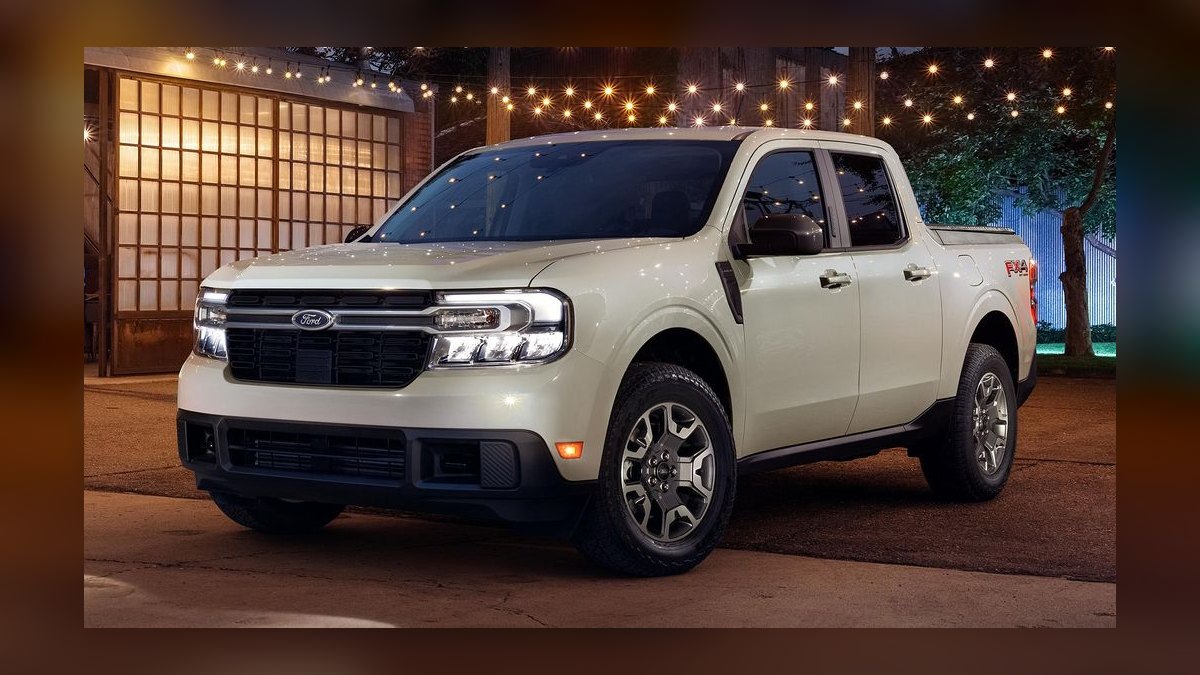
Also expect the after-destination figure to sit noticeably below whatever a dealer's first written quote says. That gap is not a sign anyone is cheating you; it is the structural difference between the manufacturer's baseline and an out-the-door number that includes sales tax, title, registration, documentation fees, and any dealer-installed accessories. A realistic mental model: the after-destination price is the floor of the conversation, the out-the-door quote is the ceiling of the conversation, and your negotiation happens entirely in the space between them. Knowing the floor precisely is what lets you evaluate the ceiling.
One more expectation worth setting: this number is perishable. Automakers routinely adjust MSRP and destination charges at model-year rollover and occasionally mid-cycle, and available incentives change monthly. A configured summary you saved in January is a historical document by June. Treat every baseline you calculate as a dated snapshot, note the date on it, and re-pull before you sign anything. That single habit prevents the most avoidable pricing argument at the dealership — the one where you are quoting last quarter's figure at this quarter's truck.
What drives that outcome
Three inputs, and only three, determine the after-destination number: trim, configuration, and the model-year destination charge. Understanding what each one actually does clarifies why quotes diverge.
Trim sets the base MSRP. The Maverick's ladder runs from a value-oriented work trim through progressively better-equipped versions, and each rung carries its own published base price. Moving up a trim buys you standard equipment — upgraded seating surfaces, larger displays, driver-assist bundles, exterior trim — that would otherwise be optional or unavailable. The base MSRP is the single largest driver of your total, dwarfing destination by an order of magnitude, which is why trim selection deserves far more of your attention than the freight line ever will.

Configuration covers drivetrain and options. For the Maverick specifically, the hybrid powertrain's relationship to the standard engine has shifted across model years — in some years it was the standard, no-cost powertrain; in others it carried a surcharge or was tied to particular trims. All-wheel drive, where offered with the hybrid, carries its own cost. Then come packages: towing preparation, bed utility bundles, appearance packages, upgraded audio, sunroofs, premium paint. Each appears as its own itemized line above the destination charge on both the configurator summary and the window sticker. Options are the second-largest driver and, unlike destination, they are entirely within your control.
Destination and delivery is the flat freight charge. Ford sets one figure per model line per model year and applies it nationwide, identically, whether the truck ships two hundred miles or two thousand. It is disclosed as its own line on the Monroney label because federal labeling rules require the base price and the delivery charge to be shown distinctly. It typically climbs modestly year over year as logistics costs rise, which is exactly why a destination figure someone quotes you from a 2025 or 2026 Maverick is not automatically the 2027 figure.
Notice where the diagram splits. Everything above the after-destination baseline is manufacturer-controlled and identical at every Ford dealer in the country. Everything below it is transaction-specific: taxes set by your state and county, registration set by your DMV, documentation fees set by the dealer within whatever cap your state imposes, and accessories the dealer chose to install. Confusing the two halves is the single most expensive mistake a buyer makes, because it leads people to negotiate against the wrong number — arguing over freight, which nobody will move, instead of over the discretionary stack, where all the real room lives.

There is a practical discipline that follows from this structure: write each input on its own line before you add anything. Trim MSRP on line one. Each option or package on its own line. Drivetrain delta on its own line if applicable. Destination on the last line. Then draw the total. When your baseline is itemized this way, any dealer quote that disagrees with it has to disagree on a *named* line — and a named line is one you can question specifically. Buyers who collapse everything into a single number lose that traceability and end up arguing about a lump sum, which is an argument you cannot win because there is nothing concrete to point at.
Benchmarks and realistic ranges
Rather than memorize a figure that will be stale within months, calibrate against the structural benchmarks that hold across model years.
Destination as a share of total. For compact and mid-size pickups, the destination and delivery charge is typically a low-single-digit percentage of the vehicle's base MSRP — roughly comparable in magnitude to a modest option package, not to a trim jump. Practically, this means destination will move your total by a meaningful but not decisive amount. If someone tells you the freight charge is the reason a quote is thousands above what you expected, the arithmetic does not support them; look at the trim, the options, or the addendum sticker instead.
Trim spread. Across a compact pickup lineup, the base-to-top MSRP spread is usually several thousand dollars before any options. That spread is where your budget decision actually lives. A useful exercise: configure the entry trim with the options you genuinely need and configure the mid trim in base form, then compare after-destination totals. Buyers frequently discover that a well-optioned lower trim and a stripped higher trim land within a few hundred dollars of each other, at which point the decision becomes about which specific features you get rather than about price at all.

Option stack. Packages on a compact truck typically run from a few hundred dollars for appearance or convenience items up to a couple of thousand for towing, technology, or drivetrain content. It is entirely normal for a buyer to add two to four thousand dollars of options to a base configuration without feeling like they went overboard — which is why the after-destination figure for "a 2027 Maverick hybrid" can legitimately span a wide band depending on how the truck is built.
Hybrid versus gas delta. Because Ford's treatment of the hybrid powertrain has varied by model year and trim, the only honest benchmark is: check the 2027 configurator directly, comparing the hybrid and non-hybrid versions of the *same* trim with the *same* options. Do not carry forward an assumption from an earlier model year, and do not accept a secondhand claim about the premium. Configure both, screenshot both, compare the after-destination totals.
Gap between baseline and out-the-door. Sales tax alone commonly adds several percent of the purchase price depending on your state; title and registration add a smaller fixed amount; documentation fees vary enormously by state, from tightly capped low-double-digit dollars in some jurisdictions to many hundreds in others. A reasonable planning assumption is that your out-the-door number will exceed your after-destination baseline by a noticeable margin driven mostly by tax. Budget for that gap explicitly rather than discovering it in the finance office.

How to build your own live benchmark. Configure three versions of the truck in a single sitting: your realistic target build, a stripped version of the same trim, and the next trim up in base form. Record the after-destination total for each with the date. Those three numbers give you a personal price band, and any dealer quote can be immediately placed against it. This takes fifteen minutes and is worth more than any figure you could look up, because it is specific to the truck you actually want.
Risks, edge cases, and failure modes
The second sticker. The most common trap is the supplemental addendum sticker placed beside the Monroney label. It looks official, it uses similar formatting, and it lists market adjustments, protection packages, nitrogen tire fills, appearance coatings, and dealer-installed accessories. None of it is part of the manufacturer's after-destination baseline. Train yourself to identify the federally required Monroney — it carries the base MSRP, itemized factory options, the destination and delivery line, and the EPA fuel-economy panel — and treat anything on a second label as a menu, not a price.
Assuming destination is negotiable. It is not, in any meaningful sense. Ford bills the dealer for freight directly, the charge is uniform nationwide, and you cannot avoid it by taking factory delivery, by ordering rather than buying from stock, or by paying cash. Buyers who spend their negotiating capital attacking the freight line arrive at the discretionary items exhausted and concede there instead. Reverse the order: accept destination as fixed, and spend everything you have on the lines above it that are actually discretionary.
Comparing mismatched configurations. Two quotes that both say "2027 Maverick hybrid" can differ by thousands purely on trim, drivetrain, and packages. Before comparing any two numbers, confirm the trim name, the drivetrain, and the full option list on both. If a dealer will not give you an itemized breakdown, that itself is information.

Carrying forward a prior model year's destination figure. Destination charges generally rise year over year. Using a 2026 figure for a 2027 truck produces a baseline that is quietly wrong, and being wrong in the dealer's favor by accident is not a position you want to negotiate from.
Treating an incentive as part of the baseline. Rebates, financing offers, and regional promotions sit outside the manufacturer's after-destination construct and change monthly. Fold them in only at the out-the-door stage, and only after confirming eligibility — many are conditional on financing through a captive lender, on membership, on a trade-in, or on the specific vehicle being in dealer stock.
Confusing a lease or finance headline with a purchase price. Advertised monthly payments encode a down payment, a term, a mileage allowance, and a money factor. They tell you almost nothing about the after-destination price. Never let an advertised payment substitute for the configured baseline.

Stale configurator data. A configured summary is a snapshot. If weeks have passed, re-pull it before you sign. This is a thirty-second task that prevents the most avoidable version of a pricing dispute.
Hybrid availability by trim. Do not assume the hybrid powertrain is offered on every trim or in every drivetrain combination for 2027. Availability has varied across the Maverick's history. Confirm in the configurator which trims offer the hybrid and under what configuration cost, because a build you assumed was possible may simply not be orderable — which changes your realistic price band entirely.
Allocation and ordering reality. Popular compact trucks have periodically been supply-constrained, and when supply tightens, dealer addenda expand. A tight market does not change the after-destination baseline by a dollar, but it changes how much of the discretionary stack a dealer is willing to drop. Knowing the baseline lets you recognize instantly when a market has moved, because the gap between baseline and quote widens visibly.
A practical rollout plan
Here is the sequence, start to signature.

Step one: define the truck. Write down the exact trim, the drivetrain, and every package you want, before you look at a single price. Deciding what you want while looking at prices is how people talk themselves into content they did not need.
Step two: configure it on Ford's site. Use the official build-and-price tool for the 2027 model year. Build exactly the truck from step one. Do not stop at the marketing "starting at" figure on the model landing page — that is a base trim in base form and will not match your build.
Step three: capture the itemized summary. Screenshot or print the configuration summary showing base MSRP, each option with its price, and the destination and delivery line as a distinct entry. Write the date on it. This document is your negotiating anchor.

Step four: compute the baseline. Add base MSRP plus options plus destination. That sum is your after-destination number. Keep it separate from every other figure you will encounter.
Step five: build an out-the-door estimate. Layer your state and local sales tax, title, registration, and a realistic documentation fee onto the baseline. This is the number to compare against dealer quotes — and the number to have in mind when you set your walk-away limit.
Step six: cross-check. Look at a reputable third-party research site on the same day to see current incentives and any regional programs. Use it as corroboration, never as the primary source; aggregators can lag official manufacturer updates.
Step seven: verify against the physical truck. When you are looking at a specific vehicle, read its Monroney label line by line against your configured summary. Differences will be either legitimate configuration variance — this truck has options you did not select, visible line by line — or dealer addenda on a separate sticker.

Step eight: negotiate the discretionary stack only. Take the addendum sticker and the dealer's fee sheet and go item by item. Ask what each line is, whether it can be removed, and what it costs to remove. Leave the destination line alone.
Step nine: re-pull before signing. If more than a few weeks have passed since step two, re-run the configurator and confirm nothing has moved.
Run this the same way every time and the process becomes about ten minutes of work per dealer, which is what makes shopping three dealers realistic instead of exhausting.
Related questions
Is the destination fee negotiable on a Ford Maverick?
Generally no. Destination is a manufacturer-set freight charge billed to the dealer and disclosed separately on the window sticker, so reputable dealers will not waive it. Your negotiating room lives in dealer-added fees, accessories, and market adjustments layered above the manufacturer baseline.
Does the Maverick hybrid cost more than the gas version?
It depends on model year and trim. In some years the hybrid has been the standard engine at no extra cost; in others it carried a surcharge or was limited to certain trims. Compare both configurations of the same trim directly in Ford's 2027 configurator.
What is the difference between MSRP and out-the-door price?
MSRP plus options plus destination is the manufacturer baseline. Out-the-door adds sales tax, title, registration, and dealer fees — the full amount leaving your account. Always request an itemized out-the-door quote rather than accepting a single headline figure.
Where can I find the official 2027 Maverick price?
Ford's build-and-price configurator and the Monroney window sticker on the specific vehicle are the authoritative sources. Third-party research sites are useful for cross-checking incentives and market conditions but can lag official manufacturer pricing updates.
Do AWD and options change the after-destination price?
Yes. All-wheel drive, higher trims, and option packages all raise the subtotal before the destination charge is added. Name your exact trim, drivetrain, and packages whenever comparing quotes so you are always comparing identical builds.
FAQ
Is the destination charge the same everywhere in the country?
Yes. Ford sets a single nationwide destination and delivery charge per model line for a given model year, so it does not vary with shipping distance or dealer location. That flat, uniform structure is exactly why it is treated as part of the manufacturer baseline rather than as a regional or negotiable line item.
Why is destination itemized separately from MSRP?
Federal vehicle labeling rules require the base price and the delivery charge to appear as distinct entries on the Monroney window sticker so buyers can see each clearly. The separation is a transparency requirement, not a marketing tactic — it lets you verify precisely what portion of the price is the vehicle and what portion is freight.
Does the after-destination price include sales tax?
No. Sales tax, title, and registration are calculated at the point of sale based on your state and locality and sit above the after-destination baseline. To know your true final cost you need an out-the-door quote that layers those items onto the manufacturer baseline explicitly.
Can a dealer add charges on top of destination?
Yes, and most do. Documentation fees, dealer-installed accessories, protection packages, and market adjustments are dealer-originated and entirely separate from the manufacturer's freight charge. Many are negotiable or removable, which is why isolating them from the baseline is where your leverage comes from.
How often does the destination charge change?
Typically once per model year, though manufacturers can revise it mid-cycle as logistics costs shift. That is why a figure quoted from an earlier Maverick model year may not match the 2027 charge — always confirm against Ford's current configurator or a current window sticker before relying on it.
Should I choose the hybrid purely for fuel savings?
Not on fuel alone. Take whatever purchase-price difference the 2027 configurator shows between the hybrid and gas builds you actually want, divide it by your estimated annual fuel savings, and compare that payback period against how long you plan to keep the truck. Insurance, maintenance, and resale value belong in the same calculation.
Sources
- Ford — Maverick model page and build & price
- FTC Consumer Advice — Buying a New Car
- Consumer Financial Protection Bureau — Auto Loans
- NHTSA — Vehicle labeling and safety information
- U.S. Department of Energy / EPA — fueleconomy.gov
- Kelley Blue Book — new car pricing research
- Edmunds — True Cost to Own
- Cars.com — new vehicle research
- Consumer Reports — car buying guides
Related on PULSE
- [How much does a 2027 Toyota Camry LE cost after destination fees?](/knowledge/ca1106)
- [Best Ford Maverick Model Years (Ranked) in 2027](/knowledge/ca0402)
- [How much does Cars cost in 2027?](/knowledge/ca1102)
- [What is a Monroney sticker and how do you read it?](/knowledge/ca1103)
- [MSRP vs out-the-door price: what actually changes?](/knowledge/ca1104)
 pulse-carsTop 10 Hybrid SUVs for 2027 — Best Overall + Best Value
 pulse-carsHow much does a 2027 Toyota Camry LE cost after destination fees?
 pulse-carsWhat are the most common mistakes in Cars in 2027?
 pulse-carsWhat should you know before investing in Cars in 2027?
 pulse-carsHow do you get started with Cars in 2027?
 pulse-carsTop 10 best Cars options in 2027
 pulse-carsHow much does Cars cost in 2027?
 pulse-carsWhat is the best way to approach Cars in 2027?
 pulse-carsIs Cars worth it in 2027?
 pulse-carsTop 10 Cars strategies for 2027