 Pulse Reviews and Analysis
How do you coach reps to ask better discovery questions?
 Curated by Kory White · Fractional CRO, CRO Syndicate
Direct Answer
You coach reps to ask better discovery questions by separating the question itself from the call around it and drilling the questions to mastery. Stop reviewing whole calls in the abstract and start coaching the specific questions a rep asked, didn't ask, and should have asked next.
The core move: build a shared question bank organized by purpose (situation, problem, impact, vision), then run weekly micro-drills where the rep practices layered questioning — answering "and then what?" three levels deep — until open-ended, consequence-seeking questions become reflex.
Most reps don't have a question problem; they have a *premature-pitch* problem, and the fix is teaching them to stay in the buyer's world one question longer. This matters more in 2027 because buying committees are larger and AI-summarized calls reward reps whose questions surface real business impact, not feature interest.
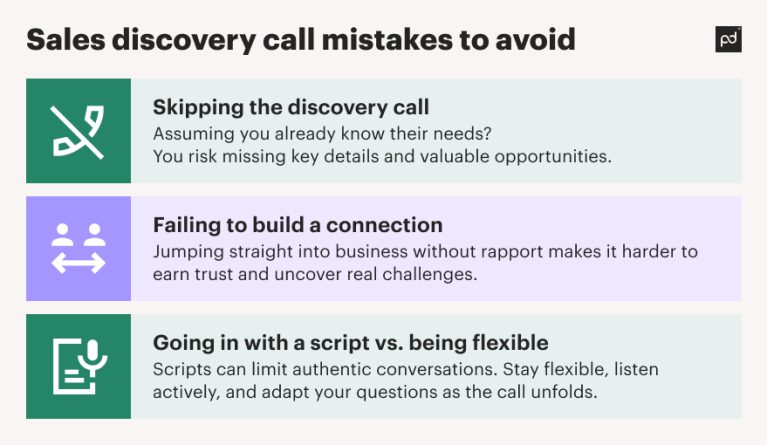
Why This Happens — Diagnose Before You Coach
Bad discovery questions are a symptom, not a root cause. Before you script a single drill, find out *why* the rep's questions are weak. There are four common causes and they need four different responses.
Skill — the rep doesn't know what a great question sounds like. They ask closed, leading, or feature-fishing questions ("Are you happy with your current vendor?") because no one ever taught them the difference between a situation question and an impact question. This is the most coachable cause.
Will — the rep knows better but rushes. They're anxious about silence, eager to pitch, or chasing the demo because that's where they feel competent. The questions are shallow because they're *uncomfortable staying in discovery*. You coach the mindset, not the script.
Knowledge — the rep doesn't understand the buyer's business well enough to ask a smart question. You can't ask a sharp impact question about a CFO's quarter-close pain if you don't know how quarter-close works. This is enablement and industry training, not call coaching.
System — the rep is forced into bad discovery by a broken process: a 15-minute "discovery" slot, a qualification form that demands BANT answers in order, or a comp plan that rewards demos booked. No amount of role-play fixes a structural incentive.
Run the diagnosis on a real call before your next 1:1. The honest answer is usually skill plus will — they were never taught, and they rush. Knowledge and system gaps are real but rarer, and coaching role-play won't touch them.
The Coaching Conversation
Pick ONE recent recorded call. Open with the rep's self-assessment, then steer to the questions. Use the GROW model (Goal, Reality, Options, Will) so the rep does the thinking.
Goal — set the focus on questions, not the whole call.
"Today I only want to look at your discovery questions on the Acme call — nothing else. By the end I want you to walk out with three questions you'll add to your next call. Fair?"
Reality — make them hear their own questions. Play the discovery portion. Then ask:
"How many open-ended questions did you ask before you mentioned our product?" "When they said 'reporting is a pain,' what did you ask next?" "Where could you have asked 'and what does that cost you?' and didn't?"
The goal is for the rep to *notice the gap themselves*. Reps defend questions they didn't realize were weak — let the recording do the arguing.
Options — teach the question types with a real example. Give them the four-layer question bank out loud, tied to the call:
- Situation: "Walk me through how your team handles renewals today, start to finish." (Sets context — ask few of these; 2027 buyers resent reps who Google nothing.)
- Problem: "Where in that process does it break down most often?"
- Impact / consequence: "When it breaks, who feels it and what does it cost you — in hours, dollars, or deals?" This is the question reps skip, and it's the one that creates urgency.
- Vision / payoff: "If that disappeared, what would your team do with the time?"
This is SPIN selling's spine (Situation, Problem, Implication, Need-payoff) made conversational. Name it — reps respect that you're teaching a real method, not a vibe.
Then teach layered questioning — the single highest-leverage habit:
"Whatever they answer, your next question is 'and then what?' or 'what does that lead to?' — three layers deep before you move on. Surface answer, business answer, personal answer."
Will — lock the commitment.
"What two questions will you add to your next three calls, and how will I know you did?"
Have them write the questions in their own words and drop them in your shared doc. A question they wrote sticks; a question you assigned evaporates.
The Coaching Plan / Cadence
One conversation doesn't rewire a habit. Run a tight weekly loop and a 30/60/90 build.
- Days 1–30: Teach the four question types and the question bank. Review one call's discovery section each week. Target: rep can name what type each of their questions was.
- Days 31–60: Drill layered questioning. Weekly role-play plus one live call you sit in on. Target: three open-ended questions before any pitch, one impact question per call.
- Days 61–90: Self-coaching. Rep reviews their own Gong or Chorus call, marks their best and worst question, brings it to the 1:1. Target: the rep coaches themselves and you just calibrate.
Keep the loop weekly and small. A 20-minute session on three questions beats a 60-minute call autopsy every time, because the rep can actually act on three things by Friday.
Drills & Role-Play
- The "and then what?" drill. You play the buyer. Give one pain. The rep must ask five consecutive follow-ups, each going deeper, no pitching allowed. Reps who break and pitch start over. Two minutes, brutal, effective.
- Question-type sorting. Pull 10 questions from the rep's last call. Have them label each: situation, problem, impact, vision, or "not a real question." Most reps discover 7 of 10 were situation or closed questions.
- Silence drill. Rep asks an impact question, then must stay quiet for a full five seconds. Reps fill silence with a softer follow-up or a pitch; this trains them to let the buyer think. Borrow the discipline from Sandler's "no rushing" rule.
- Steal-the-question library. Each week the rep pulls one great question from a Gong call of a top performer and uses it. Builds the bank from real wins, not theory.
- Reverse role-play. Rep plays the buyer, you play the rep, deliberately asking weak questions. The rep diagnoses *you*. Teaching the skill cements it.
What to Measure
Coach the leading indicators — they move weeks before quota does.
- Open-ended questions per discovery call (pull from Gong/Chorus transcripts): trend up from a baseline.
- Talk-to-listen ratio: strong discovery sits near 43/57 rep-to-buyer per Gong Labs call data; falling rep talk-time is a green flag.
- Impact questions per call: at least one cost/consequence question. This is the leading indicator of created urgency.
- Longest monologue by the buyer: great questions make buyers talk in paragraphs, not sentences.
- Discovery-to-next-step conversion: the lagging proof — better questions earn more committed next steps.
- Forecast accuracy / stage-2 win rate: over a quarter, deals with strong discovery push and close cleaner.
Track behavior change, not just outcomes. If questions-per-call is up and talk ratio is down, the coaching is working even before the win rate confirms it.
Common Mistakes Managers Make
- Coaching the deal, not the skill. You tell the rep "ask about budget on Acme" and the deal moves — but the rep learned nothing transferable. Coach the *question habit* so it shows up on the next 30 deals.
- Giving them your questions instead of building theirs. A scripted question read robotically lands worse than a clumsy question the rep owns. Help them write it in their voice.
- Rescuing. When the rep stumbles in role-play, managers jump in with the answer. Sit in the silence; let them find it.
- One-size coaching. A will problem and a skill problem look identical on the call and need opposite responses. Diagnose first.
- No follow-through. A great 1:1 with no checkpoint is entertainment. Always end with "how will I know you did it?" and actually check the next call.
- Mistaking more questions for better questions. Twelve situation questions is an interrogation, not discovery. Quality and depth beat volume.
FAQ
How many discovery questions should a rep ask on a call? There's no magic number — depth beats count. A strong discovery call often has 4–6 *layered* lines of questioning, each going three deep, rather than 20 disconnected questions. Coach the rep to go deeper on fewer threads.
Gong Labs call research consistently ties higher buyer talk-time, not question count, to won deals.
My rep asks questions but they're all closed/leading. How do I fix that fast? Run the question-type sorting drill on their last call so they *see* the pattern, then give them three open-ended replacements they write themselves. The fastest unlock is teaching the opener "Walk me through…" and the follow-up "and then what?" — those two phrases convert most closed questioners in a week.
How is coaching discovery questions different from coaching the whole call? Whole-call coaching tries to fix everything and fixes nothing. Question coaching isolates one transferable skill — the questions asked, skipped, and missed — and drills it to reflex. It's narrower, faster to act on, and compounds across every future deal.
What if the rep knows the questions but still rushes to pitch? That's a will or mindset gap, not a skill gap, and role-play won't fix it alone. Coach the discomfort directly: run the silence drill, reframe discovery as the rep's competitive moat, and reward staying in the buyer's world in your 1:1 language.
Praise the discipline, not just the deal.
Can AI tools coach discovery questions for me? AI call tools like Gong, Chorus, and Clari are excellent at *surfacing* the data — question count, talk ratio, topics covered — and flagging calls to review. They don't replace the human 1:1 where you build the rep's judgment and confidence.
Use AI to find the coachable moment; you still do the coaching.
When is bad discovery NOT a coaching problem? When the process forces it — a 15-minute discovery slot, a rigid BANT form, or a comp plan that rewards demos booked over deals qualified. Fix the system first. Also, if a rep can't grasp question logic after a focused 60-day plan, that may be a hiring-fit issue, not a coaching one.
Bottom Line
Reps ask weak discovery questions because they were never taught the four question types and they rush past discovery to pitch. The one move that fixes it: isolate the questions themselves, build a shared bank organized by purpose, and drill layered questioning weekly until "and then what?" becomes reflex.
Diagnose skill versus will versus knowledge versus system before you coach, measure questions-per-call and talk ratio as your leading indicators, and never give a rep a question they didn't write in their own voice.
Sources
- Gong Labs — Sales Discovery Call Research
- RAIN Group — Effective Sales Discovery Questions
- Harvard Business Review — The Surprising Power of Questions
- SPIN Selling — Neil Rackham (Huthwaite)
- Sandler — Asking Better Sales Questions
- Sales Hacker — Discovery Questions That Work
- Winning by Design — Discovery Framework
- The GROW Coaching Model
*Sales coaching for discovery questions — how to coach reps to ask better discovery questions, sales manager coaching guide, rep discovery questioning framework, and a discovery coaching playbook for 2027.*