 Pulse Reviews and Analysis
How do you coach reps to ask better questions using call data?
 Curated by Kory White · Fractional CRO, CRO Syndicate
Direct Answer
Coach question quality by making the call recording the coaching unit, not the rep's memory. Pull the actual transcript from Gong or Chorus, count the questions the rep asked, sort them into open vs. Closed, and put that data in front of the rep before you say a word.
Gong Labs call research consistently shows that top performers ask more — and more diverse — questions, with the strongest discovery calls landing in roughly the 11–14 question range and weighting heavily toward open-ended, problem-centered questions. The move is to set a question scorecard (count, open-vs-closed ratio, talk-track tie-ins), review one real call per week against it, and have the rep self-diagnose from the data before you coach.
This is a skill that compounds: better questions surface pain, build the business case, and shorten 2027's longer, committee-driven cycles.
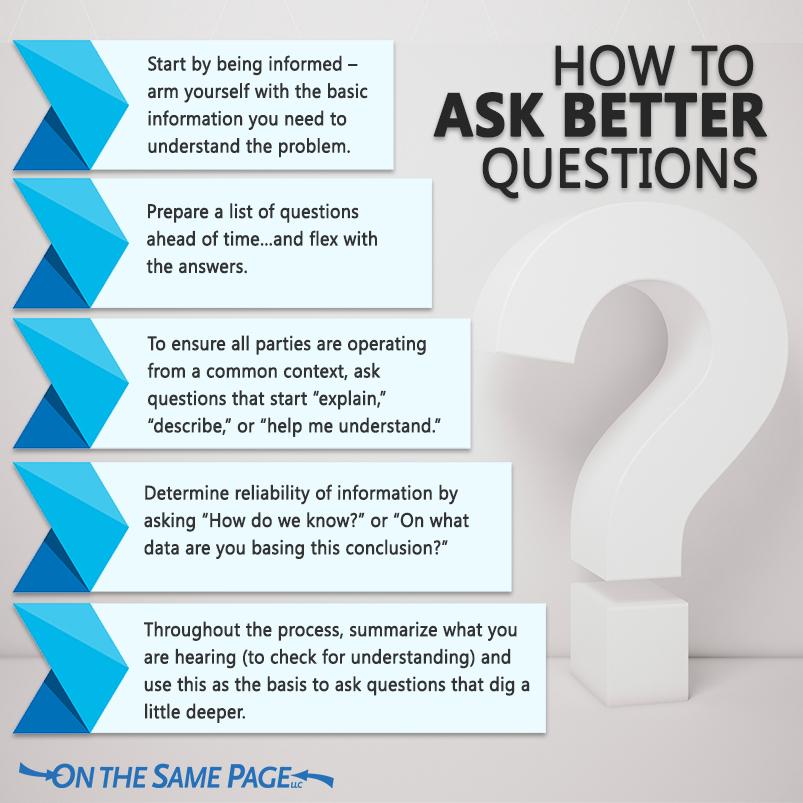
Why This Happens — Diagnose Before You Coach
Reps ask weak questions for four very different reasons, and the fix is different for each. Treat "ask better questions" as a single problem and you will waste both your time and theirs.
- Skill gap. The rep does not know what a good discovery question sounds like, or only knows closed, feature-led questions ("Are you using a CRM today?"). This is the most coachable cause and the one call data exposes fastest.
- Will / confidence gap. The rep knows better questions but is afraid to ask them — afraid of silence, afraid of seeming pushy, afraid of "wasting" the prospect's time. The transcript shows them retreating to safe, closed questions whenever the buyer pushes back.
- Knowledge gap. The rep does not understand the buyer's world well enough to ask sharp, industry-specific questions, so they stay generic. This is a product-and-market enablement problem, not a questioning problem.
- System / process gap. The "discovery" call is really a product pitch because the rep is told to demo on call one, or the call is so short there is no room to ask. No amount of questioning coaching fixes a broken meeting structure.
Use the recording to route the symptom to the real cause. The data does the diagnosing so the conversation stays about behavior, not opinion.
The Coaching Conversation
Run this as a 1:1 with the transcript open on a shared screen. Lean on the GROW model — Goal, Reality, Options, Will — so the rep does the thinking and owns the fix. Bold lines are the exact words to use.
Goal. Frame the session around their number, not yours.
"Your discovery-to-demo conversion is sitting at about 35 percent. The reps clearing 55 are asking more, and better, questions. What would landing more second meetings be worth to your quota this quarter?"
Reality — let the data, not your opinion, be the mirror. Open the Gong call and show the question count.
"On the Acme call you asked four questions, and three of them were closed — yes/no. Before I share what I noticed, what do you hear when you listen back to your own discovery here?"
Then make it concrete with a real moment from the recording:
"At the seven-minute mark the buyer said 'renewals are a headache.' What did you ask next? … Right — you went to a feature. What could you have asked there to find out why renewals are a headache and what it's costing them?"
Options — generate, don't prescribe. You want three to five better questions in their own words.
"Let's build your top three discovery questions for this segment. What's one open question that gets a CFO to quantify the cost of the status quo? … Good. What's a question that surfaces who else has to sign off?"
If they stall, model one, then hand it back: "Here's one I use — 'Walk me through what happens today when a renewal slips.' Now make that one yours."
Will — get a commitment that is measurable. End with a behavior, a number, and a date.
"On your next three discovery calls, what's your target for open questions, and how will we check it?"
Land on something like: ask at least 10 questions per discovery call, at least 7 open, and one cost-of-inaction question — measured off the next three Gong recordings, reviewed together Friday.
The Coaching Plan / Cadence
Question skill is built by reps, drilled weekly, and verified on recordings — not by a one-time pep talk. Run a steady loop.
- Week 1 — Baseline. Pull two of the rep's discovery calls. Build their scorecard: question count, open-vs-closed ratio, did they ask a cost-of-inaction question, did they confirm next steps. Set targets.
- Week 2 — Model & drill. Watch a top rep's call together. Role-play the rep's next two deals before they happen.
- Weeks 3–4 — Review & adjust. One real call per week against the scorecard. Celebrate the open questions they actually asked; pick exactly one thing to improve next.
- 30/60/90. By day 30, question count and open ratio up on every reviewed call. By day 60, the rep self-scores their own calls before the 1:1. By day 90, the behavior holds without prompting and shows up in discovery-to-demo conversion.
Drills & Role-Play
- The transcript audit. Rep highlights every question they asked on a real call in two colors — open vs. Closed — and counts them. Self-scoring beats being told.
- Question-only role-play. You play the buyer; the rep may only ask questions, no pitching, for three minutes. It forces them out of feature mode.
- The "why" ladder. Take one piece of pain the buyer mentioned and drill five layers deeper with follow-up questions, each building on the last.
- Silence drill. After the rep asks a strong question, you stay silent for five seconds. The rep practices not rescuing the silence with a closed clarifier.
- Steal from the best. Share a 90-second Chorus or Gong snippet of a top rep's best discovery question of the week; the rep adapts it to their own deal.
What to Measure
Track leading indicators that prove the behavior is changing — long before quota moves.
- Questions per discovery call (count off the recording).
- Open-to-closed ratio — aim the majority of discovery questions toward open.
- Talk-to-listen ratio — Gong research links healthier ratios (roughly the buyer talking the majority of the call) to higher win rates.
- Cost-of-inaction questions asked — did the rep quantify the pain?
- Next-step confirmation rate — strong questioning ends with a committed next step.
- Discovery-to-demo and overall win-rate — the lagging proof the leading behaviors are paying off.
Common Mistakes Managers Make
- Coaching from memory, not the recording. "You should ask more questions" is opinion; "you asked four, three closed" is data the rep cannot argue with.
- Rescuing the rep in the 1:1. If you supply all the better questions, the rep never builds the muscle. Make them generate the options.
- Coaching the deal instead of the skill. Fixing one stuck deal feels productive but teaches nothing portable. Coach the questioning pattern that shows up across deals.
- No follow-through. A great session with no next-call review is theater. Verify on the next recording.
- Coaching everyone the same. A skill gap and a confidence gap look identical on paper but need opposite interventions.
- Chasing a magic number. The goal is better, sharper, more diverse questions — not gaming the count with throwaway closed questions to hit a quota.
FAQ
How many questions should a rep ask on a discovery call? There is no universal number, but Gong Labs call analysis points to top discovery calls clustering around 11–14 questions, weighted toward open-ended and problem-focused. Use it as a guardrail, not a quota — quality and diversity of questions matter more than raw count.
Should I share the call data with the rep or just give feedback? Share the data first and let them self-diagnose. When the rep counts their own open vs. Closed questions on a real Gong transcript, the gap becomes their conclusion, not your criticism, and they own the fix.
What if the rep gets defensive about being recorded? Reframe recordings as the rep's own film room, not surveillance. Watch a top performer's call first so the rep sees the bar, and only ever review one call per session focused on one improvement, never a highlight reel of mistakes.
Open or closed questions — which should I push? Push open, problem-centered questions for discovery ("walk me through…", "what happens when…", "what's that costing you?"). Closed questions still have a place to confirm and gain commitment, but a discovery call dominated by closed questions usually means weak pain and a weak business case.
How long until I see results from question coaching? Behavior on reviewed calls should shift within two to four weeks because it is highly coachable. Conversion and win-rate are lagging indicators — give them a full quarter to follow the leading behavior.
What if more questions don't help — is it ever not a coaching problem? Yes. If the rep asks strong questions but still loses, the issue may be wrong-fit territory, a comp or process problem, or a genuine performance issue that needs a PIP rather than more coaching. Honest diagnosis up front saves everyone the wasted cycle.
Bottom Line
Make the call recording the coaching unit. Count the rep's questions, split open vs. Closed, and let the Gong or Chorus data do the diagnosing so the 1:1 stays about behavior.
Run a weekly GROW conversation off one real call, drill the questioning skill, and verify it on the next recording. Better questions are the most coachable, highest-leverage skill on your team.
Sources
- Gong Labs — Discovery call research and question data
- Gong Labs — Talk-to-listen ratio and win rates
- HBR — The Surprising Power of Questions
- RAIN Group — Sales Discovery Questions
- Sales Hacker — How to Run a Great Discovery Call
- Performance Consultants — The GROW Model of coaching
- Winning by Design — SPICED and discovery frameworks
*Sales coaching for asking better questions — how to coach reps to improve discovery questions using call data, sales manager coaching guide, rep questioning framework, and a call-data coaching playbook for 2027.*