 Pulse Reviews and Analysis
How do you coach a veteran rep who's coasting?
 Curated by Kory White · Fractional CRO, CRO Syndicate
Direct Answer
You coach a coasting veteran by separating comfort from capability: the rep is hitting number but not stretching, so quota alone will never re-engage them. The core move is a purpose-and-mastery reset — sit them in a peer-mentor or new-challenge role that makes their experience matter again, set a goal above their plateau, and hold a weekly cadence that measures behavior, not just attainment.
Use the GROW model to run the conversation, and be honest with yourself: if they refuse the stretch and the comfort is really disengagement, that is a performance and accountability problem, not a coaching one. This is the most common 2027 manager challenge, because senior reps with five-plus years of pipeline muscle memory can clear an AI-assisted quota on autopilot while their growth flatlines.
Why This Happens — Diagnose Before You Coach
A coasting veteran is rarely lazy. They are usually bored, plateaued, or quietly checked out, and each root cause needs a different response. Coast almost always traces to one of four sources: skill (they have outgrown the deals they are working and need bigger, harder ones), will (motivation has drained — the comp curve flattened, a promotion got passed over, or they have nothing left to prove), knowledge (they are running a 2022 playbook against 2027 buying committees and don't know it), or system/territory (their patch is mature and easy, so effort and reward have decoupled).
The trap is assuming it is a will problem and reaching for a pep talk. Often it is a system problem disguised as attitude — a senior rep on a fat, repeat-heavy territory looks like a coaster because the territory does the work. Diagnose first.
The Coaching Conversation
Do not open with a complaint. Open by naming their value, then naming the gap. A veteran's defenses go up the instant they hear "you've slipped." Run the conversation on the GROW model — Goal, Reality, Options, Will — so they talk themselves into the stretch instead of you pushing it.
Open (set the tone, lower the threat):
"You're one of the most reliable closers on this team — I never worry about your number. That's exactly why I want to talk. I think you've gotten so good that this job has stopped being hard for you, and I don't want to watch one of my best people coast into being average. Can we be straight with each other for twenty minutes?"
Goal — find what would actually light them up:
"Forget the quota for a second. When was the last time a deal made you feel sharp — like you had to bring your A-game? What kind of work would make this feel hard again in a good way?"
Reality — hold up the mirror without blame:
"Here's what I see: you're at 104% of plan, which is solid, but your average deal size is flat year over year and you haven't worked an enterprise logo in three quarters. You've got the most product knowledge in the room and you're using maybe half of it. Does that match how it feels to you?"
Options — let them design the stretch (mastery + new challenge + purpose):
"I've got three things I could put in front of you. One: take the two enterprise accounts I've been holding — bigger committees, longer cycles, real teeth. Two: own the deal-review for the two new AEs and rebuild our discovery playbook with me — your name on it.
Three: pilot the new AI call-coaching workflow and teach the team what works. Which of those gets you out of bed?"
Will — get a specific commitment, not a vibe:
"So you'll take the two enterprise accounts and run AE deal-reviews on Thursdays. By next Friday, what will you have done? And how do you want me to hold you to it — light touch or in your face?"
The script works because it trades comfort for status and mastery. Veterans rarely re-engage for money; they re-engage for respect, a worthy problem, and a chance to be the expert in the room. If they shrug at all three options, you have your honest answer — this is disengagement, and you move to the accountability path, not another conversation.
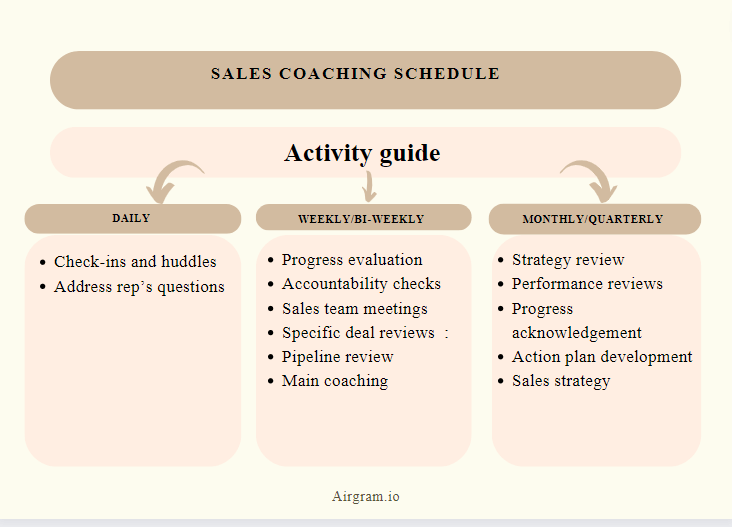
The Coaching Plan / Cadence — 30/60/90
Coaching a veteran is a habit, not an event. One inspiring 1:1 fades in ten days without a loop.
Days 1–30 — Re-contract and raise the bar. Run the GROW conversation. Co-author a written growth goal (e.g., "open two enterprise opportunities and mentor two AEs"). Reset the weekly 1:1 from a forecast-only review to a skill-and-stretch review. Pick one observable behavior to rebuild — say, multi-threading into buying committees.
Days 31–60 — Practice and pressure-test. Review two of their Gong or Chorus call recordings each week against the new playbook. Have them lead an AE deal-review every week so teaching forces their own reps higher. Introduce one role-play per week on the harder enterprise motion.
Days 61–90 — Measure and lock it in. Look at the leading indicators (below), not just attainment. Publicly credit the mentor work and the new logos. If the stretch held, formalize it into the role; if it didn't, you now have data for an honest accountability conversation.
Drills & Role-Play
- Enterprise discovery role-play. You play a skeptical VP of Operations on a six-person buying committee. The veteran has to multi-thread the deal live — no leaning on the warm single-threaded relationship they're used to. Score them on stakeholder mapping using a MEDDICC scorecard.
- Call-review teardown. Pull one of their recent Gong calls and one of a hungry junior rep's. Have the veteran self-grade both against the discovery rubric — they'll spot their own autopilot faster than you can tell them.
- "Teach it back" reps. Make them run a 15-minute micro-training for the team on one advanced skill (negotiation, executive access, competitive displacement). Teaching is the fastest re-engagement drill there is — it converts boredom into status.
- Cold-stretch scenario. Assign a deliberately uncomfortable scenario (a stalled enterprise deal, a multi-vendor RFP) and run a deal-coaching session where you coach the skill, not the deal outcome.
What to Measure
Quota tells you nothing here — they're already hitting it. Track behavior-change leading indicators:
- Average deal size and segment mix trending up (proof they're working harder accounts).
- Pipeline created in stretch segment (new enterprise opportunities sourced).
- Multi-threading rate — contacts per opportunity, pulled from Salesforce or Clari.
- Mentor output — AE deal-reviews led, playbook contributions shipped.
- Call-quality scores from Gong or Chorus on the new motion, week over week.
- Self-reported engagement in the 1:1 — are they bringing problems to you again, or just status?
If these move, the coaching is working even before the number does. If they stay flat for 60 days despite a clear "yes" in the GROW conversation, that's your signal the comfort was disengagement.
Common Mistakes Managers Make
- Rescuing instead of stretching. Don't hand the veteran easy wins to "keep them happy." Comfort is the disease, not the cure.
- Coaching to the deal, not the skill. Closing one enterprise deal for them teaches nothing. Coach the repeatable behavior so the next ten are theirs.
- No follow-through. The single biggest failure: one great conversation, zero cadence. The loop is the coaching.
- Coaching everyone the same. A veteran needs autonomy and a worthy challenge; a new rep needs structure. Same script for both insults the veteran.
- Leading with money. Re-quoting the comp plan to a bored expert backfires. They re-engage for mastery and purpose, not an accelerator.
- Confusing coasting with a performance issue. If they refuse every stretch, more coaching is avoidance. Move to a clear accountability plan — and a PIP if it's truly disengagement.
FAQ
How do you tell coasting apart from genuine disengagement? Coasting reverses when you offer a worthy challenge; disengagement doesn't. Run the GROW conversation and offer three real stretch options. If even one lights them up, it's coasting and coachable.
If all three get a shrug, it's disengagement — and that's an accountability conversation, not a coaching one.
Should I move a coasting veteran into a mentor or player-coach role? Often yes — it's one of the strongest re-engagement levers because it restores status and makes their experience matter. But protect it: keep them carrying a quota on harder accounts so they don't become a full-time coach who's stopped selling.
The mentor role is fuel, not an exit ramp.
What if the territory is just easy and they're maxed out? That's a system problem, not a will problem. Rebalance the patch, add stretch accounts, or raise the bar — and adjust the comp curve if effort and reward have decoupled. No 1:1 fixes a territory doing the work for the rep.
How long do I give the coaching before I escalate? Run a full 30/60/90 loop. If the leading indicators (deal size, stretch pipeline, multi-threading) haven't moved in 60 days despite a clear commitment, you have the data for an honest accountability path. Don't let it drift past a quarter.
Can AI call-coaching help with a senior rep who thinks they know it all? Yes — Gong and Chorus scorecards depersonalize the feedback. "The data shows you're single-threading 70% of enterprise deals" lands harder and lighter than your opinion. Have the veteran self-grade their own calls; experts trust evidence more than advice.
Won't a veteran resent being coached at all? Only if you coach them like a rookie. Lead with respect, give them autonomy over the plan, and frame it as growth, not correction. Coaching a veteran is collaboration on a challenge they help design — not a top-down fix.
Bottom Line
The one move that matters: trade their comfort for mastery and purpose. Don't coach the quota they're already hitting — coach toward a harder goal, a mentor role, and a worthy new challenge, then hold a real 30/60/90 cadence that measures behavior, not just attainment. And be honest: if the stretch is refused at every turn, that's disengagement, and the answer is accountability, not another conversation.
Sources
- Harvard Business Review — How the Best Sales Teams Coach Themselves
- Gong Labs — Sales Coaching Research and Call Analytics
- RAIN Group — Sales Coaching Skills and Methodology
- Sandler — Sales Management and Coaching Resources
- Challenger / Gartner — Coaching the Challenger Seller
- Winning by Design — Sales Coaching Frameworks
- SBI (Sales Benchmark Index) — Sales Coaching and Talent Insights
- Richardson Sales Performance — The GROW Coaching Model
*Sales coaching for a coasting veteran rep — how to coach a senior salesperson who's plateaued, sales manager coaching guide, rep re-engagement framework, and a veteran coaching playbook for 2027.*