
How do you coach a rep to ask better discovery questions?
 Curated byKory White · Fractional CRO · Maryland
 PULSEKNOWLEDGE LIBRARY
Quality
Certified

Coach a rep toward better discovery questions by pairing two disciplines: recorded call review and structured role-play, run on a fixed weekly cadence. A RevOps-minded coach diagnoses why questions are weak (fear of silence, no framework, ego, or poor listening), drills the specific fix in role-play, then verifies the change shows up on live calls. Scripted frameworks alone don't stick — the coaching loop between practice and real calls is what changes behavior.
Two Ways to Coach Discovery: Live Call Review vs. Structured Role-Play
Every sales manager coaching discovery questions ends up choosing between two core methods, and the strongest programs use both rather than picking one. The first is live call review — sitting with a rep, pulling up a real recorded discovery call, and dissecting it minute by minute. The second is structured role-play — a simulated buyer conversation, run before the rep ever gets on the phone with a prospect, designed to build muscle memory in a low-stakes setting.
Call review has one enormous advantage: it's real. The rep can't argue that the scenario was unrealistic or that the buyer wouldn't have actually said that, because the buyer did say that, three days ago, and the recording proves it. When a manager plays back a segment and asks "what did you learn about their pain there?", the rep is forced to confront their own actual performance rather than a hypothetical. This is why most RevOps-aligned enablement teams treat call review as the anchor of any coaching motion — it's harder to dispute and it surfaces patterns (a rep who always accepts the first vague answer, a rep who talks over silence) that no role-play script would catch, because those patterns only emerge under real pressure with a real stranger on the line.

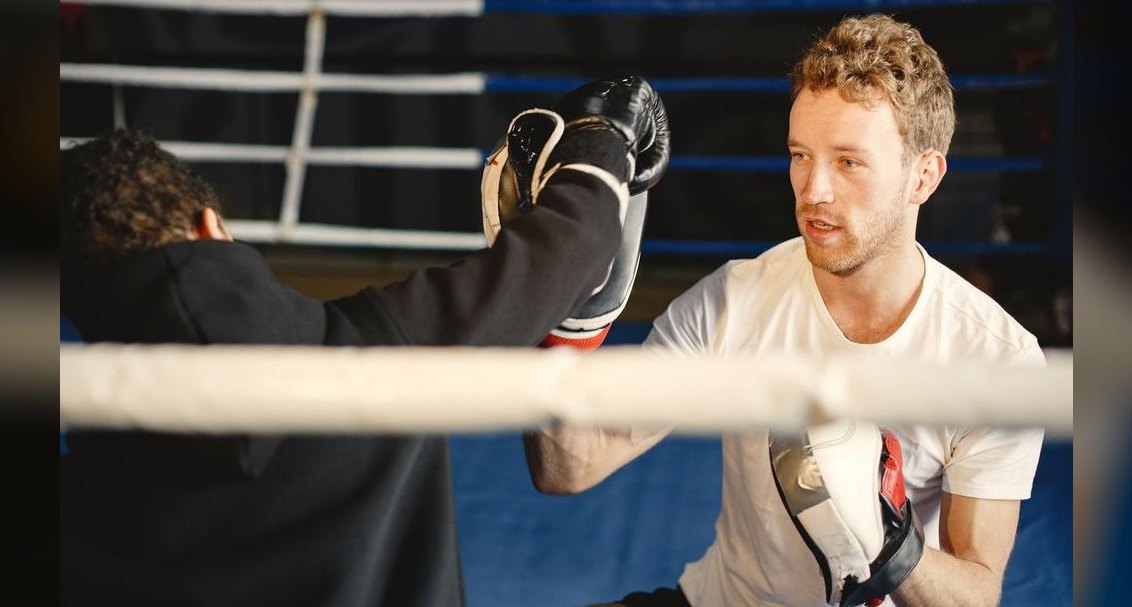
Role-play, on the other hand, has the advantage of being controllable and repeatable. A manager can force a rep to practice the exact skill that's missing — asking three consecutive follow-ups, sitting through five seconds of silence, converting a closed question into an open one — as many times as needed, without burning a real prospect relationship in the process. If a rep is bombing discovery calls because they don't know what a good follow-up sounds like, throwing them back onto live calls and hoping they improve is slow and expensive; each blown call is a real deal. Role-play compresses the learning cycle: ten reps can each get three reps of the same drill in a 30-minute team session, something that would take weeks to accumulate from live call volume alone.
The trade-off is realism versus repetition. Live calls carry higher stakes and lower control — you can't manufacture the exact scenario you want to coach, you have to wait for it to occur naturally. Role-play carries lower stakes and higher control — you can manufacture any scenario, but a rep who performs well in a friendly role-play with their manager sometimes freezes when a real buyer gives a genuinely evasive answer, because the emotional pressure of a live deal doesn't transfer into a rehearsed exercise. Coaches who rely only on role-play often build reps who sound great in practice and stiff in the field; coaches who rely only on call review often diagnose problems accurately but never give the rep a safe place to fix them before the next call is on the line. That's the core argument for running both.

How to Decide Which Coaching Method Fits Your Rep
Deciding which method to lead with — and how much weight to give each — comes down to diagnosing where the rep's discovery is actually breaking down before you invest coaching time. A rep who understands the framework intellectually but chokes under live pressure needs more role-play reps to build reflexes. A rep who sounds fine in a scripted setting but goes off-script and reverts to pitching on real calls needs more call review to hold them accountable to what they actually do, not what they can recite. The decision tree below is the practical version of that diagnosis — a manager runs through it before designing that week's coaching session, rather than defaulting to whichever method is more convenient that day.
New reps in their first 90 days generally need the role-play-heavy path, because they haven't built enough of a call library yet to review, and they need repetitions before facing live buyers. Tenured reps who have gone stale — hitting quota through relationships or luck rather than sharp discovery — usually need the call-review-heavy path, because the framework isn't the gap; accountability to actually using it is. A useful rule for a RevOps-minded manager: if a rep can recite the 4 Ps framework accurately in a coaching conversation but their live calls don't reflect it, that's a call-review problem, not a training problem — more scripting won't fix a gap between what they know and what they do under pressure.

The Numbers Behind Each Coaching Method
Coaching discovery questions is measurable, and the concrete numbers matter more than the philosophy, because they tell a manager whether the investment of time is actually producing better outcomes. For role-play, the standard cadence that shows results is 15-20 minutes per rep, twice a week, sustained for at least 4-6 weeks — shorter or less frequent sessions rarely produce durable habit change, because a single drill fades within days without reinforcement. Teams running twice-weekly role-play typically see a measurable shift in talk-to-listen ratio within 3-4 weeks: a rep starting around 55-60% talk time (meaning the rep talks more than the buyer, a clear red flag) can realistically move to 35-40% talk time by week six if the drills specifically target silence tolerance and follow-up habits.
For call review, the number that matters most is frequency and depth, not volume. Reviewing one call for 30 minutes, broken into 2-minute segments with a rewrite exercise at each stop, produces more behavior change than skimming five calls at high speed. Weekly cadence is the minimum; twice-weekly is where most high-performing RevOps teams land for reps who are actively working on a specific discovery gap. The follow-up-question count is the clearest leading indicator: a weak discovery call typically shows 0-1 follow-up questions per topic (pain, priority, process, persona), while a strong discovery call shows 2-3 follow-ups per topic before the rep moves on. Coaches should track this number explicitly, call over call, rather than relying on a subjective sense that "the call sounded better."

On the deal-outcome side, the lagging numbers take longer to show but matter more to leadership: teams that formalize discovery coaching (structured role-play plus weekly call review, sustained for a full quarter) commonly report discovery-stage-to-close cycle times shortening by roughly 10-20%, because deals with thorough discovery surface objections and stakeholders earlier rather than at the finish line. Win rates on deals where the rep asked 3+ follow-ups per P versus 0-1 follow-ups per P also diverge meaningfully — thorough discovery correlates with materially higher close rates, though the exact percentage varies enough by industry and deal size that a manager should pull their own team's numbers rather than assume a universal figure. The point isn't a specific benchmark to hit blindly; it's that these are trackable numbers, and a coach who isn't measuring talk ratio, follow-up count, and cycle time is coaching on instinct alone.
Budget the time realistically: a manager coaching a team of 6-8 reps with this dual method spends roughly 3-4 hours per week total (2 role-play sessions at 20 minutes per rep pair, plus 30-45 minutes of call review per rep every other week). That's a meaningful but sustainable investment, and it's front-loaded — the first month costs more coaching time than months two and three, because early drills need more repetition before they become habitual.

Implementation Details and Sequencing the Coaching Program
Rolling this out well is less about any single technique and more about sequencing — doing the right coaching activity in the right order so each one builds on what came before instead of overwhelming the rep with everything at once. Start with diagnosis, not correction: pull two to three recent calls before saying a word about "better questions," and identify which of the four root causes (fear of silence, no preparation, ego-driven talking, poor listening) is actually driving the weak questions for this specific rep. Skipping this step is the most common mistake — a manager who tells every rep to "ask more open-ended questions" without diagnosing the underlying cause is prescribing the same medicine for four different diseases.
Once the root cause is identified, week one should introduce the 4 Ps framework (pain, priority, process, personas) as a shared vocabulary, not as a rigid script. Give the rep a written question bank organized by these four categories so they have something concrete to reference before their next call, and pair it with one 15-minute role-play session focused narrowly on whichever P the rep struggles with most. Week two shifts to the first call review session: pull a call from that week, and specifically look for whether the rep attempted to use the framework, where they abandoned it, and rewrite the abandoned moment together in real time. This is where the coaching loop actually closes — the rep sees the gap between rehearsed and real performance directly.

Weeks three and four should introduce the follow-up-specific drills (the "Follow-Up" and "Silence" exercises) because by this point the rep has the framework but likely still moves on too quickly after a surface-level answer. Continue alternating: role-play early in the week to prime a specific skill, call review later in the week to check whether that skill showed up live. By week five or six, start tracking the concrete numbers — talk-to-listen ratio, follow-ups per topic — as a weekly scoreboard the rep can see improving, and shift the coaching conversation from "here's what you should do" to "here's what the data shows changed." This sequencing — diagnose, frame, drill, review, measure — keeps the coaching from becoming generic advice and keeps it anchored to what actually moves the rep's next call.
A RevOps-minded team should also decide, up front, who owns this sequencing — a frontline sales manager, an enablement lead, or a senior rep mentoring a junior one — because inconsistent ownership is one of the fastest ways a coaching program stalls after week two. Whoever owns it needs calendar time protected specifically for this, not squeezed between pipeline reviews, because discovery coaching that gets bumped every time a forecast call runs long never accumulates the repetition it needs to change behavior.

Related questions
How long does discovery coaching take to show results on live calls?
Most reps show a measurable shift in talk-to-listen ratio and follow-up count within 3-6 weeks of twice-weekly role-play paired with weekly call review, though deal-outcome metrics like cycle time take a full quarter to move visibly.
What's the difference between coaching discovery questions and coaching objection handling?
Discovery coaching focuses on uncovering the buyer's situation before a solution is proposed; objection handling coaches responses after a solution is on the table — discovery gaps often cause objections that better questions would have surfaced earlier.
Should new hires and tenured reps be coached on discovery the same way?
No — new hires typically need role-play-heavy repetition to build the framework from scratch, while tenured reps who already know the framework usually need call-review-heavy accountability to close the gap between what they know and what they actually do live.
How do I know if a rep's discovery problem is a skill gap or a will gap?
Show them a lost-deal call where a weak question cost the deal; if they're surprised and motivated to fix it, it's a skill gap needing more drills — if they shrug it off, it's a will gap needing a harder conversation about expectations.
Can this coaching approach work for a fully remote or asynchronous sales team?
Yes — call review works well asynchronously (record comments on a shared recording), but role-play generally needs a live synchronous session, even a short 15-minute video call, since the pause-and-redirect coaching moments don't translate to written feedback.
FAQ
How often should a manager run role-play sessions for discovery coaching? Twice a week, 15-20 minutes per rep, is the cadence that most reliably produces a measurable shift in behavior within a month; once a week tends to fade before it becomes habit.
What's the fastest way to diagnose why a specific rep asks weak discovery questions? Pull two or three of their recent recorded calls and check two numbers: talk-to-listen ratio and follow-up questions per topic. Those two data points point directly at whether the root cause is fear of silence, lack of framework, or shallow follow-up habits.
Does a rep need a written question bank, or should questions come naturally? Early on, yes — give them a written bank organized by pain, priority, process, and personas so they have a reference during real calls. As they internalize the framework over several weeks, the reliance on the script should fade naturally.
How do I coach a rep who resists changing their discovery approach? Play them a recording of their own call where a weak question caused them to miss a clear buying signal. Self-recognition from real evidence is more persuasive than any framework explained in the abstract.
Is it worth using call recording software like Gong or Chorus for this coaching? Yes — these tools automate the talk-to-listen ratio and can flag open versus closed questions automatically, which saves the manual work of tracking those numbers by hand and lets the coaching conversation focus on the content, not the counting.
What's the single highest-leverage skill to coach first if I can only pick one? The first follow-up question after a buyer's initial answer. Most reps ask a reasonable opening question but accept the first response and move on; training the habit of always asking "tell me more about that" before advancing produces the fastest visible improvement in discovery quality.
Sources
- https://www.gong.io/labs/
- https://hbr.org/topic/coaching
- https://www.rainsalestraining.com/resources
- https://blog.hubspot.com/sales
- https://www.salesforce.com/resources/articles/sales-coaching/
- https://www.saleshacker.com/
- https://corporatevisions.com/resources/
Related on PULSE
- [How do you coach reps to ask better discovery questions?](/knowledge/cg0052)
- [How do you coach reps to ask better questions using call data?](/knowledge/cg0126)
- [How can I ask a question that helps a rep structure a better follow-up sequence?](/knowledge/cg0854)
- [How do you coach a rep to write better follow-up emails?](/knowledge/cg0045)
- [How do you coach a sales team to work better with customer success in 2027?](/knowledge/cg0974)
This page will be disappearing soon. Save it to your device for $1 — or read it free while it is here.
@Kory-White- · if Venmo asks, the last 4 of my number are 2012
This page is gone.
This one is off the shelf now. $1 keeps it on your phone for good — the whole page, pictures and diagrams included.
 cgHow do you coach a rep to handle silence during a call without filling it
 cgHow do you coach a rep to use video in follow-ups to stand out in a crowded inbox in 2027
 cgHow do you coach a rep to prospect into a completely new vertical in 2027
 cgHow do you coach a rep to overcome imposter syndrome in competitive sales environments in 2027
 cgHow do you coach a rep who resists using video prospecting in 2027
 cgHow do you coach a rep to improve their follow-up game without being pushy
 cgHow do you coach a rep to effectively use cold calling in a saturated market in 2027
 cgHow do you coach a rep who resists using CRM tools for deal forecasting in 2027
 cgHow do you coach a rep to handle a prospect who says they need to 'check with the team' indefinitely
 cgHow do you coach a rep who dominates the conversation but closes low