 Pulse Reviews and Analysis
The 10 Best Vintage Cameras to Collect in 2027
 Curated by Kory White · Fractional CRO, CRO Syndicate
Direct Answer
The best vintage camera to collect in 2027 is the Leica M3, the 1954 rangefinder that defined the genre and still sells in clean, working condition for $2,000 to $4,000 — with rare black-paint examples reaching the stratosphere (a black-paint M3 outfit brought €625,000 / about $722,000 at Wetzlar in October 2025).
If you want a piece of camera history for the price of a weekend trip, the best value is the Polaroid SX-70, the 1972 folding instant SLR that still turns up for $40 to $150 in working order — a genuinely usable design icon at a fraction of the others here.
This list is for collectors who want real, shootable cameras with documented values in 2027, ranging from museum-grade trophies down to a working classic anyone can afford. Every price below is anchored to recent auction results or current marketplace comps. Vintage cameras reward collectors who buy mechanically sound bodies and avoid the fantasy prices that litter online listings.
How We Ranked the Top 10
We weighted six criteria, each tied to real market data rather than nostalgia:
- Design and historical importance (25%) — did this camera define its category or advance the craft? Checked against maker histories and museum collections.
- Recent sold comps (25%) — realized prices from Leitz Photographica Auction, Wetzlar Camera Auctions, eBay sold listings, and dealer price guides like Collectiblend.
- Build quality and longevity (20%) — how well the camera survives and whether it still works decades on.
- Collector demand and liquidity (15%) — how readily the model sells and how stable the price floor is.
- Variant and condition sensitivity (10%) — black paint vs. Chrome, early serial numbers, and finish that swing value.
- Usability today (5%) — whether it's a shooter or a shelf piece, which broadens the buyer pool.
Sources span Leitz Photographica and Wetzlar auction recaps, Collectiblend price guides, B&H and KEH dealer data, and PetaPixel auction reporting. The list favors models with deep, repeatable sales over one-off record headlines.
1. Leica M3 🏆 BEST OVERALL

Era/Set: 1954-1966, Wetzlar Germany | Typical price: ~$2,000-$4,000 (clean chrome, working) | Best for: the collector who wants the definitive rangefinder and a camera they'll actually shoot
The Leica M3 is the camera that set the template for every rangefinder that followed. Introduced in 1954 with the now-standard M bayonet mount and a superb 0.91x viewfinder, it remains the most collected serious camera ever made. Clean, serviced chrome bodies trade at $2,000 to $4,000, but the variant ceiling is astonishing — a black-paint M3 outfit sold for €625,000 (about $722,000) at the 7th Wetzlar Camera Auctions in October 2025.
Black-paint M2 and M3 bodies routinely fetch double their chrome siblings. With more than 220,000 made, supply is healthy, so you can buy a great user without paying trophy money.
Pros:
- The definitive rangefinder — universal demand and the deepest collector base in cameras.
- $2,000-$4,000 working chrome makes a legend genuinely attainable.
- Black-paint variants give the model a six-figure trophy ceiling.
- Still a superb shooter that holds value as a daily user.
Cons:
- Service is essential and a proper CLA can run $200-$400.
- Black-paint and early double-stroke variants carry steep premiums.
Verdict: The single best vintage camera to own — buy a serviced chrome body and shoot it.
2. Leica 0-Series
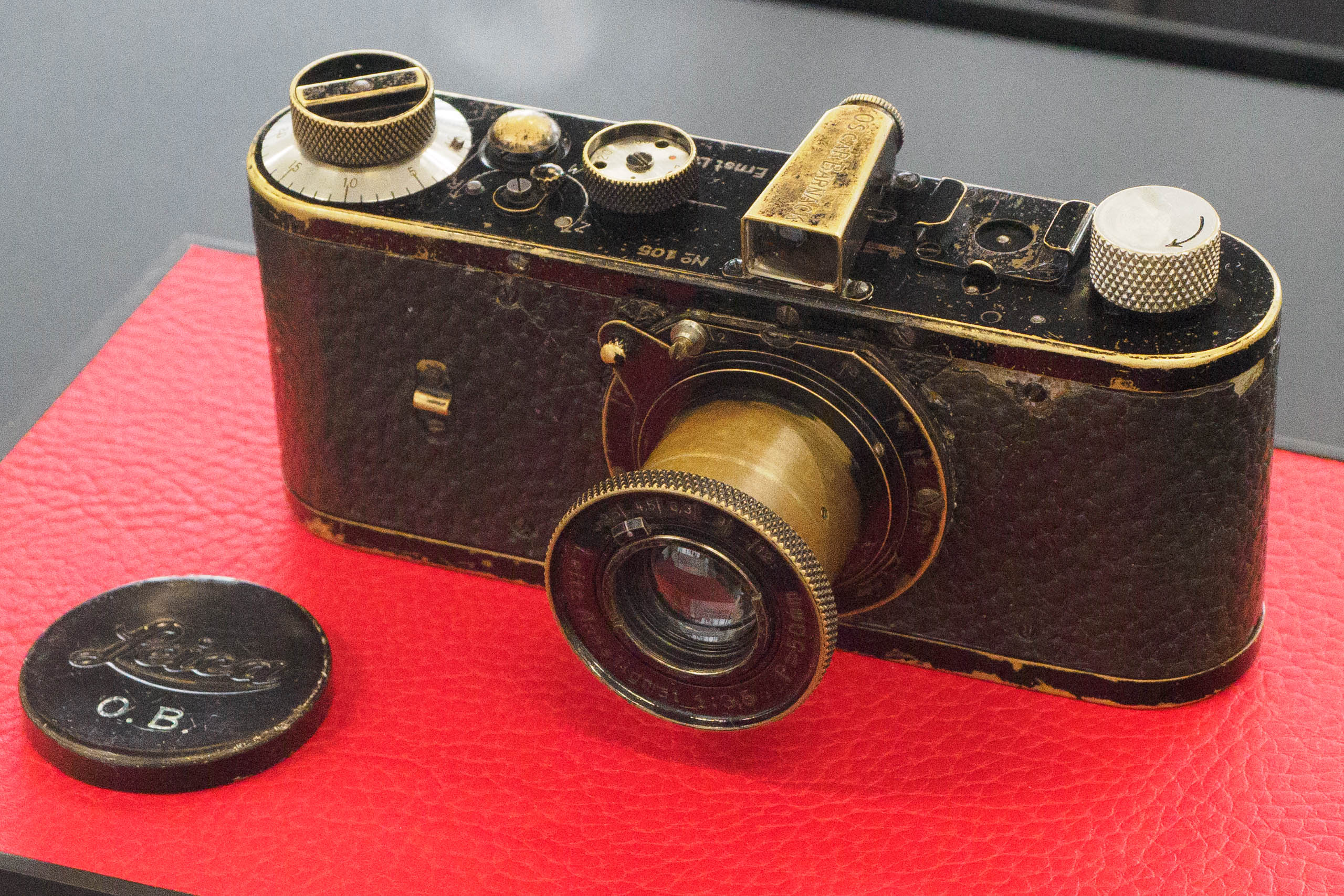
Era/Set: 1923-1925, pre-production prototype | Typical price: $2 million and up (museum grade) | Best for: institutional collectors and the apex of the hobby
The Leica 0-Series is the holy grail of camera collecting — one of roughly two dozen pre-production prototypes that launched 35mm photography. In June 2025, serial number 112 sold at the Leitz Photographica Auction for €7.2 million (nearly $8.5 million), against a pre-sale estimate of €1.5 to €2 million.
It is unattainable for almost everyone, but it sets the ceiling and the historical anchor for the entire Leica market. No camera carries more provenance or scarcity.
Pros:
- The most historically important camera ever made — apex provenance.
- $8.5 million 2025 sale sets the market ceiling for all collecting.
- Roughly two dozen known make it irreplaceably scarce.
- Museum-grade pedigree with auction-house documentation.
Cons:
- Effectively unattainable outside the seven-figure tier.
- Authentication and provenance must be airtight at this level.
Verdict: The unreachable benchmark — own it only if you're an institution or a serious investor.
3. Hasselblad 500C/M
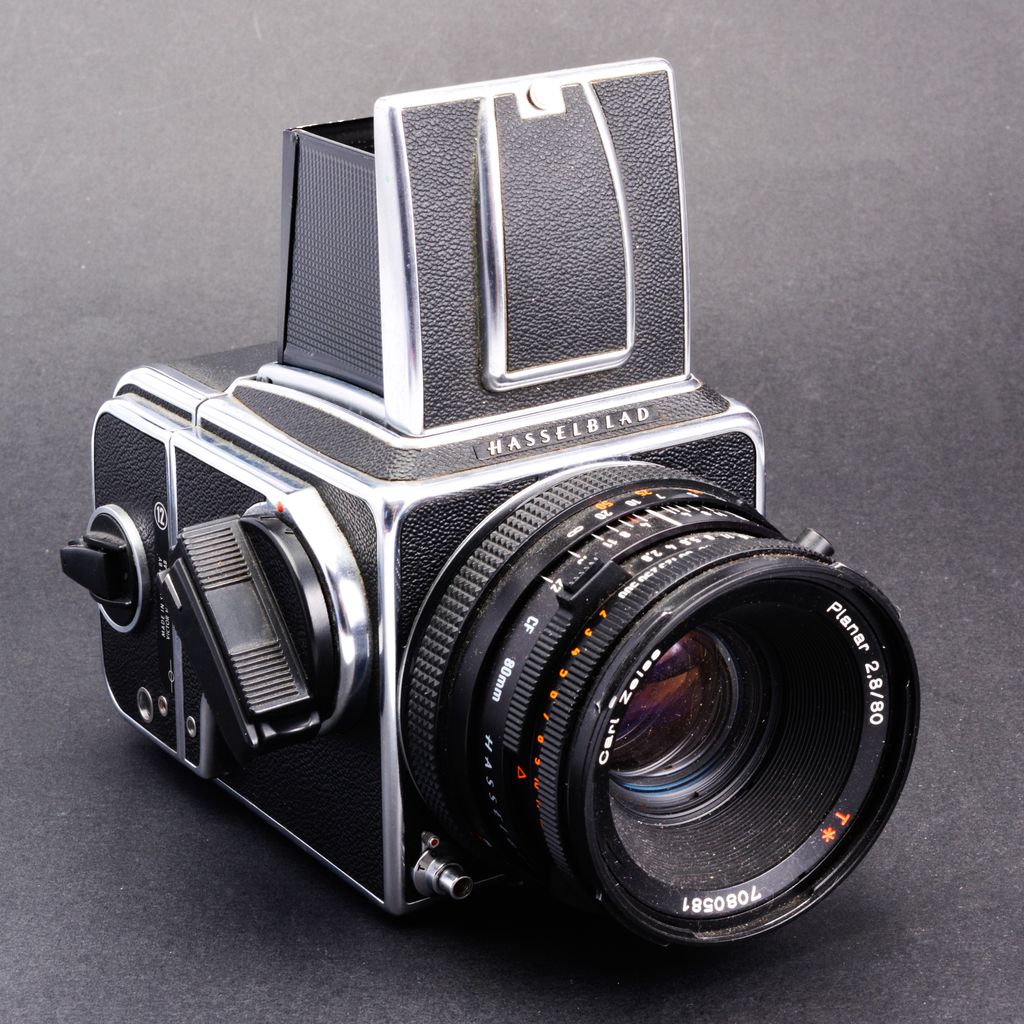
Era/Set: 1970-1994, Sweden | Typical price: ~$530-$2,500 (kit, condition dependent) | Best for: medium-format collectors who want the camera that went to the moon
The Hasselblad 500C/M is the modular Swedish 6x6 that defined professional medium format and shares its lineage with the cameras NASA carried to the moon. A clean kit with 80mm lens, A12 back, and waist-level finder trades from about $530 to $2,500, with strong examples settling near $1,900.
Its leaf-shutter Zeiss lenses, interchangeable backs, and bulletproof build make it both a collectible and a working studio tool. The system's modularity means you can start with a body and grow, which keeps demand broad.
Pros:
- Moon-program lineage with unmatched professional pedigree.
- $530-$2,500 kits span budget and premium buyers alike.
- Modular system with Zeiss glass and interchangeable backs.
- Still a working studio camera, not just a shelf piece.
Cons:
- Lenses and backs add quickly to total cost.
- Leaf shutters need periodic service to stay accurate.
Verdict: The benchmark medium-format collectible and a camera you can genuinely use.
4. Rolleiflex 2.8F

Era/Set: 1960-1981, Germany | Typical price: ~$650-$3,200 (working, condition dependent) | Best for: collectors who want the finest twin-lens reflex ever built
The Rolleiflex 2.8F is the pinnacle twin-lens reflex, with a fast f/2.8 Planar or Xenotar taking lens and the build quality that made it a photojournalist favorite. Working examples trade from roughly £500 to £2,500 (about $650 to $3,200), and a fully functional copy is worth two to three times a non-working one because shooters actively use these.
The square 6x6 format, bright finder, and mechanical reliability give it lasting appeal. Condition and lens choice (Planar vs. Xenotar) drive most of the price spread.
Pros:
- The finest TLR ever made with a fast f/2.8 Planar/Xenotar lens.
- Working copies command 2-3x non-working ones — a clear quality signal.
- Photojournalist heritage keeps demand steady.
- Mechanical reliability means many still shoot perfectly.
Cons:
- Service for the film transport and shutter can be costly.
- Lens variant and meter condition swing value significantly.
Verdict: The collectible TLR to own — pay up for a serviced, fully working body.
5. Nikon F

Era/Set: 1959-1973, Japan | Typical price: ~$150-$700 (early serials premium) | Best for: collectors who want the SLR that ended the rangefinder era
The Nikon F is the camera that made the 35mm SLR the professional standard and broke Leica's grip on photojournalism. Clean working bodies sell up to about £500 ($650), but the earliest examples matter: the 1959 first-run serials (6,400,001-6,449,999) are worth three to five times identical-looking later cameras.
Its system breadth — finders, motor drives, and a vast F-mount lens line that survives today — made it the workhorse of a generation. For collectors, the early serial chase is the whole game.
Pros:
- The SLR that ended the rangefinder era — pivotal historical importance.
- $150-$700 range keeps a landmark camera affordable.
- 1959 early serials carry a 3-5x premium for the variant hunter.
- F-mount lenses still mount on modern Nikons.
Cons:
- Later mass-production bodies have a modest value floor.
- Meter prisms (Photomic) are often dead and hard to service.
Verdict: A landmark SLR at an accessible price — chase a 1959 first-run serial for the upside.
6. Nikon SP Rangefinder
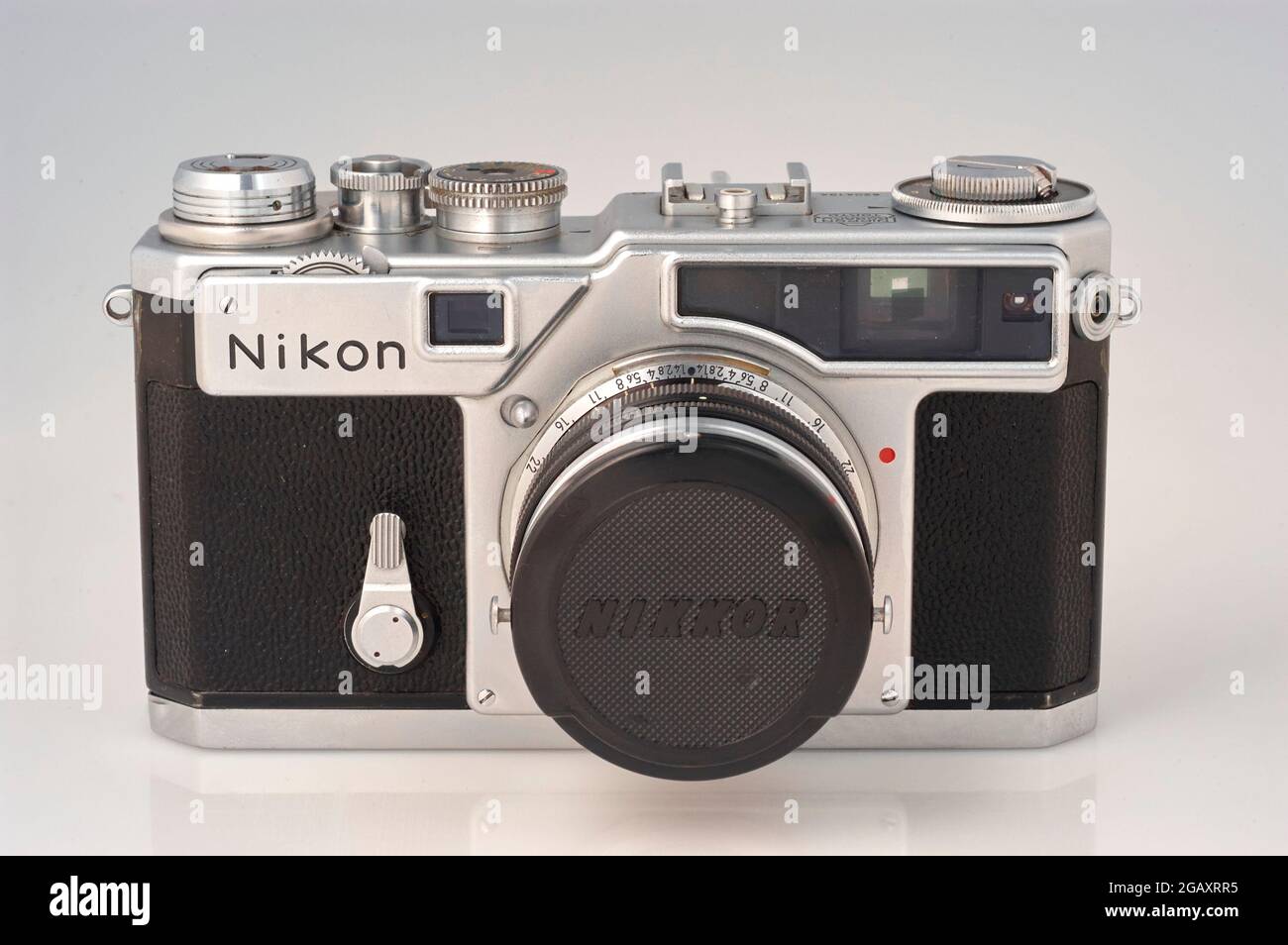
Era/Set: 1957-1960, Japan | Typical price: ~$1,500-$4,000 (with fast lens) | Best for: collectors who want Japan's answer to the Leica M3
The Nikon SP is the high-water mark of Japanese rangefinder engineering — a direct M3 rival with a remarkable dual-frame viewfinder covering 28mm to 135mm. Clean bodies paired with a fast lens reach $2,500 to $4,000, and the legendary 50mm f/1.1 glass pushes prices to the top of that band.
Built in far smaller numbers than the Nikon F that replaced it, the SP is genuinely scarce. Collectors prize it as the moment Japan matched the Germans on a professional rangefinder.
Pros:
- Japan's answer to the M3 with a brilliant dual-frame finder.
- $1,500-$4,000 for a scarce professional rangefinder.
- 50mm f/1.1 lens drives the high end and collector interest.
- Low production makes clean copies genuinely hard to find.
Cons:
- Finder complexity makes service specialized and costly.
- Fast Nikkor lenses are pricey and increasingly scarce.
Verdict: The connoisseur's rangefinder — buy a clean body and add the fast Nikkor over time.
7. Contax IIa

Era/Set: 1950-1961, Zeiss Ikon Germany | Typical price: ~$300-$900 (with Sonnar lens) | Best for: collectors who want German rangefinder pedigree at an affordable price
The Contax IIa is the postwar refinement of Zeiss Ikon's prewar Contax line and a quietly brilliant German rangefinder. Clean bodies with a Sonnar 50mm f/1.5 lens trade in the $300 to $900 range, making it one of the most undervalued German classics for the money. Its long-base rangefinder, combined finder, and Zeiss Sonnar optics deliver a distinctive look that film shooters chase.
The IIa sits in the shadow of Leica, which is precisely why it's such a sane entry into vintage German glass.
Pros:
- German rangefinder pedigree at a fraction of Leica money.
- $300-$900 with Sonnar glass is a standout value.
- Distinctive Sonnar rendering prized by film shooters.
- Undervalued relative to its build and optical quality.
Cons:
- Vertical metal shutter is delicate and service is specialized.
- Bayonet/screw lens mounting is fiddly for newcomers.
Verdict: The smart-money German rangefinder — premium glass and pedigree without the Leica tax.
8. Leica IIIf
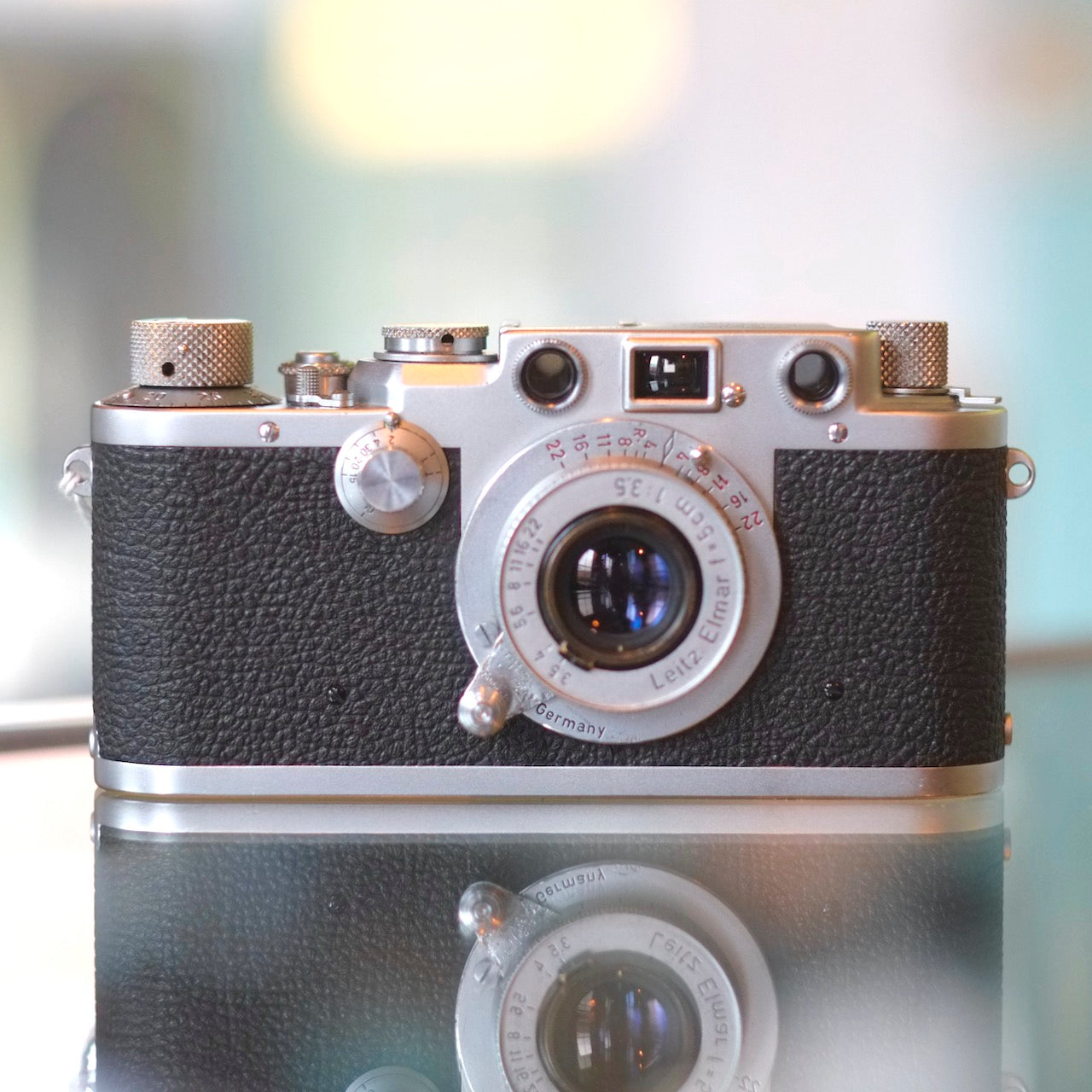
Era/Set: 1950-1957, Wetzlar Germany | Typical price: ~$300-$800 (red-dial premium) | Best for: collectors who want a true Leica at an entry price
The Leica IIIf is the most refined of the classic Barnack screw-mount Leicas and the gateway into the brand for most collectors. Clean working bodies trade from $300 to $800, with the later red-dial version (flash-sync calibrated) commanding a premium over the black-dial.
Compact, beautifully machined, and compatible with a deep catalog of LTM lenses, the IIIf is a daily-shootable piece of Leica history. It's the most affordable way to own a genuine Wetzlar Leica.
Pros:
- A genuine Leica for $300-$800 — the brand's entry point.
- Red-dial variant rewards the detail-oriented buyer.
- Deep LTM lens catalog keeps it endlessly shootable.
- Exquisite machining in a pocketable body.
Cons:
- Bottom-loading film handling has a learning curve.
- Shutter curtains can develop pinholes and need replacement.
Verdict: The most affordable real Leica — a red-dial IIIf is the connoisseur's value buy.
9. Polaroid SX-70 💎 BEST VALUE
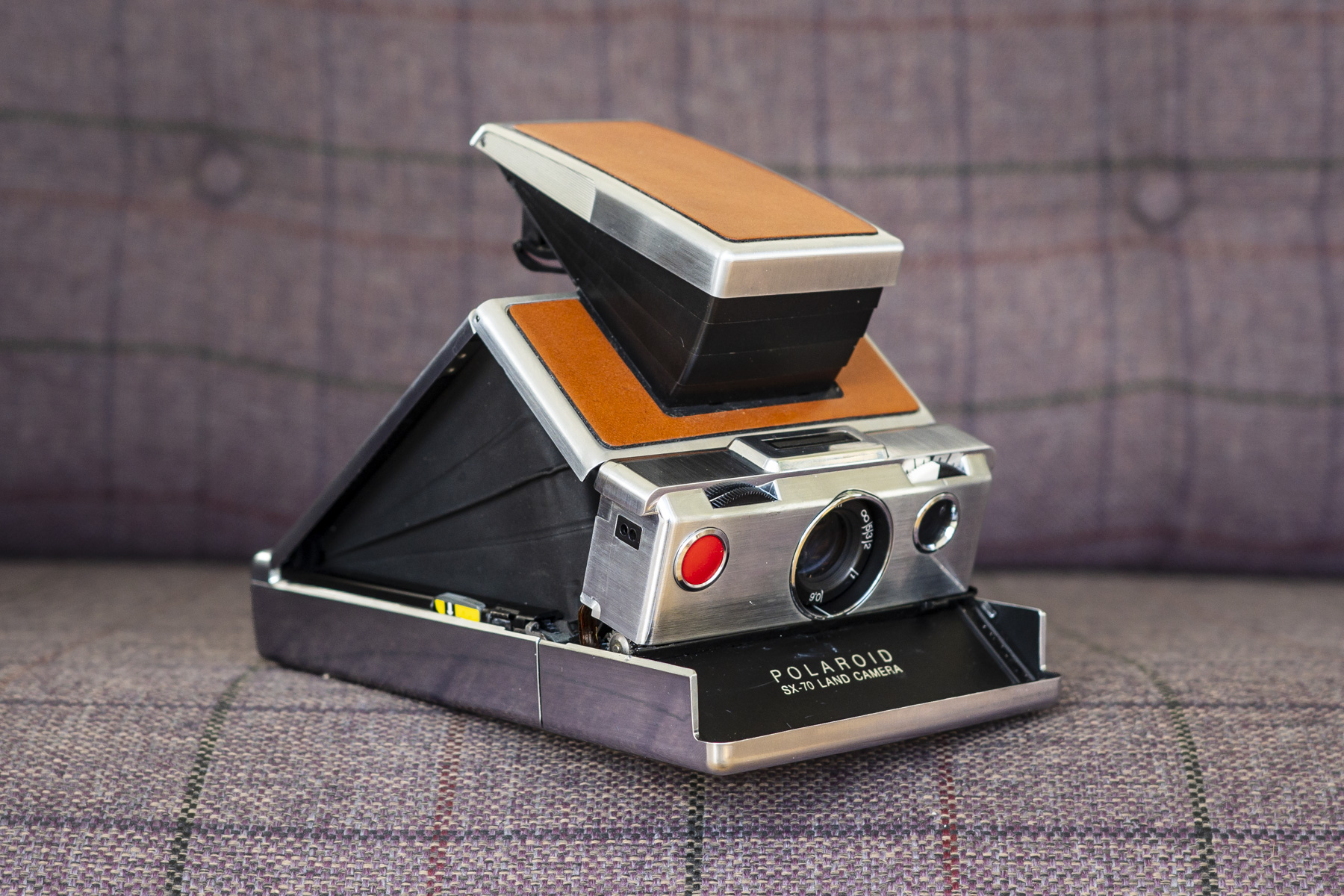
Era/Set: 1972-1981, USA | Typical price: ~$40-$150 (working, model dependent) | Best for: anyone who wants a working design icon for almost nothing
The Polaroid SX-70 is the best value in vintage cameras by a wide margin. The 1972 folding instant SLR — the first of its kind — is a genuine design milestone, displayed in museums, yet working bodies still turn up for $40 to $150. Pristine boxed examples and special finishes can list above $2,000, but the everyday version costs less than a roll-and-develop session on the cameras above it.
With modern instant film readily available, it's a working camera you can shoot today for pocket money.
Pros:
- A museum-grade design icon for $40-$150 — unmatched value.
- Still shootable with current instant film.
- Folding SLR engineering unlike anything else of its era.
- Plentiful supply means easy buying and low risk.
Cons:
- Bellows and rollers can fail and need cleaning or repair.
- Film cost per shot is high relative to 35mm.
Verdict: The best value here — a working design landmark for the price of lunch.
10. Mamiya 7 II
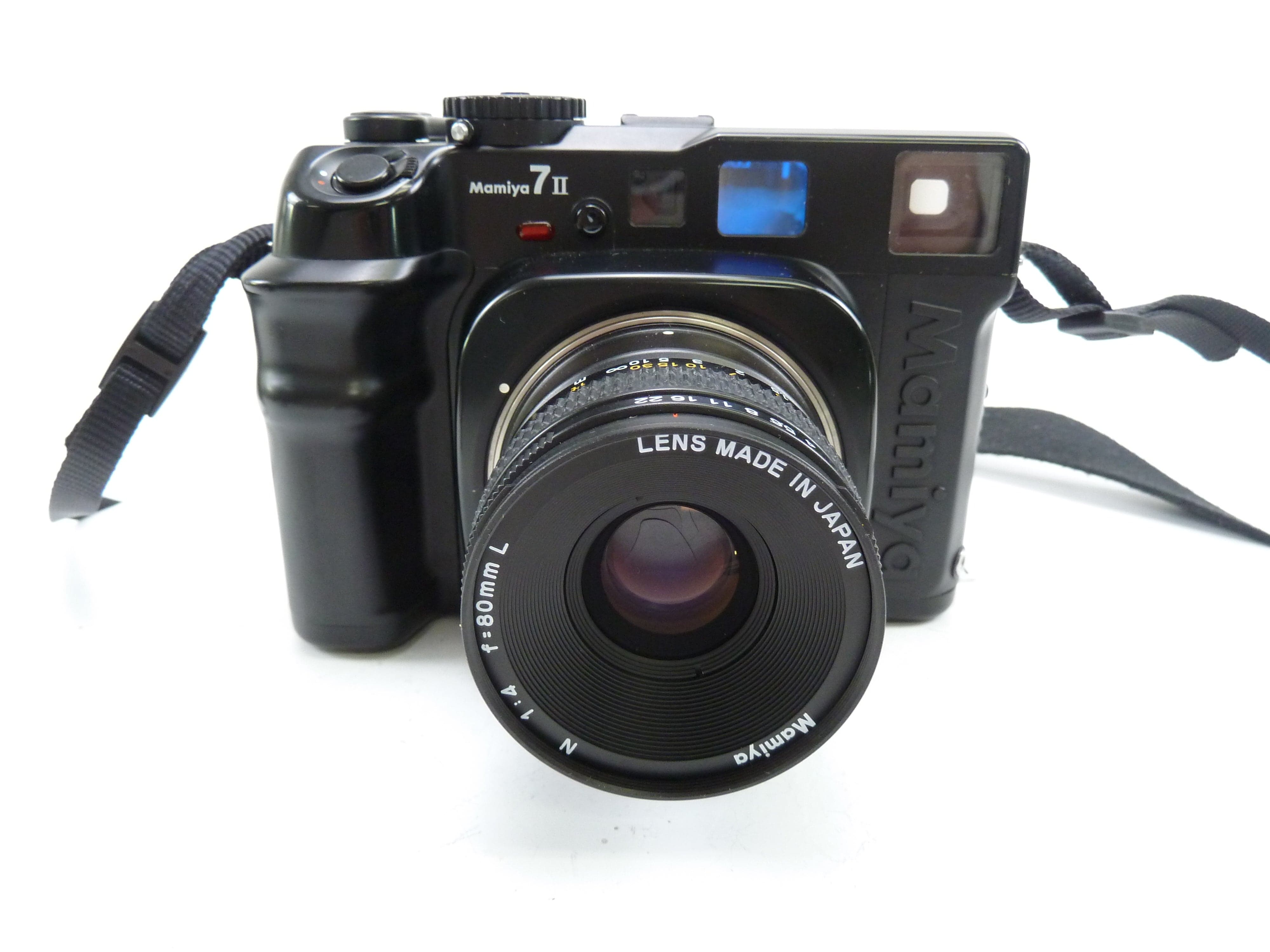
Era/Set: 1999-2014, Japan | Typical price: ~$3,000-$4,500 (body only) | Best for: collectors and shooters who want the sharpest portable 6x7
The Mamiya 7 II is the modern-classic that bridges collecting and serious shooting — a 6x7 rangefinder with some of the sharpest medium-format lenses ever made. Body-only prices run $3,000 to $4,500, with lenses adding $1,000 to $2,500 each; values have roughly tripled since 2015 on the film resurgence.
Its light weight, near-silent leaf shutters, and world-class optics make it the travel and scenery shooter's grail. Demand consistently outruns supply, which keeps the floor firm.
Pros:
- Sharpest portable 6x7 — a working grail for film shooters.
- Values roughly tripled since 2015 on real, durable demand.
- Light and quiet with leaf-shutter lenses.
- Tight supply keeps the price floor firm.
Cons:
- The newest and priciest camera here, with limited downside cushion.
- Lenses are expensive and increasingly hard to find.
Verdict: The modern collectible that doubles as a working grail — buy the body, add lenses patiently.
Which One Is Right for You?
What to Look For
- Buy on mechanical condition, not cosmetics. A clean-looking body with a sticky shutter or hazy rangefinder is a money pit; insist on a recent service or test report.
- Verify the variant. Black paint vs. Chrome, red-dial vs. Black-dial, and early serial numbers can multiply value — confirm the exact version before paying a premium.
- Check the shutter and light seals. Curtain pinholes, slow speeds, and crumbling foam are common and costly; budget for a CLA on anything unserviced.
- Ignore fantasy listings. Online marketplaces are full of cameras priced at 3-5x their real comps; anchor to sold results from Collectiblend and auction recaps.
- Match the lens to the body. On rangefinders especially, the right Sonnar, Nikkor, or Planar lens drives both value and image quality.
What matters less than the hype: a pristine box and papers on a common model. Mechanical health and the correct variant beat a mint shelf-queen nearly every time.
FAQ
What's the best vintage camera to buy if I only own one? The Leica M3. It's the definitive rangefinder, sells for $2,000-$4,000 in working chrome, holds value, and remains a superb daily shooter — the safest all-around pick in the category.
Are vintage cameras a good investment? The blue chips (M3, Hasselblad, Rolleiflex, Mamiya 7) have appreciated steadily, but values hinge on mechanical condition and variant. Treat them as collectibles you can also use, not guaranteed appreciation, and budget for service.
Why did the Leica 0-Series sell for $8.5 million? It's a pre-production prototype from 1923-1925, one of roughly two dozen that launched 35mm photography. Extreme scarcity plus apex historical provenance produced the €7.2 million result at Leitz Photographica in June 2025.
Is the Polaroid SX-70 really worth collecting? Yes. It's a genuine design milestone and the first folding instant SLR, yet working bodies cost $40-$150 and still shoot with modern instant film — the best value in the category by far.
How much does servicing a vintage camera cost? A proper CLA (clean, lubricate, adjust) typically runs $150-$400 depending on the model. Always factor it into the purchase price of anything that hasn't been serviced recently.
Which models are most faked or misrepresented? Black-paint Leicas and early-serial Nikon F bodies are the most commonly repainted or relabeled. Buy graded or vetted examples from reputable auction houses and verify serial ranges against maker records.
Bottom Line
The Leica M3 is the best vintage camera to collect in 2027 — the definitive rangefinder, working chrome bodies at $2,000-$4,000, with black-paint variants reaching $722,000. For collectors who want a working piece of history on a budget, the Polaroid SX-70 is the best value, a museum-grade design icon for $40-$150.
Between them sit the 0-Series trophy, the Hasselblad, Rolleiflex, Nikon F and SP, Contax IIa, Leica IIIf, and Mamiya 7 II — each a real camera with a real, recent comp behind it.
Sources
- Wetzlar Camera Auctions — record M3 black-paint result
- PetaPixel — Leica 0-Series sells for $8.5 million
- Collectiblend — Hasselblad 500C/M price guide
- Collectiblend — Rolleiflex 2.8F price guide
- Collectiblend — Mamiya 7 II price guide
- Wikipedia — Nikon SP rangefinder
- 35mmc — Contax IIa review and market notes
- Wikipedia — Polaroid SX-70
*Vintage cameras review — vintage cameras reviews, ratings, best vintage cameras to collect 2027, and a review of the top film cameras for collectors.*